this week in theater

CLIVE

CLIVE

Director and star Ethan Hawke wonders just what he got himself into in pal Jonathan Marc Sherman’s CLIVE

Acorn Theatre, Theatre Row
410 West 42nd St. between Ninth & Tenth Aves.
Monday – Saturday through March 9, $61.25
212-239-6200
www.thenewgroup.org

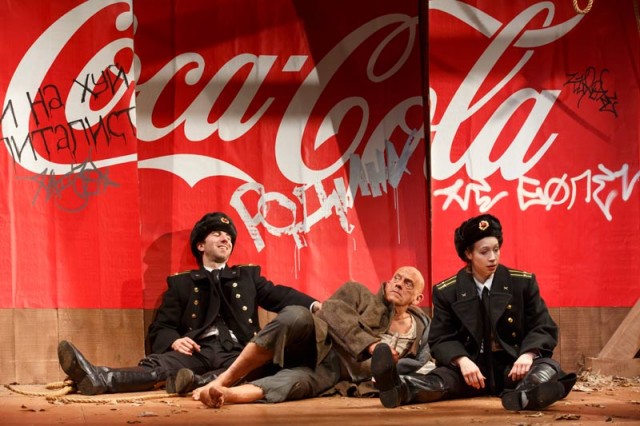
Partway through Clive, the title character tells a burly friend, “You lost me, man.” The audience can say the same thing to playwright and actor Jonathan Marc Sherman (Knickerbocker, Evolution) and director and title character Ethan Hawke in the New Group’s awkward adaptation of Bertolt Brecht’s first full-length play, Baal. In a program note, Sherman explains, “Clive is based on, inspired by, and stolen from the German version of Bertolt Brecht’s Baal published in Potsdam in 1922. I worked from a literal translation courtesy of Google Translate. I do not recommend that you try this.” Indeed, the hundred-minute play is annoying and confusing, very much like Google-translated prose. Hawke and Sherman, who previously collaborated on the New Group’s Things We Want, turn the main character into an aging, debauched punk rocker, in spiked white hair and black leather jacket, who prefers sex and drugs to rock and roll. Early on, during a game of Truth or Dare, he spits in the face of a record deal in favor of snorting different kinds of coke and coming on rather heavily to a prominent producer’s wife. He ultimately beds her, as well as a bandmate’s virgin girlfriend and just about every other woman he comes into contact with, and that’s a big part of the problem with the play, based on a work that famously ran for only one performance when it was first staged in 1923: there isn’t a likable character anywhere to be seen, starting with Clive himself, who is as uninteresting as he is despicable, making it hard to believe that all of these women are such suckers. Over the years, the role of Baal has been played by a diverse range of actors, including Oskar Homolka, Rainer Werner Fassbinder, and David Bowie, with varying success; Hawke, who won an Obie for his performance in the New Group’s Blood from a Stone, is unlikely to garner any awards for transforming Baal/Clive into a psychotic escapee from a Billy Idol video who doesn’t really have much to say. The most compelling part of the production is the stage itself, with its beer-label wallpaper, front pit, and seven musical doors designed by the sibling art duo GAINES. The doors, scattered in strategically yet seemingly random places, are visually and aurally intriguing, occasionally played by the supporting cast, which includes Brooks Ashmankas and Zoe Kazan in multiple roles and Vincent D’Onofrio as a bald hulk who regularly lets loose bizarre howls. But the design doesn’t meld with the rest of the show, instead feeling out of place, a whole lot of art for art’s sake, which pretty much sums up the misbegotten Clive as well.

WORKING ON A SPECIAL DAY

(photo by Carol Rosegg)

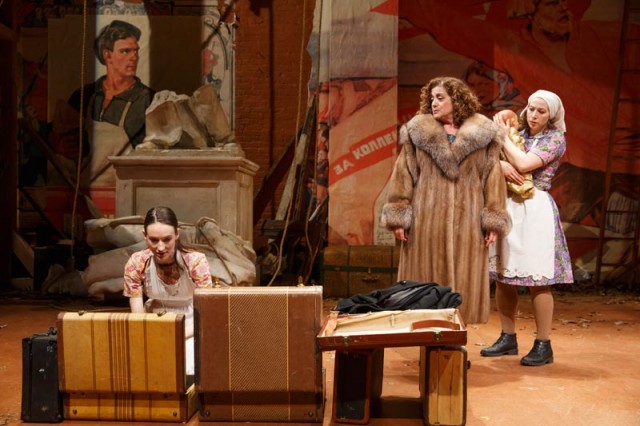
Gabriel (Antonio Vega) and Antonietta (Ana Graham) discuss life, love, and fascism in WORKING ON A SPECIAL DAY (photo by Carol Rosegg)

59E59 Theaters
59 East 59th St. between Park & Madison Aves.
Tuesday – Sunday through February 17, $35
212-279-4200
www.59e59.org

It’s May 8, 1938, and there’s a parade making its way through the streets of Rome celebrating Adolf Hitler’s visit with Benito Mussolini as the Fascist leaders plot their takeover of Europe. A bored housewife, Antonietta (Ana Graham), is left alone by her husband and kids, cleaning the apartment and doing the laundry while everyone else heads out to the festivities. After her parrot flies out of its cage and out the window, Antonietta tracks it down in the apartment of a stranger, Gabriel (Antonio Vega), the only other person remaining in the complex. Unbeknownst to Antonietta, Gabriel was about to blow his brains out until she suddenly showed up. Soon the two lonely souls are sharing secrets and more in the offbeat yet engaging Working on a Special Day. The seventy-five-minute show was adapted and translated by Graham, Vega, and Danya Taymor from Ettore Scola’s Academy Award–nominated 1977 film, Una giornata particolare, which starred Sophia Loren as Antonietta, Marcello Mastroianni as Gabriele, and John Vernon as Antonietta’s husband (played onstage by Vega also). The intriguing drama takes place in small black box theater in which two of the walls and a pair of doorways are like chalkboards that Graham and Vega constantly draw on, creating windows, telephones, a birdcage, and more. They also make all the sound effects themselves. Thus, when Graham makes the sound of a telephone, Vega draws one on the wall and pretends to answer it. It’s an odd conceit that grows more endearing as the two characters spend more time together and get to know each other much better. Although it’s not interactive or participatory, it is warm and welcoming; when the two actors first appear, the house lights are on, and they change into their costumes using actual seats in the audience, as if crowd and performer are one and the same. A coproduction of the New York–based Play Company and Mexico City’s Por Piedad Teatro Foundation, Working on a Special Day has been extended at 59E59 through February 17.

ROBOT THEATER PROJECT

Robot Theater Project (photos by Tsukasa Aoki and Tatsuo Nambu)

Robot Theater Project includes a pair of one-act plays starring real robots at Japan Society (photos by Tsukasa Aoki and Tatsuo Nambu)

Japan Society
333 East 47th St. at First Ave.
February 7-9, $28, 7:30
212-715-1258
www.japansociety.org

Last month the Resonance Ensemble revived Karel Čapek’s 1920 play, R.U.R., the work that introduced the word “robot” to the world — and a highly influential story that involved machines gaining sentience and threatening humankind. Seinendan Theater Company takes that to the next level this week at Japan Society with Robot Theater Project, a pair of one-act plays written and directed by company founder Oriza Hirata in which real robots play characters onstage. In Sayonara, a woman with a terminal illness is cared for by Geminoid F, described in the cast biographies as “a female type tele-operated android [with the] potential to go beyond an experimental platform and become a commonly used robot in human society.” In I, Worker, a man struggles to deal with the loss of his child while his robot questions the meaning of life; the mechanical being is played by Robovie R3, “a life-sized robot invented to research communications between humans and robots.” While Geminoid F is making its theatrical debut, Robovie R3 previously appeared in Hirata’s Three Sisters, Android Version. The human actors include Bryerly Long, Hiroshi Ota, and Minako Inoue. The two plays, developed in collaboration with Dr. Hiroshi Ishiguro of the Intelligent Robotics Laboratory at Osaka University, will be performed February 7-9 at Japan Society, Sayonara in English and Japanese with subtitles and I, Worker in Japanese with subtitles. Hirata and Dr. Ishiguro will participate in Q&As following the February 8-9 shows. In addition, Hirata will lead an acting workshop, “Exploring Naturalism,” on February 9 at 1:00, delving into his unique “contemporary colloquial theater.”

robots and humans interact in moving ways at Japan Society

Robots and humans interact in moving ways at Japan Society

Update: As the audience enters the Japan Society theater for Sayonara, the first of a pair of one-act plays, two characters are already onstage, sitting in chairs. Although it appears to be two women, one brunette and Asian, the other blonde and Caucasian, it turns out that while the latter is a living, breathing female, Bryerly Long as a young woman dying of a terminal disease, the former is Geminoid F, a remarkably realistic android playing a robot who has been hired by the woman’s father to recite beautiful poetry to make his daughter’s final days peaceful. Geminoid F, who is powered through air pressure via twelve motorized actuators, doesn’t mouth the words exactly, which, along with her vacant eyes, are the only things that give her away as a mechanical being until she is carried off at the end, a long tube connecting her to electronic controls. The interplay between the android and the human is quite moving and believable, with a new scene added involving the nuclear disaster at Fukushima and how robots can help in the aftermath. In I, Worker, Hiroshi Ota (who also plays a small part in Sayonara) and Minako Inoue (who voices Geminoid F) are parents trying to cope with the death of their child. The husband is having more difficulties getting back to a relatively normal existence, which is also the case with the family’s two robots, played by Robovie R3s. While Geminoid F was created to look like a human, Robovie R3 is more in the mode of a futuristic R2D2/Dr. Who type, with fanciful colors and round, wide eyes. Just like the parents, the male robot has lost purpose in his life and is trying to find the will to go on, but I, Worker contains much more humor, supplied by the robots themselves, including how they exit the stage at the end. The two plays work because writer-director Oriza Hirata has created two pieces in which the stories themselves deal with the interchange between humans and robots; he has not cast the androids as real people going through completely real situations, and human actors are not playing robots. The plays would not be successful if they were performed only by robots or only by humans; instead, by bringing the two together, Hirata and robotic scientist Dr. Hiroshi Ishiguro have built a fascinating meta that surrounds the tales, a harbinger of things to come both on- and offstage in our ever-evolving world.

CULTUREMART 2013

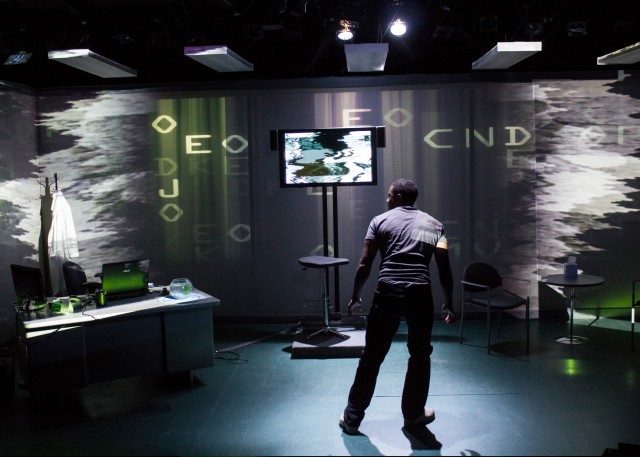
Bora Yoon collaborates with Adam Larsen and R. Luke DuBois in surreal WEIGHTS AND BALANCES (photo by James Chung)

Bora Yoon collaborates with Adam Larsen and R. Luke DuBois in surreal WEIGHTS AND BALANCES (photo by James Chung)

HERE
145 Sixth Ave. at Dominick St.
Through February 10, $10 in advance, $15 within twenty-four hours of show
212-647-0202
www.here.org

The HERE Artist Residency Program, known as HARP, is now in the second week of its annual Culturemart festival, consisting of unique, experimental works, often in double features, from emerging presenters in such disciplines as dance, theater, music, visual arts, and puppetry as well as a melding of several of them. On February 4-5, Mei-Yin Ng’s Lost Property Unit explores loneliness and solitude in the digital age, referencing television and movies through dance, live and prerecorded music, and robot sculptures, while in Hai-Ting Chinn’s Science Fair the mezzo-soprano combines opera with science in a multimedia performance. On February 6-7, Robin Frohardt’s The Pigeoning uses music and puppets to look at the end of the world, while Joseph Silovsky’s Send for the Million Men is a solo piece that reexamines the Sacco and Vanzettti case with puppets and handmade projectors. Also on February 6-7, Bora Yoon’s Weights and Balances is a surreal opera featuring an interactive performance design by R. Luke DuBois. On February 8-9, Stein / Holum Projects’ The Wholehearted is a work in progress about a woman boxer looking back at her glory days. On February 9 at 2:00, there will be a free performance of David T. Little’s opera-theater piece Artaud in the Black Lodge, which links Antonin Artaud, William S. Burroughs, and David Lynch through a libretto by Anne Waldman. The festival, which also celebrates HERE’s twentieth anniversary, concludes February 9-10 with HERE artistic director Kristin Marting and David Morris’s Trade Practices, a live, interactive market in which audience members become participants in the event.

CAT ON A HOT TIN ROOF

(photo by Joan Marcus)

Brick (Benjamin Walker) and Maggie (Scarlett Johansson) smell the odor of mendacity in Broadway revival of CAT ON A HOT TIN ROOF (photo by Joan Marcus)

Richard Rodgers Theatre
226 West 46th St. between Seventh & Eighth Aves.
Through March 30, $27-$132
877-250-2929
www.catonahottinroofbroadway.com

Over the last two years, there has been a plethora of Tennessee Williams revivals on and off Broadway in celebration of the centennial of the Mississippi-born playwright’s birth in 1911, including In Masks Outrageous and Austere, In the Bar of a Tokyo Hotel, Vieux Carré, and A Streetcar Named Desire. The latest is a new Broadway production of Cat on a Hot Tin Roof, which initially debuted on the Great White Way in 1955 and was last seen on Broadway in an all-black version in 2008. The problems with this current revival, directed by Rob Ashford (How to Succeed in Business Without Really Trying), are evident from the very start, as the audience applauds over the opening lines spoken by Scarlett Johansson as Maggie the Cat and continues with Ciarán Hinds’s understated Big Daddy, Debra Monk’s goofy Big Mama, and Benjamin Walker’s barely there Brick. Cat on a Hot Tin Roof demands big, over-the-top performances to hide its relatively basic story line of a family hunkering for a big inheritance when they believe their patriarch to be seriously ill, in addition to a classic Williams subplot of a character having trouble facing his possible homosexuality. It’s not so much that the actors have to deal with the memories of such previous Cat stage and film superstars as Burl Ives, George Grizzard, Charles Durning, and James Earl Jones as Big Daddy, Ben Gazzara, Paul Newman, and Terrence Howard as Brick, and Elizabeth Taylor, Kathleen Turner, and Barbara Bel Geddes as Maggie. Instead, Ashford presents the play as a subdued tale lacking nuance; the audience keeps waiting for electricity and explosions that never happen. Christopher Oram’s set, a large, wide-open bedroom, turns into Grand Central Terminal as characters keep traipsing through, denying Maggie and Brick any privacy as the odor of mendacity increases. This production of Williams’s second Pulitzer Prize winner — Streetcar also garnered the honor — would have been better served in a smaller off-Broadway house than under the glaring lights of the Great White Way.

BARE THE MUSICAL

BARE

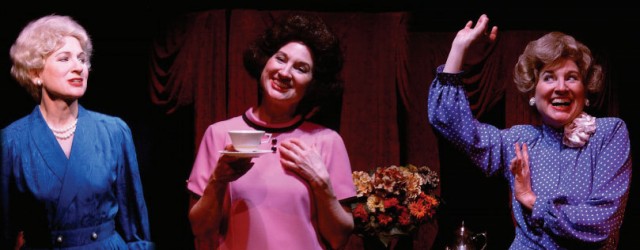
Revamped BARE musical explores relationships among a group of teenagers at a Catholic boarding school

New World Stages
340 West 50th St. between Eighth & Ninth Aves.
Through February 3, $92.50
www.baremusicalnyc.com

Bare has been around since October 2000, appearing in various versions around the world, usually billed as a pop opera. But in its latest incarnation, it has been transformed into a straightforward musical, presented by an energetic cast in an extremely entertaining production. The story takes place in St. Cecilia’s co-ed boarding school, where the shy, nerdy Peter (Taylor Trensch) has fallen for beautiful blond basketball star Jason (Jason Hite). While Peter is not ashamed of being gay, Jason is determined to hide their secret relationship, no matter the cost. Wanting to spend more time with Peter, Jason auditions for the school production of Romeo and Juliet, run by the controversial Sister Joan (Missi Pyle), who tends to bend the rules when it comes to certain religious practices, which does not make Father Mike (Jerold E. Solomon) happy. Soon jealousy and envy take center stage as Jason is cast as Romeo opposite supposed slut Ivy (Elizabeth Judd), who Matt (Gerard Canonico) thinks he is dating, while Jason’s sister, wry, cynical drug dealer Nadia (Barrett Wilbert Weed), has the hots for Matt. Comic relief is provided by Alice Lee as ditzy Asian Valley Girl Diane and Alex Wyse as Alan, the only Jew at St. Cecilia’s. Jon Hartmere, who wrote the original book and lyrics, has updated the show, with Lynne Shankel adding new songs to Damon Intrabartolo’s score to make the show more relevant to current events.

Jason (Jason Hite) and Peter (Taylor Trensch) share a forbidden kiss in BARE THE MUSICAL

Jason (Jason Hite) and Peter (Taylor Trensch) share a forbidden kiss in BARE THE MUSICAL

Director Stafford Arima (Carrie, Altar Boyz) and choreographer Travis Wall (All the Right Moves) keep things moving fast on Donyale Werle’s hip set as the company performs such numbers as “A Million Miles from Heaven,” “Drive You Out of Your Mind,” “Kiss Your Broken Heart,” and “Pilgrims’ Hands.” One of the new songs, “Hail Mary,” is meant to be a showstopper, with Pyle portraying Mother Mary camping it up in a Vegas-style romp, but although it revs up the audience, it ends up detracting from the developing story. Otherwise, the first act unfolds beautifully, with well-developed characters and a smart use of Shakespeare’s classic romance as it relates to what is going on between Peter, Jason, Matt, Ivy, and Nadia. The shorter second act is not quite as crisp, wandering too much as it tries to make its points about forbidden love and religion, still not quite there after all these years. An engaging night of theater, Bare continues at New World Stages through February 3. There are various ways to get tickets besides buying them in advance, including $26.50 same-day general rush, “30 at 30” $30 tickets available thirty minutes before showtime for people under thirty, and “20at20” $20 tickets twenty minutes prior to curtain.

THE NETFLIX PLAYS

netflix plays

Ars Nova
511 West 54th St. between Tenth & Eleventh Aves.
January 30 – February 9, $15, 8:00
212-352-3101
www.arsnovanyc.com

Since 2007, Ars Nova’s Play Group has been putting together festivals of short works and live music dedicated to pop-culture themes and internet memes, beginning with “The Wikipedia Plays” and continuing with “Playlist,” “Missed Connections NYC,” “The Wii Plays,” and “The Urban Dictionary Plays.” This year the Play Group turns its attention to online movie streaming with “The Netflix Plays,” twelve works inspired by Netflix’s recommendation categories and people’s guilty pleasures. The queue consists of Josh Koenigsberg’s Because You Watched Weekend at Bernie’s 2: A Kantian Morality Tale directed by Wes Grantom, Rachel Bonds’s Because You Watched Sherlock: Jack of Hearts directed by Portia Krieger, Sarah Gancher’s Understated Foreign Coming of Age: December 2011, Budapest directed by Jess Chayes, Sarah Burgess’s Inscrutable European-Set Thrillers: Bolzano directed by Jesse Jou, Dipika Guha’s Because You Watched Downton Abbey: Violently Overstated British Period Drama for Ages 19-100 directed by Jou, Bess Wohl’s Watch It Again: Happy New Year directed by Chayes, Sharyn Rothstein’s Heartfelt Noncontroversial Political Tearjerkers: October Surprise! directed by Chayes, A. Zell Williams’s Emotional Foreign Father-Daughter Films: The Foreign Affair, directed by Jou, Nick Gandiello’s Hip-Hop Documentaries: How I Feel directed by Krieger, Stephen Karam’s Watch It Again! directed by Grantom, Michael Mitnick’s Because You Watched Frasier: BECAUSE YOU WATCHED FRASIER!!!!!!!!!!!!!!!!!!! directed by Krieger, and Jon Kern’s Inspiring Fight-the-System Movies Based on Real Life: The Cable Bill directed by Grantom. But you need not worry too much about the bill, as the evening, in which all the plays are performed, is a mere fifteen bucks. The cast, which, based on the plays’ titles, should be having a lot of fun themselves, includes Kyle Beltran, Deonna Bouye, Nadia Bowers, Megan Byrne, Ben Graney, Drew McVety, Sarah Steele, and Eddie Kaye Thomas.