this week in theater

THE MASTER BUILDER

(photo by Stephanie Berger)

Wrenn Schmidt and John Turturro try to build an unusual relationship in Andrei Belgrader’s new version of 1892 Ibsen play (photo by Stephanie Berger)

Brooklyn Academy of Music
BAM Harvey Theater
651 Fulton St. between Ashland & Rockwell Pl.
Through June 9, $25-$90
718-636-4100
www.bam.org

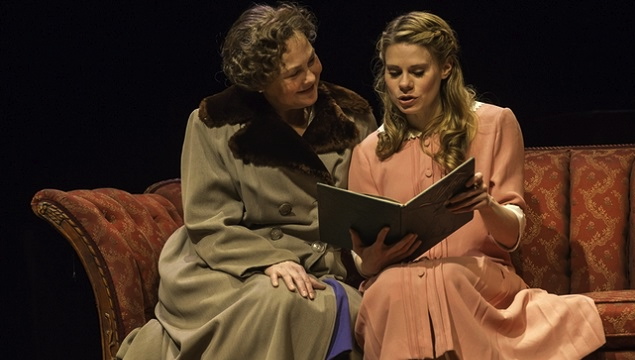
A stark coldness pervades Andrei Belgrader’s new version of Henrik Ibsen’s most autobiographical play, The Master Builder. Collaborating once again with John Turturro — the two previously worked together on a terrific production of Samuel Beckett’s Endgame at BAM in 2008 and on Anton Chekhov’s The Cherry Orchard at Classic Stage this past fall/winter, Belgrader uses David Edgar’s recent streamlined, modernized translation in telling the story of a star Norwegian architect who knows how to build buildings but can’t manage to keep his life from falling apart around him. Turturro plays the title character, Halvard Solness, a mean-spirited, philandering megalomaniac who is refusing to allow his dying mentor, Knut Brovik (Julian Gamble), the opportunity to see his architect son, Ragnar (Max Gordon Moore), succeed in any way before the father dies. Halvard also flirts terribly with his secretary, Kaja Fosli (Kelly Hutchinson), even though she is engaged to Ragnar. Meanwhile, Halvard’s wife, Aline (Katherine Borowitz, Turturro’s real-life wife), wanders through Santo Loquasto’s latticed-metal set like a ghost, never having recovered from a family tragedy. “I am the way I am. I can’t remake myself,” Halvard says at one point, but he does go through a change upon the arrival of Hilde Wangel (Wrenn Schmidt), a sexy fairy-tale-like nymph who claims that Halvard promised himself to her ten years earlier, when she was a mere thirteen. He is of course smitten with her, leading to yet more complications. But just as Halvard clearly differentiates between “a house, but not a home,” this Master Builder never climbs the heights it aspires to. Turturro is too blustery and Schmidt (Katie Roche, Boardwalk Empire) too chirpy (and chippy), while the production as a whole never quite develops a solid foundation, its structure too loose and disconnected, in need of some further construction.

NIKOLAI AND THE OTHERS

(photo by Paul Kolnik)

A group of Russian émigrés form an extended artistic family in Richard Nelson’s new play (photo by Paul Kolnik)

Lincoln Center Theater at the Mitzi E. Newhouse
150 West 65th St. between Broadway & Amsterdam Ave.
Tuesday – Saturday through June 16, $85
212-362-7600
www.lct.org

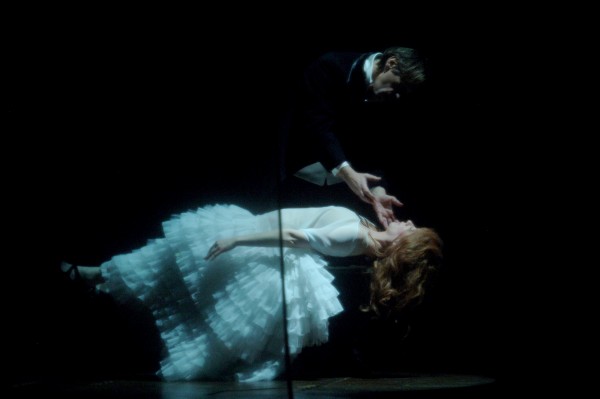
Over the last few years, Richard Nelson has been detailing the exploits of the Rhinebeck-based Apple family in such decidedly American, politically tinged works as That Hopey Changey Thing, Sweet and Sad, and Sorry. Nelson examines a very different kind of extended American family in the intelligent and engaging Nikolai and the Others, running at Lincoln Center’s Mitzi E. Newhouse Theater through June 16. It’s the spring of 1948, and a group of Russian immigrants has gathered at the Westport farmhouse of Vera and Igor Stravinsky (Blair Brown and John Glover) to honor elderly set designer Sergey Sudeikin (Alvin Epstein). Among the guests are choreographer George Balanchine (Michael Cerveris), actor Vladimir Sokoloff (John Procaccino) and his wife, Lisa (Betsy Aiden), Balanchine confidant and Stravinsky friend and translator Lucia Davidova (Haviland Morris), piano teacher Aleksi Karpov (Anthony Cochrane) and his fiancée, Natasha Nabokov (Kathryn Erbe), and composer Nikolai “Nicky” Nabokov (Stephen Kunken), Natasha’s first husband and a man who helps out his fellow Russian émigrés through secret connections. The men and women discuss life and love, art and politics while eating and drinking delicacies from the old country, proud of their heritage as well as having become American citizens. The evening’s centerpiece is to be the presentation of a pas de deux from Balanchine and Stravinsky’s upcoming ballet, Orpheus, performed by Balanchine’s wife, Maria Tallchief (Natalia Alonso), and Nicholas Magallanes (Michael Rosen), but the arrival of conductor Serge Koussevitsky (Dale Place) with U.S diplomat Charles Bohlen (Gareth Saxe) throws everything out of balance as suspicion and fear hover in the country air.

Vera Stravinsky (Blair Brown) and others reach out for help from Nikolai Nabokov (Stephen Kunken) during weekend in Westport (photo by Paul Kolnik)

Vera Strainsky (Blair Brown) and others reach out for help from Nikolai Nabokov (Stephen Kunken) during weekend in Westport (photo by Paul Kolnik)

Though featuring real characters and referencing many actual events, Nikolai and the Others is a fascinating creation of Nelson’s, an imaginary weekend that delves into the very nature of the creative process in a quickly changing world. (For example, Sudeikin died in 1946, two years before the play takes place.) But Nelson does an excellent job capturing the powerful emotions these Russian immigrants are experiencing as they attempt to continue their careers in America at the start of the Cold War, in search of personal and professional freedom that comes at a price. Nelson and director David Cromer (Tribes, When the Rain Stops Falling) have the characters speak unaccented English when they are conversing in their native Russian tongue, then in thickly accented English when they are talking in English itself, a conceit that is confusing at first but ultimately works very well. Glover, Brown, and Cerveris lead a strong cast that feels like they have formed a warm family of their own while inviting in the audience, which wraps around Marsha Ginsberg’s intimate set. The show takes on added meaning since it is in the midst of its world premiere at Lincoln Center, where Balanchine and Lincoln Kirstein (who is mentioned often but is never seen) ultimately moved the New York City Ballet after founding the troupe in 1948 and including Orpheus in its inaugural season.

BUNTY BERMAN PRESENTS…

(photo by Monique Carboni)

The New Group goes back to 1950s Bollywood in BUNTY BERMAN PRESENTS… (photo by Monique Carboni)

Acorn Theatre, Theatre Row
410 West 42nd St. between Ninth & Tenth Aves.
Monday – Saturday through June 1, $61.25
212-239-6200
www.thenewgroup.org

When its lead actor, Erick Avari, hurt himself right as previews were beginning, Bunty Berman Presents… turned to its creator to keep it going, much as the title character is willing to do just about anything to keep his Bombay movie studio in business in this middling musical comedy from the New Group. With Avari out of the production on doctor’s orders, Ayub Khan Din, who wrote the book and lyrics and cowrote the music with Paul Bogaev, stepped in to take over the role of Bunty Berman. Set in 1950s Bollywood, Bunty Berman Presents… follows the trials and tribulations of director and dreamer Berman as he struggles to complete his latest low-budget quickie with aging has-been hero but still diva Raj Dhawan (Sorab Wadia). The first act is a disappointing farce that feels unfinished, echoing the movie they’re desperately trying to make. While Raj primps and preens, Berman, his right-hand man, Nizwar (Sevan Greene), and loyal assistant, Dolly (Gayton Scott), struggle to come up with financing, eventually turning to a local gangster, Shankar Dass (Alok Tewari), who insists that his son, Chandra (Raja Burrows), star in the film. The backstage intrigue also zooms in on lead actress Shambervi (Lipica Shah), who has a secret only tea boy Saleem (Nick Choksi) knows about. Things improve significantly in the second act, which contains more slapstick and is much funnier, particularly in how writer Din and director Scott Elliott use Raj’s head in several scenes. Khan Din, one of the stars of Sammy and Rosie Get Laid and the writer of the autobiographical play and film East Is East, cuts an amiable-enough figure as Berman as the British-born Pakistani pays tribute to the old Indian films his father loved as well as Hollywood classics by the Marx Brothers, but the music, dancing, and drama never quite gel. The only song that really registers is the show’s signature tune, “Let’s Make a Movie,” which you might actually find yourself singing as you leave the theater. However, Bunty Berman Presents… relates all too well to it, as it could have been renamed “Let’s Make a Musical.” (The night we went, two people were handing out leaflets protesting the show’s “violent transphobia” and “cultural appropriation and misrepresentation”; not only do they seem to have not watched the same musical comedy we did while completely missing a major plot point, but they gave away the ending, so beware.)

CANCELED: PHÈDRE LES OISEAUX

(photo © Ayodele Casel)

French theater director Jean-Baptiste Sastre rehearses Haitian-American chorus for New York premiere of PHÈDRE LES OISEAUX (photo © Ayodele Casel)

PHÈDRE LES OISEAUX (PHAEDRA THE BIRDS)
Baryshnikov Arts Center, Howard Gilman Performance Space
450 West 37th St. between Ninth & Tenth Aves.
May 21-24, 28-29, $20, 7:30
866-811-4111
www.bacnyc.org

French director Jean-Baptiste Sastre describes his production of Phèdre les oiseaux (Phaedra the birds), which makes its New York premiere May 21-29 at the Baryshnikov Arts Center, as “a poem,” while Palestinian star Hiam Abbass calls it a “moment of pleasure, and of poetry, and of theater.” The seventy-five-minute show, which relates the Greek myth of Phaedra, a tale of forbidden love, betrayal, rejection, and revenge, will be performed by Abbass (Paradise Now, Lemon Tree) as Phaedra and American-Ugandan actor Ntare Guma Mbaho Mwine (Heroes, Treme) as Hippolytus, joined by approximately thirty members of the Brooklyn-based organization Haïtian-Americans in Action serving as the chorus. The text is by Frédéric Boyer, with English translation by Cole Swensen and dramaturgy by Ellen Hammer. The international project, which features a local chorus at every stop on its tour, has been reconfigured for the Howard Gilman Performance Space, will be told in English, French, and Haitian Creole at BAC. [ed. note: This event has now been canceled. We apologize for any inconvenience.]

VANYA AND SONIA AND MASHA AND SPIKE ON BROADWAY

(photo by Carol Rosegg)

Vanya (David Hyde Pierce) and Sonia (Kristine Nielsen) look back at their sad lives in Christopher Durang’s Chekhovian mashup (photo by Carol Rosegg)

Golden Theatre
252 West 45th St. between Broadway & Eighth Ave.
Tuesday – Sunday through July 28, $62 – $142
www.vanyasoniamashaspike.com

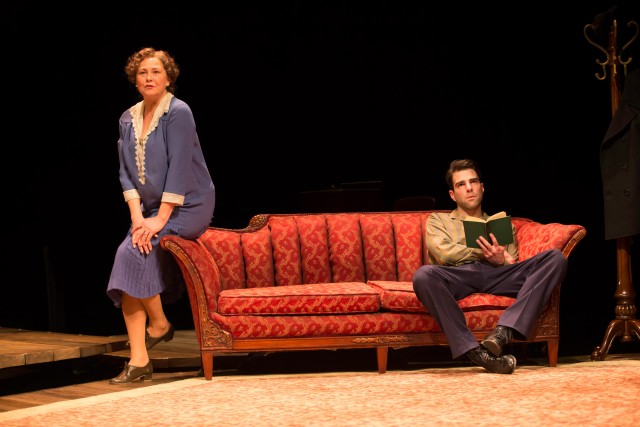
When he was at Yale in the 1970s, Christopher Durang teamed with Albert Innaurato and Jack Feldman on The Idiots Karamazov, a musical about a Russian translator that begins with a song titled “O, We Gotta Get to Moscow,” as the translator confuses Dostoevsky with Chekhov and other writers. Going to Moscow shows up again in Durang’s delightful satire, Vanya and Sonia and Masha and Spike, which has made a successful transition from Lincoln Center’s Mitzi E. Newhouse to Broadway’s Golden Theatre. Durang sets his latest play in a Bucks County farmhouse by a lake where a blue heron stops by daily, based on the Bucks County farmhouse by a lake with a blue heron where Durang and his partner reside. Living in the fictional house are Vanya (David Hyde Pierce) and Sonia (Kristine Nielsen), a pair of fiftysomething siblings (one adopted) who have essentially sacrificed what lives they might have had by taking care of their ill, elderly parents while their sister, Masha (Sigourney Weaver), became a famous movie star gallivanting around the world with five husbands. Clearly, their parents had a thing for Chekhov; Masha is named after characters from The Seagull and Three Sisters, Vanya and the adopted Sonia from Uncle Vanya. Invited to a neighbor’s costume party, Masha arrives at the house in grand diva fashion, overemoting and unable to keep her hands off her hot new boy toy, Spike (Billy Magnussen), who enjoys taking off most of his clothes at a moment’s notice and striking muscular poses. Masha quickly grows jealous when Spike meets young, pretty ingénue Nina (played at Lincoln Center by Genevieve Angelson and now by Leisel Allen Yeager, the only cast change from the original production), a wannabe actress named after the young, innocent actress in The Seagull. Meanwhile, the cleaning lady, Cassandra (Shalita Grant), makes dire predictions that keep coming true, just like her namesake, the Greek mythological figure with second sight. As Vanya, Sonia, Masha, Spike, and Nina prepare for the party — Masha insists they all go as characters from Snow White, with Masha as the beautiful protagonist, slyly referencing Weaver’s portrayal of the evil stepmother in the 1997 television movie Snow White: A Tale of Terror — jealousy, fear, deception, childhood resentment, and more bubble to the surface and threaten to erupt, albeit in primarily wacky, hysterical ways.

(photo by Carol Rosegg)

Spike (Billy Magnussen), Masha (Sigourney Weaver), and Vanya (David Hyde Pierce) spend a crazy weekend together in Bucks County (photo by Carol Rosegg)

You don’t need to know anything about Chekhov and his searing dramas about seriously dysfunctional families to get a huge kick out of Vanya and Sonia and Masha and Spike, which has a unique family feel itself — Weaver has been working with Durang since the Yale days, Hyde Pierce starred in the Broadway production of the playwright’s Beyond Therapy (as well as Peter Brook’s The Cherry Orchard), and Nielsen is Durang’s acknowledged muse, having appeared in many of his shows, in parts specifically written for her. Director Nicholas Martin, who previously helmed Durang’s Why Torture Is Wrong, and the People Who Love Them at the Public, keeps things relatively natural and grounded even with Weaver, Magnussen, and Grant playing things deliciously way over the top, as the story’s tender heart is wonderfully captured by the amazing Nielsen and Hyde Pierce, who agonize over their loneliness and advancing age, the importance of family, and, perhaps most Chekhovian, a world that seems to be passing them by. Vanya and Sonia and Masha and Spike is a thoroughly enjoyable if often goofy and now, on Broadway, even bigger and broader mashup from one of America’s most engaging satirists at the top of his game. (And be sure to go here to read the fall 2012 issue of Lincoln Center Review, which includes Durang’s “My Life with Chekhov,” an essay detailing seven encounters he had with the Russian playwright, dating back to when he was fourteen.)

HERE LIES LOVE

(photo by Joan Marcus)

David Byrne turns story of Imelda Marcos and the Philippines into spectacular new musical HERE LIES LOVE (photo by Joan Marcus)

The Public Theater, LuEsther Hall
425 Lafayette St. by Astor Pl.
Extended through June 30, $80.50 – $95.50
212-967-7555
www.publictheater.org

“I thought to myself, wouldn’t it be great if — as this piece would be principally composed of clubby dance music — one could experience it in a club setting?” David Byrne asked upon the release of his 2010 two-disc concept album about Imelda Marcos, Here Lies Love, a collaboration with Fatboy Slim featuring vocal contributions from Tori Amos, Steve Earle, Martha Wainwright, Natalie Merchant, Florence Welch, Cyndi Lauper, Nellie McKay, and others. “Could one bring a ‘story’ and a kind of theater to the disco? Was that possible? If so, wouldn’t that be amazing!” And amazing it is, to put it lightly. Byrne has turned Here Lies Love into a spectacular, must-see event, an immersive, endlessly creative theatrical experience that has been extended at the Public through June 30. Scenic designer David Korins has transformed LuEsther Hall into a rockin’ dance club where the audience is encouraged to shake it to hard-thumping tunes spun by a DJ (Kelvin Moon Loh) as they enter the space, which has stages at either end and a cross-shaped platform at the center. (The majority of the crowd moves about on the floor, with a smaller contingent sitting in chairs in the balcony, watching from above.) For the next ninety minutes, Byrne (concept, lyrics, music), Fatboy Slim (music), choreographer Annie-B Parson, and go-to director Alex Timbers (Bloody Bloody Andrew Jackson, Peter and the Starcatcher, the upcoming Shakespeare in the Park production of Love’s Labour’s Lost) tell the story of Imelda Marcos (Ruthie Ann Miles), from her younger days as a poor villager in Tacloban with her best friend, Estrella (Melody Butiu), to her romance with politician Ninoy Aquino (Conrad Ricamora), marriage to eventual Filipino dictator Ferdinand Marcos (Jose Llana), and ever-expanding wealth and power.

(photo by Joan Marcus)

Imelda Marcos (Ruthie Ann Miles) wonders where it all went wrong in David Byrne’s theatrical extravaganza at the Public (photo by Joan Marcus)

The nonstop action takes place on a constantly changing set rearranged by a crack crew as the lead actors, as well as a talented ensemble cast (each of whom is worthy of mention: Renée Albulario, Natalie Cortez, Debralee Daco, Joshua Dela Cruz, Jeigh Madjus, Maria-Christina Oliveras, Trevor Salter, and Janelle Velasquez) that goes through numerous costumes (designed by Clint Ramos), pop up all over the theater, march up and down the sides, and walk through the crowd. Peter Nigrini’s projections range from archival news footage to live shots of reporters interviewing the main characters, with the audience right in the middle of it all as if they are one with the Filipino populace as the People Power Revolution approaches. Byrne’s lyrics are sharp and insightful, never proselytizing or judgmental, highlighted by such numbers as “The Rose of Tacloban,” “Eleven Days,” “Order 1081,” and the title song, tracing the political history of the Philippines in the twentieth century as seen through the eyes of a fascinating woman who didn’t just collect expensive shoes. Here Lies Love is a staggering achievement, an engrossing and involving extravaganza of cutting-edge theater at its finest.

MACBETH

(photo by Jeremy Daniel)

Alan Cumming gives a multifaceted whirlwind performance as an institutionalized man obsessed with Shakespeare’s Scottish play (photo by Jeremy Daniel)

Ethel Barrymore Theatre
243 West 47th St. between Broadway & Eighth Ave.
Thursday – Tuesday through July 14, $69.50 – $145
www.macbethonbroadway.com

As audience members arrive at the Barrymore Theatre to see the Scottish Play, they’re greeted by a warning on the outside doors: “The producers ask that you please refrain from speaking the name of the play you are about to see while inside these walls.” Once this fascinating, intense reimagination of William Shakespeare’s 1606 tale of bloodlust and blind ambition gets under way and star Alan Cumming says the name of the eponymous character out loud, there’s an audible hush in the theater, as if he’s broken the cardinal rule. For this is no ordinary Macbeth, and Cumming is no ordinary lead actor. Instead, he plays a deeply troubled man locked up in an asylum after some kind of tragic event. A doctor (Jenny Sterlin) and an orderly (Brendan Titley) set him up in his room and watch him carefully through a door and a window as he deals with his psychological crisis by getting lost inside Macbeth, speaking only lines from the play as guilt and fear envelop him. Directors John Tiffany (Once, Black Watch) and Andrew Goldberg (The Bomb-itty of Errors, Betwixt) have Cumming examine himself in a mirror, sit proudly on a chair like it’s a throne, huddle meekly under a stairway, and take a bath as he goes from Macbeth, Lady Macbeth, Banquo, and Macduff to the three witches, King Duncan, Fleance, and Malcolm. The stark, surreal goings-on are enhanced by Ian William Galloway’s surveillance cameras and video monitors and Fergus O’Hare’s powerful sound design, as loud noises echo through the patient’s head and across the theater. Cumming gives a tour-de-force performance as the man coming undone in one hundred breathtaking minutes, mixing in humor with tragedy as his breakdown continues. “There’s no art to find the mind’s construction in the face,” Duncan says in the first act. In this bold, daring take on the Bard’s classic story, there is plenty of art in the destruction of one mind’s haunted memory.