this week in theater

COIL 2014

Multiple venues
January 3 – February 1, $15-$20
212-352-2101
www.ps122.org

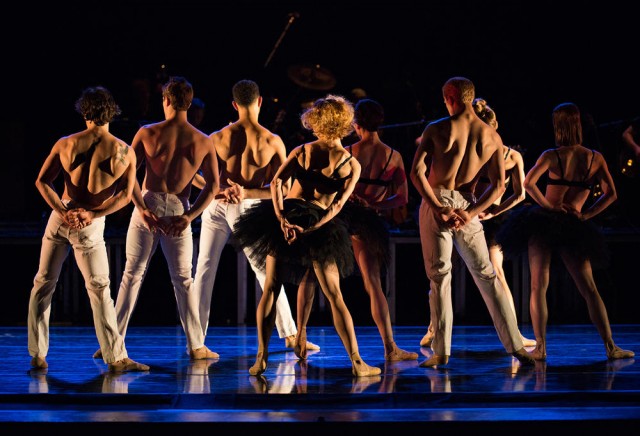
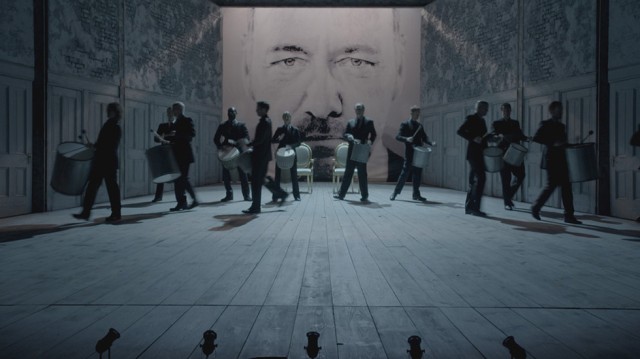
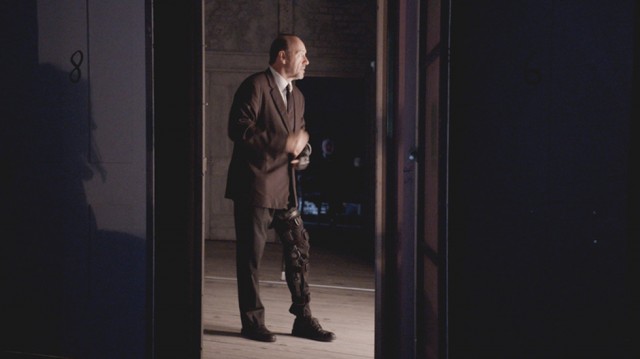
PS122’s East Village home might be under renovation, but that isn’t stopping the organization from presenting the ninth annual incarnation of its winter performance festival, Coil. This year’s festivities comprise nine cutting-edge works in various disciplines, with tickets for all shows only $20, so there’s no reason not to check out at least one of these unique, unusual productions. Reid Farrington stages the ultimate heavyweight match in the world premiere of Tyson vs. Ali at the 3LD Art & Technology Center (January 3-19), in which live action and multiple screens pit Mike Tyson against Muhammad Ali. Mac Wellman’s Muazzez at the Chocolate Factory (January 7-17), from “A Chronicle of the Madness of Small Worlds,” transports the audience, and actor Steve Mellor, into outer space. Heather Kravas’s a quartet at the Kitchen (January 8-12) consists of four dancers performing four dances in four parts each. Director Phil Soltanoff, systems designer Rob Ramirez, and writer Joe Diebes boldly go where no one has gone before in An Evening with William Shatner Asterisk at the New Ohio Theatre (January 9-12), creating a hybrid work highlighted by humans interacting with video clips of words spoken by Shatner as Captain James T. Kirk on Star Trek but strung into new thoughts and statements. Tina Satter’s highly stylized House of Dance at Abrons Arts Center (January 9-13) investigates a tap-dance contest and the relationship between a teacher and his student. The performance series CATCH 60 celebrates its tenth anniversary with the one-night-only CATCH Takes the Decade at the Invisible Dog Art Center (January 11), with works by Cynthia Hopkins, Molly Lieber & Eleanor Smith, Anna Sperber, Ivy Baldwin, and others. Okwui Okpokwasili’s solo Bronx Gothic at Danspace Project (January 14 – February 1) is a song-and-movement-based coming-of-age story about two eleven-year-old girls. All three parts of Jeremy Xido’s solo piece The Angola Project will take place at the Invisible Dog (January 14-17). And family tragedy lies at the center of Brokentalkers’ Have I No Mouth at Baryshnikov Arts Center (January 14-26), with company director Feidlim Cannon and his mother trying to put things back together. In addition, the Red + White Party will get folks mingling as SPIN New York on January 12 ($30 and up) with Elevator Repair Service, and the SPAN conversation series will be held at NYU on January 18.

TWELFTH NIGHT / RICHARD III

(photo © Joan Marcus)

Mark Rylance is simply spectacular as Olivia in old-fashioned version of TWELFTH NIGHT on Broadway (photo © Joan Marcus)

MR. WILLIAM SHAKESPEARES TWELFE NIGHT, OR WHAT YOU WILL /
THE TRAGEDIE OF KING RICHARD THE THIRD

Belasco Theatre
111 West 44th St. between Sixth & Seventh Aves.
Tuesday – Sunday through February 16, $25 – $165
www.shakespearesglobe.com

Shakespeare’s Globe makes its Broadway debut by turning back the clock some four hundred years with stellar versions of Twelfe Night, or What You Will and The Tragedie of King Richard the Third. Running in repertory at the Belasco through February 16, the productions hearken back to the Bard’s time, featuring onstage candlelight, hand-stitched costumes made out of authentic materials, such period instruments as the rauschpfeife, the sackbut, the cittern, and the theorbo, and men playing all the roles, highlighted by a pair of spectacular performances by two-time Tony winner Mark Rylance (Boeing-Boeing, Jerusalem). Rylance is a riot as Olivia in the mistaken-identity comedy Twelfth Night, wearing a dazzlingly detailed full-length gown that makes it look as though the character is gliding across the floor like a true noblewoman, rather than doing anything as common or manly as merely walking. Near the beginning of a seven-year mourning period for her father and brother, the Countess Olivia is being courted by Duke Orsino (Liam Brennan) and Sir Toby Belch (Colin Hurley) while developing the hots for Cesario (Samuel Barnett), who is in the service of Orsino — but the youth Cesario is actually the shipwrecked Viola in disguise, twin sister of Sebastian (Joseph Timms), who survived the disaster as well, although each sibling believes the other to be dead. In the meantime, Olivia’s gentlewoman, Maria (the deliciously wonderful Paul Chahidi, baring impressive cleavage), has conspired with Sir Toby, Sir Andrew Aguecheek (Angus Wright), and servant Fabian (Jethro Skinner) to dupe Olivia’s loyal and dedicated steward, Malvolio (the wickedly funny Stephen Fry), into thinking that Olivia is in love with him, leading to lots of mayhem and surprise discoveries. But at the center of it all is Rylance, whose every movement is a joy to behold. Director Tim Carroll keeps it all light and lively on a relatively sparse stage backed by an oak screen with two-level stalls on either side where members of the audience can sit — and even become part of the show.

(photo © Joan Marcus)

Mark Rylance has a blast as the conniving Duke of Gloucester in seriocomic RICHARD III (photo © Joan Marcus)

Rylance is playfully malevolent as the Duke of Gloucester in Richard III, although it’s all just a bit too lighthearted for Shakespeare’s dark tale of a power-hungry deformed creature murdering friends and family on his way to the throne. With a stiff left hand hanging lifeless against his body, the ultra-paranoid Richard woos the freshly widowed Lady Anne (Timms), whose husband he killed; betrays his brothers Clarence (Brennan) and Edward (Colin Hurley); disparages Queen Elizabeth (Barnett); falsely accuses Lord Hastings (Chahidi) of treason; and orchestrates other lies and deception as the crown dangles within his grasp during the winter of his discontent. Rylance has a ball uttering devilishly humorous asides and offering a white rose to an audience member in the multilevel stage seating, repeating a charming laugh that belies his deviousness. The supporting cast, consisting of many of the same actors appearing in Twelfth Night — including lone American Matt Harrington playing multiple small roles in each work — is outstanding in both productions, playing their parts, whether male or female, with a robust gusto. Among the other stars are Claire van Kampen’s score and Jenny Tiramani’s sleek stage design and period-specific costumes, which the audience can watch being put on the actors by their expert dressers, starting about twenty minutes before curtain time. If you have a choice, the marvelously inventive Twelfth Night is the one to see, but if you can manage it, you should try to see both, preferably as close together as possible.

THE LIFE AND DEATH OF MARINA ABRAMOVIC

Willem Dafoe and Marina Abramovic examine the seminal performance artists life in Robert Wilson spectacle (photo © Lucie Jansch)

Willem Dafoe and Marina Abramović examine the seminal performance artist’s life — and death — in Robert Wilson spectacle (photo © Lucie Jansch)

Park Avenue Armory, Wade Thompson Drill Hall
643 Park Ave. at 67th St.
Through December 21, $135, 7:30
212-933-5812
www.armoryonpark.org

As the audience enters the Park Ave. Armory’s massive Wade Thompson Drill Hall to find their seats in the rising bleachers, three figures are already onstage, a trio of white-faced women representing Marina Abramović lying in coffins, motionless, hands clasped over their chests. On each seat is a copy of the Seventh Regiment Gazette newspaper, which announces, “Artist Marina Abramović Dies at 67.” Soon three dogs are onstage, sniffing at the red bones scattered around the coffins. For the next two and a half hours, episodes from the life of the seminal performance artist are depicted as only director Robert Wilson can do it: visually stunning and psychologically confounding, gorgeous and infuriating, rousing and frustrating, hysterically funny and annoyingly repetitive. Looking like a cross between Joel Grey in Cabaret,, the Joker from Batman, and the Heat Miser from The Year without a Santa Claus, Willem Dafoe narrates the story, primarily from a heavily littered platform in front of the right-hand side of the stage, calling out biographical tidbits from Abramović’s professional and personal life, some of which are then played out with a cast that includes Abramović first as her domineering mother, then as herself. Tales of her family being the first in their neighborhood in the former Yugoslavia to have a washing machine, her mother throwing an ashtray at her head, Marina considering getting a nose job, and her breakup walk with Ulay across the Great Wall of China are accompanied by music by Baby Dee, Scott Joplin, Paul Anka, and others, original compositions by William Basinski, and live performances of haunting songs by musical director, composer, and lyricist Antony, looking robust in a large, dark gown, and the Svetlana Spajić Group. The compelling second act is far more successful than the disappointing first, with a less abstract narrative and greater involvement from Dafoe. It is of course a visual spectacle, with wild costumes by Jacques Reynaud, crazy makeup by Joey Cheng, fab lighting by A. J. Weissbard, and video projections by Tomasz Jeziorski that feature snippets of some of Abramović’s durational performances. Although clear connections can be made between events in Abramović’s childhood and certain works, especially those that involve physical attacks on her body, The Life and Death of Marina Abramović is not meant to be mere biography, autobiography, or obituary; instead, it is another unique and unusual collaborative performance in a provocative career that has been experiencing a quite a resurgence over the last decade, with more to come.

CHÉRI

(photo by Joan Marcus)

ABT veterans Alessandra Ferri and Herman Cornejo play passionate lovers in Martha Clarke’s unique adaptation of Colette’s CHÉRI (photo by Joan Marcus)

The Pershing Square Signature Center
The Irene Diamond Stage
480 West 42nd St. between Tenth & Eleventh Aves.
Extended through December 29, $75
212-244-7529
www.signaturetheatre.org

In 1920, Sidonie-Gabrielle Colette published the short novel Chéri, the story of a love affair between a young man and an older woman that she had first told in a series of short stories for Le Matin. Baltimore-born director and choreographer Martha Clarke (The Garden of Earthly Delights) has now transformed the beloved tale into a minimalist performance piece that is the first of her three Residency Five productions for the Signature Theatre. Chéri stars current American Ballet Theatre principal dancer Herman Cornejo as the title character, a twenty-four-year-old man in the midst of a torrid six-year affair with Lea (former ABT principal dancer Alessandra Ferri), the forty-nine-year-old best friend of his mother, Charlotte (Amy Irving); both women are courtesans in Belle Époque France. “Was he my gift to her? Or did she take him from me?” Charlotte says to the audience in one of four monologues adapted by Tina Howe (Painting Churches, Coastal Disturbances) from Colette’s Chéri and its sequel, The Last of Chéri. Over the course of sixty-five minutes, Cornejo and Ferri perform a series of solos and pas de deux that display their fiery emotions, which grow ever more complicated when Charlotte marries her son off to a virgin from a wealthy family. Chéri and Lea move passionately in rhythm, as if they are the only two people in the world, but when he comes back from fighting in WWI, nothing is quite the same. Although much of the dancing is splendid, particularly when Cornejo lifts Ferri against a wall and his face makes its way down her body, it becomes repetitive, an at-times confounding mix of silent-film acting and operatic panache. Irving is calm and steady as Charlotte, but her words feel unnecessary, as if they could have been trimmed down to spare surtitles instead. Set and costume designer David Zinn’s stage melds the colorful lightness of Bonnard with a Caligari-like German Expressionism, highlighted by long, slanted doorways and mirrors that more than hint at an approaching darkness. The gentle, tender score is played live by pianist Sarah Rothenberg and features selections from Maurice Ravel, Claude Debussy, Richard Wagner, Morton Feldman, and, most prominently, Federico Mompou. Unfortunately, Clarke’s Chéri winds up being less than the sum of its parts, a collaboration that never reaches its potential.

THE COMMONS OF PENSACOLA

THE COMMONS OF PENSACOLA

A family faces some hard, cold truths in THE COMMONS OF PENSACOLA (photo by Joan Marcus)

Manhattan Theatre Club
New York City Center Stage 1
Extended through February 9, $105
212-581-1212
www.thecommonsofpensacola.com
www.nycitycenter.org

Earlier this year, Steven Levenson’s The Unavoidable Disappearance of Tom Durnin at the Roundabout examined the Bernie Madoff scandal through the eyes of a man returning from prison. Now Manhattan Theatre Club looks at the crisis from a very different point of view in Amanda Peet’s engaging and involving The Commons of Pensacola. Blythe Danner stars as Judith, a grandmother banished to live in shame in a low-rent Florida retirement community after her husband gets nailed by the Feds. With Thanksgiving approaching, Judith is visited by her forty-three-year-old daughter, Becca (Sarah Jessica Parker), and Becca’s twenty-nine-year-old boyfriend, Gabe (Michael Stahl-David). A fading actress, Becca wants to team up with Gabe, a photojournalist, to make a documentary series about Judith, focusing on her former extravagant lifestyle and what her days are like now, without any money or the luxury she grew to be so familiar and comfortable with. They are soon joined by Becca’s sixteen-year-old niece, Lizzy (Zoe Levin), who has snuck away to see her grandmother against her mother’s wishes. But soon Lizzy’s mom, Becca’s sister, Ali (Ali Marsh), who had sworn never to see their mother again, is there as well, and some damaging secrets and lies that have been bubbling just below the surface threaten to explode.

Lizzy (Zoe Levin) has a little too much in common with her aunt Becca (Sarah Jessica Parker) in Amanda Peets debut play (photo by Joan Marcus)

Lizzy (Zoe Levin) has a little too much in common with her aunt Becca (Sarah Jessica Parker) in Amanda Peet’s playwriting debut (photo by Joan Marcus)

Peet, who has appeared in such films as The Whole Nine Yards and Please Give and such television series as Studio 60 on the Sunset Strip and The Good Wife, makes a more than admirable debut as a playwright with The Commons of Pensacola. Despite a few questionable plot twists, the dialogue is sharp and the characters wholly believable, propelled by MTC artistic director Lynne Meadow’s noninvasive direction and Santo Loquasto’s clean and tidy set, which features a glass door to the outside that is jammed shut. Danner and Parker make a natural mother and daughter team, playing off each other with a friendly ease; they previously teamed up in A. R. Gurney’s Sylvia, a 1995 MTC production in which Danner played a married woman and Parker played the stray dog her husband (Charles Kimbrough) just picked up in the park. Levin, who was in The Way, Way Back with Peet, fits right in as the niece who emulates her rather kooky aunt. Nihala Sun (No Child…) does what she can with the relatively predictable role of the black maid, Marsh is somewhat annoying as the annoying Ali, and Stahl-David (Cloverfield) is fine as Gabe, who becomes much more than just an innocent observer of this newly destitute clan. Continuing through February 9 at City Center, The Commons of Pensacola, which clocks in at a smooth, uninterrupted eighty minutes, might not be particularly deep, but it does offer a good balance of comedy and drama while depicting another side of the Madoff madness.

AND AWAY WE GO

(photo by Al Foote III)

The cast of Terrence McNally’s new play at the Pearl go through multiple time periods in a celebration of live theater (photo by Al Foote III)

The Pearl Theatre
555 West 42nd St. between Tenth & Eleventh Aves.
Extended through December 21, $35-$65
212-563-9261
www.pearltheatre.org

Last year, four-time Tony-winning playwright Terrence McNally (Master Class, Love! Valour! Compassion!) took audiences behind the scenes of the 1835 world premiere of Vincenzo Bellini’s I puritani in Golden Age. Now he’s backstage again, time traveling through six productions in six different time periods in the utterly delightful And Away We Go. Written specifically for the Pearl Theatre Company for its fortieth anniversary season, the one-hundred-minute intermissionless play begins as each of the six actors, four of whom are part of the regular Pearl ensemble, kiss the stage and introduce themselves on Sandra Goldmark’s set, which is littered with theatrical paraphernalia, from multiple chairs and lamps hanging from the ceiling to clothing and posters to a phrenology head and a skeleton in a bathtub. The play then moves to 458 BCE Athens, where a troupe is backstage, putting on Aeschylus’s The Oresteia as part of a theater-festival contest. “One day, Hector, an actor is going to tear his mask off and say to the audience, ‘This is what human suffering looks like,’” Pallas (Micah Stock) says to Hector (Dominic Cuskern) while Dimitris (Sean McNall) desperately awaits his handcrafted mask since it’s nearly time for him to make his entrance as Agamemnon. As in Golden Age, the action remains backstage as the six actors, staying in contemporary costume, shift to the Globe in 1610 London for The Tempest, the Royal Theatre in Versailles in 1789 for a new play by Christophe Durant (Stock), the Moscow Art Theatre in 1896 for the first reading of The Seagull, and finally the Coconut Grove Playhouse in South Florida in 1956 for closing night of the U.S. premiere of Waiting for Godot.

Donna Lynn Champlin is not thrilled that is sharing some inside secrets in AND AWAY WE GO (photo by Al Foote III)

Donna Lynn Champlin is not thrilled that Sean McNall is sharing some inside secrets in AND AWAY WE GO (photo by Al Foote III)

Along the way, McNally and the thirty-six characters skewer theatrical conventions, give away acting tricks and secrets, make inside jokes about donors, subscribers, critics, and open rehearsals, and take plenty of self-referential stabs at themselves as well, having a ball tearing the mask away from Theater with a capital T. “We need new plays. Classics aren’t the answer,” Kenny Tobias (Stock) says in Coconut Grove in an obvious reference to the Pearl itself, which specializes in the classics. “I love the theater,” Gretna (Donna Lynne Champlin) tells Lydia (Carol Schultz) in London, to which Lydia responds, “You attend the theater, which is something altogether different. Everyone loves the theater, very few are of the theater.” Meanwhile, Bert Lahr’s wife, Mildred (Champlin), calls playwriting “a dying profession” and playwrights “miserable sons of bitches.” And back in Moscow, actress Maya Nabokov (Rachel Botchan) tells her lover, set designer Yuri Goldovsky (McNall), “Scenery that frees the actor and doesn’t confine him. I can soar in such a space.” And indeed, the six performers soar in their multiple roles, effortlessly shifting characters under the smooth, fluid direction of the Transport Group’s Jack Cummings III (Queen of the Mist), although there are occasional loud explosions that shake things up a bit and keep the audience on its toes. Another small gem from McNally, And Away We Go, which continues at the Pearl through December 21, is a wonderful treat for people who love the theater, whether they are of the theater or not.

SHAKESPEARE’S MACBETH

(photo by T. Charles Erickson)

Ethan Hawke stand alone in Jack O’Brien’s dark and blustery LCT production of MACBETH (photo by T. Charles Erickson)

Vivian Beaumont Theater at Lincoln Center Theater
150 West 65th St. between Broadway & Amsterdam Ave.
Tuesday – Saturday through January 12, $77-$157
212-362-7600
www.lct.org

There’s a whole lot of loud noises and shouting in Jack O’Brien’s blustery adaptation of Macbeth at the Vivian Beaumont, but it ends up being all sound and fury, not signifying enough of anything. A game Ethan Hawke stars as the Thane of Glamis, returning home with Banquo (Brian D’Arcy James in fine form) after a thrilling victory over Norwegian forces. He meets a trio of witches (an impassioned Byron Jennings, an undistinguished Malcolm Gets, and a creepy John Glover with quite a pair of boobs) who predict that he will be promoted to Thane of Cawdor and then become king of Scotland while also proclaiming that Banquo’s kin will ultimately gain the throne as well. Upon being named Thane of Cawdor by King Duncan (a surprisingly ineffective Richard Easton), Macbeth starts wondering about the rest of the prophecy, but his wife (a too-delicate Anne-Marie Duff) decides to take action, assuring his ascendancy by concocting a plan in which they murder the monarch in their house and place the blame elsewhere. But power corrupts and guilt haunts, making things very difficult for the paranoid new leader, who trusts no one, not even the loyal Macduff (Daniel Sunjata, delivering the show’s best, most heartfelt performance).

New MACBETH is all sound and fury (photo by T. Charles Erickson)

New MACBETH is too much sound and fury (photo by T. Charles Erickson)

O’Brien, who has scored success with The Coast of Utopia, Hairspray, Dirty Rotten Scoundrels, and The Nance but fallen short with Dead Accounts and Impressionism, bathes the production in a lurid black and red in the first act, adding white and gold in the second, courtesy of Catherine Zuber’s costumes and Scott Pask’s set, anchored by a large circle on the floor carved with alchemical symbols inspired by a late Middle Ages mandala known as the Seal of God’s Truth. The mandala serves as a symbol of all that is wrong with this production; O’Brien relies far too much on the magical aspects of Shakespeare’s play. Each of the three witches plays other characters as well, still costumed in their witch’s garb, and answer to Hecate (Francesca Faridany, who seems to have escaped from Game of Thrones). Their undue prominence makes it appear that they are manipulating the action, wresting human will and desire away from the characters, particularly Macbeth and Lady Macbeth, who are like puppets following a preordained curse. Hawke (The Coast of Utopia, Blood from a Stone) is bold and brave as Macbeth, but he never quite gets the Shakespearean rhythm down, and he shouts way too much. In her Broadway debut, Duff (Nowhere Boy, Saint Joan) is actually not given all that much to do, as her character fades away into the background. And poor Jonny Orisini (The Nance, An Early History of Fire) is a disaster as Malcolm, reciting his lines like he’s reading the morning paper. Mark Bennett’s overly loud sound effects, Jeff Sugg’s unnecessary video projections, and Steve Rankin’s slow-motion fight choreography all contribute as well to there being fewer people in their seats after intermission than there were at the start of the play.