this week in theater

BROADWAY WEEK 2014

broadway week

Multiple venues
January 21 – February 6, buy one ticket, get one free
www.nycgo.com/broadwayweek

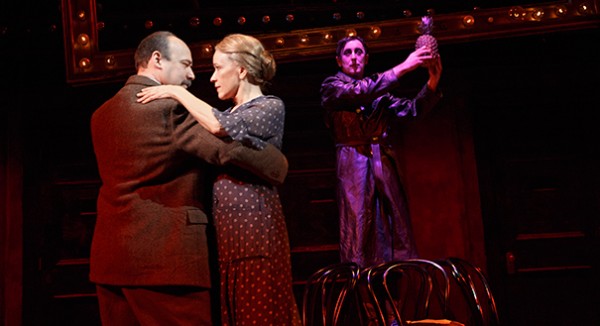
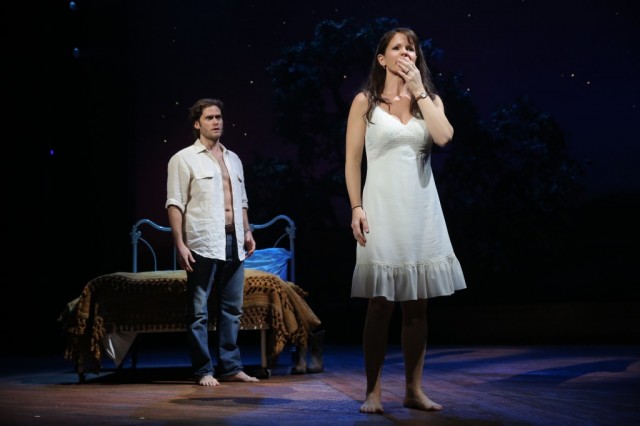
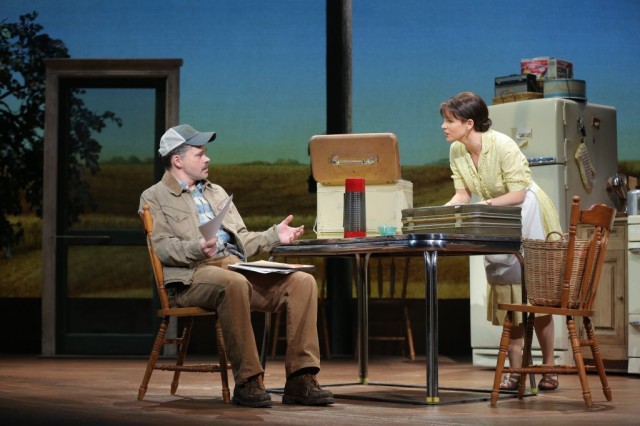
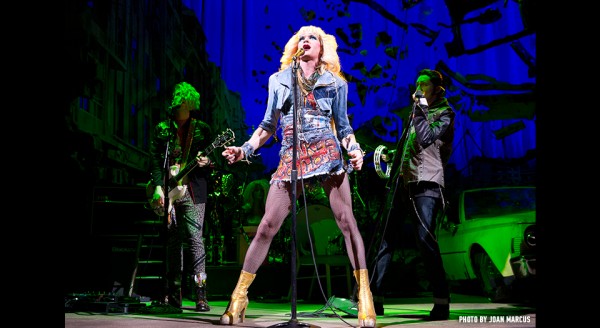
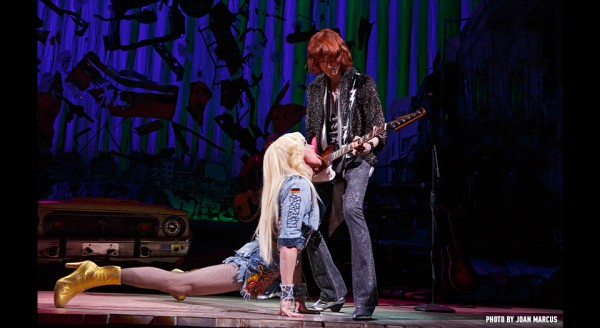
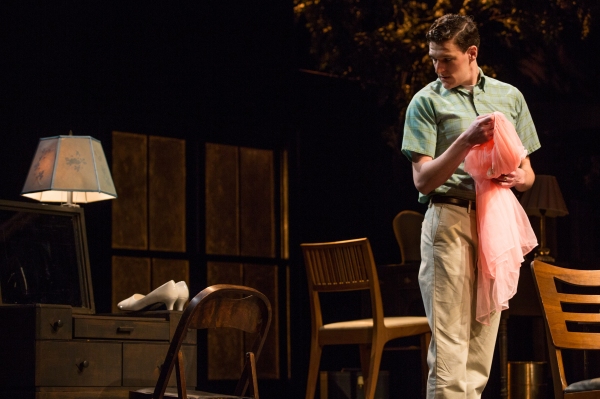
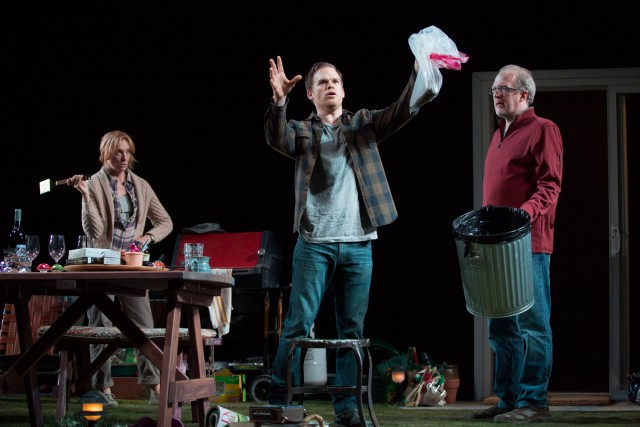
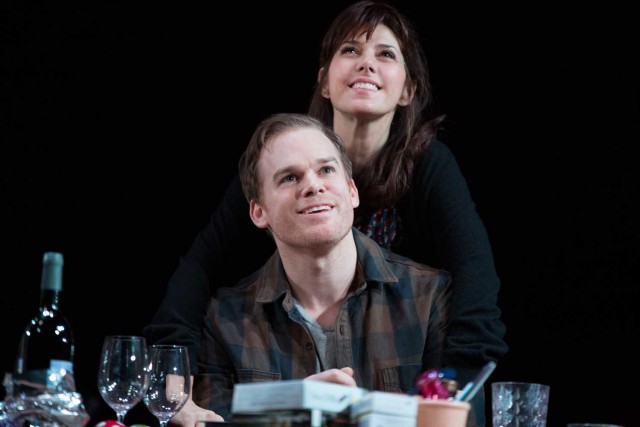
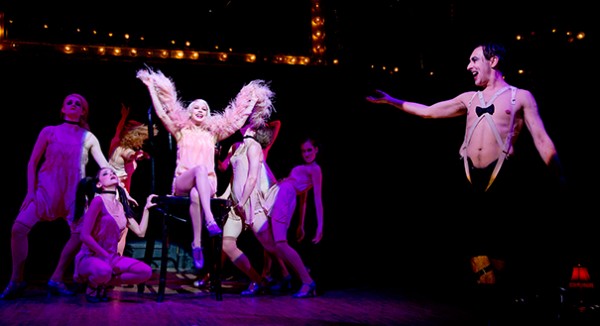
Tickets are now on sale for the winter edition of Broadway Week, which runs January 21 through February 6 and offers theater lovers a chance to see new and long-running shows for half-price, as well as have an opportunity to pay a $20-$30 fee to upgrade to better seats. More than two dozen shows are participating, but they’re selling out fast, with the most popular selections being Beautiful: The Carole King Musical and Kinky Boots. But you can still get either regular two-for-one tickets or upgrades to such newer productions as A Gentleman’s Guide to Love and Murder, Matilda the Musical, After Midnight, The Glass Menagerie, The Bridges of Madison County, Bronx Bombers, Machinal, Outside Mullingar, No Man’s Land, Twelfth Night, and Waiting for Godot as well as such older favorites as Chicago, Jersey Boys, The Lion King, The Phantom of the Opera, Once, Pippin, Wicked, and Mamma Mia! Nope, sorry, but The Book of Mormon is not on the list.

COIL 2014: TYSON VS. ALI

(photo by Paula Court)

Multimedia presentation imagines intriguing “What if” boxing scenario (photo by Paula Court)

REID FARRINGTON: TYSON VS. ALI
3LD Art + Technology Center
80 Greenwich St.
Extended through February 2, $20
www.ps122.org/tyson-vs-ali
www.reidfarrington.com

Two of the greatest heavyweight champions of all time never got a chance to go toe-to-toe in the ring, but Reid Farrington creates a dream match-up that never was in his multimedia presentation Tyson vs. Ali. Extended at 3LD Art & Technology Center through February 2 as part of PS122’s Coil festival, Tyson vs. Ali takes place in a full-size boxing ring, with the audience sitting cater-corner on two sides. The hour-long show is timed like an actual fight, with three-minute rounds separated by sixty seconds each. Actor and playwright Dennis A. Allen II, actor Roger Casey, athlete, actor, and dancer Femi Olagoke, and professional boxer Jonathan Swain continually switch up playing either Mike Tyson or Muhammad Ali as the two champs spout off about their life and career and mow down opponents. In the early rounds, the men get in the ring two at a time and blast away at each other, mimicking the action in archival footage of Tyson and Ali, which is projected onto screens moved around by actor, producer, and Photoville cofounder Dave Shelley, who serves as referee (as well as several of Iron Mike’s trainers); video is also projected onto the two back walls. The movement is choreographed beautifully by Laura K. Nicoll, who has worked with Farrington on such previous shows as The Passion Project and A Christmas Carol, making it feel like a real boxing match, especially as the sweat flies. Although the performers may not be throwing their hardest punches, they connect with some pretty tough shots in this intensely physical performance that is sure to take its toll on them.

(photo by John Hurley)

Ref tries to break up battle of heavyweight champs in TYSON VS. ALI (photo by John Hurley)

A longtime boxing fan, Farrington (Gin & “It”), with script writer Frank Boudreaux, does an excellent job bringing the sweet science to the stage, examining the hype surrounding the champs, delving into their backgrounds and religious beliefs, exploring why they fight, and displaying their unique styles in and out of the ring. Ali fought from 1960 to 1981, while Tyson battled from 1985 to 2005, so their careers did not overlap, although they did both fight Larry Holmes and Trevor Berbick, and they have a father-and-son connection as well, as Ali went up against Joe Frazier twice and Tyson knocked out his son, Marvis. (They also fought the Spinks brothers, with Ali splitting two fights with Leon and Tyson destroying younger sibling Michael.) So it’s a thrill seeing Ali duke it out with Tyson with the gloves on and off, pounding each other with both physical and vocal jabs, body shots, and uppercuts and waxing poetic in between rounds into microphones that hang from the ceiling and are set up just outside the ropes. The rounds, which follow the slowly building pace and energy of a heavyweight championship bout, have such titles as “The Body,” “Beauty and Brutality,” “Origin Myths,” “Endurance / Strategy,” and “Race/Lineage,” as Tyson and Ali pay tribute to those who came before. They also pay tribute to themselves and, in a 1990 clip from The Arsenio Hall Show, each other. “Once I’m in the ring, I’m a god. No one can beat me,” Olagoke says as Tyson. “I know I have him. He goes down. He’s out. I’m victorious. The greatest fighter that ever lived.” To which Allen as Ali responds, “The stage is set for me to be ranked the greatest of all time!” Who really is the greatest? You’re going to have to see the show to find out.

COIL: AN EVENING WITH WILLIAM SHATNER ASTERISK

New Ohio Theatre
154 Christopher St.
Through January 12, $20
888-596-1027
www.ps122.org
www.newohiotheatre.org

“Right now I have something to tell you,” philosopher and starship captain James T. Kirk, as portrayed by the great William Shatner, says near the beginning of An Evening with William Shatner Asterisk. “You could call it a transmission. A transmission from the future. Your future. Where you are going. I’m sure you’d like to know. Do you want to know where you’re going? Or maybe you don’t.” Kirk then goes on to give a nearly sixty-minute lecture that examines art and science, time and space, savagery and civilization. He does so via an ingenious technique developed by director Phil Soltanoff (SITSTANDWALKLIEDOWN) in collaboration with writer Joe Diebes (I/O, Botch) and systems designer Rob Ramirez (I/O): Soltanoff cataloged every word spoken by Kirk on the Star Trek television series, then strung them together to create sentences and new words, sometimes syllable by syllable. (For example, Kirk never said “art,” so Soltanoff clipped if from “start,” while “ontologically” and “epistemologically” were made up from syllables from multiple words.) The audiovisual sampling creates a kind of new language, part classic Shatner choppy overemoting, part early electronic voice generation computer speak. The clips, mainly close-ups of Shatner’s face, appear on a video monitor pushed around the stage silently and deliberately by Mari Akita, as if Kirk is moving about, reminiscent of Shatner’s recent one-man Broadway show, Shatner’s World: We Just Live in It . . . For most of the performance, Kirk’s talk is translated via subtitles on two flanking screens, but by the end the subtitles go away; it is easier to understand because the audience has begun to recognize and associate certain words and pictures. The lecture is rather simplistic and repetitive, even when it occasionally mocks itself, although there are numerous funny bits. The show also includes several minutes of the Star Trek episode A Private Little War as well as a brief monologue by Akita, but they end up being more puzzling than enlightening. “This might seem confusing at first,” Kirk says at one point. “At first you might think I’m full of it. You might think I’m full of shatner.” And really, when all is said and done, is being full of Shatner ever a bad thing?

UNDER THE RADAR: THE ROOM NOBODY KNOWS

(photo by Julie Lemberger)

Kuro Tanino digs deep into the unconscious mind in THE ROOM NOBODY KNOWS (photo by Julie Lemberger)

Japan Society
333 East 47th St. at First Ave.
Through January 12, $28
212-715-1258
www.japansociety.org
www.undertheradarfestival.com

Kenji (Ikuma Yamada) has quite a surprise in store for his older brother’s (Ichigo Iida) birthday in Kuro Tanino’s hyper-strange and fabulously entertaining The Room Nobody Knows. Running at Japan Society through January 12 as part of the Public Theater’s Under the Radar festival, the sixty-minute production is a surreal journey deep inside the subconscious and unconscious minds, a psychedelic Freudian trip through a phallic world built out of fear and desire, dreams and anxiety. A sculptor, painter, writer, and director from a family of psychiatrists who until recently was a practicing psychiatrist himself, Tanino (Frustrating Picture Book for Adults, Fortification of Smiles) sets his highly stylized, bizarre tale in a spectacular two-level horizontal apartment designed by Tanino and Michiko Inada. On the top, colorful Gaudí-style tiles line a room that a pair of worker elves with really bad teeth (Momoi Shimada and Taeko Seguchi) begin to furnish with penis-shaped chairs and flutes, while below, in a lablike white space too small for the characters to stand up in, Kenji, surrounded by scissors, experiment bottles, and four heads mounted on penises, studies for his university entrance examinations and awaits his brother’s arrival. When Kenji’s older sibling shows up, the two men give new meaning to the concept of brotherly love. Performed in Japanese (with English surtitles) by Tanino’s Niwa Gekidan Penino company — part of the name comes from his childhood nickname, Penino, which combines “Tanino” with “penis” — The Room Nobody Knows is a deeply personal and intimate piece, based on Tanino’s own life and memories. And what memories they are.

TWI-NY TALK: NORA WOOLLEY / KIM KATZBERG / RAQUEL CION OF “HIP” / “DARKLING”

Nora Woolley channels multiple characters in Williamsburg-set HIP

Nora Woolley channels multiple characters in Williamsburg-set one-act HIP (photo by Sarah Rogers)

HIP / DARKLING
IRT Theater
154 Christopher St. near Washington St.
Through January 12, $12-$15
www.irttheater.org

A pair of one-woman multicharacter shows that explore self-identity and searching for one’s place in the world, Nora Woolley’s thirty-minute Hip and Kim Katzberg’s hour-long Darkling were developed to run in tandem with each other, and they are doing so beautifully at the tiny IRT Theater on Christopher St., where they continue through January 12. In Hip, Woolley first appears as Wythe, an angry, leather-jacketed, mustached Williamsburg musician who claims that Julian Casablancas and the Strokes stole songs from him. She also plays Wythe’s temporarily bed-ridden grandmother, a trendy lifestyle photographer whose child Wythe baby-sits, and an Eastern European landlord attempting to rent an apartment to the cash-poor musician. Woolley’s knowing, spot-on portrayals of hipsters in their unique little worlds are searingly recognizable as well as extremely funny. As she changes costume for each character, videos by the Strokes and Wythe’s band are projected onto a back screen; the short films were made by Mariclare Lawson.

In Darkling, Katzberg appears as Trinity, a thirteen-year-old girl with terrible buck teeth who is just beginning to experiment with boys, especially an older hottie named Kevin. It’s 1987, and Trinity is deep into the awkward phase of adolescence, although she doesn’t realize it. A bold girl with seemingly no boundaries, she worships her older sister, Morgan (Katzberg), who has been sent off to a home for troubled girls but has escaped with her friend Chiara (Maia Cruz Palileo); their exploits are shown in a series of video postcards Morgan sends to Trinity. Katzberg also plays their mother in a very clever scene as well as a Goth marketing witch on-screen. Darkling is breathtaking in its ability to both attract and repel the audience’s identification with this most unusual yet quintessentially archetypal adolescent; Katzberg dives right into that nameless raw emotion that exists between laughing at and crying over something, at times evoking Todd Solondz’s cult classic, Welcome to the Dollhouse, in addition to the multimedia oeuvre of artist and filmmaker Ryan Trecartin.

Under Raquel Cion’s confident, smartly paced direction, Hip and Darkling work extremely well together. Cion — who is also an actor and cabaret performer performing as herself and sometimes as her alter ego, Cou-Cou Bijoux — knows how to get the best out of Woolley and Katzberg, who show off their mad skillz as they go from character to character and scene to scene, holding nothing back. The three women recently discussed collaboration, the Strokes, virginity, and more with twi-ny.

twi-ny: The three of you met back in 1998. Did you immediately hit it off?

Raquel Cion: Oh, we’re going back to the twentieth century, now are we? Okay, so, in ’98 my dear friend Raïna von Waldenburg’s play Das Kaspar Theatre was produced at the Experimental Theater Wing (ETW) at NYU. I was the associate director. Raïna was my classmate at ETW and then became both Kim and Nora’s acting teacher there. I can say from the moment Nora and Kim auditioned that they made a huge impression on me. The show dealt with very intense subjects: family dysfunction, sexual abuse, how one survives and heals. They were both so incredibly facile with their acting and willingness to jump into anything thrown at them. We later did a reading of a revised version of Raïna’s play for the hotINK Festival in 2006 that I directed.

Nora Woolley: Raquel and Kim have always been two of my favorite artists. I remember being blown away by Kim’s brave and charged work in acting school. Raquel directed us in a play and I could tell she was intensely gifted at getting actors to hone in on the meat. I asked Raquel to direct another show of mine (Selling Splitsville, cowritten by Christine Witmer) and she really understands me as a performer, so of course I hoped she’d direct Hip.

Kim Katzberg: I was pretty intimidated by Nora when I was in college in 1998. I had an inferiority complex back then, not to mention zero self-esteem. Plus, Nora was one of the stars in the drama department at NYU. Raquel scared me as well. She was very blunt as a director and she didn’t let you get away with any bullshit acting.

Thirteen-year-old Trinity (Kim Katzberg) gazes into her future in DARKLING

The very strange thirteen-year-old Trinity (Kim Katzberg) gazes into her future in DARKLING (photo by Sarah Rogers)

twi-ny: How did this collaboration come about?

NW: I saw Kim in Penetrating the Space and thought it was one of the most beautiful solo plays I had ever seen. Still do. She was doing and saying things I had never seen before. Referencing white tigers, taping her eyes for effect, talking about suicide with humor — it blew me away. I had never made a solo piece before, so I asked Kim if she wanted to get together and just play around in a rehearsal studio. We each brought some work we had been thinking about and then we began improvising for each other. This continued every couple of weeks for a couple of years. Our rehearsals were so important to me — they were a space to take huge risks and to challenge ourselves emotionally, physically, etc., a mini acting school. I secretly hoped, but for the first year or so I never considered, that we would present them together. Then it became clear to me that I wanted to create a shorter piece and perform both pieces in the same evening. That sounded fun and really interesting — a structure I had never done before. Plus, I was kind of terrified to devote a whole evening to myself. 🙂

RC: Though New York is a huge city, it’s also a very small town amongst the like-minded and we just were in each others’ circles, I suppose. Nora asked me to direct Selling Splitsville at the undergroundzero festival at PS122 in 2009. Kim came to that show and was beginning work on Penetrating the Space. We discussed working together then but schedules didn’t allow it. Kim and Nora had told me that they were developing work together. They kept me in the loop and here we are in 2014 collaborating and it is pure joy! We’re having a blast, all three of us.

KK: A bunch of years ago I saw Selling Splitsville. I thought it was brilliant and hilarious. I could relate to the kind of character work that Nora was doing and I loved Raquel’s bold direction and thought maybe both of them would be interested in my kind of characters too. Then Nora saw Penetrating the Space and liked it and asked me if I wanted to meet up twice a month in a studio space so that we could bounce work off of each other. Then Nora reintroduced me to Raquel and the rest is herstory.

twi-ny: What’s the single best piece of advice you’ve received from one another?

NW: I learn so much from Kim on a daily basis — for real. I don’t know any performers who own silence like Kim does. Her timing is profound in that she creates these incredibly moving, suspended moments that land in your heart. She takes her time in a way that is supremely rare and extremely hard to pull off. At some point early on in our rehearsal process, I remember watching her work and thinking that I should challenge myself to take lots more time in my own work — it was a revelation. Also, of course, Kim’s characters are beyond comparison. She has always encouraged me to let my characters say what they were afraid to say. I could go on. . . .

Raquel is an acting savant, so it is hard to define one piece of her advice as “best.” She has an impeccable eye and can navigate any moment onstage — from helping me find the deepest, most interesting route to emotional-connectedness to filling in the occasional flimsy playwriting with the perfect single word or two. I always feel like Raquel is an acting surgeon with X-ray vision. It blows my mind how often she hones in on that heartbreaking space between funny and sad, then makes it possible for me to repeat. After a show the other day, she called out the exact moment in the performance when I was not enjoying the work. Raquel reminds me not to take myself too seriously.

KK: The best advice I got from Nora was more that she didn’t offer advice but instead gave me unconditional support throughout the process. I felt free to be a bad actor sometimes and to bring in work that totally failed. We were able to create a safe space in which to take risks and explore. I also felt incredibly challenged by Nora being that the work she brought in was always at such a high level. I felt that I had to at least try to match that in order for her to want to keep working with me. I was also continually inspired by Nora, as a human being and as an artist, so that made the rehearsals thrilling and motivating.

Working with Raquel felt equally safe, challenging, and inspiring. Raquel pushed me to go farther than I thought was possible. The audition dance in Darkling where I put on the horse head and get down to Patti Smith’s “Horses” scared the shit out of me, and at first I didn’t want to do it. It was Raquel’s idea to put that dance in and I felt so embarrassed by it and didn’t think I could go there. That is one of the riskiest moments in the play for me as an actor, and it’s because of Raquel’s genius and bravery that moments like that burst through in the show.

twi-ny: Raquel, you met Nora and Kim some fifteen years ago. What were they like then, compared to how they are now?

RC: Hmmm, when we met, I believe, there was an implied hierarchical structure in place since I was coming into a school. However, I do feel that both Nora and Kim are profoundly themselves and have always been. They are both huge risk takers as performers. Now, though, we are fully equals, friends, all artists making our own work. I don’t know, it may be an age thing. When you’re older the commonalities become more present. Once one’s passed thirty, the years all kind of meld together anyhow. I am still blown away by their talent, as I was when we initially met, but being let into someone’s process for their own work is a very different dynamic than being cast in another’s play. Simply put, they are freaking amazing creators of theater with very distinct points of view. Not to mention that they are incredibly versatile and just damn good actors and writers. So whip-smart, funny as hell, and so poignant. That comes with time and trust for themselves and each other. I am so honored that they trust me with their work. I really am in awe of what they create.

Burlesque and cabaret performer Raquel Cion directs HIP and DARKLING at IRT

Actor and cabaret performer Raquel Cion directs intimate doubleheader at IRT (photo by Colman Domingo)

twi-ny: What’s the difference between the Raquel of 1998 and the Raquel of 2014?

KK: The Raquel of 1998 was a scary, cool, untouchable older sister–like figure. The Raquel of 2014 is a close friend and colleague that I feel very bonded to. She is an equal now, as opposed to an authority figure.

NW: I have always called Raquel “the smartest girl in the room.” She is one of those people who knows not even a little, but a lot, about most topics. It is kind of amazing, actually. I am not sure I have ever referenced something that she didn’t have some solid familiarity with. When she is directing, those smarts are, of course, funneled into the scene, so working on original material is especially fun with her because she will encourage me to take it in the most interesting (and scariest) direction. I remember feeling that way in 1998 but was more shy around her and probably a little intimidated because I wanted her to think I was “good.” Actually, let’s be real: I still want her to think I am “good,” but I can laugh really hard with her nowadays.

twi-ny: Hip partly revolves around Wythe’s obsession with the Strokes. Why the Strokes?

NW: It’s funny. I didn’t really listen to the Strokes when they first came out. I liked one or two songs I had heard, but I never actually owned any of their music or gave them much thought. When I first started conceiving of this piece, I thought a lot about what it means to be “cool,” like cool as hell — something I have never been. The image of a musician came to mind and when I started physicalizing him, the dark side of cool — self-consciousness — really came out, and with it a flood of pain and heartbreak. I happened to know that one of the Strokes was in my class at Tisch, and dramaturgically that meant that I could tap into the feeling that all struggling artists have in regard to the fact that so-and-so “made it” and why haven’t I. I did some research, which consisted mostly of watching lots of early Strokes videos ad nauseam and listening to their music day and night and found that they were the exact embodiment of cool that I was looking for in that early 2000s era — young and absolutely on fire, raised in NYC and Europe, children of supermodels, seemingly really nice guys, and distinctive looking.

twi-ny: How much of Darkling is autobiographical — or, at least, how much are you willing to admit to?

KK: My sister did go to a lock-up boarding school and ran away. She was punk and I did worship her. I did lose my virginity to a punk on acid and it did hurt like hell. Lots of other things in the piece are true too….

twi-ny: While you both go through numerous costume changes, Nora, you do it behind temporary walls, where the audience can’t see you, but Kim, you change in front of the walls, in the corners, where the audience can peek if they want to. Is there any specific reason for the difference, or is it merely a case of time and/or personal modesty?

NW: Modesty? Please. I was very adamant early on about each piece using the stage space itself very differently. Kim’s piece needs to breathe and I wanted mine to feel a bit claustrophobic, hence the walls and their configurations. I only change behind the walls because they are there and changing in front of them would quite literally take center stage.

RC: Modesty?!? You should see the dances Nora does in her white leotard for us. She’s said that one night she’ll take her bow in said leotard. We are working in a tiny black-box theater, putting up two very different shows. Each of the shows has a very distinct aesthetic. We worked very closely with our wonderful lighting and set designer, Josh Iacovelli, who has made magic with our small budget and space. We have four flats and a box with a two-sided “headboard” that serves as two beds and a car. Both shows use projections and video to further expand the narrative. In Hip, along with video there are projections that are very funny and very text heavy. It’s tough to read when you see someone off to the side in their underwear. So it simply serves the piece better to give that reprieve. Kim’s videos are filled with fast cuts and multiple characters. There is a very DIY quality to them that is very compelling, so seeing Kim change becomes another aspect to that visual component and doesn’t detract from it.

KK: I liked the idea of Darkling being kind of Brechtian in that the audience can also see me in a stripped-down aesthetic as just myself. I stole it from Karen Finley. Every time I saw her perform she changed right in plain view; it was part of the performance, and I always thought it was punk rock.

AMERICAN REALNESS 2014

Adrienne Truscott moves from her day job at the Kitchen to live performance at Abrons Arts Center in ...TOO FREEDOM...

Adrienne Truscott moves from her day job at the Kitchen to live performance at Abrons Arts Center in …TOO FREEDOM…

Abrons Arts Center and other venues
466 Grand St. at Pitt St.
January 9-19, $20
212-598-0400
www.americanrealness.com
www.abronsartscenter.org

January in New York City is a veritable feast of live performance festivals, including PS 122’s Coil, the Public’s Under the Radar, Here’s Prototype, and Winter Jazzfest. Over at Abrons Art Center, American Realness will be celebrating its fifth anniversary with seventeen new movement-based shows and encore presentations as well as several off-site events. Tina Satter’s House of Dance (also part of Coil) follows a tense tap-dance competition. Ishmael Houston-Jones and Emily Wexler team up for the world premiere of 13 Love Songs: dot dot dot, which involves deconstructing romantic lyrics by Bryan Adams, Mary J. Blige, Ja Rule, Stephen Merritt, Nina Simone, Madonna, and others. Miguel Gutierrez explores gay sex and lost love in the intimate myendlesslove. Eleanor Bauer combines text, music, and movement in Midday and Eternity (The Time Piece); she’ll also lead the “Dancing, not the Dancer” class and host the anything goes Bauer Hour on January 19. Choreographer Juliana F. May and dancers Benjamin Asriel, Talya Epstein, and Kayvon Pourazar explore the physical and emotional naked body in Commentary=not thing. The Kitchen house manager Adrienne Truscott delves into day jobs and artistic creativity in . . . Too Freedom . . . , which also features Neal Medlyn, Gillian Walsh, Laura Sheedy, and Mickey Mahar. Lucy Sexton (the Factress), Anne Iobst (the Naked Lady), Scott Heron, and DANCENOISE join forces for Prodigal Heroes: An Evening of Legendary New York. Moriah Evans and Sarah Beth Percival play with human-connection tropes in Out of and Into (8/8): Stuff. Medlyn’s King concludes his seven-part foray into iconic stars, this time taking on Michael Jackson. And Melinda Ring’s Forgetful Snow and Roseanne Spradlin’s Indelible Disappearance — A Thought not a Title will be presented together for free on January 12.

Moriah Evans and Sarah Beth Percival team up in OUT OF AND INTO (8/8): STUFF for American Realness festival

Moriah Evans and Sarah Beth Percival team up in OUT OF AND INTO (8/8): STUFF for American Realness festival

Also on the schedule are Adam Linder’s Cult to the Built on What, Michelle Boulé’s Wonder (Boulé will also lead a “Persona & Performance” class on January 17), Rebecca Patek’s ineter(a)nal f/ear, Jillian Peña’s Polly Pocket, and Dana Michel’s Yellow Towel. The festival heads to MoMA PS1 on January 10-12 for Mårten Spångberg’s four-and-a-half-hour La Substance, but in English and to MoMA’s main Midtown location on January 15-16 for Eszter Salamon’s Dance for Nothing, based on John Cage’s Lecture on Nothing. In addition, there will be art exhibits throughout Abrons (Sarah Maxfield’s “Nonlinear Lineage: Over/Heard,” Ian Douglas’s “Instant Realness,” Medlyn and Fawn Krieger’s “The POP-MEDLYN Hall of Fame,” and Ann Liv Young’s interactive “Sherry Art Fair”), and Coil, Under the Radar, Prototype, and American Realness will be copresenting free live concerts every night from January 9 to 19 in the Lounge at the Public Theater, including Invincible, Christeene, Ethan Lipton, Heather Christian & the Arbonauts, Sky-Pony, Timur and the Dime Museum, the Middle Church Jerriesse Johnson Gospel Choir, M.A.K.U. Sound System, DJ Acidophilus, and Nick Hallett, Space Palace, and Woahmone DJs.

UNDER THE RADAR 2014

The Public Theater and other venues
425 Lafayette St. by Astor Pl.
January 8-19, $20-$28 (UTR Packs $75 for five shows)
212-967-7555
www.undertheradarfestival.com

The tenth edition of the Public Theater’s Under the Radar Festival is another diverse collection of unique and unusual international theatrical productions, roundtable discussions, and free live music, from the strange to the familiar, the offbeat to the downright impossible to describe. Among the sixteen shows, most of which take place at the Public, are 600 Highwaymen’s The Record, a dance-theater work that brings together a roomful of strangers to comment on the relationship between performer and audience; John Hodgman’s one-man piece, I Stole Your Dad, in which the Daily Show “resident expert” shares intimate, personal stories about his family and technology while baring himself onstage; psychiatrist Kuro Tanino and his Niwa Gekidan Penino company’s The Room Nobody Knows (at Japan Society), about two brothers getting ready for the older one’s birthday party; Andrew Ondrejcak’s Feast, in which a king and his court (starring Reg E. Cathey) have a farewell dinner as Babylon collapses; and the American premiere of hip-hopper Kate Tempest and Battersea Arts Centre’s Brand New Ancients (at St. Ann’s Warehouse), a multidisciplinary show about everyday life in a changing world. Also on the roster is Sacred Stories, Toshi Reagon’s thirtieth annual birthday celebration with special guests; Roger Guenveur Smith’s one-man improvisation, Rodney King; a reimagining of Sekou Sundiata’s blessing the boats with Mike Ladd, Will Power, and Carl Hancock Rux; Cie. Philippe Saire’s Black Out (at La MaMa), Edgar Oliver’s Helen and Edgar, Lola Arias’s El Año en que nací / The year I was born (at La MaMa), SKaGeN’s BigMouth, tg STAN’s JDX — a public enemy, Sean Edward Lewis’s work-in-progress Frankenstein (at the Freeman Space), excerpts from ANIMALS’ The Baroness Is the Future, and Daniel Fish’s Eternal, the last three also part of the Incoming! Festival within a Festival.

Kate Tempest will rap about the state of the world in BRAND NEW ANCIENTS (photo by Christine Hardinge)

Kate Tempest will rap about the state of the world in BRAND NEW ANCIENTS (photo by Christine Hardinge)

In addition, there will be numerous postshow talkbacks, a pair of workshops with Sara De Roo and Jolente De Keersmaker of tg STAN on January 10-11, four noon Culturebot conversations January 11-12 and 18-19, and Coil, Under the Radar, Prototype, and American Realness have joined forces to present free live concerts every night from January 9 to 19 in the Lounge at the Public, including Invincible, Christeene, Ethan Lipton, Heather Christian & the Arbonauts, Sky-Pony, Timur and the Dime Museum, the Middle Church Jerriesse Johnson Gospel Choir, M.A.K.U. Sound System, DJ Acidophilus, and Nick Hallett, Space Palace, and Woahmone DJs.