this week in theater

TICKET ALERT: THE ICEMAN COMETH

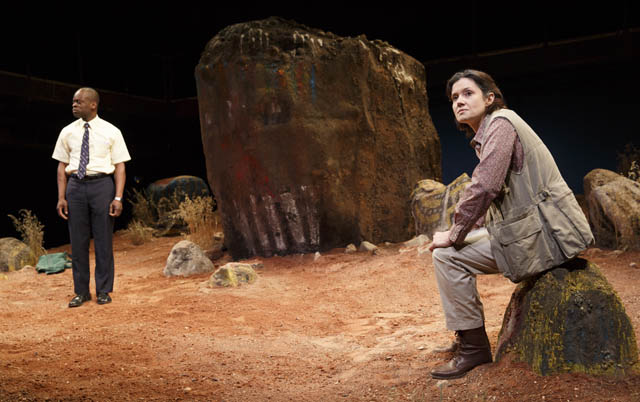
Goodman Theatre revival of Eugene Oneills THE ICEMAN COMETH comes to BAM, starring Brian Dennehy and Nathan Lane (photo by Liz Lauren)

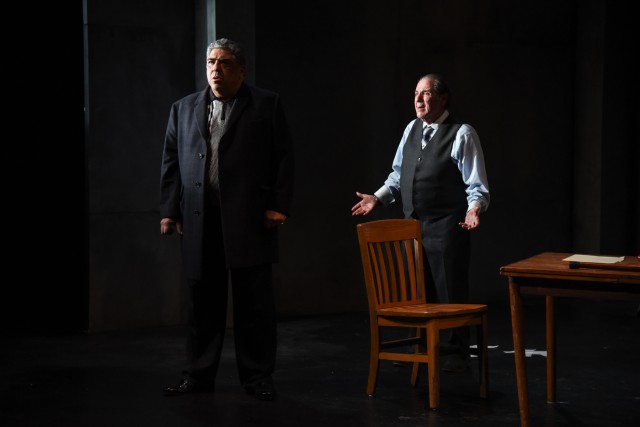
Goodman Theatre revival of Eugene O’Neill’s THE ICEMAN COMETH comes to BAM, starring Brian Dennehy and Nathan Lane (photo by Liz Lauren)

Who: Nathan Lane, Brian Dennehy, John Douglas Thompson, Kate Arrington, and others
What: Goodman Theatre revival of Eugene O’Neill’s The Iceman Cometh
Where: BAM Harvey Theater, 651 Fulton St. Ashland and Rockwell Pl., 718-636-4100
When: February 5 – March 15, Tuesday – Sunday, $35-$180
Why: The highly praised Chicago revival of The Iceman Cometh, directed by Robert Falls, comes to BAM for a limited engagement, starring Nathan Lane as Hickey, Kate Arrington as Cora, John Douglas Thompson as Joe Mott, John Hoogenakker as Willie Oban, and Brian Dennehy as Larry Slade; the production runs four hours and forty-five minutes with three intermissions (a $30 meal box is available, with either a grilled chicken wrap or a slow-roasted butternut squash sandwich with brie and kale, among other items, but must be purchased at least three days in advance). In addition, Dennehy and Lane will take part in a special talk about the show on Monday, March 2, at 7:30 ($25.)

ORSON WELLES 100: TOO MUCH JOHNSON — FILM & LIVE THEATER EVENT

Joseph Cotten stars in Orson Welles’s newly edited 1938 silent comedy, TOO MUCH JOHNSON, screening for the first time ever at Film Forum

Joseph Cotten stars in Orson Welles’s newly edited 1938 silent comedy, TOO MUCH JOHNSON, screening for the first time ever at Film Forum

Who: Orson Welles
What: Encore presentation of Too Much Johnson as part of “Orson Welles 100” series
Where: Film Forum, 209 West Houston St., 212-727-8110
When: Thursday, February 5, $25, 7:30
Why: In August 2013, the raw footage of Orson Welles’s first professional film, a deliriously entertaining 1938 silent comedy made in conjunction with the Mercury Theatre staging of William Gillette’s 1894 farce and starring Joseph Cotten, Virginia Nicolson, Arlene Francis, Mary Wickes, John Houseman, and Welles, was discovered in Italy, and it has now been edited by William Hohauser and is being screened for the first time ever at Film Forum; the February 2 show is sold out, so they’ve added a special encore presentation on February 5, with the film, as originally intended, serving as prologues to live theatrical readings by the Film Forum Players (Carl Wallnau, Yelena Shmulenson, Jacqueline Sydney, Bob Ader, Karen Sklaire, Ben Rauch, Jonathan Smith), directed by Allen Lewis Rickman and with live music by Steve Sterner (you can see the unedited footage here).

A DELICATE BALANCE

(photo by Brigitte Lacombe)

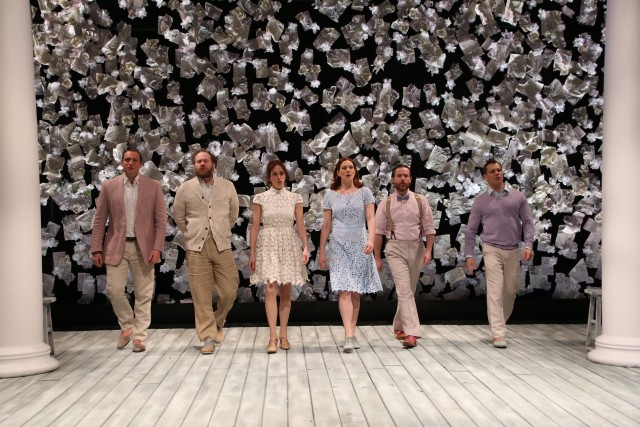
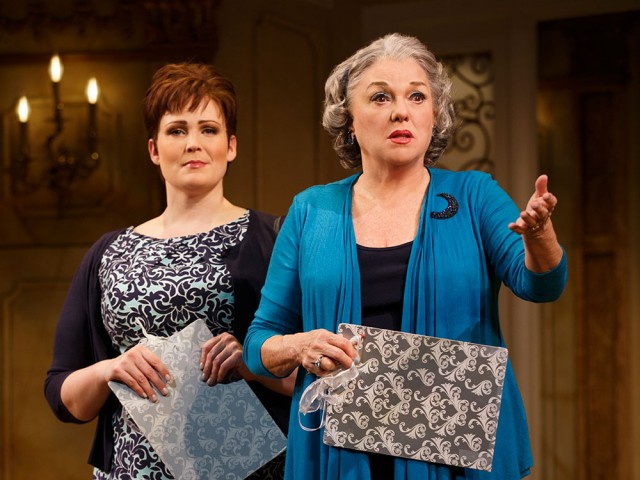
John Lithgow, Glenn Close, and Lindsay Duncan star in stellar Broadway revival of Edward Albee’s A DELICATE BALANCE (photo by Brigitte Lacombe)

Golden Theatre
252 West 45th St. between Broadway & Eighth Ave.
Tuesday – Sunday through February 22, $60 – $155
www.adelicatebalancebroadway.com

It seems that everyone wants to live with Agnes (Glenn Close) and Tobias (John Lithgow) in their elegant New England suburban home, but it’s hard to understand why in Edward Albee’s Pulitzer Prize–winning A Delicate Balance, running at the Golden Theatre through February 22. Tobias is a calm, retired businessman who likes to sit in his chair and read while sipping fancy cocktails. Agnes is a stern, cold woman who believes that “there is a balance to be maintained . . . and I must be the fulcrum.” They sleep in separate bedrooms and, while civil to each other, don’t seem to be particularly close anymore. Agnes’s wild and unpredictable sister, Claire (Lindsay Duncan), is already living with them. Tobias and Agnes’s thirty-six-year-old daughter, Julia (Martha Plimpton), has just left her fourth husband and is on her way to move back in with her parents yet again. But before Julia arrives, Tobias and Agnes’s best friends, Harry (Bob Balaban) and Edna (Clare Higgins), show up unannounced, claiming that they are too frightened to remain in their own house, quickly heading upstairs and locking themselves in Julia’s room. So when the bitter Julia returns home to find that her room is spoken for, the already none-too-happy woman gets even more upset. But since Tobias and Agnes both try to avoid confrontation, not much gets resolved in this growing household, even as secrets are being whispered and certain emotions are reaching the boiling point. It’s not quite as explosive as Who’s Afraid of Virginia Woolf, but it’s no barrel of laughs either. “Do we dislike happiness?” Agnes asks. Apparently, yes.

Daughter Julia (Martha Plimpton) drives the emotional angst in Pulitzer Prize-winning play (photo by Brigitte Lacombe)

Daughter Julia (Martha Plimpton) brings the emotional angst to a boil in Edward Albee’s Pulitzer Prize–winning play (photo by Brigitte Lacombe)

Director Pam MacKinnon, who helmed the recent smash Broadway revival of Woolf as well as Bruce Norris’s Pulitzer Prize–winning Clybourne Park, lets the anger simmer before it erupts as the play examines themes of loss and fear. Agnes, who is questioning her sanity, is afraid of facing certain truths about her husband and her life, Tobias is frightened that Agnes will find out about his long-ago indiscretion, Claire is scared of being sober and responsible, and Julia is still terrified of growing up. Harry and Edna never reveal precisely what it was that drove them from their home, but they appear to be afraid of not being afraid. Albee, who also won Pulitzers for Seascape and Three Tall Women, captures suburban angst and WASP culture with his incisive, biting dialogue, which was written with very specific performance notes; in addition, most of the characters were based on relatives of his. The play has quite a history; the original Broadway production in 1966, starring Hume Cronyn (Tobias), Jessica Tandy (Agnes), Rosemary Murphy (Claire), Henderson Forsythe (Harry), Carmen Matthews (Edna), and Marian Seldes (Julia), won the Pulitzer and was nominated for a Tony. Thirty years later, the first Broadway revival won the Tony with another stellar cast: George Grizzard (Tobias), Rosemary Harris (Agnes), Elaine Stritch (Claire), John Carter (Harry), Elizabeth Wilson (Edna), and Mary Beth Hurt (Julia). And Tony Richardson’s 1973 film featured Paul Scofield (Tobias), Katharine Hepburn (Agnes), Kate Reid (Claire), Joseph Cotten (Harry), Betsy Blair (Edna), and Lee Remick (Julia). Nearly fifty years after its Broadway debut, A Delicate Balance still feels fresh and alive, poignant and relevant. In 1996, Albee wrote in an introduction to a newly published edition of the work, “The play does not seem to have ‘dated’; rather, its points seem clearer now to more people than they were in its first lovely production. Now, in its lovely new production (I will not say ‘revival’; the thing was not dead — unseen, unheard perhaps, but lurking), it seems to be exactly the same experience. No time has passed; the characters have not aged or become strange. . . . I have become odder with time, I suppose, but A Delicate Balance, bless it, does not seem to have changed much — aged nicely, perhaps.” It has aged nicely indeed, in yet another lovely production.

TITUS ANDRONICUS

Titus (Brendan Averett) has some family business to clean up in New York Shakespeare Exchange production of TITUS ANDRONICUS (photo by Kalle Westerling)

Titus (Brendan Averett), Lavinia (Kate Lydic), and Marcus (Terence MacSweeny) have some family business to clean up in New York Shakespeare Exchange production of TITUS ANDRONICUS (photo by Kalle Westerling)

HERE Main Stage Theater
145 Sixth Ave.
Through February 8, $18
www.here.org
shakespeareexchange.org

During its brief five-year existence, the New York Shakespeare Exchange has already put its unique spin on such Bard works as Pericles, Othello, Romeo & Juliet, Hamlet, and the sonnets in such experimental productions as The One Man (Two Man (Not Quite)) Hamlet, The Life and Death of King John, and “The Sonnet Project,” in addition to the ShakesBEER pub crawl. The company now turns its attentions to one of Shakespeare’s most violent tragedies, Titus Andronicus, a bloody tale of power and lust. The show begins with a fantastical dance of stabbings as the actors kill one another on the circuslike set that features a glittering light-up bull’s-eye in the back. But soon the story gets under way, as Roman general Titus Andronicus (Brendan Averett) returns a hero from the wars and is acclaimed as emperor, an honor he instead bestows on Saturninus (Vince Gatton), son of the recently deceased emperor. Saturninus at first chooses Lavinia (Kate Lydic), Titus’s daughter, to be his queen, but she runs off with her true love, Bassianus (Adam Kezele), Saturninus’s younger brother. The new emperor then decides to marry Tamora, the captured queen of the Goths, whose sons, Demetrius (Nathaniel P. Claridad) and Chiron (Ethan Itzkow), and lover, Aaron (Warren Jackson), are cooking up some vicious plans of their own. Jealousy, revenge, deceit, and dishonor follow, involving rape, murder, behandings, and beheadings.

(photo by Kalle Westerling)

The Clown (Kerry Kastin) has a special prize to present in stripped-down production of TITUS ANDRONICUS (photo by Kalle Westerling)

Helmed by New York Shakespeare Exchange founding artistic director Ross Williams, Titus Andronicus can be a bit rocky, with actors stepping on one another’s lines and some minor gaffes with the set — perhaps they should have gotten a few performances under their belt before inviting critics — but Averett (The Killer, Julie Taymor’s A Midsummer Night’s Dream) is a strong, determined, yet vulnerable Titus, Terence MacSweeny is a stand-out as his stalwart brother Marcus, and Egolf is a fine foil as femme fatale Tamora. (A few of the other actors don’t fare so well.) Kerry Kastin is a kind of singular Greek chorus all by herself as the Clown, playing multiple roles and continually coming back from the dead. One of the play’s most intriguing conceits is the use of a feed chute through which corn tumbles whenever someone is killed — which happens a lot, the rat-a-tat sound taking the place of spurting blood. But don’t worry; there’s blood to be spilled as well. Part of the SubletSeries@HERE, Titus Andronicus could use a little more seasoning, but it’s nonetheless an involving, stripped-down version of a famously difficult, rarely presented play.

ZERO HOUR: TOKYO ROSE’S LAST TAPE

Miwa Yanagi’s ZERO HOUR: TOKYO ROSE’S LAST TAPE will have its North American premiere at Japan Society this week (photo by Ayumi Sakamoto)

Miwa Yanagi’s ZERO HOUR: TOKYO ROSE’S LAST TAPE will have its North American premiere at Japan Society this week (photo by Ayumi Sakamoto)

Japan Society
333 East 47th St. at First Ave.
January 29-31, $35, 7:30
212-715-1258
www.japansociety.org
www.yanagimiwa.net

We’ve been fans of Japanese multidisciplinary artist Miwa Yanagi since her summer 2007 exhibit at the Chelsea Art Museum, consisting of three photographic series that featured highly cinematic compositions and videos. So it comes as no surprise that the Kobe-born Yanagi is also now creating theatrical works and performance art projects. The North American premiere of Yanagi’s latest piece, Zero Hour: Tokyo Rose’s Last Tape, will take place January 29-31 at Japan Society as part of the institution’s “Stories from the War” series, being held in recognition of the seventieth anniversary of the end of World War II. Conceived, written, and directed by Yanagi, who also designed the sets and costumes, Zero Hour follows one of the many women known as Tokyo Rose, who broadcast propaganda for the Japanese Imperial Army. The production, which will be performed in English and Japanese (with English subtitles) by Yohei Matsukado, Hinako Arao, Megumi Matsumoto, Ami Kobayashi, Sogo Nishimura, Aki, and Sachi Masuda, with video projection by Tadashi Mitani, lighting design by Akane Ikebe, sound design by Yasutaka Kobayakawa, and choreography by Megumi Matsumoto. The January 29 show will be followed by a meet-the-artists reception. “Stories from the War” continues through August with Michiko Godai in Yokohama Rosa April 25-26, New and Traditional Noh: Holy Mother in Nagasaki and Kiyotsune May 14-16, Meet the Author lectures by Julie Otsuka and Hayden Herrera, and the Globus Film Series “The Most Beautiful: The War Films of Shirley Yamaguchi & Setsuko Hara.”

HONEYMOON IN VEGAS

(photo © 2014 Carol Rosegg)

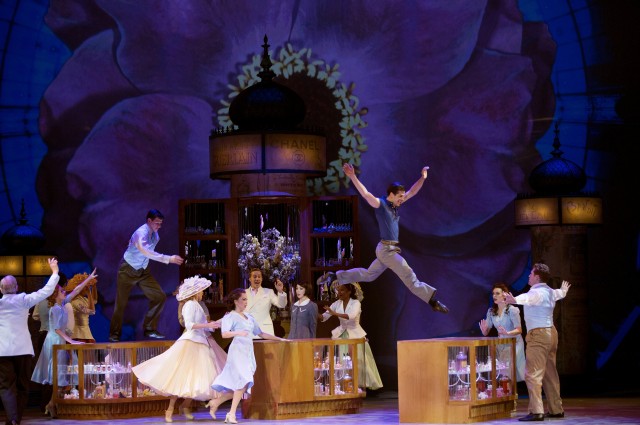
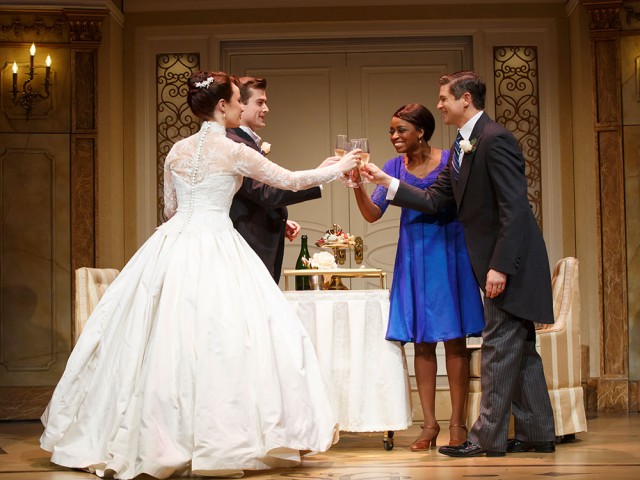
Jack Singer (Rob McClure) thinks he can’t lose in HONEYMOON IN VEGAS (photo © 2014 Carol Rosegg)

Nederlander Theatre
208 West 41st St. between Seventh & Eighth Aves.
Tuesday – Sunday through April 5, $69-$152
www.honeymoonbroadway.com

Perhaps what happens in Hollywood should stay in Hollywood. Musical adaptations of Hollywood dramas continue to flood Broadway, despite the lack of success experienced by such recent fare as The Bridges of Madison County, Big Fish, and Rocky. And now, before we can even think about Doctor Zhivago, An American in Paris, and Finding Neverland, we’ve been pummeled by Honeymoon in Vegas, which arrives on the East Coast smothered in glitz and glamor but ultimately coming up snake eyes. Writer-director Andrew Bergman, who has written and directed The Freshman and Striptease and written or cowritten The In-Laws and Fletch, has transformed his 1992 film into a Broadway musical that draws to an inside straight and falls desperately short. Rob McClure (Chaplin) stars as Jack Singer, a wimpy New Yorker in love with the beautiful Betsy Nolan (Brynn O’Malley); she is ready to get married, but he is terrified by a deathbed curse delivered by his mother, Bea (Nancy Opel), who has forbade him from ever taking a bride, claiming that no woman can love him like she did. Bea, ten years dead by this point, keeps popping up at crucial junctures, like in the middle of Tiffany’s when he’s about to buy a ring for Betsy. Betsy gives Jack an ultimatum, so he suddenly tells Betsy that they should fly immediately to Las Vegas and get married, no matter what his mother demanded. Off they go to Sin City, where Jack, a natural gambler, gets suckered into a poker game organized by the smooth-talking Tommy Korman (Tony Danza), a high-rolling mobster who thinks Betsy is a dead ringer for his late wife. When Jack can’t pay the fifty-eight grand he loses in the game, Tommy says he’ll call it even if he can borrow Betsy for the weekend. Furious at what Jack did, Betsy agrees to the deal, leaving Jack to either fight for her or give her up forever. Of course, it wouldn’t be much of a story if Jack just let her walk away, so he is soon off to Hawaii to win back his true love.

(photo © 2014 Carol Rosegg)

Tommy Korman (Tony Danza) woos another man’s girlfriend (Brynn O’Malley) in musical version of 1992 film (photo © 2014 Carol Rosegg)

Bergman’s 1992 film featured established stars Nicolas Cage as Jack, James Caan as Tommy, Sarah Jessica Parker as Betsy, and Anne Bancroft as Jack’s mother. O’Malley, as the blond Betsty, is the breakout star of the Broadway musical, showing a natural talent for romantic comedy while also displaying a fine voice in such numbers as “Anywhere But Here” and “I’ve Been Thinking.” McClure does an admirable job as Jack, his highlight coming early on in “I Love Betsy.” The eminently likable Danza blows hot and cold, delivering on the mournful ballad “Out of the Sun” and the clever “Come to an Agreement,” but he stands around too much when he’s not involved in the immediate action, and a tap-dancing number was wholly unnecessary. The less said about Opel (Urinetown, Cinderella) in the thankless role of the mother the better. And yes, the Flying Elvises are in the building, but prepare to cringe. Brian C. Hemesath’s costumes are flashy, particularly in the Vegas nightclub scenes, while Denis Jones’s choreography is relatively flat and lifeless. The music and lyrics, by popular and critical darling Jason Robert Brown (The Bridges of Madison County, Parade, The Last Five Years), are, for the most part, surprisingly standard and uninteresting. (“Jump jump / jumpity jump”?) Another surprise was that there was no standing ovation at the end, since audiences seem to jump jump jumpity jump to their feet after most splashy musicals these days, no matter the quality. But maybe they could tell too that this Honeymoon in Vegas is in need of a Haitian divorce.

THE IRISH REP READING SERIES: CHESTER BAILEY

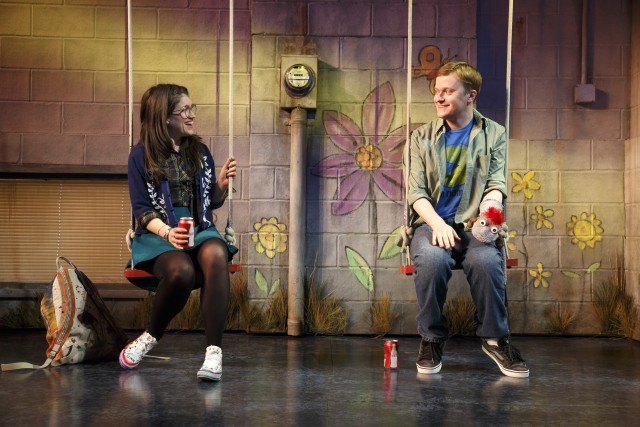
Reed Birney will take a break from his starring role in IM GONNA PRAY FOR YOU SO HARD to participate in Irish Rep Reading Series (photo by  Ahron R. Foster)

Reed Birney will take a break from his starring role in I’M GONNA PRAY FOR YOU SO HARD to participate in free Irish Rep Reading Series on January 30 with Noah Robbins (photo by Ahron R. Foster)

Who: The Irish Repertory Theatre
What: Staged reading of Joseph Dougherty’s Chester Bailey
Where: DR2 Theatre, 103 East 15th St. between Park Ave. South & Irving Pl., 212-727-2737
When: Friday, January 30, free (advance reservations strongly suggested), 3:00
Why: The Irish Rep Reading Series continues with Tony nominee Reed Birney (I’m Gonna Pray for You So Hard, Casa Valentina) and Noah Robbins (Punk Rock, Brighton Beach Memoirs) reading WWII-set drama by Emmy-nominated writer and producer Joseph Dougherty (Thirtysomething, Saving Grace, Digby), directed by Emmy and Tony nominee Ron Lagomarsino (Digby, Driving Miss Daisy, Pretty Little Liars); Irish Rep literary manager Kara Manning explains that the series “gives playwrights, both emerging and more established, the invaluable opportunity to develop their new work in a supportive, safe environment and will also introduce some Irish playwrights, especially those who might not yet have the New York recognition they merit, to an American audience.”