this week in theater

THEATER & CINEMA: VENUS IN FUR

VENUS IN FUR

The relationship between actor and director becomes an intense psychosexual battle in Roman Polanski’s VENUS IN FUR

CINÉSALON: VENUS IN FUR (LA VÉNUS À LA FOURRURE) (Roman Polanski, 2013)
French Institute Alliance Française, Florence Gould Hall
55 East 59th St. between Madison & Park Aves.
Tuesday, September 22, $14, 4:00 & 7:30 (later screening with David Ives Q&A)
212-355-6100
www.fiaf.org
www.ifcfilms.com

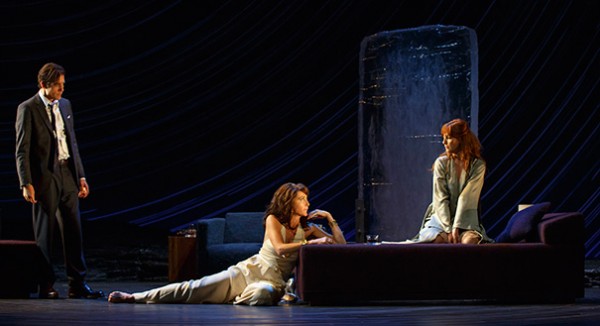
For his third stage adaptation in ten years, following 1994’s Death and the Maiden and 2011’s Carnage, Roman Polanski created a marvelous, multilayered examination of the intricate nature of storytelling, consumed with aspects of doubling. David Ives’s Tony-nominated play, Venus in Fur, is about a cynical theater director, Thomas Novachek, who is auditioning actresses for the lead in his next production, a theatrical version of Leopold von Sacher-Masoch’s psychosexual novella Venus in Furs (which led to the term “sado-masochism”), itself a man’s retelling of his enslavement by a woman. In the film, as he is packing up and about to head home, Thomas (Matthieu Amalric) is interrupted by Vanda (Emmanuelle Seigner), a tall blond who at first appears ditzy and unprepared, practically begging him to let her audition even though she isn’t on the casting sheet, then slowly taking charge as she reveals an intimate knowledge not only of his script but of stagecraft as well. An at-first flummoxed Thomas becomes more and more intrigued as Vanda performs the role of Wanda von Dunayev and he reads the part of Severin von Kushemski, their actor-director relationship intertwining with that of the characters’ dangerous and erotic attraction.

Roman Polanski directs wife Emmanuelle Seigner in thrilling stage adaptation of Tony-winning play

Roman Polanski directs wife Emmanuelle Seigner in thrilling stage adaptation of Tony-nominated play

Ives’s English-language play, which earned Nina Arianda a Tony for Best Actress, was set in an office, but Polanski, who cowrote the screenplay with Ives, has moved this French version to an old theater (the Théâtre Récamier in Paris, rebuilt by designer Jean Rabasse) where a musical production of John Ford’s Stagecoach has recently taken place, with some of the props still onstage, including a rather phallic (and prickly) cactus. Polanski has masterfully used the machinations of cinema to expand on the play while also remaining true to its single setting. One of the world’s finest actors, Amalric, who looks more than a little like a younger Polanski, is spectacular as the pretentious Thomas, his expression-filled eyes and herky-jerky motion defining the evolution of his character’s fascination with Vanda, while Seigner, who is Polanski’s wife, is a dynamo of breathless erotic power and energy, seamlessly weaving in and out of different aspects of Vanda. Venus in Fur was shot in chronological order with one camera by cinematographer Paweł Edelman, who photographed Polanski’s previous five feature films, making it feel like the viewer is onstage, experiencing the events in real time. Alexandre Desplat’s complex, gorgeous score is a character unto itself, beginning with the outdoor establishing shot of the theater. The film also contains elements that recall such previous Polanski works as The Tenant, Bitter Moon, Tess, and The Fearless Vampire Killers, placing it firmly within his impressive canon. Polanski was handed Ives’s script at Cannes in 2012, and this screen version was then shown at Cannes for the 2013 festival, a whirlwind production that is echoed in Seigner’s performance. Venus in Fur kicks off the CinéSalon series “Theater & Cinema” on September 22, with Ives on hand for a Q&A moderated by Nicholas Elliott following the 7:30 screening. The Tuesday festival continues through October 27 with such other stage-related dramas as Jacques Rivette’s Va Savoir, Olivier Assayas’s Clouds of Sils Maria, Arnaud Desplechin’s Esther Kahn, Abdellatif Kechiche’s Games of Love and Chance, and François Truffaut’s The Last Metro. But FIAF is only getting started with Amalric, who will be the subject of a six-week retrospective in November and December; he’ll be in Florence Gould Hall for a Q&A with costar Stéphanie Cléau following the 7:30 screening of The Blue Room on November 3, then will perform in writer-director Cléau’s stage production of Le Moral des Ménages with Anne-Laure Tondu at FIAF on November 4-5.

ISOLDE

(photo by Gerry Goodstein)

Massimo (Gary Wilmes), Patrick (Jim Fletcher), and Isolde (Tory Vazquez) discuss function and beauty, love and memory in splendidly constructed Richard Maxwell play (photo by Gerry Goodstein)

Theatre for a New Audience, Polonsky Shakespeare Center
262 Ashland Pl. between Lafayette Ave. & Fulton St.
Tuesday – Sunday through September 27, $55-$100
866-811-4111
www.tfana.org

Writer-director Richard Maxwell uses the construction of a Jungian dream house as a sharp metaphor for the building of a play in his latest experimental work, Isolde. Hyperrealism, surrealism, psychobabble, inside jokes, and the occasional cliché combine to form a grounded though existential narrative that has a lot to say about life, love, and the theater. As the play begins, Isolde (Tory Vazquez), a popular actress, is running lines with her husband, Patrick (Jim Fletcher), a successful contractor. She is rehearsing for a role in a play based on the legend of Tristan and Isolde, but she gets frustrated when she keeps losing her place. “Should we start from the top?” Patrick says? “No, no! I can get it,” she replies. “OK. . . . Um. Isolde. To get the line . . . Did you ever just try saying what you feel?” Patrick asks. He’s worried about her mental health, but she’s concerned about a lot more than that. “It’s getting worse!” she declares. Her career might be in jeopardy, but she is energized by Massimo (Gary Wilmes), the “artist architect” she has hired to design their latest vacation house. Massimo’s method involves getting to know his clients very well before deciding what to build, which in this case includes growing a little too close to Isolde. They discuss function and beauty, home and memory, while Patrick, a practical realist, becomes more and more concerned that Massimo, a poetic fantasist, isn’t really doing anything, so he brings in his friend Uncle Jerry (Brian Mendes), a gruff construction worker, for his opinion. Massimo and Uncle Jerry lock horns almost instantly, their differing styles at odds. As the three men watch football and bicker among themselves, Isolde gets right to the point. “Imagine knowing something is missing and not knowing what that is. That dresser, that doorway. That tree, that face. That thought. The panic of it not being there,” she tells Massimo with Shakespearean grace. “Wait till you see it gone and the terror of one day not even knowing that it’s gone — how do you mourn that which you cannot recall? You’re only left with the ghost of some longing, a deadened sensation of the void. How subtle is the gift of memory? How precious?”

(photo by Gerry Goodstein)

Massimo (Gary Wilmes) and Patrick (Jim Fletcher) both have their hands full in ISOLDE (photo by Gerry Goodstein)

Isolde takes place on Sacha Van Riel’s somewhat spare set, with exposed, movable plywood walls and a far-off image of the lake they are building near, as if the play’s setting is as unfinished as Massimo’s design. There are numerous bits of dialogue that refer to the making of theater as much as the construction of a house. “Where is the flow? Should you have two stories?” Massimo asks. “This is my cue?” Patrick says, adding, “Can we see a budget?” Maxwell also takes a wry stab at how he perhaps has been perceived as an avant-garde theater director, as Massimo explains: “People often get the wrong impression about me. They think I’m this laid back guy and I am but that doesn’t mean I don’t know what I’m doing. The truth is some of my ideas are not always embraced. And I’ll be the first to tell you I come across as arrogant, but I see my peers bumble through the orthodoxy of architecture and I want to be impressed with their work but I’m not impressed.” Fletcher (House of Dance, And That’s How the Rent Gets Paid), Vazquez (People without History, Wrestling Ladies), and Wilmes (Chinglish, Straight White Men) are joys to watch, so at ease with one another; veterans of Maxwell’s New York City Players company, they also portrayed characters immersed in a love triangle in Gatz, Elevator Repair Service’s eight-hour adaptation of Fitzgerald’s The Great Gatsby. To further the various meta surrounding the multilayered show, Maxwell is married to Vazquez and went to high school with Wilmes. As with nearly all of Maxwell’s productions (Neutral Hero, House, The Evening), the terrific actors — including Mendes, who offers a refreshing honesty and bluntness as Uncle Jerry — recite their often abstruse, disconnected dialogue plainly and directly, without overt emotion, almost robotic at times, although their performances are filled with passion. Artists of many disciplines are often compared to architects, and, of course, vice versa; in the eighty-five-minute Isolde, at Theatre for a New Audience’s Polonsky Shakespeare Center in Fort Greene through September 27, Maxwell lifts the concept to a whole new level, or should we say story. “Function is beauty; it takes us out of the past, answers the future,” Isolde says to Massimo early on. “Don’t erect a monument just to hold on to something.” In Maxwell’s world, function is indeed beauty, and he builds works that are much more than mere monuments.

AUTUMN MOON FESTIVAL AND MORE

autumn moon festival

A CELEBRATION OF ASIAN CULTURE
Snug Harbor Cultural Center & Botanical Garden
1000 Richmond Terrace, Staten Island
Saturday, September 19, $8-$10, 12 noon – 4:00 pm
718-425-3504
snug-harbor.org

On September 19, Staten Island’s beautiful Snug Harbor Cultural Center & Botanical Garden will be hosting its sixteenth annual Autumn Moon Festival, an afternoon of special programs celebrating the Asian harvest. Taking place in the Chinese Scholar’s Garden, the festival will include an arts and crafts family workshop, a performance of Rabbit Days and Dumplings by Elena Moon Park and Friends, traditional music and dance, Asian-inspired food, martial arts and Tai Chi demonstrations, calligraphy lessons, and more. In addition, on Saturday and Sunday, Snug Harbor is holding a party for the grand opening of the Staten Island Museum, with games, live music, crafts, science, food, and more; admission for that is free. And finally, on Saturday at 2:00 and 8:00 and Sunday at 2:00, the Harbor Lights Theater Company will be presenting Rent in the Music Hall ($35-$45); the production continues through October 4.

EMPIRE TRAVEL AGENCY

It all starts out innocent enough in EMPIRE TRAVEL AGENCY — or does it? (photo by Mitch Dean)

It all starts out innocent enough in EMPIRE TRAVEL AGENCY — or does it? (photo by Mitch Dean)

Financial District, Lower Manhattan
Through September 26, free
www.empiretravelagency.com

To say too much about Woodshed Collective’s marvelously inventive Empire Travel Agency would ruin the endless surprises that make this wholly immersive production the most engaging trip of the season. Yet it is difficult not to want to share at least some of the chills and thrills that occur over the course of two and a half intense and involving hours. Six nights a week at thirty-minute intervals, four lucky individuals in four separate groups go on a wild journey through the dark passageways of Lower Manhattan, caught up in the middle of a dangerous battle over a mysterious substance. It all begins with a call at a pay phone — yes, a few of them still work — and then you are led from narrow streets through public plazas, private galleries, cars, the subway, and more. Be prepared to do plenty of walking, and climbing up and down a lot of stairs, as you get serenaded by the Avant Guardsmen, play a few games of Ordo, and meet a series of shady characters, beginning with Dr. Hans Bidity, who welcomes you to the Hidden City Excursion and proudly announces, “The only alliance I feel is to the truth. And secret societies.” From there — well, again, we’ve already said too much. (But just who is Rhonda Cadwallader?)

(photo by Mitch Dean)

A downtown art space is one of the many unusual locations audience members will visit in immersive, participatory show (photo by Mitch Dean)

Empire Travel Agency is no mere gimmicky shtick. It works because, first and foremost, Jason Gray Platt’s (There Was No Time Before the War, Agnosiophobia) script is well laid out and compelling, tackling with intelligence and wry humor such topics as Manhattan real estate, the New York City art market, government conspiracies, and constant surveillance. “Yeah, the animals are cooped up in this little cage, but can you be free in a confined space?” Frank asks. “I say, sure, we’re all livin’ inside some kinda boundary — city, country, planet, whatever, and you can decorate your little dollhouse however you like. Can you be free when you are under observation? No you cannot.” Woodshed artistic director Teddy Bergman (Twelve Ophelias, The Tenant) keeps it all moving at an exciting pace while still allowing for a few breathers as the uniformly excellent large cast (featuring particularly fine performances by Rosalie Lowe, Roger Lirtsman, Nicole Golden, and Phillip Taratula) guides you through some very cool small spaces designed by Gabriel Hainer Evansohn. You really have to let go if you want to enjoy the proceedings to the fullest; you will be touched and jostled, you’ll have to be extremely trusting of strangers, and you’ll be expected to improvise with the actors so you can dig deeper into the intriguing, if wacky, story. Oh, and did we say it’s all free? You will be asked for a five-dollar donation for an early imbibement that also serves as a souvenir, although you won’t need a physical object to help you remember this delirious production that takes adventurous, immersive, participatory theater to a whole new level.

QUEER NEW YORK INTERNATIONAL ARTS FESTIVAL

Social Health Performance Club will explore the framing of work as queer at the fourth annual Queer New York International Arts Festival (photo by Laura Bleür )

Social Health Performance Club will explore the framing of work as queer at the fourth annual Queer New York International Arts Festival (photo by Laura Bleür)

Abrons Arts Center (unless otherwise noted)
466 Grand St. at Pitt St.
September 16-26, $15-$25
212-598-0400
www.queerny.org

Curated and produced by Queer Zagreb founder Zvonimir Dobrović, the fourth annual Queer New York International Arts Festival consists of more than a dozen performances in multiple venues over eleven days. The program, which expands the idea of just what queer art is and can be, begins on September 16 with the legendary Annie Sprinkle and Beth Stephens leading an EcoSex Walking Tour of Central Park ($25, 3:00), focusing on SexEcology and including a water toast, Ecosexercises, a search for the E-spot, and other sex and environmental issues. Sprinkle and Stephens will then head over to festival hub Abrons Arts Center to present the New York City premiere of their 2014 film, Goodbye Gauley Mountain: An Ecosexual Love Story ($25, 8:00). Bulgarian artist Ivo Dimchev returns to QNYIAF with two shows, the interactive Facebook Theater (9/17, suggested donation $25, 8:00), in which the audience creates the text, and the concert 15 songs from my shows (9/18, suggested donation $25, 8:00). On September 19, John Moletress pays tribute to Derek Jarman with the multimedia one-man piece Jarman (all this maddening beauty) ($15, 8:00), while on September 20, Max Steele explores power and gender in the solo cabaret show The Good Daughter ($20, 8:00). One of the festival highlights should be the world premiere of Bruno Isaković’s Disclosures (9/22-26, suggested donation $20), in which people are invited to expose themselves both through words and the removal of clothing. Also on the bill are the Social Health Performance Club, Joshua Monten’s Doggy Style, Mmakgosi Kgabi’s Shades of a Queen, Kaia Gilje and Lorene Bouboushian’s Know What Smokes, Mehdi-Georges Lahlou’s Stupidité contrôleé or jump jump baby jump jump at the Merton D. Simpson Gallery, and Michael Breslin’s Kiss me just once more at Dixon Place.

LOAD OUT!

Load OUT!

Arts and cultural organizations can donate and acquire costumes, props, furniture, and more at Load OUT!

11 East Third St.
Saturday, September 12, free for artists and students, $5 for general public, 11:00 am – 2:00 pm
www.fabnyc.org

The biannual Load OUT!, which has been “helping artists recycle together since 2011,” is hosting its fall 2015 event on September 12, sponsored by Fourth Arts Block, which is dedicated to helping develop the East Fourth St. Cultural District that includes numerous small theaters and nonprofits. On September 10 and 11, arts and cultural institutions are invited to donate, by appointment only, their gently used costumes, props, furniture, and office equipment so they can be reused by other arts organizations and individuals, instead of just going into Dumpsters as garbage. This creative repurposing saves companies money while also cutting down on waste. Admission is free for artists and art students and five bucks for the general public.

INGRID BERGMAN AT BAM / THE INGRID BERGMAN TRIBUTE

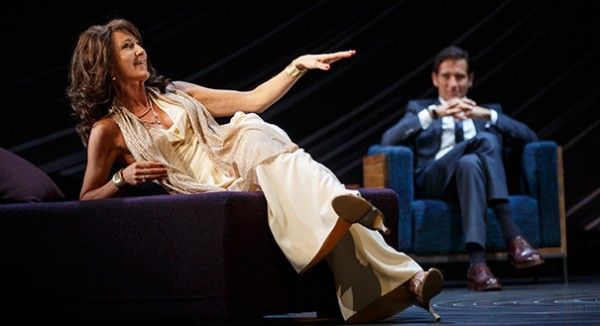
BAM celebration of Ingrid Bergman centennial kicks off with theatrical presentation featuring Isabelle Rossellini and Jeremy Irons

BAM celebration of Ingrid Bergman centennial kicks off with theatrical presentation featuring Isabelle Rossellini and Jeremy Irons

BAM Howard Gilman Opera House, BAMcinématek: BAM Rose Cinemas
30 Lafayette Ave. between Ashland Pl. & St. Felix St.
Tribute: Saturday, September 12, $35-$85, 8:00
Film festival: September 13-29
718-636-4100
www.bam.org/theater
www.bam.org/film

Following hot on the heels of MoMA’s Centennial Celebration of Ingrid Bergman, honoring the one hundredth anniversary of the actress’s birth on August 29, BAM joins the party with two special programs. The festivities begin on September 12 with “The Ingrid Bergman Tribute,” a multimedia theatrical staging in the Howard Gilman Opera House created and written by Ludovica Damiani and Guido Torlonia in collaboration with Isabella Rossellini, one of Bergman’s three daughters. The presentation, directed by Torlonia (Handmade Cinema), will feature Rossellini and Jeremy Irons performing material based on interviews, unpublished letters, and Rossellini’s own memories and will also include home videos and unreleased film clips. Damiani has previously staged tributes to such cinema giants as Luchino Visconti and Federico Fellini. The one-night-only event will be followed by the film series “Ingrid Bergman at BAM,” a fourteen-movie, seventeen-day festival that includes some of the works shown at MoMA in addition to other classics and lesser-known fare. One of the greatest films ever made, Casablanca, starts things off on September 13; the festival also includes such gems as Anastasia, Notorious, Europa ’51, Gaslight, Spellbound, and Murder on the Orient Express as well as Gustaf Molander’s A Woman’s Face, Per Lindberg’s June Night, Vincente Minnelli’s A Matter of Time with Liza Minnelli and Charles Boyer, and Lewis Milestone’s Arch of Triumph with Boyer and Charles Laughton. Bergman, who was nominated for seven Oscars, winning three, while also capturing a Tony for Joan of Lorraine and two Emmys, for Startime and A Woman Called Golda, died of breast cancer on her sixty-seventh birthday in 1982.