this week in theater

ME & MR. JONES: MY INTIMATE RELATIONSHIP WITH DAVID BOWIE

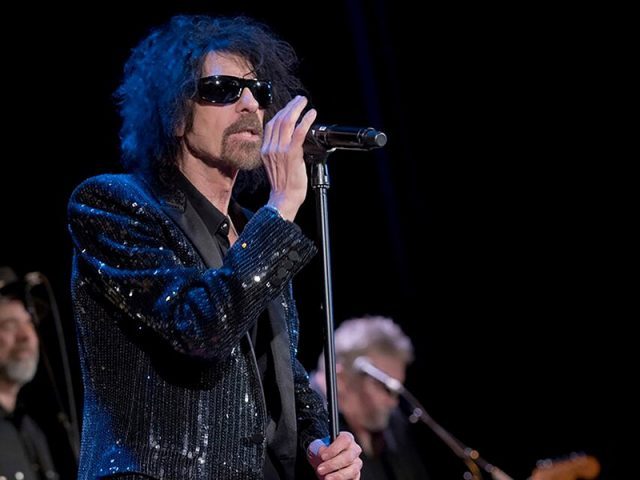
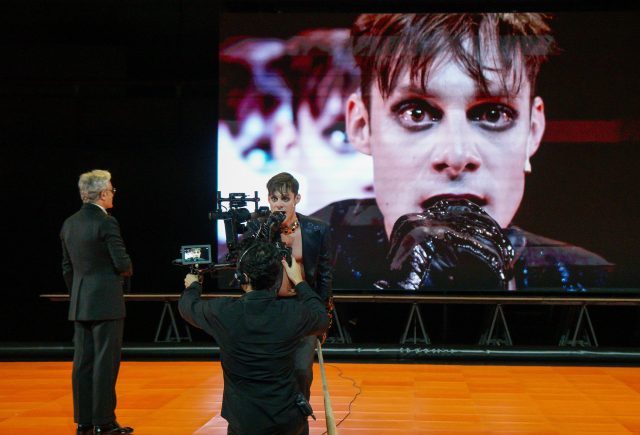
Raquel Cion brings her deeply personal David Bowie tribute to Pangea on May 11 & 12 (photo by Jody Christopherson)

Raquel Cion brings her deeply personal David Bowie tribute to Pangea on May 11 & 12 (photo by Jody Christopherson)

Pangea NYC
178 Second Ave. between Eleventh & Twelfth Sts.
Friday, May 11, and Saturday, May 12, $20 in advance, $25 at the door, $20 food/beverage minimum, 9:30
212-995-0900
www.meandmrjonesshow.com
www.pangeanyc.com

In a November 2015 twi-ny talk, Raquel Cion said, “Isn’t it great to be amidst a flurry of Bowie activity?” referring to Bowie’s sudden resurgence with an off-Broadway musical, new album, and various other new songs. “Oh, I have so much to say,” she added. Cion continues to have much to say as the show keeps evolving, especially following Bowie’s death in January 2016 at the age of sixty-nine; the recent opening of the immensely popular “David Bowie is” exhibition at the Brooklyn Museum, for which you need to get timed tickets in advance; and her own battle with cancer. In Me & Mr. Jones: My Intimate Relationship with David Bowie, librarian and chanteuse Cion reflects on her life through her worship of Bowie — who was born David Jones — singing Bowie songs and sharing deeply personal anecdotes that are both moving and funny. She is now bringing her glittery multimedia performance, which was nominated for a 2015 New York Cabaret Award for Best Musical Comedy or Alt Cabaret Show, to Pangea May 11-12, joined by Jeremy Bass on guitar, Daniel Shuman on bass, Michael Ryan Morales on drums, and Karl Saint Lucy on piano. If you’ve seen it before, Cion is promising significant ch-ch-ch-changes for this iteration. The show is directed by Cynthia Cahill, and Cion’s glam outfits are by David Quinn. Tickets are $20 in advance and $25 at the door, with a $20 food and beverage minimum.

BELOVED/DEPARTED

(photo by Russ Rowland)

Beloved/Departed invites guests to the wedding of Orpheus (Joshua James) and Eurydice (Kendra Slack) at the West Park Presbyterian Church (photo by Russ Rowland)

The Center at West Park
West Park Presbyterian Church
165 West 86th St. at Amsterdam Ave.
Wednesday – Saturday through May 18, $45-$75, 8:00
www.linkeddancetheatre.com

A significant part of the attraction of immersive theatrical productions is the opportunity to wander through cool places you might not otherwise see. Third Rail Projects took the audience behind the scenes of the Claire Tow Theater at Lincoln Center for Ghost Light and is still guiding people through a former parochial school in Greenpoint in Then She Fell, Creative Time led adventurers around the Brooklyn Navy Yard for Doomocracy, the musical KPOP sang and danced its way up and down A.R.T., and Woodshed Collective’s Empire Travel Agency even drove participants around Lower Manhattan. In Beloved/Departed, which opened last night and continues through May 18, Linked Dance Theatre invites guests to the ill-fated wedding of Orpheus and Eurydice at the Center at West Park, where they will be led all over the late-nineteenth-century West Park Presbyterian Church. The low-budget production offers ticket holders three options: being part of the wedding party ($75) or choosing to sit on the groom’s or bride’s side ($45). Each choice results in a slightly different experience, but everyone gets to see the key scenes. Musician and poet Orpheus (Joshua James) is given away by Apollo (Calvin Tsang), the sun god, while nymph Eurydice (Kendra Slack) is given away by Apollo’s twin sister, Artemis (Kellyn Thornburg), the goddess of the hunt; the siblings do not much care for each other, and their rift affects the newly married couple when Eurydice suddenly disappears and the characters and guests set out to find her. Among the other celebrants who become involved in the story are Hermes (Maya Gonzalez), Aphrodite (Rita McCann), Hades (director Jordan Chlapecka), Persephone (Chloe Markewich), Charon (Matt Engle), Hymen (Engle), and the Muse (Oliver Burke “Tillett”). Guest are led by various gods through the balcony, into the basement, and around small rooms until Eurydice is found and the plot takes a much darker turn.

(photo by Russ Rowland)

Twins Artemis (Kellyn Thornburg) and Apollo (Calvin Tsang) are at odds throughout Beloved/Departed (photo by Russ Rowland)

Conceived by Slack and Chlapecka, Beloved/Departed has a DIY feel to it, from curtains draped awkwardly to set off or block certain areas, relatively lame reception snacks, and curiously used paper airplanes; at one point a few guests were even asked to clear some tables. In addition, the search for clues is disappointing, as the audience members don’t really get to find information, despite being led to believe otherwise. (And don’t lean against the upstairs columns.) But there are also neat touches and a charming creativity in evidence, including the presents from other gods, mingling with characters at the party, and lots of Prosecco. A string quartet, consisting of Camille Enderlin and Leerone Hakami on violin, Anna Heflin on viola, and Lydia Paulos on cello, is excellent, following the action through the 10,000-square-foot space, accompanying the dancing, primarily duets that further reveal the characters’ motives and emotions, with such pairings as Orpheus with Eurydice, Apollo with Artemis, Orpheus with the Muse, and Aphrodite with Hermes. Some of the actors and dancers are more polished than others (James stands out as Orpheus, who has a down-home charm), and the play is probably about a half hour too long, as the pacing is far too inconsistent; immersive shows need to keep the audience involved every minute to keep up interest. Linked Dance Theatre — which has previously staged such works as Like Real People Do, If You Tame Me, Soul of the Sea, and Freaks Don’t Cry in such locations as Central Park, the Rockaway Brewing Company, the Coney Island Side Show, and on board the docked Lilac ship — also alter the mythology, so Greek classicists shouldn’t think too hard about every detail. Members of the wedding party get to drink Prosecco before everyone else and learn a little more background at the beginning (for example, groomsmen play cards with Orpheus and Apollo and share some secrets), but I’m not sure it’s worth the additional thirty dollars, unless you really can’t wait to start drinking. So it’s an up-and-down affair, in more ways than one.

PUBLIC THEATER MOBILE UNIT: HENRY V

Hamlet (Chukwudi Iwuji) is back home at the Public Theater after Mobile Unite road trip across the five boroughs (photo by Joan Marcus)

Henry V is back home at the Public Theater after Mobile Unit road trip across the five boroughs (photo by Joan Marcus)

The Shiva Theater at the Public Theater
425 Lafayette St.
Tuesday – Sunday through May 13, free with advance tickets
212-539-8500
publictheater.org

“We few, we happy few, we band of brothers. / For he to-day that sheds his blood with me / Shall be my brother,” King Henry V says in the fourth act of William Shakespeare’s history play. But it’s a sister who leads the charge in the Public Theater’s Mobile Unit adaptation. From March 29 to April 21, the Mobile Unit took to the road, fulfilling Joe Papp’s mandate to bring free Shakespeare to the people, presenting Henry V at such locations as the Lesbian, Gay, Bisexual & Transgender Community Center in Manhattan, the Roy Wilkins Recreation Center in Queens, the Brownsville Recreation Center in Brooklyn, the Williamsbridge Oval Recreation Center in the Bronx, and Faber Park Field House in Staten Island as well as women’s prisons and homeless shelters. It’s now back home at the Public’s Shiva Theater, where it continues — for free — through May 13. Two-time Obie winner Robert O’Hara’s production features nine actors in more than two dozen roles, but what makes this version unforgettable is a phenomenal performance by Zenzi Williams as the monarch who attacks France after being mocked with a gift of tennis balls from the Dauphin (Michael Bradley Cohen), among other reasons. As Henry, she dominates the small, intimate stage at the Shiva, where the audience sits in three rising rows on all four sides of a central square area, the only props a carpet that is half Union Jack, half fleur-de-lys, and a black throne on wheels. (The set design is by Tony winner Clint Ramos, who also did the costumes.) Williams (The Crucible, The Homecoming Queen) delivers a bold, impassioned interpretation with a spectacular grasp of Shakespeare’s language and meter, worthy of such Harry predecessors as Ralph Richardson, Laurence Olivier, Richard Burton, and Timothy Dalton. Interestingly, everyone auditioning for the play read the same lines from two characters, not knowing which role they would get; after the show, Williams admitted that she was shocked when O’Hara told her that she was going to be the king. But as thrilling as it is for the Shiva Theater audience to see a strong black woman with a nose ring playing Henry V, it is almost impossible to imagine how empowering it must have been to women in prison and homeless shelters and underprivileged children who have never experienced Shakespeare before.

Zenzi Williams gives a towering performance as Henry V in Mobile Unit production at the Public (photo by Joan Marcus)

Zenzi Williams gives a towering performance as Henry V in Mobile Unit production at the Public (photo by Joan Marcus)

The French monarchy is played almost exclusively for laughs by the talented cast, with very silly buffoonery by Joe Tapper as the goofy king, Cohen as the twee Dauphin, and Carolyn Kettig as Princess Katharine, who brings down the house when Alice (Kim Wong) teaches her the English names of various body parts. Mobile Unit veteran David Ryan Smith is superb as both the Duke of Exeter and the Governor of Harfleur, Cohen is riotous as a slow-moving French ambassador, Ariel Shafir is solid as the Earl of Westmoreland and a constable, and Patrice Johnson has a “Bye, Felicia” moment as the gruff Montjoy; Kettig, Leland Flower, and Wong portray the treasonous trio of the Earl of Cambridge, Lord Scroop, and Northumberland knight Thomas Grey. The play is stripped down to 105 minutes, with the lights on the whole time to provide intimacy between the cast and the audience; the characters regularly involve the crowd, pointing at specific people, asking rhetorical questions, and even giving one woman a key prop to hold. (Be sure to get to the theater early, when the actors stroll about, ready to talk to you about whatever you want.) Everyone is dressed in black; red or blue sashes, gloves, and/or hats identify them as either British or French. (The two tennis balls offered to Henry are also blue, innuendo intended.) In addition, there are several moments of stylized, almost avant-garde movement (including the Battle of Agincourt scene) set to original music by Elisheba Ittoop. Even with all the low comedy, dance, and audience involvement, O’Hara (Bootycandy, In the Continuum) hits on the key elements and themes of the play — power, war, patriotism, leadership — while turning another one, masculinity, inside out and upside down by casting the amazing Williams in the title role.

BIRDS: A FESTIVAL INSPIRED BY ARISTOPHANES

(photo by Kiki Papadopoulou)

American premiere of Nikos Karathanos’s The Birds is a highlight of Greek arts festival in New York (photo by Kiki Papadopoulou)

St. Anns Warehouse, Metrograph, New-York Historical Society, Brooklyn Museum
Through June 16
onassisusa.org

In a classic Odd Couple episode, Oscar and Felix finally get on the same wavelength while on the game show Password when Oscar gives the clue “Aristophanes” and Felix responds, “Ridiculous!” However, there’s nothing particularly ridiculous about “Birds: A Festival Inspired by Aristophanes,” more than a month of film screenings, art exhibitions, panel discussions, a theatrical adaptation of Aristophanes’s The Birds, and more, produced by the Onassis Cultural Center New York and taking place at numerous locations in Manhattan and Brooklyn. “Democracy was under threat when Aristophanes presented his comedy The Birds as part of the Dionysia festival in Athens in the fifth century BC,” explains festival curator Violaine Huisman in a program note, continuing, “Oligarchy was jeopardizing Athenian democracy, while war and constant legal battles raised havoc among citizens. The festival itself offered a chance for the people of Athens to congregate and revel in equal parts, to address state affairs and be entertained — all together.” Sound familiar? The timing is certainly impeccable. The centerpiece of this third annual Onassis Festival begins tonight with the American premiere of Nikos Karathanos’s inventive adaptation of The Birds, presented by St. Ann’s Warehouse and the Onassis Cultural Centre–Athens. The play runs May 2-13 and is accompanied by the free audio and visual lobby and garden exhibit “Nature of Justice: On the Birds.” There will also be events at the Brooklyn Museum, Metrograph on the Lower East Side, and the New-York Historical Society. Actually, looking at some of the photos from the production of The Birds, it does have a “ridiculous” quality to it, but in a good way. απολαμβάνω!

Wednesday, May 2
through
Sunday, May 13

The Birds, American premiere of Nikos Karathanos’s adaptation of the Aristophanes comedy, in Greek with English supertitles, St. Ann’s Warehouse, Brooklyn Bridge Park, $46-$66

Thursday, May 3
through
Sunday, May 13

“Nature of Justice: On the Birds,” multimedia exhibition, curated by Mari Spirito, with works by Machine Dazzle, Louise Lawler, Sofia Stevi, and Theo Triantafyllidis in conjunction with Nikos Karathanos’s adaptation of The Birds, St. Ann’s Warehouse garden and lobby, Brooklyn Bridge Park, free

Saturday, May 5
Pigeon Toes: Bird Walks, led by Paul Sweet of the American Museum of Natural History, Jane’s Carousel, Empire Fulton Ferry State Park, 1 Water St., free with advance registration, 8:00, 11:30, and 3:30 for adults, 10:00 and 2:00 for children six to twelve with adults

Alfred Hitchcock The Birds is part of Greek festival inspired by Aristophanes

Alfred Hitchcock’s The Birds is part of Greek festival inspired by Aristophanes

Monday, May 7
“Nature of Justice: A Visual Arts Response to The Birds,” panel discussion and audience Q&A with artist Andreas Angelidakis, independent curator Reem Fadda, and Brooklyn Museum director Anne Pasternak, moderated by Onassis Foundation director of culture Afroditi Panagiotakou, free with advance RSVP, 7:00

Thursday, May 10
“Voices on: Post-Show Artist Talk,” with director Nikos Karathanos and members of the cast, moderated by St. Ann’s Warehouse artistic director Susan Feldman, St. Ann’s Warehouse, free with show ticket, 9:30

Saturday, May 12
Meet the Fledglings, family-friendly programs by the Wild Bird Fund in conjunction with the exhibition “Feathers: Fashion and the Fight for Wildlife,” for ages five and up, New-York Historical Society, 170 Central Park West, museum admission plus $5 per child, 2:00 – 4:00

Friday, May 18
through
Sunday, May 20

“Birds,” screenings of films relating to birds, including Ghost Dog: The Way of the Samurai (Jim Jarmusch, 1999), The King and the Mockingbird (Paul Grimault, 1980), Brewster McCloud (Robert Altman, 1970), and The Birds (Alfred Hitchcock, 1963), Metrograph, 7 Ludlow St., $15

Sunday, May 19
Birdheart, by Julian Crouch and Saskia Lane, family-friendly show with puppets, free with museum admission but advance RSVP required, 4:00

Wednesday, May 23
“Talk: David Levine,” performative lecture in conjunction with the opening of the exhibition “David Levine: Some of the People, All of the Time,” Brooklyn Museum, free with advance RSVP, 7:00

Saturday, June 16
Cool Culture Family Festival, with arts & crafts, storytelling, scavenger hunts, concert by Shine & the Moonbeams, and more, Brooklyn Museum, free with museum admission, 12 noon – 4:00 pm

HARRY POTTER AND THE CURSED CHILD

(photo by Manuel Harlan)

Students cheer on their Hogwarts house in Harry Potter and the Cursed Child (photo by Manuel Harlan)

Lyric Theatre
214 West 43rd St. between Broadway & Eighth Ave.
Wednesday – Sunday through May 12, 2019, $80-$199 per part
www.harrypottertheplay.com/us
www.lyricbroadway.com

In the interest of full disclosure, I have an embarrassing public confession to make: I have not read a single page of any Harry Potter book, nor have I seen any of the films. But that didn’t prevent me from having a jolly good time at Harry Potter and the Cursed Child, the two-part, nearly $70 million extravaganza that is scheduled to run at the completely refurbished Lyric Theatre through May 2019. Yes, there were plenty of occasions when many audience members, including lots of kids in Potter garb, laughed, gasped, sighed, and applauded for reasons unbeknownst to me, but Tony winner Tiffany (Once, Black Watch) does an excellent job of making Potter neophytes feel more than welcome; in addition, a cheat sheet in the Showbill identifies the main characters and outlines the timeline of events from the books. The five-hour epic was written by Jack Thorne, based on an original story by Potter creator J. K. Rowling, writer Jack Thorne, and Tiffany. The show begs everyone who sees it to #KeepTheSecrets, and I fully intend to; any character- or plot-related information I divulge can be found on the official website, so I will do my best to give away nothing more.

(photo by Manuel Harlan)

Harry (Jamie Parker) has to help get the gang out of trouble in Broadway extravaganza (photo by Manuel Harlan)

If you don’t want to know anything about the plot or which characters are even part of the story, you should skip this paragraph, but it could serve as necessary context for those unfamiliar with the Potter universe. Harry Potter and the Cursed Child takes place nineteen years after the seventh and final book, 2007’s Harry Potter and the Deathly Hallows. Harry (Jamie Parker) is married to Ginny (Poppy Miller) and working at the Ministry of Magic. They have three children, the youngest being Albus (Sam Clemmett), who is not particularly thrilled to bear the legacy of his legendary father. That’s all the specifics you’re going to get out of me, except that Noma Dumezweni is Hermione Granger, Paul Thornley plays Ron Weasley, Alex Price is Draco Malfoy, and Anthony Boyle is terrific as his son, Scorpius. The cast also includes Jessie Fisher, Susan Heyward, Geraldine Hughes, Edward James Hyland, Byron Jennings, and David St. Louis in key roles, but to tell you who they’re portraying would give far too much away. Suffice to say that Thorne and Tiffany do a great job of giving everyone their due.

(photo by Matthew Murphy)

Much of the magic is orchestrated by Hagrid (Brian Abraham) in Harry Potter epic at the Lyric Theatre (photo by Matthew Murphy)

The play builds steadily, with each act more exciting than the previous one, although there is some repetition, in addition to more than a bit of questionable science regarding the time-space continuum. Christine Jones’s sets, which range from the Hogwarts facade to the Forbidden Forest, from a Quidditch match to platform 9¾, change with the help of a large ensemble cast in full costumes (by Katrina Lindsay), moving across the stage to music by Imogen Heap in choreographed near-dances by Steven Hoggett, involving suitcases, a rolling ladder, and other objects in fun ways; you’ll expect the players to break out into song at any moment, but fortunately they don’t. As the tension grows, so does the magic (designed by Jamie Harrison), which is primarily analog, avoiding too much high-tech, although there are moments of dazzling projections, shifting characters, and — well, I’m not going to tell you about that, or that, or that, either, but you’ll love it. Be sure to wander around the lobby during intermission, where there are lots of visual treats, from the wallpaper to the carpeting. One of my favorite moments actually occurred outside the Lyric, which features a glowing billboard and a child in a nest high above. I had arrived at the theater early so watched the crowd as it lined up and prepared to go through the scanners. I then saw one of the actors walking down the street and approach the stage door. The security guard asked a small group of costumed girls to wait as the actor went into the theater. The girls paid the actor no mind; little did they know that pure evil had just made room for pure evil. Such are the many secrets of this clever little play, which took London by storm and is now doing the same on Broadway.

CAROUSEL ON BROADWAY

Julie Jordan (Jessie Mueller) and Billy Bigelow (Joshua Henry) fall in love in Carousel revival at the Imperial (photo by Julieta Cervantes)

Julie Jordan (Jessie Mueller) and Billy Bigelow (Joshua Henry) fall in love in Carousel revival at the Imperial (photo by Julieta Cervantes)

Imperial Theatre
249 West 45th St. between Broadway & Eighth Ave.
Tuesday – Sunday through January 6, $59-$169
carouselbroadw ay.com

Pardon the pun, but the matinee I saw of the Broadway revival of Rodgers & Hammerstein’s beloved Carousel at the Imperial Theatre had more than its share of ups and downs, including something I had never before experienced in a theater. About ten minutes into the first act, which begins with a beautiful dialogue-free ballet with gorgeous new choreography by New York City Ballet soloist and resident choreographer Justin Peck, a loudspeaker announcement asked the actors to leave the stage due to a medical emergency in the audience. Theater personnel and doctors tended to an ill man at the far right side of the orchestra for about fifteen minutes before the show resumed, restarting shortly before the place where it had been stopped. Later, about ten minutes into the second act, during what is the emotional high point of the narrative, cries of help could be heard from a few rows behind where I was sitting. Again, the voice came over the loudspeakers, asking the cast to leave the stage because of another medical emergency. This time it appeared to be a small child choking; it took another ten minutes or so for things to calm down as the boy, who seemed to be okay, and his family were escorted into the lobby. Again, the show then restarted a moment before it had been stopped. It is a tribute to the cast and crew that both situations were handled gracefully and professionally, but it’s still an unusual occurrence that left an uncomfortable aura in the air — much as the plot of Carousel does, especially today.

Julie Jordan (Jessie Mueller) delights in hearing about best friend Carrie Pipperidge’s (Lindsay Mendez) trip to New York City in Carousel (photo by Julieta Cervantes)

Julie Jordan (Jessie Mueller) delights in hearing about best friend Carrie Pipperidge’s (Lindsay Mendez) trip to New York City in Carousel (photo by Julieta Cervantes)

The production itself, directed by three-time Tony winner Jack O’Brien (The Coast of Utopia, Hairspray), with splendid costumes by Oscar and Tony winner Ann Roth (The English Patient, The Nance), lovely sets (the carousel itself earns deserved applause) by four-time Tony winner Santo Loquasto (Café Crown, Hello, Dolly!), and wonderful orchestrations by EGOT winner Jonathan Tunick (Titanic, A Little Night Music), is first-rate all the way, even with some critical miscasting and the always problematic second act. The plot, adapted from the 1909 Hungarian play Liliom by Ferenc Molnár, is the classic tale of a good girl falling for a bad boy and trouble ensuing. Local mill worker Julie Jordan (Jessie Mueller) is attracted to carousel operator Billy Bigelow (Joshua Henry), agreeing to meet him one night in a park. She brings along her best friend and coworker, Carrie Pipperidge (Lindsay Mendez), who is not sure this is the best idea. Billy arrives, proving to be a bit of a cad, but even when a policeman (Antoine L. Smith) advises Julie of Billy’s questionable dealings with other women, she can’t stop herself, risking her job and more to be with him. Meanwhile, Carrie is in love with the much less dangerous wannabe herring king, Enoch Snow (Alexander Gemignani). Billy and Julie marry and have a child, but money is scarce, so when Jigger Craigin (NYCB principal dancer Amar Ramasar) approaches Billy with a plan to make a quick buck, Billy takes the chance, and tragedy follows.

Opera superstar Renée Fleming makes a point as Nettie Fowler in Broadway revival of Rodgers & Hammerstein classic (photo by Julieta Cervantes)

Opera superstar Renée Fleming makes a point as Nettie Fowler in Broadway revival of Rodgers & Hammerstein classic (photo by Julieta Cervantes)

The immensely talented Mendez (Significant Other, Dogfight) is charming as the dependable Carrie; Gemignani (Les Misérables, Sweeney Todd) is terrific as her beau, forward-thinking in business and woefully conservative otherwise; Tony winner Mueller (Beautiful: The Carole King Musical, Waitress), who played Carrie to Kelli O’Hara’s Julie in a 2013 Live from Lincoln Center concert version with the New York Philharmonic, again shows off her marvelous voice and wide-eyed innocence; retired opera star Renée Fleming excels as seaside spa owner Nettie Fowler; Margaret Colin (Defiance, The Columnist) is effective as carousel owner Mrs. Mullin; and Tony nominee John Douglas Thompson (Jitney, The Emperor Jones) is stoic as the mysterious Starkeeper, who keeps watch over all the goings-on until getting more involved in the fantastical second act. But two-time Tony nominee Henry (The Scottsboro Boys, Violet) is out of place, like he’s in a different show, his anger and rage so overwhelming that it becomes hard to imagine why Jessie first falls for him, then stays with him. O’Brien doesn’t shy away from the domestic abuse subplot, although it is difficult to watch in the #MeToo generation. “I knew why you hit me. You were quick-tempered and unhappy. That don’t excuse it. But I guess I always knew everything you were thinking,” Julie says, while Nettie sings, “What’s the use of wond’rin’ if he’s good or if he’s bad. He’s your feller, and you love him — that’s all there is to that.” The show debuted on Broadway in 1945 and has been revived in 1957 and 1994, in addition to being made into a film in 1956; it features such timeless songs as “June Is Bustin’ Out All Over” and “You’ll Never Walk Alone” as well as an emotional ballet in the second act that begins as a solo, performed here by NYCB principal dancer Brittany Pollack. But the scenes involving heaven feel dry and stale, detracting from the otherwise powerful, earthy story. This Carousel reaches for the brass ring but comes up too short.

THE SEAFARER

(photo by Carol Rosegg)

Five men celebrate Christmas Eve with plenty of drink in Irish Rep revival of The Seafarer (photo by Carol Rosegg)

Irish Repertory Theatre, Francis J. Greenburger Mainstage
132 West 22nd St. between Sixth & Seventh Aves.
Wednesday – Sunday through May 24, $50-$70
212-727-2737
www.irishrep.org

Lightning doesn’t quite strike twice for director Ciarán O’Reilly, star Matthew Broderick, and playwright Conor McPherson in the Irish Rep revival of The Seafarer. In June 2016, O’Reilly directed Broderick in a haunting revival of McPherson’s 2004 West End hit, Shining City, which was nominated for Best Play and Best Actor (Oliver Platt) when it moved to Broadway in 2006. Two years later, The Seafarer garnered four Tony nods, including Best Play and Best Director (McPherson). The current version of The Seafarer, continuing on the Francis J. Greenburger Mainstage through May 24, is a stormy black comedy that takes place on Christmas Eve morning in a squalid, creaky basement apartment in Baldoyle, a coastal settlement north of Dublin City, that looks like a hurricane just passed through. Sharky (an exceptional Andy Murray) is cleaning up after what must have been one helluva drunken gathering the night before. Bottles and cans are strewn all over Charlie Corcoran’s vividly detailed, dank and dingy, crowded set, a shambles stuffed full of piles of junk, old record albums, ratty furniture, stained wallpaper, a small iron stove, and a puny fake Christmas tree. Recently on the wagon, Sharky is an uptight, tense fisherman and chauffeur who is taking care of his perpetually drunk, recently blinded, overweight wastrel of an older brother, Richard (Colin McPhillamy). Their friend Ivan (Michael Mellamphy) spent the night, too drunk to go home to his wife and kids. Ivan has misplaced his car and his glasses, which serves as a metaphor for all the characters, who are each unable to look ahead and move forward in life. Sharky is none too keen when Nicky (Tim Ruddy) arrives, a somewhat slicker man who is now living with Sharky’s ex-girlfriend. Nicky also brings a special guest, the well-dressed, well-spoken Mr. Lockhart (Broderick), who is more than he appears to be. “I’ve seen you. On your travels. On your wandering ways,” Lockhart tells Sharky when the two of them are alone. “I’ve seen all those hopeless thoughts, buried there, in your stupid scrunched-up face.” The mysterious Lockhart has come to collect on a debt, one that Sharky might not even have realized he still owes but has been tearing at his soul for decades. In the second act, the five men sit down for a game of cards in which the stakes are a lot higher for Sharky than for his drinking buddies.

(photo by Carol Rosegg)

Mr. Lockhart (Matthew Broderick) and Sharky (Andy Murray) have a lot riding on a game of cards in Conor McPherson play (photo by Carol Rosegg)

The Seafarer was inspired by an Olde English poem about the hardships men suffer as well as the Irish folktale “The Hellfire Club,” involving a rather dramatic card game. All five characters, including Lockhart, are carrying personal demons, but it’s Sharky’s tale that drives the narrative, and Murray (War Horse, The Emperor Jones) is more than up to the task, playing Sharky — whom he also portrayed in a 2008 production in California — with the brooding intensity of a once-proud man whose chances are quickly running out. His penetrating eyes reveal a deeply troubled individual who might at last be coming to terms with the things he has done and the choices he has made. Two-time Tony winner Broderick (Brighton Beach Memoirs, How to Succeed in Business . . .), fiddling with an Irish brogue, gets to break out of his stiffness near the end in a part previously played by Ron Cook, Ciarán Hinds, and Tom Irwin. Ruddy (The Weir, Swansong) is fine as the thinly drawn Nicky, but Mellamphy (Guy Walks into a Bar, When I Was God) is underwhelming as Ivan, and McPhillamy (The Woman in Black, Shakespeare in Love) severely overplays Richard; true, it’s a big, meaty part, one that earned Jim Norton an Olivier and a Tony, but McPhillamy never gets inside the character, playing his many physical and psychological maladies too broadly. Irish Rep producing director O’Reilly (The Emperor Jones, The Weir) does a good job with the surprise revelations that come at the end of each act, but the play is saddled with too much repetition, a few unresolved issues, and too many distractions, particularly the winos creating a ruckus outside. As with The Weir and Shining City, the supernatural is dealt with in clever ways, this time more overtly. And speaking of the supernatural, religion is key as well. There are numerous depictions of Jesus hanging on the walls, but the only thing the failed men worship is booze. When Richard proclaims, “I have so little left to live for!,” it could apply, in different ways, to every one of them, who, in the tradition of many alcoholic Irishmen before them, live only for the next drink.