this week in theater

WINTER PERFORMANCE FESTIVALS: UNDER THE RADAR

(photo by Alejandro Fajardo)

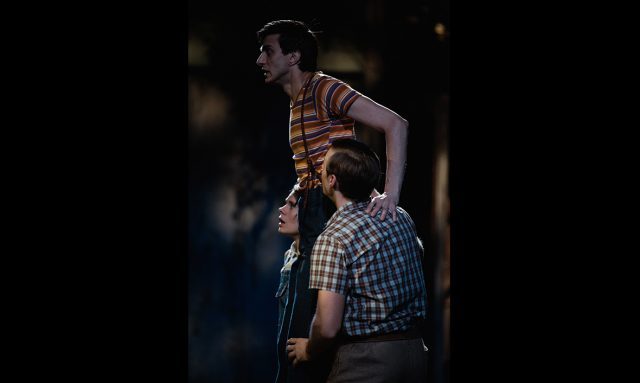
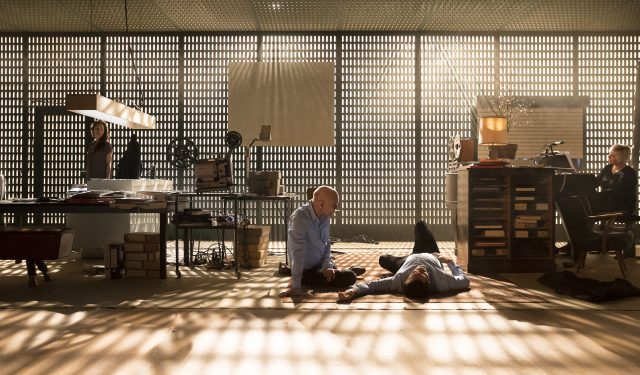
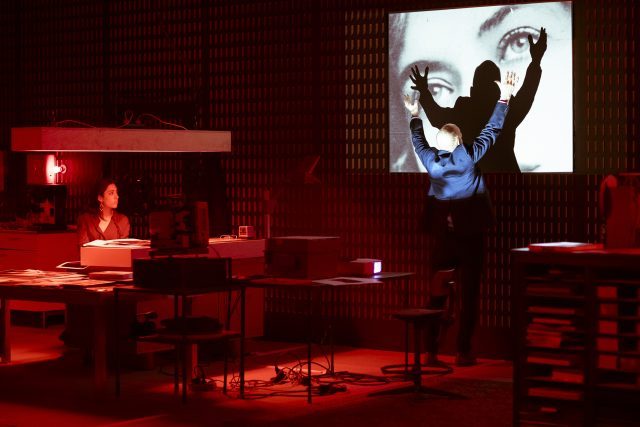
Eva von Schweinitz’s The Space between the Letters is part of Incoming! section of Public Theater’s Under the Radar Festival (photo by Alejandro Fajardo)

UNDER THE RADAR
Public Theater and other venues
425 Lafayette St. by Astor Pl.
January 3-13
publictheater.org

The Public Theater’s annual Under the Radar Festival invites adventurous theatergoers to experience cutting-edge, experimental theater and music from around the world. The 2019 iteration features works from twenty-one artists from nine countries, with most tickets costing a mere thirty bucks. Below are some of the highlights.

Hear Word! Naija Woman Talk True, by Ifeoma Fafunwa, January 3, 5, 6, 7, Public Theater, Martinson Theater, $30

Frankenstein, by Manual Cinema, concept by Drew Dir, January 3, 5, 6, 7, 10, 11, 12, Public Theater, LuEsther Theater, $30

Minor Character, New Saloon adaptation of Anton Chekhov’s Uncle Vanya, January 4-13, Public Theater, Martinson Theater, $30

BITCH! DYKE! FAGHAG! WHORE! The Penny Arcade Sex and Censorship Show, by Penny Arcade, January 3, 6, 10, 12, 13, Joe’s Pub, $35

Incoming! Macbeth in Stride, by Whitney White, Public Theater, Shiva Theater, $25

THE CHER SHOW

(photo by Joan Marcus)

Teal Wicks, Stephanie J. Block, and Micaela Diamond all portray Cher at different points in her career in Broadway jukebox musical (photo by Joan Marcus)

Neil Simon Theater
250 West 52nd St. between Broadway & Eighth Ave.
Wednesday – Sunday through June 9, $59-$229
thechershowbroadway.com

Stephanie J. Block will blow your mind as Cher in the new Broadway musical The Cher Show, capturing the very essence of the diva in looks, attitude, and voice. Bob Mackie’s over-the-top costumes are appropriately dazzling, eliciting oohs and ahs from the audience. And Ashley Blair Fitzgerald brings down the house in a scintillating modern dance performance of “Dark Lady.” Unfortunately, everything else about this biographical tale is misguided and disappointing, beginning with its central device: The glittering icon is played by three actresses who talk to one another about their career(s): Micaela Diamond as Babe, the young Cher; Teal Wicks as Lady, the middle-years Cher; and Block as Star, the more current Cher. It’s a conceit that never works, and not only because it’s hard to believe they are all the same person but because it’s at the heart of a production that can’t stop interrupting itself. Born Cherilynn Sarkisian in California in 1946, Cher was determined to be a success from an early age. “I know what I’m going to do! I’m going to sing! I’m going to sing and act and be famous like in the movies!!” six-year-old Babe declares. After Cher complains that the other kids laugh at her at school for being different, her mother, Georgia Holt (Tony nominee Emily Skinner), tells her, “Now you listen to me, young lady. You may not be the prettiest, or the smartest, or the most talented. But you’re special, and one day the whole world will know it! You’re going to grow up to be somebody.” With that deep insight out of the way, the tale proceeds.

(photo by Joan Marcus)

Sonny Bono (Jarrod Spector) and Cher (Micaela Diamond) get groovy in The Cher Show (photo by Joan Marcus)

Jukebox musicals are supposed to celebrate the songs, but book writer Rick Elice (Jersey Boys, The Addams Family) and director Jason Moore (Shrek, Avenue Q) continually stop the action in the middle of tunes to add bits of narrative and jokes. Moore and Elice — the latter was handpicked by Cher, who was intimately involved with the show’s development — include only snippets of some of the biggest songs; very few numbers are performed in their entirety, which, combined with the other two Chers often intervening with the one onstage at any given moment, results in an extremely choppy and annoying pace. They also leave out large chunks of important detail as Cher and first husband Sonny Bono (Tony nominee Jarrod Spector) start with nothing, take over London, host a big-time television variety program in Hollywood, have a kid, break up, reconnect, etc. We also get to see her longtime costume designer, Mackie (Tony nominee Michael Berresse); her second husband, musician Gregg Allman (Matthew Hydzik); her younger boyfriend Rob Camilletti (Michael Campayno); music impresario Phil Spector (Michael Fatica); and others who played parts in her life, but it’s all very superficial.

(photo by Joan Marcus)

Dancer Ashley Blair Fitzgerald steals the show in “Dark Lady” scene (photo by Joan Marcus)

When Star auditions for Robert Altman (Berresse) for her professional stage debut, not only does the audience never hear the name of the show (Come Back to the Five and Dime, Jimmy Dean, Jimmy Dean) but they also never learn what ultimately happened, that she was in both the off-Broadway play and the film. Meanwhile, Christine Jones’s and Brett J. Banakis’s sets, Darrel Maloney’s projections, and Christopher Gattelli’s choreography are surprisingly bland and unimaginative, save for the “Dark Lady” scene, which also includes a strange face-off between Bono and Allman.

Oddly, the songs are not listed in the Playbill, which is unusual for a musical, but the hits all make an appearance, though usually not in full: “Half-Breed,” “Gypsies, Tramps & Thieves,” “I Got You Babe,” “Bang Bang,” “Strong Enough,” and “If I Could Turn Back Time,” which is the theme of the show. The musical also focuses on Cher’s impressive determination to pick herself up when things are down, which has occurred throughout her life and career, although the critical moments aren’t depicted onstage. Block (Falsettos, The Mystery of Edwin Drood) is an absolute knockout, nearly enough to make The Cher Show worth your time and money. If you really need to see the genuine diva herself, perhaps you’re better off checking out her 2019 Here We Go Again tour, which comes to the Barclays Center on May 2 and the Pru on May 3. Because on Broadway, the beat just doesn’t go on.

SLAVE PLAY

(photo by Joan Marcus)

Kaneisha (Teyonah Parris) and Jim (Paul Alexander Nolan) have an unusual relationship in Slave Play (photo by Joan Marcus)

New York Theatre Workshop
79 East Fourth St. between Second & Third Aves.
Tuesday – Sunday through January 13, $79
www.nytw.org

Jeremy O. Harris’s intense Slave Play delves deep into a trio of dangerous sexual interactions defined by race, gender, and power in the Antebellum South as well as today. The story takes place in Virginia on the MacGregor Plantation, which is represented by a large image of the main house behind the audience that is reflected on the mirrored wall across the back of the stage on Clint Ramos’s narrow set, onto which various pieces of furniture are brought on through a doorway at the center and around the sides. The play opens with black slave Kaneisha (Teyonah Parris) sweeping the floor, twerking to Rihanna’s “Work,” when she is caught by her white overseer, Jim (Paul Alexander Nolan). “I ain’t never seen no / ‘negress’ / move like that there before!” Jim says. “Where’d you learn dat? / Thought they beat all the Africa outcha’ll fore we broughtcha up here to MacGregor’s.” Kaneisha responds, “Ya’ll did / try to tear it way from us. / The truth of our bodies? / The way they moved / Our bodies. / Told us it / was / devilish / Our bodies / told us that it won’t / fit / for civ’lized eyes.” Kaneisha expects to be whipped for her actions, but Jim, who tells Kaneisha to address him as “Mista Jim,” not “Massa,” becomes turned on by her instead.

(photo by Joan Marcus)

Alana MacGregor (Annie McNamara) wants more than just music from Phillip (Sullivan Jones) in Jeremy O. Harris play (photo by Joan Marcus)

After they depart the stage, a four-poster bed is wheeled on with Alana MacGregor (Annie McNamara), the plantation owner’s wife, who calls for her “mulatto” house servant, Phillip (Sullivan Jones), to play his violin for her. While he wants to play Beethoven, she condescendingly insists on hearing “some of your music. A negro spiritual!” Soon she is appealing for more than just music. The third couple arrives next, Dustin (James Cusati-Moyer), a white indentured servant, and Gary (Ato Blankson-Wood), his black boss. “I’s in charge. / But / that’s what makes you a funny white man. / Ha!” Gary tells him. “Ain’t used to seein’ them allow / no n—a to run they show. / You’s a funny white man.” They end up fighting to Unknown Mortal Orchestra’s “Multi-Love,” until clothes start coming off. With the later addition of facilitators Patricia (Irene Sofia Lucio) and Teá (Chalia La Tour), the second act offers a surprising twist that puts the actions of the first act into a compelling contemporary context, but to say anything further would be doing the play a disservice.

(photo by Joan Marcus)

Gary (Ato Blankson-Wood) and Dustin (James Cusati-Moyer) turn the power dynamic inside out in Slave Play at NYTW (photo by Joan Marcus)

Inspired by such films as Ingmar Bergman’s Scenes from a Marriage and Richard Fleischer’s Mandingo, such writings as Hortense J. Spillers’s Mama’s Baby, Papa’s Maybe: An American Grammar Book and José Esteban Muñoz’s Feeling Brown, Feeling Down: Latina Affect, the Performativity of Race, and the Depressive Position, and songs by Rihanna, Slave Play is a hard-hitting look at America’s shameful past, an investigation into slavery, racism, white privilege, and political correctness that will have you laughing nervously as you shift uncomfortably in your seat, the plantation mind-set still all-too-real. Divided into three sections, “Work,” “Process,” and “Exorcise,” the two-hour intermissionless production explores the things we say and don’t say, the demands we make on our partners as well as ourselves. Harris — who also examines what he refers to as “decolonizing desire” in 2016’s water sports; or insignificant white boys and the upcoming Daddy and is actually still a graduate student at Yale — and Obie-winning director Robert O’Hara (Eclipsed, The Continuum) keep the audience rapt but uneasy throughout; when the lights are up, audience members can see themselves reflected in the stage mirror, making them complicit in the shenanigans they are watching, evoking the sexist and racist problems still so prevalent in contemporary society and our psyches, born of America’s original sin, slavery.

FABULATION, OR THE RE-EDUCATION OF UNDINE

(photo by Monique Carboni)

Undine (Cherise Boothe) faces some new challenges when an FBI agent (Marcus Callender) shows up at her office in Signature revival (photo by Monique Carboni)

The Pershing Square Signature Center
The Romulus Linney Courtyard Theatre
480 West 42nd St. between Tenth & Eleventh Aves.
Tuesday – Sunday through December 30, $35; through January 13, $35-$60
212-244-7529
www.signaturetheatre.org

To kick off her residency at the Signature Theatre, Lynn Nottage has pulled out her 2004 comedy, Fabulation, or The Re-Education of Undine, which has been extended at the Linney through January 13. Best known for the two plays that earned her Pulitzer Prizes — 2009’s Ruined, about sexually abused women in the Democratic Republic of Congo, and 2016’s Sweat, which explores economic strife in a dying Pennsylvania factory town — Nottage takes a different route in Fabulation, a consistently very, very funny play, but, like her later works, it also faces such issues as race, gender, and class head-on. Cherise Boothe stars as Undine, a highly motivated, high-powered businesswoman who thinks she has made it, with her own posh boutique public relations firm in Manhattan that, she tells the audience directly, “caters to the vanity and confusion of the African American nouveau riche,” and a hot husband, Hervé (Ian Lassiter), to escort her to just the right parties. But when Hervé cleans out her bank account and disappears, Undine is forced to go back to the family she abandoned fourteen years earlier, when she was Sharona Watkins living in the Walt Whitman Houses in Brooklyn. Her mother (Nikiya Mathis), father (J. Bernard Calloway), brother (Marcus Callender), and grandmother (Heather Alicia Simms) are not exactly thrilled to see her, but blood is blood, so they take her in, and she is soon overwhelmed by all she had fought to leave behind as she battles various addictions and anxieties.

(photo by Monique Carboni)

Undine (Cherise Boothe) can’t believe what is happening to her in Lynn Nottage’s Fabulation (photo by Monique Carboni)

Fabulation is reminiscent of John Landis’s Trading Places, the 1983 comedy in which an upper-class white snob (Dan Aykroyd) gets an unexpected comeuppance when two old white brokers (Don Ameche and Ralph Bellamy) take everything away from him and give it all to a black man who has nothing (Eddie Murphy). Sharona tried extremely hard to get away from her past in the projects, creating a supposedly tony life as Undine — her chosen name evokes ambitious social climber Undine Spragg from Edith Wharton’s The Custom of the Country — but she learns some valuable lessons once back home; it’s no coincidence that both her parents work in security, something she desperately needs on several levels. But Nottage (Mlima’s Tale, Intimate Apparel) and director Lileana Blain-Cruz (The Death of the Last Black Man in the Whole Entire World, Actually) keep the belly laughs coming as Undine reevaluates who she is and where she came from.

In a role originated by Charlayne Woodard at Playwrights Horizons, Boothe (Ruined, When We Were Young and Unafraid) is, well, fabulous as Undine, beautifully handling her character’s fast fall from grace and her frantic desire to get back up again, if she possibly can ever face reality. The rest of the cast — MaYaa Boateng, Dashiell Eaves, Lassiter, Mathis, and Simms — excels in multiple small roles that represent and challenge the notion of black stereotypes with humor that is not meant to make the audience uncomfortable; Mathis and Boateng are a hoot, quickly changing characters and some pretty choice outfits, while Eaves switches among several white dudes with jocularity. (The costumes are by Montana Levi Blanco, with set design by Adam Rigg.) Nottage will follow up her Signature residency with a revival of her 2011 comedy, By the Way, Meet Vera Stark, and a brand-new comedy as well; Fabulation is a fab start.

AMERICAN SON

(photo by Peter Cunningham)

Kendra (Kerry Washington) and Scott (Steven Pasquale) reflect as they await important news in American Son (photo by Peter Cunningham)

Booth Theatre
222 West 45th St. between Broadway & Eighth Ave.
Tuesday – Sunday through January 27, $59 – $169
americansonplay.com

Christopher Demos-Brown’s American Son is a blistering, explosive play, a searing deep dive into systemic and institutionalized racism in contemporary America. The story takes place in real time in a Miami police station as a storm rages, torrents of water pouring down outside tall glass windows, mixing with ever-threatening thunder and lightning reminiscent of a horror movie. (The set is by Tony-winning design master Derek McLane, with sound by Peter Fitzgerald and lighting by Peter Kaczorowski.) It’s 4:12 in the morning, and Kendra Ellis-Connor is desperate to locate her eighteen-year-old son, Jamal, a solid kid who has not come home and is not answering his phone. She is frustrated with police officer Paul Larkin, who insists that Kendra wait until the public affairs liaison officer arrives for his shift at 8:00 to find out anything. Kendra’s estranged husband, Scott Connor, shows up and tries to force further information out of Larkin regarding Jamal’s whereabouts, but he is only mildly successful. Ultimately, the liaison officer, Lt. John Stokes, comes in early, but things don’t get any easier for Kendra and Scott, who are getting angrier by the minute, but not just at the cops.

(photo by Peter Cunningham)

FBI agent Scott Connor (Steven Pasquale) has some choice thoughts for Officer Paul Larkin (Jeremy Jordan) as Kendra (Kerry Washington) looks on in scintillating play at the Booth (photo by Peter Cunningham)

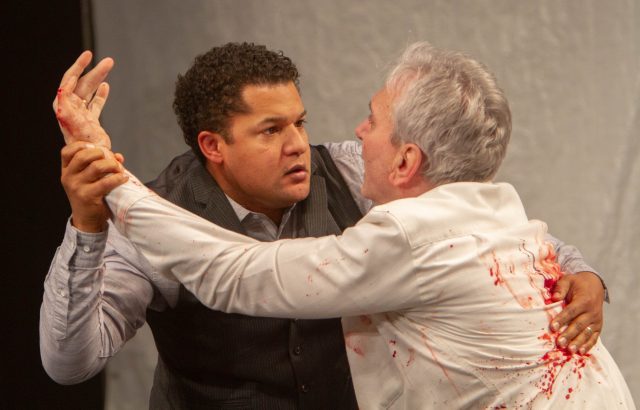
Color-blind casting might (deservedly) be all the rage on Broadway, but the color of each character’s skin is critical to the narrative in American Son as Demos-Brown and director Kenny Leon investigate ripped-from-the-headlines issues of identity, societal perceptions, stereotyping, racial profiling, ingrained prejudice, and cultural biases. Kendra (Kerry Washington) is a black psychology professor who says, “I don’t know I’ve had a sleep-filled night since that boy was born,” constantly fearful that something bad will happen to Jamal because of his race. Scott (Steven Pasquale) is a white FBI agent who wants his son to follow him into law enforcement, putting him on a path to attend West Point, but, not being black, Scott doesn’t share the same worries as Kendra, hoping, “This is just some frivolous nonsense. He probably just had his music cranked up too loud.” Officer Larkin (Jeremy Jordan) is white and has not been properly trained to handle this kind of incendiary situation, assuming that a black teenager out for the night must be part of a posse looking for trouble. “I completely understand your concern,” Larkin tells Kendra, who responds, “Respectfully, Officer — I don’t think you do.” Larkin adds, “Ma’am — I have kids too, OK?” “Any of ’em black?” Kendra says. And Stokes (Eugene Lee) is black, a seasoned officer who is not so quick to see things from Kendra’s or Scott’s points of view; “Settle down now. Settle down,” Stokes declares, but instead of calming the situation, he, well, continues to stoke the fire.

(photo by Peter Cunningham)

Kendra (Kerry Washington) and Scott (Steven Pasquale) listen intently to Lt. Stokes (Eugene Lee) in American Son (photo by Peter Cunningham)

A white civil trial attorney from South Florida whose previous plays (Fear Up Harsh, Wrongful Death and Other Circus Acts) have dealt with sociopolitical subjects involving different kinds of justice, Demos-Brown was inspired to write American Son — his Broadway debut — by real-life events and Ta-Nehisi Coates’s National Book Award winner, Between the World and Me, a letter the author pens for his adolescent son about what it’s like to grow up black in the United States. In fact, the script includes an epigraph from the book: “Race is the child of racism, not the father.” Black Tony-winning director Leon (A Raisin in the Sun, Stick Fly), a protégé of August Wilson’s, maintains a sizzling-hot pace, but he and Demos-Brown don’t take sides; all four characters are both guilty and innocent, and yet none of them are as well. The problem is bigger than just four people, each of whom gets to share their perspective. The audience, more racially diverse than at most Broadway shows, is also implicated, each person bringing his or her own personal history and biases with them; be prepared to hear laughs or gasps at certain times when you’re not reacting the same way as those sitting around you, the differences very much representative of the race of the audience member.

All four actors give dynamic, honest performances, led by Washington (Race, Scandal), a mother of two small children, a boy and a girl; at a postshow discussion the night I went, Washington talked about the fears black mothers have for their sons, something that brought even more intensity to her performance. (The play, which continues at the Booth through January 27 and boasts such producers as Nnamdi Asomugha, Jada Pinkett Smith, Shonda Rimes, Dwyane Wade, and Gabrielle Union-Wade, comes with a discussion guide from the Opportunity Agenda that addresses the concept of equal justice under the law, police-community relations, and racially motivated violence.) Pasquale (Junk, Rescue Me) finds just the right balance as Scott, who doesn’t get a pass just because he’s a white man who married a black woman and has a biracial teen. American Son wisely avoids clichés and melodrama, although there is some emotional manipulation, but it’s easy to look past that and immerse yourself in the onstage dilemma — and wonder what you would do if you were any of the four characters, or the most important missing fifth one, Jamal himself.

THE RESISTIBLE RISE OF ARTURO UI

(photo by Joan Marcus)

Raúl Esparza stars as title character in Classic Stage revival of The Resistible Rise of Arturo Ui (photo by Joan Marcus)

Classic Stage Company
136 East 13th St. between Third & Fourth Aves.
Tuesday – Sunday through December 22, $82-$127
www.classicstage.org

As twenty-first-century Fascism takes root around the world — and, arguably, to some extent, here in America — it is an appropriate time for a revival of Bertolt Brecht’s 1941 parable, The Resistible Rise of Arturo Ui, and John Doyle and Classic Stage Company have done just that, using the 1964 English translation by George Tabori. The play does not have the most illustrious history; because of its content, it was never produced in Brecht’s lifetime (he died in 1956 at the age of fifty-eight), and two Broadway productions, one starring Christopher Plummer as the title character in 1963, the other with Robin Gammell in 1968, ran for a grand total of twenty-three performances, including previews. Tony Randall’s National Actors Theatre staged the allegory in 2002, with an all-star cast that included Al Pacino (as Ui, which rhymes with “phooey”), Steve Buscemi, Dominic Chianese, Billy Crudup, Charles Durning, Paul Giamatti, Sterling K. Brown, John Goodman, Chazz Palminteri, Tony Randall, and Linda Emond; among the others to try their hand at Ui are Peter Falk, Leonard Rossiter, Antony Sher, Nicol Williamson, and Hugo Weaving. Classic Stage previously put it on in 1991, with John Turturro in the lead.

For his uneven version, Tony winner Doyle (Sweeney Todd, The Color Purple) has turned to four-time Tony nominee Raúl Esparza, who starred in Doyle’s 2006 Tony-winning revival of Stephen Sondheim’s Company, to play Arturo Ui, a Chicago gangster intent on taking over the cauliflower market. “But truth will come to life, fraud can’t be hid too long! / To put it bluntly: Chaos reigns supreme / If everybody does as he damn pleases, / Prompted by egoism, which is a grievous fault,” Ui declares, and chaos does reign supreme in this adaptation. Ui is based on Adolf Hitler during the 1930s; the cast also features Christopher Gurr as Dogsborough (Paul von Hindenburg), Elizabeth A. Davis as Giri (Hermann Göring), Eddie Cooper as Roma (Ernst Röhm), Thom Sesma as Givola (Joseph Goebbels), and George Abud as Clark (Franz von Papen). The two-act, 130-minute play begins with all eight actors behind a floor-to-ceiling chain-link fence, as if in prison. (Doyle designed the set as well, a warehouse representative of the Reichstag.) They exit and return through a door monitored by a guard; the central area is an open space with tables and chairs. The audience sits on three sides, and the characters often speak to them directly.

(photo by Joan Marcus)

Bertolt Brecht’s The Resistible Rise of Arturo Ui tackles the Chicago cauliflower market (photo by Joan Marcus)

The play features many long speeches in iambic pentameter, including excerpts from Shakespeare’s Julius Caesar, amid power grabs, corruption, threats, scandal, and deception. “He guarantees to double our grosses, / Because the grocers, Mr. Ui says, / Would rather buy a cabbage than a coffin,” Flake (Mahira Kakkar) tells Clark. But for all his bluster, Ui is also a pathetic figure at odds with his ambition. “Nobody cares enough to bump you off,” Roma, his right-hand man, advises him. Ui responds, “They don’t? You see? That’s what I mean, Ernesto. / They’re giving more respect to horse-manure. . . . I’m gonna take him for a ride, Ernesto, / As soon as I get credit for a car.” The absurdity continues when Ui declares, “It’s cauliflower now! Or bust. One day / The vegetable business shall be mine!” But in the Trump era, it also is all-too-believable that a leader can be so petty and ridiculous — and comparing the Trump administration to a gang of criminals is not unfamiliar to this audience. Thus, as a cautionary tale, Ui feels too late. Combined with inconsistent acting and pacing and too many scattershot elements that don’t come together, The Resistible Rise of Arturo Ui turns out to be not irresistible.

DOWNSTAIRS

(photo by James Leynse)

Siblings Tim and Tyne Daly play siblings in first-ever appearance together on a New York City stage (photo by James Leynse)

Cherry Lane Mainstage Theatre
38 Commerce St.
Tuesday – Sunday through December 22, $82-$152
212-989-2020
primarystages.org
www.cherrylanetheatre.org

When I was a kid, one of my favorite things to do was rush home from school to catch the 4:30 movie on channel 7, the local ABC affiliate. One week would be devoted to the Planet of the Apes films, one to QB VII, and another to monster movies, but my favorite was the week that showed crazy flicks about unsettling children in unusual circumstances. Two of the most memorable were Bad Ronald, with Scott Jacoby as a boy living in a hidden room, and The Little Girl Who Lives Down the Lane, with Jodie Foster as a girl with a secret in the basement. Theresa Rebeck’s Downstairs, a Primary Stages production continuing at the Cherry Lane through December 22, is like a grown-up version of those oddball films that left such an imprint on me and many of my generation. Real-life brother and sister Tim and Tyne Daly, in their first New York City stage appearance together, star as fictional siblings Teddy and Irene, respectively, both of whom are at least a little bit off. Teddy is experiencing some financial difficulties, so he has moved into the basement of the home Irene shares with her husband, Gerry (John Procaccino), who is none-too-happy having Teddy around. Of course, nothing good ever happens in a basement. “This is my apartment,” Teddy says to Irene, who replies, “This isn’t your apartment. This is my basement.” While Irene has been able to make a comfortable life with Gerry, Teddy seems to have nothing, and he more than hints that Irene owes him.

Teddy might have trouble concentrating (his morning routine is a riot) and his wild conspiracy theories are eyebrow-raising to say the least, but he also occasionally produces surprisingly vivid and insightful statements. “Whether or not I say it doesn’t make it true or untrue. Because sometimes it is true,” he tells Irene. Later he says to her, “First of all that is a totally solipsistic argument and second you don’t know what the fuck you are talking about.” He also spends a lot of time at an ancient computer, although Irene insists it doesn’t work. About halfway through the ninety-minute play, Gerry makes his initial appearance, to tell Teddy to leave, but Teddy is not about to walk out, and he lets Gerry know it, setting up a rather unexpected conclusion.

(photo by James Leynse)

Gerry (John Procaccino) has a point to make in Theresa Rebeck’s Downstairs (photo by James Leynse)

Downstairs unfolds in a series of primarily two-person scenes beautifully orchestrated by director Adrienne Campbell-Holt (Hatef*ck, What We’re Up Against); the audience sees the three characters in this dysfunctional family together only once. Emmy nominee Tim (Coastal Disturbances, The Caine Mutiny Court Martial) and Tony and Emmy winner Tyne (Gypsy, Mothers and Sons) have the chemistry of, well, a brother and sister who love and care about each other, playing the same; they deliver Rebeck’s (Seminar, Bernhardt/Hamlet) sharply unpredictable dialogue with a natural, rhythmic flow, while character actor extraordinaire Procaccino (Art, Nikolai and the Others) is terrific as the angry foil who forces himself between them. (Tyne actually made her professional stage debut at the Cherry Lane in 1966 in George S. Kaufman’s The Butter and Egg Man.) Narelle Sissons’s set design is as dusty and creepy as the characters, filled with items that could become dangerous at the flick of a switch. Another touchstone of my generation, Bugs Bunny, famously told Elmer Fudd in The Wabbit Who Came to Dinner, “Don’t go down there; it’s dark!” But Downstairs is one basement that is well worth visiting for 105 eerily enticing minutes.