this week in theater

SIGNIFICANT OTHER BY JOSHUA HARMON: A STAGED READING

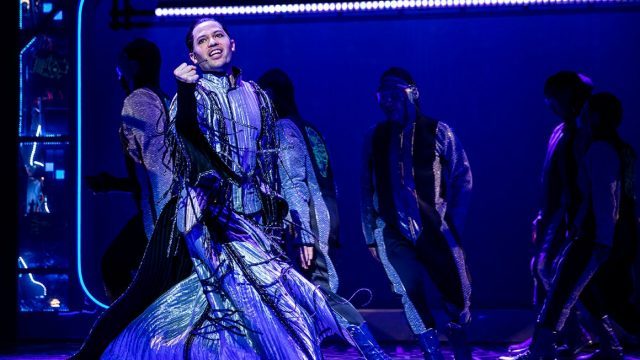
(photo by Joan Marcus)

Tony nominee Ethan Slater will perform the key role of Jordan in staged benefit reading of Significant Other at the JCC (photo by Joan Marcus)

Arts + Ideas
Marlene Meyerson JCC Manhattan
334 Amsterdam Ave. at West 76th St.
Thursday, January 31, $25, 7:00
646-505-5708
jccmanhattan.org

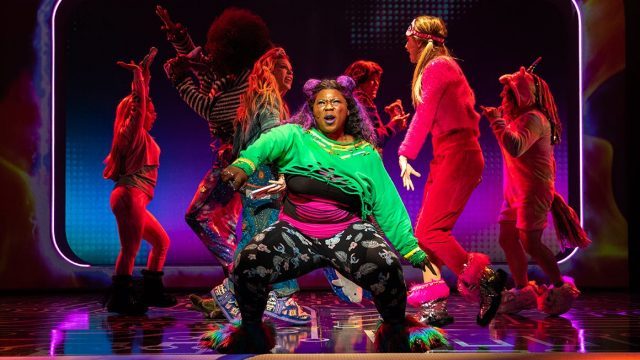
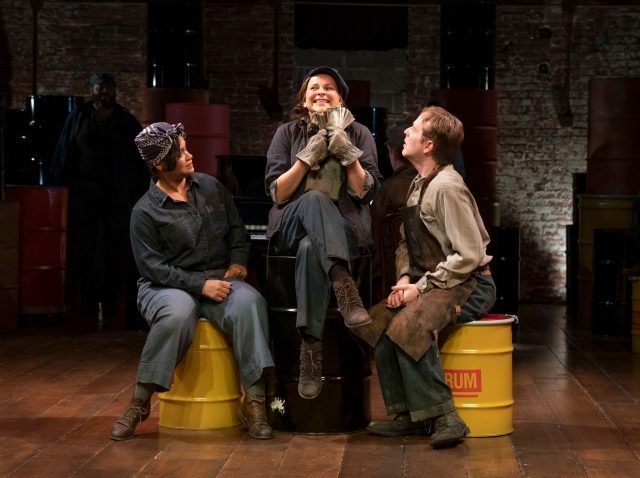
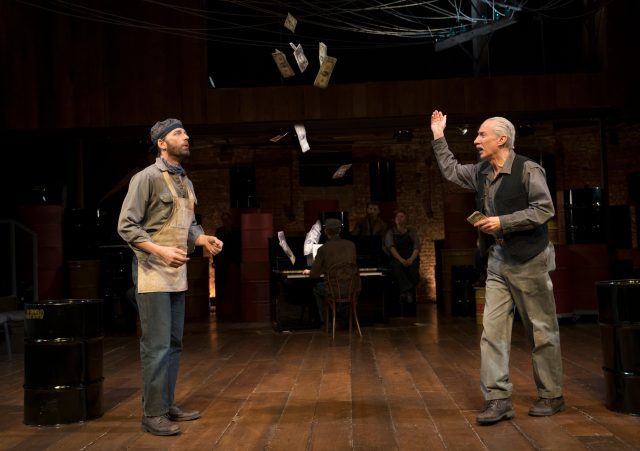
I had the privilege of seeing Joshua Harmon’s wonderful Significant Other both off Broadway at the Laura Pels Theatre in 2015 as well as on Broadway at the Booth in 2017, completely falling for this tale of four friends searching for love in New York City and beyond. The Roundabout production had an undeserved short run on Broadway, but it’s being brought back for a special one-night-only staged reading on January 31 at the Marlene Meyerson JCC Manhattan, benefiting the institution’s “Out at the J” LGBTQIA programming. SpongeBob SquarePants himself, Tony nominee Ethan Slater, will play Jordan, with Midori Francis as Laura, Latoya Edwards as Vanessa, Cathryn Wake as Kiki, Kathryn Kates as Helene, and Isaac Powell as Zach, Evan, and Roger. (The casting of the actor who will play Will, Conrad, and Tony is TBD.) Rising star Harmon has also written Skintight, Admissions, and Bad Jews, so his career is off to a rousing start. Tickets for the Arts + Ideas event, which is directed by Daniella Caggiano and produced by Rachel Kunstadt, are only twenty-five dollars and go to a great cause, so you can’t go wrong with this special evening, part of the JCC’s Arts + Ideas initiative.

THE FERRYMAN

(photo © 2018 Joan Marcus)

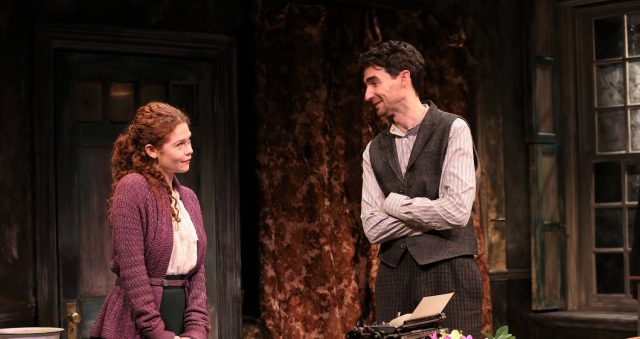
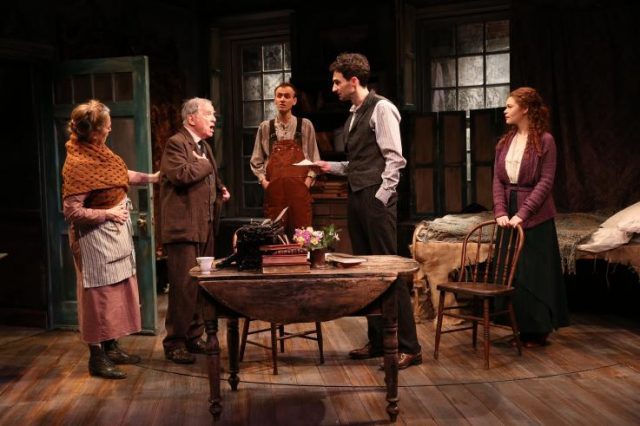
The Ferryman is set during the height of the Troubles in Northern Ireland (photo © 2018 Joan Marcus)

Bernard B. Jacobs Theatre
242 West 45th St. between Broadway & Eighth Ave.
Tuesday – Sunday through July 7, $79 – $209
theferrymanbroadway.com

Winner of three Olivier Awards for Best New Play, Best Director (Sam Mendes), and Best Actress (Laura Donnelly), British import The Ferryman is a staggering achievement, everything a Broadway play should be and more. Jez Butterworth, whose three-hour Jerusalem dazzled audiences in 2011 and earned Mark Rylance a Tony, followed in 2014 by the underwhelming eighty-five-minute The River, returns to the Great White Way with a searing 215-minute tale set during the height of the Troubles in Northern Ireland in the late summer of 1981, while Irish Republican political prisoners are on a five-month hunger strike that has divided Great Britain. Quinn Carney (Paddy Considine) and his extended family are living on a farm in rural County Armagh — including his always ailing wife, Mary (Genevieve O’Reilly); their children, J.J. (Niall Wright), Michael (Fra Fee), Shena (Carla Langley), Nunu (Brooklyn Shuck), Mercy (Willow McCarthy), Honor (Matilda Lawler), and a nine-month-old son; Quinn’s elderly Uncle Patrick (Mark Lambert) and wheelchair-bound Aunt Maggie Far Away (Fionnula Flanagan); fierce IRA supporter Aunt Patricia (Dearbhla Molloy); and Quinn’s sister-in-law, Caitlin (Donnelly), and her son, Oisin (Rob Malone).

(photo © 2018 Joan Marcus)

Aunt Maggie Far Away (Fionnula Flanagan) and Uncle Patrick (Mark Lambert) have stories to share in Jez Butterworth’s masterful The Ferryman (photo © 2018 Joan Marcus)

They are all preparing for the harvest feast, with the help of their trusted farmworker, Tom Kettle (Justin Edwards), an addled, simple Englishman, and teenage cousins Shane (Tom Glynn-Carney), Diarmaid (Conor MacNeill), and Declan Corcoran (Michael McArthur), who know how to have a good time. Quinn has been trying to escape his IRA past, but it all comes hurtling back when the body of his brother, Seamus, Caitlin’s husband, is found in a bog and IRA strongman Frank Magennis (Dean Ashton) and leader Muldoon (Stuart Graham) show up unexpectedly at the house to send a very specific message. Caught in the middle is Father Horrigan (Charles Dale), who wants to do the right thing but is threatened by Magennis and Muldoon as well.

Tony winner Mendes (American Beauty, Cabaret) superbly navigates the play’s many complexities, making three hours and fifteen minutes virtually float by. Rob Howell’s crowded, busy set (he also designed the costumes), a kind of purgatory where various sins are revealed, is able to contain the large cast as the characters sing, dance, argue, cook, tell stories, love, and fight. Numerous cast changes have been made since it first opened at the Bernard B. Jacobs Theatre in October (and where it has been extended through July 7), but The Ferryman is an ensemble piece, not dependent on any individual performances, although a baby and a goose stand out. That said, it is a treat to see English actor Considine, who has starred in such films as Michael Winterbottom’s 24 Hour Party People, Edgar Wright’s Hot Fuzz, Paul Greengrass’s The Bourne Ultimatum, and Armando Iannucci’s The Death of Stalin, make his stage debut as Quinn, a proud man who just wants to go on with his family life but is pulled back into his past. “Let’s just stay like this. Let me just dream for a moment. Imagine what it feels like to have won. I just want to stay like this,” he tells Caitlin early on, before news of Seamus’s fate reaches them. Butterworth, who has cowritten screenplays for such films as Fair Game, Black Mass, and Spectre, was inspired to write The Ferryman by the true story of the murder of Donnelly’s uncle Eugene, who disappeared in 1981 and whose body was discovered three years later. Butterworth wrote the part of Caitlin specifically for Donnelly (Outlander, The River), his partner, who was pregnant during the initial London run. Donnelly gave birth to a daughter, while Butterworth delivered what is currently the best play on Broadway.

AMERICAN REALNESS: EVERYTHING IS IMAGINABLE

Jack Ferver

Jack Ferver collaborates with Reid Bartelme as well as James Whiteside, Lloyd Knight, and Garen Scribner in the world premiere of Everything Is Imaginable at New York Live Arts (photo by Jason Akira Somma)

New York Live Arts
219 West 19th St. between Seventh & Eighth Aves.
January 7-12, $15-$35, 8:00 or 10:00
212-924-0077
americanrealness.com
newyorklivearts.org

Jack Ferver’s Everything Is Imaginable returns this week to New York Live Arts as part of the multidisciplinary American Realness festival. Below is our review of the work’s world premiere in April 2018; don’t miss this second chance to catch this extraordinary piece.

A few weeks before the world premiere of Everything Is Imaginable, New York City treasure Jack Ferver tore his calf while preparing a piece for Reid Bartelme and Harriet Jung at the Guggenheim. But leave it to the Wisconsin-born actor, writer, dancer, choreographer, teacher, and director to incorporate the injury into the narrative of the two-act, seventy-minute show. As the audience enters the theater at New York Live Arts, the curtain is down, a rarity at the venue, upping the growing sense of anticipation that accompanies every Ferver work. The curtain soon opens on Jeremy Jacob’s playful set, consisting of four white cardboard columns with drawings of leaves on them, along with a central cardboard chandelier hovering at the top of a screen in the back. It immediately immerses the crowd into the wonders of Ferver’s imagination while exposing the artifice behind staged productions in general. The first act features four queer men in sheer, butt-revealing outfits dancing solos inspired by their childhood memories and one major role model: American Ballet Theater principal James Whiteside, in a short, glittering dress of silver sequins, pays tribute to Judy Garland, dancing to Garland’s version of Cole Porter’s “I Happen to Like New York”; Martha Graham principal dancer Lloyd Knight honors Graham, moving to a recording of the legendary choreographer speaking about dance; dancer and actor Garen Scribner slides across the stage in socks and does spins like his hero, champion skater Brian Boitano, to the sound of ice skates being sharpened and gliding across the ice; and longtime Ferver collaborator Bartelme, a former ballet dancer and current costume designer (as part of Reid and Harriet Design, who made the costumes for the show), wears a long orange mane and dances with horse movements, since his idol is My Little Pony. Each solo combines humor with beautiful movement, taking advantage of each dancer’s strengths while adding the charm and whimsy that are mainstays of Ferver’s choreography. The four star turns are followed by a solo about sunglasses and then an ensemble piece danced to “club music,” including a Martha Graham–esque sexualized orgy that is uproariously funny.

After a ten-minute intermission (with the curtains closed), the second act begins with Ferver (Chambre, Night Light Bright Light) by himself onstage, standing over a miniature version of the set from the first act, evoking Stonehenge from This Is Spinal Tap. In a sheer bodysuit recalling Michelle Pfeiffer’s garb as Catwoman in Batman Returns, the compact Ferver towers over the tiny columns and chandelier, emphasizing his power as a creator while also poking fun at it. Ferver talks about his calf injury, explaining how that limited his ability to dance — his doctor advised him not to move forward, which is not part of his vocabulary, literally or figuratively — and forced him to reimagine the work, and discusses his difficult childhood, friendless and bullied for his overt homosexuality; growing up gay is a regular theme in his oeuvre. As always, his stage persona is that of a devilish cherub, wild and wacky one moment, making the audience roll around their seats with laughter, and then deadly serious the next, raising disturbing elements from his life that may or may not be true, causing everyone to reconsider their reactions. He’s joined by Bartelme, who looks lovely in a fringe dress, and the two dance together to heartbreaking effect while Ferver, soldiering on despite his injury, goes on to describe his process of writing a memoir, which took place alone, terrified, in a strange house, in the dark. Ferver is no longer friendless or alone, as evidenced not only by the crowd response to the supremely personal show but by the long line of well-wishers who waited to hug and congratulate him for giving them yet another unique, meaningful, and vastly entertaining experience, shining a light on his life, and ours, as only he can.

WINTER PERFORMANCE FESTIVALS: ORIGIN’S 1st IRISH THEATRE FESTIVAL

Ann Blake

Ann Blake’s The Morning After the Night Before is part of eleventh annual Origins 1st Irish Theatre Festival

ORIGIN’S 1st IRISH THEATRE FESTIVAL
Multiple venues
January 9-28
www.origintheatre.org

The Origins 1st Irish Theatre Festival, now in its eleventh year, is dedicated to presenting works by Irish playwrights from around the world, both in and out of competition. This year’s schedule boasts seventeen events from Belfast, Derry, Dublin, Cork, Limerick, Queens, and Manhattan, at such venues as Scandinavia House, the Playroom, the Irish Consulate, the cell, and NYU’s Glucksman Ireland House.

Alone It Stands, written and directed by John Breen, with Chase Guthrie Knueven, Ed Malone, Rob McDermott, David O’Hara, Henry Raber, and Sarah Street, 59E59, January 10-27, $35

On Blueberry Hill, by Sebastian Barry, directed by Jim Culleton, with Niall Buggy and David Ganly, 59E59, January 8 – February 3, $35

The Smuggler, by Ronan Noone, directed by David Sullivan, with Mick Mellamphy, the cell, January 14-21, $30

The Morning After the Night Before, by Ann Blake, directed by Paul Mead, with Ann Blake and Lucia Smyth, the cell, January 20-27, $30

Irish Women Lighting Up Broadway, with Geraldine Hughes, Fionnula Flanagan, and Dearbhla Molloy, moderated by Patrich Pacheco, American Irish Historical Society, $10 with RSVP, 1:00

THE HARD PROBLEM

(photo by Paul Kolnik)

Spike (Chris O’Shea) and Hilary (Adelaide Clemens) discuss altruism, God, and the prisoner’s dilemma in latest Tom Stoppard masterpiece (photo by Paul Kolnik)

Lincoln Center Theater at the Mitzi E. Newhouse
150 West 65th St. between Broadway & Amsterdam Ave.
Tuesday – Sunday through January 6, $92
212-362-7600
www.lct.org

In his first new play since 2006’s Rock ‘n’ Roll, octogenarian genius Tom Stoppard takes a deep dive into nothing less than human consciousness. The opening of The Hard Problem lets us know just what we’re in for: An attractive young tutor and his student hotly debate “the prisoner’s dilemma,” preparing her for a major job interview. We are going to watch characters onstage swim in a British think tank where the big questions are asked. The “hard problem,” of course, is how the biochemistry of organic matter gives rise to consciousness, the realization of a “self” able to reflect on its own existence and concepts of goodness, self-sacrifice, and altruism. Another hard problem, of course, is how to make this cerebral subject work as live theater. Stoppard, who has explored issues of science, chaos theory, philosophy, history, and other intellectual endeavours in such previous works as Arcadia, The Invention of Love, and The Coast of Utopia, achieves his goal this time via a somewhat predictable though cleverly chosen cast of characters: the male “quant” with impeccable academic and professional qualifications who may lack human emotion, the female researcher with a tender heart, strong mind, and wrenching personal history, the overeager postdoctoral assistant, and an old school friend who remains resolutely sensible and cynical.

“It’s about survival strategies hard-wired into our brains millions of years ago. Who eats, who gets eaten, who gets to advance their genes into the next generation,” Spike (Chris O’Shea) tells Hilary Matthews (Adelaide Clemens), who is up for a job at the prestigious Krohl Institute for Brain Science. He continues, “Competition is the natural order. Self-interest is bedrock. Co-operation is a strategy. Altruism is an outlier unless you’re an ant or a bee. You’re not an ant or a bee; you’re competing to do a doctorate at the Krohl Institute, where they’re basically seeing first class honours degrees and you’re in line for a second, so don’t be a smart arse, and above all don’t use the word ‘good’ as though it meant something in evolutionary science.”

(photo by Paul Kolnik)

Hilary (Adelaide Clemens) listens in as Amal Admati (Eshan Bajpay) and Dr. Leo Reinhart (Robert Petkoff) have quite a disagreement in The Hard Problem (photo by Paul Kolnik)

Hilary has just about everything going against her: She went to the wrong schools, didn’t do the expected internships, didn’t ace the proper tests, and has different ideas about the mind and consciousness than does Amal Admati (Eshan Bajpay), who is seemingly the perfect candidate for the job — but Dr. Leo Reinhart (Robert Petkoff) chooses Hilary for the position because of her rather unique and somewhat unscientific thoughts on the relationship between the brain and consciousness. It all comes to a head when the fiercely ambitious Bo (Karoline Xu) joins Hilary’s team and takes the lead on a complex project that doesn’t go quite as planned.

(photo by Paul Kolnik)

Bo (Karoline Xu) complicates things for Hilary (Adelaide Clemens) in New York premiere of The Hard Problem at Lincoln Center (photo by Paul Kolnik)

Despite all the talk of statistical tendencies, evolutionary behavior, moral intelligence, computer programming, binary operations, egoism, and other high-falutin’ terms, Stoppard is not so much interested in science than in personality; the characters in the play are splendidly drawn, from Jerry Krohl (Jon Tenney), who Spike describes as “a squillionaire with a masters in biophysics who decided to try hedge-funding,” and Jerry’s bright young daughter, Cathy (Katie Beth Hall), to Julia Chamberlain (Nina Grollman), a former classmate of Hilary’s who runs Pilates classes at the institute — serving the body in a place built around the mind — and Julia’s partner, Ursula Tarrant (Tara Summers), who doesn’t shy away from discussing panpsychism. Stoppard also explores the idea of a supreme being among all this science. “How does God feel about your model of Nature-Nurture Convergence in Altruistic Parent-Offspring Behaviour?” Spike asks Hilary, who prays every night before she goes to bed. But Hilary and Stoppard are concerned with more down-to-earth subjects. “Who’s the you outside your brain? Where? The mind is extra,” Hilary says.

Three-time Tony-winning director Jack O’Brien (Hairspray, Hapgood), who has helmed such other major Stoppard works as The Coast of Utopia and The Invention of Love, has a clear handle on the material, never allowing the play to get overly pedantic, keeping it all real on David Rockwell’s cool set, in which props and furniture are wheeled on or off or drop from the ceiling. Various cast members sit on a couch watching when they’re not involved in the action, taking in every poetic phrase just as we are. Clemens (Hold on to Me Darling, Rectify) is a revelation as Hilary, an unpredictable, fascinating woman who in many ways is representative of the average, regular person facing a changing world. “Explain consciousness,” Hilary says early on to Spike, who doesn’t have an answer. In The Hard Problem, Stoppard isn’t seeking answers but is asking all the right questions.

WINTER PERFORMANCE FESTIVALS: FIRST NATIONS DIALOGUES

(photo by Adele Wilkes)

Joshua Pether’s Jupiter Orbiting is part of First Nations Dialogues festival (photo by Adele Wilkes)

Multiple venues
January 5-12
www.catalystdance.com

The First Nations Dialogues Lenapehoking/New York festival takes place January 5-12 with live performances, community gatherings, discussions, and other special programs focusing on Indigenous cultures in the US, Canada, and Australia. The centerpiece is KIN, a series of events curated by Emily Johnson that includes three conversations with Paola Balla, Genevieve Grieves, and Johnson; a fabric workshop with Spiderwoman Theater cofounder Muriel Miguel; the play-reading series “Reflections of Native Voices,” with Muriel Miguel, Gloria Miguel, Carolyn Dunn, Ed Bourgeois, Henu Josephine Tarrant, Rachael Maza, and Nicholson Billey; presentations by Joshua Pether and S. J. Norman; and the outdoor ceremonial fire gathering “Kinstillatory Mappings in Light and Dark Matter.” Kicking off the Global First Nations Performance Network, First Nations Dialogues is held in partnership with the Lenape Center, Amerinda, American Indian Community House, Abrons Arts Center, American Realness, Danspace Project, La MaMa, Performance Space New York, Safe Harbors Indigenous Collective, Under the Radar, the Association of Performing Arts Presenters, and the International Society for the Performing Arts. Below are some of the highlights.

Saturday, January 5
Tëmikèkw, an honoring and welcome gathering, with Muriel Miguel, Gloria Miguel, and Deborah Ratelle of Spiderwoman Theater, Diane Fraher (Osage/Cherokee) of Amerinda, the SilverCloud Singers led by Kevin Tarrant of the Hopi and HoChunk Nations, Laura Ortman of the Apache Nation, and fancy shawl dancer Anatasia McAllister of the Colville Confederated Tribes and Hopi Nation, Danspace Project, free with RSVP, 12:30 – 4:00 pm

Saturday, January 5, 7:00
and
Sunday, January 6, 3:00

Jupiter Orbiting, by Joshua Pether, immersive movement-based work about dissociation and trauma, Performance Space New York, $15

Tuesday, January 8, 7:30
Cicatrix 1 (that which is taken/that which remains), by S. J Norman, four-hour durational ritual, Performance Space New York, $15

Wednesday, January 9, 10:00
Thursday, January 10, 10:00
Friday, January 11, 1:00

Serpentine, by Daina Ashbee, performed by Areli Moran to music composed by Jean-Françoise Blouin, La MaMa, Downstairs Theater, $20-$25

Friday, January 10, 2:00, 6:00, 8:00
Footwork/Technique, by Mariaa Randall, incorporating contemporary Aboriginal footwork and dance legacies, Performance Space New York, $15

WINTER PERFORMANCE FESTIVALS: AMERICAN REALNESS

(photo by Maria Baranova)

Jack Ferver’s Everything Is Imaginable was one of the best shows of 2018 (photo by Maria Baranova)

AMERICAN REALNESS
Abrons Arts Center and other venues
466 Grand St. at Pitt St.
January 4-13
americanrealness.com

Since 2010, Abrons Arts Center has presented American Realness, a multidisciplinary festival of dance, music, theater, discourse, literature, and more. The 2019 lineup features a stellar lineup of creators, including Marjani Forté-Saunders, Jack Ferver, nora chipaumire, Reggie Wilson, Julian F. May, Miguel Gutierrez, Gillian Walsh, and the Royal Osiris Karaoke Ensemble staging works across four boroughs, at such venues as Performance Space New York, the Chocolate Factory, Danspace Project, La MaMa, and Gibney. Below are only some of the highlights.

Moon Fate Sin, by Gillian Walsh, location and ticketing TBD, January 4-6

100% Pop / Shebeen Remix, by nora chipaumire, Jack, January 4-6 and 10-12, $25

Everything Is Imaginable, by Jack Ferver, New York Live Arts, January 7-12, $15-$25

The Bridge Called My Ass, by Miguel Gutierrez, Chocolate Factory Theater, January 8-19, $20

Folk Incest, by Juliana F. May, Abrons Arts Center, January 9-12, $21