this week in theater

THE NEW GROUP OFF STAGE: EVENING AT THE TALK HOUSE REUNION READING

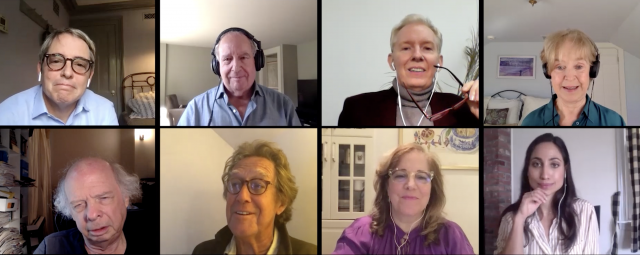
The full original cast returns for virtual reunion reading of Wallace Shawn’s Evening at the Talk House for the New Group

TWO BY WALLACE SHAWN
The New Group
Evening at the Talk House, Aunt Dan and Lemon
Through November 29, $25 ($45 for both plays)
thenewgroup.org

When I sat down at my desktop computer to watch the New Group’s online reunion reading of Wallace Shawn’s Evening at the Talk House, I was most interested in seeing how original director Scott Elliott, the company’s founding artistic director, would deal with the immersive nature of the preshow setup: As the audience entered the Romulus Linney Courtyard Theatre at the Pershing Square Signature Center for its 2017 US premiere, the actors were already onstage, milling about Derek McLane’s comfy, inviting communal room, and we were encouraged to join them, grabbing a drink, sharing snacks, and chatting with them. “The last time I saw you, you were wearing a dress,” I casually said to Larry Pine, referring to his character in Harvey Feinstein’s 2014 Broadway drama, Casa Valentina, about cross-dressing in the Catskills in the 1960s. “Yes you did,” he answered with a smile. I then had gummy worms and marshmallows with Claudia Shear before sitting down and settling in for the play, which begins with a long monologue by Matthew Broderick in which he makes eye contact with just about everyone in the audience. I wasn’t sure how they would replicate that feeling of instant connection in a Zoom reading, and it turns out they chose to not even try, which disappointed me greatly. But I decided to keep watching anyway, and I’m supremely glad I did.

Part of “The New Group Off Stage: Two by Wallace Shawn,” which also includes a reunion reading of Shawn’s Aunt Dan and Lemon, which is worth checking out (through November 29) just for Lili Taylor’s facial gestures during the three-minute countdown to the start of the play, Evening at the Talk House turns out to be an eerily prescient commentary on the state of the country postelection, as if Shawn had written it yesterday, or tomorrow. The play is about a reunion itself, as some of the cast and crew of the Broadway flop Midnight in a Clearing with Moon and Stars have gathered at their old haunt upon the tenth anniversary of the show’s opening night: playwright Robert (Broderick), star Tom (Pine), composer Ted (John Epperson), costume designer Annette (Shear), and producer Bill (Michael Tucker), along with longtime Talk House host Nellie (Jill Eikenberry) and server Jane (Annapurna Sriram), unexpectedly joined by the bedraggled Dick (Shawn).

(photo by Monique Carboni)

US premiere of Evening at the Talk House took place at the Signature Center (photo by Monique Carboni)

As I wrote in my original review, early on, Robert, now a hugely successful television writer, says, “At that time, you see . . . theater played a somewhat larger part in the life of our city than it does now. . . . Because what exactly was ‘theater,’ really, when you actually thought about it?” In 2017, I noted how the play prefigured the Trump administration and the many proposed cuts to arts funding, but four years later it could be seen as being about the pandemic lockdown as theaters across the country and around the world find themselves unable to take the stage in front of audiences, relegated to livestreaming and recorded events over Zoom and YouTube at least in part because of the federal government’s profound failure at handling the Covid-19 health crisis.

In addition, there is a twist in the play that deals with targeting human life: In 2017, it had a sci-fi futuristic bent but today evokes the decisions made by the government and its citizens as to who will live and who will die, who is expendable and who is not in order to save the economy, echoing the cries of essential workers as they have to choose who to intubate and who will not be treated, left to die alone in the ICU or a nursing home.

But amid all that bleakness, Evening at the Talk House is a very funny play, a delight to watch both in person and digitally. The acting is some of the best I have seen in Zoom boxes, led by the soft-spoken Broderick, the engaging Sriram, the firmly brash Tucker, and Shawn himself, who can’t help but steal every scene he’s in, even when his character is just nodding off. The immediate future of theater is very much in doubt right now, but nostalgically looking back at the past is not the answer, even as these reunion readings grow in popularity. “I want the old days back! Where are they? Where have they gone?” Dick declares. Onstage, he wore pajamas, like most of us probably are as we watch him online; since we can see only the top half of Shawn in his cluttered home office, we don’t know what kind of bottoms he is wearing. Later, Robert asks Jane, “You don’t get pleasure from reliving the past?” The future might be uncertain, but with well-written, cleverly crafted works such as Evening at the Talk House, which hold up so well during this time of intense, unpredictable change and never-before-conceived-of stagings, theaterlovers still have much to look forward to.
STARS IN THE HOUSE: CATS AND DOGS HUMANE SOCIETY BENEFIT

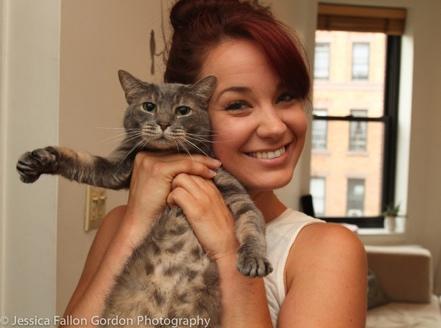
Sierra Boggess and her cat are among the performers joining Stars in the House benefit for the Humane Society of New York

Who: Sierra Boggess, Lilli Cooper, Darius de Haas, Andy Karl, Jose Llana, Jesse Mueller, Orfeh, Paige Price, Kate Rockwell, Doug Sills, Will Swenson, Seth Rudetsky, James Wesley
What: Livestreamed benefit show for the Humane Society of New York
Where: Stars in the House YouTube channel
When: Friday, November 27, pay-what-you-can, 8:00
Why: Dogs and cats and other household pets are scratching their pretty little heads trying to figure out why we’re home with them all day every day since mid-March, never giving them an ounce of freedom. Yes, animals have been impacted by the Covid-19 crisis, in different ways than their people are. On November 27 at 8:00, Stars in the House, the tireless charity site hosted by Seth Rudetsky and James Wesley that features live play readings and cast reunions, will recognize our furry four-legged friends with a benefit event for the Humane Society of New York, which, during the coronavirus pandemic, has been “doing the daily work of helping those that need help; those owners who may need financial support. More and more we are seeing people from all walks of life that have just lost their jobs and their income, and don’t know when they will be employed again. They know that they can turn to us when their pets need medical attention.” The society’s annual Best in Shows gala fundraiser was canceled, so Stars in the House has stepped in to fill part of the void. Rudetsky and Wesley will be joined by an all-star lineup of Broadway actors and their animals, performing together, featuring Sierra Boggess, Lilli Cooper, Darius de Haas, Andy Karl, Jose Llana, Jesse Mueller, Orfeh, Paige Price, Kate Rockwell, Doug Sills, and Will Swenson.

A THOUSAND DREADFUL THINGS: SHAKESPEARE AND THE FEAR OF BLACK VENGEANCE

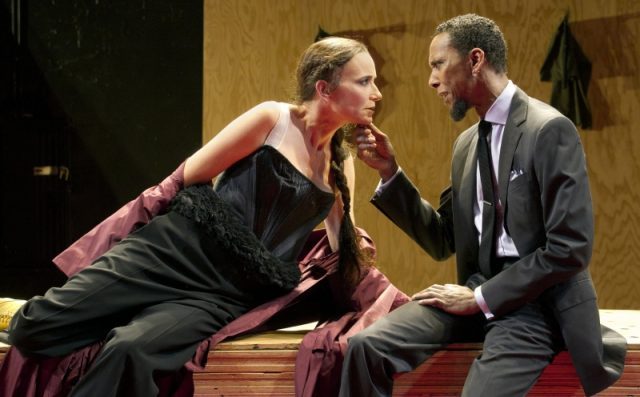
Ron Cephas Jones (right) will discuss Titus Andronicus in special Shakespeare program from Brooklyn Public Library and the Public Theater (photo by Joan Marcus)

Who: Ron Cephas Jones, Eisa Davis, William Jackson Harper, Raúl Esparza, Jill Lepore, Michael Sexton, Ayanna Thompson, Stephen Greenblatt, Philip Lorenz
What: Digital Shakespeare program
Where: Brooklyn Public Library and the Public Theater
When: Sunday, November 22, free with RSVP, 7:00; Thursday, December 3, free with RSVP, 7:00; Thursday, December 17, free with RSVP, 7:00
Why: Shakespeare readings and discussions have multiplied during the pandemic, with actors and scholars presenting impassioned soliloquies online, followed by fascinating talks about the legacy of the Bard, particularly in this time of Covid-19, isolation, and social and political unrest; Red Bull Theater’s RemarkaBULL Podversations have been especially enlightening, highlighted by scintillating episodes with Chukwudi Iwuji and Patrick Page. Now the Brooklyn Public Library and the Public Theater have teamed up for a free three-part digital voyage into Shakespeare, kicking off November 22 at 7:00 with “A Thousand Dreadful Things: Shakespeare and the Fear of Black Vengeance,” an exploration of Aaron the Moor from Titus Andronicus, with Ron Cephas Jones, who played Aaron at the Public in 2011, William Jackson Harper, and Public Theater Shakespeare scholar in residence Ayanna Thompson, author of Passing Strange: Shakespeare, Race, and Contemporary America. On December 3 at 7:00, “What Is the City but the People? Shakespeare, Art, and Citizenship” features Pulitzer Prize-winning profession Stephen Greenblatt, author of Tyrant: Shakespeare on Politics, and actor and playwright Eisa Davis looking at modern democracy; and on December 17 at 7:00, “Two Monsters of Nature: Lope de Vega and William Shakespeare” links the theater of Lope de Vega and Shakespeare, with readings in Spanish and English by Tony winner Raúl Esparza and commentary by Cornell professor of comparative language Philip Lorenz. All three programs will be moderated by Public Theater Shakespeare Initiative director Michael Sexton and are free with RSVP.

#IRISHREPONLINE: ON BECKETT / IN SCREEN

Who: Bill Irwin
What: Livestreams of updated show
Where: Irish Rep online
When: November 17-22, suggested donation $25
Why: In my October 2018 review of Bill Irwin’s mostly one-person-show, On Beckett, at the Irish Rep, I wrote, “Irwin adds fascinating insight to [Samuel] Beckett and his oeuvre, discussing the Nobel Prize winner’s punctuation and pronoun usage, his identity and heritage, the possible influence of vaudeville on his work, his detailed stage directions, and other intricacies. . . . Irwin is a delight to watch, his passion for Beckett infectious. He occasionally goes off topic in comic ways, wrestling with a microphone and toying with the podium, but he eventually gets back on track for an enchanting piece of theater about theater.” Irwin (Old Hats, Who’s Afraid of Virginia Woolf?) is now revisiting the play, updating it in this time of pandemic lockdown, in a Covid-19-sensitive version he codirected onstage at the Irish Repertory Theatre with M. Florian Staab; Brian Petchers served as director of photography and editor, with set design by Charlie Corcoran, lighting by Michael Gottlieb, and music and sound by Staab. Irwin’s revised take on Waiting for Godot could probably make a show all its own. The seventy-five-minute On Beckett / In Screen will stream November 17-22; suggested donation is $25.

READ SUBTITLES ALOUD

Read Subtitles Aloud invites each audience member to be the protagonist in thirteen short episodes

Who: Onur Karaoglu, Kathryn Hamilton, Meera Kumbhani, Fatih Gençkal, Paul Lazar
What: Interactive short plays
Where: Media Art Xploration YouTube channel
When: Daily through November 23, free with RSVP
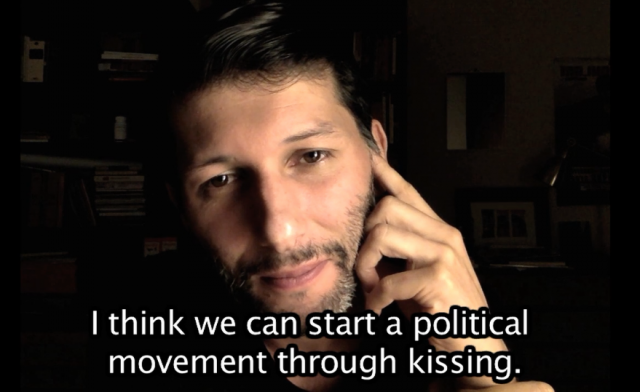
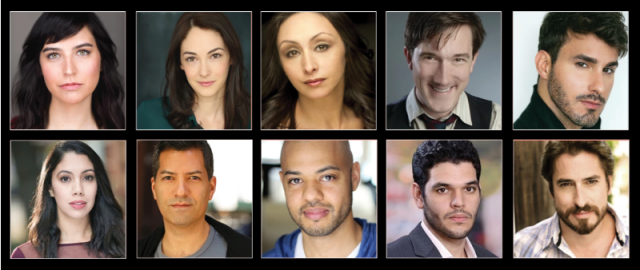
Why: MAX (Media Art Xploration) and PlayCo have teamed up to present a unique twist on interactive theater during the pandemic lockdown with Read Subtitles Aloud. Written by Onur Karaoglu and Kathryn Hamilton (aka Sister Sylvester), it consists of thirteen episodes in which you hear only half the dialogue, spoken by an onscreen actor; the other half is your responsibility, as you are the protagonist in the story, reading aloud the lines that appear on your monitor, creating a dialogue between you and characters portrayed by Karaoglu, Hamilton, Meera Kumbhani, Fatih Gençkal, and Paul Lazar that also encompasses a certain physicality, acknowledging how we sit in front of the computer and relate to others virtually.

The first three chapters, “Digital Kissing,” “A Warm Up,” and “A Secret Video,” are available now, with each new chapter dropping daily through November 23, exploring such issues as love and sex, loyalty and betrayal, what’s real and what’s not, and connection and isolation, so key as we keep sheltering in place. The play features art direction by Christine Jones, costume and set curation by Zoë Hurwitz, lighting by Bill Berner, and dramaturgy by Emily Reilly. During the conversations, which are based on Altyazıları Yüksek Sesle Oku’s YouTube series, in which Karaoglu appeared, the actors pace their responses, giving you time to say your lines, and they then react as if they heard what you said. In the first episode, you ask, “Should I give you a kiss?” Karaoglu, who is very close to the screen, smiles, puts his hand over his mouth, and coquettishly says, “No, you don’t have to kiss me right now. But if you want, you can. If you feel something, kiss. Don’t kiss if you don’t feel anything. So the rule about kissing is don’t kiss if you don’t feel anything.” You: “I’m not going to kiss you.” Him: “So, um.” You: “It makes no sense.” Him: “True. It is generally something we fake.” You: “Speak for yourself.” Him: “Okay, I’ll go back to the normal position now, a position that does not invite kissing, a distant position.” You: “When you were close there was this feeling.” Hey, at least you’re not talking to yourself, or bored out of your skull having another Zoom meeting with friends, family, or work colleagues while also shoring up your acting chops.

RED BULL THEATER: THE COURAGE TO RIGHT A WOMAN’S WRONGS (VALOR, AGAVIO, Y MUJER)

Red Bull Theater teams up with UCLA to present new translation of Spanish Golden Age comedy

Who: Red Bull Theater company
What: Livestreamed benefit reading of new translation of Ana Caro Mallén’s The Courage to Right a Woman’s Wrongs
Where: Red Bull Theater website and Facebook Live
When: Monday, November 16, free with RSVP (donations accepted), 7:30 (available on demand through November 20 at 7:00)
Why: For its latest livestreamed reading, Red Bull is teaming up with Diversifying the Classics | UCLA to present a brand-new translation of Spanish Golden Age poet and playwright Ana Caro’s The Courage to Right a Woman’s Wrongs (“Valor, agravio y mujer.”) Part of La Escena 2020, the second edition of Los Angeles’s Festival of Hispanic Classical Theater, the seventeenth-century comedy focuses on a woman’s boundary-crossing encounters with issues of society and gender, justice and honor, specifically related to her former lover, Don Juan. In their introduction to the new translation, Marta Albalá Pelegrín and Rafael Jaime write, “Through this stirring tale of a woman’s courage to right the wrongs she has suffered, the play holds up to scrutiny contemporary notions of masculine honor and offers in their place a vision that opens up space for women and their agency.”

The reading will be performed by Anita Castillo-Halvorssen, Helen Cespedes, Natascia Diaz, Carson Elrod, Anthony Michael Martinez, Sam Morales, Alfredo Narciso, Ryan Quinn, Luis Quintero, and Matthew Saldivar and is directed by Melia Bensussen; there will be a live, interactive Bull Session with some of the artists involved and UCLA professor of Spanish and English Barbara Fuchs and California State Polytechnic English and modern languages associate professor Pelegrín on November 19 at 7:30, also free with RSVP. The reading will be available on demand through November 20 at 7:00.

STEPPENWOLF NOW: WHAT IS LEFT, BURNS

Keith (K. Todd Freeman) and Ronnie (Jon Michael Hill) reconnect online after fifteen years in What Is Left, Burns (photo by Lowell Thomas)

WHAT IS LEFT, BURNS
Steppenwolf Theatre Company
Through November 30, virtual membership for six shows $75
www.steppenwolf.org

The pandemic lockdown of theaters across the country has come with a side benefit that I hope you’re all taking advantage of: the opportunity to see live and prerecorded work by companies around the world from the comfort of your home. Of course, it’s not the same thing as sitting in a dark venue, being part of an audience, watching a story unfold in the same time, air, and space as the performers, but we have to make do with what we have. I’ve been particularly drawn to theater and dance created during the crisis as creators experiment with Zoom and other platforms to bring entertainment to a public starved for it. Which is why I’m excited that Chicago’s fabled Steppenwolf Theatre has just kicked off its Steppenwolf NOW program, a virtual series that consists of six online works through June 2021.

First up is James Ijames’s What Is Left, Burns, streaming this month. During the health crisis, people have been communicating more than ever via video, logging on with friends and family, sometimes digging deep into the past to reach out to those who might not be part of their lives anymore. In What Is Left, Burns, a literature professor and a former student reconnect after fifteen years, bringing up long-left-unsaid feelings as they take stock of their lives without each other. “It’s been a long time,” says the younger Ronnie (Jon Michael Hill) with a big smile. “Yeah, it has. Actually, honestly, I wasn’t sure you’d respond to my email,” replies the older, tentative Keith (K. Todd Freeman). “I wasn’t sure either,” the more open and emotional Ronnie says. Over the course of twenty-three minutes, the full extent of their relationship is revealed, involving love, lies, personal and professional jealousy, and, above all, loneliness, which we each have been facing in our own ways during Covid-19.

Though not about the pandemic, What Is Left, Burns is tailor-made for our current state of mind. By now we are used to watching others on our computers like never before, and Tony nominees Freeman (The Song of Jacob Zulu, Airline Highway) and Hill (Eastbound & Down, Superior Donuts), who last performed together onstage in 2009 in Tina Landau’s production of The Tempest at Steppenwolf — Freeman as Caliban, Hill as Ariel — do an outstanding job of making us feel just the right amount of uncomfortable as we peer into their private conversation; Freeman is appropriately jittery as Keith, who is hesitant to share too much at the outset, while Hill is bright and engaging as the bubbly Ronnie, who smiles widely even as he harbors discontent at what happened between them. Ijames uses his experience as a director (The Brothers Size), playwright (Kill Move Paradise), and actor (Angels in America) — he portrayed Franco in a Philly production of Superior Donuts, the role that earned Hill a Tony nomination — to craft an intimate tale that works on multiple levels.

Director Whitney White rhythmically cuts from Keith, sitting in his chair with books, CDs, and photos around him, as well as a computer open to the TED Legacy Project talk “The fight for civil rights and freedom” with John Lewis and Bryan Stevenson, while Ronnie is in front of a much more sparse background as he moves throughout his apartment. White (What to Send Up When It Goes Down, Our Dear Dead Drug Lord) adds interstitial abstract scenes that bathe the two boxes in mysterious pastel blues, greens, and reds, with droning sound and music by Justin Ellington that take us further into the characters’ complex psyche. Lowell Thomas serves as director of photography and video editor, using iPads, laptops, and phones from multiple angles to avoid the action becoming too static, which is the case with so many Zoom presentations. What Is Left, Burns is a strong start to Steppenwolf NOW, which continues with Isaac Gómez’s two-act radio play Wally World in December, Rajiv Joseph’s ten-minute Red Folder with Carrie Coon in January, Vivian J. O. Barnes’s Duchess! Duchess! Duchess! in February, Donnetta Lavinia Grays’s Where We Stand in April, and Sam Shepard’s Ages of the Moon with Randall Arney and William Petersen in June.