this week in theater

TWI-NY TALK: IGOR GOLYAK AND DARYA DENISOVA OF STATE vs. NATASHA BANINA

Natasha

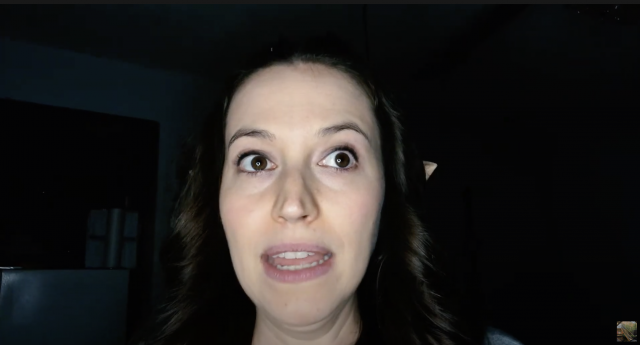
Darya Denisova gives a bold performance made for Zoom in State vs. Natasha Banina

STATE VS. NATASHA BANINA
Baryshnikov Arts Center online
Cherry Orchard Festival
Monday, October 12, and Wednesday, October 14, free with RSVP, 8:00
bacnyc.org
www.arlekinplayers.com

In my June 21 review of State vs. Natasha Banina, I wrote that “the future of online productions might be best represented so far by Arlekin Players Theatre’s State vs. Natasha Banina.” Part of the Cherry Orchard Festival, the forty-five-minute solo play is an online adaptation of the Boston troupe’s version of Yaroslava Pulinovich’s Natasha’s Dream, which deals with mental illness and, perhaps, murder. The extraordinary interactive work — the audience serves as a jury — is directed by company founding artistic director Igor Golyak and stars his partner, Darya Denisova, who is brave and mesmerizing as Natasha. What began as a handful of live performances has blossomed into a virtual national tour, with Arlekin teaming with arts organizations around the country to put on the play, complete with an integral talk afterward in which Golyak and Denisova are likely to reveal some of their theatrical secrets.

Among the play’s countless fans is Mikhail Baryshnikov, who is bringing the production to the Baryshnikov Arts Center (online, not in person) on October 12 and 14 at 8:00; tickets are free with advance RSVP. The October 12 show will be followed by a talkback with music critic and Beginner’s Ear founder Corinna da Fonseca-Wollheim, while the October 14 postshow discussion will feature actress Jessica Hecht, who is planning on working with the troupe soon. As they prepare for the BAC shows, Golyak, who runs the Igor Golyak Acting Studio, and Denisova, who teaches there, answered some questions about their sudden success and the future of theater.

twi-ny: For those previously unfamiliar with your company, you have staged innovative adaptations of The Seagull, Dead Man’s Diary, and The Stone, among others, that create unique relationships between audience and performer. When you were looking for a play to take online, what was it about Natasha that made you think it was ripe for virtual reimagining?

igor golyak: First of all, the subject matter of systems failing young people felt really relevant today, so the theme was definitely an inspiration. This is generally how we approach text at Arlekin; I want to have a discussion with the audience about subject matter, not a lesson plan, but pose a question around a point of pain in me and the collaborators.

twi-ny: Natasha has become a viral sensation, one of the most-talked-about and widely praised online productions during the pandemic. What has that experience been like?

ig: The experience has been overwhelming. Being an immigrant theater with our accent not just in language but in the approach to the theater, we feel understood.

twi-ny: Darya, during the show, you call out some of the names of the people watching, but you can’t see them over Zoom. What’s it like giving such an intimate, courageous performance without a visible audience?

darya denisova: Actually, there is a seventy-inch monitor right in front of me, so I do see the audience at certain points. It is very inspiring when audience members choose to keep their videos on; I get to see their facial expressions, their emotions, and how people change during the course of the performance. This makes the connection between me and the audience very real.

twi-ny: One of your fans is Mikhail Baryshnikov, and on October 12 and 14, you will be performing the show for the Baryshnikov Arts Center. You have been able to essentially tour the show online, creating a new model, collaborating with organizations across the world. How did that come about?

ig: We work with two amazing touring producers, Sara Stackhouse of BroadBand and Maria Shclover and Irina Shabshis of the Cherry Orchard Festival Foundation, who have strategized around how the show lives and where it is presented next. It is an incredible feeling being able to present the show in different languages with subtitles live to an audience across the globe. We are not only touring with theaters but also with film festivals, which opened a new door to virtual theater. We don’t know where this is going and what’s next, as this has not really existed before, but we are eager to find out.

twi-ny: Do you find audience reaction different depending on which organization you are partnering with? Do the reactions change with the geographic location of the organization?

ig: Great question; yes it does! We have had only one not guilty verdict with an all-immigrant audience. However, I will say that all our audience members are sophisticated theatergoers, and the discussions that take place postshow are extremely thoughtful and lively.

dd: The audience reactions are different at every show, and so is the connection. I don’t think geographic locations matter — Natasha’s story is universal; it could happen anywhere.

twi-ny: You mentioned different languages. The play is sometimes performed in Russian. Does it feel different compared to when you do it in English?

ig: Yes, the play in Russian feels a little more authentic; being artists from that part of the world, we really know the character. The character, not the language, is sometimes difficult to translate. I can’t generalize, but in Russia, people view for example drunks or alcoholics as having a difficult life and feel more pity for them maybe because they can relate. In America, I feel it is more black and white. So I guess what I am saying, Dostoyevsky couldn’t have written Crime and Punishment here in the US. I don’t know if it is good or bad, probably good, but these are just my subjective observations. By the way, these are the questions that an immigrant from Russia grapples with their whole life.

Director Igor Golyak, seen here at Arlekin’s tenth anniversary celebration last year, is reinventing online theater with State vs. Natasha Banina

twi-ny: What has the success of Natasha meant for Arlekin? At a talkback that I attended, you noted that on the other side of this, you were going to continue exploring technical innovation over the internet in addition to in-person productions. What do you see as the future of the company, especially now that you have a global fan base that goes far beyond your fifty-seat theater in Boston?

ig: Glad you asked. In addition to our in-person live theater, we will be announcing the creation of a virtual theater stage with its own season in the coming days. Stay tuned for a press release.

twi-ny: That’s exciting. When you’re not at home, what do you like to do? Have you gone out much during the pandemic?

dd: I teach acting privately, and I really love what I do. Having a toddler and a dog keeps me outdoors most of the time, which I love.

twi-ny: Igor, do you go out much?

ig: Not enough. It is getting to me. I just came from a meeting at a coffee house and realized that people are not two-dimensional. Revelatory!

TOLERANCE PARTY #2: ROLE CALL

Six strangers reunite for another online adventure in the cell’s Tolerance Party #2: Role Call

Who: Corey Allen, Bob Jaffe, Heather Mo’Witz, Richard Urquiza, India Meñete, Brian Reager, Peyton Rowe
What: Live online interactive performance
Where: The cell theatre online
When: Tuesday, October 13, $5-$25, 8:00
Why: On September 1, the cell theatre premiered the first episode of the interactive online participatory series Tolerance Party, titled “Icebreakers,” in which six strangers get trapped in an existential new world order. The same characters (with one addition) are back for more on October 13 at 8:00 in Tolerance Party #2: Role Call, a collaboration between Nancy Manocherian’s Chelsea theater and DimlyWit Productions. This time around, Corey Allen, Bob Jaffe, Heather Mo’Witz, Richard Urquiza, India Meñete, Brian Reager, and Peyton Rowe come together to perform a play, but they’re not really sure what it’s all about as they face new obstacles and cursed cats; a live chat function encourages the audience to join in the mystery.

Tickets for the show, which was written and directed by cell regular Joseph Hendel (Katzelmacher, U.S.A.; Beware the Ides of Monday), co-conceived by cell artistic director Kira Simring, and features original music by Ricardo Romaneiro, are available on a sliding scale from $5 to $25, depending on what you can afford. This production is online, but the cell is currently hosting the masked, meditative labyrinthine journey Garden of Eden, a collaboration with Dark Matter, in its home on West Twenty-Third St.; extended through December 19 ($10-$40 per person), the interactive installation promises, “Around each corner lies enlightenment. Each dead end is a new beginning.”

PEAK HD: FALLING & LOVING

PEAK HD kicks off with SITI Company and STREB Extreme Action’s Falling & Loving (photo courtesy PEAK Performances)

Who: SITI Company, STREB Extreme Action
What: Online premiere of dance-theater collaboration
Where: Peak HD
When: Sunday, October 11, free, 8:00
Why: In September 2019, SITI Company and STREB Extreme Action joined forces for Falling & Loving, an adaptation of love sonnets and plays by Charles L. Mee, who has written such works for SITI as bobrauschenbergamerica, Hotel Cassiopeia, Under Construction, and American Document. The piece, codirected by SITI’s Anne Bogart and STREB’s Elizabeth Streb at PEAK Performances’ Alexander Kasser Theater at Montclair State University in New Jersey, featured six actors from SITI and six dancers from STREB, along with a Guck Machine providing color, humor, and danger. (SITI recently announced a legacy plan that will follow its thirtieth and final season, 2020-22.) The collaboration was Mee’s idea, bringing together Bogart’s Viewpoints and Suzuki Method and Streb’s PopAction technique. Falling & Loving will have its online premiere October 11 at 8:00, kicking off PEAK HD’s inaugural digital season, in conjunction with WNET’s All Arts.

“The obstacles we’re facing today are catastrophic and coated in painful loss, but this is not new for the performing arts,” PEAK executive director Jedediah Wheeler said in a statement. “The performing arts in America are filled with the most tough-minded, forward-thinking, get-it-done people I have ever experienced in the world. So PEAK HD comes as a celebration of the deep, purposeful, important creativity that exists not just in the U.S. but worldwide, and it’s an intense creative process with multiple experienced minds focused on it. The day we can open the Kasser’s doors to 465 people (and simultaneously capture these performances for broadcast) — that will be another celebration. But the doors that are open are the doors of our ideas. Everybody is welcome. All seats are available. There is no social distancing to the imagination.” The lineup continues November 8 with the Martha Graham Dance Company and the International Contemporary Ensemble’s Appalachian Spring and The Auditions from November 2019, December 13 with Gandini Juggling and Alexander Whitley’s Spring from December 2019, January 10 with Grand Band (Kate Moore’s Sensitive Spot, Julia Wolfe’s my lips from speaking, Julius Eastman’s Gay Guerrilla, and Three Fragile Systems by Missy Mazzoli with Joshua Frankel’s Emergent System and Faye Driscoll) from February 2020, and February 14 with the Richard Alston Dance Company’s Detour, Shine On, and Brahms Hungarian also from February 2020.

WOOLLY MAMMOTH: HUMAN RESOURCES

HUMAN RESOURCES
Telephone audio play
Thursdays at 12:01 am through Sundays at 11:59 pm through November 1, $7 minimum
www.woollymammoth.net

We’ve all been there. Whatever our class, race, gender, religion, ethnicity, politics, geographic location, or height, we call up a customer service hotline and spend an annoying amount of time shuttled between mechanical voices, with no resolution in sight and no one to scream at. The DC-based Woolly Mammoth Theatre Company has taken that infuriating scenario and transformed it into a unique and fun theatrical piece, an audio rabbit hole that is well worth a deep dive.

Human Resources is a telephone play with no visuals and no live people, only recordings. For as little as seven dollars, you receive not a ticket but an access code that allows you to explore all that can be found at 800-804-1573, the number for the Telephonic Literary Union. Organized as a kind of choose-your-own-adventure narrative with texting (landlines will limit your experience), the show encourages you to track various threads either in one call or over several during the course of ninety-six hours, from 12:01 am Thursday to 11:59 pm Sunday. The goal is acquiring the super-secret happiness access code, which requires plenty of patience.

Right from the start, you are given the option of filing a claim for unhappiness (because of financial pressure, loneliness, race relations in America, mask fogging, or guilt over buying products from Amazon), seeking self-care with a travel agent through the Department of Conscious Rearrangement, or holding for technical support. You might end up hearing actor Jin Ha recite a poem by Wendell Berry in multiple accents, booking a mental escape pod vacation, or being offered the opportunity to reach parties in the Office of Essential Workers, which includes some of the creators of Human Resources: The thoroughly entertaining play was developed by Brittany K. Allen, Christopher Chen, Hansol Jung, Sarah Lunnie, Stowe Nelson, Zeniba Now, and Yuvika Tolani and features Marc Bovino, David Greenspan, Mia Katigbak, Brian Quijada, Ikechukwu Ufomadu, and Ha.

Although I was given the chance to leave a message at the end of some threads, the calls always got cut off at that moment; I’m not sure whether that was on purpose or a technical flaw, but it was the only element that left me frustrated. Oh, wait; maybe that’s the point: the inability to make any real connection or achieve any kind of legitimate progress with an actual human.

I don’t want to give anything else away, but take your time and wander through the handful of alternatives. When you do reach a dead end, call back and frolic down another path. Eventually you will find yourself hearing a very strange conversation that just might lead you to the promised land.

LIVE AT THE LORTEL: SEASON TWO

Moulin Rouge’s Karen Olivo is the guest on “Live at the Lortel” podcast taping on October 15 (photo by Matthew Murphy)

Who: BD Wong, Ty Jones, Maybe Burke, Telly Leung, Tonya Pinkins, Pooya Mohseni, Karen Olivo, Betty Shamieh, Andréa Burns, Eric Ostrow, John-Andrew Morrison, Daphne Rubin-Vega
What: Live Zoom podcast tapings
Where: Live at the Lortel Zoom
When: Thursdays & Fridays at 10:15 am and 12:15 pm, free with advance RSVP
Why: The Lucille Lortel Theatre’s second season of its “Live at the Lortel” podcast, which focuses on BIPOC and LGBTQ creators and the fight against systemic racism and hatred, got under way October 2 with an in-depth conversation with BD Wong, which you can listen to here. The talks, hosted by Eric Ostrow with cohosts John-Andrew Morrison and Daphne Rubin-Vega, are done live for later release, featuring a discussion and an audience Q&A. The live taping schedule continues October 8 at 10:15 with transgender actor, writer, and human rights advocate Maybe Burke, October 9 with Telly Leung at 10:15 and Tonya Pinkins at 12:15, October 15 with Pooya Mohseni at 10:15 and Karen Olivo at 12:15, and October 16 with Betty Shamieh at 10:15 and Andréa Burns at 12:15. If you miss the live recording, you can catch the podcast later, as a new one is posted online every Friday. Season one included such theater luminaries as Condola Rashad, Christine Baranski, Judy Kuhn, Michael Urie, Jonathan Groff, Jocelyn Bioh, Lileana Blain-Cruz, Kate Hamill, John Benjamin Hickey, Donja R. Love, Stephen Adly Guirgis, Kathleen Chalfant, John Glover, Lee Sunday Evans, Marsha Mason, Halley Feiffer, Duncan Sheik, and Charles Busch, which you can listen to here.

HERE WE ARE: THEATRE FOR ONE

Shyla Lefner discusses Native American voting rights in in DeLanna Studi’s Before America Was America (photo by Cherie B Tay)

HERE WE ARE
Theatre for One
Thursday nights through October 29, free with advance RSVP, 6:00 – 7:30
Tickets available every Monday morning at 10:00 for that Thursday’s performances
theatreforone.com
bfplny.com

In the October 1 New York Times Offstage discussion “How I Miss Broadway,” Jessie Mueller, Neil Patrick Harris, Danielle Brooks, and Audra McDonald talked about what they missed most about live theater. “I miss the holy communion between the audience and the performers,” six-time Tony winner McDonald said. “It all happens right there in the moment. You’re forced to be in that moment with this group of people that you will never be all together with again, and there’s something so magical about that. . . . We all start to beat with one heart; our humanity comes through as that one being. We become this one thing.”

During the pandemic lockdown, I have watched a lot of theater online, but as good as some livestream Zoom readings, very short new works made with cellphones, and previously recorded stage performances have been, they cannot capture the rush that comes when you walk into a theater, take your seat, skim the Playbill, then wait with intense anticipation for the lights to go down and the curtain to rise. “I miss the live energy exchange with the audience,” Mueller longingly explained. Only theater can foster that kind of intimate relationship, where you are part of a crowd but also believe that the actors are speaking specifically to you, that the writer’s words are meant just for your mind, heart, and soul.

Theatre for One’s “Here We Are” comes the closest to conjuring that feeling, that swell of emotion between audience and performer. It is not only a brief, temporary panacea for what ails you; it fills a deep need for those desperate for live theater to return, taking advantage of current technology to make that exhilarating connection again.

Over the past ten years, Tony-nominated set designer Christine Jones has been touring Theatre for One, short plays performed for one person at a time inside a mobile four-by-eight-foot repurposed musical equipment container. She and co-artistic director Jenny Koons have now reimagined the project for the internet, commissioning eight works written, directed, and performed by BIPOC women (with one exception), presented live for one person at a time, sitting at home in front of their computer. The key is that not only do the actors have their video and audio turned on but so does the audience member, allowing the performer to gauge the viewer’s reaction in real time — and in some cases even engage in very brief conversation.

Nikkole Salter has a lot to say about race and publishing in Lydia R. Diamond’s Whiterly Negotiations (photo by Cherie B Tay)

Every Monday morning at ten, free timed tickets for that Thursday’s shows become available, but they go in a hurry; blink and they’re gone, so don’t hesitate. Each play generally lasts between five and eight minutes; on Thursday at your scheduled time, you follow a link and enter a code, which sends you into a kind of chat room while you wait to be sent to your show. You won’t know which play you will see until it starts; you cannot choose in advance, which adds to the excitement and mystery. Over a dark gray screen, other anonymous audience members make comments that appear in text bubbles that fade after a few seconds, evoking the whispers overheard while you get comfy in your theater seat, standing by expectantly for the show to begin. Just as one occasionally engages in small talk with one’s seatmates, you are encouraged to engage with the others online, mentioning where you’re from, expressing how you’re doing during the pandemic, and opining about how much you miss live theater. An unidentified facilitator keeps the discussion going as some people are whisked away to their show and others continue to hang out. Be patient; it sometimes takes ten or fifteen minutes before you go to your show, but this period can be very peaceful and calming. Don’t keep checking your watch or social media; as McDonald said, be in the moment.

And then it happens: The comment bubbles disappear, your camera goes on, and you are suddenly face-to-face with an actor filling your screen. It’s a stunning encounter that will have you breathless at first; it can also be a bit awkward, as you don’t know whether to say anything, either at the beginning or later in the piece, when a question might or might not be rhetorical. The actors are ready for all circumstances, but you should definitely err on the side of caution, as you would at an actual theater. That said, there do seem to be occasions when a response is fine. When I saw one work for the second time, the actress paused when she saw me, recognizing me, and asked whether I wanted to see something else instead. I said no, that I would love to see the play again, and I enjoyed it even more this time around, perhaps partly because of that extra personal contact.

Eisa Davis recalls a haunting memory in Lynn Nottage’s What Are the Things I Need to Remember (photo by Cherie B Tay)

I’ve seen seven of the shows thus far, and they have all been captivating and deeply affecting, dealing with the current state of the world without getting too overtly political. In Jaclyn Backhaus’s Thank You Letter, directed by Candis C. Jones, the endearing Mahira Kakkar shares a letter she wrote to civil rights pioneer John Lewis, detailing how his crossing of the Edmund Pettus Bridge impacted her Indian family. In Lynn Nottage’s What Are the Things I Need to Remember, superbly directed by Tiffany Nichole Greene despite the clear limitations of physical space, Eisa Davis portrays a woman who brings up an old memory that still haunts her. A memory is also at the center of Carmelita Tropicana’s Pandemic Fight, directed by Rebecca Martinez, as Zuleyma Guevara recalls battling with her ex-boyfriend, a straight white Buddhist monk, over race. “In my pandemic university I’m majoring in race and white fragility,” she says. “I’ve had a crash course getting woke and I’m amazed at how much I did not know. In this pandemic are you having fights with your loved ones? Because I am.”

Lydia R. Diamond deals with another aspect of race relations in whiterly negotiations, directed with flair by Greene, in which Nikkole Salter portrays a Black writer having problems with her white editor. “So listen . . . it really is probably a by-product of this place that we’re in now. I um . . . I’m a little, raw, right now. . . . And . . . also, white people have been fucking with me for a really long time,” she forcefully declares. “I’ve been thinking, does America still need a book about the intersectionality of race, class, and gender in politics and fashion? And . . . You know what . . . Fuck all white people.” She gets right to the point, and it’s not an easy one to swallow, no matter who you are.

Shyla Lefner is much more relaxed in DeLanna Studi’s Before America Was America, directed by Tamilla Woodard, as Sequoyah Jolene Sevenstar, a Quoya woman who composedly examines the history of Native American voting rights. Voting is also the subject of Regina Taylor’s Vote! (The Black Album), directed by Taylor Reynolds, in which she remembers her grandmother putting on her Sunday best to go vote while she now worries what she will do in the face of the coronavirus crisis, occasionally peering out the window behind her, searching for the spirit of her grandmother as well as trying to decide whether it’s safe to go outside at all.

One of the most powerful works, strikingly directed by Candis C. Jones, is Stacey Rose’s Thank You for Coming. Take Care., which makes the viewer a character in the story. Patrice Bell portrays prison inmate Larhonda McKinney, who is receiving a special visitor. “To be clear, you look good. / You look whole,” she states. “I can’t speak to your insides, though. That’s what actually matters, right? Especially since — / I’m ramblin’.” She could really be addressing any of us during the crises that are tearing apart friends, families, and the country as a whole. The only play I haven’t seen yet is the one that gives the project its name, Salter’s Here We Are, which is directed by Woodard and performed by the only male participant, Russell G. Jones.

In the Times panel, Harris said, “We live in a hella-divisive world right now, and if there’s any way for people to be united by a singular experience, whether it be fun, and dancers, and sets that move around, or whether it be a singular voice that causes you to think in different ways that you didn’t believe before, making a moment of going to do that, regardless of what you think and where you live and who you are, I think that that community is valuable. I think the theater community, the acting community, is valuable, but almost more valuable is the theater-watching community.” Theatre for One’s “Here We Are” is a giant step in that direction, reinventing the relationship between the acting community and the theater-watching community even as we’re all stuck at home around the globe, yearning for the connections that live theater gives us.

LESSONS IN SURVIVAL

Who: Kyle Beltran, Dan Butler, Helen Cespedes, Kalyne Coleman, Crystal Dickinson, Brandon J. Dirden, Ricardy Fabre, Yonatan Gebeyehu, Marin Ireland, Peter Mark Kendall, Nicole Lewis, Nana Mensah, Joe Morton, Deirdre O’Connell, Keith Randolph Smith, Ryan Spahn, Chris Stack, Myra Lucretia Taylor, TL Thompson, Nicole Villamil, Victoria Villier, Reggie D. White
What: Historic talks put into contemporary context
Where: Vineyard Theatre
When: October 6 – November 1, community conversations free, others $5-$9 per person per event, All Access Pass $60
Why: Conceived by Marin Ireland, Peter Mark Kendall, Tyler Thomas, and Reggie D. White, the Vineyard Theatre’s “Lessons in Survival” features a group of actors dubbed the Commissary reenacting historic speeches, interviews, and conversations from activists and artists during revolutionary times. Episodes such as “Survival Is Not a One Time Decision,” “I’m Trying to Make You See Something,” and “When You Say Revolution . . . What Do You Mean?” will be performed by Kyle Beltran, Dan Butler, Helen Cespedes, Crystal Dickinson, Brandon J. Dirden, Nicole Lewis, Joe Morton, Deirdre O’Connell, and Keith Randolph Smith, presenting the words of Nina Simone, Lorraine Hansberry, James Baldwin, Angela Davis, Fannie Lou Hamer, Maya Angelou, Toni Morrison, Nikki Giovanni, and others, directed by Tyler Thomas, with video design and editing by Josiah Davis and music by Daniel Kluger. Performances take place Tuesday and Wednesday nights at 8:30, with ticketed open rehearsals on Thursday nights and free Sunday afternoon community talks that can be viewed over YouTube and Facebook Live. To get ready, you can watch a discussion about the series here.

Tuesday, October 6, 8:30
“Survival Is Not a One Time Decision,” words by Nina Simone, Lorraine Hansberry, and Audre Lorde/Blanche Cook, with Nicole Lewis, Kalyne Coleman, Myra Lucretia Taylor, and Deirdre O’Connell

Wednesday, October 7, 8:30
“I’m Trying to Make You See Something,” words by James Baldwin/Dick Cavett, and Paul Weiss, followed by live tweeting about the vice presidential debate, with Ricardy Fabre, Chris Stack, and Dan Butler

Thursday, October 8, 8:30
Live Open Rehearsal, words by Ruby Dee and Ossie Davis and others, with Crystal Dickinson, Brandon J. Dirden, and Victoria Villier

Sunday, October 11, 5:30
Live Community Conversation, free

Tuesday, October 13, 8:30
“When You Say Revolution . . . What Do You Mean?,” words by Angela Davis, Georgia Gilmore, and Fannie Lou Hamer, with Nicole Lewis, Ricardy Fabre, Crystal Dickinson, and Helen Cespedes

Thursday, October 15, 8:30
Live Open Rehearsal, words by Bobby Seale, Bobby Seale/Bob Costas, and Ericka Huggins/Angela Davis/JoNina Abron/Barbara Rogers, with April Matthis, Reggie D. White, Sevrin Anne Mason, Adam Chanler-Berat, Brandon J. Dirden, Kristolyn Lloyd, Clarissa Marie Ligon, Nicole Lewis, and director Tyler Thomas

Sunday, October 18
Live Community Conversation, free, 5:30

“The Old Leadership Is Dead,” words by Bayard Rustin, with Kyle Beltran, Yonatan Gebeyehu, and TL Thompson, 8:30

Tuesday, October 20, 8:30
“Something Is Beginning to Crack,” words by Maya Angelou/Mavis Nicholson and James Baldwin/Mavis Nicholson, with Myra Lucretia Taylor, Marin Ireland, Joe Morton, and Deirdre O’Connell

Wednesday, October 21, 8:30
“This Country’s My Problem and Your Problem,” words by Toni Morrison and Charlie Rose, James Baldwin and R. H. Darden, with Dan Butler, Yonatan Gebeyehu, Nana Mensah, and Ryan Spahn

Thursday, October 22, 8:30
Live Open Rehearsal, words by Muhammad Ali/Nikki Giovanni, Joan Baez, Pete Seeger, and more, with TL Thompson, Jennifer Ikeda, Crystal Dickinson, Nicole Villamil, Peter Mark Kendall, Peter Gerety, and director Tyler Thomas

Sunday, October 25
Live Community Conversation, free, 5:30

“This Country’s My Problem and Your Problem,” words by Toni Morrison/Charlie Rose, James Baldwin, and R. H. Darden, with Dan Butler, Yonatan Gebeyehu, Nana Mensah, and Ryan Spahn, 8:30

Tuesday, October 27, 8:30
“Lie to Me,” words by James Baldwin/Nikki Giovanni, with Kalyne Coleman, Crystal Dickinson, and Reggie White

Thursday, October 29, 8:30
Live Open Rehearsal, with words by Lucille Clifton/Sonia Sanchez, Sarah Keys Evans, John Lewis, and Paul Robeson, with Keith Randolph Smith and others

Sunday, November 1
Live Community Conversation, free, 5:30

“To Teach Is a Revolutionary Act,” words by James Baldwin/Nikki Giovanni, with Kyle Beltran, Nana Mensah, Kalyne Coleman, and Joe Morton, 8:30