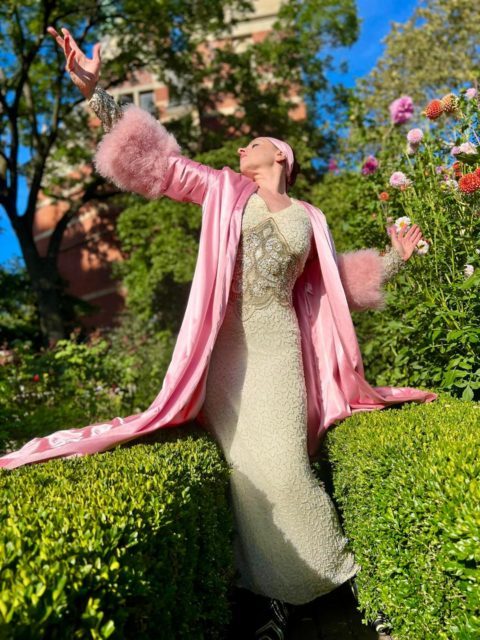
Breton Tyner-Bryan will premiere Reclamation in Jefferson Market Library Garden on October 16 (photo by James Jude Johnson)
Who:Breton Tyner-Bryan,Hugh Ryan, Dajuan Harris, James Jude Johnson, Tatiana Stewart What: World premiere of site-specific work honoring the Women’s House of Detention Where:Jefferson Market Library Garden, 10 Greenwich Ave. at Tenth St. When: Saturday, October 16, free with advance RSVP, 5:00 Why: From March 1932 to June 1972, the Women’s House of Detention held female prisoners, including Ethel Rosenberg, Afeni Shakur, Grace Paley, Angela Davis, Valerie Solanas, and Andrea Dworkin; it was an art deco building in which inmates facing the street could speak with passersby. The structure was demolished in 1973 and replaced with a lovely garden behind the Jefferson Market Library, designed by Pamela Berdan with a wide range of colorful plants and flowers.
On October 16 at 5:00, dancer, choreographer, filmmaker, and teacher Breton Tyner-Bryan will activate the space with the world premiere of Reclamation, a piece directed, choreographed, and performed by Tyner-Bryan, joined by three members of the Breton Follies, Dajuan Harris, James Jude Johnson, and Tatiana Stewart, and featuring an original score by Brooklyn-based composer and pianist Ai Isshiki. The work explores the metaphysical energy and spiritual freedom of the garden and the location’s history, particularly as they relate to the local LGBTQIA+ community. In addition, writer, historian, and curator Hugh Ryan (When Brooklyn Was Queer) will read from his upcoming book, The Women’s House of Detention. The library itself is currently closed; when it reopens, Tyner-Bryan will present her latest films, Invicta and West of Frank, as part of the celebration.
Todd Haynes tells the true story of the Velvet Underground in new documentary opening at Film Forum
THE VELVET UNDERGROUND (Todd Haynes, 2021)
Film Forum
209 West Houston St.
Opens Wednesday, October 13
212-727-8110 filmforum.org
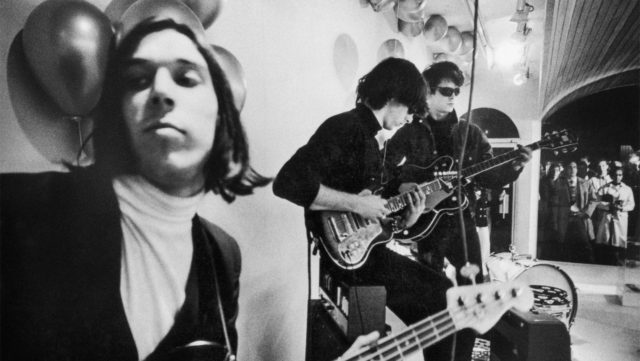
The Velvet Underground was more than just a music group; they electrified a generation, and continue to do so today, half a century later. Todd Haynes, whose 1998 Velvet Goldmine was set in the world of glam rock and whose 2007 I’m Not There explored the career of Bob Dylan through six characters and a nonlinear narrative, now turns his attention to the true story behind the Velvets. Haynes details the history of the band by delving into leaders John Cale and Lou Reed’s initial meeting, the formation of the Primitives with conceptual artists Tony Conrad and Walter DeMaria, and the transformation into the seminal VU lineup at the Factory under Pop icon Andy Warhol’s guidance: singer-songwriter-guitarist Reed, Welsh experimental composer and multi-instrumentalist Cale, guitarist Sterling Morrison, drummer Maureen Tucker, and German vocalist Nico. Much of Haynes’s documentary focuses on Warhol’s position in helping develop and promote the Velvets. “Andy was extraordinary, and I honestly don’t think these things could have occurred without Andy,” Reed, who died in 2013, says. “I don’t know if we would have gotten the contract if he hadn’t said he’d do the cover or if Nico wasn’t so beautiful.”
Haynes and editors Affonso Gonçalves and Adam Kurnitz pace the film like VU’s songs and overall career, as they cut between new and old interviews and dazzling archival photographs and video, frantic and chaotic at first, then slowing down as things change drastically for the band They employ split screens, usually two but up to twelve boxes at a time, to deluge the viewer with a barrage of sound and image. Among the talking heads in the film are composer and Dream Syndicate founder La Monte Young, actress and film critic Amy Taubin, actress and author Mary Woronov, Reed’s sister Merrill Reed-Weiner, early Reed bandmates and school friends Allan Hyman and Richard Mishkin, filmmaker and author John Waters, manager and publicist Danny Fields, composer and philosopher Henry Flynt, and avant-garde filmmaker and poet Jonas Mekas. “We are not part really of the subculture or counterculture. We are the culture!” Mekas, who passed away in 2019 at the age of ninety-six, declares.
Haynes also talks extensively with Cale and Tucker, who hold nothing back, in addition to Morrison’s widow, Martha Morrison; singer-songwriter Jackson Browne, who opened up for the Velvets back in their heyday; and big-time fan Jonathan Richman (of Modern Lovers fame). While everyone shares their thoughts about Warhol, the Factory, the Exploding Plastic Inevitable shows, and the eventual dissolution of the band, Haynes bombards us with clips from Warhol’s Sleep,Kiss,Empire, and Screen Tests (many opposite the people who appear in the film) as well as works by such artists as Maya Deren, Jack Smith, Kenneth Anger, Barbara Rubin, Tony Oursler, Stan Brakhage, and Mekas and paintings by Warhol, Jasper Johns, Robert Rauschenberg, and Mark Rothko. It’s a dizzying array that aligns with such VU classics as “I’ll Be Your Mirror,” “I’m Waiting for the Man,” “Heroin,” “White Light / White Heat,” “Sister Ray,” “Pale Blue Eyes,” and “Sweet Jane.”
Several speakers disparage the Flower Power era, Bill Graham, and Frank Zappa and the Mothers of Invention, with Tucker admitting, “This love-peace crap, we hated that. Get real.” They’re also honest about the group’s own success, or lack thereof. Tucker remembers at their first shows, “We used to joke around and say, ‘Well, how many people left?’ ‘About half.’ ‘Oh, we must have been good tonight.’” And there is no love lost for Reed, who was not the warmest and most considerate of colleagues.
The Velvets still maintain a remarkable influence on music and art today despite having recorded only two albums with Cale (The Velvet Underground and Nico and White Light / White Heat) and two with Doug Yule replacing Cale (The Velvet Underground and Loaded) in a span of only three years. (For example, the tribute album I’ll Be Your Mirror was released in September, featuring VU covers by Michael Stipe, Matt Berninger, Andrew Bird & Lucius, Kurt Vile, St. Vincent & Thomas Bartlett, Thurston Moore & Bobby Gillespie, Courtney Barnett, Iggy Pop & Matt Sweeney, and others.) Haynes (Far from Heaven,Safe) sucks us right into their extraordinary orbit and keeps us swirling in it for two glorious hours of music, gossip, art, celebrity, and backstabbing. The documentary, which premiered earlier this month at the New York Film Festival, opens at Film Forum on October 13 and begins streaming on Apple+ two days later. If you end up watching the film at home, turn it up loud. No, louder than that. Even louder. . . .
[Film Forum will be hosting Q&As with Gonçalves and Kurnitz on October 14 and 16 following the 7:50 shows, and Taubin will introduce the 7:50 screening on October 15. In addition, Haynes will join Gonçalves and Kurnitz at Film Forum for the 7:50 screening on November 12.]
Morgan Danielle Day delivers one of six monologues about motherhood in Matriarch
Who:The Roots and Wings Project What: Livestream of six monologues Where:Houston Coalition Against Hate online When: Friday, October 8, free (donations accepted), 7:00 (available on demand through October 30) Why: The Roots and Wings Project and the Houston Coalition Against Hate have teamed up to present Matriarch, a collection of six monologues and a song exploring the complex relationship between mothers and children in a patriarchal society. Filmed in front of a live, masked audience in the small backyard of the MKM Cultural Arts Center in Los Angeles, the show begins with Lioness, in which writer and Roots and Wings co-executive producer Jesse Bliss rails at an unseen man chastising her for breastfeeding in her parked car. “Fuck that,” she argues. “I’ll feed my baby wherever we need to handle it and it should elicit no kind of reaction and cause no kind of problem. . . . I birthed her, care for her, feed her. I could scream loud as fuck right now and it won’t bother her because we are a team. She wants me to chew your ass out. . . . . You’re trying to make shame out of something beautiful,” immediately establishing motherhood as a nurturing necessity and connection.
In The Truth about Perfecta, written by Obie winner Diane Rodriguez, who died of lung cancer in April 2020, Cristina Frias plays a mother defending herself against racist stereotypes. “I bet when you people look at me, you make assumptions about who I am, where I come from, who I belong to, who I love, how I love, where I live, how I live, who my friends are, how I manage my life, how much money I make, how I treat my kids. Well, don’t do that; you don’t know who I am, and you don’t know how I was raised.”
Some Things You Should Know about My Mom is a eulogy written by Gabriel Diamond and Tamar Halpern and performed by Diamond in front of a music stand. “You’ve been talking about Sandy the friend, the playwright, the sister, the calligrapher, the painter, the poet, all these things,” he says. ”I’m gonna talk about her as the mommy,” proceeding to tell stories about her decision to be a single mother and detailing her death.
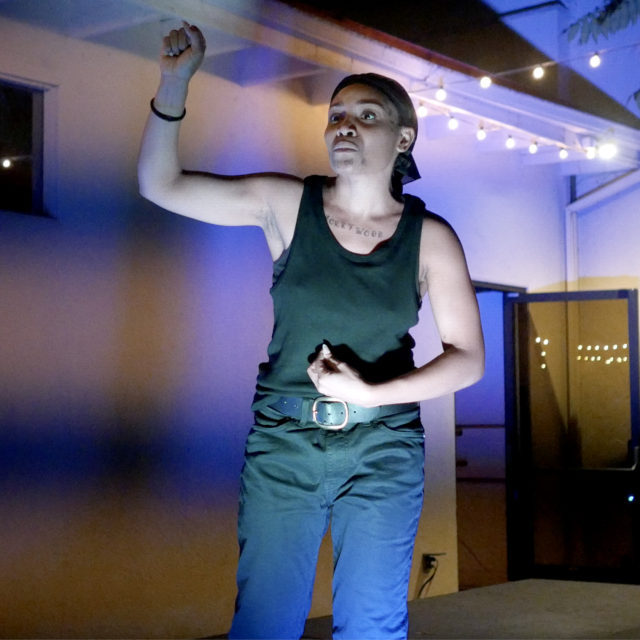
Morgan Danielle Day is explosive as a young woman fighting the system in Taylor Lytle’s The Formula. Wearing a durag and face tattoos, Day fiercely proclaims, “I was criminalized long before I was ever incarcerated. I remember it like it was yesterday.” She recounts how her drug-addicted, sexually abused mother sent her off to foster care. “Now, it may be to you all a surprise that I was actually happy to get a foster home. Now, don’t get the wrong idea. I had a beautiful mother. I admire this woman for her strength. She was loving and caring and did what she could with what she had, period. . . . But there wasn’t a lot of room in this world for a single mother of twelve on welfare.”
Bahni Turpin sits down for Sigrid Gilmer’s Remember This . . . in which she portrays Margaret, a mother who is preparing her daughter for her impending death. “Oh, Angela. Please, dear,” she pleads. “Please, don’t. No tears, my darling. Stop it. I’m not going to discuss it. It is just dying. . . . I will not suffer any more than I have to. I will not waste away. You know, you don’t have to be here when I go.” She also admits, “I should have never had children.”
The evening concludes with Roger Q. Mason’s Age Sex Location, in which a fab Ramy El-Etreby dances onstage in glittery drag and proclaims, “Fat bitch / Black queen / Mixed breed mishap / Round nosed fag hoe / That’s what you think of me / As I walk down the street / My wide hips waddling / My fleshy neck obscuring a too-soft jawline.” He goes on to tell how he was rejected by his mother, father, and doctor, none of whom even tried to understand who he was, who he needed to be. The show also features a song by Sheila Govindarajan in which she sings, “Let me go / set me free,” along with snippets from Lizzo, Talking Heads, Nina Simone, Bob Dylan, Ella Fitzgerald, and Roberta Flack.
Created and directed by Bliss and photographed by Ivan Cordeiro, Matriarch debuts online October 8 at 7:00, followed by a panel discussion with several of the performers and Houston-area domestic violence prevention advocates, including Dr. Nusrat Ameen of Daya and Barbie Brashear of the Harris County Domestic Violence Coordinating Council, moderated by HCAH executive director Marjorie Joseph, and will be available on demand on YouTube and Facebook through October 30.
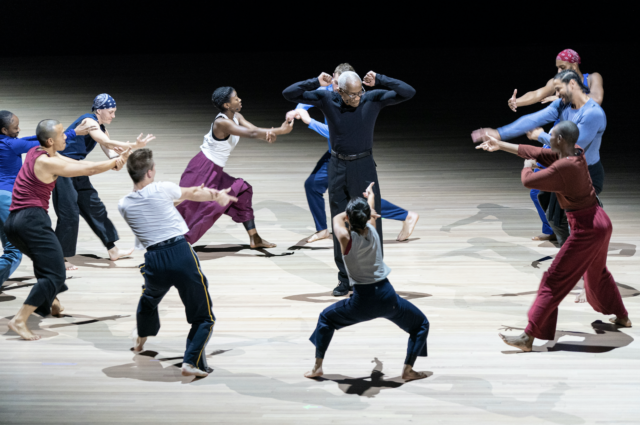
Bill T. Jones’s Deep Blue Sea is set within an illuminating, immersive environment at Park Ave. Armory (photo by Stephanie Berger)
DEEP BLUE SEA
Park Avenue Armory, Wade Thompson Drill Hall
643 Park Ave. at 67th St.
September 28 – October 9, $40
212-933-5812 www.armoryonpark.org
Bill T. Jones is in the midst of yet another well-deserved moment, culminating in the spectacular Deep Blue Sea, continuing at Park Avenue Armory through October 9. During the pandemic, the legendary dancer, choreographer, Kennedy Center honoree, and activist, along with his troupe, the Bill T. Jones/Arnie Zane Company, streamed a reimagined version of 1991’s Continuous Replay. In May, after a one-month delay because of a Covid outbreak in the company, they staged Afterwardsness at Park Ave. Armory, a socially distanced and masked production that addressed racism, police brutality, classism, and the pandemic itself. In July, the documentary Can You Bring It: Bill T. Jones and D-Man in the Waters was released, a thrilling look at Jones’s seminal 1989 piece, D-Man in the Waters, exploring intergenerational tragedy and loss while drawing comparisons between AIDS and other crises.
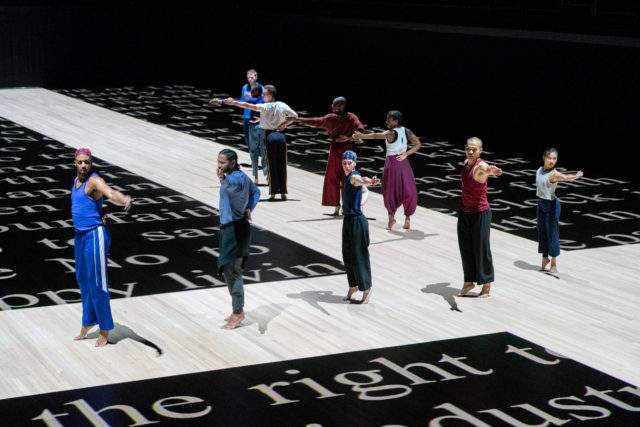
Delayed a year and a half due to the pandemic, Deep Blue Sea is a one-hundred-minute multimedia meditation on being Black in America. As the audience enters the Wade Thompson Drill Hall, which features a large, rectangular central space with ten rows of rafters, starting about ten feet high, on all four sides, Jones, dressed in his trademark black, is moving determinedly across the floor, almost robotically. Some people recognize him; others walk right past him to their seats, oblivious. It’s Jones’s return to performing for the first time in ten years, when he appeared (nude) in a 2011 iteration of Continuous Replay at New York Live Arts. On every seat is a long sheet of paper with writing on both sides, in Jones’s handwriting; it reads in part: “Thank you, Mr. Melville! / Thank you for the Pip / Thank you for his music / Thank you for his fragile fear / Thank you for his loneliness in the ocean . . . / Thank you for not letting him drown. / Thank you for this floor we are moving on. Thank you for the ocean just now pretending to be a stage. / Thank you, Dr. King! . . . Thank you for words that I can shred, misunderstand, mangle and still they meet the air like singing.”
Bill T. Jones stands in the middle of it all in multimedia Deep Blue Sea (photo by Stephanie Berger)
The sixty-nine-year-old Florida native soon starts a long monologue in which he explains that he was disturbed to discover that, upon revisiting Herman Melville’s Moby-Dick, he had completely forgotten about Pip, the young Black cabin boy aboard the Pequod. “Pip was invisible to me,” he recalls. Using that as a metaphor, Jones, joined by ten dancers, delves into the lack of inclusivity in the word “we” in contemporary society. He incorporates text from W. E. B. DuBois’s The Souls of Black Folk, Rev. Dr. Martin Luther King Jr.’s “I Have a Dream” speech, Kendrick Lamar’s “Never Catch Me,” and Moby-Dick, with live gospel, blues, and hip-hop performed by vocalists Philip Bullock, Shaq Hester, Prentiss Mouton, and Stacy Penson in red costumes and Jay St. Flono in more colorful African-inspired dress. (The costumes are by Liz Prince.) The dramatic score was composed by musical director Nick Hallett, accompanied by an electronic soundscape by Hprizm aka High Priest, Rena Anakwe, and Holland Andrews.
Choreographed by Jones, Janet Wong, and the company — Barrington Hinds, Dean Michael Husted, Jada Jenai, Shane Larson, s. lumbert, Danielle Marshall, Nayaa Opong, Marie Lloyd Paspe, Jacoby Pruitt, and Huiwang Zhang — Deep Blue Sea immerses the audience in a breathtaking visual environment designed by Elizabeth Diller, of Diller Scofidio + Renfro, with award-winning projection designer Peter Nigrini (Here Lies Love,Beetlejuice); the superb lighting is by Robert Wierzel. (You can watch an artist talk with Diller, Nigrini, and Hinds here.) I suggest wearing a white or light-blue mask for an added bonus when it gets dark.
The surprises are many, from a black spotlight following Jones to white spotlights on the other dancers that merge into amorphous bubbles, from mirrors that turn the space into a kind of three-dimensional infinity room to the appearance of a calming, gently rolling ocean. Snippets of text roll beneath the dancers. The face of a boy representing Pip dominates the floor, blinking up at us. Jones refers to the dancers by name several times, giving each their own identity and voice. Wearing everyday clothing, they run across the stage, form into a tight group, and line up on their backs, asserting themselves as individuals and a close-knit group. Jones expands the idea of community with an overly long though visually engaging conclusion in which ninety-nine local people share personal statements that begin, “I know . . . ,” after which the audience is encouraged to come down and mingle, becoming an ever-expanding “we.”
“[Pip] saw God’s foot upon the treadle of the loom, and spoke it; and therefore his shipmates called him mad,” Melville writes in Moby-Dick. “So man’s insanity is heaven’s sense; and wandering from all mortal reason, man comes at last to that celestial thought, which, to reason, is absurd and frantic; and weal or woe, feels then uncompromised, indifferent as his God.” At one point in Deep Blue Sea, the phrase “You can’t turn back” is projected onto the floor, Jones’s uncompromising approach to providing a way forward through indifference.
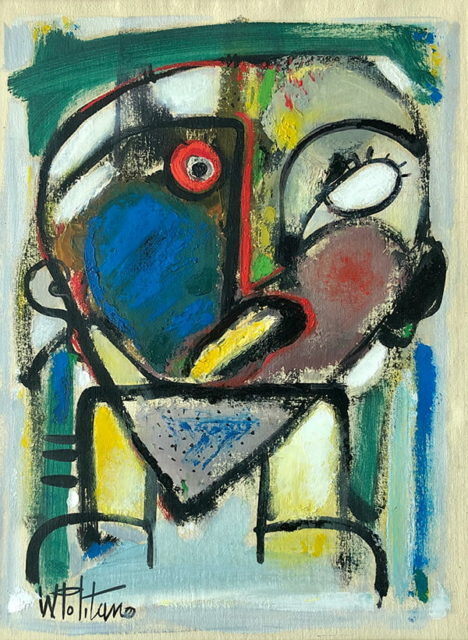
Wladimiro Politano, The Expression of the Soul XLIX, 2010
Who: Mariana Valencia, Jimena Paz, Shamel Pitts, Francesca Harper, Francisco Cordova, Ernesto Breton/Rudy Perez, Edivaldo Ernesto, Horacio Macuacua, Emilio Rojas, Claudia Rankine, Margo Jefferson, Antonio Sánchez Band, Jonathan Mendoza, Gina Belafonte, Xaviera Simmons, Enrique Morones, Roger H. Brown, Raoul Roach, Adelita-Husni-Bey, Reverend Micah Bucey What: Dance, poetry, music, film, and activism at historic location Where: Judson Memorial Church, 55 Washington Square South between Thompson & Sullivan Sts. When: Saturday, October 2, free with RSVP (suggested donation $20), 11:00 am – 6:30 pm; ninety-minute recorded version the next day at the Jersey City Theater Center Why: An all-star lineup of artists and activists are coming together October 2 at Judson Memorial Church for “Movement without Borders: A Day of Performance to Celebrate New York Immigration Coalition, UnLocal, and Gente Unida,” honoring three organizations fighting for immigration rights. From 11:00 am to 6:30 pm, dancers and choreographers, musicians, poets, authors, visual artists, and more will honor the work being done by New York Immigration Coalition,UnLocal, and Gente Unida. Among the presenters are dancer/choreographers Mariana Valencia, Ernesto Breton/Rudy Perez, Jimena Paz, Francisco Cordova, Horacio Macuacua, Francesca Harper, Edivaldo Ernesto, and Shamel Pitts/TRIBE, multidisciplinary artist Emilio Rojas, the Antonio Sánchez Band (with Sánchez, Thana Alexa, Jordan Peters, Carmen Staaf, Noam Wiesenberg), Adelita Husni-Bey (who will screen her film Chiron), visual artist Xaviera Simmons, poets Jonathan Mendoza and Claudia Rankine, Gente Unida founder and director Enrique Morones, Sankofa executive director Gina Belafonte, music producer and activist Raoul Roach, and others. Conceived, directed, and produced by Richard Colton, “Movement without Borders” will also be available in a ninety-minute recorded version on October 3 at the Jersey City Theater Center as part of the third annual Voices International Theater Festival.
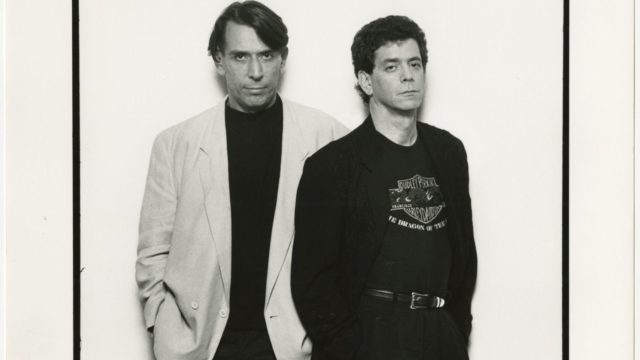
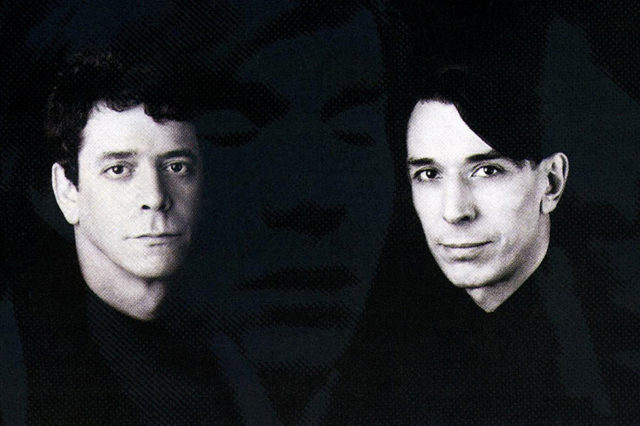
John Cale and Lou Reed reunite to honor Andy Warhol in Songs for ’Drella
SONGS FOR ’DRELLA (Ed Lachman, 1990)
New York Film Festival, Lincoln Center
Francesca Beale Theater, Elinor Bunin Munroe Film Center
144 West 65th St. between Broadway & Amsterdam Ave.
Tuesday, October 5, 4:30 www.filmlinc.org
In December 1989, Velvet Underground cofounders John Cale and Lou Reed took the stage at BAM’s Howard Gilman Opera House and performed a song cycle in honor of Andy Warhol, who had played a pivotal role in the group’s success. The Pittsburgh-born Pop artist had died in February 1987 at the age of fifty-eight; although Cale and Reed had had a long falling-out, they reunited at Warhol’s funeral at the suggestion of artist Julian Schnabel. Commissioned by BAM and St. Ann’s, Songs for ’Drella — named after one of Warhol’s nicknames, a combination of Dracula and Cinderella — was released as a concert film and recorded for an album. The work is filled with factual details and anecdotes of Warhol’s life and career, from his relationship with his mother to his years at the Factory, from his 1967 shooting at the hands of Valerie Solanis to his dedication to his craft.
Directed, photographed, and produced by Ed Lachman, the two-time Oscar-nominated cinematographer of such films as Desperately Seeking Susan,Mississippi Masala,Far from Heaven, and Carol — Lachman also supervised the 4K restoration being shown at the New York Film Festival this week — Songs for ’Drella is an intimate portrait not only of Warhol but of Cale and Reed, who sit across from each other onstage, Cale on the left, playing keyboards and violin, Reed on the right on guitars. There is no between-song patter or introductions; they just play the music as Robert Wierzel’s lighting shifts from black-and-white to splashes of blue and red. Photos of Warhol and some of his works (Electric Chair,Mona Lisa,Gun) are occasionally projected onto a screen on the back wall.
“When you’re growing up in a small town / Bad skin, bad eyes — gay and fatty / People look at you funny / When you’re in a small town / My father worked in construction / It’s not something for which I’m suited / Oh — what is something for which you are suited? / Getting out of here,” Reed sings on the opener, “Smalltown.” Cale and Reed share an infectious smile before “Style It Takes,” in which Cale sings, “I’ve got a Brillo box and I say it’s art / It’s the same one you can buy at any supermarket / ’Cause I’ve got the style it takes / And you’ve got the people it takes / This is a rock group called the Velvet Underground / I show movies of them / Do you like their sound / ’Cause they have a style that grates and I have art to make.”
Songs for ’Drella is screening at NYFF59 in new 4K restoration
Cale and Reed reflect more on their association with Warhol in “A Dream.” Cale sings as Warhol, “And seeing John made me think of the Velvets / And I had been thinking about them / when I was on St. Marks Place / going to that new gallery those sweet new kids have opened / But they thought I was old / And then I saw the old DOM / the old club where we did our first shows / It was so great / And I don’t understand about that Velvets first album / I mean, I did the cover / and I was the producer / and I always see it repackaged / and I’ve never gotten a penny from it / How could that be / I should call Henry / But it was good seeing John / I did a cover for him / but I did it in black and white and he changed it to color / It would have been worth more if he’d left it my way / But you can never tell anybody anything / I’ve learned that.”
The song later turns the focus on Reed, recalling, “And then I saw Lou / I’m so mad at him / Lou Reed got married and didn’t invite me / I mean, is it because he thought I’d bring too many people? / I don’t get it / He could have at least called / I mean, he’s doing so great / Why doesn’t he call me? / I saw him at the MTV show / and he was one row away and he didn’t even say hello / I don’t get it / You know I hate Lou / I really do / He won’t even hire us for his videos / And I was so proud of him.”
Reed does say hello — and goodbye — on the closer, “Hello It’s Me.” With Cale on violin, Reed stands up with his guitar and fondly sings, “Oh well, now, Andy — I guess we’ve got to go / I wish some way somehow you like this little show / I know it’s late in coming / But it’s the only way I know / Hello, it’s me / Goodnight, Andy / Goodbye, Andy.”
It’s a tender way to end a beautiful performance, but Lachman has added a special treat after the credits, with one final anecdote and the original trailer he made for Reed’s 1974 song cycle, Berlin.Songs for ’Drella is screening October 5 at 4:30 at the Francesca Beale Theater; it is also being shown October 2 prior to the free outdoor presentation of Todd Haynes’s new documentary, The Velvet Underground, in Damrosch Park, which will be followed by a Q&A with Lachman and Haynes. Lachman and Haynes will also be part of a Q&A with producers Christine Vachon and Julie Goldman and editors Affonso Gonçalves and Adam Kurnitz at the September 30 screening of The Velvet Underground at Alice Tully Hall; Cale was supposed to attend but has had to cancel.
Todd Haynes documents the history of the Velvet Underground in new film
THE VELVET UNDERGROUND (Todd Haynes, 2021)
Thursday, September 30, Alice Tully Hall, 6:00
Saturday, October 2, Damrosch Park, 7:00
Film Comment Live: The Velvet Underground & the New York Avant-Garde, Sunday, October 3, Damrosch Park, free, 4:00 www.filmlinc.org
Much of Haynes’s documentary, which will have its theatrical premiere October 14–21 at the Walter Reade (and streaming on Apple+ beginning October 15), focuses on Warhol’s position in helping develop and promote the Velvets. “Andy was extraordinary, and I honestly don’t think these things could have occurred without Andy,” Reed, who died in 2013, says. “I don’t know if we would have gotten the contract if he hadn’t said he’d do the cover or if Nico wasn’t so beautiful.”
Haynes details the history of the group by delving into Cale and Reed’s initial meeting, the formation of the Primitives with conceptual artists Tony Conrad and Walter DeMaria, and the transformation into the seminal VU lineup at the Factory under Warhol’s guidance — singer-songwriter-guitarist Reed, Welsh experimental composer and multi-instrumentalist Cale, guitarist Sterling Morrison, drummer Maureen Tucker, and German vocalist Nico.
Haynes and editors Gonçalves and Kurnitz pace the film like VU’s songs and overall career, as they cut between new and old interviews and dazzling archival photographs and video, frantic and chaotic at first, then slowing down as things change drastically for the band They employ split screens, usually two but up to twelve boxes at a time, to deluge the viewer with a barrage of sound and image. Among the talking heads in the film are composer and Dream Syndicate founder La Monte Young, actress and film critic Amy Taubin, actress and author Mary Woronov, Reed’s sister Merrill Reed-Weiner, early Reed bandmates and school friends Allan Hyman and Richard Mishkin, filmmaker and author John Waters, manager and publicist Danny Fields, composer and philosopher Henry Flynt, and avant-garde filmmaker and poet Jonas Mekas. “We are not part really of the subculture or counterculture. We are the culture!” Mekas, who passed away in 2019 at the age of ninety-six, declares.
Haynes, who has made such previous music-related films as Velvet Goldmine, set in the 1970s glam-rock era, and I’m Not There, a fictionalized musical inspired by the life and career of Bob Dylan, also speaks extensively with Cale and Tucker, who hold nothing back, in addition to Sterling Morrison’s widow, Martha Morrison; singer-songwriter Jackson Browne, who opened up for the Velvets; and big-time fan Jonathan Richman (of Modern Lovers fame). While everyone shares their thoughts about Warhol, the Factory, the Exploding Plastic Inevitable shows, and the eventual dissolution of the band, Haynes bombards us with clips from Warhol’s Sleep,Kiss,Empire, and Screen Tests (many opposite the people who appear in the film) as well as works by such artists as Maya Deren, Jack Smith, Kenneth Anger, Barbara Rubin, Tony Oursler, Stan Brakhage, and Mekas and paintings by Warhol, Jasper Johns, Robert Rauschenberg, and Mark Rothko. It’s a dizzying array that aligns with such VU classics as “I’ll Be Your Mirror,” “I’m Waiting for the Man,” “Heroin,” “White Light / White Heat,” “Sister Ray,” “Pale Blue Eyes,” and “Sweet Jane.”
Several speakers disparage the Flower Power era, Bill Graham, and Frank Zappa and the Mothers of Invention, with Tucker admitting, “This love-peace crap, we hated that. Get real.” They’re also honest about the group’s own success, or lack thereof. Tucker remembers at their first shows, “We used to joke around and say, ‘Well, how many people left?’ ‘About half.’ ‘Oh, we must have been good tonight.’” And there is no love lost for Reed, who was not the warmest and most considerate of colleagues.
The Velvets continue to have a remarkable influence on music and art today despite having recorded only two albums with Cale (The Velvet Underground and Nico and White Light / White Heat) and two with Doug Yule replacing Cale (The Velvet Underground and Loaded) in a span of only three years. Haynes (Far from Heaven,Safe) sucks us right into their extraordinary world and keeps us swirling in it for two glorious hours of music, gossip, art, celebrity, and backstabbing. If you end up watching the film at home, turn it up loud. No, louder than that. Even louder. . . .
LUNGS HARVEST ARTS FESTIVAL
Multiple locations
Daily through October 3, free
“The Great Aria Throwdown #2 — LES Edition”
Campos Community Garden, 640-644 East Twelfth St. at Ave. C
Friday, October 1, 6:30 www.lungsnyc.org
In 2011, community gardens in Loisaida, the Lower East Side, and the East Village came together and formed LUNGS, the Loisaida United Neighborhood Gardens; its mission is “to promote, protect, and preserve gardening and greening through cooperation, coordination, and communication.” The group is now hosting its tenth annual LUNGS Harvest Arts Festival, which runs through October 3 with free music and dance, knitting, activism, art exhibits, yoga, a dominos tournament, interactive workshops, classes, a treasure hunt, and more, in such locations as Green Oasis, Carmen’s Garden, LaGuardia Corner Gardens, Orchard Alley Community Garden, Creative Little Garden, La Plaza Cultural de Armando Perez, 6BC Botanical Garden, and other lovely oases.
One of the highlights is “The Great Aria Throwdown #2 — LES Edition,” taking place October 1 at 6:30 in Campos Community Garden on Twelfth St. & Ave. C. Presented by dell’Arte Opera Ensemble (dAOE), the evening features sopranos Bahati Barton and Diana Charlop, mezzo-soprano Perri di Christina, countertenor Jeffrey Mandelbaum, and pianist Pablo Zinger performing works by Bellini, Donizetti, Mozart, Purcell, and others.
“Dell’Arte Opera Ensemble is a bridge for emerging opera singers to work with accomplished professionals in the field,” dAOE executive director Marianna Mott Newirth explains. “‘The Great Aria Throwdown’ is a fun and free event that gives ‘stage’ to three sopranos and an outstanding countertenor singing with widely acclaimed pianist Pablo Zinger, producing a growing garden of sound on East Twelfth St. From Bellini to Monteverdi, we’re bringing opera to the LES! Campos Garden even has a chandelier they plan to raise just as the show begins — a nod to the new season starting at the Met after a year of darkness.” Below is the full program.
Diana Charlop: “Quel guardo il cavaliere” from Don Pasquale (Bellini)
Perri di Christina: “Deh, non voler costringere” from Anna Bolena (Donizetti)
Bahati Barton: “Ruhe Sanft” from Zaide (Mozart)
Jeffrey Mandelbaum: “If Music Be the Food of Love” (Purcell, Third Version)
Diana Charlop: “Padre germani addio” from Idomeneo (Mozart)
Perri di Christina: “Voi che sapete” from Le nozze di Figaro (Mozart)
Jeffrey Mandelbaum: “Sprezzami quanto sai” from L’incoronazione di Poppea (Monteverdi)
Perri di Christina: “Faites-lui mes aveux” from Faust (Gounod)
Bahati Barton: “Think of Me” from The Phantom of the Opera (Lloyd Webber)
Diana Charlop: “Obéissons quand leur voix appelle” from Manon (Massenet)
Jeffrey Mandelbaum: “Fra tempeste” from Rodelinda (Handel)