this week in lectures, signings, panel discussions, workshops, and Q&As

NOT A MOMENT, BUT A MOVEMENT: THE DUAT

Gregg Daniel plays a man facing judgment day in world premiere of The Duat

THE DUAT
Center Theatre Group
Available on demand through August 12, $10
www.centertheatregroup.org

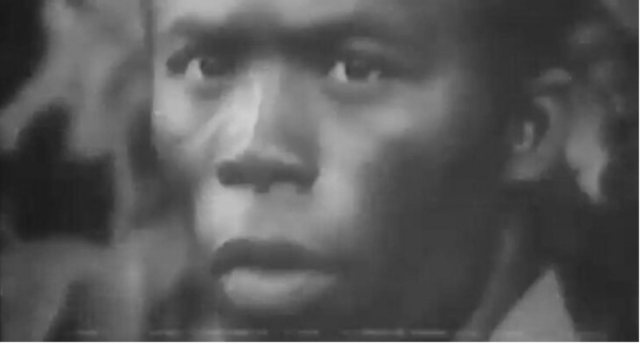
Gregg Daniel is electric as a man caught between heaven and hell, defending the choices he made in his life, in the world premiere of Roger Q. Mason’s one-man show, The Duat, streaming from Center Theatre Group through August 12. Daniel plays Cornelius “Neil” Johnson, a Black man who, when we first see him, is blindfolded and barefoot. “If I’m in hell, I want to know. I want to see the fire before it takes me down,” he calls out, dancing as if the floor is burning hot. He’s actually in the Duat, the Egyptian underworld where the god Anubis weighs the hearts of the dead to determine where they will spend the afterlife.

Over the course of forty-five minutes, Johnson shares his story, starting with his birth in Texas in 1948 and the tragic death of his father, a railroad porter, four years later. Johnson visits his grandmama, attends a liberal integrated elementary school, excels at UCLA, and becomes a driver for a wealthy white woman. Daniel seamlessly switches between characters, from his angry mother to his brash father to his sensible, soft-spoken grandmother, performing brief, urgent interpretive dance movements at the end of each scene (choreographed by Michael Tomlin III). He is haunted by his father’s fate, dying “a colored death,” and is determined to have his own, unique identity. “I am somebody,” he says in different ways throughout the play, as if Johnson is trying to convince himself that he matters, that he will be seen. But trouble brews when he recounts his time with the US organization, a rival to the Black Panthers, as Johnson does something that he regrets.

Presented in association with the Fire This Time Festival and Watts Village Theater Company, The Duat is part of the third episode of the “Not a Moment, But a Movement” series; the first episode was introduced by Vanessa Williams and featured Angelica Chéri’s one-person play Crowndation; I Will Not Lie to David, while the second episode explored “Black Nourishment” with spoken word artists. The Duat is preceded by a conversation with Watts co-artistic director Bruce A. Lemon Jr. and LA-based visual artist Floyd Strickland and is introduced by Wayne Brady.

The Duat unfolds in the tradition of such solo-show geniuses as Anna Deavere Smith, Dael Orlandersmith, and Charlayne Woodard, as Daniel (Insecure, Urban Nightmares) portrays multiple characters detailing the Black experience in America. He doesn’t change costumes but alters his tone of voice as the narrative sometimes repeats itself from different points of view. Director Taibi Magar (Is God Is, Blue Ridge) zooms in for closeups of Daniel’s face and feet, then pulls back to reveal percussionist David Leach playing several instruments in the background, the spotlight behind him casting him in silhouette. (The effective lighting is by Brandon Baruch, with sound design and original music by David Gonzalez.) Mason (The White Dress, Onion Creek) pulls no punches as Johnson looks back at his life, warts and all, trying to understand who he is and what awaits him.

PUPPET WEEK NYC

THE INTERNATIONAL PUPPET FRINGE FESTIVAL
The Clemente Center, 107 Suffolk St.
Museum of the City of New York, 1220 Fifth Ave.at 104th St.
August 11-15 live, August 16-31 online, most events free
puppetfringenyc.com
www.theclementecenter.org

“I could never be on stage on my own. But puppets can say things that humans can’t say,” British comedian, actress, and ventriloquist Nina Conti once explained. You can see a bevy of puppets this month at the International Puppet Fringe Festival, running August 11-15 in person at the Clemente on the Lower East Side, with a few special programs at the Museum of the City of New York, then moving online August 16-31. The fest, hosted by Teatro SEA and the Clemente, is part of the inaugural Puppet Week NYC and features a wide range of programming involving puppets, including live presentations, book readings, workshops, panel discussions, exhibition openings, and panel discussions, most of which are free. “The Clemente is a fitting home for the festival’s events, as puppetry found an early home here in the 1990s and we continue to foster diverse puppet performances in our theater spaces,” Clemente executive director Libertad Guerra said in a statement. “Our hope is that Puppet Week NYC draws attention to this thriving and evolving art form uniting theater with all the visual arts and attracting people of all ages, backgrounds, and cultural identities.”

International Puppet Fringe Festival founder and producer Dr. Manuel Morán added, “During the pandemic, when our curtains couldn’t go up, our roster of puppet makers and puppeteers were eagerly preparing to enthrall audiences with their creative talents, and we can’t wait to finally share their work with you.” This year’s honoree is Vincent Anthony, founder of the Center for Puppetry Arts. Below is the full schedule. Oh, and don’t forget what writer and illustrator Guy Davenport once warned: “I’ve carved the puppet, and I manipulate the strings, but while it’s on stage, the show belongs to the puppet.”

Wednesday, August 11
“Dream Puppet” Making Workshop with Marina Tsaplina, El jardín del paraíso Community Garden, noon – 8:00
Papier-Maché in a Two-Day Workshop, part 1, $50, 2:00
“Puppets of New York: Downtown at the Clemente” exhibition opening, 5:00
Puppet Celebrity Red Carpet, 5:30
Opening Remarks and festival’s dedication to Vincent Anthony, 6:00
The Triple Zhongkui Pageant by Chinese Theatre Works, 6:30
Los Grises/The Gray Ones by SEA, 7:00
The Shari Lewis Legacy Show by Mallory Lewis and Lamb Chop, 8:00

Thursday, August 12
Construction and Hybrid Puppets Manipulation Workshop by Carolina Pimentel, $50, 10:00 am
“Dream Puppet” Making Workshop with Marina Tsaplina, El jardín del paraíso Community Garden, noon – 8:00
Títeres en el Caribe Hispano: Episode 1: Cuba, Episode 2: Dominican Republic, Episode 3: Puerto Rico, 1:00
Papier-Maché in a Two-Day Workshop, part 1, $50, 2:00
Puppet Celebrity Red Carpet, hosted by Mallory Lewis and Lamb Chop, 6:00
“Puppets of New York” Opening Celebration, Museum of the City of New York, 7:00
Los Grises/The Gray Ones by SEA, 7:00
Muppets Take Manhattan (Frank Oz, 1984), $15, 8:00

Friday, August 13
Construction and Hybrid Puppets Manipulation Workshop by Carolina Pimentel, $50, 10:00 am
“Dream Puppet” Making Workshop with Marina Tsaplina, El jardín del paraíso Community Garden, noon – 8:00
Out of the Shadows Panel: A Conversation about the Henson Festivals, with Leslee Asch, Cheryl Henson, Dan Hurlin, Manuel Moran, and Michael Romanyshyn, 4:00
Karagoz by U.S. Karagoz Theatre Company, 4:00
Salt Over Gold and other Czech & Slovak fairy tales with strings by Czechoslovak American Marionette Theatre, 5:00
Handmade Puppet Dreams: Dreamscapes, short films for adults, 5:00
La Macanuda by Deborah Hunt, 6:00
The Triple Zhongkui Pageant by Chinese Theatre Works, 6:30
Los Grises/The Gray Ones by SEA, 7:00
Puppet Slam / Cabaret: Great Small Works Spaghetti Dinner, with Bruce Cannon, Piedmont Bluz, and Valerie and Benedict Turner, 8:00

Saturday, August 14
Little Red’s Hood by Swedish Cottage Marionette Theatre, 11:00 am
Penguin in My Pocket by Kurt Hunter, 11:00 am
Handmade Puppet Dreams: Kidscapes, short films for children, noon
NIMA-USA Symposium: Conversations on Puppetry, Social Justice, and Diversity: Part 1, with Jacqueline Wade, Kuang-Yu Fong, and Ginew Benton, moderated by Claudia Orenstein, noon
2-D Puppet Workshop for kids by Junktown Duende, 1:00
Los Colores de Frida / The Colors of Frida by SEA, 1:00
The Marzipan Bunny by A Couple of Puppets, 1:00
Chicken Soup, Chicken Soup by WonderSpark Puppets, 1:00
Títeres en el Caribe Hispano: Episode 1: Cuba y Episode 3: Puerto Rico, 2:00
Teatro SEA’s Theatre Book Series Presentation, 2:30
Beautiful Blackbird: An African Folktale by Lovely Day Creative Arts, 3:00
Once Upon a Time in the Lower East Side . . . by JunkTown Duende, 4:00
Karagoz by U.S. Karagoz Theatre Company, 4:00
Puppet States by Paulette Richards, 5:00
Salt Over Gold and other Czech & Slovak fairy tales with strings by Czechoslovak American Marionette Theatre, 5:00
La Macanuda by Deborah Hunt, 6:00
The Triple Zhongkui Pageant by Chinese Theatre Works, 6:30
Los Grises/The Gray Ones by SEA, 7:00
The Puppetry Guild of Greater NY presents . . . The Bawdy Naughty Puppet Cabaret, 8:00

Sunday, August 15
Little Red’s Hood by Swedish Cottage Marionette Theatre, 11:00 am
Beautiful Blackbird: An African Folktale by Lovely Day Creative Arts, 11:00 am
The Marzipan Bunny by A Couple of Puppets, 11:00 am
Giant Puppet Encounter & Mascot Encounter, 11:30 am
Handmade Puppet Dreams: Kidscapes, short films for children, noon
Chicken Soup, Chicken Soup by WonderSpark Puppets, 1:00
2-D Puppet Workshop for kids by Junktown Duende, 1:00
Penguin in My Pocket by Kurt Hunter, 1:00
Títeres en el Caribe Hispano: Episode 2: República Dominicana and Episode 3: Puerto Rico, 2:00
The Pura Belpré Project by SEA, 3:00
Harlem River Drive by Bruce Cannon, 3:00
Karagoz by U.S. Karagoz Theatre Company, 4:00
Once Upon a time in the Lower East Side . . . by JunkTown Duende, 5:00
Salt Over Gold and other Czech & Slovak fairy tales with strings by Czechoslovak American Marionette Theatre, 5:00
La Macanuda by Deborah Hunt, 6:00
The Triple Zhongkui Pageant by Chinese Theatre Works, 6:30
Los Grises/The Gray Ones by SEA, 7:00
Puppet Dance Party, 8:00

Tuesday, August 17
A Conversation with Vincent Anthony, hosted by Dr. Manuel Morán and John Ludwig, 7:00

Thursday, August 19
Puppetry 101 with Aretta Baumgartner, 7:00

Friday, August 20
Handmade Puppet Dreams: Kidscapes, short films for children, noon
Handmade Puppet Dreams: Dreamscapes, short films for adults, 5:00

Saturday, August 21
Puppetry Museums around the World Panel, noon

Tuesday, August 24
Puppetry and Its Healing Properties in Therapy, hosted by Erica Scandoval and Karen Ciego, 7:00

Thursday, August 26
UNIMA-USA Symposium: Conversations on Puppetry, Social Justice, and Diversity: Part 2, with Monxo Lopez, Paulette Richards, Jungmin Song, and Edna Bland, moderated by Claudia Orenstein, 7:00

Friday, August 27
Handmade Puppet Dreams: Dreamscapes, short films for adults, 8:00

Saturday, August 28
Conversations with Puppet Fringe Artists and Troupes in English, noon

Tuesday, August 31
“Glocal” Rethinking, American Puppetry: Opening Eyes Wider by UNIMA-USA’s World Encyclopedia Puppetry Arts, with Karen Smith and Kathy Foley, 7:00

THE VIEWING BOOTH

Maia Levy is the unexpected subject of Ra’anan Alexandrowicz’s The Viewing Booth

THE VIEWING BOOTH (Ra’anan Alexandrowicz, 2020)
Museum of the Moving Image, Bartos Screening Room
35th Ave. at 36th St., Astoria
August 6-15
718-777-6800
www.movingimage.us

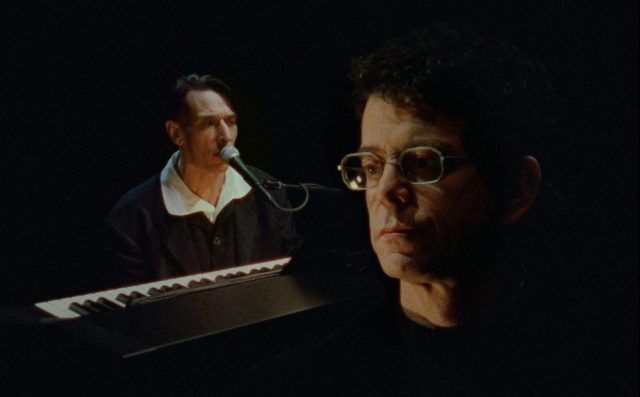
“There’s a lot for me to learn from your viewing,” Israeli filmmaker Ra’anan Alexandrowicz tells Jewish American college student Maia Levy before turning the camera on us in the ingenious documentary The Viewing Booth, running August 6-15 at the Museum of the Moving Image. The seventy-one-minute work developed out of an experiment Alexandrowicz was doing at Temple University in Philadelphia, individually filming a small group of young men and women watching internet video clips of interactions between Israelis and Palestinians in the occupied territories of the Gaza Strip; in previous films such as The Law in These Parts and The Inner Tour — both of which will also be shown at MoMI — the Jerusalem-born Alexandrowicz has made clear his support of the Palestinians in this conflict. But along the way, his focus switched specifically to Levy, whose thoughtful, careful evaluations of the scenes and acknowledgment of her pro-Israel bias are mesmerizing. We end up seeing far more of Levy’s captivating face and exploring eyes than the videos themselves as the film challenges the viewer to rethink how they experience politically charged videos.

The film takes place in a small studio at Temple, where Levy sits in a closed-off room with a large window; Alexandrowicz mans a table with two monitors and editing equipment that he adjusts as Levy observes the videos. The director cuts between shots of Levy’s face, the videos themselves, and him watching Levy on his monitors, occasionally speaking with her. Six months later, he invites Levy back so she can watch herself watching the videos and comment on that as well. It’s absolutely gripping studying Levy as she interprets and reinterprets the videos, some of which were posted by B’Tselem, the Jerusalem-based Israeli Information Center for Human Rights in the Occupied Territories, whose mission is to end the occupation; others are from unidentified sources. Alexandrowicz does not give Levy any additional details about the clips, even though he knows more about some of them, instead letting her navigate the images as if she were home by herself, surfing the internet.

In one scene, a Palestinian boy hugs an Israeli soldier who gives him food. In another, a group of young men throw rocks at someone recording them from an apartment, unclear at first who is who. In a third, an Israeli soldier snatches a young Palestinian boy and a second soldier kicks the child. The majority of the film concentrates on a longer video of a masked Israeli military unit searching the home of a Palestinian family in the middle of the night, forcing the parents to wake up the children as rifles are pointed at them. Levy scrutinizes every detail of the video, wondering if it was staged, considering what was happening just off camera, thinking the boy might be lying when he gives a wrong name that his father quickly corrects.

Levy innately understands that she brings her own personal bias and mistrust of B’Tselem to her interpretation. “I view it from an objective point,” she says. “I don’t really get my information from it. The point is, these things do happen; whether they skew the filming and everything, it still does happen, it’s still there. Yeah, they probably play a lot with it, and there is a lot of bias and things and they don’t show you the whole picture, but, I guess it’s true to some extent. That’s what it seems like.” This questioning of what is real and what isn’t is intriguing to Alexandrowicz, a documentarian whose career has been spent making nonfiction films; Levy even notes that Alexandrowicz makes choices — subjects, edits, camera angles — that impact what people see and don’t see in his work.

In his 2018 essay “50 Years of Documentation: A Brief History of the Documentation of the Israeli Occupation,” Alexandrowicz writes, “After viewing hundreds of news reports, films, and online videos about this subject, I found myself asking: What has all this documentation achieved? What has been the documentation’s role in this tragic piece of history? Visual culture scholars have long argued that images do not merely depict reality; they also perform and create reality. Then what is the relationship between the audiovisual documentation of the Israeli Occupation and the reality it claims to portray? These questions have led me to a wider inquiry about the role that documentation practices play in shaping historical, political, and social issues.” The Viewing Booth might ostensibly be about Israelis and Palestinians, but it also illuminates the great divide in America as political affiliation appears to affect how we evaluate actual footage; it seems impossible to escape from the diametrically opposed analyses of the murder of George Floyd, the BLM protests, the January 6 insurrection, and a Catholic high school student’s interaction with a Native American man at a MAGA rally.

Recognizing that many people won’t even watch videos that they presuppose will contradict their belief system, Levy offers, “I think people are scared, that they don’t watch them because they’re scared that they’re going to change their minds about it. They’re going to be, like, Wow, this is bad, and maybe I’m not so pro-Israel as I thought I would be. I think if you accept reality, then these things don’t really make or break your viewpoints. I don’t think that this can really, like . . . they can be informative to some extent, but you have to be careful.”

Alexandrowicz was inspired to make the film by Virginia Woolf’s book Three Guineas One, which grew out of a letter she was responding to about how to prevent war; she begins by discussing the visual depiction of war in newspapers and magazines. “But besides these pictures of other people’s lives and minds — these biographies and histories — there are also other pictures — pictures of actual facts; photographs. Photographs, of course, are not arguments addressed to the reason; they are simply statements of fact addressed to the eye. But in that very simplicity there may be some help. Let us see then whether when we look at the same photographs we feel the same things.” As we’ve learned over these last few years, we most often see and feel what we want to see and feel despite watching the same exact nonfiction footage.

The Israeli title of The Viewing Booth is The Mirror, a much more apt name, as we put ourselves in Levy’s position, with all our inherent biases and fears, and hopefully look at ourselves to reflect on how we watch such videos, which generally come to us through social media algorithms that keep us in our preferred bubbles or from friends who think as we do, reinforcing our beliefs. “You are the viewer that I’ve been making these films for,” Alexandrowicz tells Levy. In the case of The Viewing Booth, that is not quite true; we are all the viewers he has made this film for.

Alexandrowicz will be at MoMI for a live conversation with film critic Alissa Wilkinson following the 7:00 screening on August 6, and he will be back for the 5:00 screening on August 8 with Levy. The Viewing Booth might not change your belief system, but it will change the way you experience online nonfiction video.

THE PARIS THEATER GRAND REOPENING

Radha Blank’s Netflix hit The 40-Year-Old Version opens the renovated Paris Theater

THE PARIS THEATER
4 West Fifty-Eighth St. at Fifth Ave.
Reopens August 6
www.paristheaternyc.com

To slightly misquote Rick Blaine (Humphrey Bogart) in Casablanca, “We’ll always have the Paris.” Following the pandemic lockdown and a major renovation, the Paris Theater, New York City’s historic single-screen cinema, is officially reopening on August 6 with special programming. The longest-running arthouse in the Big Apple has been presenting films since 1948, when it showed Jean Delannoy’s La Symphonie pastorale; over the years it has screened classic works by such international auteurs as Jean Renoir, Roberto Rossellini, Marcel Pagnol, Orson Welles, Ingmar Bergman, Louis Malle, Jean-Luc Godard, Jacques Demy, Agnieszka Holland, and Bernardo Bertolucci.

The Arte Moderne theater was purchased by Netflix in November 2019 to keep it from closing; to celebrate its reopening, the Paris will be hosting the New York City theatrical premiere of Radha Blank’s Netflix hit, The Forty-Year-Old Version, the Williamsburg native’s breakthrough autobiographical film about a struggling playwright that she wrote, directed, produced, and stars in, accompanied by a selection of hip-hop videos.

“I made Forty-Year-Old Version in 35mm black and white in the spirit of the many great films that informed my love of cinema” Blank said in a statement. “I’m excited to show the film in 35mm as intended and alongside potent films by fearless filmmakers who inspired my development as a storyteller and expanded my vision of what’s possible in the landscape of cinema. That Forty-Year-Old Version gets to screen alongside them at the Paris Theater, a New York beacon for cinema, makes it all the more special.”

Sidney Lumet’s Dog Day Afternoon will help open the doors of the renovated Paris Theater

In conjunction with the August 6-12 run of her film, Blank, who will be on hand to talk about the movie at the 8:00 screening on opening night, has selected nine repertory works that have had an impact on her, a stellar collection that ranges from John Cassavetes’s Shadows, Sidney Lumet’s Dog Day Afternoon, Billy Wilder’s The Apartment, and Christopher Guest’s Waiting for Guffman to Andrea Arnold’s Fish Tank, Nick Castle’s Tap, and Hal Ashby’s The Last Detail. A screening of the late Kathleen Collins’s Losing Ground will be followed by a discussion with Collins’s daughter, Nina Collins, while there will be a video conversation with Robert Townsend after a showing of his 1987 smash, Hollywood Shuffle.

But that is only the beginning. Also on the 545-seat theater’s agenda is “The Paris Is for Lovers,” a two-week retrospective of thirty-one films chosen by master programmer David Schwartz that premiered at the Paris, reaching deep into the venue’s history. It’s a veritable crash course in cinema studies, consisting of such seminal films as Claude Lelouch’s A Man and a Woman, Bertrand Blier’s Get Out Your Handkerchiefs, Whit Stillman’s Metropolitan (with Stillman in person), the Maysles brothers’ Grey Gardens, Jean-Pierre Jeunet’s Amélie, Alfred Hitchcock’s The Trouble with Harry, Ira Deutchman’s Searching for Mr. Rugoff (with Deutchman in person), Mira Nair’s Monsoon Wedding, Henri-Georges Clouzot’s The Wages of Fear, Todd Haynes’s Carol (with cinematographer Ed Lachman in person), and Just Jaeckin’s Emmanuelle.

To slightly misquote a key conversation from Wilder’s Sabrina, the title character, portrayed by Audrey Hepburn, says to Linus (Bogart), “Maybe you should go to the Paris, Linus.” He replies, “To the Paris?” She explains, “It helped me a lot. . . . It’s for changing your outlook, for . . . for throwing open the windows and letting in . . . letting in la vie en rose.”

MOBILE UNIT’S SUMMER OF JOY

THE PUBLIC THEATER’S MOBILE UNIT
Multiple locations in all five boroughs
July 31 – August 29, free
publictheater.org

The Public Theater’s Mobile Unit is back on the road after being sidelined by the pandemic lockdown last year, bringing free pop-up Shakespeare to locations across the five boroughs. “I always felt that we should travel,” Public founder Joseph Papp said once upon a time. “I wanted to bring Shakespeare to the people.” The Public has been doing just that in one form or another since 1957; this summer the Mobile Unit, in its tenth year, will be bringing two productions to plazas and squares from July 31 to August 29. Each presentation begins with the National Black Theatre’s Stage for Healing and Resilience, which will provide a space for reflection, meditation, and sharing. That will be followed by Verses @ Work — The Abridged Mix, Mobile Unit in Corrections artist Malik Work’s one-man show that incorporates verse, video, live music, musical theater, jazz, hip-hop, spoken word, and dance. Coproduced by the Public with NBT and directed by Vernice Miller, the autobiographical piece, inspired in part by Homer’s Odyssey, was nominated for a 2017 Audelco Award for Best Solo Performance and was turned into a film; Work has also staged a one-man adaptation of Timon of Athens and teaches Shakespeare, acting, and hip-hop theater. The free afternoon concludes with the hourlong Shakespeare: Call and Response; conceived by director Patricia McGregor, it features Sofia Jean Gomez, Teresa Avia Lim, Reza Salazar, and Work interacting with the audience through text, music, dance, and improv, playing multiple roles anchored by an MC and DJ duo rapping in iambic pentameter, with scenic design by Diggle, costumes by Katherine O’Neill, sound by Jorge Olivo, and choreography by Paloma McGregor (Patricia’s sister).

“The Mobile Unit is the purest expression of the Public’s conviction that the culture belongs to everyone. Our return this summer is a thrilling and responsive artistic expression born from this historical moment. We are responding to the call of community and creating a unifying embodiment of theater for this city,” Public artistic director Oskar Eustis said in a statement. Mobile Unit director Karen Ann Daniels added, “It is essential for the Mobile Unit to build something that could speak to the moment — a unique format that would reinvigorate our communal spaces and our connection to each other. We all came to the table with a strong sense that it is only through the creation of our art, and inviting our community’s participation in it, that we could offer healing, resilience, and the unbridled joy of the simple act of gathering.” The tour begins July 31 and August 1 at Astor Plaza, moving August 5-6 to Roberto Clemente Plaza, August 7-8 to Johnny Hartman Plaza, August 12 and 28-29 to Osborn Plaza, August 13 and 20 to Albee Square, August 14-15 to 125th Street Plaza, August 19 and 26-27 to Minthorne Street, and August 21-22 to Myrtle/Wyckoff Plaza; all shows are at 4:30 except for August 7-8, which start at 2:00. Also joining in the “Summer of Joy” will be the People’s Bus, a community-led initiative that repurposes a retired NYC prisoner transport vehicle into a mobile center that provides “resources and education to restore and build trust in our democracy.”

ALICE NEEL: PEOPLE COME FIRST

Alice Neel, Self‑Portrait, oil on canvas, 1980 (National Portrait Gallery, Smithsonian Institution, Washington, DC / © the Estate of Alice Neel)

ALICE NEEL: PEOPLE COME FIRST
Met Fifth Ave.
1000 Fifth Ave. at 82nd St.
Through August 1, pay-what-you-wish to $25
www.metmuseum.org

I well remember going to El Museo del Barrio for its fortieth anniversary reopening back in the fall of 2009 after an extensive renovation. I was blown away by the centerpiece of the exhibition “Nexus New York,” a section devoted to the relationship between American painter Alice Neel and Cuban artist Carlos Enríquez, who were married in 1925. Neel is now the subject of a revelatory show continuing at the Met Fifth Ave. through August 1, “Alice Neel: People Come First,” which focuses on her portraiture, from the men in her life to the women and children who evince the beauty and fragility of pregnancy and motherhood.

Neel was born in Merion Square, Pennsylvania, in 1900, lived with Enríquez’s family in Cuba for a short time, then came back to America, where she resided in Greenwich Village before moving to Spanish Harlem for more than two decades. She had two children with Enríquez: Santillana, who died of diphtheria before the age of one, and Isabetta, who Enríquez took back to Cuba when he left Neel in 1930. A few years later, after Neel had a breakdown and spent time in a sanitorium, a relationship with sailor and heroin addict Kenneth Dolittle ended with his destruction of hundreds of her drawings, watercolors, and personal items. She attempted suicide at least twice. In 1939, she had a son, Richard, with the younger, married Puerto Rican musician José Santiago Négrón, following a 1937 miscarriage. In 1941, Neel had another son, Hartley, with Communist activist Sam Brody, whom she was with on and off for fifteen years.

Her biography is integral in appreciating the Met survey, which is expertly curated by Kelly Baum and Randall Griffey with Brinda Kumar. Stretching across eight thematic galleries, the show is filled with what Neel simply called “pictures of people” but were so much more than that, canvases alive with brutal honesty and an unwavering eye for personal identity. As she said in 1950, “For me, people come first. I have tried to assert the dignity and eternal importance of the human being.” In doing so, she also takes back the power of being a woman in what was deemed a man’s world, inherently battling discrimination, class and gender bias, and even, to a point, abstraction in portraits as well as still lifes, landscapes, and city scenes.

Alice Neel, Ninth Avenue El, oil on canvas, 1935 (Cheim and Read, New York / © the Estate of Alice Neel)

“Alice Neel: People Come First” is divided into “New York City,” “Home,” “Counter/Culture,” “The Human Comedy,” “Art as History,” “Motherhood,” “The Nude,” and “Good Abstract Qualities.” Her unflinching works do what only the finest portraits do, whether the realism of Hans Holbein, the idiosyncratic nature of Pablo Picasso, the elegance of John Singer Sargent, the royal gaze of Diego Velázquez, or the reimagining of the Old Masters of Kehinde Wiley. “One of the reasons I painted was to catch life as it goes by, right hot off the griddle, because when painting or writing are good, it’s taken right out of life itself, to my mind,” she says in a passage on the audio guide taken from an old interview. “The road that I pursued, and the road that I think keeps you an artist, was that no matter what happened to me, you still keep on painting; you just should keep on painting no matter how difficult it is, because this is all part of experience, and the more experience you can have, the better it is, unless it kills you, and then you know you’ve gone too far.”

The show consists of more than one hundred of Neel’s paintings and drawings, displaying her immense skill at creating compelling, intensely psychological narratives out of the every day. In 1933’s Investigation of Poverty at the Russell Sage Foundation, painted when Neel was employed in FDR’s Public Works of Art Project, a woman dressed in black, a homeless mother of seven, sits in the center of a room, head bowed, hands held up to her face, as ten men in suits, two women, and a priest are gathered around her, unsure if there is anything they can do to help her. The painting is accompanied by a rare preparatory sketch of two of the men, who themselves have come to ask for assistance from the foundation. In the same year’s Synthesis of New York — The Great Depression, which had been slashed by Dolittle but was repaired, men, women, and children with skulls for faces walk under the el train as two angelic mannequins, one headless, perhaps from the commercial building at the middle of the canvas, hold up a sunlike object on a gray, cloudy day. In Thanksgiving (1965), a decrepit-looking turkey is in the corner of a kitchen sink as if just another object like the nearby can of Ajax. A trio of still lifes, including Black Bottles (1977), are bright and colorful, providing contrast to many of the darker works.

But it’s the portraits that are at the heart of the exhibition. Neel’s 1970 painting of Pop Art icon Andy Warhol shows the shirtless bon vivant sitting on a sketched couch, hands folded on his knees, eyes closed, breasts sagging, scars from his recent shooting clearly visible. In Kenneth Fearing (1935), the poet, novelist, and essayist, cigarette dangling from his mouth, dominates his surroundings like a giant, with a skeleton in the left of his chest because, Neel said, “His heart bled for the grief of the world.” Works such as Puerto Rican Girl on a Chair (1949), Mercedes Arroyo (1952), and Georgie Arce No. 2 (1955) capture the people in her neighborhood, from activist to kids on the street.

Alice Neel, The Spanish Family, oil on canvas, 1943 (Estate of Alice Neel / © the Estate of Alice Neel)

The canvases of pregnant women and mothers with their children are what take the exhibition to another level. There are no smiles in The Spanish Family (1943), in which Négrón’s sister-in-law, Margarita, is seen with her three children. A vertical painting of Isabetta from 1934-35 depicts the young child, not yet six, standing naked, defiantly with hands on her hips; it was painted from a photograph, as mother and daughter never had a close relationship. In a sign of the times, the wall label explains, “The frank nudity of the young child disconcerted viewers then and continues to raise legitimate questions now around consent and children’s bodily autonomy.” In Margaret Evans Pregnant (1978), a naked Margaret Evans, her belly bulging with twins, is on a gold duvet, staring at the viewer, part of her reflected in a mirror behind her. In the ink on paper Mother and Child (1956), a woman is lifting her blouse so her infant can suckle. The subject of Pregnant Maria (1964) evokes the classic reclining nude, as a naked woman, belly bursting, breasts swollen, reveals her body, flaunting her sexuality.

There are two paintings of Neel’s son Hartley, one from 1943, with a young, blue-eyed Hartley on a rocking horse, the other from 1966, with an assured, grown Hartley on a chair, wearing a T-shirt, his hands clasped on his head, his face very similar to a 1943 painting of her son Richard, also in a chair, his left leg crossed over his right. Neither appears completely relaxed or comfortable.

Three works explore Neel as a mother and a daughter. In the ink and gouache City Hospital (1954), Neel’s mother is hunched over in a wheelchair in a hospital ward in the last year of her life. In Well Baby Clinic (1928-29), Neel returns to the hospital ward for lower-class women where she gave birth to Isabetta; the two are in the far middle right amid swirling activity. And finally, in her 1980 Self-Portrait, Neel is fully nude, sitting in a blue-and-white-striped chair, holding a slender paintbrush in her right hand, a white cloth in her left. She leans forward, her sagging skin at the center of the canvas, her lips downturned, her feet at awkward angles on a floor separated into different colors. It took her five years to finish what would be her only painted self-portrait. “Life begins at seventy!” she once declared. Neel passed away in 1984 at the age of eighty-four, leaving behind a legacy that is well served by this extraordinary retrospective.

(You can watch several virtual programs about the show on the Met website, including “Alice Neel and Spanish Harlem or El Barrio” with artist Miguel Luciano and curator Susanna Temkin, “Hilton Als on Alice Neel” with Als and Baum, and “Alice Neel and Gay Liberation” with Griffey. In addition, the audio guide features contributions from artist Jordan Casteel and curator Jasmine Wahl.)

AILEY

The life and career of Alvin Ailey is explored in new documentary opening in theaters July 23

AILEY (Jamila Wignot, 2021)
Angelika Film Center
18 West Houston St.
Film Society of Lincoln Center, Elinor Bunin Munroe Film Center, Howard Gilman Theater
144 West 65th St. between Broadway & Amsterdam Ave.
Opens July 23
neonrated.com/films/ailey

“We’re gonna do something, we’re gonna create . . . whatever it is, it gotta be good,” choreographer Rennie Harris says at the beginning of Ailey. The American Masters documentary, which opens July 23 at the Angelika and Lincoln Center, is good but sometimes overshadowed by how it could have been better.

Directed by Jamila Wignot’s (Town Hall, Walt Whitman) and edited by Annukka Lilja, the film cuts back and forth between rare archival footage of Alvin Ailey, who was born in Texas in 1931 and died from AIDS in 1989 at the age of fifty-eight; new interviews with former members of the Alvin Ailey American Dance Theater; and Harris and the company rehearsing Lazarus, the Philadelphia-born choreographer’s specially commissioned 2018 ballet celebrating the life and legacy of Ailey. “Mr. Ailey talked about blood memories — what his parents went through, what his parents’ parents went through, what his folk went through. And that was a major key for me — memory. That was the anchor,” Harris, the troupe’s inaugural artist-in-residence, explains about his motivation in creating the company’s first two-act ballet.

The film focuses on how Kennedy Center Honoree Ailey’s personal experiences directly impacted his work, from being raised by a single mother in difficult circumstances, to his homosexuality, to fighting racial injustice and being an important influence on the Black community, incorporating traditional African movement and American jazz to construct pieces unlike any ever seen before. “Alvin entertained my thoughts and dreams that a Black boy could actually dance,” former AAADT company member George Faison remembers. “It was a universe that I could go into, I could escape to, that would allow me to do anything that I wanted to.”

In a 1988 interview, Ailey says, “You have to be possessed to do dance,” and he was from an early age. The documentary includes clips from such works as 1958’s Blues Suite, a party set to traditional songs performed by Brother John Sellers; 1969’s Masekela Langage, which takes on racial violence and the prison system; 1971’s Cry, a solo for Judith Jamison that was a birthday present for Ailey’s mother; 1971’s Flowers, inspired by the life of Janis Joplin; 1979’s Memoria, a tribute to his late friend and colleague Joyce Trisler; and 1983’s Fever Swamp, Bill T. Jones’s athletic piece for six male dancers. The film also digs deep into Ailey’s most famous ballet, Revelations, the 1960 masterpiece that explores the richness of Black cultural heritage. “We didn’t have to go out on the street and protest; our protest was on the stage,” Faison says. “This was our march to freedom.”

In addition to Jones, Jamison, and Faison, also sharing stories about Ailey are current AAADT artistic director Robert Battle, original company member Carmen de Lavallade, former rehearsal directors and associate artistic directors Mary Barnett and Masazumi Chaya, stage manager and executive director Bill Hammond, and former company dancers Don Martin, Linda Kent, Sylvia Waters, Hope Clark, and Sarita Allen. Barnett calls Ailey’s dances “a reenactment of life,” while de Lavallade, who is shown dancing with Ailey back in the 1950s, notes, “Sometimes your name becomes bigger than yourself. Alvin Ailey — do you really know who that is, or what it is?”

The film would have benefited by Wignot (Town Hall, Walt Whitman) spending more time with Harris and the current Ailey dancers preparing Lazarus, which premiered in 2018 as part of the “Ailey Ascending” sixtieth anniversary season. The scenes were shot at the company’s home studio on West Fifty-Fifth St., a sharply white, brightly lit space with windows on two sides, in contrast to the grainy black-and-white videos and personal photographs tracing Ailey’s life and career that are spread throughout the film.

Last week, Rosalynde LeBlanc and Tom Hurwitz’s Can You Bring It: Bill T. Jones and D-Man in the Waters opened at Film Forum, a thrilling look at the 1989 dance by Bill T. Jones/Arnie Zane Company that dealt with the AIDS crisis; the documentary details the original conception of D-Man in the Waters while also following Loyola Marymount dancers as they get ready to perform the piece in 2016, as the directors zero in on humanity’s evolving relationship with tragedy and art across generations. In Ailey, that connection is much less clear, and the contemporary rehearsal scenes feel out of place, especially without the grand finale of a fully staged production of Harris’s homage. (You can watch a brief excerpt of Lazarus made during the pandemic here. AAADT will also be performing August 17-21 at the BAAND Together Dance Festival on Lincoln Center’s Restart Stage at Damrosch Park, featuring Lazarus and Revelations, and the company just announced that its annual New York City season will take place December 1-19 at City Center.)

Even so, Ailey offers a compelling portrait of one of the most important choreographers of the twentieth century, an extraordinary man who changed the way we look at dance and Black culture. Wignot will be at the Angelika for Q&As at the 7:30 screening on July 23 and the 12:45 show on July 24; she will also be at the Howard Gilman Theater at Lincoln Center for a Q&A with Battle, moderated by National Black Justice Coalition executive director David Johns, on July 23 at 6:15 and with Waters, moderated by author, professor, and Shubert board member Pamela Newkirk, on July 24 at 6:15.