this week in lectures, signings, panel discussions, workshops, and Q&As

ON BROADWAY

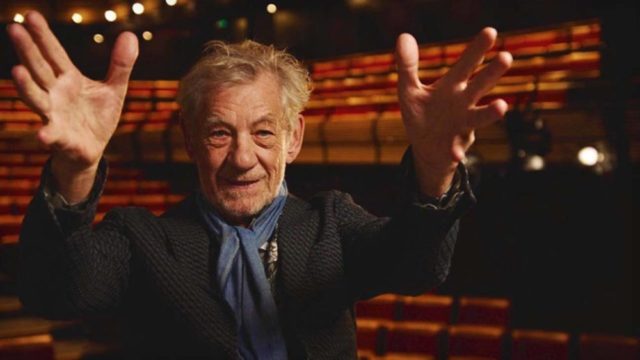
Sir Ian McKellen waxes poetic about Broadway in Oren Jacoby’s documentary

ON BROADWAY (Oren Jacoby, 2019)
Quad Cinema
34 West 13th St. between Fifth & Sixth Aves.
Opens Friday, August 20
quadcinema.com

As Broadway prepares to reopen in a big way in September following a year and a half of a pandemic lockdown that shuttered all forty-one theaters, Oren Jacoby’s documentary arrives like a love letter to the recent past, present, and future of the Great White Way (so named for its lights and illuminated marquees). “Without the theater, New York somehow would not be itself,” Sir Ian McKellen says near the beginning of On Broadway, which opens August 20 at the Quad and will have a special rooftop screening September 1 outside at the Marlene Meyerson JCC. “Live theater can change your life,” he adds near the end. Both lines appear to apply to how the city is coming back to life even as the Covid-19 Delta variant keeps spreading, but the film is nearly two years old, having made its New York City debut in November 2019 at DOC NYC.

On Broadway is a bit all over the place as it traces the history of Broadway from the near-bankrupt doldrums of 1969-72 to its rebirth in the 1980s and 1990s as a commercial force while also following Richard Bean’s UK import The Nap as it prepares to open September 27 at MTC’s Samuel J. Friedlander Theatre. I was a big fan of The Nap, calling it “a jolly good time . . . a tense and very funny crime thriller” in my review. Jacoby speaks with Bean, director Daniel Sullivan, and star Alexandra Billings, the transgender actor playing transgender character Waxy Bush. The behind-the-scenes look at the play, which was taking a big risk, lacking any big names and set in the world of professional snooker, is the best part of the film and it deserved more time instead of focusing on how such innovators as Stephen Sondheim, Bob Fosse, Andrew Lloyd Webber, Mike Nichols, and Michael Bennett helped turn around Broadway’s misfortunes with such popular shows as Pippin, Chicago, A Chorus Line, Annie, Evita, Cats, Amadeus, and Nicholas Nickleby, ultimately leading to Rent, Angels in America, and Hamilton. But Broadway still found room for August Wilson’s ten-play Pittsburgh Cycle.

The film explores how spectacle, celebrity, and extravaganza began ruling the day, at the expense of new American plays. “This could be a business,” Disney head Michael Eisner remembers thinking; his company bought a theater and produced such hits as Beauty and the Beast and The Lion King, which attracted families paying exorbitant ticket prices and going home with plenty of merch. Jacoby speaks with Sidney Baumgarten and Rebecca Robertson, who were involved in transforming Times Square from a haven for addicts, hookers, and porn shops to a place where parents could bring their kids to see a show. “We’re like Las Vegas now,” Tony-winning director Jack O’Brien laments.

Among the many other theater people sharing their love of Broadway — as well as their concerns — are John Lithgow, George C. Wolfe, Alec Baldwin, Helen Mirren, Tommy Tune, Hal Prince, Cameron Mackintosh, James Corden, Nicholas Hytner, David Henry Hwang, Oskar Eustis, and Hugh Jackman. “In the theater, you have to be present. You have to be present as an artist, and you have to be present as an audience member, for the experience to really happen,” Emmy, Tony, and Obie winner Christine Baranski says, evoking what it feels like as we wait for Broadway to reopen this fall. “And when you see a great performance, it is a spiritual experience.”

Jacoby, whose previous works include Shadowman, Master Thief: Art of the Heist, and My Italian Secret: The Forgotten Heroes, will be at the Quad for Q&As at the 7:00 screenings on August 20 and 21. But it’s Sardi’s maître d’ Gianni Felidi who gets to the heart of it all. “This is what Broadway’s about,” he says. “Great theater is a mirror to the human condition, to us, to people, and how we’re really all the same despite our differences, our perceived differences; be it if we’re from a different race, a different gender, a different sexual orientation, we’re really all the same. And that’s what theater shows us.”
RE: CARRIE MAE WEEMS

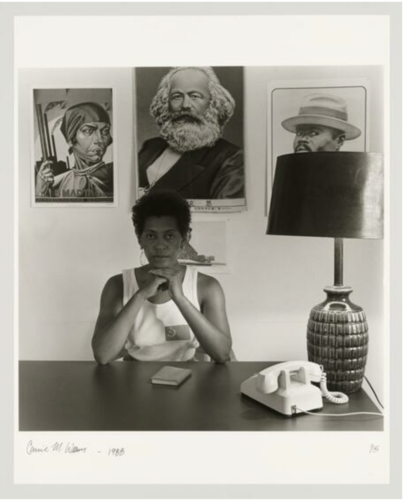
Carrie Mae Weems, Portrait of Myself as an Intellectual Revolutionary, gelatin silver print, 1988 (Whitney Museum of American Art, New York; purchase, with funds from the Photography Committee / © Carrie Mae Weems)

Who: Carrie Mae Weems, Jarrett Earnest
What: Live virtual discussion and Q&A
Where: National Academy of Design Zoom
When: Tuesday, August 17, free with RSVP, 7:00
Why: The National Academy of Design continues its “RE:” video series August 17 with Oregon-born artist Carrie Mae Weems, who will be speaking with show creator and host Jarrett Earnest. A National Academician and MacArthur Genius, Weems has been busy during the pandemic, making the hypnotic short film The Baptism with Carl Hancock Rux and hosting a podcast for the Whitney, “Artists Among Us,” in which she speaks with a wide range of artists, curators, and writers, including Glenn Ligon, Bill T. Jones, Luc Sante, Jessamyn Fiore, An-My Lê, and Adam Weinberg, focusing on David Hammons’s Day’s End, an homage to Gordon Matta-Clark.

Weems is best known for such highly influential photographic projects as “The Kitchen Table Series,” “Family Pictures and Stories,” “The Louisiana Project,” “Constructing History,” and “Museums,” several of which are currently on view in the Gagosian exhibition “Social Works.” Author, editor, curator, and educator Earnest has previously talked with Harmony Hammond, William T. Williams, Kay WalkingStick, Dorothea Rockburne, and Alison Saar, with David Diao scheduled for September 14; all episodes can be seen here after their initial broadcast.


THE STAIRS

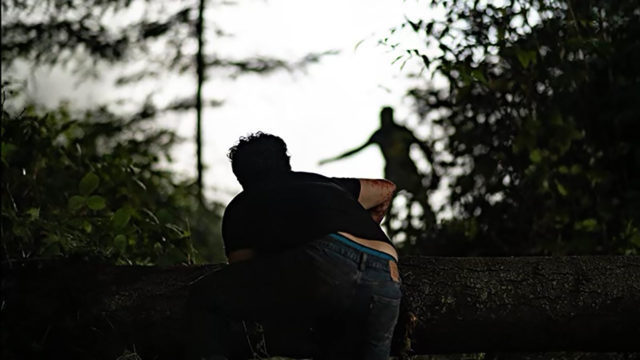
Friends encounter unspeakable horror while hiking in the woods in The Stairs

THE STAIRS (Peter “Drago” Tiemann, 2021)
AMC Kips Bay 15, 570 Second Ave.
Regal Union Square 14, 850 Broadway
AMC Empire 25, 234 West Forty-Second St.
Thursday, August 12, 7:00
www.fathomevents.com

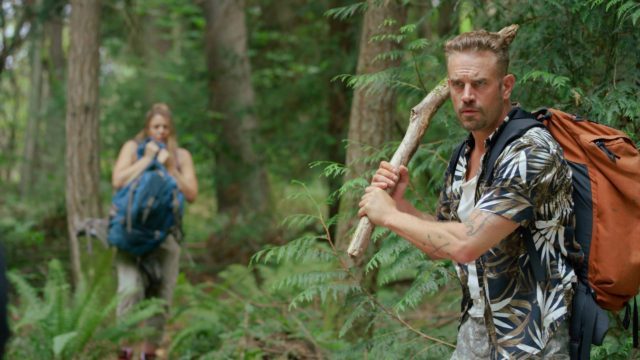
“People go missing during a blood moon,” a convenience store clerk tells two men about to go hiking in the woods in Peter “Drago” Tiemann’s grisly thriller The Stairs, a Fathom/Cinedigm one-time-only event screening in select theaters on August 12 at 7:00. If it reminds you of the warning the truck driver (Joe Belcher) gives Jack (Griffin Dunne) and David (David Naughton) in John Landis’s An American Werewolf in London — “Boys, keep off the moors. Stick to the roads, and best of luck” — well, you’re on the right track.

The film begins twenty years in the past, as a hunting sojourn with Grandpa Gene (The Dukes of Hazzard’s John Schneider) and his eleven-year-old grandson, Jesse (Thomas Wethington), goes bad when the boy finds a mysterious set of steps in the middle of the forest, harboring something evil. It quickly becomes apparent that it’s not exactly a stairway to heaven.

In the present, best bros Nick (Adam Korson) and Josh (Brent Bailey) are going camping with their friend Rebeccah (Stacey Oristano) and her new squeeze, Jordon (Tyra Colar), along with the unpredictable and wild Doug (Josh Crotty), who completely throws off the dynamic. After they encounter a strange, eerie couple (Karleena Gore and David S. Hogan), all hell breaks loose, as people start dying in brutally violent ways, with a fab supernatural twist.

A festival favorite, The Stairs is a stylish horror film in the manner of Eli Roth’s Cabin Fever, the original Friday the 13th, Drew Goddard’s Cabin in the Woods, Rob Schmidt’s Wrong Turn, and Tobe Hooper’s The Texas Chainsaw Massacre; in homage, there are even brief cameos from a chainsaw and a lake. You’ll find yourself screaming at the screen as characters make bad choices while Tiemann, who wrote the movie with Jason L Lowe, gleefully exploits genre tropes. We should always listen to Bugs Bunny, who famously told a monster, “Don’t go up there — it’s dark!”

A mysterious evil stirs up trouble in The Stairs

The pandemic lockdown has kept most of us inside for a year and a half, avoiding movie theaters and camping with friends; after watching The Stairs, you might never go outside again. The film is being shown at AMC Kips Bay 15, Regal Union Square 14, and AMC Empire 25, with a prerecorded introduction by Oscar nominee Kathleen Quinlan (Apollo 13, The Doors), who plays Grandma Bernice; a discussion with longtime stunt coordinator Tiemann; and bonus content.

NOT A MOMENT, BUT A MOVEMENT: THE DUAT

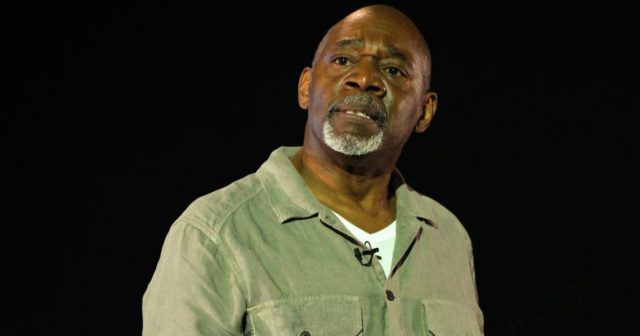
Gregg Daniel plays a man facing judgment day in world premiere of The Duat

THE DUAT
Center Theatre Group
Available on demand through August 12, $10
www.centertheatregroup.org

Gregg Daniel is electric as a man caught between heaven and hell, defending the choices he made in his life, in the world premiere of Roger Q. Mason’s one-man show, The Duat, streaming from Center Theatre Group through August 12. Daniel plays Cornelius “Neil” Johnson, a Black man who, when we first see him, is blindfolded and barefoot. “If I’m in hell, I want to know. I want to see the fire before it takes me down,” he calls out, dancing as if the floor is burning hot. He’s actually in the Duat, the Egyptian underworld where the god Anubis weighs the hearts of the dead to determine where they will spend the afterlife.

Over the course of forty-five minutes, Johnson shares his story, starting with his birth in Texas in 1948 and the tragic death of his father, a railroad porter, four years later. Johnson visits his grandmama, attends a liberal integrated elementary school, excels at UCLA, and becomes a driver for a wealthy white woman. Daniel seamlessly switches between characters, from his angry mother to his brash father to his sensible, soft-spoken grandmother, performing brief, urgent interpretive dance movements at the end of each scene (choreographed by Michael Tomlin III). He is haunted by his father’s fate, dying “a colored death,” and is determined to have his own, unique identity. “I am somebody,” he says in different ways throughout the play, as if Johnson is trying to convince himself that he matters, that he will be seen. But trouble brews when he recounts his time with the US organization, a rival to the Black Panthers, as Johnson does something that he regrets.

Presented in association with the Fire This Time Festival and Watts Village Theater Company, The Duat is part of the third episode of the “Not a Moment, But a Movement” series; the first episode was introduced by Vanessa Williams and featured Angelica Chéri’s one-person play Crowndation; I Will Not Lie to David, while the second episode explored “Black Nourishment” with spoken word artists. The Duat is preceded by a conversation with Watts co-artistic director Bruce A. Lemon Jr. and LA-based visual artist Floyd Strickland and is introduced by Wayne Brady.

The Duat unfolds in the tradition of such solo-show geniuses as Anna Deavere Smith, Dael Orlandersmith, and Charlayne Woodard, as Daniel (Insecure, Urban Nightmares) portrays multiple characters detailing the Black experience in America. He doesn’t change costumes but alters his tone of voice as the narrative sometimes repeats itself from different points of view. Director Taibi Magar (Is God Is, Blue Ridge) zooms in for closeups of Daniel’s face and feet, then pulls back to reveal percussionist David Leach playing several instruments in the background, the spotlight behind him casting him in silhouette. (The effective lighting is by Brandon Baruch, with sound design and original music by David Gonzalez.) Mason (The White Dress, Onion Creek) pulls no punches as Johnson looks back at his life, warts and all, trying to understand who he is and what awaits him.

PUPPET WEEK NYC

THE INTERNATIONAL PUPPET FRINGE FESTIVAL
The Clemente Center, 107 Suffolk St.
Museum of the City of New York, 1220 Fifth Ave.at 104th St.
August 11-15 live, August 16-31 online, most events free
puppetfringenyc.com
www.theclementecenter.org

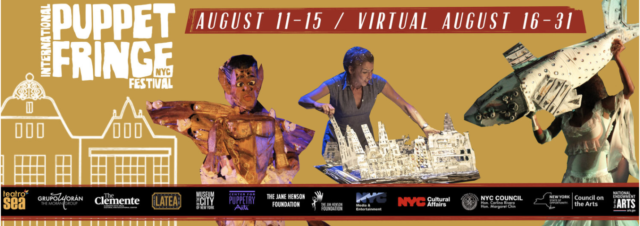
“I could never be on stage on my own. But puppets can say things that humans can’t say,” British comedian, actress, and ventriloquist Nina Conti once explained. You can see a bevy of puppets this month at the International Puppet Fringe Festival, running August 11-15 in person at the Clemente on the Lower East Side, with a few special programs at the Museum of the City of New York, then moving online August 16-31. The fest, hosted by Teatro SEA and the Clemente, is part of the inaugural Puppet Week NYC and features a wide range of programming involving puppets, including live presentations, book readings, workshops, panel discussions, exhibition openings, and panel discussions, most of which are free. “The Clemente is a fitting home for the festival’s events, as puppetry found an early home here in the 1990s and we continue to foster diverse puppet performances in our theater spaces,” Clemente executive director Libertad Guerra said in a statement. “Our hope is that Puppet Week NYC draws attention to this thriving and evolving art form uniting theater with all the visual arts and attracting people of all ages, backgrounds, and cultural identities.”

International Puppet Fringe Festival founder and producer Dr. Manuel Morán added, “During the pandemic, when our curtains couldn’t go up, our roster of puppet makers and puppeteers were eagerly preparing to enthrall audiences with their creative talents, and we can’t wait to finally share their work with you.” This year’s honoree is Vincent Anthony, founder of the Center for Puppetry Arts. Below is the full schedule. Oh, and don’t forget what writer and illustrator Guy Davenport once warned: “I’ve carved the puppet, and I manipulate the strings, but while it’s on stage, the show belongs to the puppet.”

Wednesday, August 11
“Dream Puppet” Making Workshop with Marina Tsaplina, El jardín del paraíso Community Garden, noon – 8:00
Papier-Maché in a Two-Day Workshop, part 1, $50, 2:00
“Puppets of New York: Downtown at the Clemente” exhibition opening, 5:00
Puppet Celebrity Red Carpet, 5:30
Opening Remarks and festival’s dedication to Vincent Anthony, 6:00
The Triple Zhongkui Pageant by Chinese Theatre Works, 6:30
Los Grises/The Gray Ones by SEA, 7:00
The Shari Lewis Legacy Show by Mallory Lewis and Lamb Chop, 8:00

Thursday, August 12
Construction and Hybrid Puppets Manipulation Workshop by Carolina Pimentel, $50, 10:00 am
“Dream Puppet” Making Workshop with Marina Tsaplina, El jardín del paraíso Community Garden, noon – 8:00
Títeres en el Caribe Hispano: Episode 1: Cuba, Episode 2: Dominican Republic, Episode 3: Puerto Rico, 1:00
Papier-Maché in a Two-Day Workshop, part 1, $50, 2:00
Puppet Celebrity Red Carpet, hosted by Mallory Lewis and Lamb Chop, 6:00
“Puppets of New York” Opening Celebration, Museum of the City of New York, 7:00
Los Grises/The Gray Ones by SEA, 7:00
Muppets Take Manhattan (Frank Oz, 1984), $15, 8:00

Friday, August 13
Construction and Hybrid Puppets Manipulation Workshop by Carolina Pimentel, $50, 10:00 am
“Dream Puppet” Making Workshop with Marina Tsaplina, El jardín del paraíso Community Garden, noon – 8:00
Out of the Shadows Panel: A Conversation about the Henson Festivals, with Leslee Asch, Cheryl Henson, Dan Hurlin, Manuel Moran, and Michael Romanyshyn, 4:00
Karagoz by U.S. Karagoz Theatre Company, 4:00
Salt Over Gold and other Czech & Slovak fairy tales with strings by Czechoslovak American Marionette Theatre, 5:00
Handmade Puppet Dreams: Dreamscapes, short films for adults, 5:00
La Macanuda by Deborah Hunt, 6:00
The Triple Zhongkui Pageant by Chinese Theatre Works, 6:30
Los Grises/The Gray Ones by SEA, 7:00
Puppet Slam / Cabaret: Great Small Works Spaghetti Dinner, with Bruce Cannon, Piedmont Bluz, and Valerie and Benedict Turner, 8:00

Saturday, August 14
Little Red’s Hood by Swedish Cottage Marionette Theatre, 11:00 am
Penguin in My Pocket by Kurt Hunter, 11:00 am
Handmade Puppet Dreams: Kidscapes, short films for children, noon
NIMA-USA Symposium: Conversations on Puppetry, Social Justice, and Diversity: Part 1, with Jacqueline Wade, Kuang-Yu Fong, and Ginew Benton, moderated by Claudia Orenstein, noon
2-D Puppet Workshop for kids by Junktown Duende, 1:00
Los Colores de Frida / The Colors of Frida by SEA, 1:00
The Marzipan Bunny by A Couple of Puppets, 1:00
Chicken Soup, Chicken Soup by WonderSpark Puppets, 1:00
Títeres en el Caribe Hispano: Episode 1: Cuba y Episode 3: Puerto Rico, 2:00
Teatro SEA’s Theatre Book Series Presentation, 2:30
Beautiful Blackbird: An African Folktale by Lovely Day Creative Arts, 3:00
Once Upon a Time in the Lower East Side . . . by JunkTown Duende, 4:00
Karagoz by U.S. Karagoz Theatre Company, 4:00
Puppet States by Paulette Richards, 5:00
Salt Over Gold and other Czech & Slovak fairy tales with strings by Czechoslovak American Marionette Theatre, 5:00
La Macanuda by Deborah Hunt, 6:00
The Triple Zhongkui Pageant by Chinese Theatre Works, 6:30
Los Grises/The Gray Ones by SEA, 7:00
The Puppetry Guild of Greater NY presents . . . The Bawdy Naughty Puppet Cabaret, 8:00

Sunday, August 15
Little Red’s Hood by Swedish Cottage Marionette Theatre, 11:00 am
Beautiful Blackbird: An African Folktale by Lovely Day Creative Arts, 11:00 am
The Marzipan Bunny by A Couple of Puppets, 11:00 am
Giant Puppet Encounter & Mascot Encounter, 11:30 am
Handmade Puppet Dreams: Kidscapes, short films for children, noon
Chicken Soup, Chicken Soup by WonderSpark Puppets, 1:00
2-D Puppet Workshop for kids by Junktown Duende, 1:00
Penguin in My Pocket by Kurt Hunter, 1:00
Títeres en el Caribe Hispano: Episode 2: República Dominicana and Episode 3: Puerto Rico, 2:00
The Pura Belpré Project by SEA, 3:00
Harlem River Drive by Bruce Cannon, 3:00
Karagoz by U.S. Karagoz Theatre Company, 4:00
Once Upon a time in the Lower East Side . . . by JunkTown Duende, 5:00
Salt Over Gold and other Czech & Slovak fairy tales with strings by Czechoslovak American Marionette Theatre, 5:00
La Macanuda by Deborah Hunt, 6:00
The Triple Zhongkui Pageant by Chinese Theatre Works, 6:30
Los Grises/The Gray Ones by SEA, 7:00
Puppet Dance Party, 8:00

Tuesday, August 17
A Conversation with Vincent Anthony, hosted by Dr. Manuel Morán and John Ludwig, 7:00

Thursday, August 19
Puppetry 101 with Aretta Baumgartner, 7:00

Friday, August 20
Handmade Puppet Dreams: Kidscapes, short films for children, noon
Handmade Puppet Dreams: Dreamscapes, short films for adults, 5:00

Saturday, August 21
Puppetry Museums around the World Panel, noon

Tuesday, August 24
Puppetry and Its Healing Properties in Therapy, hosted by Erica Scandoval and Karen Ciego, 7:00

Thursday, August 26
UNIMA-USA Symposium: Conversations on Puppetry, Social Justice, and Diversity: Part 2, with Monxo Lopez, Paulette Richards, Jungmin Song, and Edna Bland, moderated by Claudia Orenstein, 7:00

Friday, August 27
Handmade Puppet Dreams: Dreamscapes, short films for adults, 8:00

Saturday, August 28
Conversations with Puppet Fringe Artists and Troupes in English, noon

Tuesday, August 31
“Glocal” Rethinking, American Puppetry: Opening Eyes Wider by UNIMA-USA’s World Encyclopedia Puppetry Arts, with Karen Smith and Kathy Foley, 7:00

THE VIEWING BOOTH

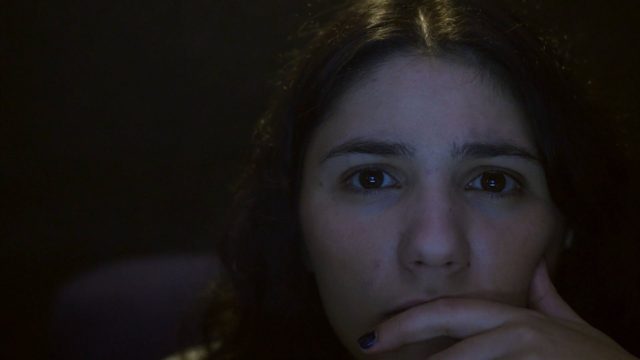
Maia Levy is the unexpected subject of Ra’anan Alexandrowicz’s The Viewing Booth

THE VIEWING BOOTH (Ra’anan Alexandrowicz, 2020)
Museum of the Moving Image, Bartos Screening Room
35th Ave. at 36th St., Astoria
August 6-15
718-777-6800
www.movingimage.us

“There’s a lot for me to learn from your viewing,” Israeli filmmaker Ra’anan Alexandrowicz tells Jewish American college student Maia Levy before turning the camera on us in the ingenious documentary The Viewing Booth, running August 6-15 at the Museum of the Moving Image. The seventy-one-minute work developed out of an experiment Alexandrowicz was doing at Temple University in Philadelphia, individually filming a small group of young men and women watching internet video clips of interactions between Israelis and Palestinians in the occupied territories of the Gaza Strip; in previous films such as The Law in These Parts and The Inner Tour — both of which will also be shown at MoMI — the Jerusalem-born Alexandrowicz has made clear his support of the Palestinians in this conflict. But along the way, his focus switched specifically to Levy, whose thoughtful, careful evaluations of the scenes and acknowledgment of her pro-Israel bias are mesmerizing. We end up seeing far more of Levy’s captivating face and exploring eyes than the videos themselves as the film challenges the viewer to rethink how they experience politically charged videos.

The film takes place in a small studio at Temple, where Levy sits in a closed-off room with a large window; Alexandrowicz mans a table with two monitors and editing equipment that he adjusts as Levy observes the videos. The director cuts between shots of Levy’s face, the videos themselves, and him watching Levy on his monitors, occasionally speaking with her. Six months later, he invites Levy back so she can watch herself watching the videos and comment on that as well. It’s absolutely gripping studying Levy as she interprets and reinterprets the videos, some of which were posted by B’Tselem, the Jerusalem-based Israeli Information Center for Human Rights in the Occupied Territories, whose mission is to end the occupation; others are from unidentified sources. Alexandrowicz does not give Levy any additional details about the clips, even though he knows more about some of them, instead letting her navigate the images as if she were home by herself, surfing the internet.

In one scene, a Palestinian boy hugs an Israeli soldier who gives him food. In another, a group of young men throw rocks at someone recording them from an apartment, unclear at first who is who. In a third, an Israeli soldier snatches a young Palestinian boy and a second soldier kicks the child. The majority of the film concentrates on a longer video of a masked Israeli military unit searching the home of a Palestinian family in the middle of the night, forcing the parents to wake up the children as rifles are pointed at them. Levy scrutinizes every detail of the video, wondering if it was staged, considering what was happening just off camera, thinking the boy might be lying when he gives a wrong name that his father quickly corrects.

Levy innately understands that she brings her own personal bias and mistrust of B’Tselem to her interpretation. “I view it from an objective point,” she says. “I don’t really get my information from it. The point is, these things do happen; whether they skew the filming and everything, it still does happen, it’s still there. Yeah, they probably play a lot with it, and there is a lot of bias and things and they don’t show you the whole picture, but, I guess it’s true to some extent. That’s what it seems like.” This questioning of what is real and what isn’t is intriguing to Alexandrowicz, a documentarian whose career has been spent making nonfiction films; Levy even notes that Alexandrowicz makes choices — subjects, edits, camera angles — that impact what people see and don’t see in his work.

In his 2018 essay “50 Years of Documentation: A Brief History of the Documentation of the Israeli Occupation,” Alexandrowicz writes, “After viewing hundreds of news reports, films, and online videos about this subject, I found myself asking: What has all this documentation achieved? What has been the documentation’s role in this tragic piece of history? Visual culture scholars have long argued that images do not merely depict reality; they also perform and create reality. Then what is the relationship between the audiovisual documentation of the Israeli Occupation and the reality it claims to portray? These questions have led me to a wider inquiry about the role that documentation practices play in shaping historical, political, and social issues.” The Viewing Booth might ostensibly be about Israelis and Palestinians, but it also illuminates the great divide in America as political affiliation appears to affect how we evaluate actual footage; it seems impossible to escape from the diametrically opposed analyses of the murder of George Floyd, the BLM protests, the January 6 insurrection, and a Catholic high school student’s interaction with a Native American man at a MAGA rally.

Recognizing that many people won’t even watch videos that they presuppose will contradict their belief system, Levy offers, “I think people are scared, that they don’t watch them because they’re scared that they’re going to change their minds about it. They’re going to be, like, Wow, this is bad, and maybe I’m not so pro-Israel as I thought I would be. I think if you accept reality, then these things don’t really make or break your viewpoints. I don’t think that this can really, like . . . they can be informative to some extent, but you have to be careful.”

Alexandrowicz was inspired to make the film by Virginia Woolf’s book Three Guineas One, which grew out of a letter she was responding to about how to prevent war; she begins by discussing the visual depiction of war in newspapers and magazines. “But besides these pictures of other people’s lives and minds — these biographies and histories — there are also other pictures — pictures of actual facts; photographs. Photographs, of course, are not arguments addressed to the reason; they are simply statements of fact addressed to the eye. But in that very simplicity there may be some help. Let us see then whether when we look at the same photographs we feel the same things.” As we’ve learned over these last few years, we most often see and feel what we want to see and feel despite watching the same exact nonfiction footage.

The Israeli title of The Viewing Booth is The Mirror, a much more apt name, as we put ourselves in Levy’s position, with all our inherent biases and fears, and hopefully look at ourselves to reflect on how we watch such videos, which generally come to us through social media algorithms that keep us in our preferred bubbles or from friends who think as we do, reinforcing our beliefs. “You are the viewer that I’ve been making these films for,” Alexandrowicz tells Levy. In the case of The Viewing Booth, that is not quite true; we are all the viewers he has made this film for.

Alexandrowicz will be at MoMI for a live conversation with film critic Alissa Wilkinson following the 7:00 screening on August 6, and he will be back for the 5:00 screening on August 8 with Levy. The Viewing Booth might not change your belief system, but it will change the way you experience online nonfiction video.

THE PARIS THEATER GRAND REOPENING

Radha Blank’s Netflix hit The 40-Year-Old Version opens the renovated Paris Theater

THE PARIS THEATER
4 West Fifty-Eighth St. at Fifth Ave.
Reopens August 6
www.paristheaternyc.com

To slightly misquote Rick Blaine (Humphrey Bogart) in Casablanca, “We’ll always have the Paris.” Following the pandemic lockdown and a major renovation, the Paris Theater, New York City’s historic single-screen cinema, is officially reopening on August 6 with special programming. The longest-running arthouse in the Big Apple has been presenting films since 1948, when it showed Jean Delannoy’s La Symphonie pastorale; over the years it has screened classic works by such international auteurs as Jean Renoir, Roberto Rossellini, Marcel Pagnol, Orson Welles, Ingmar Bergman, Louis Malle, Jean-Luc Godard, Jacques Demy, Agnieszka Holland, and Bernardo Bertolucci.

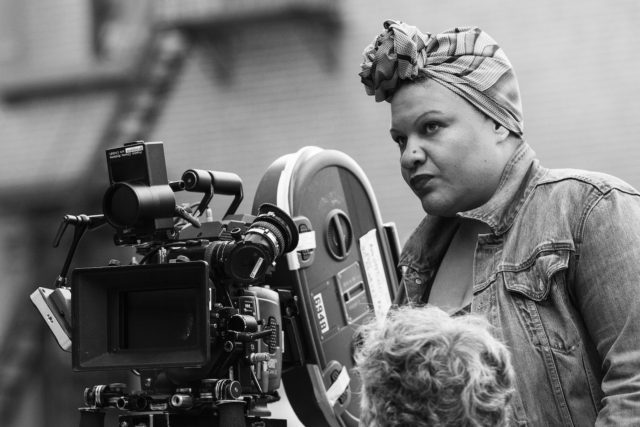
The Arte Moderne theater was purchased by Netflix in November 2019 to keep it from closing; to celebrate its reopening, the Paris will be hosting the New York City theatrical premiere of Radha Blank’s Netflix hit, The Forty-Year-Old Version, the Williamsburg native’s breakthrough autobiographical film about a struggling playwright that she wrote, directed, produced, and stars in, accompanied by a selection of hip-hop videos.

“I made Forty-Year-Old Version in 35mm black and white in the spirit of the many great films that informed my love of cinema” Blank said in a statement. “I’m excited to show the film in 35mm as intended and alongside potent films by fearless filmmakers who inspired my development as a storyteller and expanded my vision of what’s possible in the landscape of cinema. That Forty-Year-Old Version gets to screen alongside them at the Paris Theater, a New York beacon for cinema, makes it all the more special.”

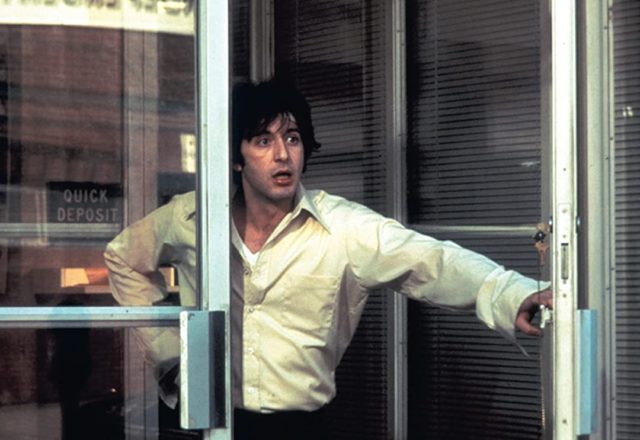
Sidney Lumet’s Dog Day Afternoon will help open the doors of the renovated Paris Theater

In conjunction with the August 6-12 run of her film, Blank, who will be on hand to talk about the movie at the 8:00 screening on opening night, has selected nine repertory works that have had an impact on her, a stellar collection that ranges from John Cassavetes’s Shadows, Sidney Lumet’s Dog Day Afternoon, Billy Wilder’s The Apartment, and Christopher Guest’s Waiting for Guffman to Andrea Arnold’s Fish Tank, Nick Castle’s Tap, and Hal Ashby’s The Last Detail. A screening of the late Kathleen Collins’s Losing Ground will be followed by a discussion with Collins’s daughter, Nina Collins, while there will be a video conversation with Robert Townsend after a showing of his 1987 smash, Hollywood Shuffle.

But that is only the beginning. Also on the 545-seat theater’s agenda is “The Paris Is for Lovers,” a two-week retrospective of thirty-one films chosen by master programmer David Schwartz that premiered at the Paris, reaching deep into the venue’s history. It’s a veritable crash course in cinema studies, consisting of such seminal films as Claude Lelouch’s A Man and a Woman, Bertrand Blier’s Get Out Your Handkerchiefs, Whit Stillman’s Metropolitan (with Stillman in person), the Maysles brothers’ Grey Gardens, Jean-Pierre Jeunet’s Amélie, Alfred Hitchcock’s The Trouble with Harry, Ira Deutchman’s Searching for Mr. Rugoff (with Deutchman in person), Mira Nair’s Monsoon Wedding, Henri-Georges Clouzot’s The Wages of Fear, Todd Haynes’s Carol (with cinematographer Ed Lachman in person), and Just Jaeckin’s Emmanuelle.

To slightly misquote a key conversation from Wilder’s Sabrina, the title character, portrayed by Audrey Hepburn, says to Linus (Bogart), “Maybe you should go to the Paris, Linus.” He replies, “To the Paris?” She explains, “It helped me a lot. . . . It’s for changing your outlook, for . . . for throwing open the windows and letting in . . . letting in la vie en rose.”