this week in lectures, signings, panel discussions, workshops, and Q&As

RED BULL THEATER CELEBRATES MARGARET CAVENDISH

Who: Red Bull Theater company
What: Livestreamed Zoom conversation, benefit reading, and Bull Session surrounding Margaret Cavendish’s The Convent of Pleasure
Where: Red Bull Theater website, Facebook Live, and YouTube
When: Conversation Monday, March 7, suggested donation $25, 7:30; benefit reading Monday, March 14, suggested donation $25, 7:30; Bull Session Thursday, March 17, free on YouTube with live chat, 7:30
Why: “Nature is material, or corporeal, and so are all her Creatures, and whatsoever is not material is no part of Nature, neither doth it belong any ways to Nature,” wrote duchess of Newcastle-upon-Tyne and polymath Lady Margaret Lucas Cavendish. Red Bull Theater is turning to the seventeenth-century poet, philosopher, aristocrat, scientist, fiction author, and playwright for Women’s History Month, presenting an online reading and discussions about her 1668 comedy, The Convent of Pleasure. The play, a closet drama not intended to be performed onstage and dealing with women who believe they can live a fulfilling life without men, features wealthy noblewoman Lady Happy, her friend the widow Madam Mediator, the anti-convent Monsieur Take-Pleasure, the married Lady Amorous and Lady Vertue, Mimick the fool, and a cross-dressing prince/princess suitor.

Lady Margaret Cavendish’s The Convent of Pleasure will be explored extensively by Red Bull

“Let me tell you, that Riches ought to be bestowed on such as are poor, and want means to maintain themselves; and Youth, on those that are old; Beauty, on those that are ill-favoured; and Virtue, on those that are vicious: So that if I should place my gifts rightly, I must Marry one that’s poor, old, ill-favoured, and debauch’d,” Lady Happy says early in the play. “Put the case I should Marry the best of Men, if any best there be; yet would a Marry’d life have more crosses and sorrows then pleasure, freedom, or hapiness: nay Marriage to those that are virtuous is a greater restraint then a Monastery. Or, should I take delight in Admirers? they might gaze on my Beauty, and praise my Wit, and I receive nothing from their eyes, nor lips; for Words vanish as soon as spoken, and Sights are not substantial. Besides, I should lose more of my Reputation by their Visits, then gain by their Praises. Or, should I quit Reputation and turn Courtizan, there would be more lost in my Health, then gained by my Lovers, I should find more pain then Pleasure; besides, the troubles and frights I should be put to, with the Quarrels and Brouilleries that Jealous Rivals make, would be a torment to me; and ’tis only for the sake of Men, when Women retire not: And since there is so much folly, vanity and falshood in Men, why should Women trouble and vex themselves for their sake; for retiredness bars the life from nothing else but Men.”
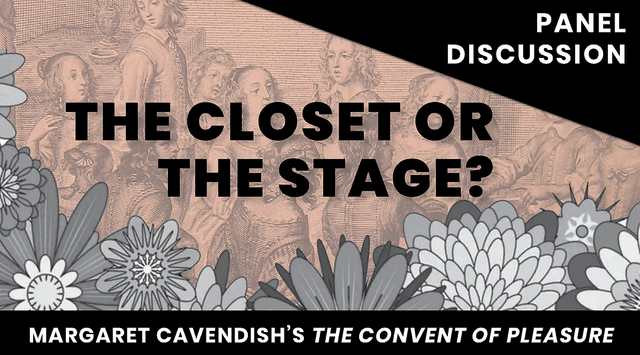
On March 7, Red Bull will host the Zoom discussion “The Closet or the Stage? A Conversation about Margaret Cavendish’s The Convent of Pleasure,” with University of Tennessee professor and author Misty G. Anderson; University of Toronto associate professor Liza Blake, editor of Margaret Cavendish’s Poems and Fancies: A Digital Critical Edition; Columbia University professor Julie Crawford, author of the upcoming Margaret Cavendish’s Political Career; and Carnegie Mellon professor emeritus, curator, and author Kristina Straub.

The reading, directed by Kim Weild (American Moor, Paradise Now), will be held the following Monday at 7:30, in association with the R/18 Collective, which “believes the theatrical repertoire from the 1660s to the 1830s provides insights into the deep histories of race, gender, sexuality, ability, nation, and capital that continue to shape anglophone culture and the world.” The cast includes Heidi Armbruster, Becca Ayers, Talley Gale, Cloteal Horne, Rami Margron, Anthony Michael Martinez, Maria-Christina Oliveras, and Josh Tyson. And then, on March 17, a free Bull Session with Weild, cast members, and scholars will take place on YouTube, with a live chat.

THE 35th ANNUAL TIBET HOUSE US BENEFIT CONCERT

Who: Philip Glass, Keanu Reeves, Trey Anastasio, Patti Smith, Laurie Anderson, Cyndi Lauper, Gogol Bordello, Nathaniel Rateliff, Jason Isbell and the 400 Unit, Angélique Kidjo, Margo Price, Punch Brothers, the Fiery Furnaces, Jesse Paris Smith, Tenzin Choegyal, Rubin Kodheli, Camerata — Queensland’s Chamber Orchestra, the Scorchio Quartet, Paul Simon, Stephen Colbert, Iggy Pop, Bernard Sumner
What: Annual benefit concert for Tibet House US
Where: Mandolin streaming platform
When: Thursday, March 3, $25-$250, 8:00
Why: The annual Tibet House US benefit fundraiser always features a wide-ranging group of special guests, gathering under the leadership of artistic director Philip Glass. The thirty-fifth annual event is no exception, with the added celebration of Glass’s eighty-fifth birthday. This year’s performers will once again be streaming in live and prerecorded from around the world instead of joining together at Carnegie Hall. The roster includes Glass, Trey Anastasio, Patti Smith, Laurie Anderson, Cyndi Lauper, Gogol Bordello, Jason Isbell and the 400 Unit, Angélique Kidjo, Punch Brothers, the Fiery Furnaces, and others as well as greetings from the Scorchio Quartet, Paul Simon, Stephen Colbert, Iggy Pop, and Bernard Sumner.

All proceeds benefit Tibet House US, “a nonprofit educational institution and cultural embassy that was founded at the request of His Holiness the Dalai Lama, who at the inauguration in 1987 stated his wish for a long-term cultural institution to ensure the survival of Tibetan civilization and culture, whatever the political destiny of the six million people of Tibet itself.” Tickets start at $25, with additions of a Katak blessing scarf, limited edition benefit poster, event T-shirt, mala beads, and more at higher levels.

BODYTRAFFIC

Micaela Taylor’s SNAP is part of BODYTRAFFIC program at the Joyce

BODYTRAFFIC
Joyce Theater
175 Eighth Ave. at 19th St.
March 1-6, $41-$61
212-645-2904
www.joyce.org
bodytraffic.com

“There’s nothing quite like coming home,” BODYTRAFFIC artistic director Tina Finkelman Berkett writes in a program note about the LA company’s upcoming presentation at the Joyce. “Growing up in NYC, I dreamt of performing on the Joyce stage, and each time our company returns is incredibly meaningful.”

Finkelman Berkett used the pandemic lockdown to reimagine the troupe, which she founded in 2007 with Lillian Barbeito, and the results can be seen March 1-6. The show begins with the world premiere of Baya & Asa’s The One to Stay With, which takes on corporate greed; the cast consists of associate artistic director Guzmán Rosado, Joan Rodriguez, Katie Garcia, Pedro Garcia, Whitney Schmanski, Jordyn Santago, Tiare Keeno, and dance captain Ty Morrison, with music by Tchaikovsky, Russian Brass Brand, and Béla Bartók.

Following a set change, Finkelman Berkett truly returns to the Joyce stage with the New York premiere of Fernando Hernando Magadan’s (d)elusive minds, a duet she will perform with Rosado, set to Schubert’s Trio Pour Piano, Violon Et Violoncelle En Mi Bemol, Op. 100. It was inspired by Dora Garcia’s “All the Stories” and the true story of a man with Capgras syndrome who killed his wife, thinking she was a duplicate, and spent fifteen years in an institution believing his real wife was still alive, writing to her every day. Magadan’s scenic design includes a near-semicircle of paper along with a chair and a typewriter.

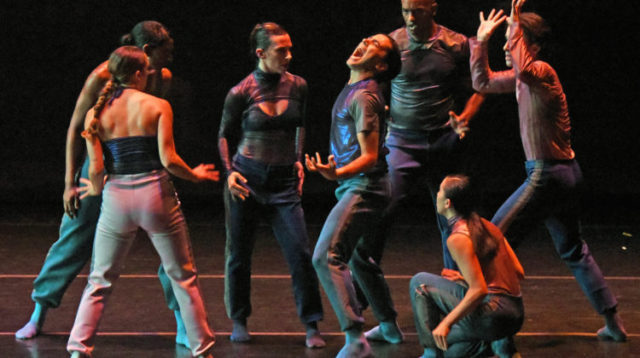
After intermission, TL Collective artistic director and former BODYTRAFFIC dancer Micaela Taylor’s SNAP will make its New York premiere, with Alana Jones, Joseph Davis, Katie Garcia, Santiago, Keeno, Rodriguez, and Morrison moving and grooving to James Brown, with original music by Shockey and costumes by Kristina Marie Garnett. The piece is meant to snap people out of their complacency while celebrating the diversity of Los Angeles.

The evening concludes with Alejandro Cerrudo’s PACOPEPEPLUTO, a work for three male soloists originally choreographed for Hubbard Street Chicago in 2011, with Rodriguez, Pedro Garcia, and Rosado or Davis hoofing it to Dean Martin’s “In the Chapel in the Moonlight,” “Memories Are Made of This,” and “That’s Amoré.” In addition, there will be a curtain chat on March 2.

RASHAAD NEWSOME: ASSEMBLY

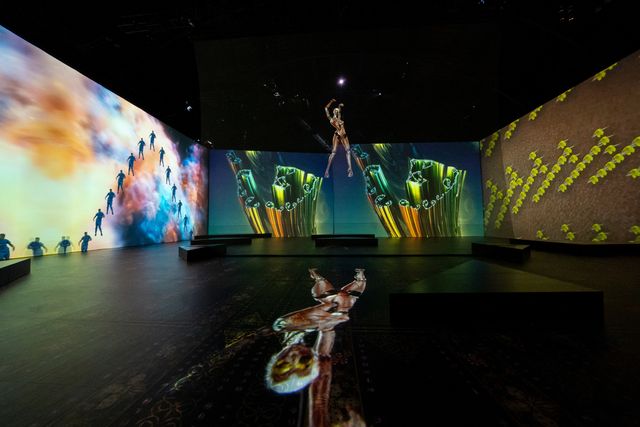
Rashaad Newsome’s Assembly is an immersive multimedia exploration of the intersection of humanity and technology (photo by Stephanie Berger Photography / Park Avenue Armory)

ASSEMBLY
Park Ave. Armory, Wade Thompson Drill Hall
643 Park Ave. at Sixty-Seventh St.
Tuesday – Sunday through March 6, $18 exhibition, $40 performances
www.armoryonpark.org
rashaadnewsome.com

The Muthaship has landed — and taken root inside Park Ave. Armory’s 55,000-square-foot Wade Thompson Drill Hall. New Orleans–born interdisciplinary artist Rashaad Newsome’s immersive multimedia installation Assembly is an open call to end colonialism, white supremacy, systemic racism, homophobia, and other societal ills based in bigotry and inequality, through music, movement, art, and storytelling grounded in Black queer culture. A kind of group healing focusing on opportunity, Assembly is hosted by Being the Digital Griot, an artificial intelligence project Newsome developed at Stanford’s Institute for Human-Centered AI (HAI).

When you enter the hall, you are met by Wrapped, Tied & Tangled, a thirty-foot-tall scrim on which a series of performers in bright red, yellow, and blue costumes appear to be dancing and drawing in space while a robotic voice makes affirmations. “Dig into your mind. Welcome to your insides,” Being offers in a gentle, caring tone. “I am here to listen and provide you with a new beginning for your journey. . . . There is only breath, heartbeat, rhythm, and peace. . . . No matter what, you are enough. . . . You are the most beautiful you. You are the master of your own self. You are radiant. You are divine. Always. Ever. Only. Enough. This is your solution. An infinite everything.” The dancers morph into one another — and then into Being, as if we all are one and the same, a spiritual melding of humanity and technology.

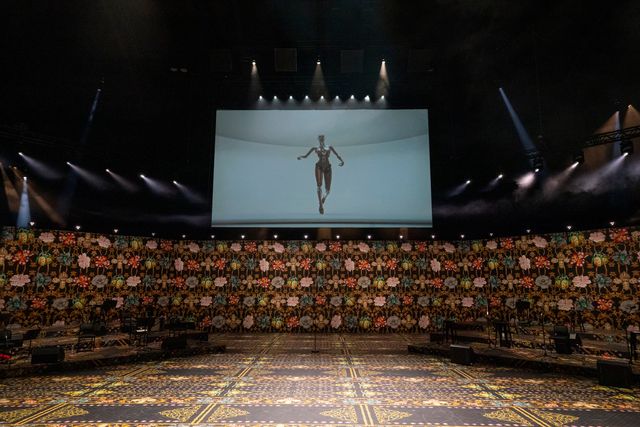
Large screens surround the scrim on three sides; to your right, the dancer in yellow moves proudly, with an army of tiny dancers arranged on their head like cornrows, while to the left, the dancer in blue moves in the universe, where miniature dancers align like stars. The screens in front feature computer-generated diasporic imagery of flowers, fractals, twerking, and abstract shapes seemingly coming to life. And behind you, above the entrance, site-specific projections interact with the wall and windows, from more dancers and flashing lights to a facade evoking a plantation house collapsing and figures emerging in silhouette. The textile-like flower imagery is repeated as wallpaper and across the floors.

Tuesday through Sunday at 1:00, 3:00, and 5:00 (free with general admission), workshops are held on the other side of the far screens, in a 350-seat classroom that also serves as a live performance venue Tuesday through Saturday evenings at 9:00 ($40). In the workshop, the onscreen Being leads the class through a series of movements the AI relates to oppression, suppression, the power of consumption, the culture of domination, the ownership of narrative, and freedom by exploring voguing and its highly stylized modes of catwalking, duckwalking, spin dipping, and ballroom.

Being hosts an interactive workshop as part of Assembly (photo by Stephanie Berger Photography / Park Avenue Armory)

Speaking about how spin dips conclude with falling to the floor, Being explains, “I see that collapse as the transgressive moment when we let go of the binary of imperfect and perfect and engage in the incredible pedagogy of resistance by thinking critically about our process, acknowledging that we don’t have the visionary skills at that moment to make the most liberatory decision and then stop, reflect, and try again.” Workshop participants are invited to come down from their seats and join in the movement. “Floor performance leads into the embodied pedagogy aspects of vogue femme, centering the erotic and rejecting the patriarchal legacy of the mind-body split,” Being says. After Being’s presentation, audience members can share their thoughts and ask questions of the AI, who supplies analytical answers generated by key words and algorithms through which Being continues to learn.

The AI also celebrates their father, Newsome, and declares that author, activist, and feminist bell hooks, who passed away on December 15 at the age of sixty-nine, is their spiritual mother, while strongly suggesting that we read Paulo Freire’s 1968 book Pedagogy of the Oppressed to better understand what we are all facing as a society. The text of the presentation was inspired by the writings of hooks, Audre Lord, Alok Vaid-Menon, and Assembly performer Dazié Rustin Grego-Sykes. Among the other performers are rappers Ms. Boogie, TRANNILISH, and Bella Bags, a ten-piece band, opera singer Brittany Logan, and a six-member gospel choir. The choreography is by Wrapped dancers Kameron N. Saunders, Ousmane Omari Wiles, and Maleek Washington, with music by Kryon El and booboo, lighting by John Torres, scenography by New Affiliates (Ivi Diamantopoulou and Jaffer Kolb), and sound by Robert Aiki Aubrey Lowe and Mark Grey.

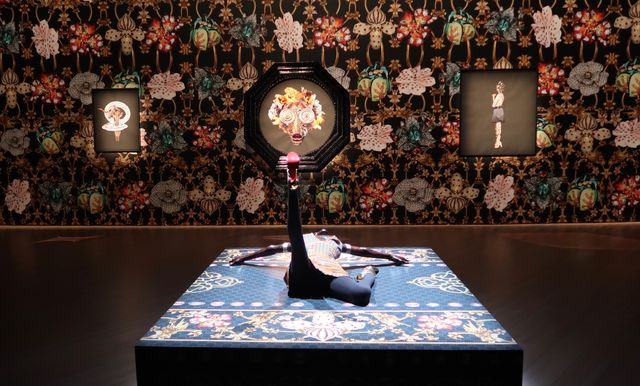
Ansista has a leg up in front of Twirl, Isolation, and Formation of Attention (photo by twi-ny/mdr)

Around the back of the classroom is a semicircle of other works by Newsome, who is based in Brooklyn and Oakland. At either end are Ansista and Thee Variant, lifesize iterations of Being, one wearing red heels and a West African print dress, the other styled like a dominatrix with spiky black leather pants, stilettos, and a helmet mask, with warped facial parts that are also evident in nine framed collages featuring such titles as Isolation, Formation of Attention, It Do Take Nerve, O.G. (Oppositional Force), and JOY! In addition, there are monitors at either end of the armory hallway and in the gift shop, showing the twerking video Whose Booty Is This, the 2015 King of Arms parade and coronation, and the 2021 postapocalyptic Build or Destroy. Be sure to check out the cases in the shop, as Newsome has snuck in some hand-carved mahogany and resin African objects alongside the armory’s historic pieces, including Adinkra, Gemini, Brolic, and Unity. On February 20, the armory hosted the salon “Captcha: Dancing, Data, Liberation,” an all-day seminar examining art, technology, and Black queer culture and quantum visual language that you can watch here.

Given the history of hate and oppression that Assembly takes on, it is a surprisingly hopeful, forward-thinking installation, as Newsome envisions a “utopian future [of] beloved togetherness” at the intersection of humanity and technology, where “racial hierarchies and biases” can be overcome through what he calls a “real reboot.” Being and Assembly are only the beginning.

TOP OF THE HEAP

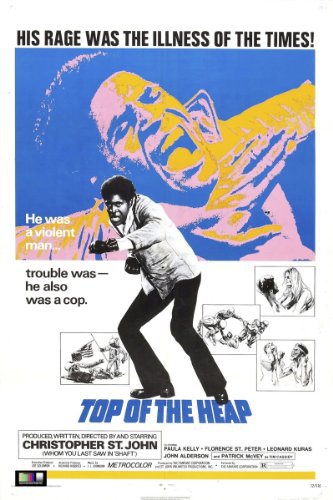
Christopher St. John wrote, produced, directed, and stars in underrated blaxploitation flick Top of the Heap

TOP OF THE HEAP (Christopher St. John, 1972)
BAM Rose Cinemas
30 Lafayette Ave. between Ashland Pl. & St. Felix St.
February 18-24
718-636-4100
www.bam.org

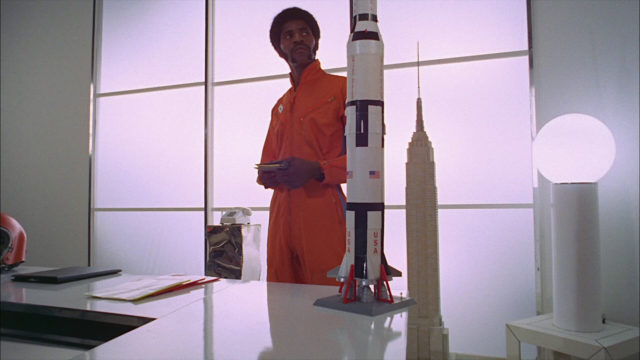
George Lattimer is not just a cop; he’s a Black cop on the edge in Top of the Heap, screening at BAM February 18-24. The 1972 blaxploitation flick was written, produced, and directed by Christopher St. John, who stars as Lattimer, a Metropolitan Police sergeant in DC who is sick and tired of being treated like a Black man first and not an officer of the law. Surrounded by white men and Black women who take him for granted, he fantasizes about becoming an astronaut preparing to rocket to the moon. In the NASA scenes, he is slick and debonair, sporting ultracool facial hair and an infectious determination to succeed, but as the cop he is unsure of himself and his place in the world.

His mother (Beatrice Webster) has died but he doesn’t want to go to the funeral in his hometown in Alabama. His wife (Florence St. Peter) says he doesn’t communicate with her anymore. His white partner (Leonard Kuras) is corrupt. His daughter (Almeria Quinn) is downing pills. He gets no respect from his captain (John Alderson). His groovy nightclub-singing girlfriend (Paula Kelly, listed in the credits as playing “Black Chick”) makes fun of him. On an incident on a bus, he is mistaken for a criminal by a white rookie cop (Brian Cutler). Driving in his woody station wagon, he is almost hit by a cab driver (character actor extraordinaire Allen Garfield, who died from Covid in April 2020 at the age of eighty) who threatens to bust him up until he finds out he is a cop.

White people see Lattimer only as a Black man and all the racist stereotypes that come with that. Black men see him only as a cop, a traitor working for the man. His life and career are unraveling right before his eyes, and he is threatening to explode at any minute. “I can do any goddamn thing I want!” he cries out, but of course he can’t. When he visits his former colleague, retired police officer Tim Cassidy (Patrick McVey), the old man talks about being overwhelmed with fear and loneliness, feeling useless, all of the things that Lattimer is experiencing; just as America turns its back on the elderly, so it does on Black men like Lattimer just trying to get by day to day. When asked by a reporter what it’s like to be in space, Lattimer explains, “Isolation . . . Sort of like waiting at the mailbox for your welfare check.”

Nominated for the Golden Bear at the Berlin International Film Festival, the film features small touches that lift it above the realm of standard Blaxploitation. A poster in Lattimer’s daughter’s bedroom declares, “War is not healthy for children and other things.” In a fantasy sequence, his blond, sexy white Scandinavian nurse (Ingeborg Sørensen) is reading a copy of Ebony magazine before offering him her services. Soon-to-be heavyweight boxing champion Ken Norton shows up in a bar scene, ready to go at it with Lattimer. Meanwhile, the space fantasies evoke Gil Scott-Heron’s “Whitey on the Moon,” the 1970 song in which Scott-Heron declares, “The man jus’ upped my rent las’ night (’cause Whitey’s on the moon) / No hot water, no toilets, no lights (but Whitey’s on the moon).”

Imaginatively photographed by Richard A. Kelley and featuring a soundtrack by J. J. Johnson with percussive African rhythms and jazz fusion, the Afro-Futurist Top of the Heap is a potent exploration of the Black experience in the United States, as relevant today as it was fifty years ago. “Top of the Heap is a powerful, dynamic story as only a Black man can tell it,” the above original trailer proclaims.

It’s a shame that St. John and this film faded into obscurity; a member of the Actors Studio, St. John played Lumumbas leader Ben Buford in Shaft and had only a handful of film and television roles before quitting the business in 1988. In 2014, he and his son, Emmy-winning soap opera star Kristoff St. John, codirected the documentary A Man Called God, about their family’s involvement with an Indian cult. Kristoff passed away in 2019 at the age of fifty-two; St. John is now eighty.

Be sure to stay through the end of the credits, where a final bonus will make you wonder whether Jordan Peele is a Top of the Heap fan. Writer Josiah Howard, author of Blaxploitation Cinema: The Essential Reference Guide, will introduce the 7:00 screening at BAM on February 18.

THE AUTOMAT

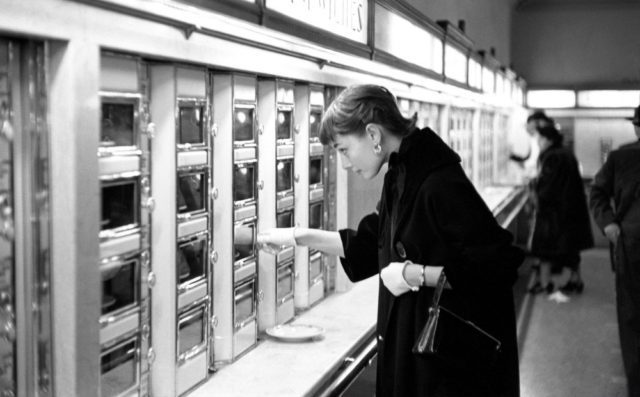
Audrey Hepburn grabs a bite at the Automat in New York City (photo by Lawrence Fried, 1951)

THE AUTOMAT (Lisa Hurwitz, 2021)
Film Forum
209 West Houston St.
Opens Friday, February 18
212-727-8110
filmforum.org
automatmovie.com

New Yorkers are used to saying goodbye to iconic institutions, from the old Penn Station and Ebbets Field to the Carnegie Deli and the Stork Club. One of the hardest to bid farewell to was a most unusual eatery that catered to anyone who had a couple of nickels and time for a quick lunch or dinner: the Automat, a type of self-service restaurant that flourished in New York City and Philadelphia, predominantly during the first six decades of the twentieth century.

At the beginning of Lisa Hurwitz’s thoroughly satisfying yet elegiac debut documentary, The Automat, comedian Mel Brooks tells her, “I’m going to give you what I can in terms of time and effort, and I’ll try to write the song.” He continues, “I suggest you do some narration at the beginning to frame what you’re going to talk about. You know, with pictures — do you have enough pictures of Automats?”

Hurwitz has plenty of pictures of Automats and just the right narrator to open the film, Brooks himself, who explains, “Of course, when you say ‘Automat,’ or ‘Horn & Hardart,’ very few people know what you’re talking about. But one of the greatest inventions in insane centers of paradise were these places that had little glass windows framed in brass with knobs, and if you put two nickels into the slot next to the windows, the windows would open up, and you could take out a piece of lemon meringue pie for ten cents and you could eat it.”

Brooks is one of many people who more than just enjoyed going to the Automat; for them, it was an integral part of their lives, a place to gather with friends, colleagues, and family, schmooze a bit, and have a cheap but good meal. From 1902 to 1991, the Automat served young and old, rich and poor; race, religion, politics — none of that mattered in the egalitarian spaces.

The late Supreme Court Justice Ruth Bader Ginsberg recalls, “Yes, this is the great USA, with people of all different colors, and religions, and manner of dress, and yet we are all together.” The late Secretary of State Colin Powell notes, “All the Automats had that beautiful diversity that didn’t exist in most of the rest of the country, of economic standing, of color, of ethnicity, of language. You never knew what you’d run into in an Automat.” Among the others waxing poetic about the Automat are Carl Reiner, Elliott Gould, former Philly mayor Wilson Goode, and former Starbucks chairman and CEO Howard Schultz, who says, “The Automat for me was a seminal moment in my childhood, and I became a merchant the day that I was in that Automat.” Brooks declares, “The Automat had panache.”

Made over the course of seven years, the film also features interviews with Lorraine Diehl and Marianne Hardart, authors of The Automat: The History, Recipes, and Allure of Horn & Hardart’s Masterpiece; former Automat VP of engineering John Romas; Edwin K. Daly Jr., whose father was president of Horn & Hardart from 1937 to 1960; New York City historian Lisa Keller; H&H architect Roy Rosenbaum; architectural dealer and restorer Steve Stollman, who bought a lot of the old mechanisms when the restaurants closed; and historian Alec Shuldiner, whose PhD dissertation inspired Hurwitz to make the film.

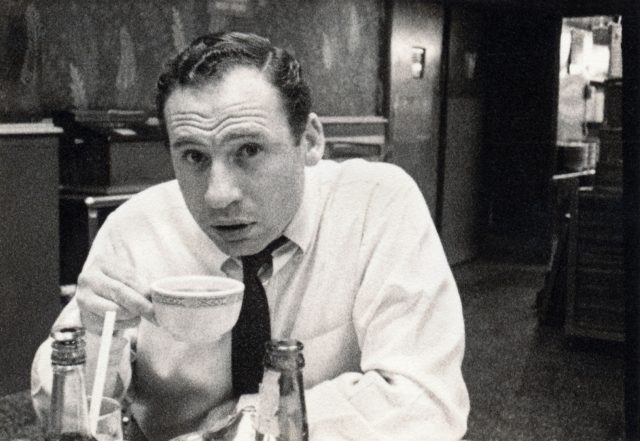
Mel Brooks sings the praises of the Automat in loving documentary (photo by Carl Reiner)

There are tons of great photos and film clips in the documentary, including shots of Audrey Hepburn, Debbie Reynolds and Eddie Fisher, Jackie Gleason, Donna Reed, Abbott & Costello, and James Dean at the Automat and scenes from That Touch of Mink, The Bob Hope Show, The Flintstones, Warner Bros. cartoons A Hare Grows in Manhattan and Tree Cornered Tweety, Candid Camera, and such old movies as The Early Bird, No Limit, and Thirty Day Princess. Jack Benny hosts an opening there, giving out nickels to his guests. The Irving Berlin and Moss Hart musical Face the Music begins with the song “Lunching at the Automat.”

Hurwitz also deals with socioeconomic change that helped make the Automat so popular after the Great Depression and through both wars and, later, led to its downfall. The sentimental attachment everyone has for the Automat in the film is contagious, even if you never had the baked beans, ham and cheese sandwich, or creamed spinach; it was a special place to so many through several generations, and Hurwitz captures those sentimental feelings with panache while leaving you with an ache in your heart and stomach — and a song from Mel Brooks. The Automat opens February 18 at Film Forum, with Hurwitz participating in Q&As on Friday at 7:00, Saturday at 7:30, and Sunday at 5:40.

THE UNMAKING OF A COLLEGE: THE STORY OF A MOVEMENT

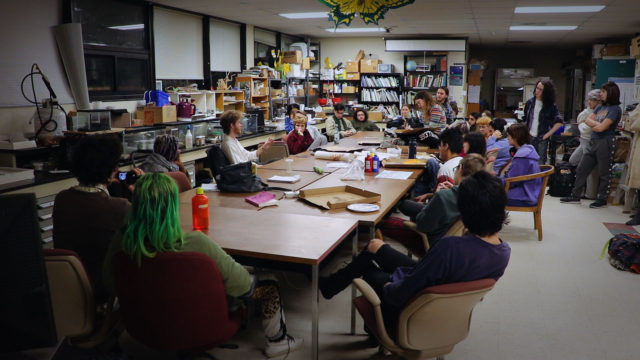
Students occupy offices in documentary The Unmaking of a College

THE UNMAKING OF A COLLEGE: THE STORY OF A MOVEMENT (Amy Goldstein, 2021)
IFC Center
323 Sixth Ave. at West Third St.
Opens Friday, February 11
www.ifccenter.com

“One can worry that if Hampshire is failing, what does that mean for liberal arts education in general?” Sloan Foundation president Adam Falk asks in Amy Goldstein’s passionate documentary, The Unmaking of a College: The Story of a Movement. A graduate of the innovative, experimental independent Hampshire College, which opened its doors in 1970, Goldstein follows a months-long sit-in orchestrated by students upon learning that the institution was in danger of closing.

On January 15, 2019, new college president Miriam “Mim” Nelson sent out a letter advising of an important meeting being held in forty-nine minutes. At that meeting, which many people could not attend because of the late notice, she announced that the school was looking for a “strategic partner” and that there was likely going to be no incoming class in the fall. Students, teachers, and even members of the board of directors took action, demanding answers. When none came, the students occupied several offices, including Nelson’s, as they crusaded for their rights, attempting to save the liberal arts college, which had a relatively low endowment and relied primarily on tuition, which was high.

Columbia University professor Andrew Delbanco explains, “We are about to see a great shrinkage in the number of colleges and universities in this country because only the wealthiest will be able to survive. And it’s inevitable, I think, that fragile colleges are going to face the possibility of going out of business.”

Among the students Goldstein talks to are Marlon Becerra; Cheyenne Palacio-McCarthy; Andrew Gordon; Moon West; Annie Wood; Joshua Berman, who took extensive footage of various events and gatherings; and Rhys MacArthur, who works in the admissions office. They are often photographed in front of a large screen with campus footage projected over them, evoking how all-encompassing the situation is; they are not just battling for their education but for their future careers and life.

“Students have always been a huge part of how this college runs. I remember occupying the president’s office, but I don’t remember why. I mean, that’s just in our blood,” Hampshire alum and master documentarian Ken Burns notes. “At one point it seemed like the story is that Hampshire College is dead. I am happy to say that rumors of our death are greatly exaggerated.”

Nelson doesn’t back down even as the press gets hold of the story and some questionable behind-the-scenes negotiations are revealed. Sitting on the floor of her office, surrounded by students, Nelson tells them, “I just have to say, I feel like I’m in an alternative universe here. I am working so f’ing hard. I am fighting like you can’t even imagine to maintain our independence. It’s critical. So I’m looking at all of these things.”

Student Nya Johnson immediately responds, “You get paid to work f’ing hard. So work. Do your work. We pay you to do this. I don’t know; I’m just confused. What alternative universe are you living in?”

Hampshire has a history of activism and providing students with a nontraditional education. Fear of a merger with one of its sister schools, Amherst, Smith, Mount Holyoke, or UMass, worries students and faculty; professors are concerned with what would happen to them, particularly as potential layoffs loom. However, as Hampshire professor Salman Hameed declares about Nelson, “She picked the wrong college to mess with.”

Hampshire College president Miriam “Mim” Nelson finds herself under fire in Amy Goldstein doc

Goldstein (Kate Nash: Underestimate the Girl, Self-Made Men) also speaks with Hampshire Gazette reporter Dusty Christensen, Science magazine editor in chief Holden Thorp, former college president Adele Simmons, lead fundraiser Cheri Butler, and Hampshire board of trustees member Mingda Zhao, who each offers a unique perspective on the conflict.

Hampshire professor Margaret Cerullo writes an article for The Nation detailing what is happening; she titles it “The Unmaking of a College: Notes from Inside the Hampshire Runaway Train,” a riff on the school’s original manifesto, The Making of a College. Yale School of Management associate dean Jeffrey Sonnenfeld announces, “This was very badly handled.” The only person who speaks up for Nelson is Hampshire alum and conservative Subject Matter PR firm CEO John Buckley, who was hired by Nelson to help handle the crisis. “I saw a woman who was trying to do the right thing who got caught and made some mistakes, and then everything unraveled really, really badly,” he says.

Hampshire’s motto is “Non satis scire” — “To know is not enough.” The students’ nonviolent campaign for transparency, involvement, and agency, to know the truth and be part of the solution, is inspiring; many of them are learning lessons that will help them on their life’s journey while also finding out there can be lies and betrayal on that road. In many ways, the film serves as a primer for the future as the next generation prepares to eventually take over a torn and tattered America — and it all begins with education.

The Unmaking of a College: The Story of a Movement opens February 11 at IFC Center; Goldstein will be on hand for a Q&A with some of the film’s subjects following the 7:50 show.