this week in lectures, signings, panel discussions, workshops, and Q&As

A DAYLONG CELEBRATION—BEFORE YESTERDAY WE COULD FLY: AN AFROFUTURIST PERIOD ROOM

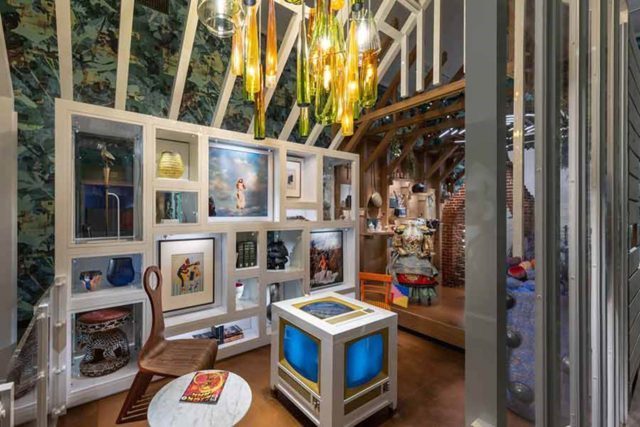
Before Yesterday We Could Fly is the Met’s latest period room (photo © the Metropolitan Museum of Art)

A DAYLONG CELEBRATION
Metropolitan Museum of Art
1000 Fifth Ave. at 82nd St.
Sunday, March 13, free with museum admission, 11:00 am – 4:00 pm
212-535-7710
www.metmuseum.org

In November, the Metropolitan Museum of Art opened a new period room, the spectacular Afrofuturist Before Yesterday We Could Fly, an homage to the nineteenth-century Seneca Village, a thriving African American community, including Black landowners, that was taken away by the city in order to build Central Park. Named after Virginia Hamilton’s 1985 children’s book, The People Could Fly: American Black Folktales, the installation features more than six dozen objects, including bowls, vases, cups, plates, chairs, jars, boxes, paintings, sculpture, and more by such artists as Robert Lugo, Zizipho Poswa, Atang Tshikare, Elizabeth Catlett, William Henry Johnson, Magdalene Odundo, and Njideka Akunyili Crosby. The room is instilled with a spiritual energy that is intoxicating, melding past and present with the future.

“I think for a lot of us, when we were kids, our ability to envision a future that was different than some of the things that we didn’t like that we were seeing around us was to escape into a fantasy and envision a future that’s more akin to a superhero comic book than it is to actual reality — and I think that comes through in my work and a lot of the people that express visions in an Afrofuture,” Swiss industrial designer and artist Ini Archibong says in a Met video; Archibong contributed two Atlas Chairs, an Orion Table, and the Vernus 3 chandelier to the room.

“The Black imagination and manifestation of freedom is really what I was aiming at. And my feeling that roots, magic is really at the center of our strength and identity, and is something that has always helped direct us into the future and given us strength in the present,” Haitian-born, Brooklyn-based conceptual artist Fabiola Jean-Louis says in another Met video; her ornately designed Justice of Ezili corset dress, a tribute to Vodou loa (spirit) Ezili Dantor, is a highlight of the room.

Also be on the lookout for Henry Taylor’s Andrea Motley Crabtree, the first, a portrait of the first woman and Black woman army deep-sea diver; Willie Cole’s Shine, a mask made of high-heeled leather shoes equating soles and souls; Tourmaline’s photographic self-portraits Summer Azure and Morning Cloak; Njideka Akunyili Crosby’s Thriving and Potential, Displaced (Again and Again and…), wallpaper that merges a Seneca Village map with images from the African diaspora; Andile Dyalvane’s Umwonyo, a pot that collapsed when he danced in his studio; Roberto Lugo’s Digable Underground, a porcelain sculpture with images of Harriet Tubman and Erykah Badu, in a place of honor on a glass plinth within an open brick tower; and Jenn Nkiru’s Out/Side of Time, a mysterious photo made specifically for the period room.

On March 13, the Met will host an all-day celebration of the installation, running from 11:00 am to 4:00 pm, consisting of art workshops in which participants can make tech-y accessories and social justice pottery; gallery chats with curators and researchers Sarah Lawrence, Ian Alteveer, and Ana Matisse Donefer-Hickie; the panel discussion “In the Parlor” with Rena Anakwe, Dyalvane, Jean-Louis, and Tourmaline; storytelling; and more. All events are free with museum admission; some require advance registration.
OUR LOVE AFFAIRS — ARNAUD DESPLECHIN SELECTS : THE EARRINGS OF MADAME DE . . .

The Earrings of Madame De . . .

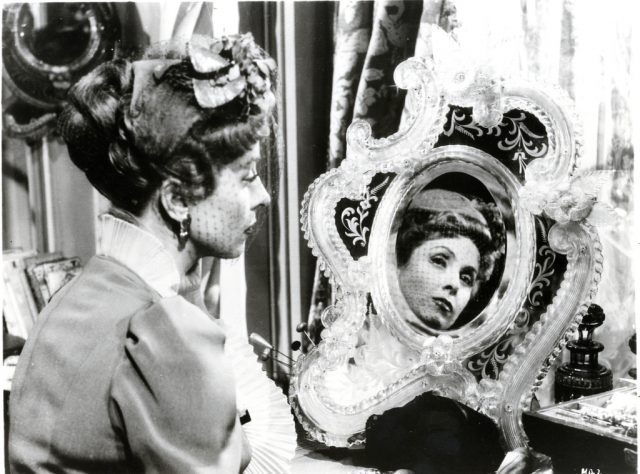
The Comtesse Louise de . . . (Danielle Darrieux) reflects on her life in The Earrings of Madame De . . .

THE EARRINGS OF MADAME DE . . . (Max Ophüls, 1953)
French Institute Alliance Française, Florence Gould Hall
55 East 59th St. between Madison & Park Aves.
Tuesday, March 15, $14, 4:00 & 7:30
Series continues Tuesday nights through March 29
212-355-6100
fiaf.org

Max Ophüls’s The Earrings of Madame de . . . (also known as just Madame de . . .) is a marvelously told tale, a majestic cinematic achievement that Andrew Sarris considered the greatest movie ever made and Dave Kehr called “one of the most beautiful things ever created by human hands.” In 1950, the German-born auteur made La Ronde, a merry-go-round of romance in which one of the two lovers from one scene moves on to someone else in the next. Three years later, Ophüls again follows a series of current, past, and potential lovers in The Earrings of Madame de . . . , but this time via a pair of diamond earrings whose meaning and importance are altered every time they change hands. The film opens with the Comtesse Louise de . . . (a radiant Danielle Darrieux) looking through her personal possessions, from jewelry to furs to a Bible. During a two-minute continuous shot with a handheld camera, Ophüls shows only her hands and the side of her face until she sits down and looks at herself in the mirror; it not only immediately establishes the woman’s character — like her fancy things, she has become merely another object, an empty reflection — but lets the audience know that they are in the grip of a master, that the very motion of the camera itself will play a central role in what we’re about to experience.

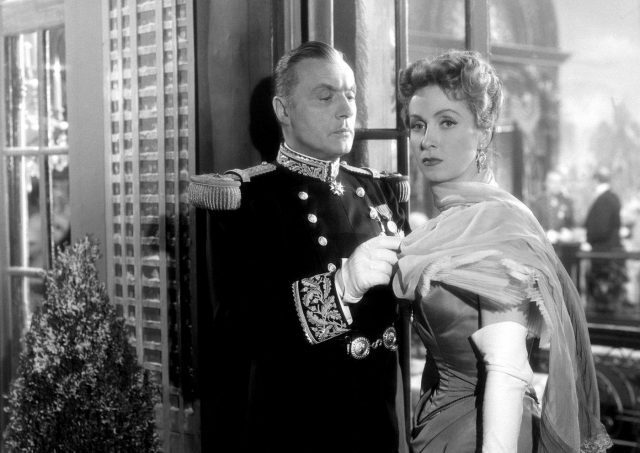
And indeed, Christian Matras’s gorgeous black-and-white cinematography, composed of wonderfully orchestrated close-ups and sweeping montages, guides us along as we follow the travels of a pair of diamond earrings that, through various circumstances, keeps coming back to the countess. Louise, whose last name we never learn through clever blocks made in sound and image, needs money, but she is afraid to let her husband, Général Andre de . . . (a stern Charles Boyer), know. She decides to sell the diamond earrings he gave her as a wedding present — she not only wants the cash but also is seeking to rid herself of what the jewelry represents, a love that is not what it once was. Meanwhile, her husband is saying goodbye to his lover, Lola (Lia Di Leo), shipping her off to Constantinople as if she were a piece of jewelry he no longer requires. But when Louise’s playful flirtation with the graceful Italian diplomat Baron Fabrizio Donati (Neorealist director Vittorio De Sica) threatens to become more serious, Andre gets more serious as well, and the heart-wrenching melodrama reaches epic dilemmas.

The Earrings of Madame De . . .

Général Andre (Charles Boyer) takes a newfound interest in his wife (Danielle Darrieux) in Max Ophüls classic

Loosely adapted by Ophüls with Marcel Achard and Annette Wademant from the novel by Louise Lévêque de Vilmorin, The Earrings of Madame de . . . is a ravishing film, every moment a gem. Darrieux, who also appeared in Ophüls’s House of Pleasure and La Ronde and only passed away this past fall at the age of one hundred, is bewitching as the countess, a long-unsatisfied woman attempting to break out of the shell she has been held captive in. Boyer, who had previously starred in Anatole Litvak’s Mayerling with Darrieux, is beguiling as the general, a proud man who is protective of certain possessions. And De Sica, who appeared in more than 150 films but is best known as the director of such Italian stalwarts as The Bicycle Thieves, Umberto D., and Miracle in Milan, is enchanting as the baron, who has fallen passionately in love with Louise and doesn’t care who knows it. Their courtship is breathlessly depicted in a whirling, swirling series of dances at various balls where they are the last to leave. James Mason, who starred in Ophüls’s Caught and Letters from an Unknown Woman, famously wrote, “A shot that does not call for tracks / Is agony for poor old Max, / Who, separated from his dolly, / Is wrapped in deepest melancholy. / Once, when they took away his crane, / I thought he’d never smile again.” Ophüls, who died in 1957 at the age of fifty-four during the making of Les Amants de Montparnasse, goes all out in The Earrings of Madame de . . . , an unforgettable movie with a spectacular ending.

The film is screening March 15 at 4:00 and 7:30 in the FIAF series “Our Love Affairs: Arnaud Desplechin Selects,” comprising five films that have influenced and inspired the French auteur (Kings and Queen, A Christmas Tale). Desplechin says about Madame de . . . , “Danielle Darrieux suffocates under the obligations of marriage. Infidelity will be the risky path she takes to remember herself. And, following along through the film on this journey of a gem, we encounter the twists and turns of desire.” The festival continues March 22 with Ingmar Bergman’s The Touch and concludes March 29 with Martin Scorsese’s The Age of Innocence; Desplechin will provide video introductions for each film.

I’VE HEARD THE MERMAIDS SINGING

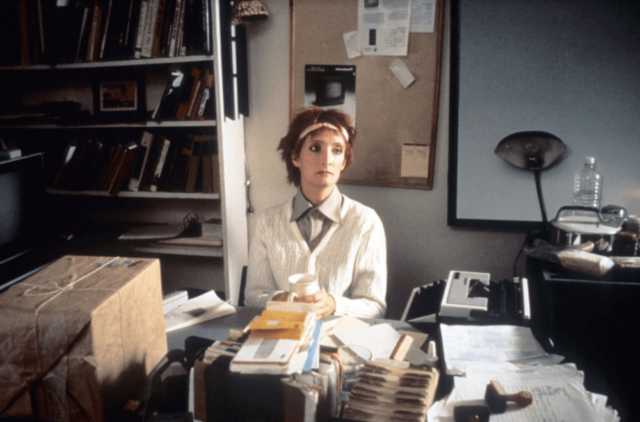
Polly Vandersma (Sheila McCarthy) shares her unique view of the world in I’ve Heard the Mermaids Singing

I’VE HEARD THE MERMAIDS SINGING (Patricia Rozema, 1987)
Metrograph
7 Ludlow St. between Canal & Hester Sts.
Opens Friday, March 11, At Home and In Theater
212-660-0312
nyc.metrograph.com
www.kinolorber.com

“Gosh. You know, sometimes I think my head is like a gas tank. You have to be really careful what you put into it because it might just affect the whole system,” Polly Vandersma (Sheila McCarthy) says in I’ve Heard the Mermaids Singing. “I mean, isn’t life the strangest thing you’ve ever seen?”

Considered one of the best films to ever come out of Canada, I’ve Heard the Mermaids Singing is plenty strange itself. The 1987 comedy is a unique exploration of queer culture and belongs with such 1980s underground fare as Smithereens, Liquid Sky, and Repo Man as well as James McBride’s 1967 David Holzman’s Diary. In her second film, McCarthy stars as the birdlike Polly, a quirky, self-described “unsuccessful career woman” and “gal on the go,” a not-very-good girl Friday who is content being a temporary secretary, the antithesis of the ’80s archetype embodied by Tess McGill, the ambitious thirty-year-old portrayed by Melanie Griffith in Mike Nichols’s 1988 Working Girl.

The story is told in flashback as Polly makes a video about her simple existence, kind of like a precursor to the confessions in MTV’s The Real World but without the self-aggrandizement. Polly lives alone in Toronto, with no friends; now thirty-one, she lost both her parents ten years before. She’s not exactly smart or well rounded and not much of a conversationalist. When gallery curator Gabrielle (Paule Baillargeon) offers her a full-time position, Polly jumps at the chance, ready to immerse herself in the contemporary art world, which she knows nothing about, and Gabrielle’s personal life, which includes the sudden, unexpected return of her old girlfriend, Mary (Ann-Marie MacDonald).

Polly is an aspiring photographer who snaps pictures of people on the street hanging out, playing sports, and falling in love, all activities that seem to evade her. She develops the film in her bathroom, which she has converted into a makeshift darkroom. Meanwhile, she has endearing fantasies of climbing buildings, flying, and walking on water. Her photos and fantasies are in black-and-white, countering the pastel colors of her daily life. When she finds out that Gabrielle is a painter — her canvases literally glow, as if descended from heaven (while evoking the mysterious object in the trunk of the Chevy Malibu in Repo Man) — she becomes obsessed with her mentor’s works as both of them decide to pursue their artistic talents further.

Filmed in Toronto in one month for $275,000, I’ve Heard the Mermaids Singing, winner of the Prix de la Jeunesse at the 1987 Cannes Film Festival, underwent a 4K restoration in 2017 as part of Canada 150, a celebration of the country’s 150th anniversary of its confederation. The title was taken from a line in T. S. Eliot’s poem “The Love Song of J. Alfred Prufrock”: “I have heard the mermaids singing, each to each. / I do not think that they will sing to me.”

McCarthy won the first of two Genie Awards for Best Actress, the Canadian equivalent of the Oscars, for Mermaids; she would nab the honor again six years later for Diane Kingswood’s The Lotus Eaters. She is mesmerizing as the endlessly eccentric, spikey-red-haired Polly, who is as peculiar and unpredictable as she is charming and endearing; it’s like she’s arrived from another planet, intent on learning what life can be about. Pay close attention to the scene in which Gabrielle and art critic Clive (Richard Monette) discuss a new painting by a gallery artist while Polly eavesdrops; they are actually talking about her potential transformation, even if she doesn’t realize it.

Rozema (Mansfield Park, When Night Is Falling) wrote, directed, edited, and coproduced the film, which features playful cinematography by Douglas Koch and a fab ’80s score by Mark Korven, alongside Ludwig van Beethoven’s Symphony No. 5.

The restored version opens at Metrograph on March 11, with Rozema participating in a Q&A with multidisciplinary artist Laurie Anderson following the 6:30 screening on opening night. “I wanted to make a warm-spirited anti-authority film,” Rozema says in her director’s statement. “But most of all I wanted to make a film with Polly in it, one where she and I get to hear the mermaids singing.” We should consider ourselves fortunate to be able to do the same.

JOHN EARLY SELECTS: MAPS TO THE STARS

MAPS TO THE STARS

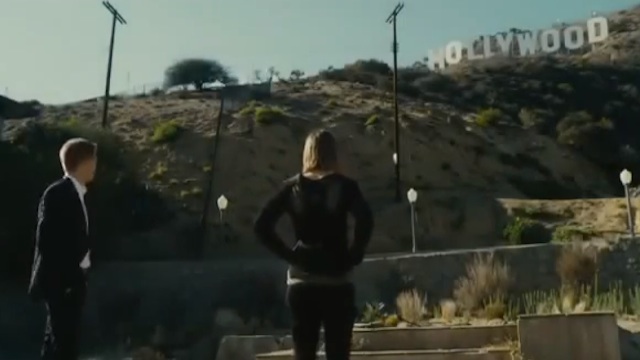
Jerome Fontana (Robert Pattinson) and Agatha Weiss (Mia Wasikowska) look to the Hollywood hills in Maps to the Stars

MAPS TO THE STARS (David Cronenberg, 2014)
Metrograph
7 Ludlow St. between Canal & Hester Sts.
Wednesday, March 9, 4:45 and 7:15
Metrograph at Home, March 12-14
www.focusfeatures.com
nyc.metrograph.com

Actor and comedian John Early’s latest selection for Metrograph is an underrated gem. Canadian filmmaker David Cronenberg and American novelist and screenwriter Bruce Wagner, a match made in Hollywood Babylon, paint a savage portrait of celebrity culture in the absolutely incendiary and off-the-charts satire Maps to the Stars. The darkly funny comic drama centers on Agatha Weiss (Mia Wasikowska), a young woman who returns to Hollywood after having been put away for a long time for a dangerous deed, her face and body marked by burns. Befriending limo driver Jerome Fontana (Robert Pattinson), who is an aspiring actor and writer, Agatha gets a job working for disgruntled actress Havana Segrand (Julianne Moore), who is desperate to star in the remake of Stolen Moments, playing the role that made her mother, Clarice Taggart (Sarah Gadon), famous, but Havana fears that according to Hollywood she is much too old. Havana undergoes regular intense physical and psychological therapy to deal with her mommy issues with television healer Stafford Weiss (John Cusack), Agatha’s father, who has banished his daughter from ever contacting the family again. Meanwhile, Agatha’s younger brother, thirteen-year-old child star Benjie Weiss (Evan Bird), is a Bieberesque character fresh out of rehab who is negotiating the sequel to his massive hit, Bad Babysitter, with his very serious stage mom, Cristina (Olivia Williams). Slowly but surely, everyone’s lives intersect in a riot of fame and misfortune, drugs and guns, ghosts and incest.

Julianne Moore

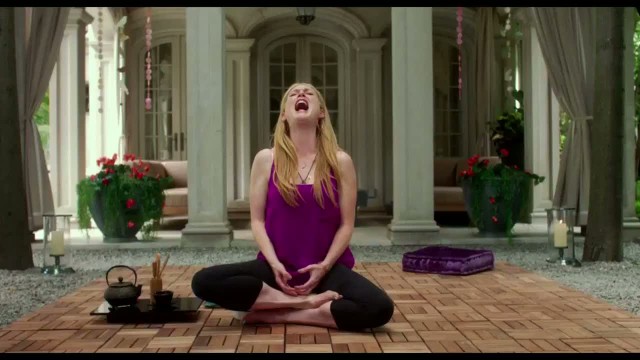
Havana Segrand (Julianne Moore) screams for success in dazzling collaboration between David Cronenberg and Bruce Wagner

Cronenberg, who has made such cult favorites as Scanners, The Fly, Naked Lunch, and A History of Violence, and the L.A.-based Wagner, author of such stinging novels as I’ll Let You Go, Still Holding, The Empty Chair, and I’m Losing You, which he also turned into a film, leave nothing and no one unscathed in this thoroughly brutal depiction of Hollywood as a haunted La La Land of dreams and nightmares, both literally and figuratively. Rising star Wasikowska (Alice in Wonderland, In Treatment, Jane Eyre) is superb as Agatha, her inner and outer scars revealing more and more of themselves as she reinserts herself into the life of her crazy family, with Cusack channeling a bit of Nicolas Cage as the overprotective patriarch, a self-help guru who could use a little help himself. Moore was named Best Actress at Cannes for her harrowing portrayal of an actress teetering on the edge of reality.

Shooting for the first time ever in the United States, Cronenberg captures the sights and smells of Los Angeles and its environs; most of the film was shot in Canada, however, but Cronenberg kept Wagner, a former Hollywood limo driver himself, close by, trying to attain as much authenticity as possible. Twilight hunk Pattinson, who spent all of Cronenberg’s previous movie, Cosmopolis, in the back of a limo, gets in the driver’s seat here, playing an alternate, reimagined version of Wagner. The severely screwed-up Weiss family serves as a microcosm for Hollywood’s own severely screwed-up dysfunction, as Cronenberg melds the ridiculous with the sublime, the tragic with the comic, the bizarre with the, well, more bizarre, creating a modern-day fairy-tale mashup of Shakespeare and Williams, Sunset Boulevard and Less than Zero, a caustic, cautionary tale of the price you pay for getting what you wish for. Maps to the Stars, with an introduction by Early (Search Party, The Afterparty), is screening March 9 at 4:45 and 7:15 at Metrograph, then will be streaming March 12-14 as part of Metrograph at Home.

CELEBRATING MOLIÈRE’S 400th BIRTHDAY

Who: Lisa Gorlitsky, Margaret Ivey, Postell Pringle, Adam Gopnik, Erica Schmidt, Comédie-Française
What: Celebration of Molière’s quadricentennial
Where: FIAF, Florence Gould Hall and Skyroom, 55 East 59th St. between Madison & Park Aves.
When: March 10-12, 24, 30, $20-$45 (three-event package $75)
Why: Jean-Baptiste Poquelin was born into a bourgeois family in early 1622 in Paris. Nicknamed “le Nez” because of his relatively large proboscis, he eventually became better known as poet, playwright, and actor Molière. In celebration of the four hundredth anniversary of his birth, the French Institute Alliance Française is hosting a trio of special events. Taking place March 10-12 at 7:30 ($45) at FIAF’s Florence Gould Hall, “Molière Turns 400: 17th Century Paris Meets 21st Century New York” consists of staged excerpts, complete with sets, costumes, and live music, from The Misanthrope, The School for Wives, and Tartuffe, with Lisa Gorlitsky, Margaret Ivey, and Postell Pringle and directed by Lucie Tiberghien, the founding artistic director of Molière in the Park, which performed livestreamed adaptations of all three works during the pandemic lockdown. The March 10 presentation will be followed by a reception.

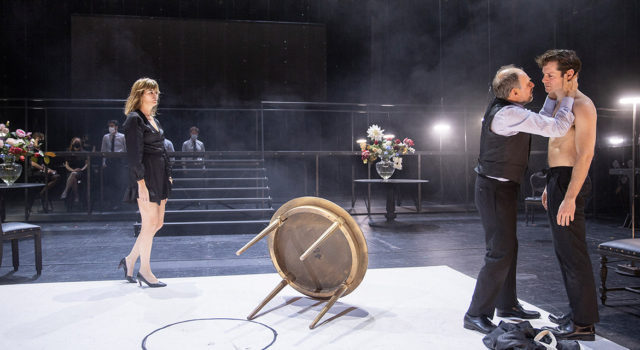
Ivo van Hove’s adaptation of Molière’s uncensored Tartuffe screens at FIAF March 24

On March 24 at 7:00 ($25), New Yorker staff writer Adam Gopnik and director Erica Schmidt will be at the FIAF Skyroom for the talk “Modernizing Molière,” available in person and via livestream. Gopnik contributed the foreword to Molière: The Complete Richard Wilbur Translations, while Schmidt directed Molière’s The Imaginary Invalid at Bard SummerScape in 2012, starring her husband, Peter Dinklage. The fête concludes March 30 at 7:00 ($35) in Florence Gould Hall with a screening of Molière’s uncensored Tartuffe or the Hypocrite by Comédie-Française, directed by Ivo van Hove from the original script, which was censored by Louis XIV in 1664; the filmed version stars Christophe Montenez and features a score by Oscar-winning composer Alexandre Desplat.

SARA MEARNS: PIECE OF WORK

SARA MEARNS: PIECE OF WORK
Joyce Theater
175 Eighth Ave. at 19th St.
March 8-13, $10-$71
212-645-2904
www.joyce.org
saramearns.com

During the pandemic lockdown, I covered more than a thousand online events created since March 2020. I had many favorite performers over those nearly two years, from actress Kathleen Chalfant and musician Richard Thompson to Arlekin Players Theatre and White Snake Projects to dancer-choreographer Jamar Roberts and Stars in the House hosts Seth Rudetsky and James Wesley. You can check out them and other stalwarts in twi-ny’s three-part Pandemic Awards.

But for me no one stood out like Sara Mearns. The extraordinary New York City Ballet principal dancer expanded her horizons in a series of breathtaking performances, including her Le Cygne (The Swan) variation for Swans for Relief, the Works & Process commission Storm, Lee Mingwei and Bill T. Jones’s durational Our Labyrinth at the Metropolitan Museum of Art, Justin Peck’s Thank You, New York for the New York City Ballet New Works Festival, Christopher Wheeldon’s The Two of Us for Fall for Dance, L.A. Dance Project’s Sonata for Saras (Mearns as her own trio!), Henry Joost and Ariel Schulman’s Another Dance Film shot at the East River Park Amphitheater, and Molissa Fenley’s State of Darkness solo onstage at the Joyce.

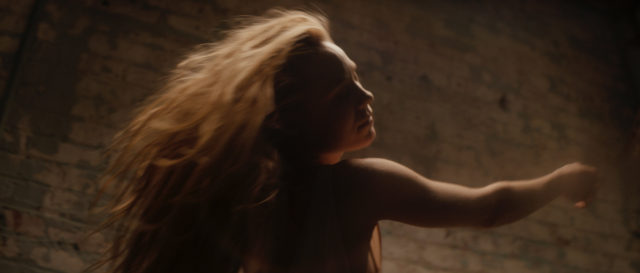
Austin Goodwin’s carefully is part of Sara Mearns program at the Joyce (photo by Drew Dawson)

But in October 2021, Mearns had to take a break to deal with a personal issue she eventually discussed on social media several months later: She was diagnosed with depression and extreme burnout and was getting help from a sports psychologist. “This is never something I saw happening to me,” she wrote on Instagram. “I thought I was invincible, that maybe I was just tired, that maybe it’s just a phase, and to get over it. I’m here to tell you it’s a very real thing,”

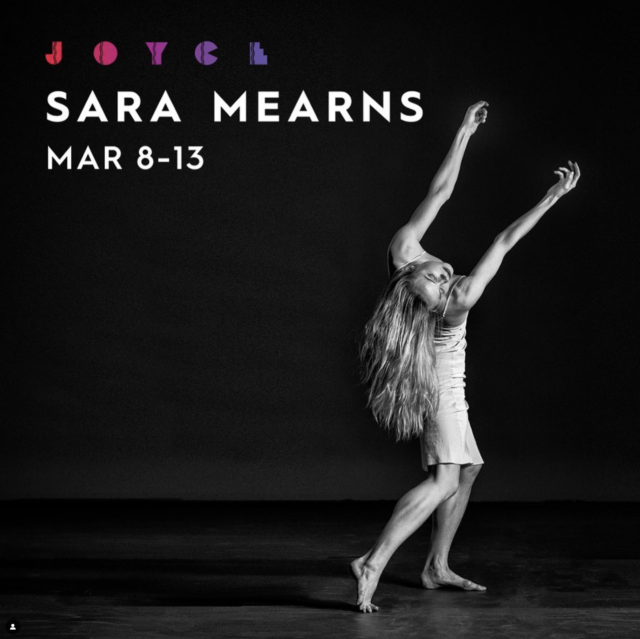
From March 8 to 13, Mearns will return to performing, and to the Joyce, with her own program, “Piece of Work,” a kind of coming-out, coming-back party in which she will perform with eight dancers in works by six choreographers, including five world or NYC premieres created specifically for Mearns. “I have been lucky enough to perform in the biggest houses in the world, doing grand productions, pouring my heart out. It’s what comes naturally to me. It doesn’t feel like a risk,” she explains in a program note. “Three years ago, I decided it was time to go a different route, a route that was vulnerable for me artistically and that would be the biggest challenge for me thus far in my career. . . . I would like to say that I curated this evening, but the truth is, New York did. It will be raw, honest, and at times messy.”

The evening begins with Jodi Melnick’s Opulence, a duet with Melnick commissioned for the 2019 Jacob’s Pillow Dance Festival, with music by drummer Kid Millions and guitarist Zach Lehrhoff. Choreographer and director Austin Goodwin’s film carefully pairs Mearns with Paul Zivkovich inside an empty house. Mearns teams with Vinson Fraley Jr. in Fraley’s On the Margins, set to an original score by Rahm Silverglade for violin, electronics, guitar, and sax.

Following intermission, Mearns will perform with Melnick, Taylor Stanley, Jaquelin Harris, Chalvar Monteiro, and Burr Johnson in a special JoycEvent, excerpts from “Night of 100 Solos: A Centennial Event” and other works by Merce Cunningham, arranged and staged here by Rashaun Mitchell and Silas Riener, featuring live music by John King. Beth Gill’s SSSara is a solo for Mearns with music by Ryan Seaton. The night concludes with Guillaume Côté’s Spir, a duet with the Canadian dancer and choreographer set to German pianist, producer, and composer Nils Frahm’s “Corn” and Woodkid and Frahm’s “Winter Morning I.” In between each piece will be audio interludes directed and edited by Ezra Hurwitz.

Mearns also wrote on Instagram, “This show has been thru so many lives, revisions, faces, versions, and I wouldn’t take any of it back. A big influence was the pandemic; it gave me a clear path of what I wanted this show to be about. I’m not the same person or artist I was before the pandemic, and I wanted the evening to reflect that & acknowledge it. How art, specifically dance, is created in New York; what artists go thru in New York is unlike anywhere else in the world.” Mearns will talk about that and more in a curtain chat at the March 9 show.

SACRED SCREENS AND SCROLLS: DECODING BUDDHIST SYMBOLS IN SHIKŌ MUNAKATA’S PRINTS

D. Max Moerman will lead a virtual walkthrough of Japan Society exhibition on March 8

Who: D. Max Moerman, Ramona Handel-Bajema, PhD
What: Virtual discussion and walkthrough of “Shikō Munakata: A Way of Seeing,” on view at Japan Society through March 20
Where: Japan Society YouTube
When: Tuesday, March 8, free with RSVP (suggested donation $5-$20), 6:00
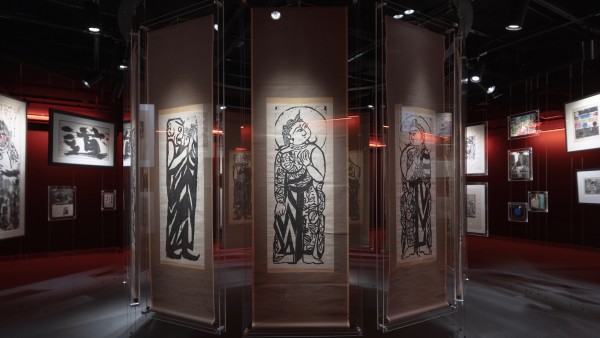
Why: On March 8 at 6:00, Barnard College professor and Columbia University Seminar in Buddhist Studies cochair D. Max Moerman will give the online lecture “Sacred Screens and Scrolls: Decoding Buddhist Symbols in Shikō Munakata’s Prints,” a deep dive into the current Japan Society exhibition “Shikō Munakata: A Way of Seeing.” Joined in conversation by Japan Society chief program officer Ramona Handel-Bajema, PhD, Moerman will walk through the show, which features nearly one hundred works by Munakata (1903-75), comprising woodblock prints, calligraphy, sumi ink paintings, watercolors, lithography, and ceramics.

“How does the artist breathe life into his work? By summoning the spirit of the art that lives inside him. . . . Power comes from the artist’s spirit, warmth from his tenderness, and serenity from his prayers,” Munakata explained in Hanga no Hanashi in 1954. Five years later, he came to New York City as a fellow in Japan Society’s Print Artists Program; several of the pieces he created for the institution are also part of the show. Moerman will focus on religious aspects of Munakata’s work, including the six-panel screen Eulogy to Shōkei and the twelve-set hanging scrolls The Ten Great Disciples of Buddha. The exhibit, which will have extended days and hours because of its popularity, also is highlighted by the newly rediscovered Tōkaidō Series from 1964, arranged at Japan Society to evoke the coastal road between Kyoto and Tokyo.