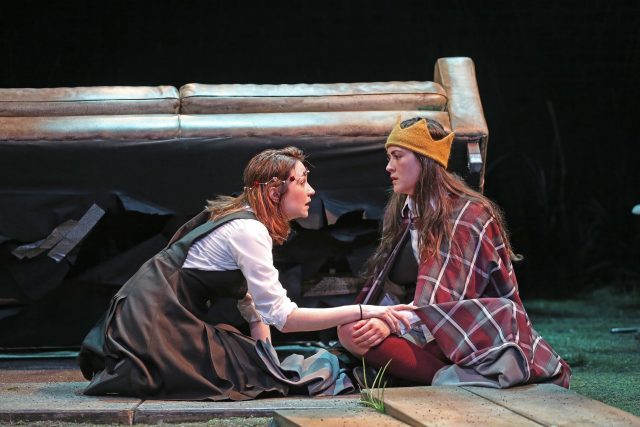
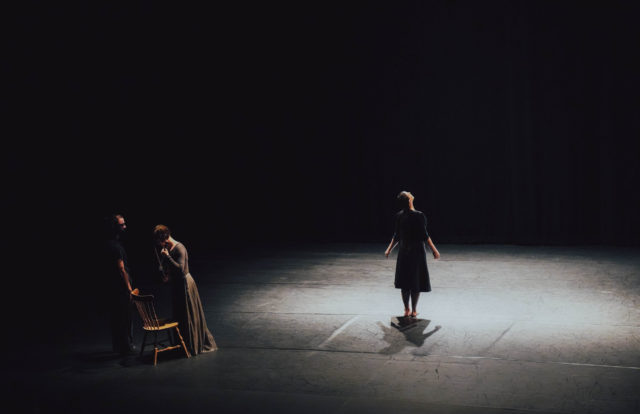
Lady Macbeth (Ismenia Mendes) reaches out to her royal husband (Isabelle Fuhrman) in inventive reimagining of Shakespeare tragedy (photo by Richard Termine)
Who: Ismenia Mendes, Nathan Winkelstein What: Livestreamed conversation about Lady Macbeth Where:Red Bull Theater online When: Monday, May 9, free with advance RSVP (donations accepted), 7:30 Why:Macbeth is all the rage now, with a much-derided version starring Daniel Craig and Ruth Negga currently playing at the Longacre on Broadway and Joel Coen’s film version with Denzel Washington and Frances McDormand having garnered three Oscar nominations. One of the best and most innovative adaptations in decades was staged by Red Bull Theater at the Lucille Lortel in 2019, directed by Erica Schmidt and set at a girls school. The fierce and furious, sexy and sinister ninety minutes starred Isabelle Fuhrman as Macbeth and Ismenia Mendes as Lady Macbeth.
In conjunction with the streaming release of the 2019 production, available on demand May 16-29, Red Bull is hosting its latest RemarkaBULL Podversation, “Exploring Lady Macbeth,” with Mendes (Troilus and Cressida,Henry V) and associate artistic director and host Nathan Winkelstein performing the “How now! what news?” scene, followed by a discussion and an audience Q&A. In the dastardly dialogue, Lady Macbeth tells her husband, “What beast was’t, then, / That made you break this enterprise to me? / When you durst do it, then you were a man; / And, to be more than what you were, you would / Be so much more the man. Nor time nor place / Did then adhere, and yet you would make both: / They have made themselves, and that their fitness now / Does unmake you. I have given suck, and know / How tender ’tis to love the babe that milks me: / I would, while it was smiling in my face, / Have pluck’d my nipple from his boneless gums, / And dash’d the brains out, had I so sworn as you / Have done to this.” Previous RemarkaBULL Podversations, which are always a treat, have featured Kate Burton, André De Shields, Elizabeth Marvel, Chukwudi Iwuji, Patrick Page, Lily Rabe, Jay O. Sanders, Michael Urie, and others and can be viewed for free here.
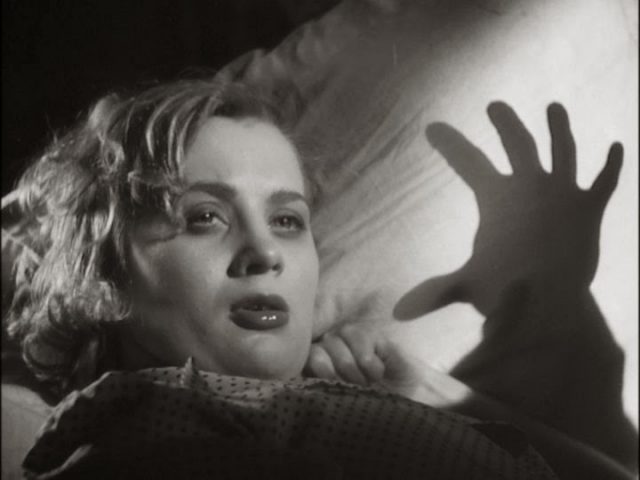
Tobacco-shop clerk Bertha Olsson (Mai Zetterling) is terrified of life in Alf Sjöberg’s Torment
TORMENT (FRENZY) (HETS) (Alf Sjöberg, 1944)
Film Forum
209 West Houston St.
Saturday, May 7, Monday, May 9, Friday, May 13, Tuesday, May 17
Series runs May 6-19
212-727-8110 filmforum.org
Film Forum pays tribute to Swedish actress, director, and novelist Mai Zetterling with a two-week, twenty-one-film retrospective featuring works directed by Basil Dearden, Nicolas Roeg, Ingmar Bergman, Alf Sjöberg, Christina Olofson, Ken Loach, and Zetterling, among others, ranging from 1944 to 1990. A passionate feminist, Zetterling studied at the National Theater in Sweden, became a star in England, had affairs with Herbert Lom and Tyrone Power, left Hollywood (avoiding the blacklist), and passed away in 1994 at the age of sixty-eight. “It feels like I’m a long way away from pretty much every norm there is,” she said.
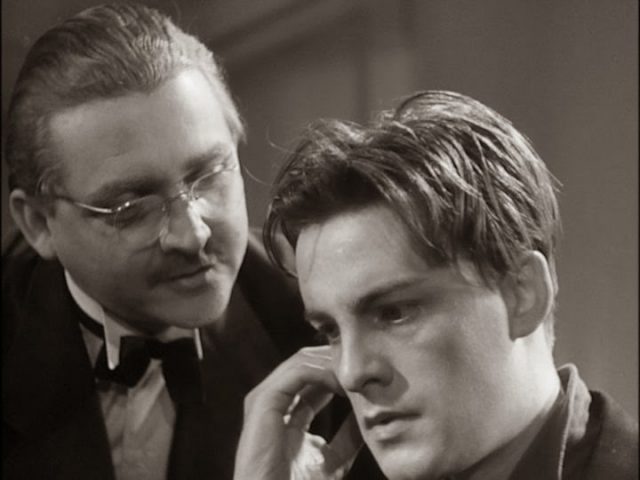
One of the series highlights is Sjöberg’s intense 1944 expressionistic noir, Torment, which had its US premiere at the Museum of Modern Art in 1962. Although directed by Sjöberg, Torment, also known as Frenzy, was written by Bergman, who also served as assistant director and made his directing debut in the final scene, which Bergman added at the insistence of the producers when Sjöberg was not available. A kind of inversion of Josef von Sternberg’s The Blue Angel, the film is set in a boarding school where high school boys are preparing for their final exams and graduation. They are terrified of their sadistic Latin teacher, whom they call Caligula (Stig Järrel), a brutal man who wields a fascistic iron fist. He particularly has it out for Jan-Erik Widgren (Alf Kjellin), the son of wealthy parents (Olav Riégo and Märta Arbin) who think he should be doing better in school. One night Jan-Erik helps out a troubled woman in the street, tobacco-shop clerk Bertha Olsson (Zetterling), who is being mentally and physically tormented by an unnamed man who ends up being Caligula. The stakes get higher and the teacher becomes even harder on Jan-Erik when he finds out the young man is having an affair with the wayward woman. When tragedy strikes, Jan-Erik’s soul is in turmoil as lies, threats, and danger grow.
A sadistic teacher (Stig Järrel) torments a student (Alf Kjellin) in Ingmar Bergman–written Torment
The twenty-five-year-old Bergman was inspired to write his first produced film script by his experience in boarding school, which led to a public disagreement with the headmaster. In a public letter to the headmaster, Bergman explained, “I was a very lazy boy, and very scared because of my laziness, because I was involved with theater instead of school and because I hated having to be punctual, having to get up in the morning, do homework, sit still, having to carry maps, having break times, doing tests, taking oral examinations, or to put it plainly: I hated school as a principle, as a system and as an institution. And as such I have definitely not wanted to criticize my own school, but all schools.” Throughout his career, Bergman would take on institutions, including religion and marriage, but his defiance began with this hellish representation of education, which oppresses all the boys in some way, including Jan-Erik’s best friend, self-described misogynist Sandman (Stig Olin), and the geeky Pettersson (Jan Molander). While the headmaster (Olof Winnerstrand) knows how frightened the boys are of Caligula, he is willing to go only so far to protect them. The opening credits are shown over a dreamlike sequence of Jan-Erik and Bertha desperately holding on to each other, but Torment is so much more than a treacly melodrama, as if Sjöberg (Miss Julie, Ön) is setting us up for one film before switching gears into an ominous, haunting thriller.
Järrel, who played an evil, jealous teacher in his previous film, Hasse Ekman’s Flames in the Dark, is indeed scary as the devious, malicious Caligula, while adding more than a touch of sadness. Zetterling, in her breakthrough role — she would go on to star in such films as Dearden’s Frieda and Roeg’s The Witches and direct such feminist works as Loving Couples and The Girls — brings a touching vulnerability to Bertha, a young woman who can’t find happiness. It’s all anchored by Kjellin’s (Madame Bovary, Ship of Fools) central performance, so rife with emotion it evokes German silent cinema. Torment suffers from Hilding Rosenberg’s overreaching score, although it is usually offset by Martin Bodin’s cinematography, filled with lurching shadows and deep mystery. The film was produced by Victor Sjöström, the legendary director of The Phantom Carriage, The Divine Woman, The Wind, and so many others in addition to his work as an actor, starring as Professor Isak Borg in another Bergman masterpiece, 1957’s Wild Strawberries, and as the conductor in 1950’s To Joy.
“Mai Zetterling” includes such other films as Sidney Gilliat’s Only Two Can Play, Bergman’s Music in the Dark, Sjöberg’s Iris and the Lieutenant, Loach’s Hidden Agenda, and Gustaf Edgren’s Sunshine Follows Rain in addition to Zetterling’s own Loving Couples (her debut as a director), Night Games (based on her unfinished novel), We Have Many Names,The Moon Is a Green Cheese, several shorts, and other features, many in new restorations courtesy of the Swedish Film Institute. Cinema historian Jane Sloan will be at Film Forum for a Q&A following the 1:00 screening of The Girls on May 7, while avant-garde filmmaker and curator Vivian Ostrovsky will introduce the 6:10 showing of the film on May 8; in addition, actress Harriet Andersson and Kajsa Hedström of the SFI will record intros for special screenings.
Hans Holbein the Younger, A Lady with a Squirrel and a Starling (Anne Lovell?), oil on panel, ca. 1526–28 (National Gallery, London)
CAPTURING HOLBEIN: THE ARTIST IN CONTEXT
The Morgan Library & Museum, Gilder Lehrman Hall
225 Madison Ave. at Thirty-Sixth St.
Friday, May 6, $30, 2:00 – 6:30 “Capturing Holbein: The Artist in Context” continues through May 15 www.themorgan.org
“Welcome to the house / to the Haus of Holbein / Ja, ooh ja, das ist gut / Ooh ja, ja / The Haus of Holbein,” the characters sing in the hit Broadway musical Six, about the six wives of Henry VIII, the king for whom Hans Holbein the Younger (1497/98–1543) was the court painter.
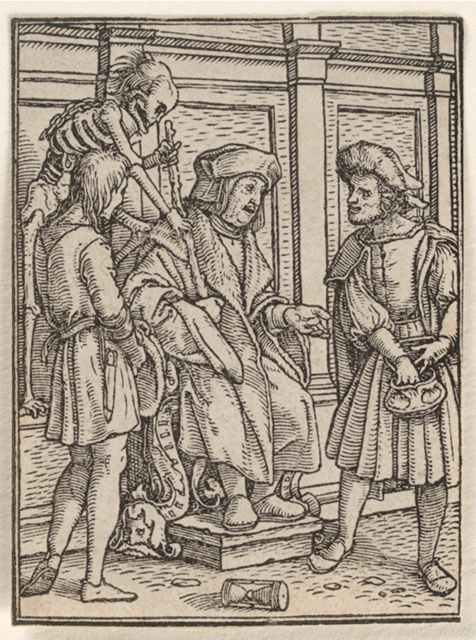
Hans Lützelburger, after designs by Hans Holbein the Younger, Death and the Judge, woodcuts, ca. 1526 (the Metropolitan Museum of Art, New York, Rogers Fund, 1919)
Right now the Haus of Holbein is the Morgan Library, which is hosting the revelatory exhibition “Holbein: Capturing Character” through May 15. The German-Swiss Holbein was best known for his exquisitely detailed portraiture, including his remarkable 1527 depiction of Sir Thomas More, on loan here from the Frick. These portraits — A Lady with a Squirrel and a Starling (Anne Lovell?),A Member of the Wedigh Family, the miniatures Portrait of a Court Official of Henry VIII and Simon George,Roundel Portrait of the Printer Johann Froben of Basel, a painting of his early supporter Erasmus, which features the phrase “I yield to none” — go deep inside his subjects, becoming not mere representations in oil but a look into their souls. In her catalog essay “The Pictorial Eloquence of Hans Holbein the Younger,” J. Paul Getty Museum curator Anne T. Woollett writes that the exhibit “considers how the artist engaged with the philosophical debate about the superiority of the written word over the painted image to convey an individual’s interior qualities. Holbein’s masterful manipulation of the viewing experience emerges through close examination of his drawings, paintings, and related works of art such as portrait medals and symbolic jewels.”
But amid all this glorious work, it is Holbein’s 1524–25 print series, “Images of Death,” that is most memorable. A collaboration with blockcutter Hans Lützelburger and based on the medieval danse macabre, “Images of Death” is a startling narrative that follows the skeletal Death as he confronts royals and peasants alike, holding aloft an hourglass, engaging in battle, playing instruments, and leading people to their ultimate, inescapable fate, which comes to everyone regardless of their wealth or power.
On May 6 from 2:00 to 6:30, the Morgan is hosting the afternoon symposium “Capturing Holbein: The Artist in Context” in the museum’s Gilder Lehrman Hall; the program consists of six presentations in addition to the keynote lecture, “Becoming Holbein: Art and Portraiture,” by Jochen Sander of the Städel Museum: “Flexibility and Rapport: Holbein’s Working Method” by Woollett, “Inherent Ingenuity: Holbein’s Portrait of Georg Gisze (1532)” by Alexander Marr of Cambridge University, “Drawing in Time: Portrait Studies by Holbein and His Contemporaries” by the Morgan’s Austėja Mackelaitė, “The Contexts for Character in Holbein’s Narrative Prints” by Jeanne Nuechterlein of York University, “Metalwork Design Drawings from the Circle of Hans Holbein the Younger” by Olenka Horbatsch of the British Museum, and “‘Foolish Curiosity’: Holbein’s Earliest English Afterlives” by Adam Eaker of the Met.
Even if you can’t make the symposium — perhaps the Morgan will record it and make it available later online — be sure to see the exhibit, co-organized with the Getty, before it leaves town. As Morgan director Colin B. Bailey says in the above video, “[Holbein] was the greatest artist of the sixteenth century working in England but really one of the greatest artists of the European Renaissance. His works are rare, they’re fragile, they’re precious, they’re rarely lent, and that’s why this exhibition is such an opportunity.”
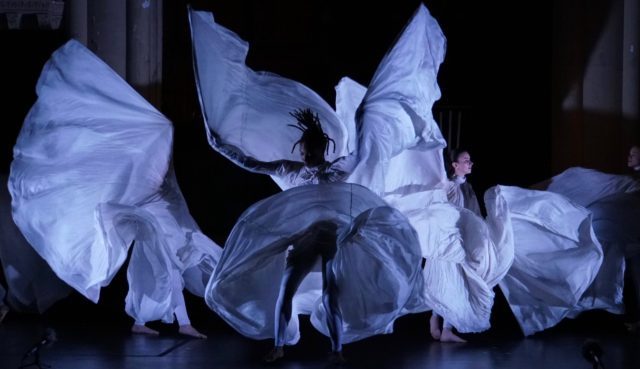
Wind Rose is part of special performance series by Jody Sperling/Time Lapse Dance (photo by Annie Drew)
Who:Jody Sperling/Time Lapse Dance What: Climate-change-themed performance series Where:The Theater at the 14th Street Y, 344 East Fourteenth St. between Second & Third Aves., and online When: May 5-7, $10-$100 Why: New York–based choreographer, dancer, writer, and scholar Jody Sperling, the founding artistic director of Time Lapse Dance (TLD), continues her climate-change-themed collaboration with Alaskan-born composer, sound artist, and eco-acoustician Matthew Burtner with a series of live events May 5-7 at the Theater at the 14th Street Y. TLD will present four shows that investigate the relationship between the body and the environment, with dancers Frances Barker, Morgan Bontz, Carly Cerasuolo, Anika Hunter, Maki Kitahara, Sarah Tracy, Nicole Lemelin, and Sperling and live music by Burtner.
The bill, which marks the company’s return to live, indoor performance in front of an audience after having made numerous dance films during the pandemic, includes the stage premiere of Plastic Harvest, about plastic pollution, performed by dancers immersed in a world of plastic bags; 2019’s Wind Rose, a work about breath and atmosphere for five dancers in flowing white costumes and a soloist in black; 2015’s Ice Cycle, about the melting of the ice caps; and an excerpt from the processional American Elm. It all begins with a gala on May 5 at 7:00 featuring a full performance, an artist talk, and a benefit reception. On May 6 at 7:00, a full performance can be experienced in-person or livestreamed. There will be a family-friendly in-person program May 7 at 2:00, followed by an in-person-only finale at 7:00.
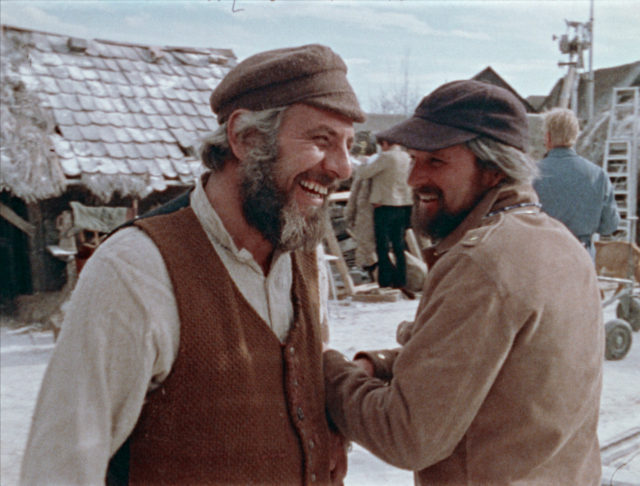
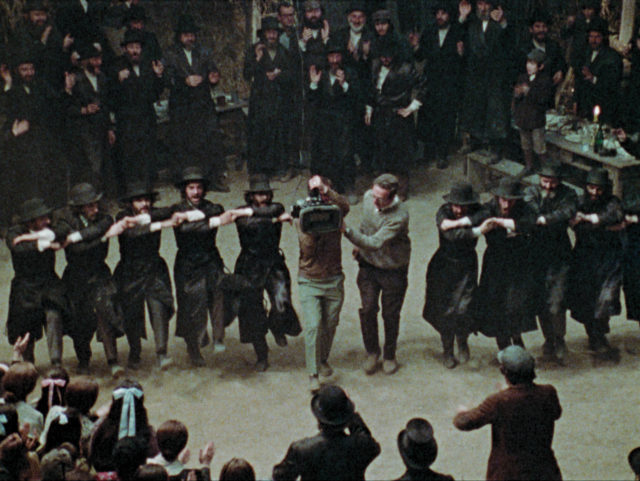
Daniel Raim takes viewers behind the scenes of the making of one of the most beloved musicals of all time in Fiddler’s Journey to the Big Screen, opening April 29 at the Angelika. Raim follows the development of the 1964 Broadway smash Fiddler on the Roof, which ran for 3,242 performances and won nine of the ten Tonys it was nominated for, into the classic 1971 film that was up for eight Oscars and won three.
The documentary is anchored by a series of talks with Fiddler’s director and producer, Canadian filmmaker Norman Jewison, who had previously made The Cincinnati Kid,In the Heat of the Night, and The Russians Are Coming, the Russians Are Coming and would go on to direct and produce Jesus Christ Superstar,A Soldier’s Story, and Mooonstruck. One of the first things we learn about Jewison is that he isn’t Jewish.
Recalling the initial meeting he had with United Artists executives, Jewison recalls, “[Studio head] Arthur Krim looked at me and he says, ‘What would you say if we were to say we want you to produce and direct Fiddler on the Roof?’ And my heart came up into my mouth and I thought, Oh my G-d. And I looked over, waited, and they waited, and they all kind of leaned forward. They thought, What is he waiting for? And then I said, ‘What would you say if I told you I’m a goy?’” He got the job because, as Krim explained, “We want a film for everybody.”
Documentary goes behind the scenes of the making of Fiddler on the Roof
Raim incorporates old and/or new interviews with vibrant lyricist Sheldon Harnick, who turns ninety-eight on April 30 (the score was composed by Jerry Bock, who passed away in 2010); musical director and conductor John Williams, who is featured extensively; production designer Robert F. Boyle, who was Raim’s professor at AFI; cinematographer Oswald Morris; American film critic Kenneth Turan; and Israeli star Chaim Topol, who nabbed the role of Tevye from Zero Mostel, who played the anguished, deeply religious father on Broadway. The film is worth seeing just for the lovely interviews with the three actresses who portrayed the three oldest daughters, none of whom marry the men their parents prefer: Rosalind Harris (Tzeitel), Michele Marsh (Hodel), and Neva Small (Chava). “What a gift I was given,” Marsh, nearly in tears, remembers.
Discussing his approach to the cross-cultural nature of the story, which was based on the 1894 Yiddish tales of Tevye the dairyman by Sholem Aleichem, Jewison points out, “Themes of family is universal; everybody has a family — good or bad, right or wrong, we all have a family, and we all have our little problems. But we all end up sitting around the table. And I thought, this is so common, this is something people can understand. They can understand a family. They can understand Golde. They can understand Tevye; they can understand his problems with life and his relationship to G-d. I think all of these things, all put together, make the story of Fiddler on the Roof so compelling.”
More than a dozen years in the making, Fiddler’s Journey can be a bit scattershot and is supplemented with occasional narration by Jeff Goldblum that feels like filler, consisting primarily of excerpts from Jewison’s This Terrible Business Has Been Good to Me, Alisa Solomon’s Wonder of Wonders: A Cultural History of Fiddler on the Roof, and Morris’s Huston, We Have a Problem: A Kaleidoscope of Filmmaking Memories. Unfortuntely, these distract from the main narrative, which is packed with fabulous details about everything from the construction of the synagogue, Frank Sinatra’s desire to play Tevye, and the stocking Boyle placed over the lens of the camera to the influence of Marc Chagall’s paintings, Harris understudying Bette Midler onstage, and the involvement of Isaac Stern.
The wealth of material includes archival stills and film footage, Mentor Huebner’s storyboards, and photos by Roman Vishniac that inspired the look of the movie, which was shot in Lekenik in what was then Yugoslavia. There are also in-depth looks at such treasured songs as “Matchmaker, Matchmaker,” “If I Were a Rich Man,” “Sunrise, Sunset,” and “Do You Love Me?”
The Fiddler on the Roof movie might be fifty years old now, but its impact is as powerful and, sadly, as relevant as ever. “One of the things that Fiddler is about: Nothing is permanent,” Turan says. Long before the Russian invasion of Ukraine — Aleichem was born and raised in Kyiv — the show (most recently revived in Yiddish by the National Yiddish Theatre Folksbiene at the Museum of Jewish Heritage) and the film captured the pain of refugees forced to leave their home. Raim’s (Harold and Lillian: A Hollywood Love Story, The Man on Lincoln’s Nose about Boyle) documentary was completed prior to the invasion, but it’s impossible to watch it without thinking about all the Anatevkas we see on the news every day, in Ukraine and around the world.
(Raim will be at the Angelika on April 29 and 30 for Q&As following the 7:25 screenings, joined by Small and Harris.)
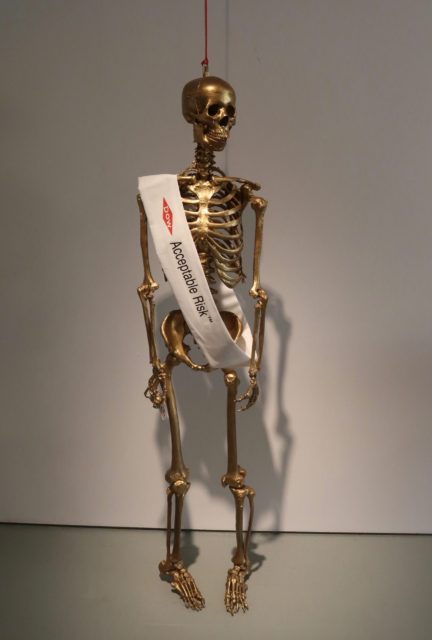
Gilda, Dow’s Golden Skeleton, is part of Yes Men retrospective at carriage trade (photo by twi-ny/mdr)
Who:The Yes Men What: Exhibition closing reception and catalog launch Where:carriage trade, 277 Grand St. When: Friday, April 29, free, 6:00 Why: For a quarter-century, the Yes Men — Jacques Servin and Igor Vamos (or Andy Bichlbaum and Mike Bonanno) — have been confronting corporate greed and environmental neglect through “identity-correcting” hijinks in which they portray fake entrepreneurs and spokespeople at actual press conferences, conventions, and television news programs. They build realistic sham websites and use forged IDs to gain entrance to locations they have no business being at as they take on George W. Bush, Dow Chemical, the World Trade Organization, ExxonMobil, the New York Times and the New York Post, HUD in New Orleans, the US Chamber of Commerce, Shell Oil, VW, and, most recently, the United Nations COP26 summit. They pull off the pranks with ingenuity, bold daring, and a wild sense of humor, as evidenced by their hysterical “SurvivaBall,” which is on view at carriage trade’s small but terrific Yes Men retrospective.
The show, which has been extended several times because of popular demand, features Dow’s Golden Skeleton, named Gilda, a gold skeleton wearing a beauty contest sash that declares her an “acceptable risk”; a wall of fake Chevron street ads, riffing on the company’s “We Agree” campaign, making such claims as “I can see sludge & dead birds from my window” with a photo of Sarah Palin, “I’m living like there’s no tomorrow because there isn’t one” with a photo of Don Draper from Mad Men, “We lie and we don’t care — we love money — fuck the world!” with a photo of Jim Carrey from Liar Liar, and “To prove us likes you us will smash your planet” with a picture of Bizarro Superman; a vitrine of ExxonMobil Vivoleum phallus candles made from the skin of the “late” climate change victim Reggie Watts; and copies of a fake New York Times edition that proclaims, “Iraq War Ends,” “Maximum Wage Law Succeeds,” and “Ex-Secretary Apologizes for W.M.D. Scare,” which you can take home and read to your heart’s delight. There is also a case of newspaper and magazine articles and legal cease and desist orders sent to the Yes Men, a collection of fake IDs they’ve used, a pictorial history of the Golden Phallus stunt, and a room where twenty of their short and full-length films are on continuous rotation, from 1996’s Bringing IT to YOU! to 2021’s “Total Disaster” excerpt from The Fixers.
On April 29 at 6:00, carriage trade will be hosting the closing reception of the exhibition, along with the launch of the seventy-two-page catalog ($25; $20 at the reception). There’s no telling who might be there and in what capacity, so be ready for anything. (For more on the show, check out Montez Press Radio’s interview with Jacques Servin and carriage trade’s Peter Scott here.)
AMOC’s With Care comes to the 92nd St. Y this week (photo by Natalia Perez)
Who:Bobbi Jene Smith,Or Schraiber,Keir GoGwilt, Miranda Cuckson What: New York City premiere of work by AMOC (American Modern Opera Company) Where: Kaufmann Concert Hall, 92nd St. Y Harkness Dance Center, 1395 Lexington Ave. at Ninety-Second St., and online When: In person Thursday, April 28, $30, 8:00; online April 29, noon, to May 1, midnight, $15 Why: In November 2018, married former Batsheva dancers Bobbi Jene Smith and Or Schraiber debuted With Care at ODC Theater in San Francisco, a co-commission with AMOC (American Modern Opera Company). The piece, which explores caregiving, carelessness, and loss — as perceived prior to the pandemic, when those issues took center stage — was created by Smith in collaboration with violinist Keir GoGwilt; the latter performs with violinist Miranda Cuckson as current L.A. Dance Project artists-in-residence Smith and Schraiber, portraying a caregiver and a wounded spirit, move around them.
Directed by Smith and featuring music by AMOC cofounder Matthew Aucoin, the work includes chairs, small wooden slats, and sand with dance, music, and spoken word that should take on new meaning in the wake of the Covid-19 crisis. “The original impetus for With Care came out of the last section of my previous work with Keir, A Study on Effort,” Smith said in a statement. “This piece consists of seven efforts, the last of which is the effort of taking care. We thought to expand this study of emotional and physical labor into a theatrical context, investigating the dynamics of caregiving and taking between four characters. Adding Or and Miranda opened a world in which the dynamics of care spiral from empathy to apathy. The more our characters attempt to break free from this cycle, the more they become lost in the maze of their commitments to each other. Yet ultimately the only solace they find is in each other. Never stop caring.”
With Care will be performed live at the 92nd St. Y’s Kaufmann Concert Hall on April 28 at 8:00; a recording will be available online from April 29 at noon to May 1 at midnight. For more on Smith and Schraiber, check out Boaz Yakin’s 2019 film, Aviva, and Elvira Lind’s 2017 documentary, Bobbi Jene. The Harkness Main Stage Series continues in May with the Future Dance Festival and in June with Jonathan Fredrickson of Tanztheater Wuppertal.