this week in lectures, signings, panel discussions, workshops, and Q&As

PIONEERS GO EAST COLLECTIVE: CROSSROADS

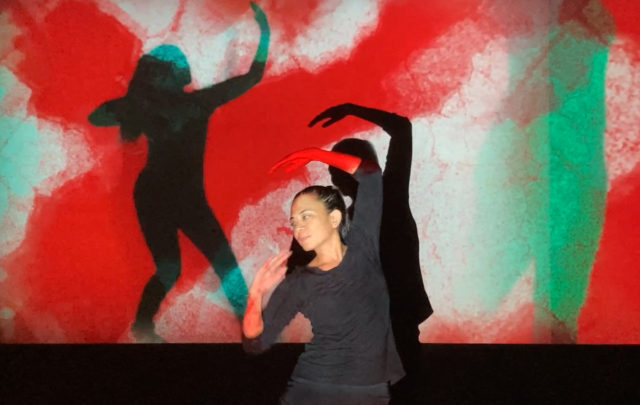
Paz Tanjuaquio will present Dead Stars Still Shine at Judson Church

Who: Pioneers Go East Collective
What: Multimedia cross-disciplinary performance series
Where: Judson Memorial Church, 55 Washington Sq. South between Thompson & Sullivan Sts.
When: May 26–28, free – $50 sliding scale, 8:00
Why: Pioneers Go East Collective continues its “Crossroads” series May 26-28 at Judson Memorial Church with works by Yoshiko Chuma, Symara Johnson, Anabella Lenzu, Amanda Loulaki, Molly&Nola, and artists-in-residence Angel Acuña, Doron Perk, Paz Tanjuaquio, and Dane Terry, curated by Daniel Diaz, Gian Marco Riccardo Lo Forte, and Philip Treviño. The 8:00 program on May 26 includes Acuña’s video EPIFANIO – DV no.0001, Perk’s Grandfather Visit solo, Tanjuaquio’s Dead Stars Still Shine, a collaboration with visual artist/composer Todd B. Richmond and digital artist Onome Ekeh, with poetry by Luis H. Francia, and pianist Terry’s On Eternity, with visuals by Bizzy Barefoot. On May 27 at 8:00, Chuma will be joined by dancers Emily Pope and Sarah Skaggs and multi-instrumentalist Ginger Dolden for Hey Women!, the latest in Chuma’s “Head in the Sand” series; Johnson’s The Kitchen Sink Ranger at the Midnight Rodeo; Molly&Nola’s Steer, dealing with livestock auctioneering and cloning; and Pioneers Go East Collective’s film My Name’Sound.

Saturday’s lineup includes Hey women!, My Name’Sound, Lenzu’s A bone to pick with you, and a new piece by Loulaki, who explains, “There is something that is never able to be described, just to be sensed, and that is the place where we sometimes could meet. Traces of actions and faint memories wondering for their place in time. The focus shifts, the essence morphs, and pause gives meaning to time and sense to presence.” In addition, there will be NEXT! workshops on May 26 at 6:00 with Perk and on May 27 at 6:00 with Parijat Desai.

TRISHA BROWN DANCE COMPANY’S 50th ANNIVERSARY

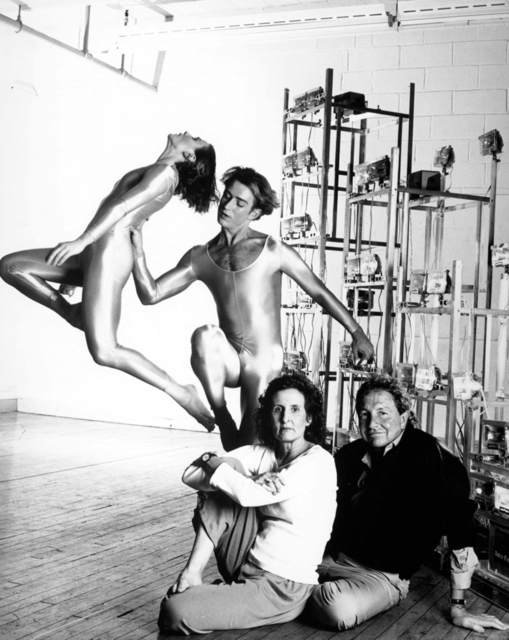
TBDC fiftieth anniversary celebrates collaboration between Trisha Brown and Robert Rauschenberg (photo by Jack Mitchell)

Who: Trisha Brown Dance Company
What: Fiftieth anniversary season
Where: The Joyce Theater, 175 Eighth Ave. at Nineteenth St.
When: May 24-29, $51-$71
Why: “I feel like this is the one time I can let the cat out of the bag and let you know just how dear this man is to me,” Trisha Brown said about her friend and longtime collaborator Robert Rauschenberg. “Bob understands how I construct movement.” Bob returned the compliment: “Particularly with Trisha, it’s always a challenge because she remains so unpredictably fresh.” Founded in 1970, Trisha Brown Dance Company will be celebrating its fiftieth anniversary — delayed two years because of Covid — with a special program at the Joyce celebrating the work Trisha and Bob did together.

Beginning with the fundraising UnGala on May 24, TBDC will present 1990’s Foray Forêt, which kicked off the Back to Zero cycle, a twenty-eight-minute piece of “delicate aberrations” for nine dancers, with costumes and visual design by Rauschenberg, set to marching band music; and 1991’s Astral Converted, part of Brown’s Valiant Cycle, a piece for eleven dancers, with motion-activated metal frame towers by Rauschenberg, set to John Cage’s specially commissioned hourlong “Eight,” for which Cage explained, “Intonation need not be agreed upon.” The works will be performed by former and current dancers including Cecily Campbell, Marc Crousillat, Kimberly Fulmer, Hsiao-jou Tang, Leah Ives, Amanda Kmett’Pendry, Kyle Marshall, Patrick McGrath, Jennifer Payán, and Stuart Shugg. There will be a curtain chat with members of the company following the May 25 performance.

ALISON LEIBY: OH GOD, A SHOW ABOUT ABORTION

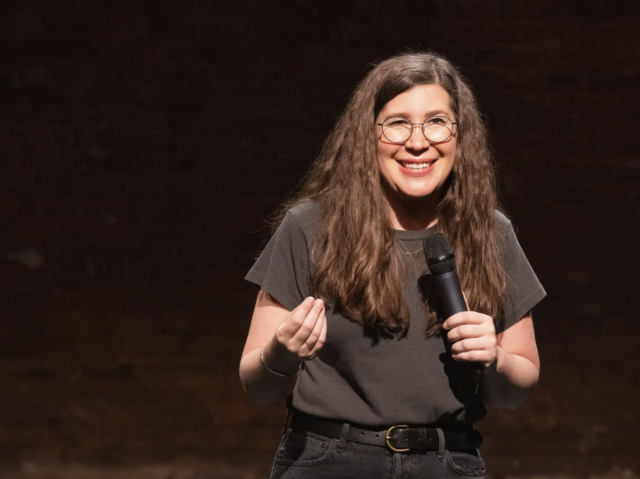
Alison Leiby shares her the details of her own abortion in comic routine at the Cherry Lane (photo by Mindy Tucker)

OH GOD, A SHOW ABOUT ABORTION
Cherry Lane Theatre
38 Commerce St.
Through June August 26, $37-$61
www.cherrylanetheatre.org

Nearly every night, the opening lines of Alison Leiby’s Oh God, a Show About Abortion change as the debate over abortion rages even hotter since May 2, when the draft opinion in which the Supreme Court appears to be ready to overturn Roe v. Wade was leaked. The day I attended, West Virginia senator Joe Manchin had announced that he would not vote for a bill to codify abortion rights, so he made it into the beginning of Leiby’s show, and not favorably.

Extended through August 26 at the Cherry Lane, Oh God is really more of a themed comedy monologue than a one-person show. For seventy-five minutes, Leiby, who has written for such series as The Marvelous Mrs. Maisel and The Opposition with Jordan Klepper, uses her recent abortion to talk about her career, her relationships with men and her family, and the need for reproductive freedom in America.

“Welcome to what my dad calls my ‘special show,’” she says. “My parents are very supportive. My mom texted me, ‘kill it tonight!’ and I’m like, I already did, that’s why the show exists.”

On an empty stage save for a mic stand, a stool, and a glass of water, the classic stand-up set, Leiby talks about “all of the unprotected sex I have had,” getting pregnant while on the road in Missouri, deciding not to keep the baby, and going to Planned Parenthood in New York City to have the procedure done. “So I had an abortion three years ago. I’m still trying to lose the no baby weight,” she explains.

She also notes, “I was thirty-five years old. I thought my eggs were just Fabergé at this point: feminine, but decorative. But this positive test brought into light all of the intense anxieties I have been feeling as a woman for years.” Many of those anxieties stem from her mother. “When I was thirty, she told me, ‘The best time in your life is when you’re married and you don’t have kids.’ I am her only child.”
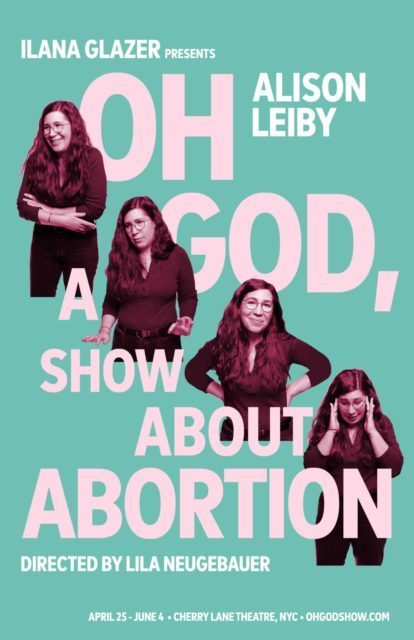
Leiby uses the central narrative as the impetus to make tangential one-liners that perhaps are meant as comic relief from the main topic, but too many miss the mark or feel unnecessary, including digressions about Oreo flavors, Michael Jordan, Al Gore, Ashanti, and falafel. For comparison, in March, I saw Alex Edelman’s hysterical Just for Us, about his infiltration of a white supremacist meeting in Queens, and that was more theater than stand-up, with relevant detours about dating and family that were insightful and pushed the story forward, not one-off jokes; when he described certain events, you could see it in your mind, even though it was also an empty stage. And although Oh God credits the immensely talented Lila Neugebauer (Morning Sun, The Wolves) as director, her contributions are not clearly visible.

But the Brooklyn-based Leiby does have a lot to say about birth control, Barbie dolls, sex education in schools, period trackers, reproductive ads, doctors, Richard Gere, Jennifer Aniston, drunk sex, and womanhood in the twenty-first century. A story about receiving a nerve shot for her back is both very funny and representative of our patriarchal society. “The medical community has abandoned women,” she declares. She also delves into how “the culture seems to pit women who are mothers against women who aren’t all the time. TV shows, magazines, influencers all perpetuate this fake divide between mothers and non-mothers so we are left fighting about that while men go to space in their cock rockets? Fuck. That.”

But amid all the sociopolitical controversies and the gender gap, perhaps the most important question she asks is “If I’m not a mother, then who am I?” It’s a matter of personal choice, one that is as fraught today as it ever was, in myriad ways.

Oh God, a Show About Abortion is presented by Ilana Glazer (Broad City, The Afterparty), who, on May 22 at 7:00, will join Leiby for a conversation about the production in Buttenwieser Hall at the 92nd St. Y; in-person tickets are $30-$35, or you can watch the livestream for $20.
DanceAfrica 2022: HOMEGROWN

Asase Yaa African American Dance Theater will perform at BAM’s annual DanceAfrica festival

Who: Asase Yaa African American Dance Theater, Bambara Drum and Dance Ensemble, Farafina Kan, Harambe Dance Company, LaRocque Bey School of Dance, BAM/Restoration Dance Youth Ensemble, DanceAfrica Spirit Walkers, more
What: DanceAfrica Festival 2022
Where: BAM Howard Gilman Opera House, 30 Lafayette Ave.
When: May 21 – June 2, many events free, Gilman dances $12.50 – $85, film screenings $16
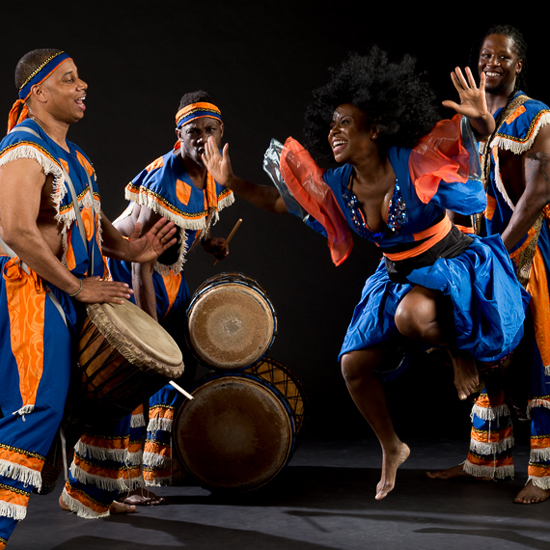
Why: The coming of summer means the arrival of one of the best festivals of every year, BAM’s DanceAfrica. The forty-fifth annual event features the theme “Homegrown,” with five companies making return visits to BAM’s Howard Gilman Opera House: Asase Yaa African American Dance Theater, Bambara Drum and Dance Ensemble, Farafina Kan, Harambe Dance Company, and LaRocque Bey School of Dance, along with the BAM/Restoration Dance Youth Ensemble and DanceAfrica Spirit Walkers, highlighting movement and music from Nigeria, Ghana, Guinea, Mali, and the Caribbean, accompanied by Arkestra Africa. Curated by artistic director Abdel R. Salaam, the festival also includes the Tribute to the Ancestors, Community Day, a Memorial Room, the DanceAfrica Bazaar with more than 150 vendors, dance workshops and master classes in Brooklyn Bridge Park and the Mark Morris Dance Center, the Water Your Roots Youth Dance Expo & Talent Show, the Council of Elders Roundtable “Legacy & Preservation,” Christopher Myers’s stained-glass work Be Lost Well (Stay in the House All Day), and a late night dance party with DJ YB.

FilmAfrica runs May 27 to June 2, consisting of more than two dozen films, from Moussa Touré’s 1997 TGV (followed by a Q&A with Touré and Amy Andrieux), Raymond Rajaonarivelo’s 1996 When the Stars Meet the Sea, and Amleset Muchie’s 2019 Min Alesh! to Mahamat-Saleh Haroun’s 2008 Sex, Okra, and Salted Butter, Balufu Bakupa-Kanyinda’s 2006 Juju Factory, and Dumisani Phakathi’s Don’t F*** with Me, I Have 51 Brothers and Sisters.

THE GREAT DUMBO DROP

THE GREAT DUMBO DROP
DUMBO, Brooklyn
Saturday, May 21, free, 3:00 – 8:00
dumbo.is

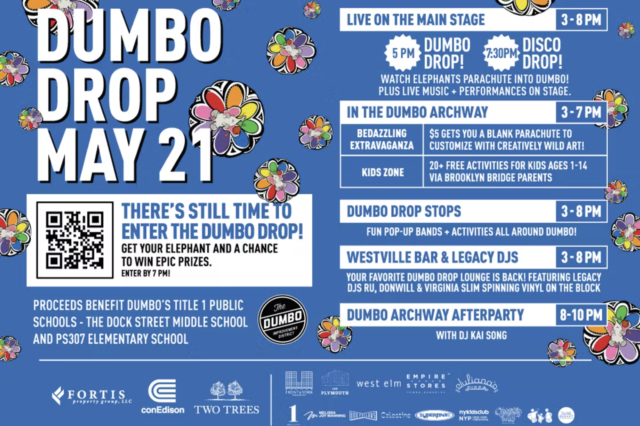
DUMBO Drop 2022 is set for May 21, a block party with live music, food and drink, art, prizes, the testing of the wind, and elephants falling from the sky. Among this year’s performers and activities are a sing-along with the New York City Kids Club, tap-dancing by Camila Aldet, Glam Expressway, cheerleading, a fashion show, dancing to a brass band, DJ Kyndal Marie, jugglers, an FDNY photo zone, Melissa Joy Manning, Fogo Azul NYC, wine tastings, boxing demonstrations, face painting, archery, biking, and more. Such galleries as A.I.R. Gallery and Undercurrent Gallery will be hosting exhibitions and walkthroughs, along with an art wall curated by CAM and Jaimie Walker (who designed the 2022 souvenir elephant parachute), Talking Portraits with Doménica García, and raffles benefiting DUMBO’s Title I public schools, the Dock Street Middle School and PS307 Elementary School.

Among the participating eateries are Seamore’s, Superfine, Westville, Butler, Randolph Bar, Bread and Spread, Em Vietnamese Bistro, and Time Out Market. Be sure to get there by 5:00 when the elephants float through the air around Washington St., followed at 7:45 by the Disco Drop. You can get raffle tickets from $20 to $3,000 here, making you eligible for such prizes as a shopping spree, an ice-cream party, jewelry, a hotel staycation, and a rooftop party.

“BACK TO THE STREETS” DANCE PARADE

Who: Eduardo Vilaro, Heidi Latsky, Rich Medina, more
What: Sixteenth annual Dance Parade and DanceFest
Where: Parade starts at Twentieth St. & Broadway, DanceFest in Tompkins Square Park
When: Saturday, May 21, free, noon – 7:00
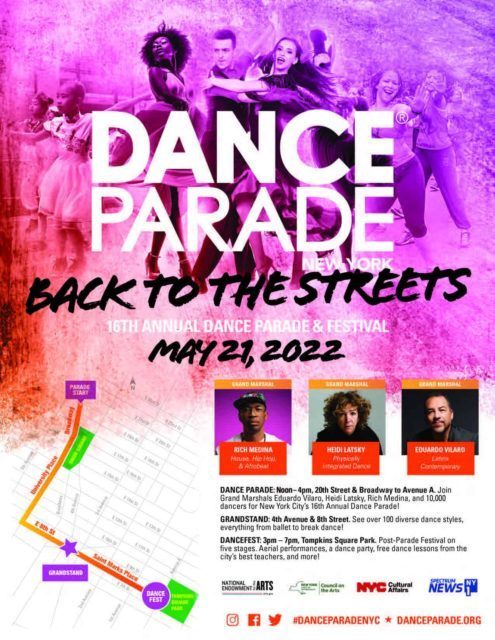
Why: After two years off because of Covid, Dance Parade has returned. On May 21 from noon to seven, more than ten thousand dancers and musicians will participate in the sixteenth event, aptly dubbed “Back to the Streets.” The 2022 grand marshals are Eduardo Vilaro of Ballet Hispánico, Heidi Latsky of Heidi Latsky Dance, and DJ Rich Medina. “I’m proud to headline New York City’s largest dance event focused on cultural representation and diversity,” Vilaro said in a statement. “Movement and community is so vital to our well being which the pandemic stole from us. We look forward to being a part of Dance Parade’s citywide celebration.”

The parade kicks off at Twentieth St. & Broadway, with the viewing stand located at Fourth Ave. & Eighth St. DanceFest takes place from three to seven in Tompkins Square Park, with dozens of performers on three stages from across the dance spectrum and the globe (Ukranian folk dance, Afro-Brazilian percussion, Argentine tango, Chinese classical, hip-hop, street jazz, breakdancing, flamenco, belly dance, Afro-Caribbean, majorette, Indonesian, Bolivian, Mexican, ballet, Bollywood, more) along with dance demonstrations, education outreach, dance battles, a Soul Train line, and other activities, all free and open to everyone.

CANE FIRE

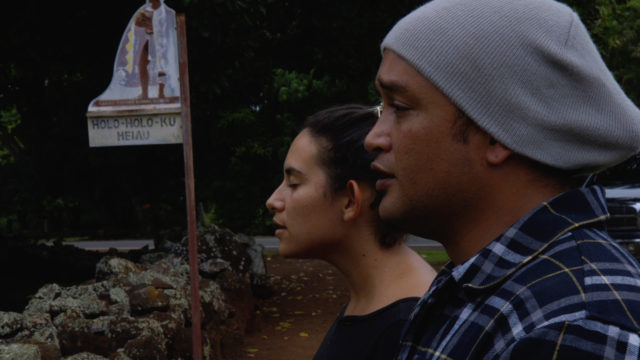
Activists fight for ancestral land in Kauaʻi in Anthony Banua-Simon’s Cane Fire

CANE FIRE (Anthony Banua-Simon, 2020)
BAM Rose Cinemas
30 Lafayette Ave. between Ashland Pl. & St. Felix St.
May 20-26
www.bam.org

Not that it’s surprising, but colonialism is alive and well in the United States, as revealed in Anthony Banua-Simon’s poignant documentary Cane Fire, screening May 20-26 at BAM.

While doing research for his 2013 short, Third Shift, about the demise of the Domino Sugar Factory in South Williamsburg and its replacement with luxury condos and commercial properties, Banua-Simon became immersed in his family’s Hawaiian history; in the 1920s, his great-grandfather immigrated to Kauaʻi from the Philippines to work in the sugar and pineapple plantations. His great-grandfather eventually left, leaving family behind, but not before serving as an extra in Lois Weber’s long-lost 1934 melodrama, Cane Fire (aka White Heat), which was filmed on Kauaʻi and deals with sugar plantations, imperialism, and mixed marriages.

While searching for more information about the film, Banua-Simon became immersed in the history of Kauaʻi, from its use as a favorite Hollywood shooting location to labor strife, cultural appropriation, and the building of massive “plantation-style” resorts on land taken from the native population, particularly following its gaining statehood in 1959, primarily for military purposes.

Banua-Simon depicts how Kauaʻi has changed through the eyes of his elderly great-uncle Henry Bermoy, a former union leader who does not like what he sees happening to the land and the culture. Banua-Simon also speaks with his younger cousins River Bermoy, Micah Bermoy, and Dylan Silva, who are trying to make lives for themselves on the island; Henry’s longtime friend and colleague, Alfredo Castillo, who bemoans the end of unions; popular singer Larry Rivera, who will take whatever gig he’s offered; second generation sugar company manager Mike Faye, who believes that industrial growth benefits everyone and always has; union rep Pamela Green; Mike Wong, who works such long hours (for low pay) at Smith’s Tropical Paradise that he has no time for his family; activists Keʻala Lopez and Kamu “Charles” Hepa, who risk their freedom to protect ancestral land; and real estate broker Chad Deal, who promotes luxury living on the island with no sense of how that negatively impacts the families who have lived there for generations.

“For those who can afford it, the island continues to fulfill the escapist fantasy,” Banua-Simon explains about more than a hundred years of exploitation. “But for the working class and native resident, Kauaʻi is at a breaking point.”

Banua-Simon keeps close track of developer Tyler Greene, who is planning on restoring the old Coco Palms resort to its former glory, when Hollywood greats partied there, owner Grace Guslander appropriated Hawaiian culture to please white tourists, and locals were taken advantage of as part of the cost of doing business. Banua-Simon incorporates new interviews with archival photographs and video; clips of Charlton Heston, John Wayne, Kevin Costner, Yvette Mimieux, Frank Sinatra, Nicolas Cage, Jennifer Aniston, Adam Sandler, and others in such movies and TV shows shot on Kauaʻi as Blue Hawaii, Jungle Heat, Diamond Head, South Pacific, Fantasy Island, Big Jim McLain, Dinocroc vs. Supergator, Dragonfly, and Pagan Love Song; old commercials for luxury travel promising the heights of extravagance; and more that reveal the disconnect between the native Hawaiians and the white interlopers.

And it’s still happening today.

“There are forces out there that don’t want us to survive because our existence threatens directly their existence,” Keʻala says as a group of locals occupy a historic, important site that is going to be redeveloped. “The fact that the kingdom exists takes away from the legitimacy of the corporations that stole these lands.”

Banua-Simon directed, edited, and photographed Cane Fire and cowrote and produced it with Michael Vass. A member of the volunteer-run Spectacle Theater in Brooklyn, Banua-Simon and Vass will be at BAM on May 20 and 21 for Q&As moderated by Alex Press and Steve Macfarlane, respectively, following the 7:00 screenings each night. In addition, documentarian Joan Lander is presenting “Eyes of the Land: Hawai‘i Shorts by Nā Maka o ka ‘Āina,” a special program at Spectacle on May 18 at 7:30 consisting of All Hawaiʻi Stand Together, No Tell Me Go, Waimanalo Eviction, and Na Wai E Ho’ōla I Nā Iwi — Who Will Save the Bones?