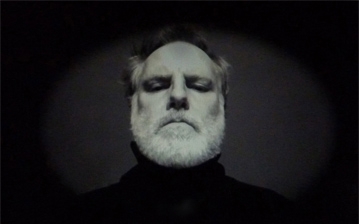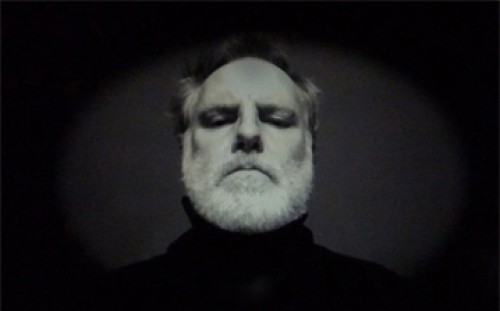
Eclectic Canadian filmmaker Guy Maddin will be taking part in a pair of special Performa 11 presentations on Friday and Saturday
Tales from the Gimli Hospital: Reframed
November 18-19, Walter Reade Theater, 165 West 65th St., $25-$30, 7:00 & 9:00
www.11.performa-arts.org/event
“The Power of a Continuity-Free Cinema”
Saturday, November 19, Performa Hub, 233 Mott St., $10, 3:00
www.11.performa-arts.org/event
During a career that has now reached a quarter of a century, iconoclastic Canadian filmmaker Guy Maddin has made ten feature films and more than two dozen shorts, many of them harkening back to the early days of silent black-and-white cinema. His eclectic tales often blend fact with fiction, the past with the present (and the future), as evidenced in such critical successes as Careful (1992), The Heart of the World (2000), and My Winnipeg (2007). He has also expanded the notion of cinema with such works as Cowards Bend the Knee (2003), which was initially shown in ten segments screening at individual stations, and Brand upon the Brain! A Remembrance in 12 Chapters (2006), which debuted with live music and narration. For Performa 11, Maddin is going back to his first feature film, 1988’s Tales from the Gimli Hospital, adding a new score by Matthew Patton that will be performed live by an Icelandic supergroup, electronics engineer Paul Corley, and Seattle-based collective Aono Jikken Ensemble, along with new narration sung and spoken by Kristín Anna Valtýsdóttir. The exciting program takes place at the Walter Reade Theater on November 18-19, directed by Maddin, who will also be teaching the film class “The Power of a Continuity-Free Cinema” on Saturday afternoon. We corresponded with Maddin via e-mail as he prepared to participate in Performa 11.
twi-ny: What made you want to revisit your first film, Tales from the Gimli Hospital, for Performa 11?
Guy Maddin I thought, of all the films of mine that might actually thematically justify a revisiting from the director (something that truly ought not to be done under almost any circumstances!), then this was the title. The movie, if it’s about anything, seems to play with the Icelandic proclivity for making personal lives into timeless myths. I chose to use the project to help us timid Canadians take up the task of doing the same thing for our smaller-than-life selves. There’s a serious national myth debt in Canada. Back in 1988, when I completed the movie, I tried to right that wrong by myself, using the great vocabularies of early Hollywood dream factories and the sassitudes of the ancient Icelandic sagas. We have a wondrous and perverted history up here in Canada, but our temperament is too weak, our storytelling flare too pallid, to impart to these stories the bigger-than-life lineaments required to elevate a person or incident to mythic dimensions. Americans can do this stuff in their sleep, so you might be puzzled to hear of a country struggling with such things.
Anyway, myths are the product of a long process of telling and retelling, word-of-mouth burnishings into canonical permanence that can take decades, centuries, or even millennia to complete. I wanted to do it overnight, using artificial means aided by methods borrowed from Hollywood, and now, twenty-three years later, I get to artificially update this saga of Icelanders struggling as delirious pioneers in the Canadian north by speed-composting twenty-three years’ worth of word-of-mouth retellings all in one night at Lincoln Center. I feel a bit like a mad scientist, but with my Petri dishes brimming with narrative gelatins instead of the usual sneeze-cultures. It’s crazy. If I’d tackled any other movie of mine, I’d simply be trying to reduce the humiliations produced by a dated filmography, but here I can use this mad process of allowing the stories to evolve in ways beyond my control to actually increase my humiliation!
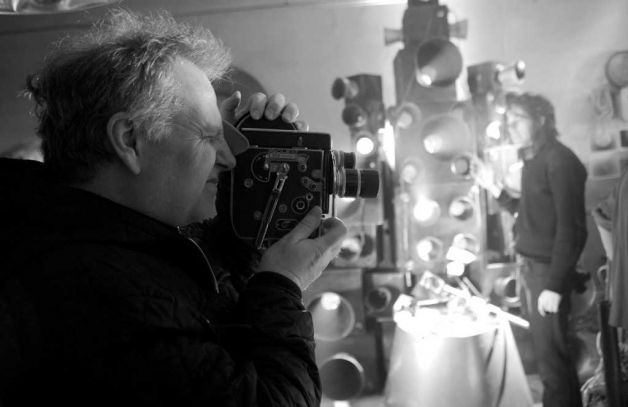
Guy Maddin will be reframing his feature-length debut at Lincoln Center as part of Performa 11 (photo courtesy Guy Maddin)
twi-ny: How did you go about selecting the diverse range of musicians for this event?
Guy Maddin: Some of these were people located by Matthew Patton, the composer originally commissioned to create the new score. He’s a fervid Icelandophile and collected the phone numbers of some of the most talented musicians in that country. Incredible, unearthly, and eerie music is their coin of the realm. One gets the feeling their music would play the same backward as forward, that they waft out melodic palindromes on warm breezes of helium, that the actual source of these strains is the elf king’s adamantine face fixed and hidden somewhere in the Icelandic lava canyons. The other musicians are my friends from the Seattle-based Aono Jikken Ensemble, who performed for my Brand upon the Brain show that I mounted here in New York a few years ago. I love these equally mysterious alchemists. I have no idea how they even make some of the sounds they send out into the theater, although the audience will be able to watch them and perhaps divine for themselves.
I love making the component parts of a film visible to the public. It’s boredom insurance. I’m not thrilled about the vivisection of animals, but of films — I’m all for it!
twi-ny: We have to say that we’re for it too. That’s part of the reason why we’ll be attending the class you’ll be leading on Saturday afternoon, “The Power of a Continuity-Free Cinema.” What can people expect from that class? And what exactly is “Continuity-Free Cinema”?
Guy Maddin: Good question. I’ll be bluffing my way through that class. I guess I plucked the title out of my past, the early days of my career when everyone on set was a continuity expert. It drove me nuts when everyone pointed out to me, or refused to perform because of, the continuity errors I was making. I grew to hate these literal-minded people and to love bad continuity. No one really utters this vilest of c-words anymore. Terrence Malick hasn’t had two consecutive shots cut to continuity in his entire career. It’s gone. Maybe I’ll just show Tree of Life on DVD and dismiss the class when the credits roll. Maybe I’ll show some early examples of flagrant discontinuity from film history and try to share with my students the gooseflesh these incidents produce.
twi-ny: Sounds like it should be fun. Much of your work is not only about cinema itself but the physical and psychological experience involved with watching and listening to a film. With more and more people watching movies on computers and tiny handheld devices, is cinema as we knew it, as Peter Greenaway has announced, dead?
Guy Maddin: Nah, there’s still no better first date than a movie in a theater with popcorn. And we’ll always need first dates, or something like them. On a second date couples can meet up in some motel and watch my stuff on some lurid handheld device. Until we eliminate the first date, cinema is alive.
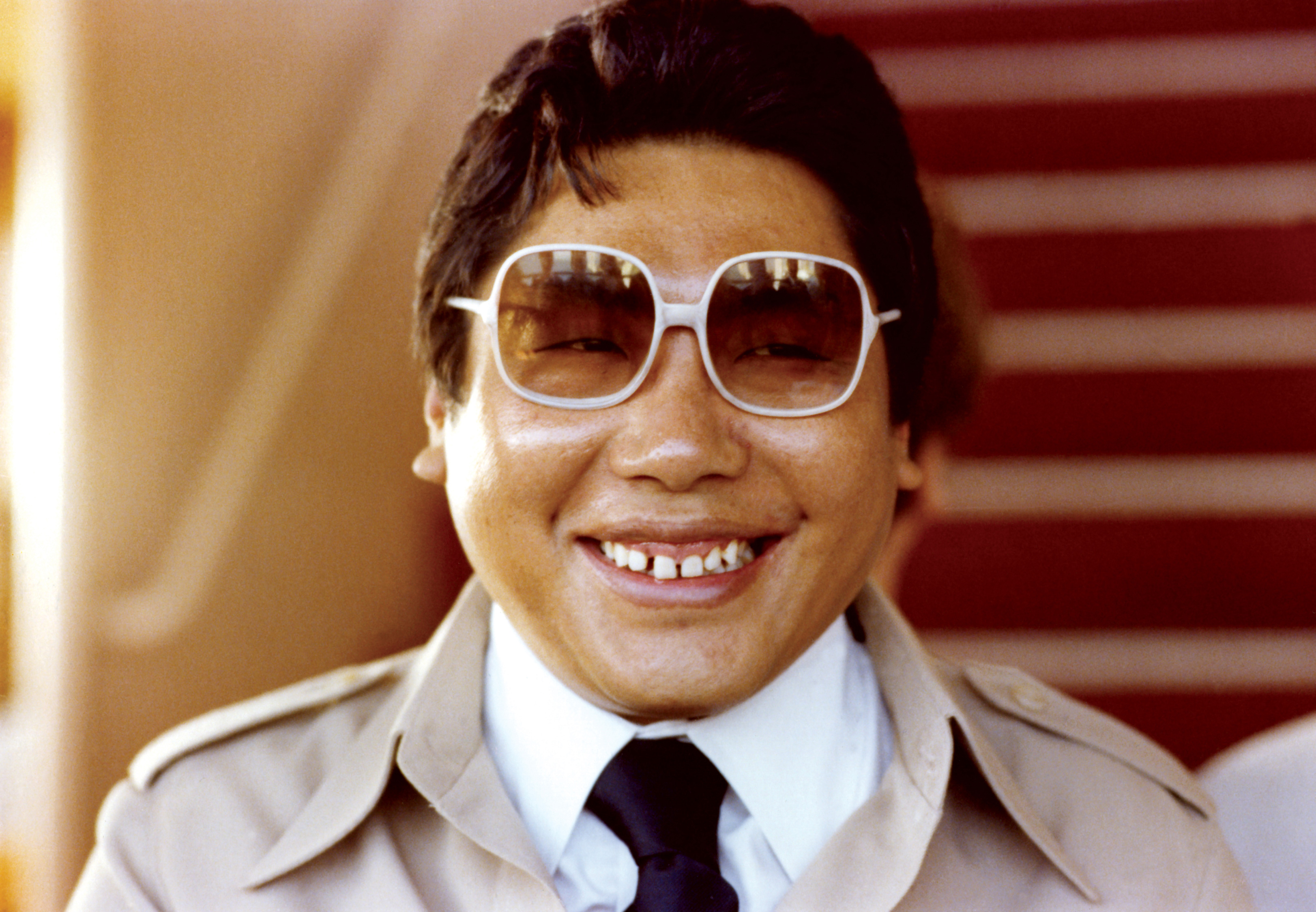
 Born in February 1939 and recognized as an enlightened reincarnation of the Trungpa tülkus when he was just thirteen months old, Chögyam Trungpa escaped his native Tibet during the 1959 Chinese invasion, eventually becoming a central figure in the spread of Tibetan Buddhism throughout the West. Filmmaker Johanna Demetrakas (Right Out of History: The Making of Judy Chicago’s Dinner Party), a former student and friend of Chögyam Trungpa’s, recounts his unusual story in the adulatory Crazy Wisdom: The Life and Times of Chögyam Trungpa Rinpoche. “From the first seminar, called ‘The Battle of Ego” in Los Angeles, to filming his cremation on a cloudless but rainbow-filled day in Vermont, Chögyam Trungpa literally blew my mind,” Demetrakas explains on the film’s official website. His fascinating tale is liable to blow your mind too. Chögyam Trungpa invited Demetrakas into his inner circle from 1983 to 1987, allowing her intimate access to his wild life, which included exchanging his monk’s robes for a business suit and later a pseudo-military uniform, confusing his followers and angering his critics. A proponent of what he called “crazy wisdom,” Chögyam Trungpa studied at Oxford, suffered partial paralysis in a car accident, married a sixteen-year-old westerner, smoked cigarettes, was a heavy drinker, and carried on dalliances with many of his female students while teaching about fear, self-deception, the ego, spiritual materialism, and the importance of meditation. “You can survive by doing nothing,” he preached, but he alienated some with his nontraditional actions, leading him to be known as the “Bad Boy of Buddhism.” Trying to get to the bottom of the complicated man who founded such learning centers as the Naropa Institute and Shambhala, Demetrakas speaks with Chögyam Trungpa’s wife, Diana Mukpo, his lover Agness Au, and his eldest son, Sakyong Mipham; such fellow teachers as Pema Chodron and Ram Dass; poets Allen Ginsberg and Anne Waldman; and various other scholars, journalists, and former students, supplemented by archival footage and clips from his teachings, which together paint a compelling portrait of a most colorful and singular individual. Crazy Wisdom is scheduled for a one-week limited engagement at the Rubin Museum beginning November 25, with all screenings (several of which are beginning to sell out) followed by Q&As with such special guests as Demetrakas, Waldman, Au, Meredith Monk, Tulku Jamyang Rinpoche, and others.
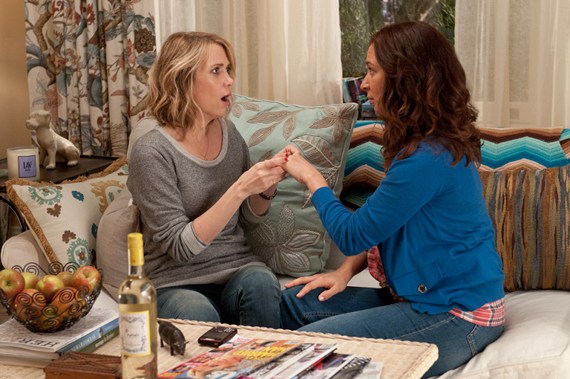
 First and foremost, don’t link Bridesmaids in with all those lousy Saturday Night Live one-note movies and the string of overrated and overhyped lowbrow trash streaming out of the Judd Apatow factory. And don’t assume it’s a silly chick flick either. As it turns out, Bridesmaids is one of the most consistently funny laugh-out-loud romps of this young century. Directed by Freaks and Geeks creator Paul Feig, Bridesmaids is an endlessly clever and insightful examination of love, loneliness, and friendship starring SNL’s Kristen Wiig, who cowrote the smart script with Groundlings member Annie Mumolo (who makes a cameo as a nervous flyer). Wiig shows surprising depth and range as Annie, a perennial screw-up whose closest childhood friend, Lillian (Maya Rudolph), is marrying into a very snooty upper-crust family. After agreeing to be Lillian’s maid of honor, Annie gets involved in a battle of wits with Lillian’s future sister-in-law, the elegant Helen (a radiant Rose Byrne), who is determined to outshine Annie in every way possible and steal Lillian away from her. Already a mess — she had to close her bakery, she shares an apartment with a bizarre pair of British siblings, she works in a jewelry store where she drives away potential customers with her sorry tales of woe, and she allows herself to be treated miserably as a late-night booty call for a self-centered businessman (Jon Lamm) — Annie experiences a series of hysterical, pathetic setbacks as she attempts to organize the bridal shower and bachelorette party, including a riotous potty-humor scene in a high-end boutique that is likely to go down in comedy history for its sheer relentlessness. The rest of the bridesmaids are quite a hoot — Becca (Ellie Kemper), the Disney-loving kewpie doll; Rita (Wendi McLendon-Covey), a foul-mouthed married mother who can’t wait to go crazy away from her family; and the groom’s burly sister, Megan (the hugely entertaining Melissa McCarthy), who lives life without a filter. Annie is so caught up in her own failures that she doesn’t recognize when something potentially good enters her life, in the form of state trooper Nathan Rhodes (Chris O’Dowd). Wiig gives the finest performance of her career as Annie, clearly a role that is very close to her heart. Despite the slapstick nature of many of the jokes, Bridesmaids is filled with heart and soul, making it one of the best comedies in years.