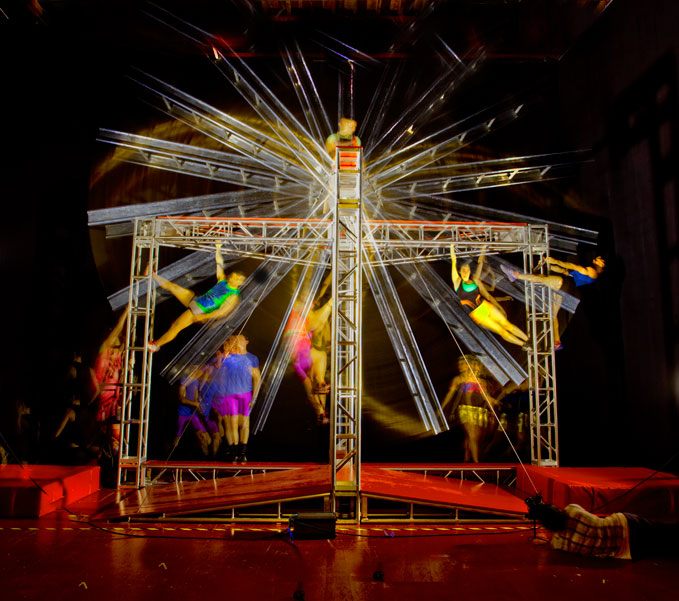
ASCENSION is part of STREB Extreme Action’s special presentation at the Park Avenue Armory (photo by Tom Caravaglia)
Park Avenue Armory
643 Park Ave. at 67th St.
December 14-22, $35, 7:30
212-933-5812
www.armoryonpark.org
www.streb.org
There’s good reason New York-based choreographer Elizabeth Streb calls her company Extreme Action: The diversely talented troupe is known for performing daring acrobatic feats that push the boundaries of contemporary dance. From December 14 to 22, STREB Extreme Action will be at the Park Avenue Armory displaying their vast skills in Kiss the Air!, a program that includes two dazzling pieces that were previewed this summer in special free outdoor presentations. In “Ascension,” nine dancers take individual turns and team up on a twenty-one-foot moving ladder, risking life and limb as it circles around and around to a score by master percussionist David Van Tieghem. The breathtaking piece debuted this summer in Gansevoort Plaza as part of Whitney on Site: New Commissions Downtown; for the indoor version, Robert Wierzel’s lighting design will add another aspect to the work. This summer Streb, a MacArthur Genius, also premiered the eye-popping “Human Fountain” as part of the River to River Festival’s Extraordinary Moves program at the World Financial Center, in which sixteen daredevils — er, dancers — took swan dives off a thirty-foot, three-story structural installation. Inspired by the Bellagio fountain in Las Vegas, they fly through the air (with the greatest of ease?) in tandems, sometimes crossing one another’s path, landing on an inflatable mat that cushions their fall. “Human Fountain is another thrilling example of how STREB Extreme Action goes for, well, the extreme in its challenging repertoire. Streb and several of her dancers will participate in an artist talk following the December 15 performance, moderated by Kristy Edmunds. Kiss the Air! is the second of three dance presentations at the Park Avenue Armory, following Shen Wei Dance Arts and concluding with the Merce Cunningham Dance Company’s farewell December 29-31.
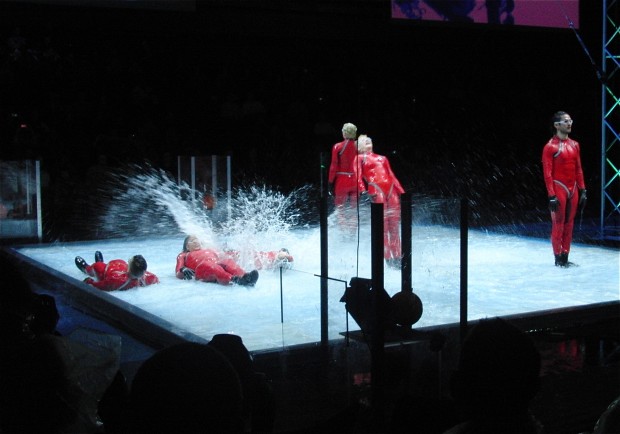
KISS THE AIR! is a one-of-a-kind experience at Park Avenue Armory (photo by twi-ny/mdr)
Update: The STREB Extreme Action Heroes announce their arrival in the Park Avenue Armory in typically extreme fashion, individually riding an overhead wire and slamming face-first into a vertical mat, letting the audience know right from the start that they are in for a very different kind of performance, one filled with impressive feats of daring and plenty of good humor. A unique melding of modern dance, ballet, gymnastics, cheerleading, aerial arts, and stunt work, Kiss the Air! is a five-ring circus that tests the limits of the human body over the course of seventy thrilling minutes, supplemented by large screens displaying live close-up footage and action architect and choreographer Elizabeth Streb’s original layouts. As the dancers make their way across five architectural set-ups, the crowd is encouraged to scream out with enthusiasm, take photographs and video, and tweet away, knocking down the barrier between viewer and performer. Action engineers Jackie Carlson, John Kasten, Sarah Callan, Zaire Baptiste, Samantha Jakas, Leonardo Giron Torres, Cassandre Joseph, Felix Hess, Daniel Rysak, and associate artistic director Fabio Tavares da Silva, along with seven additional performers, manipulate one another in swinging harnesses, climb over a moving ladder, bounce their bodies up and down on mats, dive off a thirty-foot structure, and splash about in a shallow pool, getting some audience members wet (ponchos are provided) as they run nonstop through eleven numbers, including “Swing,” “Popaction,” “Falling Sideways,” “Drop,” “Catch,” “Wave,” and “Kiss the Water.” The abovementioned showpieces, “Ascension” and “Human Fountain,” turn out to be not quite as dazzling in the armory as they were outside last summer, as the dancers (understandably) take longer pauses to catch their breath and the audience is seated farther away, but they still are impressive, enhanced by Robert Wierzel’s lighting and David Van Tieghem´s sound design and music. A one-of-a-kind experience for children and adults of all ages, Kiss the Air! continues through December 22.
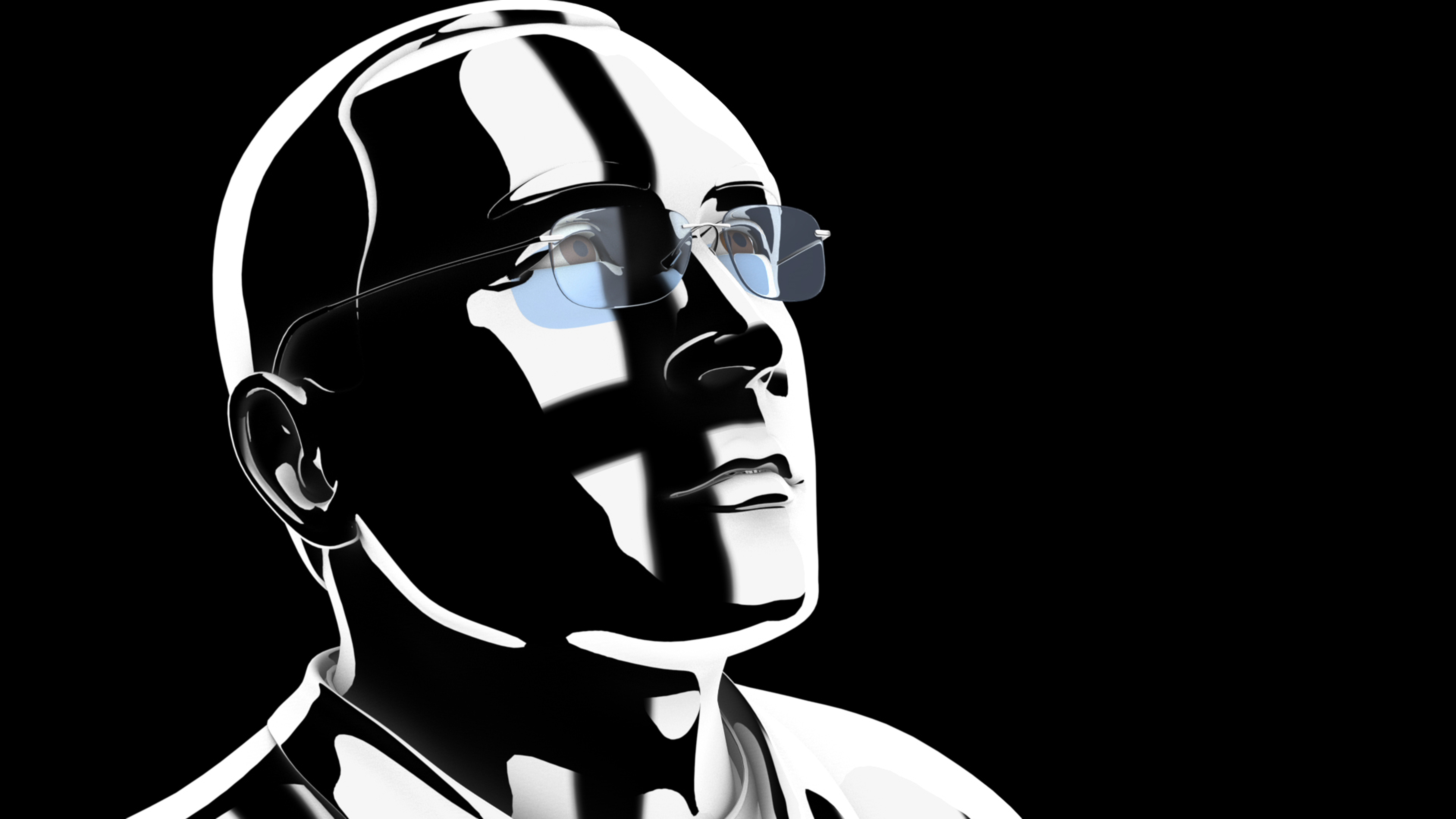
 On October 25, 2003, Russian oligarch Mikhail Khodorkovsky was arrested for tax fraud and has been in prison ever since. The controversial story of the eight-billion-dollar man is told in German director Cyril Tuschi’s political-thriller documentary Khodorkovsky. Combining Michael Moore’s rugged determination to meet with GM CEO Roger Smith in Roger & Me with a police-procedural narrative, Tuschi (Slight Changes in Temperature and Mind) desperately tries to speak with the imprisoned Khodorkovsky, but for most of the film he only gets to communicate him through letters while instead talking with his first wife, his mother, his son, former business partners, spies, and various politicians, some of whom share illuminating details about the life and career of the seemingly equally loved and despised socialist-turned-capitalist and others who adamantly refuse to say anything about the onetime head of the Yukos oil company, perhaps out of fear of retribution. Khodorkovsky is alternately shown to be a philanthropic businessman who founded the Open Russia Foundation charitable project and a ruthless tyrant whose giant ego resulted in his publicly butting heads with former Russian president Vladimir Putin, the reason why many think he is in jail — and might never get out. Tuschi supplements the film with black-and-white constructivist animation of Khodorkovsky, placing him firmly in between socialism and capitalism as he seeks to lead Russia into a new age. Featuring music by Estonian composer Arvo Pärt and narration by Jean-Marc Barr and Harvey Friedman, Khodorkovsky paints a fascinating portrait of contemporary Russia as well as of one of its most enigmatic and mysterious figures. Tuschi and Khodorkovsky’s son Pavel will be at Film Forum on November 30 to talk about the documentary and its subject following the 7:50 screening.