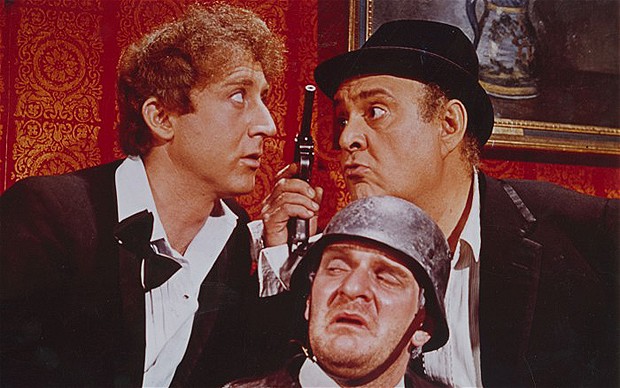
Zero Mostel and Gene Wilder, along with Kenneth Mars, concoct a crazy plan that just might work in THE PRODUCERS
THE PRODUCERS (Mel Brooks, 1968)
Film Society of Lincoln Center, Walter Reade Theater
165 West 65th St. at Amsterdam Ave.
Thursday, November 3, 8:30, and Monday, November 7, 1:45
Series runs November 3-13
212-875-5601
www.filmlinc.com
 No way around it; this is one funny movie. Written and directed by Mel Brooks (who won an Oscar for Best Original Screenplay), The Producers stars Zero Mostel as Max Bialystock, a once great Broadway producer now relegated to wooing old ladies for their checkbooks. Gene Wilder earned an Oscar nomination for Best Supporting Actor as Leo Bloom, a by-the-book accountant who figures out that it could be possible to make more money from a bomb than a hit. And the bomb they turn to is the extraordinary Springtime for Hitler, featuring a great turn by Kenneth Mars as a neo-Nazi. Brooks, Mostel, Wilder, Mars, and the rest of the crazy cast — which also includes Dick Shawn, Lee Meredith, Estelle Winwood, Christopher Hewett, Renee Taylor, Barney Martin, Bill Macy, and William Hickey — don’t just play it for laughs but for giant guffaws and jaw-dropping disbelief in this riotous romp that was turned into a very good but overrated Broadway musical and a terrible film version of the show, both starring Nathan Lane and Matthew Broderick, neither of whom can fill Mostel and Wilder’s shoes. The Producers is screening November 3 at 8:30 and on November 7 at 1:45 as part of the Film Society of Lincoln Center’s “Hollywood’s ‘Jew Wave’” festival, being held not far from the very fountain where one pivotal Producers scene takes place. Mostel can also be seen November 12 in Ján Kadár’s oddball rarity The Angel Levine, in which he plays Morris Mishkin, a lonely old Jew suddenly visited by a cool black man (Harry Belafonte) who claims to be an angel sent down from heaven to help him. The series continues through November 13 with screenings of such films as Robert Altman’s California Split, William Wyler’s Funny Girl, Larry Peerce’s Goodbye, Columbus, Hy Averback’s I Love You, Alice B. Toklas, and Bob Fosse’s Lenny, with many special guests on hand to participate in introductions and Q&As.

 When Leslie Braverman suddenly dies at the ripe old age of forty-one, four of his childhood friends reunite to attend the funeral in this very different kind of road movie. Morroe Rieff (George Segal), Barnet Weinstein (Jack Warden), Felix Ottensteen (Joseph Wiseman), and Holly Levine (Sorrell Booke) have one helluva time trying to get to temple on time as they battle traffic, a crazy cabbie (Godfrey Cambridge), and other urban impediments on their way from Sheridan Square to Brooklyn — even though they don’t know exactly which funeral house to go to. Jessica Walter as Inez Braverman, Phyllis Newman as Miss Mandelbaum, and Alan King as a wacky rabbi add to the fun. Based on Wallace Markfield’s 1964 novel, To an Early Grave, this charming little cult fave was written by longtime television variety show scribe Herb Sargent (Saturday Night Live, The Tonight Show Starring Johnny Carson), directed by Sidney Lumet (Serpico, Dog Day Afternoon), and shot by Boris Kaufman (one of Dziga Vertov’s brothers). This very funny absurdist comedy will sneak up on you when you least expect it. Bye Bye Braverman is screening November 3 at 6:30 (introduced by series coprogrammer J. Hoberman) and on November 12 at 3:45 as part of the Film Society of Lincoln Center’s “Hollywood’s ‘Jew Wave’” festival, eighteen (chai!) films made between 1968 and 1977 by and/or about Jewish characters, including such rarities as Ján Kadár’s The Angel Levine (with Zero Mostel as Morris Mishkin and Harry Belafonte as Alexander Levine) and Stuart Rosenbert’s Move (with Elliott Gould and Paula Prentiss), such lesser-known favorites as Karel Reisz’s The Gambler and Michael Roemer’s The Plot Against Harry, and such timeless gems as Woody Allen’s Annie Hall and Ted Kotcheff’s The Apprenticeship of Duddy Kravitz. Among those showing up to talk about the films are Gould (Robert Altman’s California Split), Walter Bernstein (Martin Ritt’s The Front), James Toback (The Gambler), Charles Grodin (Elaine May’s The Heartbreak Kid), Buck Henry (Herbert Ross’s The Owl and the Pussycat), and Gould again with the Safdie brothers (Ingmar Bergman’s The Touch.)
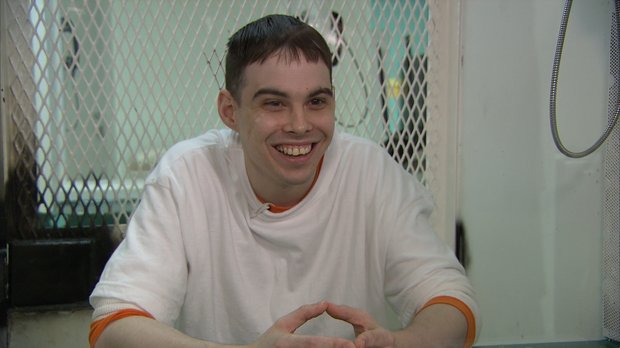
 Upon meeting convicted murderer Michael James Perry on Death Row eight days before the twenty-eight-year-old was going to be executed by the state of Texas, master filmmaker Werner Herzog tells him, “I have the feeling that destiny, in a way, has dealt you a very bad deck of cards. It does not exonerate you, and when I talk to you, it doesn’t necessarily mean that I have to like you, but I respect you, and you are a human being, and I think human beings should not be executed.” After explaining his personal view on capital punishment, Herzog then lets the rest of the compelling documentary Into the Abyss: A Tale of Death, a Tale of Life play out like a police procedural as he investigates how and why two teenage boys murdered three people in October 2001. Herzog opens the film by speaking with Death House chaplain Rev. Richard Lopez in a potter’s field graveyard, then follows that with four sections that detail the crime, the community in which it occurred, and the family members on both sides of the law affected by the grisly, senseless murders. Herzog divides the film into four primary chapters — “The Crime,” “The Dark Side of Conroe,” “Time and Emptiness,” and “A Glimmer of Hope” — as he talks with the often smiling Perry and his cohort, Jason Aaron Burkett; Lt. Damon Hall, who shares the specific aspects of the murders of Sandra Stotler, her seventeen-year-old son, Adam, and Adam’s friend Jeremy Richardson, supplemented by original crime-scene video; Charles Richardson, Jeremy’s older brother; Lisa Stotler-Balloun, Adam’s sister, who has seen more than her fair share of loss; Melyssa Thompson-Burkett, who fell in love with Burkett after he was incarcerated; Delbert Burkett, Jason’s stepfather, who is also behind bars; and Captain Fred Allen, who oversaw executions in the Huntsville prison. Herzog asks penetrating but not leading questions that get the subjects to talk openly and honestly about the crime and its aftermath and their lives in general, many of which seem trapped in a vicious cycle of violence, jail, poor education, and other endless hardships. Into the Abyss is a powerful film that, because of Herzog’s extremely sensitive handling of an extremely controversial topic, is not nearly as polemical or political as it could have been. Into the Abyss is the opening-night gala selection of “Doc NYC,” a nine-day festival of documentary films running November 2-10 at the IFC Center and NYU, screening dozens of feature-length and short nonfiction films from around the world, divided into such categories as Viewfinders, Icons, American Perspectives, Metropolis, and Midnight Rock Docs, with a special tribute to Richard Leacock and a series of panel discussions about the state of the industry.
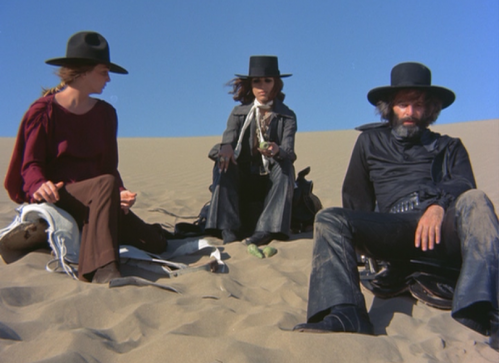
 Chilean-born Mexican filmmaker Alejandro Jodorowsky’s El Topo is a psychedelic head trip, an acid Western that will blow your mind. Jodorowsky stars as the title character, a gunslinger traveling through a deserted landscape accompanied by his naked young son, who already knows his way around a firearm. After coming upon a town that has been decimated by a nasty group of marauders working for the Colonel, El Topo seeks violent revenge, eventually taking off with a woman and leaving his boy behind as he meets four masters on his path to proving he is the best there is. But soon El Topo is praying for redemption with a community of inbred cripples trapped in a cave. El Topo is a wild and bizarre journey through religious imagery, romance, and vengeance, a surreal spaghetti Western strained through the mad mind of Jodorowsky, widely hailed as the creator of the midnight movie. The film melds Bergman with Leone, Tod Browning’s Freaks with Hiroshi Inagaki’s Samurai Trilogy, filtered through Kazuo Koike and Goseki Kojima’s Lone Wolf and Cub. It’s like nothing you’ve ever seen before and, despite your better instincts, will lure you into the cult of Jodorowsky. El Topo is screening on All Saints’ Day at Lincoln Center, introduced by Jodorowsky and followed by a conversation with outgoing Film Society program director Richard Peña; the night before, Jodorowsky will be at MoMA to introduce a screening of