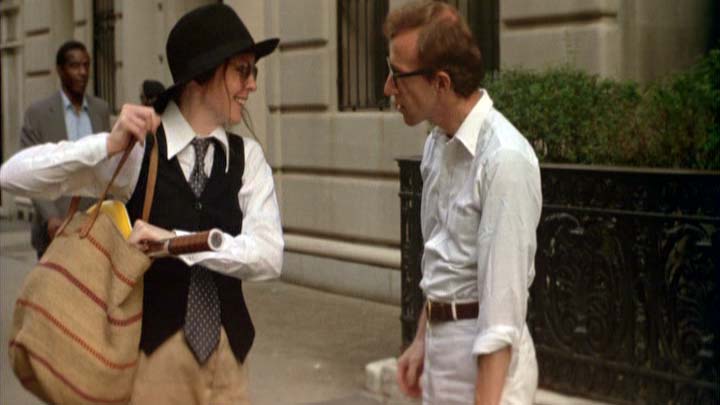
Annie Hall (Diane Keaton) and Alvy Singer (Woody Allen) don’t always see eye-to-eye in classic romantic comedy
ANNIE HALL (Woody Allen, 1977)
Film Society of Lincoln Center, Walter Reade Theater
165 West 65th St. at Amsterdam Ave.
Sunday, November 6, 9:00, and Tuesday, November 8, 1:45
Series continues through November 10
212-875-5601
www.filmlinc.com
 One of the funniest, most-quoted romantic comedies in film history, Woody Allen’s Annie Hall is a pure delight from start to finish. It’s ostensibly a luuuuuurve story about a nebbishy Jew (Allen as Alvy Singer) and the ultimate WASPy goy (Diane Keaton as the title character), but it’s really about so much more: large vibrating eggs, right turns on red lights, television, Existential Motifs in Russian Literature, California, slippery crustaceans, driving through Plutonium, dead sharks, Freud, Hitler, Leopold and Loeb, religion, cocaine, Shakespeare in the Park, Buick-size spiders, planet Earth, and, well, la-di-da, la-di-da, la la. Nominated for five Oscars and taking home four — for Best Original Screenplay (Allen and Marshall Brickman), Best Director (Allen), Best Actress (Keaton), and Best Film — Annie Hall is screening November 6 and 8 at the Film Society of Lincoln Center’s “Hollywood’s ‘Jew Wave’” series, where such scenes as Annie’s grandmother seeing Alvy as an Orthodox rabbi at the dinner table should take on added significance. The eleven-day festival features eighteen (chai!) movies by and/or about Jews made between 1968 and 1977, a period that saw the influx of such actors as Elliott Gold, George Segal, Dustin Hoffman, Barbra Streisand, Richard Dreyfuss, Zero Mostel, and other members of the tribe. Allen fans should also be interested in checking out Martin Ritt’s The Front, in which Woody plays a bookie who becomes a front for blacklisted writers (one of whom, screenwriter Walter Bernstein, will be on hand for a Q&A on November 7), and The Touch, an English-language film made by one of the Woodman’s biggest influences, Ingmar Bergman.
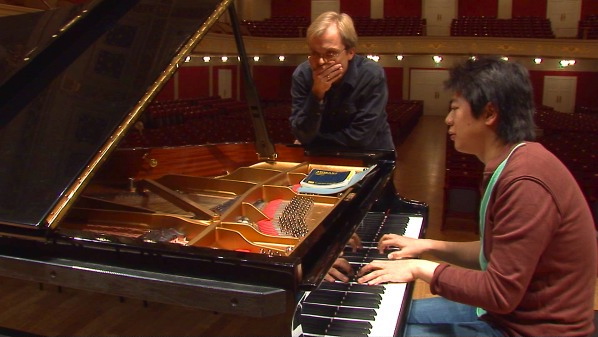
 A surprisingly exciting race against time, Lilian Franck and Robert Cibis’s Pianomania offers an inside look at a fascinating aspect of the world of classical keyboardists. The award-winning documentary follows the triumphs and travails of Stefan Knüpfer, the chief technician for Steinway & Sons in Vienna whose primary responsibility is to make sure that the company’s grand pianos are in pristine condition for the great pianists who come to play at the Vienna Concert House. Early in the film, he is running around the dark underbelly of the venue, searching for just the right bench for Lang Lang, displaying his passion and his demand for perfection. The narrative focuses on Knüpfer’s desperate attempts to ensure that piano number 109 (and then 245) is exactly how Pierre-Laurent Aimard wants it as the piano master prepares for a series of Bach recordings. “The tone isn’t breathing,” explains Aimard, who continues to point out minute problems that only he and one of the technicians seem to be able to hear, but Knüpfer is determined to do everything in his power to satisfy Aimard, using whatever means necessary to get the job done. Knüpfer, who goes deep inside 245, the camera intricately following him as he examines nearly every one of the 88 hammers and 230 strings, rarely gets mad at the sometimes diva-like dictates of such pianists as Aimard, Alfred Brendel, and Rudolf Buchbinder, instead seeing each subtle nuance as a challenge, even if it means playfully chastising someone for removing a ball of dust from a piano, since every little detail influences the unique sound of the instrument. He does lighten up significantly when working with Igudesman and Joo, who use grand pianos (and not-so-grand violins) for their comedy act, including playing a very funny joke on them. Although Knüpfer says that he considers his clients “special” instead of “neurotic,” he does admit that he himself is neurotic as he lovingly explores the many secrets and hidden magic that exist within the distinct personalities of each piano he comes into contact with. You don’t have to love classical piano to love Pianomania. The film opens November 4 at Lincoln Center’s Elinor Bunin Munroe Film Center, with codirector Cibis on hand for a Q&A following the 7:15 screening.
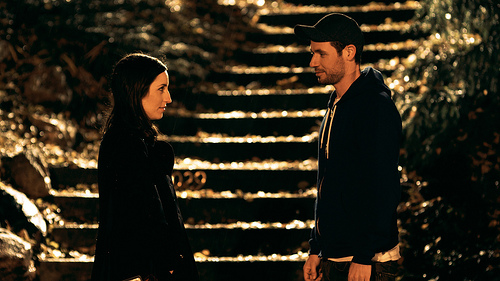
 In many ways, Stuck Between Stations, which screened earlier this year at the Tribeca Film Festival, is the quintessential American festival movie. The low-budget indie feels like a deeply personal work, teetering on the edge of collapsing into overwrought melodrama but always able to get back on track. Cowriter and coproducer Sam Rosen stars as Casper, a young man who returns to his Minneapolis home for his father’s funeral. At a bar he bumps into his childhood crush, Rebecca (Zoe Lister-Jones), a grad student whose life is being turned upside down, as the head of her department just discovered that Zoe has been having an affair with her husband. Casper gets into a fight with Rebecca’s friends, then ends up spending the rest of the very long night with her as they wander through Minneapolis visiting a bizarre circus, breaking into a house, and talking openly and honestly about their lives, revealing only little bits at a time. It takes a while to warm up to the two main characters, but once director and coproducer Brady Kiernan gets things rolling, Stuck Between Stations becomes a compelling, moving ride. To keep the protagonists on-screen the whole way, Kiernan, in his feature-length debut, employs split screens whenever the two are physically separated, a conceit that ends up working. The film also stars Michael Imperioli as Rebecca’s mentor/lover and Josh Hartnett as the leader of a late-night partying bike crew. The title comes from a 2006 song by the then-Minneapolis-based band the Hold Steady in which Craig Finn sings, “Boys and girls in America, they have such a sad time together.” Audiences will end up not having a sad time together watching Stuck Between Stations. The film is having a limited one-week engagement at reRun Gastropub Theater, with the filmmakers and other special guests present for screenings Friday at 7:00 and Saturday at 7:00 and 10:00.