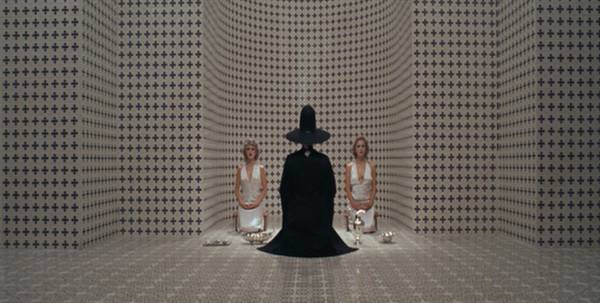
The beautiful weirdness never ends in Jodorowsky cult classic THE HOLY MOUNTAIN, being screened Halloween night at MoMA
TO SAVE AND PROJECT
MoMA Film
Museum of Modern Art
11 West 53rd St. between Fifth & Sixth Aves.
Monday, October 31, 7:00
Tickets: $10, in person only, may be applied to museum admission within thirty days, same-day screenings free with museum admission, available at Film and Media Desk beginning at 9:30 am
212-708-9400
www.moma.org
 Inspired by Rene Daumal’s Mount Analogue: A Novel of Symbolically Authentic Non-Euclidean Adventures in Mountain Climbing, Alejandro Jodorowsky’s The Holy Mountain also involves symbolically non-Euclidean adventures in mountain climbing, funneled through Carlos Castaneda, Stanley Kubrick’s 2001: A Space Odyssey, and magic mushrooms and LSD galore. What passes for narrative follows a Jesus look-alike thief (Horacio Salinas) and an alchemist with a thing for female nudity (Jodorowsky) on the path to enlightenment; along the way they encounter the mysterious Tarot, stigmata, stoning, eyeballs, frogs, flies, cold-blooded murder, naked young boys, chakra points, life-size plaster casts, Nazi dancers, sex, violence, blood, gambling, turning human waste into gold, death and rebirth, and the search for the secret of immortality via representatives of the planets, each with their own extremely bizarre story to tell. Jodorowsky, who is credited with having invented the midnight movie with the acid Western El Topo (1970), literally shatters religious iconography in a kaleidoscopic whirlwind of jaw-droppingly gorgeous and often inexplicable imagery composed from a surreal color palette, set to a score by free jazz trumpeter Don Cherry and Archies keyboardist Ron Frangipane. (Frangipane also worked with John Lennon and Yoko Ono, who produced this film with their business manager, Allen Klein.) The Holy Mountain — which brings a whole new insight to Matthew Barney’s Cremaster Cycle — is filled with psychedelic mysticism centered around the human search for transcendence in a wilderness of the sacred and profane. Jodorowsky’s work can move you deeply, but don’t expect it to make much sense. Sit back and let in pour in and over you — you’ll feel it. You may hate it, but you’ll feel it. Although you’ll definitely hate the very end. The Holy Mountain is screening on Halloween night at MoMA as part of the Modern Mondays program and the To Save and Project series; Jodorowsky will be on hand to introduce the film, then take part in a Q&A with MoMA’s Klaus Biesenbach and Joshua Siegel afterward. Advance tickets are sold out, but a limited number of seats will be released Monday morning at 9:30 at the Film and Media Desk. Jodorowsky will be at the Film Society of Lincoln Center the next night for a screening of El Topo and a conversation with Richard Peña.
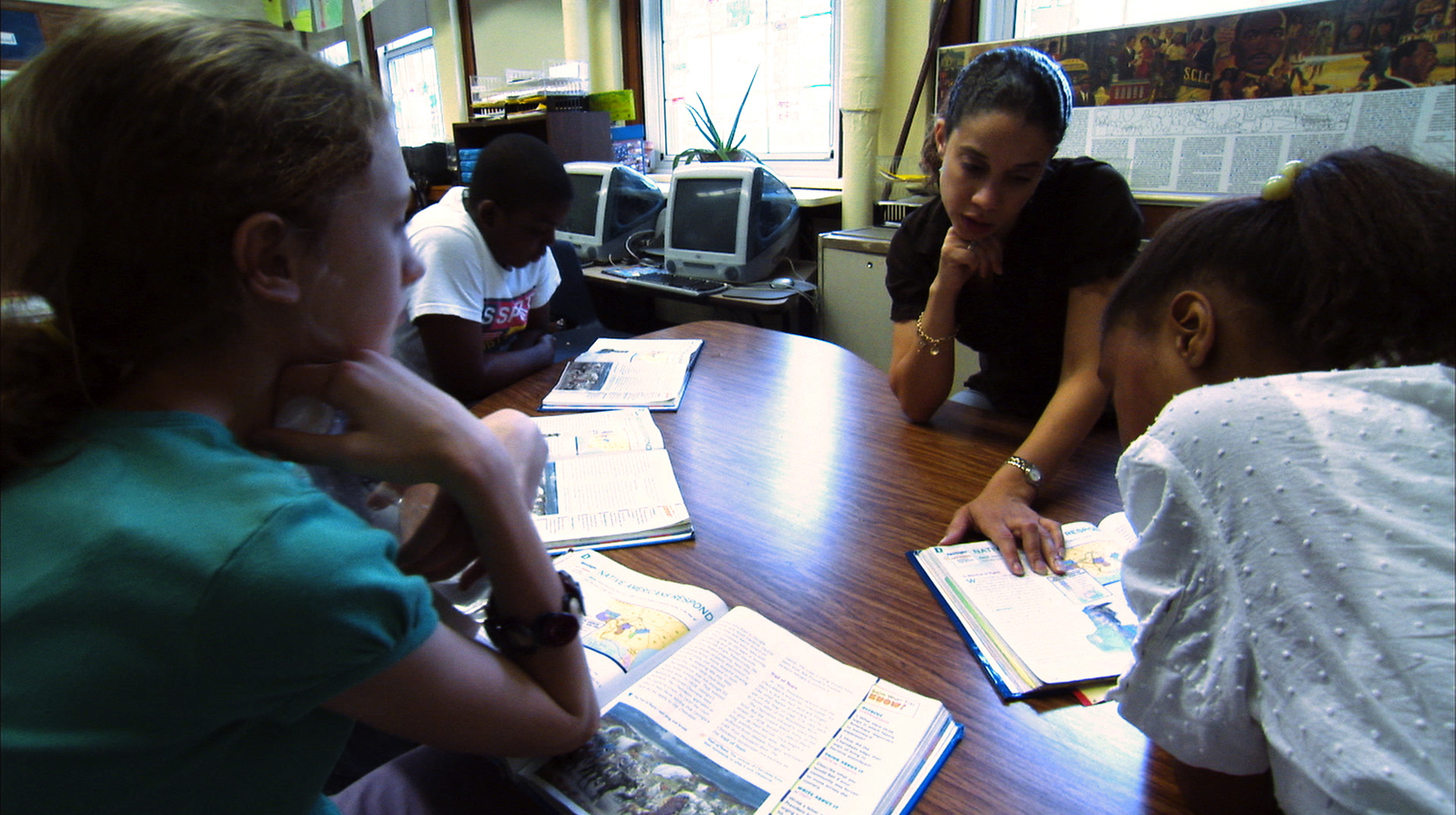
 “It’s the best job in the world, no comparison,” Jonathan Dearman says in American Teacher, Vanessa Roth’s eye-opening documentary about the sorry treatment of teachers in the United States today. Based on the book Teachers Have It Easy: The Big Sacrifices and Small Salaries of America’s Teachers (New Press, 2005) by Dave Eggers, Daniel Moulthrop, and Nínive Clements Calegari, the eighty-one-minute film looks at the surprising lack of status, salary, respect, and training afforded what is considered in other countries the most important profession by examining the cases of four current or former American teachers, dedicated men and women who are born educators but who have been deeply affected by a seriously flawed system. Texas history professor and sports coach Erik Benner sees his marriage fall apart as he works two jobs to help support his wife and two daughters. Brooklynite Jamie Fidler is following in her father’s footsteps as a teacher, but her pregnancy complicates her future in part by revealing the relatively poor health benefits. Maplewood’s Rhena Jasey is a Harvard grad with two masters degrees from Columbia who is considering leaving the kids she loves so much for a Washington Heights charter school that pays a far more substantial salary. And Dearman, a beloved San Francisco educator, turns to the family real estate business when teaching just can’t pay the bills. Part of the nonprofit Teacher Salary Project, American Teacher is at its best when it shows the teachers in the classroom and talking about what they love about their job, but when it focuses on the many negatives, it feels too much like a telethon, as if a crawl should be running across the bottom of the screen soliciting donations. The film includes numerous statistics involving turnover rates, the declining number of men in the industry, and, of course, various financial figures, dryly narrated by Matt Damon. In addition to following around the four protagonists, Roth speaks with students and their parents, superintendents, principals, professors, and other industry professionals who want to see the system changed. Interestingly, one word that never comes up is “union,” which is often at the center of any discussion about the state of education in America. Although it can pull too much at the heartstrings while stating the obvious, American Teacher is an important documentary that makes a strong case for the United States to fix this growing problem, and fast. The film is screening twice on October 30 as part of the Thalia Film Sundays series at Symphony Space, with Roth participating in a Q&A following the 6:15 show.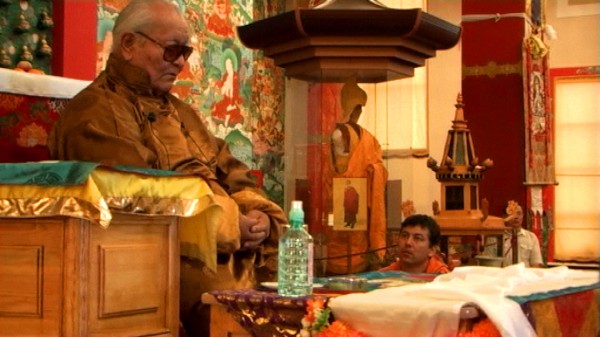
 More than twenty years in the making, Jennifer Fox’s My Reincarnation tells the fascinating story of a very unusual father-son relationship amid the modern world of tulkus, or reincarnated Tibetan lamas. World-renowned high Tibetan Buddhist Master Chögyal Namkhai Norbu travels around the world teaching meditation and Dzogchen practice. He meets with the Dalai Lama, advises students and fans, signs copies of his many books, and builds support for his beleaguered native land, Tibet. But his son, Yeshi Silvano Namkhai, who was born in 1970 in Italy (where Rinpoche Namkhai Norbu taught at university from 1964 to 1992), had no desire to follow in his father’s footsteps and instead went into the computer business, starting a family and rejecting nearly everything his father believes in — including that Yeshi might just be the reincarnation of his great-uncle, Khyentse Rinpoche Chökyi Wangchug, and so is destined for a life of service and tradition. “Everybody knows about me and nobody knows me at all,” Yeshi says about trying to establish his own identity. Father and son and the rest of the family allowed Fox remarkable access, holding nothing back as they talk about their lives and each other; Yeshi is particularly vocal about his father’s treatment of him over the years. But soon Yeshi has a change of heart, and the documentary takes an unexpected turn. Fox, who has previously made such films as Beirut: The Last Home Movie, Flying: Confessions of a Free Woman, and An American Love Story, shot more than one thousand hours of footage, which she edited down to a tight seventy-five-minutes, including archival and newsreel footage as well. As much as it is about a father and a son, My Reincarnation is also about the old vs. the new, tradition vs. modernization, private love vs. public responsibility, the spiritual vs. the technological, and, above all, familial legacy. My Reincarnation opens at Cinema Village on October 28; Fox and Yeshi will participate in several Q&As and/or introductions on October 28 and 29, with Fox also taking part in Q&As following the 7:00 screenings on November 2 and 3.