The thirty-fifth annual Margaret Mead Film Festival is sure to take viewers to places they’ve never been
American Museum of Natural History
Central Park West at 79th St.
November 10-13, $12-$40
212-769-5200
www.amnh.org/mead
“The first Margaret Mead Film Festival, held on Mead’s own seventy-fifth birthday and her fiftieth year at the [American Museum of Natural History], was meant to be a one-time celebration, but it became one of the most enduring legacies in support of visual anthropologists, inspiring generations of anthropologists and filmmakers, including myself,” writes Faye Ginsburg in the brochure for the thirty-fifth annual Margaret Mead Film Festival, running November 10-13 at AMNH. Ginsburg, an anthropology professor and director of the Center for Media, Culture, and History at NYU, will be moderating the panel discussion “How Do We Look?” on November 13 at 4:30, examining the history of the first documentary festival of its kind. Lotte Stoops’s Grande Hotel is the opening-night selection, while Meshakai Wolf’s Flames of God, introduced by Darren Aronofsky, closes things out on Sunday night. In between are such new documentaries as Robert Nugent’s Memoirs of a Plague and Alain LeTourneau and Pam Minty’s Empty Quarter along with retrospective screenings of Jean Rouch’s Jaguar from 1967, John Marshall and Adrienne Miesmer’s N!ai, The Story of a !Kung Woman from 1980, and Gregory Bateson and Mead’s Trance and Dance in Bali from 1952. Many of the screenings will include appearances by the filmmakers and subjects in addition to related live performances, most notably following Katja Esson’s Skydancer on Sunday afternoon. With the continual technological leaps being made these days, the world might appear to be getting smaller and smaller, but it still takes a festival such as the Mead to help open one’s eyes to what is really going on out there.
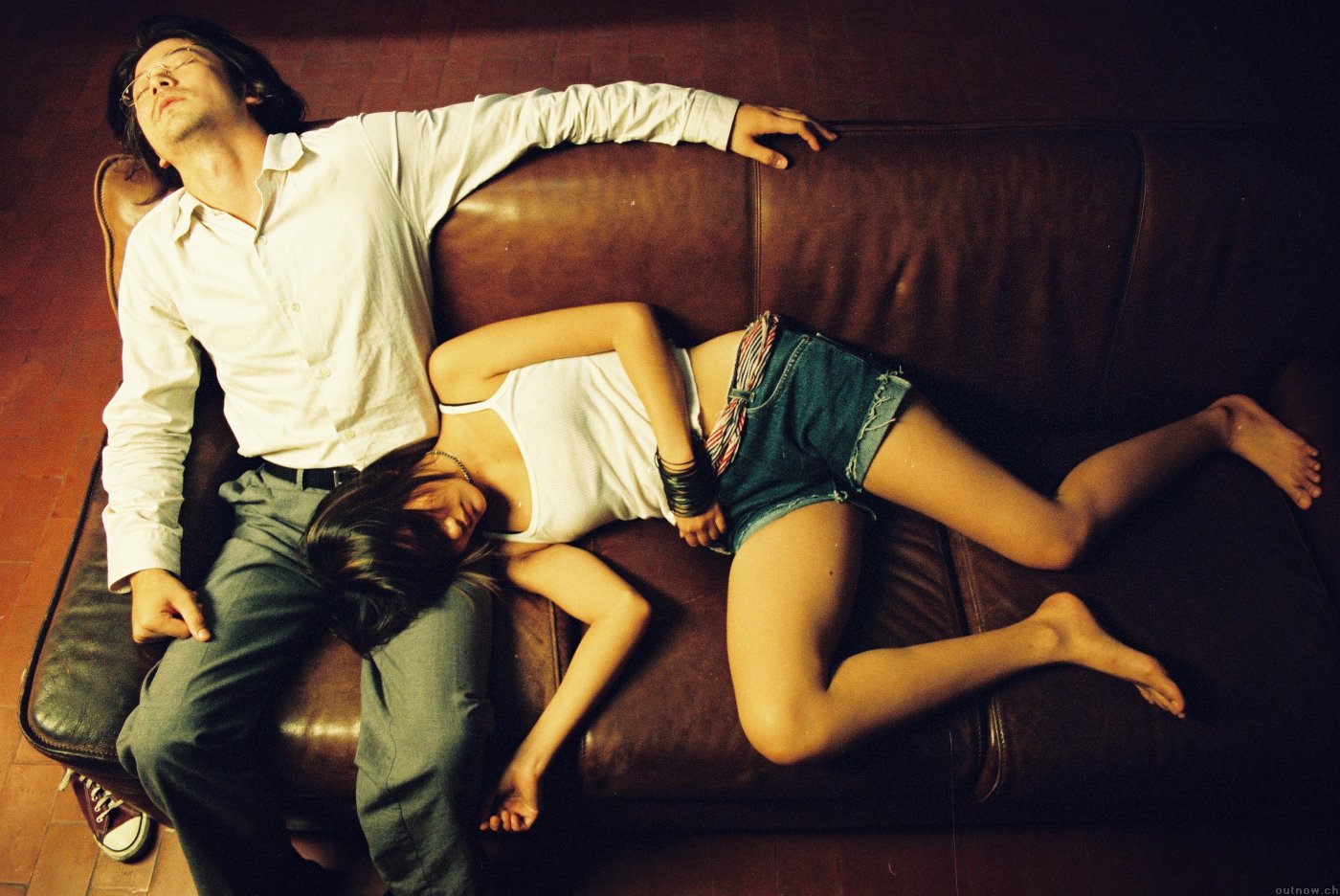
 Japanese actor Tadanobu Asano (Taboo, Ichi the Killer, Zatoichi), Australian-born Hong Kong cinematographer Christopher Doyle (Hero, In the Mood for Love, Chungking Express), and Thai cowriter-director Pen-ek Ratanuruang (6IXTYNIN9, Fun Bar Karaoke) combine their immense talents in the stunningly eloquent and marvelously offbeat black comedy Last Life in the Universe. Asano stars as Kenji, a librarian with OCD, a yakuza brother, and a propensity to consider various ways of killing himself. About to jump off a bridge, he sees a traffic accident, leading to a bizarrely touching Harold & Maude–like relationship with the young and beautiful Noi (Sinitta Boonyasak), who tends to be a little bit wild. As they try to make a simple life for themselves, danger lurks right around the corner in this nearly perfect, sadly overlooked film. Last Life in the Universe is screening at MoMA on November 12 & 18 as part of the “In Focus: Fortissimo Films” series, paying tribute to the company that has been distributing international independent releases for twenty years. The festival, which runs through November 21, opens November 10 with Taiwanese director Wei Te-sheng introducing his latest, Warriors of the Rainbow: Seediq Bale, and continues with such global favorites as Wisit Sasanatieng’s Tears of the Black Tiger, Wong Kar-wai’s Happy Together (introduced by Doyle on November 11), Zhang Yuan’s Beijing Bastards, Zhang Yang’s Shower, and the Pang brothers’ creepy horror flick The Eye.
 In a Republican debate in September, presidential hopeful Michele Bachmann called Gardasil, Merck’s HPV vaccine to prevent cervical cancer, “dangerous,” setting off a firestorm across the country and in the scientific community over the safety of childhood vaccinations in general, with groups taking to the streets and the airwaves fighting against government-mandated vaccines. Thus, Kendall Nelson and Chris Pilaro’s The Greater Good comes along at just the right time. In the ninety-minute documentary, the directors speak with individuals on all sides of the now controversial issue. They speak with the Swank, King, and Christner families, who claim that vaccinations specifically led to their children either becoming autistic, suffering strokes, or, dying. While Dr. Paul Offit declares vaccinations safe and bemoans so many people deciding not to have their children vaccinated against anything, which led to a recent outbreak of measles at Children’s Hospital of Philadelphia, Drs. John Green and Lawrence B. Palevsky come out strongly against vaccinations. And experts such as Robert W. “Dr. Bob” Sears, author of The Vaccine Book: Making the Right Decision for Your Child, and Barbara Loe Fisher, cofounder and president of the National Vaccine Information Center, are firmly in the middle, demanding that more testing be done on vaccines before they hit the market and that parents should have the choice of what vaccinations their children receive. Nelson and Pilaro supplement the film with a not-overwhelming amount of relevant data and some playful yet serious animation as they examine corporate influence on public health, the science behind the controversy, government regulation, the growing anti-vaccination movement, and the sad stories of three families dealing with harrowing personal circumstances. The Greater Good is screening November 5 at 6:45 at NYU’s Kimmel Center and November 7 at 1:30 at the IFC Center as part of the “Viewfinders” section of the Doc NYC festival, which continues through November 10, with the codirectors expected to be in attendance to discuss the film.
