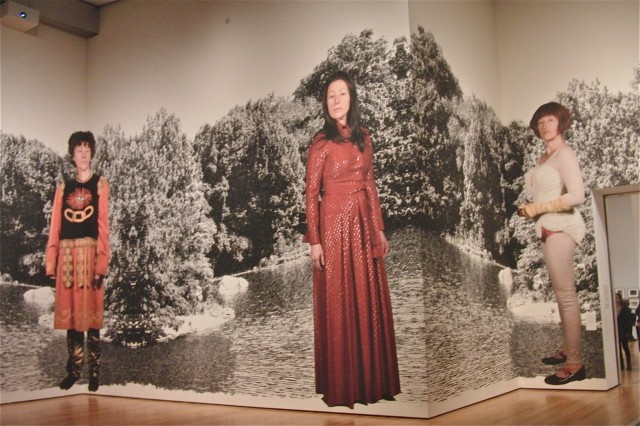
Giant Cindy Shermans watch over entrance to stunning MoMA retrospective (photo by twi-ny/mdr)
Museum of Modern Art
11 West 53rd St. between Fifth & Sixth Aves.
“Cindy Sherman” through June 11, Joan and Preston Robert Tisch Exhibition Gallery, sixth floor
“Sanja Iveković: Sweet Violence” through March 26, Donald B. and Catherine C. Marron Atrium and Special Exhibition Galleries, third floor
Wednesday – Monday, $25 (includes same-day film screenings)
212-708-9400
www.moma.org
MoMA is currently home to two solo shows by women who take very different approaches to explorations of gender, identity, sexual freedom, empowerment, and representation. “Cindy Sherman” is an appropriate title for the revelatory career survey of American artist Cindy Sherman, who has been photographing herself in ever-evolving series for thirty-five years. Sherman’s oeuvre is not a celebration of herself but an examination of how women are depicted and treated in society. Working alone, Sherman, who is most often associated with the Pictures Generation, dresses up in an endless array of costumes and makeup, becoming a sexy chanteuse, an elderly aristocrat, a centerfold model, a fashion icon, a clown, a Renaissance virgin, a tattooed punk rebel, and a murder victim. Each photograph, most of which were taken in her studio, is untitled, allowing viewers to experience it for themselves, bringing their own biases to it without being prodded. Her “Untitled Film Stills” are not based on actual movies, allowing the viewer to create their own story around the carefully choreographed pictures. In such series as “Centerfolds,” “Fashion,” “Fairy Tales and Disasters,” and “History Portraits,” she re-creates herself in ways that make the story about who she portrays, not who she is. “Time and time again, writers have asked, Who is the real Cindy Sherman?” exhibition organizer Eva Respini writes in the show’s catalog. “It is Sherman’s very anonymity that distinguishes her work. Rather than explorations of inner psychology, her pictures are about the projection of personas and stereotypes that are deepseated in our shared cultural imagination.” In representing the fascinating work of one of contemporary art’s most important figures, “Cindy Sherman” is a spectacular success. (On March 26, such artists as George Condo, Kalup Linzy, Elizabeth Peyton, and Collier Schorr will participate in the panel discussion “Cindy Sherman: Circle of Influence,” moderated by Respini. In addition, Sherman has curated the film series “Carte Blanche,” which runs April 2-10 and includes such films as Barbara Kopple’s Harlan County USA, Tobe Hooper’s The Texas Chain Saw Massacre, Bong Joon-ho’s The Host, David Lynch’s Inland Empire, John Cassavetes’s Shadows, John Waters’s Desperate Living, and Sherman’s own Doll Clothes and Office Killer.)

Sanja Iveković’s “Lady Rosa of Luxembourg” rises high in MoMA’s Marron Atrium (photo by twi-ny/mdr)
As “Cindy Sherman” settles in to MoMA, continuing through June 11, “Sanja Iveković: Sweet Violence” prepares to move out, ending March 26. The first museum retrospective of the Croatian multimedia artist and activist born five years before Sherman, the show consists of photography, sculpture, drawing, video, and collage that tackle such issues as politics, female identity, and gender roles in war-torn East Central Europe. Like Sherman, Iveković, who is part of the Nova Umjetnička Praksa (New Art Practice) generation, often puts herself in her work, but she is much more direct and far less subtle. In “Tragedy of a Venus,” Iveković pairs older, existing pictures of herself with shots of Marilyn Monroe, while in “Double Life” she is seen alongside magazine advertisements for beauty products. In the short video “Personal Cuts,” Iveković films herself using scissors to slice off parts of a dark stocking that covers her face, intercut with historical footage of the post-Tito history of the former Yugoslavia. And in “Practice Makes a Master,” Iveković wears a white sheet over her head as the continually falls to the ground as if having been executed, while Monroe sings a song from Bus Stop. Other series include “Paper Women,” in which Iveković rips, scratches, and tears actual magazine ads with female models; “Sweet Violence,” in which she places bars on a television monitor showing a Zagreb economic propaganda program; and “Women’s House (Sunglasses),” large-scale prints of fashion models on which details of beaten and abused women are superimposed. The show’s centerpiece is “Lady Rosa of Luxembourg,” Iveković’s public art project that involved the re-creation of a war monument in which she made the statue of Nike into a pregnant woman and replaced the names of the fallen soldiers with such words as “Kitsch,” “Madonna,” “Virgin,” “Resistance,” “Justice,” and “Whore.” Seen together, “Cindy Sherman” and “Sanja Iveković: Sweet Violence” offer two very different perspectives on very similar themes, from two women artists from two very different cultures.


 In films such as Being John Malkovich (Spike Jonze, 1999), Adaptation. (Spike Jonze, 2002), Confessions of a Dangerous Mind (George Clooney, 2002), and Eternal Sunshine of the Spotless Mind (Michel Gondry, 2004), writer Charlie Kaufman has created bizarre, compelling alternate views of reality that adventurous moviegoers have embraced, even if they didn’t understand everything they saw. Well, Kaufman has done it again, challenging audiences with his directorial debut, the very strange but mesmerizing Synecdoche, New York. Philip Seymour Hoffman stars as the bedraggled Caden Cotard, a local theater director in Schenectady mounting an inventive production of Death of a Salesman. Just as the show is opening, his wife, avant-garde artist Adele Lack (Catherine Keener), decides to take an extended break in Europe with their four-year-old daughter, Olive (Sadie Goldstein), and Adele’s kooky assistant, Maria (Jennifer Jason Leigh). As Caden starts coming down with a series of unexplainable health problems (his last name, by the way — Cotard — is linked with a neurological syndrome in which a person believes they are dead or dying or do not even exist), he wanders in and out of offbeat personal and professional relationships with box-office girl Hazel (a nearly unrecognizable Samantha Morton), his play’s lead actress, Claire Keen (Michelle Williams), his therapist, Madeleine Gravis (Hope Davis), and Sammy (Tom Noonan), a man who has been secretly following him for years. After winning a MacArthur Genius Grant, Caden begins his grandest production yet, a massive retelling of his life story, resulting in radical shifts between fantasy and reality that will have you laughing as you continually scratch your head, hoping to stimulate your brain in order to figure out just what the heck is happening on-screen.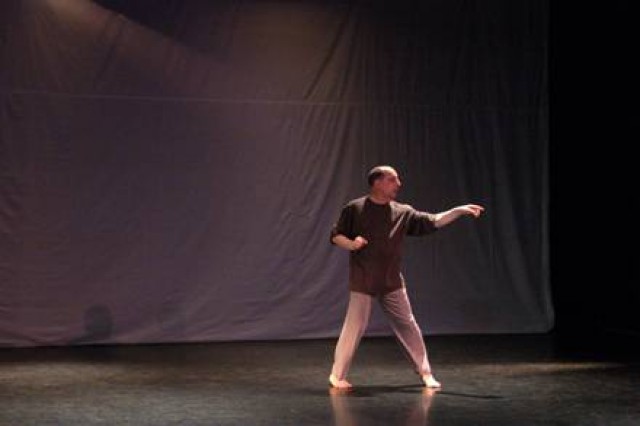

 The Raid: Redemption is a nonstop claustrophobic thrill ride through a fifteen-story apartment complex where danger lurks around every corner and behind nearly every door. The gated, heavily protected building is run by Tama (Ray Sahetapy), a well-connected drug lord who enjoys terrorizing and killing traitors and enemies. Early one morning Jaka (Joe Taslim) leads his elite special forces unit on a raid of the complex, ordered to get Tama and end his brutal reign. As Jaka’s team falls one by one, it is left to a determined young rookie, Rama (Iko Uwais), to complete the mission, which is not quite what it appears to be. Written, directed, and edited by Welsh-born Gareth Huw Evans, The Raid: Redemption is a furious, testosterone-heavy action flick filled with breathtaking scenes of ultraviolence countered by moments of intense, quiet drama where one wrong move will be a character’s last. Primarily shot with a handheld camera that puts the audience in the middle of the battle, the film uses a variety of weapons in the well-choreographed fight scenes, from machine guns and pistols to serrated knives and machetes, while focusing on the martial art of Pencak Silat. Uwais, a former truck driver and Silat champion who was discovered by Evans while the director was researching a documentary on the martial art — the two previously teamed up on 2009’s Merantau — is outstanding as Rama, a father-to-be who might have met his match in Mad Dog (Yayan Ruhian), one of Tama’s chief operatives and a killer who prefers using his hands, fists, and feet to eliminate his opponents. (Uwais, Ruhian, and Evans collaborated on the action choreography.) Buoyed by a pulsating score by Joseph Trapanese and Linkin Park’s Mike Shinoda and evoking elements of the first Die Hard, Assault on Precinct 13, and New Jack City, The Raid: Redemption is a pulse-pounding, wildly successful film that has kicked off a franchise, with two sequels in the works. (Here’s hoping the translator does a better job in the next two movies, taking a much-needed crash course in punctuation.) Even the credits are awesome, with dozens of characters listed as Hole Drop Attacker, Riot Van Shooter, Carrying Bowo Fighter, Machete Gang, AK47 Attacker, Panic Man, Tortured Man, and Junkie Guy. “I deal in blood and mayhem,” Evans, who has been based in Indonesia since 2007, states in the film’s production notes. Indeed he does.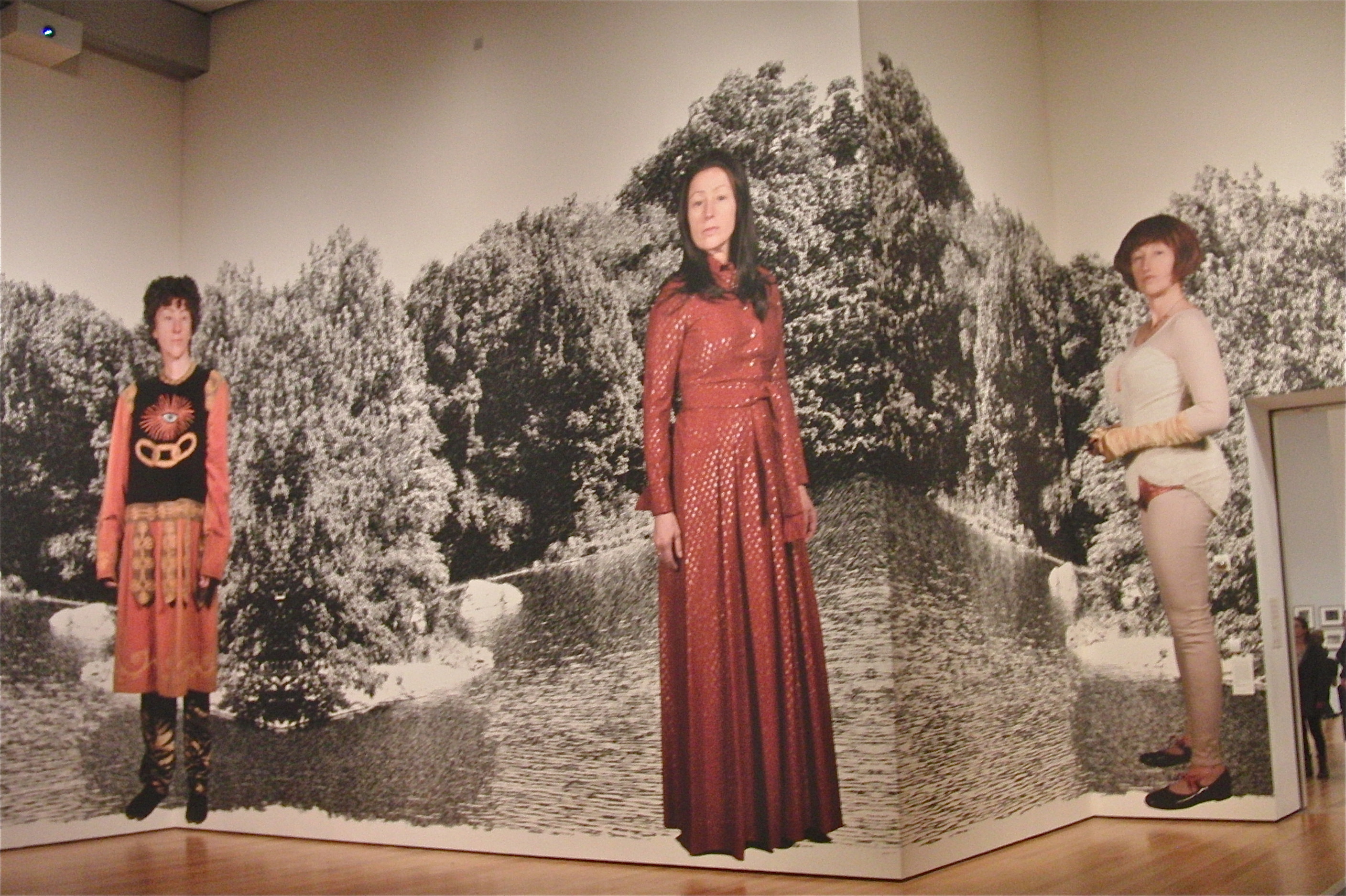

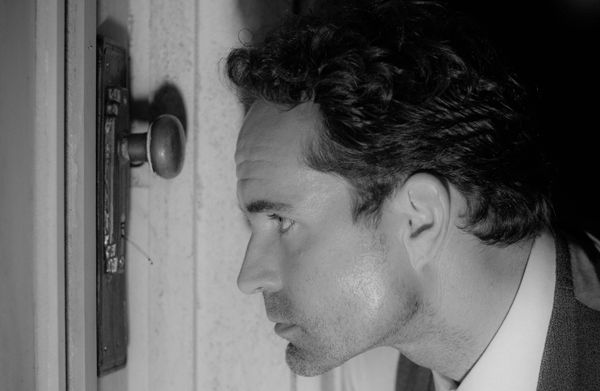
 Inspired by Homer’s Odyssey, Gaston Bachelard’s The Poetics of Space, and the Bowery Boys’ Spooks Run Wild, Canadian experimental filmmaker