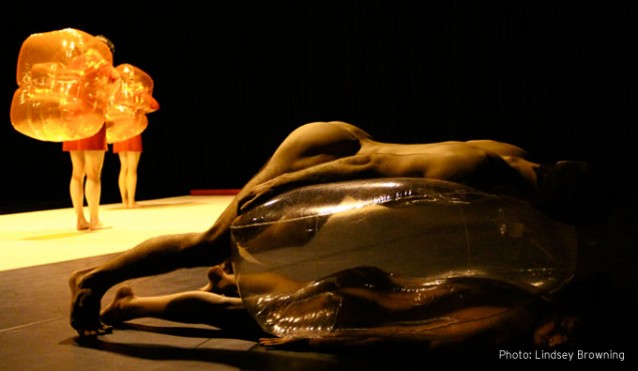
John Jasperse revisits FORT BLOSSOM at New York Live Arts this week
FORT BLOSSOM REVISITED (2000/2012)
New York Live Arts
219 West 19th St. between Seventh & Eighth Aves.
May 9-12, $15-$30, 7:30
May 11, 10:00 pm show added by popular demand
212-691-6500
www.newyorklivearts.org
www.johnjasperse.org
Manhattan-based dancer and choreographer John Jasperse speaks eloquently about his profession both on- and offstage. For more than twenty years, the Bessie Award winner has been challenging and engaging audiences with complex productions that cleverly combine movement, music, visuals, and text in unusual ways, never taking the easy way out. Although he usually performs in his own pieces, he’ll be on the sidelines this week when he brings an updated version of his 2000 work, Fort Blossom, to New York Live Arts. An intellectual and personal exploration of the limits of the human body, the gaze of the viewer, and the effects of time, Fort Blossom was originally performed at the Kitchen by Jasperse, Miguel Gutierrez, Parker Lutz, and Juliette Mapp; the expanded Fort Blossom revisited features Ben Asriel, Lindsay Clark, Erika Hand, and Burr Johnson, with music by Ryoji Ikeda, lighting by Stan Pressner, and costumes by Deanna Berg. There will be a preshow talk with Mapp on May 9 and a discussion following the early show on May 11 with members of the cast and crew; in addition, a bonus late-night 10:00 show on May 11 has just been added by popular demand. A smart, funny, and deeply introspective artist, Jasperse shares his fascinating creative process in our latest twi-ny talk.
twi-ny: What made you want to go back and reexamine Fort Blossom at this time?
John Jasperse: I wasn’t planning on revisiting this work. I have rarely remounted old repertory; I’m more interested in making new work. The occasion to do so came out of an invitation from Lisa Kraus, programmer at Bryn Mawr Presents, who wanted to have my work as part of their 2011–12 presenting season. When it became clear that a new work wasn’t possible, she asked me if there was any work that I wanted to revisit. I immediately thought of Fort Blossom. Very quickly the idea emerged to not only remount the work as it was but to substantially expand it. Subsequently, I contacted Carla Peterson at New York Live Arts to join in the adventure. I have long felt that Fort Blossom was an initial gesture that didn’t actually fully get finished.
Fort Blossom was originally conceived as a work-in-progress towards the first work I made for BAM, which was later called Giant Empty. Fort Blossom was made at a very special juncture that I would be hard pressed to describe concretely. It was made with Miguel Gutierrez, Parker Lutz, and Juliette Mapp, a group of dancers whom I had consistently worked with for a number of years at that point. We rehearsed Fort Blossom for less than two months and presented it at the Kitchen in May of 2000. Then we had a break for the summer. When we returned to rehearsals in the fall to continue work on Giant Empty, it gradually became clear that the “special juncture” of the group had ended and that it was the beginning of the dissolution of that group, that those dancers were getting ready to move on to other things. Giant Empty was the last project I made with Miguel and Parker; Juliette made one more, a duet project called just two dancers. So Giant Empty took a turn of sorts, and it became about our history together in a way — about things coming together and things falling apart.
In the process and also in part in response to the idea of doing my first work for a larger proscenium venue, the simplicity of the design of Fort Blossom got left behind as well as the starkness of the contrasts in the work in favor of an evolving visual environment and a more complicated tapestry where ideas were being approached from multiple angles. I remember a moment of crisis at the end of the process of Giant Empty where there was a discussion in the group about whether or not the men’s duet from Fort Blossom still belonged in Giant Empty. I remember thinking and saying aloud that it represented the last vestige of what I originally wanted the work to be, and as such, it was too problematic to remove it — that it would feel like some sense of me was being removed from the work if I took that choice.
Of course, that is silly, since Giant Empty was also made by me in collaboration with others. I have always felt that it is more interesting to respond to circumstance, to acknowledge and take advantage of what is actually happening rather than to willfully deny that reality and try and thrust some other thing upon the present.
But that willingness to accept things “as they are” is tricky, in part because things aren’t often just or only as they appear at first. In truth, things are always many different ways, all at the same time, so there is also practice in choosing what to align yourself with that is manifest in the present. To speak of how this played out in Giant Empty, to say that things are falling apart, places the focus on their eventual separation and dissolution, to energize that aspect of a potential future in the present. There is also the possibility of looking at the same situation and marveling at the fact that these seemingly different, separate entities are miraculously floating in a dialogue with one another that is perfect just as it is right now, and celebrating that instead of projecting some perceived inevitable fall from grace upon them. The shifts in how we see something (in how we perceive a body, a relationship, or the present moment) are clearly manifest as such in Fort Blossom, and I think after all these years, I have finally realized that there is a profound aspect of hope embedded in Fort Blossom, and in its simplest terms, it is a hope for a multiplicity of connectivity that isn’t compartmentalized and exists in a space beyond shame.
So much emphasis gets placed on the naked men, but it is very important to remember that they cohabitate a space with clothed women. The four figures are together with the simple contrast throughout the hour. The difference (which is initially a difference of division) remains throughout the work, but there is a way in which it becomes both relevant and irrelevant, and I think this is key to the work.
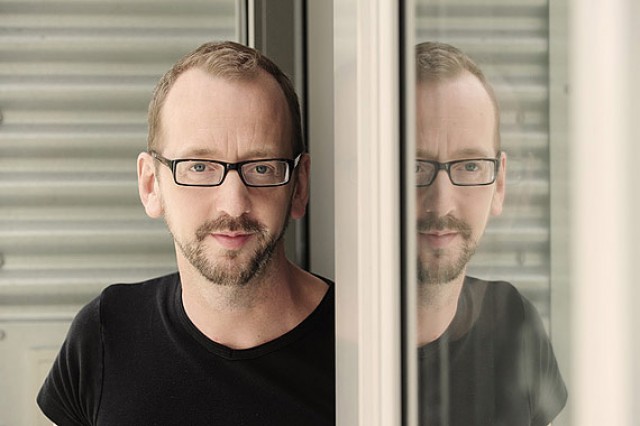
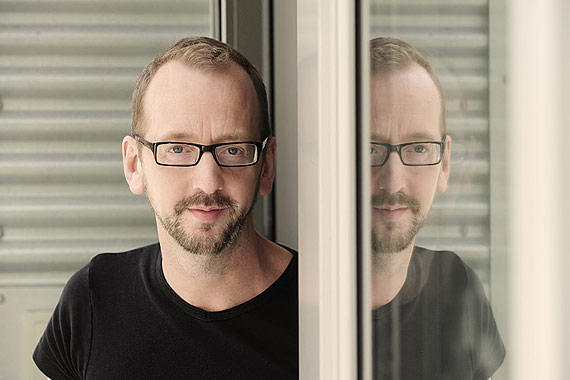
Bessie Award winner John Jasperse speaks openly and honestly about the multiple sides of dance (photo by Chris Taggart)
twi-ny: What have you discovered about yourself and the work in revisiting it?
John Jasperse: I think this work has again taught me something about the power of hope. I would be remiss to not mention something here about aging. I was originally in this work and chose to recast it without me in it. I thought long and hard about the young body vs. older body. I have been concerned that I would be criticized for not being in it this time around, for casting it with younger men. I was clear that redoing Fort Blossom with me and a noticeably younger man would add a whole other dimension to the work that I felt would complicate matters without knowing what to do with this complication. When we made Fort Blossom, it was not with a notion of an idealized body; quite the contrary, it was with the bodies that we had which happened to be of a certain age. The idea to recast the work with peers of my own age did occur to me, to have our bodies reflect the passage of time, but I wasn’t able to complete the picture in my mind of who this would be. And some of the dancing in the second half of the work was challenging for me at the time twelve years ago and would be even more challenging for me now.
So I chose to work with people who were roughly the same age as we were then. Doing it this time around with a younger cast than my current age and being a director from outside, not a dancer in the work, I was concerned that I would be shifted into a role of voyeur. But again, this brings me back to a practice of how you look at something, of what aspect you invest in. And I have found that this can help define both how your experience it and how others experience your intention and your presence in that role. In Fort Blossom revisited (2000/2012), I have really been able to step up to the plate as a director in a way that I have seldom felt in making a new work, because I understand from memory what this terrain is; I’m not trying to invent it all from ether. So while we are trying things, it is as if we have a script for a play and we are playing with how we might interpret it. Or we are developing a scene that is missing and needed by the preexisting context. So I’m more easily able to say what I want because the field is much more delimited than in a totally new work. Contrary to feeling like this is stifling, I have noticed what a relief that is to others to be directed in that way, and I’ve wondered how this experience will color my going back into the studio on new work, where there isn’t a “preexisting script” of sorts.
twi-ny: You’re one of the busiest dancer-choreographers out there; in the last few years alone, you’ve done Becky, Jodi and John at the former Dance Theater Workshop, Truth, Revised Histories, Wishful Thinking, and Flat Out Lies at the Joyce, Misuse Liable to Prosecution and Canyon at BAM, and now Fort Blossom revisited (2000/2012). Are you just constantly going nonstop? I’m getting a picture of you just running and running and running around, like you do in Canyon.
John Jasperse: I’m not sure that I’m any busier than any other dance artist. It is not an easy profession. I am aware of a balancing act, which could also be described as a stretching of bringing together circumstances that don’t naturally meet. That tension of the stretching is likely shared by any dance maker trying to make work today, and certainly by any artist working in New York City. It takes a lot of stamina, or perhaps a better word is “tenacity,” to keep that going. But I feel like I’m a dance artist/choreographer and I want to be doing that right now while I have some vibrancy in that. It is important to find ways to regenerate, and it is important to know that the well can run dry. I’m aware that I’m not so good at pushing back to make the space that I need for regeneration, and I’m aware that can take a toll on the work. I’m also aware that you as an individual are the only person who can take that responsibility on, as the machine of nonprofit arts production is hungry and it must be fed, so there is enormous momentum pushing towards working 24/7.
twi-ny: In regard to nonprofit arts production, several years ago at a post-performance talk you very openly and honestly discussed how difficult it is to make a living as a dancer in New York City. Are things getting better or worse these days?
John Jasperse: I worry that my dealing with these issues and trying to talk openly and honestly about them sounds like I am whining about my situation. I am incredibly grateful for the luck and good fortune that I have had as a dance maker in being able to do what I do. I feel very fortunate to have people interested in the worlds that I create, and I am grateful that this recognition has allowed me to keep working.
I feel that there are shifts in the current climate that ease some of the above pressures and shifts which are more challenging from a pragmatic standpoint. Doris Duke Charitable Trust just announced their first in a series of substantial unrestricted grants for performing artists, US Artists has developed a fellowship program for artists which is filling a gap made in part by the decrease in individual artist funding when the NEA stopped funding artists directly. Many of these opportunities are one-time grants. They create substantial support in a delimited period but don’t/can’t address the ongoing concerns of sustaining a practice over a long period of time.
I would like to see justice in general in the world. I’d like to think that the work that I make is participating in this greater collective effort. Since money is our primary mutually agreed system of valuation, I would like to see more ethics reflected in how money gets spent in the domain of culture. A budget is a value system, and while I have to accept some level of what value others place on things (including the value of my own work to them), I also feel that I need to be proactive in asserting my own values and ethics in budgets, which I am at least partially in control of.
twi-ny: When you do get a chance to slow down and take a step back, what kinds of things do you like to do when you’re not dancing or choreographing?
John Jasperse: I’m still trying to figure that out. I have some energy over the last years in gradually trying to make a calmer living space. I think this is partly trying to create the space for the slowing down to occur in.
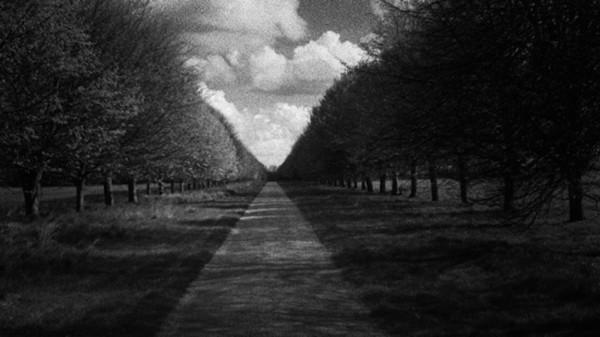
 British director Grant Gee, who has previously made such music documentaries as Meeting People Is Easy (about Radiohead), Demon Days: Live at the Manchester Opera House (with Gorillaz), and Joy Division, takes off on a more literary journey with Patience (After Sebald). Commissioned to examine a written work of fiction or nonfiction, Gee chose to delve into W. G. Maximilian Sebald’s highly influential 1995 book, The Rings of Saturn, about a character named W. G. Sebald who goes on a walk through Suffolk in East Anglia, veering off in his mind in all directions, waxing poetic on history, geography, life, death, literature, and other subjects. “In August 1992,” Sebald begins in the existential travelogue, “when the dog days were drawing to an end, I set off to walk the county of Suffolk, in the hope of dispelling the emptiness that takes hold of me whenever I have completed a long stint of work.” In the film, Gee includes shots of his own feet as he follows Sebald’s path, along with archival footage that relates to the book itself as such writers, artists, and cultural critics as Rick Moody, Tacita Dean, Ian Sinclair, Marina Warner, Adam Phillips, Andrew Motion, and Robert McFarlane talk about Sebald, who died in 2001 at the age of fifty-seven, and the importance of the hard-to-define Rings. To match the older footage, Gee shot much of the new material in a hazy, grainy black and white, with the talking heads occasionally appearing on camera almost in the background. The film includes fascinating snippets of a rare radio interview with Sebald in addition to a narrator reading sections from the book, both of which end up being far more interesting than what many of the other contributors have to say. Reminiscent of Patrick Keiller’s Robinson in Ruins, Robinson in Space, and London, Gee’s Patience fetishizes its subject but lacks the visual and aural poetry of those works, with the walk becoming somewhat tiresome until its offbeat surprise ending. As on most trips, there are beautiful moments, engaging digressions, and gorgeous landscapes to linger over, but they grow fewer and farther between as the story unfolds. Although it’s not necessary to have read the book in order to follow Gee’s wanderings, it would probably help. Patience (After Sebald) opens May 9 at Film Forum, with the 8:20 show on opening night introduced by Sebald friend Moody, and the 8:20 show on May 11 will be introduced by Lynne Sharon Schwartz, editor of The Emergence of Memory: Conversations with W.G. Sebald.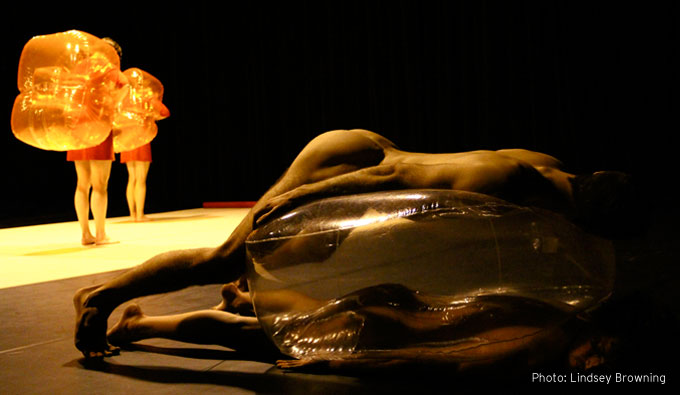


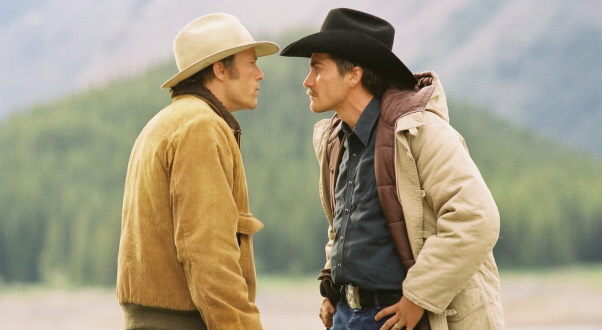
 >In the summer of 1963, two cowboys head up Brokeback Mountain in Wyoming to watch over a herd of sheep. Ennis Del Mar (an outstanding Heath Ledger) and Jack Twist (Jake Gyllenhaal) have never met before, but it doesn’t take long for them to jump into each other’s arms when it gets mighty cold up there. Their brief but powerful affair haunts them when they each return to their lives — Ennis marries his fiancee, Alma (Michelle Williams), and starts a family, while Jack settles down with Lureen (Anne Hathaway) in a clearly loveless relationship. As time moves on, their desperate need to be together only grows stronger — and more dangerous. Based on Annie Proulx’s New Yorker story and directed by Ang Lee (Hulk, The Ice Storm, Crouching Tiger, Hidden Dragon), Brokeback Mountain is an emotional tale of forbidden love that will break your heart. However, it’s not quite as great as you’ve heard; Ennis and Jack’s physical relationship starts way too soon, without enough buildup, and Lee doesn’t quite know how to end it (it’s at least twenty minutes too long). But he gets one heckuva wrenching performance from Ledger as a tough man afraid to let go of traditional values and follow his dreams. Brokeback Mountain is screening May 3 and 6 at MoMA as part of the series “Focus Features: 10th Anniversary Salute,” which pays tribute to the New York-based distributor responsible for such cutting-edge independent films as Michel Gondry’s Eternal Sunshine of the Spotless Mind, Gus Van Sant’s Milk, Lisa Cholodenko’s The Kids Are All Right, and David Cronenberg’s Eastern Promises, all of which are part of this festival, which runs May 3-20. The May 3 screening of Brokeback Mountain will be followed by a Q&A by longtime Lee producer and Focus Features CEO James Schamus.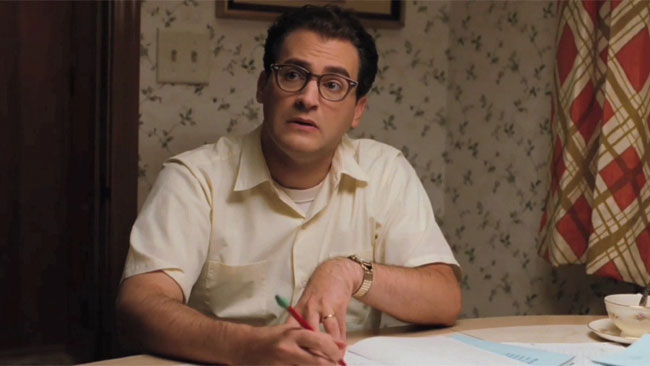
 The Coen brothers take their unique brand of dry, black comedy to a whole new level with A Serious Man. Poor Larry Gopnik (a remarkably even-keeled Michael Stuhlbarg) just keeps getting dumped on: His wife, Judith (Sari Lennick), wants to leave him for, of all people, touchy-feely Sy Ableman (Fred Melamed); his brother, Arthur (Richard Kind), keeps hogging the bathroom so he can drain his cyst; his son, Danny (Aaron Wolf), won’t stop complaining that F-Troop isn’t coming in clearly and is constantly on the run from the school drug dealer (Jon Kaminsky Jr.); his daughter, Sarah (Jessica McManus), wants to get a nose job; one of his students (David Kang) has bribed him for a passing grade; his possible tenure appears to be in jeopardy; and he gets no help at all from a series of funnier and funnier rabbis. But Larry keeps on keepin’ on in the Jewish suburbs of Minnesota in 1967, trying to make a go of it as his woes pile higher and higher. Joel and Ethan Coen have crafted one of their best tales yet, nailing the look and feel of the era, from Hebrew school to Bar Mitzvah practice, from office jobs to parking lots, from the Columbia Record Club to transistor radios, from television antennas to the naked neighbor next door. The Coens get so many things right, you won’t mind the handful of mistakes in the film, and because it’s the Coens, who’s to say at least some of those errors weren’t intentional? A Serious Man is a seriously great film, made by a pair of seriously great filmmakers. And while you don’t have to be Jewish and from Minnesota to fall in love with it, it sure can’t hurt. A Serious Man is screening May 3 and 4 at MoMA as part of the series “Focus Features: 10th Anniversary Salute,” which pays tribute to the New York-based distributor responsible for such cutting-edge breakthrough independent films as Ang Lee’s Brokeback Mountain, Fernando Meirelles’s The Constant Gardener, Roman Polanski’s The Pianist, and Sofia Coppola’s Lost in Translation, all of which are part of this festival, which runs May 3-20.