Joel and Ethan Coen’s Oscar-nominated A SERIOUS MAN kicks off MoMA tribute to Focus Features
A SERIOUS MAN (Joel & Ethan Coen, 2009)
MoMA Film, Museum of Modern Art
11 West 53rd St. between Fifth & Sixth Aves.
Thursday, May 3, and Friday, May 4, 4:00
Series runs May 3-20
Tickets: $12, in person only, may be applied to museum admission within thirty days, same-day screenings free with museum admission, available at Film and Media Desk beginning at 9:30 am
212-708-9400
www.moma.org
www.focusfeatures.com
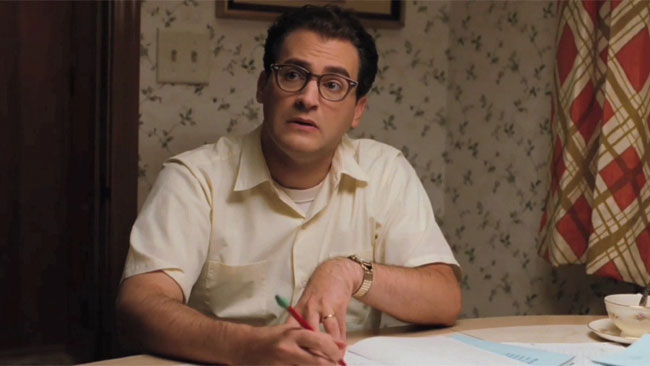
 The Coen brothers take their unique brand of dry, black comedy to a whole new level with A Serious Man. Poor Larry Gopnik (a remarkably even-keeled Michael Stuhlbarg) just keeps getting dumped on: His wife, Judith (Sari Lennick), wants to leave him for, of all people, touchy-feely Sy Ableman (Fred Melamed); his brother, Arthur (Richard Kind), keeps hogging the bathroom so he can drain his cyst; his son, Danny (Aaron Wolf), won’t stop complaining that F-Troop isn’t coming in clearly and is constantly on the run from the school drug dealer (Jon Kaminsky Jr.); his daughter, Sarah (Jessica McManus), wants to get a nose job; one of his students (David Kang) has bribed him for a passing grade; his possible tenure appears to be in jeopardy; and he gets no help at all from a series of funnier and funnier rabbis. But Larry keeps on keepin’ on in the Jewish suburbs of Minnesota in 1967, trying to make a go of it as his woes pile higher and higher. Joel and Ethan Coen have crafted one of their best tales yet, nailing the look and feel of the era, from Hebrew school to Bar Mitzvah practice, from office jobs to parking lots, from the Columbia Record Club to transistor radios, from television antennas to the naked neighbor next door. The Coens get so many things right, you won’t mind the handful of mistakes in the film, and because it’s the Coens, who’s to say at least some of those errors weren’t intentional? A Serious Man is a seriously great film, made by a pair of seriously great filmmakers. And while you don’t have to be Jewish and from Minnesota to fall in love with it, it sure can’t hurt. A Serious Man is screening May 3 and 4 at MoMA as part of the series “Focus Features: 10th Anniversary Salute,” which pays tribute to the New York-based distributor responsible for such cutting-edge breakthrough independent films as Ang Lee’s Brokeback Mountain, Fernando Meirelles’s The Constant Gardener, Roman Polanski’s The Pianist, and Sofia Coppola’s Lost in Translation, all of which are part of this festival, which runs May 3-20.

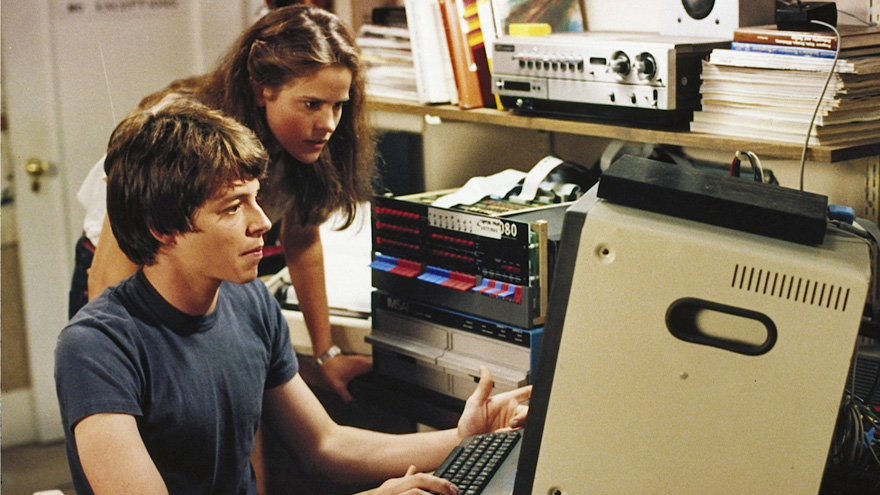
 Everyone has a few movies that they can’t turn off when they find it playing on cable. For us, John Badham’s 1983 computer thriller, WarGames, is one of those flicks. Matthew Broderick stars as David Lightman, a Seattle high school techno-geek who spends most of his time goofing around on his desktop computer. When his extremely cute classmate Jennifer Mack (Ally Sheedy) comes over, he impresses her with his mad skills, first adjusting their grades, then battling a talking computer in a pleasant game of thermonuclear war, and finally booking a trip to Europe. Unfortunately, it turns out David accidentally hacked into the Air Force’s WOPR defense system at NORAD, and soon he and Jennifer are on the run, trying to escape the grasp of blowhard Dr. John McKittrick (Dabney Coleman), who is sure they are enemy spies. As General Beringer (Barry Corbin) keeps lowering the DEFCON level, it becomes more than possible that the world might actually be on the brink of WWIII, all because of what started out as a friendly game of chess. Broderick and Sheedy are absolutely adorable in the lead roles, growing closer and closer as danger lurks around every corner, but it’s Corbin who gets most of the memorable lines, including the classic, “Hell, I’d piss on a spark plug if I thought it’d do any good.” WarGames is having a special twentieth-anniversary screening at the Tribeca Film Festival on April 28 at 1:30, followed by a panel discussion with director Badham, star Sheedy, bitcoin developer Gavin Andresen, retired Air Force intelligence officer Major William Casebeer, and hacker and futurist Pablos Holman, moderated by Craig Hatkoff.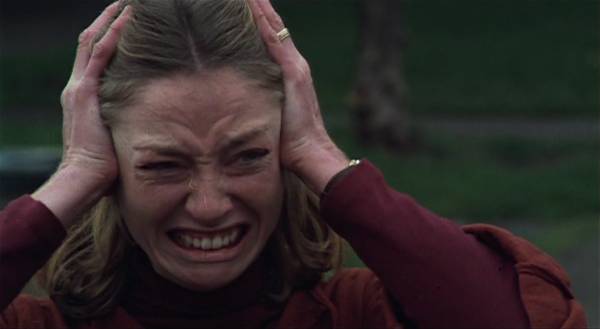
 Based on a magazine serial by Jack Finney, Don Siegel’s 1956 classic, Invasion of the Body Snatchers, was the ultimate thriller about cold war paranoia. Twenty-two years later, in a nation just beginning to come to grips with the failure of the Vietnam War, Philip Kaufman (The Right Stuff, Quills) remade the film, moving the location north to San Francisco from the original’s Los Angeles. When health inspector Matthew Bennell (Donald Sutherland) and lab scientist Elizabeth Driscoll (Brooke Adams) suspect that people, while they sleep, are being replaced by pod replicas, they have a hard time making anyone believe them, especially Dr. David Kibner (Leonary Nimoy), who takes the Freudian route instead. But when Jack and Nancy Bellicec (Jeff Goldblum and Veronica Cartwright) seem to come up with some physical proof, things begin to get far more serious — and much more dangerous. Kaufman’s film is one of the best remakes ever made, paying proper homage to the original while standing up on its own, with an unforgettable ending (as well as an unforgettable dog). It cleverly captures the building selfishness of the late 1970s, which would lead directly into the Reagan era. As an added treat, the film includes a whole bunch of cameos, including Siegel as a taxi driver, Robert Duvall as a priest, and Kevin McCarthy, who starred as Dr. Miles Bennell in the original, still on the run, trying desperately to make someone believe him. The sc-fi thriller is screening at the Museum of the Moving Image as part of the institution’s See It Big! series and will be introduced by Columbia professor and author Annette Insdorf, who will also be signing copies of her latest book, Contemporary Film Directors: Philip Kaufman (University of Illinois Press, March 2012, $22).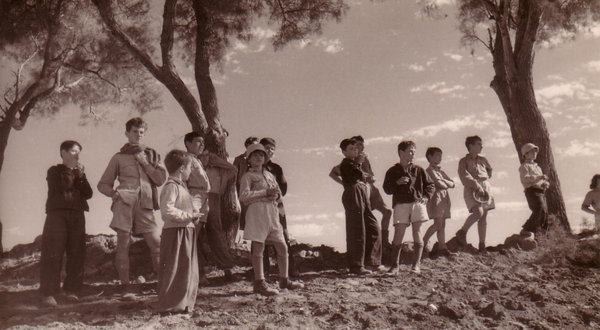
 Inspired by her eighteen-year-old sister’s move to a kibbutz back in 1968, Toby Perl Freilich has written, directed, and produced the compelling documentary Inventing Our Life: The Kibbutz Experiment. Freilich (Secret Lives: Hidden Children & Their Rescuers) traces the hundred-year history of the kibbutz movement in Israel by meeting with three generations of current and former kibbutzniks, who discuss what life was like on such collectives as Degania, Hulda, and Sasa. Mixing in archival footage and black-and-white and color home movies that include some of the very people she is speaking with, Freilich delves into the daily life of the kibbutz, beginning with the earliest immigrants settling a vast wasteland and organizing socialist communes in which most everything was shared; there was no separation of wealth, children were reared and educated together mostly outside the home, and food was eaten in large dining halls that served as the center of the community’s social life. Although critical to the success of the new state of Israel in 1948, the kibbutz grew out of favor by the 1980s as the younger generation began to leave, government support waned, and privatization beckoned. Such historians and philosophers as Avishai Margalit, Moshe Halbertal, and Menachem Brinker place the kibbutz in historical context as men, women, and children talk about what they loved — and hated — about living on a kibbutz. Freilich will be at the Quad for Q&As following the 7:10 screenings on Friday and Saturday and the 5:00 show on Sunday.