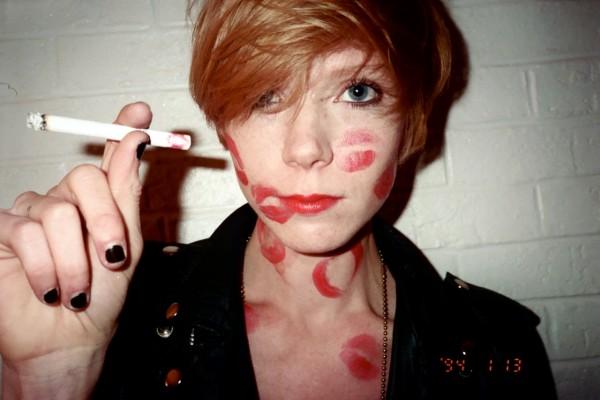
LIssy Trullie will be looking for love and more at Northside tonight (photo by Cory Kennedy)
The third annual Northside Festival heads into day two with its biggest show, an outdoor concert in McCarren Park featuring of Montreal, Jens Lekman, the Thermals, and Beach Fossils that should be hipster central. But don’t pass up the smaller, cheaper events at such venues as Bar Matchless, Cameo Gallery, Europa, Glasslands, Music Hall of Williamsburg, the Knitting Factory, Public Assembly, and Legion. Tonight’s promising roster includes St. Lucia, French Horn Rebellion, Lissy Trullie, Buke and Gase, and a record release party for These United States. In addition, Northside Art begins, with dozens of artists opening up their studios to visitors, and Northside Entrepreneurship continues with such panel discussions as “Fundraising for Niche Startups: Lessons from Urban Agriculture Innovators,” “Make Things Not War,” and “GZA on the Spirit of Disruption and Brooklyn.”
of Montreal, Jens Lekman, the Thermals, Beach Fossils, McCarren Park, $33.50, 5:00
Northside Art: Katie Nielsen, “Many Conversations” group show at Present Company, opening reception 6:00 – midnight, “Space Half Empty” group show at Fowler Arts Collective, opening reception 7:00 – 10:00
Neon Gold Records present: St. Lucia, French Horn Rebellion, Black Light Dinner Party, Slowdance, Lovelife, Nini Fabi, Chrome Canyon (DJ), Cameo Gallery, $15, 7:00
These United States (album release show), Grand Rapids, Your 33 Black Angels, Knitting Factory, $15, 8:00
The Whatever Blog presents: LUFF, Gold Streets, the Planes, Crazy Pills, Alyson Greenfield, Legion, $5, 8:00
PopGun presents: Lissy Trullie, the Young Rapscallions, Motive, Glasslands Gallery, $10, 8:30
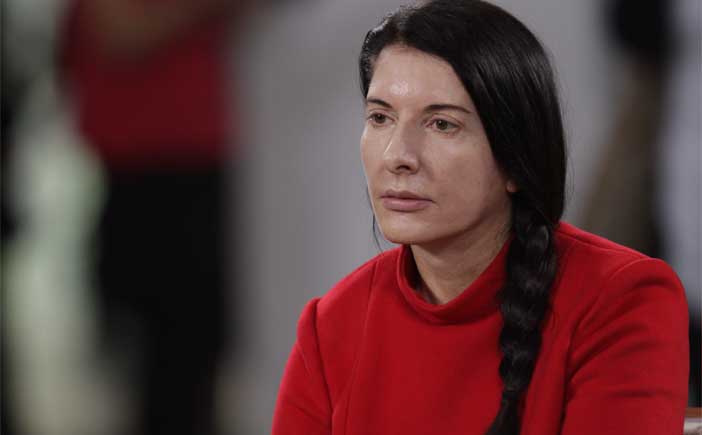
 For forty years, Belgrade-born performance artist Marina Abramović has been presenting cutting-edge, often controversial live works that redefine what art is. For her highly anticipated major career retrospective at MoMA in 2010,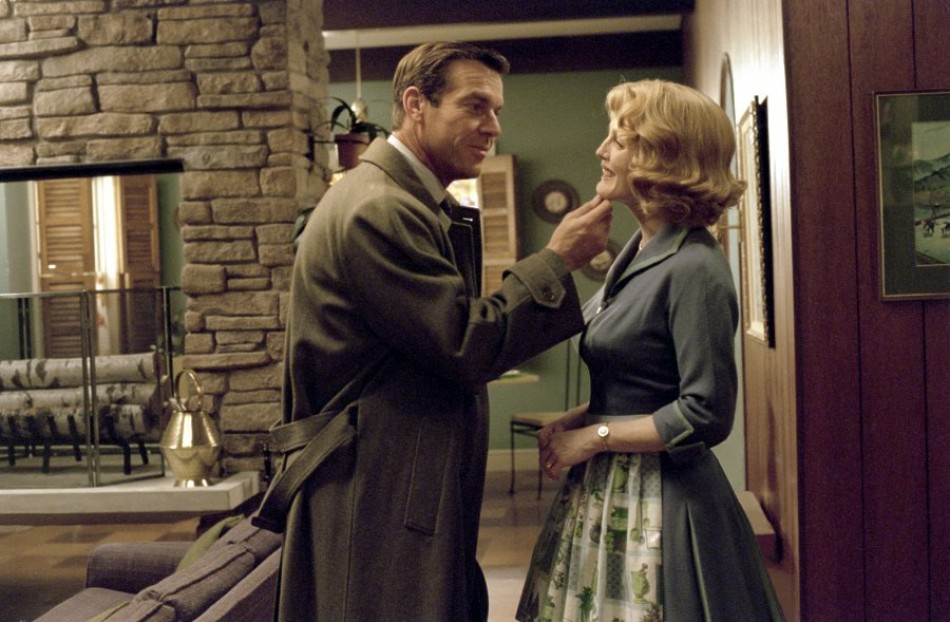
 Douglas Sirk and Thomas Mann would be proud. In Todd Haynes’s wonderfully retro Far from Heaven, Oscar-nominated Julianne Moore is amazing as 1950s housewife Cathy Whitaker, who thinks she has the perfect idyllic suburban life — until she discovers that her husband (Dennis Quaid) has a secret that dare not speak its name. Mr. & Mrs. Magnatech they are not after all. When she starts getting all chummy with the black gardener (Dennis Haysbert), people start talking, of course. Part Imitation of Life, part Death in Venice, and oh-so-original, Haynes’s awesome achievement will have you believing you’re watching a film made in the 1950s, propelled by Elmer Bernstein’s excellent music, Edward Lachman’s remarkable photography, and Mark Friedberg’s terrific production design. Far from Heaven is screening at the Museum of the Moving Image on June 14 at 7:00, with Haynes in person to talk about the film in conjunction with the opening of the exhibition “Persol Magnificent Obsessions: 30 stories of craftsmanship in film,” which focuses on artifacts from works by Ed Harris, Jean-Pierre Jeunet, Alfred Hitchcock, Douglas Trumbull, Ennio Morricone, Dean Tavoularis, Clint Eastwood, Haynes, and others.
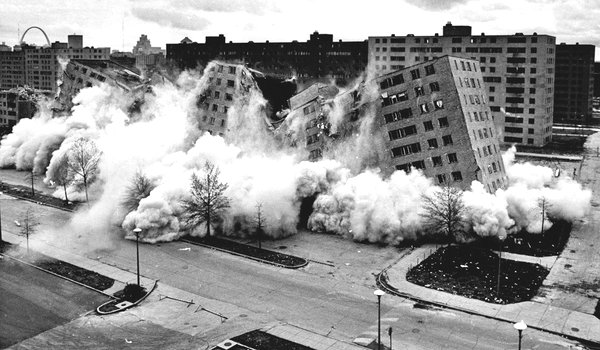
 In 1954, the St. Louis Housing Authority completed a massive urban renewal project, Pruitt-Igoe, a thirty-three-building complex for low-income families that was like a city unto itself. Eighteen years later, mired in crime, violence, poverty, and horrifically unsanitary and unsafe conditions, Pruitt-Igoe was torn down, the implosion famously being shown on news channels around the country as an example of the failure of public policy planning. The short, contentious history of Pruitt-Igoe is explored in the revealing documentary The Pruitt-Igoe Myth. Director Chad Freidrichs (Jandek on Corwood, First Impersonator) revisits Pruitt-Igoe through archival footage, new interviews, and a drive past the site where the iconic housing development, designed by architect Minoru Yamasaki, once stood, revealing the fascinating story of what was first a symbol of the post-WWII boom and then a prime example of the nation’s financial and racial problems of the 1970s. “It was like an oasis in the desert,” Ruby Russell remembers. “I never thought I would live in that kind of a surrounding.” But Brian King, who spent his childhood there, sees it a little differently. “It was hell on earth,” he says. Freidrichs speaks with urban historians Robert Fishman and Joseph Heathcott, sociologist Joyce Ladner, and former residents as they chronologically follow the rise and fall of “the poor man’s penthouse.” Narrated by actor Jason Henry, The Pruitt-Igoe Myth tells a shameful chapter in American history, one that should still be used today as a blueprint on what not to do. “It seemed to me that we were being penalized for being poor,” says former resident Jacqueline Williams. “That caused so much anger.” Named Best Documentary at several festivals and winner of the American Historical Association’s John E. O’Connor Film Award, The Pruitt-Igoe Myth is screening for free at BAMcinématek on June 11 at 6:50, followed by a panel discussion with Freidrichs and urban housing and development experts.