this week in lectures, signings, panel discussions, workshops, and Q&As

NEW YORK ASIAN FILM FESTIVAL: OLDBOY

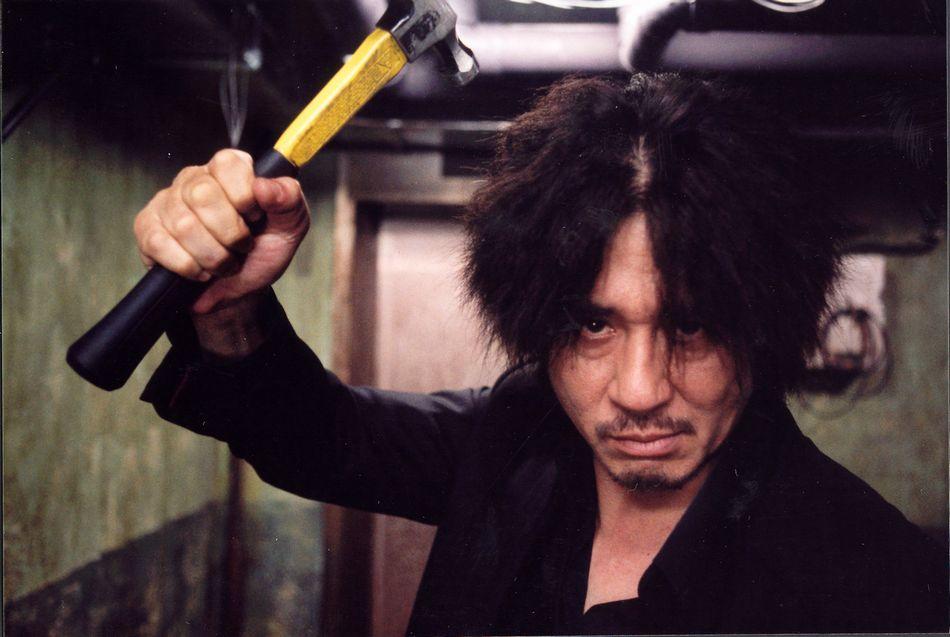
Korean star Choi Min-sik will be honored with his own sidebar at this year’s New York Asian Film Festival

CHOI MIN-SIK: MR. VENGEANCE: OLDBOY (Park Chan-wook, 2003)
Film Society of Lincoln Center, Walter Reade Theater
165 West 65th St. at Amsterdam Ave.
Saturday, June 30, 1:00
Festival runs June 29 – July 12
212-875-5601
www.subwaycinema.com
www.filmlinc.com

The second in director Park Chan-wook’s revenge trilogy (in between Sympathy for Mr. Vengeance and the 2005 New York Film Festival selection Sympathy For Lady Vengeance), Oldboy is a twisted, perverse psychological thriller that won the Grand Prix de Jury at Cannes, among many other international awards. Choi Min-sik (Chihwaseon) stars as Oh Dae-su, a man who has been imprisoned for fifteen years — but he doesn’t know why, or by whom. When he is finally released, his search for the truth becomes part of a conspiracy game, as he can seemingly trust no one. As he gets closer to finding everything out, the gore and terror continues to increase. Choi is outstanding as the wild-haired Dae-su in Park’s awesome rampage of a film, which is not for the faint of heart. On the DVD, the extras include audio commentary and deleted scenes in which Park discusses how embarrassing it is doing audio commentary and showing deleted scenes, but you can hear him discuss Oldboy in person on June 30 at 1:00 with costar Yoon Jin-seo at the Film Society of Lincoln Center, where it is being screened at the special New York Asian Film Festival sidebar event “Choi Min-sik: Mr. Vengeance,” which looks at the fascinating career of the popular Korean actor and activist, who left the business for several years in protest over controversial screen quotas. The series also includes 2001’s Failan, 2005’s Crying Fist, and this year’s Nameless Gangster.
HUMAN RIGHTS WATCH FILM FESTIVAL: CALL ME KUCHU

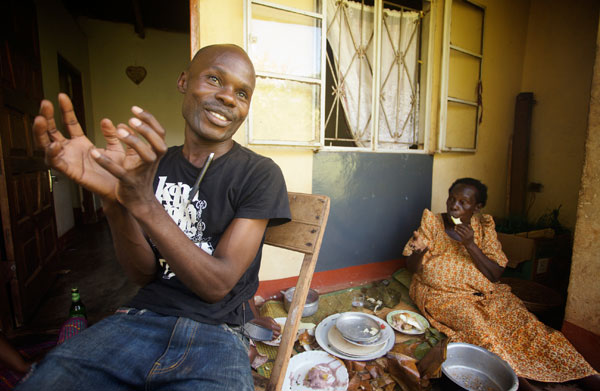
David Kato fights for justice for members of the LGBT community in powerful CALL ME KUCHU

CALL ME KUCHU (Katherine Fairfax Wright & Malike Zouhali-Worrall, 2012)
Film Society of Lincoln Center, Walter Reade Theater
165 West 65th St. at Amsterdam Ave.
Thursday, June 28, 7:00
212-875-5601
www.filmlinc.com
www.callmekuchu.com

Over this past weekend, New York, Chicago, San Francisco, and other cities celebrated gay pride as millions of marchers and spectators came together in parades, marches, and other events in which no one had to hide their sexuality. Such is not the case in Uganda, where many believe that being gay should lead to being executed — and that not turning in a gay friend or relative should result in life in prison. In the heartbreaking yet stirring Call Me Kuchu, codirectors Katherine Fairfax Wright, who also served as editor and photographer, and Malike Zouhali-Worrall, who also produced the award-winning documentary, go deep inside the LGBT community in Kampala, meeting with such gay and lesbian LGBT activists as Naome Ruzindana, Stosh Mugisha, John “Longjones” Abdallah Wambere, and movement leader David Kato, the first openly gay man in Uganda, who risk their lives on a daily basis as they fight for freedom and battle against the Anti-Homosexuality Bill, a draconian measure being strongly pushed by Member of Parliament David Bahati that threatens the lives of anyone and everyone involved in homosexual acts. As white American evangelicals come to Uganda to support the so-called Kill the Gays legislation, expelled Anglican Church bishop Senyonjo becomes a staunch defender of the LGBT community, the only religious leader to do so. Meanwhile, Giles Muhame, managing editor of Uganda’s popular Rolling Stone newspaper, proudly explains his mission of outing gays on the front cover of his publication, hoping that they get arrested, tried, convicted, and hanged by the government. But the activists won’t let that stop them. “If we keep on hiding,” Kato says, “they will say we are not here.” When tragedy strikes, everything is put into frightening perspective. Call Me Kuchu is a powerful examination of personal freedom and individual sexuality, a film that delves into the scary nature of repression, homophobia, and mob violence in an unforgiving, bigoted society. Call Me Kuchu is the closing-night selection of the Human Rights Watch Film Festival at Lincoln Center, where it will be screening on June 28 at 7:00, followed by a reception and Q&A with the directors and Longjones, moderated by Boris O. Dittrich.

MONET’S GARDEN

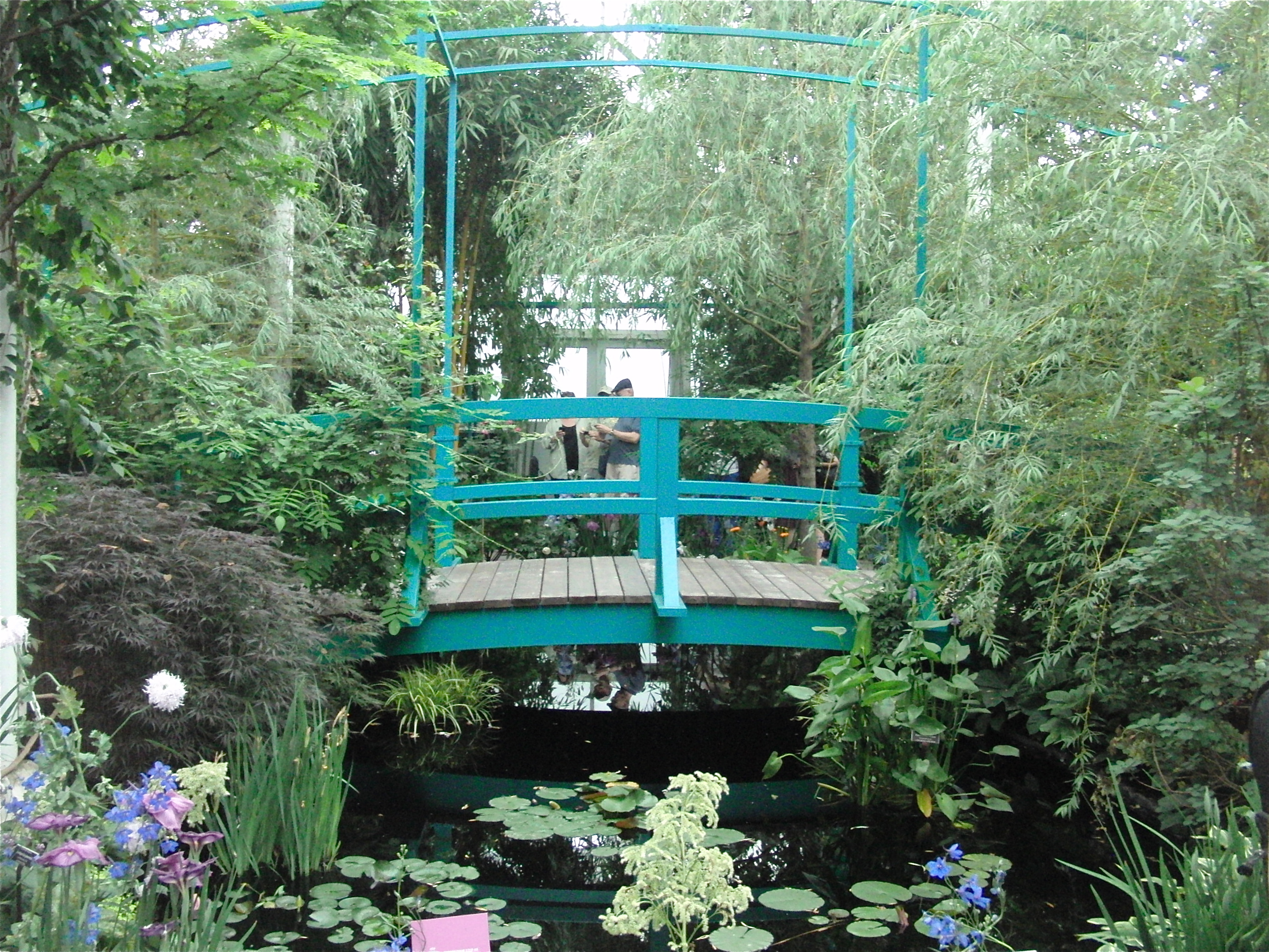
“Monet’s Garden” will change with the seasons at the New York Botanical Garden (photo by twi-ny/mdr)

The New York Botanical Garden
2900 Southern Blvd.
Tuesday – Sunday through October 21, $8-$25
718-817-8700
www.nybg.org
monet’s garden slideshow

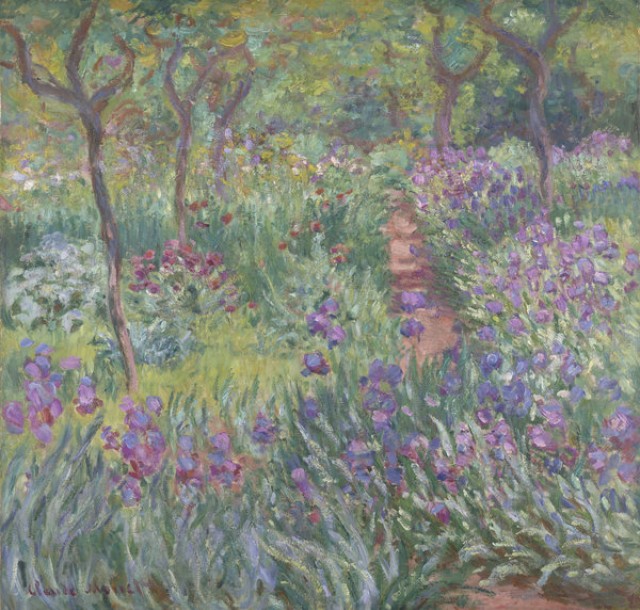
“My most beautiful work of art is my garden,” Impressionist master Claude Monet once explained to his stepson. That statement is at the heart of the wide-ranging New York Botanical Garden exhibition “Monet’s Garden,” on view through October 21 in the Bronx oasis. In 1883, the forty-two-year-old Monet moved with his family into a house in Giverny, where he spent the second half of his life developing magnificent gardens and creating some of his most famous masterpieces, paintings based on the natural world he immersed himself in. The New York Botanical Garden has transformed the Enid A. Haupt Conservatory into a tribute to Monet, complete with a facade of his house and a re-creation of the Grand Allée from the Clos Normand and the famed Japanese footbridge. The long, narrow path is lined with many of the plants that bloomed in Giverny and will change seasonally, beginning with such flowers as irises, morning glories, aubretias, roses, delphiniums, foxgloves, peonies, and poppies. Visitors can walk across the green footbridge, then head outside to the Conservatory Courtyard’s Hardy Pool, which is filled with water lilies and other aquatic plants similar to the ones Monet collected after having been introduced to Nymphaeas by Joseph Bory Latour-Marliac at the 1889 Paris World’s Fair. As you make your way over to the library, you can stroll along the Monet to Mallarmé Poetry Walk, featuring French Symbolist poems, inspired by nature, by Monet contemporaries Charles Baudelaire, Arthur Rimbaud, Paul Verlaine, and Stéphane Mallarmé, who were doing with words what Monet was doing with paint.

Claude Monet, “The Artist’s Garden in Giverny,” oil on canvas, circa 1900 (courtesy Yale University Art Gallery)

The library’s Rondina Gallery is home to several vitrines of photographs of Monet by himself and with friends in the garden in addition to letters, sales receipts, and a glorious palette he used between 1914 and 1926, a work of art in itself. The gallery is also displaying two of Monet’s paintings, the lush and beautiful “The Artist’s Garden in Giverny” and the darker, more mysterious “Irises,” which has never before been shown in the United States. Upon exiting the library, be sure to stop by the Ross Gallery, where Elizabeth Murray’s “Seasons of Giverny” consists of more than two dozen photographs taken by Murray, who has been documenting the garden for a quarter century. Curated by Monet expert Dr. Paul Hayes Tucker, “Monet’s Garden” is supplemented by a series of special events and technological enhancements, including a free iPhone app, an audio tour, weekend screenings of the films The Impressionists: Monet and Monet’s Palate, monthly poetry salons, “Monet’s Friends” chamber music concerts, “Monet Evenings” water lily concerts, home-gardening demonstrations, adult education classes, and “Observe and Create” workshops for children. “I perhaps owe having become a painter to flowers,” Monet wrote in an 1890 letter to art dealer Paul Durand-Ruel. The New York Botanical Garden celebrates both of these aspects of one of the world’s most beloved artists.

PHOTOVILLE

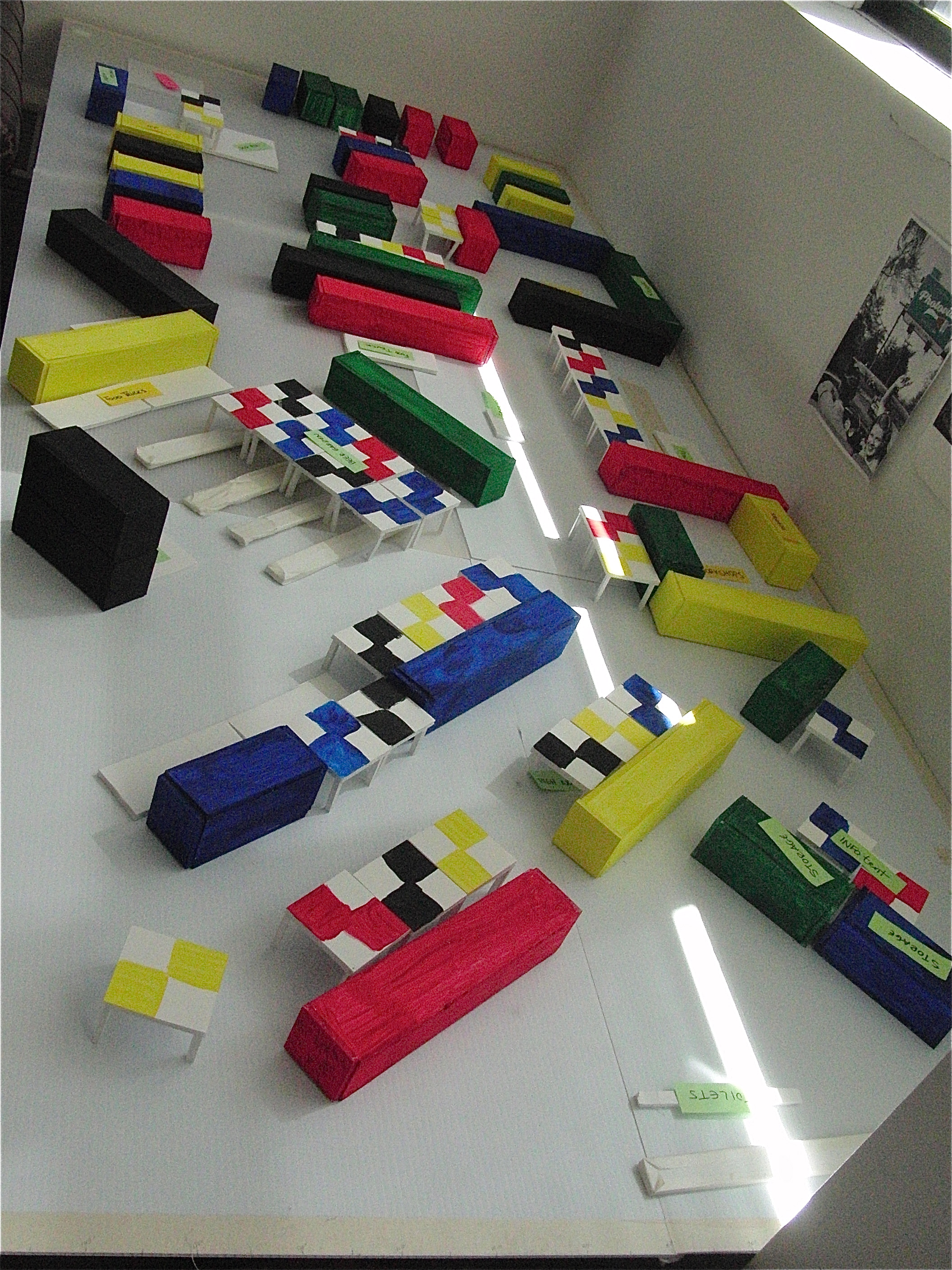
Model of Photoville by Dave Shelley of United Photo Industries (photo by twi-ny/mdr)

Pier 3 Uplands, Brooklyn Bridge Park
June 22 – July 1, free
photovillenyc.org

Following hot on the heels of last month’s New York Photo Festival in DUMBO, the inaugural Photoville begins today, held in a collection of shipping containers across sixty thousand square feet on Pier 3 in Brooklyn Bridge Park. Sponsored by United Photo Industries, the show will feature exhibits from around the world, a series of workshops and talks, a dog run surrounded by a photo fence, an interactive greenhouse with camera flowers designed by André Feliciano, and a beer garden where visitors can down Brooklyn Brewery selections while watching nighttime projections and eating food from a rotating group of trucks. Getting there will be part of the fun, with a display on board the East River Ferry of shots either of the various vessels in the fleet or taken from them. Among the more than two dozen exhibitions are analog photos from Lomography, the multimedia presentation “2084” from SVA, Russell Frederick’s “Dying Breed: Photos of Bedford Stuyvesant,” Bruce Gilden’s “No Place Like Home: Foreclosures in America,” Sim Chi Yin’s “China’s Rat Tribe,” Wyatt Gallery’s “Tent Life: Haiti,” 2012 Pulse Prize winner Sigrid Viir’s “Routine Crusher,” Josh Lehrer’s “Becoming Visible” series of portraits of homeless transgender teens, Lorie Novak’s multimedia installation “Random Interference,” and Candace Gaudiani’s “Between Destinations” photos taken from inside train windows. Advance registration is recommended for such panel discussions and artist talks as “Li Hao: ‘Worshippers’” and “Cruel and Unusual: The Prisons, the Photography or Both?” on June 23, “The New Documentary” and “Human Rights Through Visual Storytelling” on June 24, “The Art of Fashion Portraiture” on June 28, “Photographs Not Taken” on June 29, and “Janelle Lynch: ‘Los Jardines de Mexico’” and “Photography as Activism” on July 1.

NORTHSIDE FILM 2012

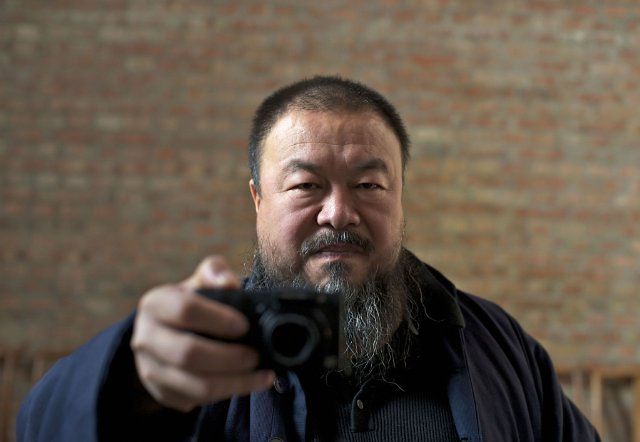
Ai Weiwei documentary makes no apologies at Northside Festival on Wednesday night

indieScreen, 289 Kent Ave.
Nitehawk Cinema, 136 Metropolitan Ave.
UnionDocs, 322 Union Ave.
June 18-21
www.northsidefestival.com

Now that the music section of the Northside Festival is now over, film takes center stage, with four days of screenings at indieScreen, Nitehawk Cinema, and UnionDocs in Williamsburg. Among the dozens of shorts, documentaries, animated films, and narrative dramas are Adam Sherman’s Crazy Eyes, about family strife and unrequited lust, starring Lukas Haas and Madeline Zima; Ryan O’Nan’s Brooklyn Brothers Beat the Best, a coming-of-age road trip story with an all-star cast in small roles; Pema Tseden’s film-festival favorite, Old Dog, about man and beast; James Yaegashi’s Park Slope-set romantic comedy Lefty Loosey Righty Tighty; Sarah Polley’s Take This Waltz, in which Luke Kirby might come between married couple Michele Williams and Seth Rogen; Alison Klayman’s Ai Weiwei: Never Sorry, about the embattled Chinese activist artist; and a special retro screening of Todd Solondz’s indie classic Welcome to the Dollhouse, with many of the presentations followed by Q&As with the filmmakers.

NEW MUSIC SEMINAR

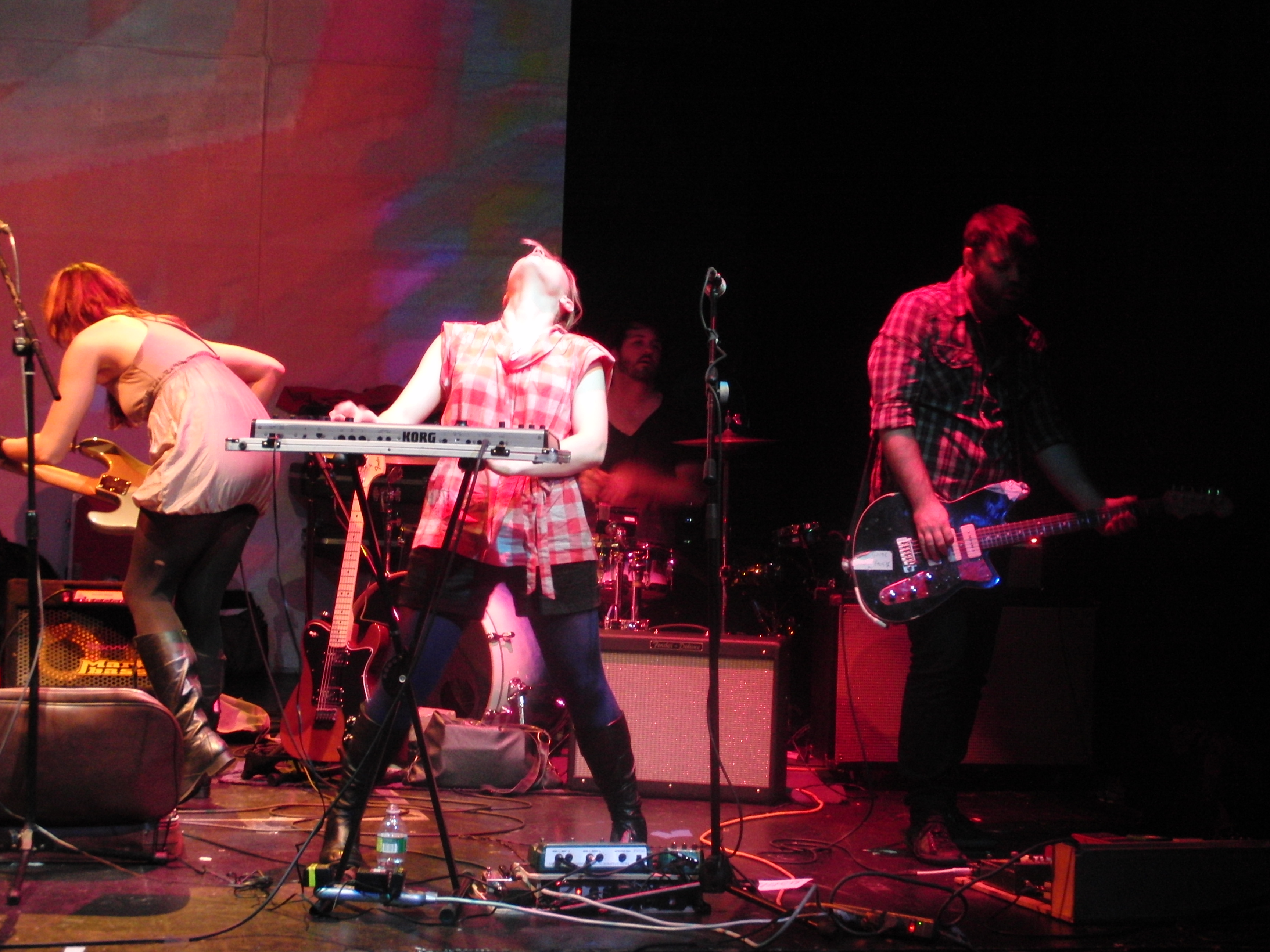
Today the Moon, Tomorrow the Sun will be part of inaugural New Music Seminar, playing Pianos on Monday night (photo by twi-ny/mdr)

Webster Hall (and other venues)
125 East 11th St.
June 17-20, registration $399 (students $249)
Individual concerts: free – $45 (most $20 and under)
212-353-1600
newmusicseminar.com

The inaugural New Music Seminar is dedicated to supporting all kinds of music based on talent and merit alone, “without regard to its financial resources or connections.” As its name implies, it’s a mix of live performances from up-and-coming bands in addition to workshops, lectures, panel discussions, and seminars. Taking place June 17-20 at Webster Hall and other venues, NMS ’12 gets under way Sunday afternoon with a pair of Songwriters Hall of Fame presentations, followed by an opening-night party with the Fiery Sensations, Samantha Slithers, Evan Shinners, the Pierces, Hoodie Allen, and others, along with DJ sets by Andy Rourke of the Smiths. Things get going early Monday morning with opening remarks by Tom Silverman of Tommy Boy Records and Michael J. Huppe of SoundExchange, followed by the keynote address delivered by Bob Pittman of Clear Channel and Sean Parker of Founders Fund. Over the next several days, Peter Asher will conduct “BMI Presents the Songwriters Movement,” with demonstrations by Desmond Child, Ammar Malik, Billy Mann, and Sandy Vee; Yancey Strickler will host “Kickstarter: Amanda Palmer’s Kickstarter Million and What We Can Learn from It”; various radio program directors and brand managers will team up for “The Gods of Radio: Going Beyond Simulcasting”; and ReverbNation’s Jed Carlson will address the question “How Do You Start a Buzz?” There will also be a Meet the Authors event on Tuesday featuring the writers of a dozen books about the music business. In addition to the special programs at Webster Hall, which require registration of $249 to $399, there are dozens of individually ticketed and/or free concerts, including Alice Smith at City Winery, Ziggy Marley and Bajah + the Dry Eye Crew at Irving Plaza, the Mingus Big Band and Terence Blanchard at the Jazz Standard, Rosie Flores, Mare Winningham, and Garland Jeffreys at the Living Room, Electric Sun at Cameo, Travis Porter at S.O.B.’s, the Great Apes at Cake Shop, NinjaSonik and the Dirty Pearls at Santos Party House, and Today the Moon, Tomorrow the Sun at Pianos.

HUMAN RIGHTS WATCH FILM FESTIVAL: THE INVISIBLE WAR

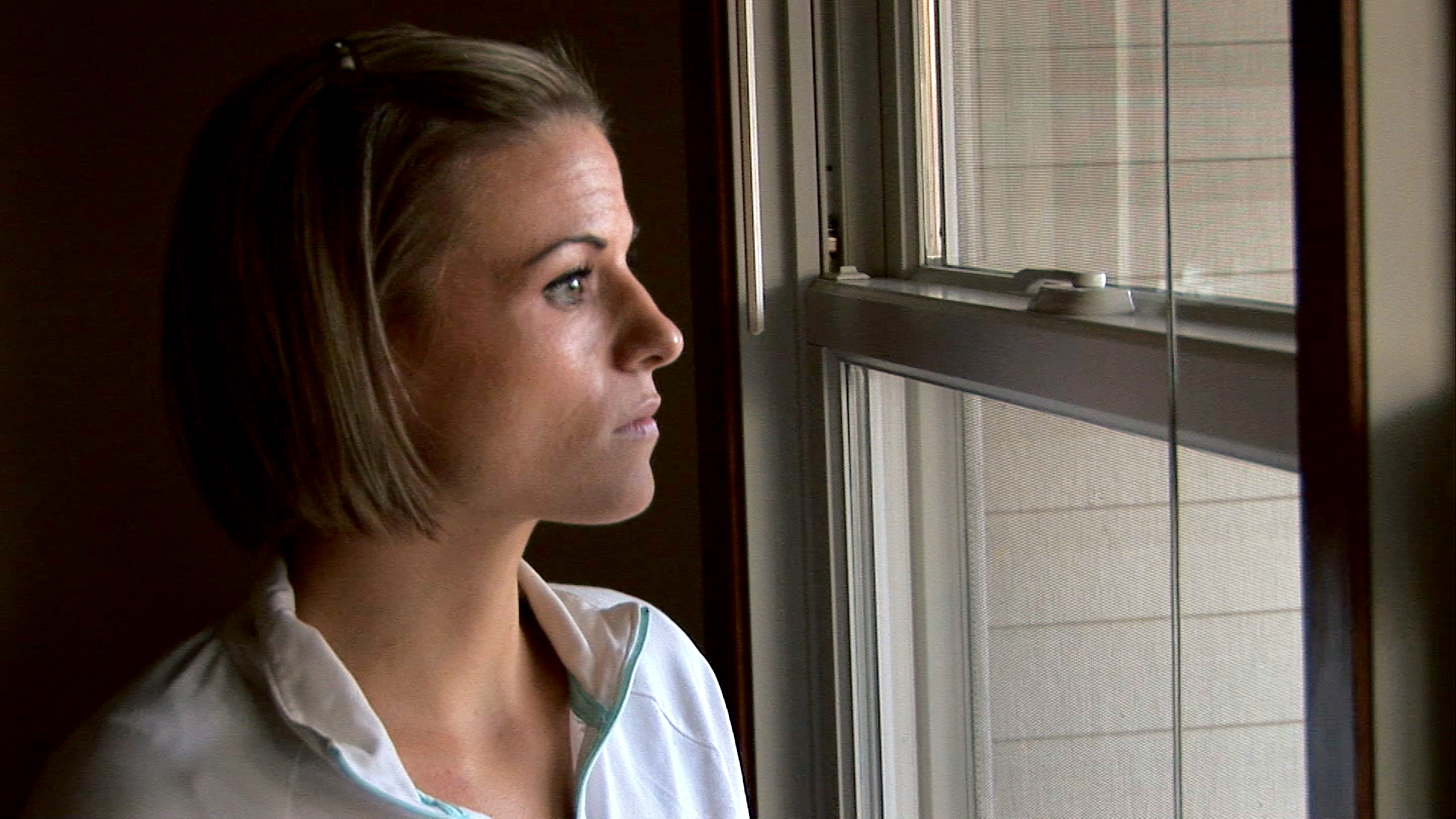
Kori Cioca shares her shocking story in THE INVISIBLE WAR

THE INVISIBLE WAR (Kirby Dick, 2011)
Film Society of Lincoln Center, Walter Reade Theater
165 West 65th St. at Amsterdam Ave.
Monday, June 18, 8:45; Wednesday, June 20, 6:30
Series runs through June 28
212-875-5601
www.filmlinc.com
invisiblewarmovie.com

Kirby Dick’s The Invisible War is one of the bravest, most explosive investigative documentaries you’re ever likely to see. Dick (This Film Is Not Yet Rated) busts open the military’s dirty little secret, revealing that episodes of horrific sexual abuse such as the Tailhook scandal are not an aberration but a prime example of a rape epidemic that seems to an accepted part of military culture. Dick speaks with many women and one man who share their incredible stories, describing in often graphic detail the sexual abuse they suffered, then faced further abuse when they reported what had happened. Their superiors, some of whom were the rapists themselves, either looked the other way, laughed off their allegations as no big deal, or threatened the victims’ careers. Dick includes remarkable Defense Department statistics — the government admits that approximately one out of every five female soldiers suffers sexual abuse and that there were nineteen thousand violent sex crimes in 2010 alone — even as such military officials as Dr. Kaye Whitley, Rear Admiral Anthony Kurta, and Brigadier General Mary Kay Hertog make absurd claims that they are satisfied with the way they are handling the alarming trend. The central figure in the film is Kori Cioca, a former member of the Coast Guard whose face was broken when she was raped by a superior and now keeps getting denied necessary medical services from the VA. Such courageous women as USAF Airman 1st Class Jessica Hinves, former Marine Officer Ariana Klay, USN veteran Trina McDonald, USMC Lieutenant Elle Helmer, USN Lieutenant Paula Coughlin, and even Special Agent Myla Haider of the Army Criminal Investigation Command also open up about the physical and psychological damage the abuse has left on their lives and careers.
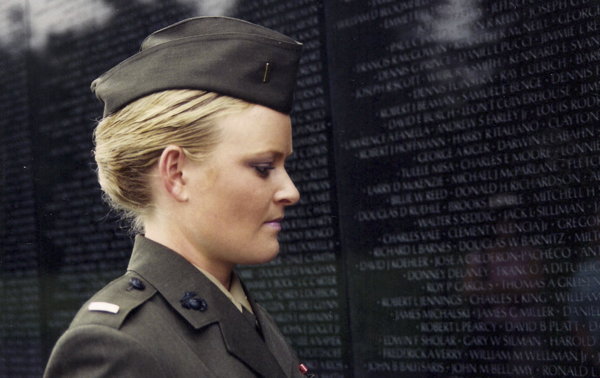
Lieutenant Elle Helmer visits the Vietnam War Memorial in shattering documentary

Inspired by Helen Benedict’s 2007 Salon.com article “The Private War of Women Soldiers,” Dick and producer Amy Ziering (The Memory Thief) have presented a searing indictment of an endemic military culture that has to come to an end, and fast. The Invisible War is screening June 18 and 20 at the Human Rights Watch Film Festival, both of which will be followed by a Q&A with Dick and Ziering, winners of the festival’s Nestor Almendros Award for courage in filmmaking. They will be joined on June 20 by Ariana Klay and her husband, Ben, along with moderator Meghan Rhoad. The festival runs through June 28 at the Film Society of Lincoln Center, highlighting seventeen works divided into five categories: “Health, Development, and the Environment,” “Lesbian, Gay, Bisexual, and Transgender (LGBT) and Migrants’ Rights,” “Personal Testimony and Witnessing,” “Reporting in Crises,” and “Women’s Rights,” with this year’s focus on how one individual or a small group of individuals can help make a difference.