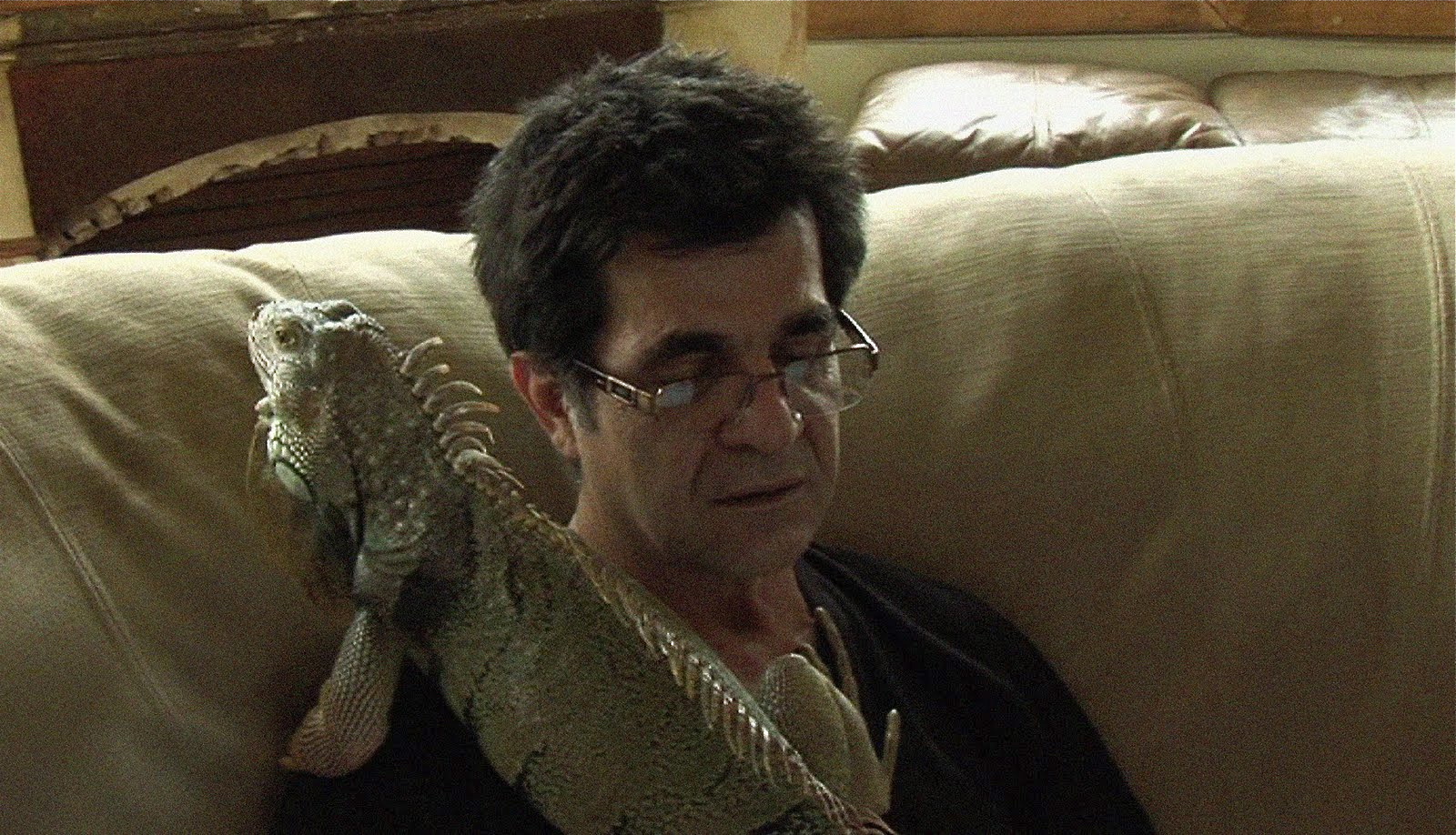
Even house arrest and potential imprisonment cannot stop Iranian auteur Jafar Panahi from telling cinematic stories
THIS IS NOT A FILM (IN FILM NIST) (Jafar Panahi & Mojtaba Mirtahmasb, 2011)
Maysles Cinema
343 Malcolm X Blvd. between 127th & 128th Sts.
January 30-31, $10, 7:30
212-582-6050
www.mayslesinstitute.org
www.thisisnotafilm.net
 “You call this a film?” Jafar Panahi asks rhetorically about halfway through the revealing documentary This Is Not a Film. After several arrests beginning in July 2009 for supporting the opposition party, the highly influential and respected Iranian filmmaker (Crimson Gold, Offside) was convicted in December 2010 for “assembly and colluding with the intention to commit crimes against the country’s national security and propaganda against the Islamic Republic.” Although facing a six-year prison sentence and twenty-year ban on making or writing any kind of movie, Panahi is a born storyteller, so he can’t stop himself, no matter the risks. Under house arrest, Panahi has his friend, fellow director Mojtaba Mirtahmasb (Lady of the Roses), film him with a handheld DV camera over ten days as Panahi plans out his next movie, speaks with his lawyer, lets his pet iguana climb over him, and is asked to watch a neighbor’s dog, taking viewers “behind the scenes of Iranian filmmakers not making films.” Panahi even pulls out his iPhone to take additional video, photographing New Year’s fireworks that sound suspiciously like a military attack. Panahi is calm throughout, never panicking (although he clearly does not want to take care of the barking dog) and not complaining about his situation, which becomes especially poignant as he watches news reports on the earthquake and tsunami disaster in Japan. “But you can’t make a film now anyhow, can you?” Mirtahmasb — who will later be arrested and imprisoned as well — asks at one point. “So what I can’t make a film?” Panahi responds. “That means I ask you to take a film of me? Do you think it will turn into some major work of art?” This Is Not a Film, which was smuggled out of Iran in a USB drive hidden in a birthday cake so it could be shown at Cannes, is indeed a major work of art, an important document of government repression of free speech as well as a fascinating examination of one man’s intense dedication to his art and the creative process. Shortlisted for the Best Documentary Academy Award, This Is Not a Film is screening January 30-31 at the Maysles Institute as part of the “Oscar Buzz” series, which continues February 15-16 with the Oscar-nominated Detropia, followed by Q&As with codirectors Rachel Grady and Heidi Ewing, and culminates with a free Oscar viewing party on February 24 that includes unlimited refills of organic popcorn
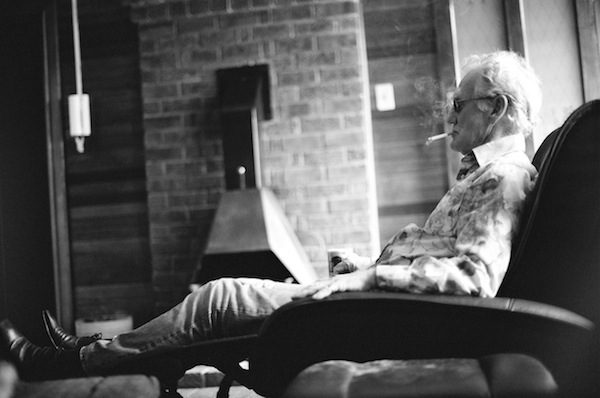
 “A great virtuoso madman,” “scary,” “a motherfucker,” “a lovable rogue,” “a dope addict,” “the hammer of the gods,” “a force of nature,” “horrible,” “the world’s greatest drummer” — these are just some of the terms of affection heaped on legendary drummer Ginger Baker by his friends, relatives, and musical colleagues at the beginning of Jay Bulger’s propulsive documentary, Beware of Mr. Baker. In 2009, after spending three months with Baker and his family in South Africa, Bulger published the in-depth article “The Devil and Ginger Baker” in Rolling Stone. Two years later, Bulger went back to expand the story into a feature-length film, but Baker was not about to make it easy for him, continually insulting his questions, calling him names, and even cracking him in the nose with his cane. “He influenced me as a drummer but not as a person,” Bad Company and Free drummer Simon Kirke says of Baker, an opinion shared by many in this revealing film. Baker might be crotchety, but he also opens up to Bulger, particularly in describing when, as a child during WWII, he would hear the bombings outside, sounds that would have an impact on his playing. Bulger speaks with such other percussionists as the Rolling Stones’ Charlie Watts, Rush’s Neal Peart, the Grateful Dead’s Mickey Hart, Metallica’s Lars Ulrich, the Police’s Stewart Copeland, Vanilla Fudge’s Carmine Appice, and Pink Floyd’s Nick Mason, as well as such former Baker bandmates as Eric Clapton, Jack Bruce, and Steve Winwood, who all rave about Baker’s remarkable abilities behind the kit while also delving into his self-destructive behavior, which led him through a parade of groups, home countries, and spouses. “I don’t know if it’s his ability to move on or it’s his inability to stay,” points out Baker’s third wife, Karen Loucks Rinedollar, a statement that applies to both Baker’s personal and professional lives.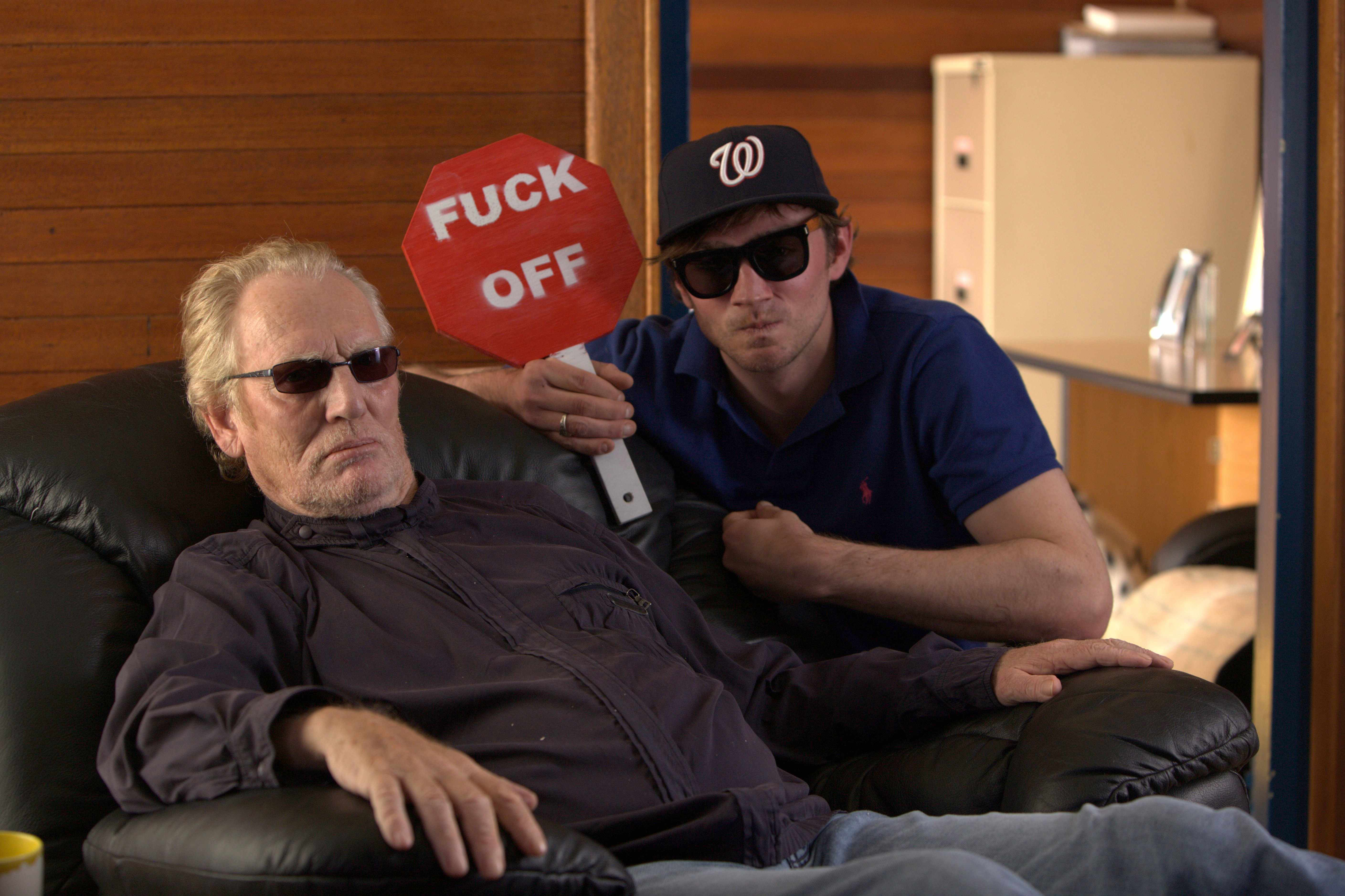

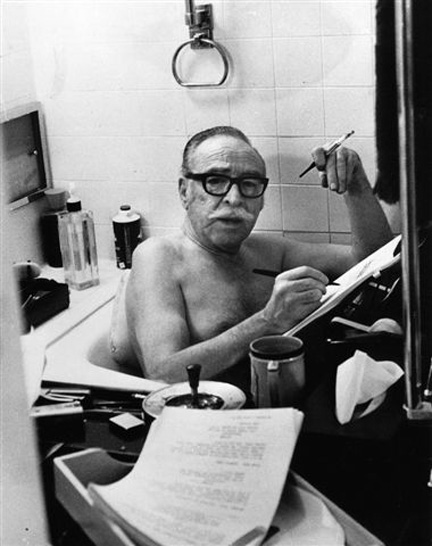
 In 2004-5, Christopher Trumbo’s play Trumbo: Red, White, and Blacklisted, based on the writings of his father, jailed Hollywood Ten screenwriter and novelist Dalton Trumbo (1905-76), toured the country, a staged reading directed by Peter Askin and starring such actors as Nathan Lane, Joe Mantegna, Bill Irwin, Brian Dennehy, and F. Murray Abraham in the title role. Christopher and Askin turned the show into a documentary film, with decidedly mixed results. Although Trumbo’s letters are works of art on their own, funny and incisive, biting and cynical, with a wry, dry sense of humor that summarizes the social and political climate of the cold war era, they lose much of their power when read overdramatically onscreen by Dennehy, Josh Lucas, Paul Giamatti, and others. The camera will linger on Michael Douglas or David Strathairn as they contemplate what they have just read, adding an unnecessary sense of seriousness and importance. It is almost impossible to concentrate on Trumbo’s words as you wonder why Joan Allen was selected, whether Liam Neeson should have tried an American accent, how long and white Donald Sutherland’s hair is, or how many sly gestures Lane will make as he relates a riotous treatise on onanism. Interviews with such friends and colleagues as Manny Azenberg, Kate Lardner, Kirk Douglas, and Trumbo’s children, Christopher and Mitzi, dig deeper into the kind of man Trumbo was, along with archival footage of Trumbo on talk shows, in home movies, and telling the House Un-American Committee to go to hell. Askin tries so hard to focus on the actual words of the Oscar-winning screenwriter behind such classics as Johnny Got His Gun, Roman Holiday, Spartacus, Exodus, and Papillon that he ends up obscuring the portrait as a whole. But oh, what words they are. Trumbo will be screening January 22 at the IFC Center as part of the Tuesday-night series “Stranger than Fiction,” with Askin on hand to participate in a Q&A. The series continues through February 26 with such other documentaries as Neil Barsky’s Koch, Amy Nicholson’s Zipper: Coney Island’s Last Wild Ride, and Terence Nance’s An Oversimplification of Her Beauty.