Documentary looks at the other side of the nation’s capital
THE GET DOWN CAMPAIGN’S NO MORE STIGMA FILM SERIES PRESENTS THE OTHER CITY (Susan Koch, 2010)
Maysles Cinema
343 Malcolm X Blvd. between 127th & 128th Sts.
Thursday, February 7, $10, cocktail reception 6:30, screening 7:30
212-582-6050
www.mayslesinstitute.org
www.theothercity.com
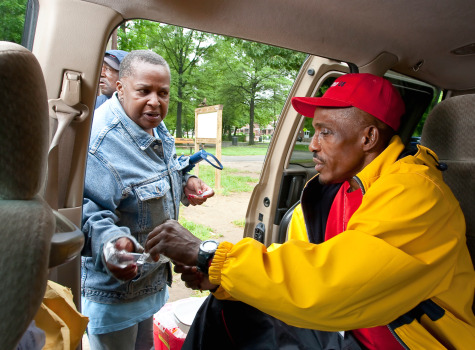
 Washington, DC, might be famous as a city filled with wealthy politicians, international ambassadors, ruthless lobbyists, and tourists visiting some of the finest cultural institutions and historical monuments in the world, but lurkng in the shadows is a very different story. As revealed in Susan Koch’s surprising documentary The Other City, the District of Columbia is in the midst of an HIV/AIDS epidemic that is actually on par with what many African nations are experiencing. Although Koch includes frightening statistics about the crisis — between three and five percent of D.C. residents are living with HIV or AIDS, primarily blacks and Hispanics as well as a growing number of women and teenagers — she focuses on a handful of fascinating protagonists who serve as a microcosm for this rampant epidemic that Washington has turned a blind eye to for three decades. J’Mia Edwards, who got infected by a boyfriend who knew he was HIV+ and didn’t tell her, is a single mother of three doing everything she can to keep her family from becoming homeless, but the red tape suffocates her at every step. Ron Daniels, who got infected from a reused needle, is a recovering addict who every day hands out medical supplies, AIDS tests, and love and hope from a van on the street. Jose Ramirez, who contracted AIDS from his much older lover, shares his story with young Latino immigrants in schools and at La Clinica del Pueblo while also handing out condoms in places where gay men go to have unprotected sex. Koch also visits the Courage to Change Group, former prisoners with HIV/AIDS who meet regularly for emotional support, and Joseph’s House, where HIV/AIDS victims such as Jimmy go to die in peace, surrounded by loved ones and dedicated caregivers. Among those adding their opinions are New York Times columnist Frank Rich, Congresswoman Eleanor Holmes Norton, playwright and activist Larry Kramer, and journalist and documentary coproducer/writer Jose Antonio Vargas, whose reporting in the Washington Post inspired Koch to make the film. The Other City is a devastating look at a horrific crisis going on right under the noses of those who can do the most to do something about it. In honor of African American HIV Awareness Day, The Other City will be having a special screening at the Maysles Institute on February 7 as part of the Get Down Campaign’s No More Stigma Film Series, a self-described “bi-monthly series on sex, sexual identity, and sexual health awareness” curated by Kim J. Ford; there will be a cocktail reception at 6:30 hosted by Richard E. Pellzer II and Ulysses Williams, followed by the film at 7:30.
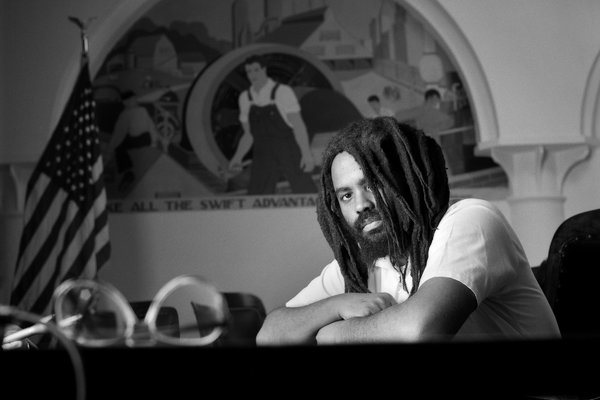
 In Stephen Vittoria’s overly reverential documentary Mumia: Long Distance Revolutionary, actors, activists, journalists, writers, and others celebrate the life and career of the former Wesley Cook, who changed his name to Mumia Abu-Jamal and helped found the Philadelphia wing of the Black Panther Party. The two-hour film begins with right-wing media mouths and the owner of Geno’s Steaks decrying the left’s embracing of Abu-Jamal, who was convicted in 1982 of killing Philadelphia police officer Daniel Faulkner. Denied access to Abu-Jamal in prison, Vittoria uses staged re-creations, archival footage, radio interviews, and such actors as Giancarlo Esposito, Ruby Dee, and Peter Coyote reading from his many books in order to portray him as a dedicated and talented journalist who became a feared target of FBI head J. Edgar Hoover and controversial Philly mayor Frank Rizzo, ultimately being set up for a murder he did not commit. Vittoria does not delve into the details of the case, instead exploring the man himself, with stories from Abu-Jamal’s sister Lydia Barashango, comedian and activist Dick Gregory, wrongly incarcerated boxer Rubin “Hurricane” Carter, philosopher Cornel West, Pulitzer Prize-winning writer Alice Walker, fellow investigative journalist Juan Gonzalez, radical activist Angela Davis, and radio host Amy Goodman, who has broadcast numerous phone interviews with Abu-Jamal, whose 1982 death sentence was commuted to life in prison last year. Mumia: Long Distance Revolutionary is completely one-sided, showing anyone against the golden-throated Abu-Jamal to be crazy as the filmmakers glorify its subject. However, it does reveal the City of Brotherly Love to be a frightening hotbed of violence and racism, even if that is not necessarily news. “Philadelphia has a veneer of liberalism and this whole Quaker mystique,” explains Temple associate professor and journalist Linn Washington. “The reality is it has been this ruthlessly racist city — really from its inception.” Mumia: Long Distance Revolutionary works better when it examines the social history of the civil rights movement and the Black Panthers as covered by Abu-Jamal but falters when it treats his writings as if they were Shakespearean soliloquies. Vittoria will be present at Cinema Village to participate in several Q&As opening weekend, following the 6:30 and 9:00 screenings on Friday and 4:00 and 6:30 shows on Saturday and Sunday.
 Film Forum’s excellent “New Yawk New Wave” series, consisting of more than three dozen independent shorts, features, and documentaries made in and about the Big Apple, came to a close on January 31, setting the stage for one of the most influential and important — and vastly entertaining — works to ever come out of the city,