this week in lectures, signings, panel discussions, workshops, and Q&As

PEN WORLD VOICES FESTIVAL OF INTERNATIONAL LITERATURE

pen world voices

Multiple venues
April 29 – May 5, free – $30
www.worldvoices.pen.org

“Without literature, it’s all just words,” PEN America president Peter Godwin writes in his opening letter to the ninth annual PEN World Voices Festival of International Literature. The organization that fights for freedom and first amendment rights this year celebrates the idea of bravery in art, politics, and personal everyday life during the weeklong festival comprising more than fifty readings, live performances, discussions, workshops, master classes, and more. Below are just some of the many highlights for this annual tribute to the power of the written word and how it can and does make a difference throughout the world, featuring such participants as Martin Amis, Joy Harjo, Paul Auster, Ai Weiwei (via Skype), Salman Rushdie, Sapphire, Sonia Sotomayor, Lewis Lapham, Amy Wilentz, Naomi Wolf, Fiona Shaw, Oskar Eustis, Fran Lebowitz, Edna O’Brien, Colm Tóibín, Lynne Tillman, and many more at such venues as Joe’s Pub, the New School, the Standard, and NYU.

Monday, April 29

Opening Night Reading: Bravery, with A. Igoni Barrett, David Frakt, Darrel Vandeveld, Joy Harjo, Jamaica Kincaid, Ursula Krechel, Earl Lovelace, Vaddey Ratner, Mikhail Shishkin, and Najwan Darwish, hosted by Baratunde Thurston, the Great Hall of the Cooper Union, $20, 7:00

Tuesday, April 30

2013 PEN Literary Gala, with Philip Roth, American Museum of Natural History, $1,000, 7:00

An Evening with McSweeney’s, with Francisco Goldman, Clancy Martin, Wyatt Mason, José Luís Peixoto, Francesco Pacifico, and others, Joe’s Pub, $15, 9:00

Wednesday, May 1

Bravery in Poetry, with Hilton Als, Paul Auster, Henri Cole, Edward Hirsch, Mary Karr, Yusef Komunyakaa, Eileen Myles, Sapphire, and others, Tishman Auditorium, the New School, $30, 7:30

Speaking in Languages on the Edge, with Gillian Clarke, Joy Harjo, Natalio Hernandez, Bob Holman, and others, Joe’s Pub, $15, 9:30

Thursday, May 2

Master/Class: Jamaica Kincaid with Ru Freeman, Tishman Auditorium, the New School, $20, 6:30

Master/Class: Sapphire with Nicole Sealey, Tishman Auditorium, the New School, $20, 8:30

Obsession: Andrew Solomon on Sleep, with Andrew Solomon and Joan Golden-Alexis, hosted by Katie Halper, the Standard, East Village Hotel, $20, 9:00

Friday, May 3

African Writers Workshop with Igoni Barrett, NYU Africa House, 10:00 am

The Literary Mews: Outdoor Indie Book Fair (with readings by Epiphany magazine, Four Way Books, St. Petersburg Review, Gigantic magazine, and Open Letter Books), presentation by photographer Nancy Crampton, Irish Song Workshop with Pádraig Ó Cearúill, Magically Grimm: German Folk Songs with Tine Kindermann & Band, Kasperl-Puppet Theater, The Griot: African Storytelling, and Chapbook Binding, Washington Mews, NYU, free, 10:00 am – 4:00

The Testament of Mary: A Discussion on the Broadway Show, with star Fiona Shaw, writer Colm Tóibín, and director Deborah Warner, moderated by Jeremy McCarter, Tishman Auditorium, the New School, free, 1:30

The Novelist as Truthteller: The Achievement and Legacy of Vasily Grossman, with Agata Tuszynska and Martin Amis, moderated by Edwin Frank, the Public Theater, $15, 6:30

A Literary Safari, with Michal Ajvaz, Nadeem Aslam, Loree Burns, Dror Burstein, Gillian Clarke, Mia Couto, Eduardo Halfon, Natalio Hernandez, Nick Holdstock, Randa Jarrar, John Kenney, Tararith Kho, Jaime Manrique, Margie Orford, Jordi Punti, Noemi Szecsi, Padma Venkatraman, Gerbrand Bakker, James Kelman, Téa Obreht, and others, Westbeth Center for the Arts, $15, 6:30

Master/Class: Fran Lebowitz with A. M. Homes, Tishman Auditorium, the New School, $20, 6:30

Saturday, May 4

Asia Society Presents: Monkey Business, with Paul Auster, Mina Ishikawa, Genichiro Takahashi, and Charles Simic, facilitated by translators Motoyuki Shibata and Ted Goossen, Asia Society, $12, 2:00

Revitalizing Endangered Languages, with Gillian Clarke, Natalio Hernandez, Daniel Kaufman, and Lorna Williams, moderated by Nick Holdstock, the Public Theater, $15, 3:00

An Evening with Lapham’s Quarterly, with Lewis Lapham, Oskar Eustis, Maryann Plunkett, Jay O. Sanders, and others, Joe’s Pub, $15, 7:00

Obsession: Naomi Wolf on Truth, with Naomi Wolf and Ben Schrank, hosted by Katie Halper, the Standard, East Village Hotel, $20, 9:00

Sunday, May 5

Granta: 2013 Best of Young British Novelists, with Hari Kunzru, Sigrid Rausing, John Freeman, and several 2013 Best Young British Novelists, Joe’s Pub, $15, 2:00

Burma: Bones Will Crow, with Khin Aung Aye, James Byrne, and Zeyar Lynn, moderated by Phillip Howze, the Public Theater, $15, 3:00

Arthur Miller Freedom to Write Lecture: Sonia Sotomayor, the Great Hall of the Cooper Union, $30, 5:00
SAKURA MATSURI

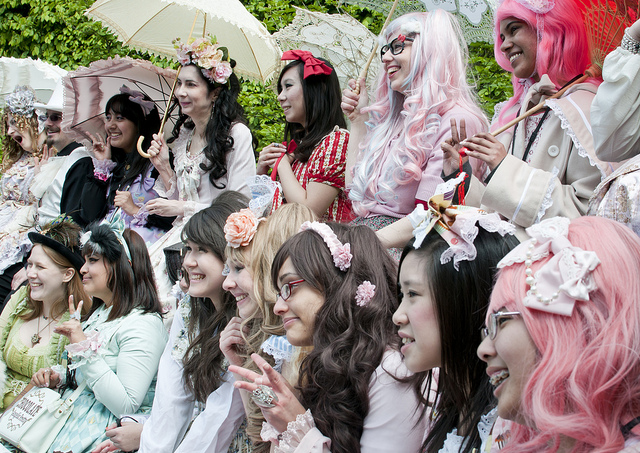
Cosplay is one of the highlights of annual Sakura Matsuri at the Brooklyn Botanic Garden

Cosplay is one of the highlights of annual Sakura Matsuri at the Brooklyn Botanic Garden

Brooklyn Botanic Garden
900 Washington Ave. at Eastern Parkway
Saturday, April 27, and Sunday, April 28, $15-$20 (children under twelve free)
718-623-7200
www.bbg.org

Last weekend, we were in Washington, DC, where we were delighted to see that the cherry trees were in bloom, filling the streets with their beautiful pink and white blossoms, even though it was still unseasonably cold down there. The weather should be a whole lot milder this weekend for the annual Sakura Matsuri at the Brooklyn Botanic Garden, with temperatures nearing seventy for the always charming Cherry Blossom Festival. Over the course of two days, there will be workshops, live music and dance, martial arts demonstrations, flower arranging, arts & crafts, food tastings, art exhibits, comedy, book signings, origami lessons, manga drawing, games, museum tours, and more. Below are only some of the highlights of one of the most enjoyable, though usually extremely crowded, festivals of the year; most programs are held both days.

Saturday

Bonsai Basics for Home Gardeners, Steinhardt Conservatory, 10:00 – 5:00

Ikebana Flower Arrangements with students of master Fumiko Allinder, Rotunda, 10:00 – 5:00

Vintage Kimonos: YokoDana Kimono, Magnolia Plaza, 11:00 – 5:00

Wagashi Japanese Sweet Shop: Minamoto Kitchoan, Magnolia Plaza, 11:00 – 5:00

Uncle Yo: Anime Stand-up Comedy, J-Lounge Stage at Osborne Garden, 12 noon

Manga Drawing and Book Signing with Misako Rocks, Osborne Garden, 12 noon – 4:45

Nihon Buyo classical dance: Dancejapan with Sachiyo Ito, Cherry Esplanade Stage, 1:00

Shogi: Japanese Chess, with New York Shogi Club, Osborne Garden, 1:00– 5:00

All-female marching band: Zakuro Chindon Band featuring vocalist Maiko, Cherry Esplanade Stage, 3:00

Traditional Tea Ceremony: Urasenke Chanoyu Center, Auditorium, 3:00

The BBG Parasol Society Games, J-Lounge Stage at Osborne Garden, 4:30 (preregistration required 2:00 – 4:00)

Sunday

Hana Kanzashi Hair Ornaments, Magnolia Plaza, 11:00 – 5:00

DJ Saiko Mikan’s Tokyo Teleport Station, J-Lounge Stage at Osborne Garden, 11:00 – 5:30

Harie Paper Collage Exhibit, with artist Junko Yamada, Members’ Room Annex, 1:00 – 5:00

Meet Puzzle Craftsman Maki Kaji, Osborne Garden, 1:00 – 5:00

Kuni Mikami and East of the Sun: Jazz-inspired renditions of traditional folk songs, Cherry Esplanade Stage, 2:00

Moku Hanga Woodblock Printing Demonstration with April Vollmer, Steinhardt Conservatory, 2:00

Ukiyo-e Illustration with Jed Henry, Osborne Garden, 3:00

Samurai Sword Soul, Cherry Esplanade Stage, 3:45

Magician Rich Kameda, J-Lounge Stage at Osborne Garden, 4:00

TRIBECA FAMILY FESTIVAL STREET FAIR & TRIBECA/ESPN SPORTS DAY

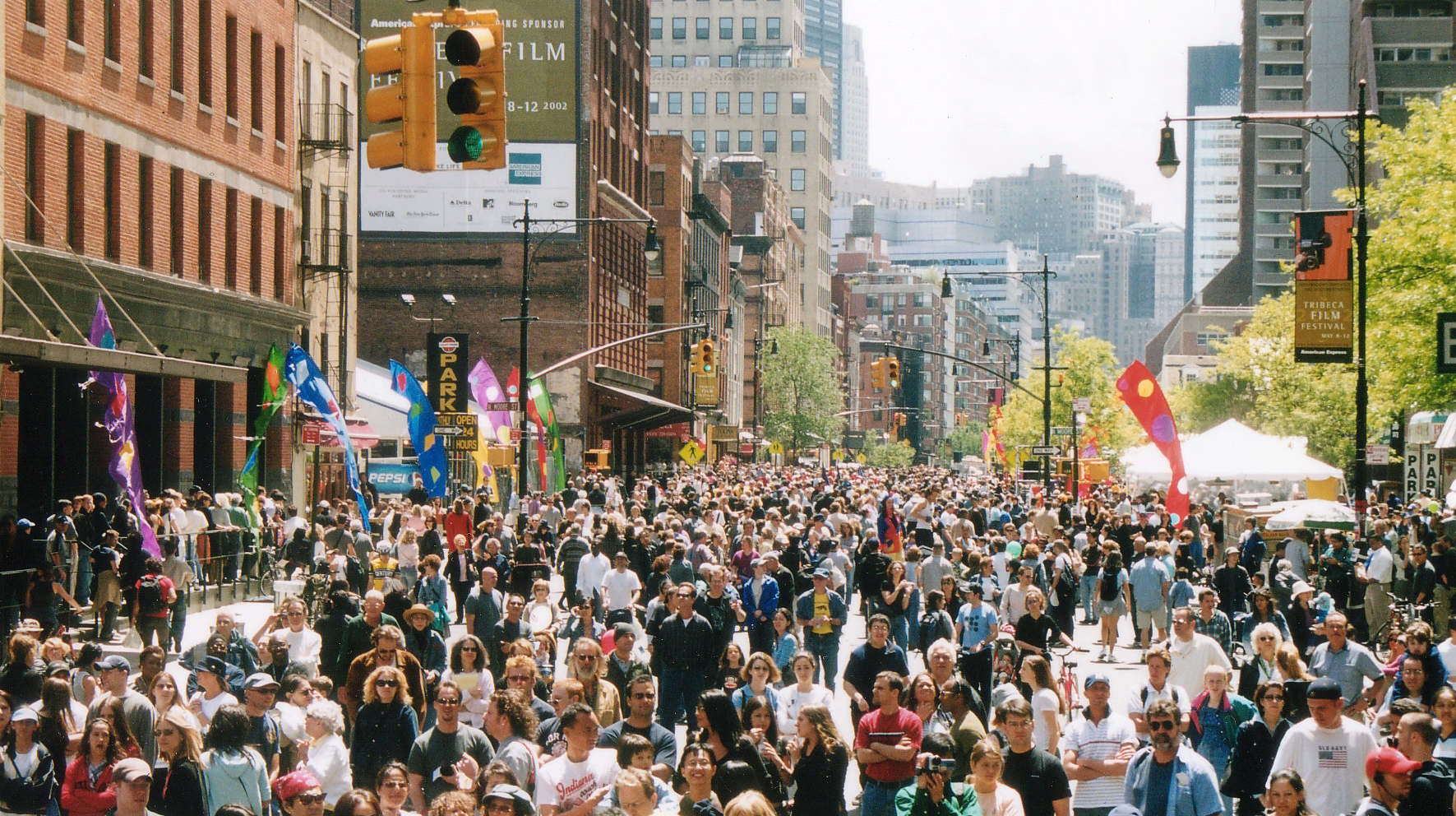
Crowds will flock to TriBeCa for film festival street fair and sports day on Saturday

Crowds will flock to TriBeCa for film festival street fair and sports day on Saturday

Tribeca Family Festival Street Fair: Greenwich St. between Chambers & Hubert Sts., free, 10:00 am – 6:00 pm
Tribeca/ESPN Sports Day: North Moore St. between Greenwich & Wall Sts., free, 10:00 am – 6:00 pm
www.tribecafilm.com/festival

The Tribeca Film Festival celebrates the TriBeCa neighborhood with its annual downtown street fair on April 27, a full day of special activities for children and adults. There will be signature dishes from such local chefs as Morimoto of Tribeca Canvas, Jehangir Mehta of Mehtaphor, Keith Klein of Milk Truck, and Rachel Thebault of Tribeca Treats, along with specialties from Bubby’s, Kutsher’s Cavaniola’s, Grandaisy Bakery, and others; live performances by the Amazing Max, Judy Pancoast, Jody Prusan, LAVA Brooklyn, TADA!, Noel MacNeal, Rolie Polie Guacamole, and the casts of Rock of Ages, Spider-Man Turn Off the Dark, Motown: The Musical, Cinderella, and Kinky Boots; plenty of arts & crafts booths; a green-screen studio backlot and other film-related activities; and a free screening of The Smurfs, with an appearance by Christina Ricci and a sneak peek at The Smurfs 2. Meanwhile, Tribeca/ESPN Sports Day will be taking place nearby, featuring a full slate of sports-related events, including live performances, demonstrations, competitions, and lessons involving basketball, hockey, badminton, fencing, flag football, cricket, jump roping, lacrosse, Ultimate Frisbee, women’s baseball, golf, soccer, sailing, and more, with street teams from the Rangers, the Mets, the Red Bulls, and others.

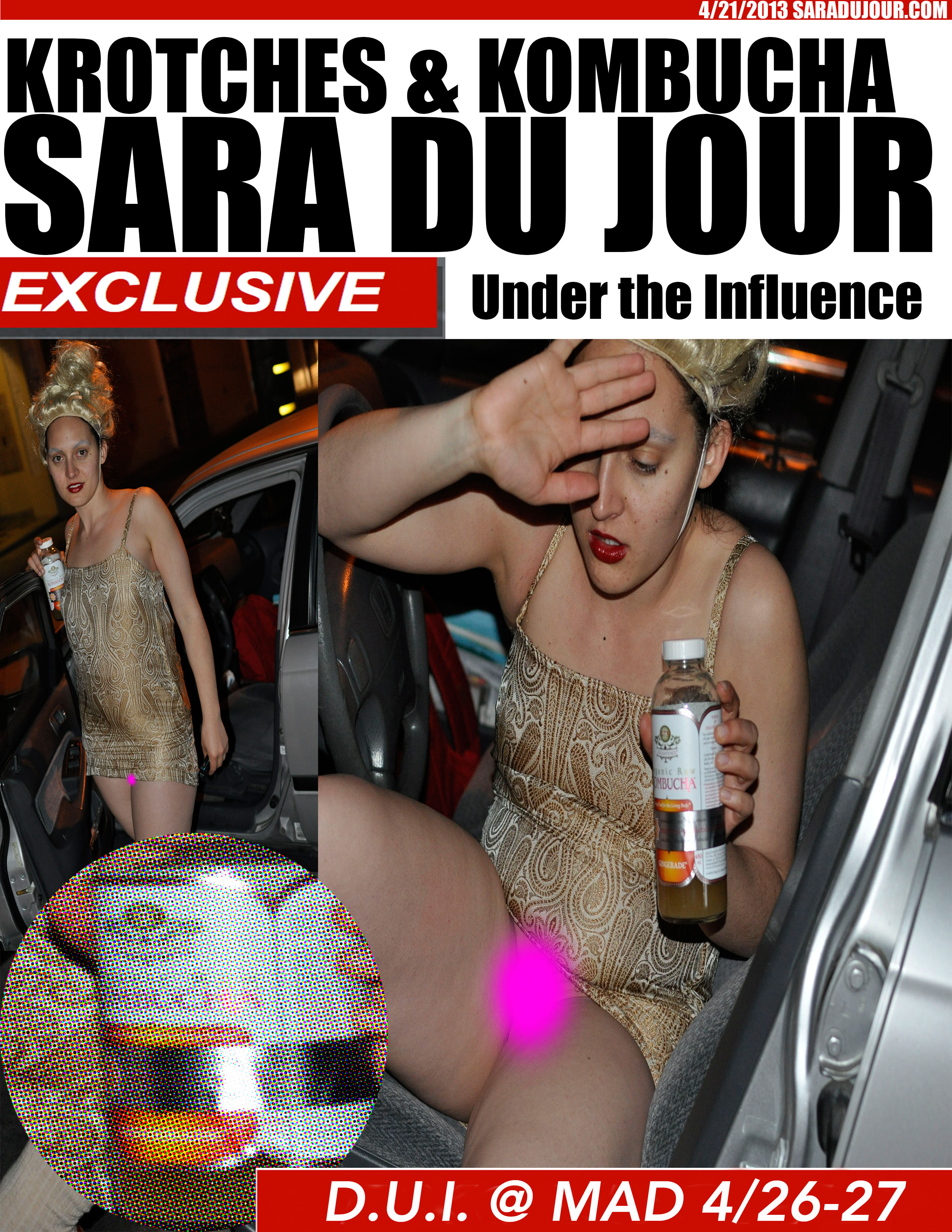
DANCE UNDER THE INFLUENCE: JARED ANGLE, PONTUS LIDBERG, SUSAN MARSHALL & COMPANY, AND SARA DU|JOUR

SARA DU|JOUR

SARA DU|JOUR will be part of influential presentation at Museum of Arts & Design

Museum of Arts & Design
The Theater at MAD
2 Columbus Circle at 58th St. & Broadway
Friday, April 26, and Saturday, April 27, $20, 7:30
800-838-3006
www.madmuseum.org

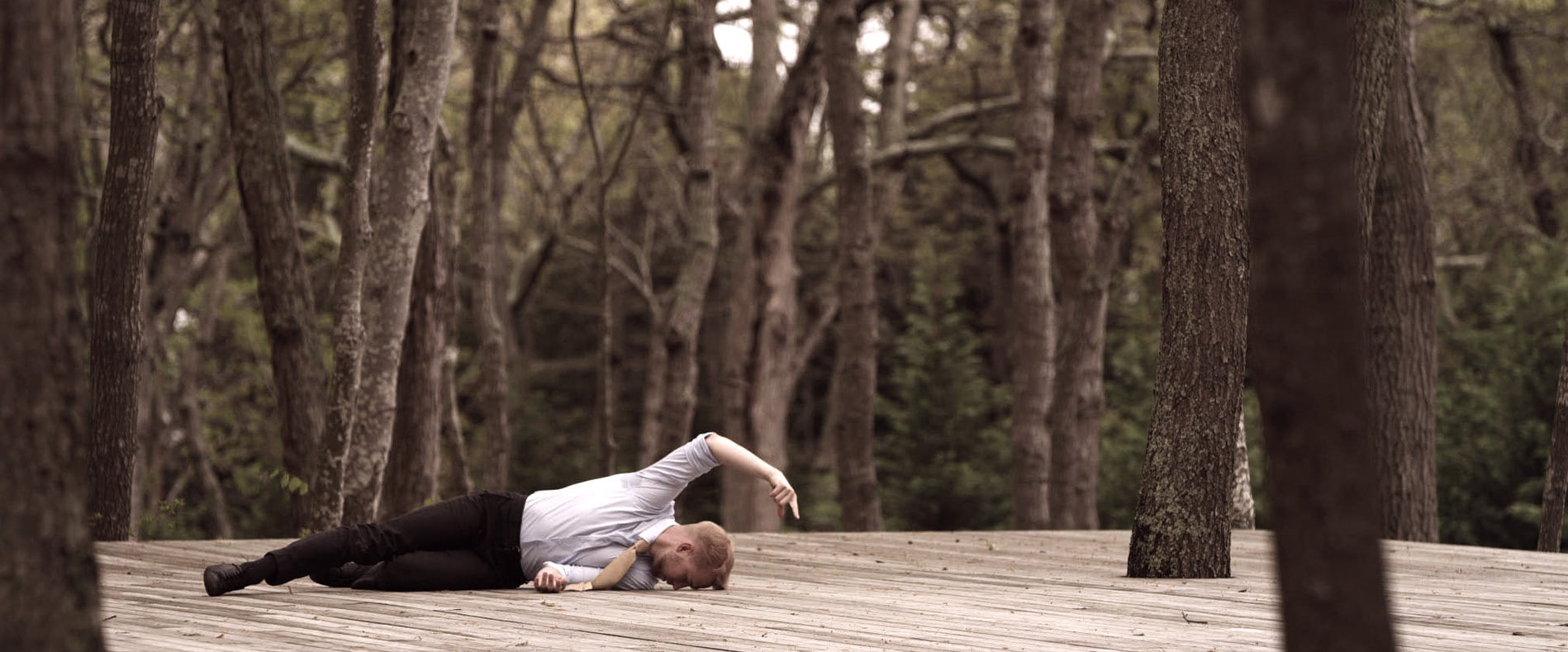
The April edition of the Museum of Arts & Design’s third annual “Dance Under the Influence” series features another wide-ranging, eclectic collection of performers who will present a piece, then discuss the inspirations that went into its creation. New York City Ballet principal Jared Angle, whose brother, Tyler, is also an NYCB principal, blends the classical with the contemporary in the personal exploration Jared. Swedish dancer and choreographer Pontus Lidberg, the current resident artistic director of Morphoses and a filmmaker who has mounted productions for stage and screen, will show a duet from Warriors and a solo from Within (Labyrinth Within). For more than a quarter century, Susan Marshall & Company has been incorporating gesture, pattern, spoken word, and multimedia elements into such pieces as Arms, Kiss, and Frame Dances, which takes place in, out of, and through wooden boxes. And the wild and unpredictable bicoastal duo SARA DU|JOUR, consisting of Jordan Isadore and Nicole Bridgens, answer the question “What would happen if the extremes and ridiculousness of pop celebrity were to infiltrate the contemporary dance world?”

WITHIN (LABYRINTH WITHIN) features choreographer Pontus Lidberg performing a solo at Jacob’s Pillow (photo by Martin Nisser)

WITHIN (LABYRINTH WITHIN) features choreographer Pontus Lidberg performing a solo at Jacob’s Pillow (photo by Martin Nisser)

Update: The April 26 edition of Dance Under the Influence was a wide-ranging evening of movement and discussion on the small stage in the Museum of Arts & Design’s downstairs theater. Actually, the show begins upstairs in the lobby, where Susan Marshall & Company dancer Luke Miller performs Voice 1, standing silently in front of a microphone, moving slowly in place as people pass by; Darrin Wright does the same thing at the entrance to the theater. The presentation then kicked off with Morphoses resident artistic director Pontus Lidberg screening excerpts from three of his films: The Rain, in which two male dancers get hot and heavy in an erotic duet in a room being pounded by rain; Within (Labyrinth Within), in which Lidberg dances across an outdoor stage at Jacob’s Pillow; and Study No. 2, a beautiful underwater solo with an exciting twist at the end. That was followed by NYCB principal Jared Angle’s Jared, a work choreographed by Elena Demyanenko specifically for that shallow stage space as Angle makes his debut as a solo contemporary dancer, set to Elizabeth Hoffman’s “Soundendipities.” After a brief intermission, Susan Marshall & Company showed an excerpt from the work-in-progress Unstrung, including a passage with Christopher Adams, Kristin Clotfelter, Miller, Chin-I Chang, and Wright congregated at the middle of the shallow stage, moving left to right to music by David Lang and the Antlers. And then came the real showstopper, as SARA DU|JOUR’s Jordan Isadore and TJ Spaur exploded with Les Saras, a wild and funky in-your-face dance as the two hairy-legged performers rock the top knot, evoking classic girl groups and vintage photographs from the 1940s and ’50s as they prance about on the stage, with Isadore making riotous faces. Afterward, all of the contributors sat down for a fun Q&A moderated by series curator Valerie Gladstone. The MAD series concludes May 17-18 with Doug Elkins, Rashaun Mitchell, Ramya Ramnarayan, and Blakely White-McGuire.

THE MODERN SCHOOL OF FILM: NAKED

NAKED

Mike Leigh’s award-winning NAKED will have a special screening at the IFC Center on April 25

NAKED (Mike Leigh, 1993)
IFC Center
323 Sixth Ave. at West Third St.
Thursday, April 25, 7:00
212-924-7771
www.ifccenter.com

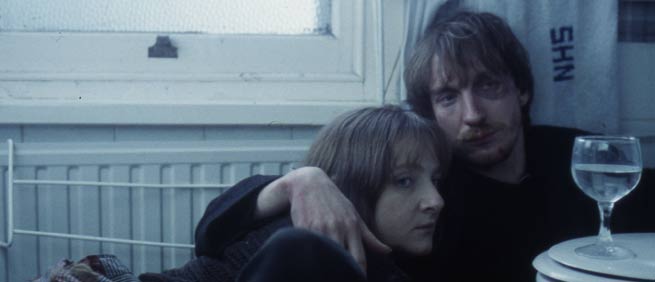
In writer-director Mike Leigh’s controversial Naked, David Thewlis is mesmerizing as Johnny, a drifter on the run from Manchester who shows up at the London apartment of an old girlfriend, Louise (Lynda Steadman), and develops a strange attraction for Louise’s roommate, Sophie (the excellent Katrin Cartlidge). Leigh, who earned Best Director honors at Cannes for the film, fills Naked with desperate characters, desolate streets, and plenty of graphic, lurid detail. Thewlis won numerous acting awards for his brilliant portrayal of a very difficult character for the audience to care about, especially in a film that runs more than two hours. Sitting through Naked is an exhausting, infuriating, ultimately rewarding experience; among the best scenes are the philosophical conversations Johnny has with the night watchman (Peter Wight). Naked is screening in a high-definition digital projection on April 25 as part of the IFC Center series “The Modern School of Film” and will be followed by a discussion with Iron & Wine’s Sam Beam.
TWI-NY TALK: NICK VAUGHAN & JAKE MARGOLIN: A MARRIAGE: 1 (SUBURBIA)

Nick and Jake

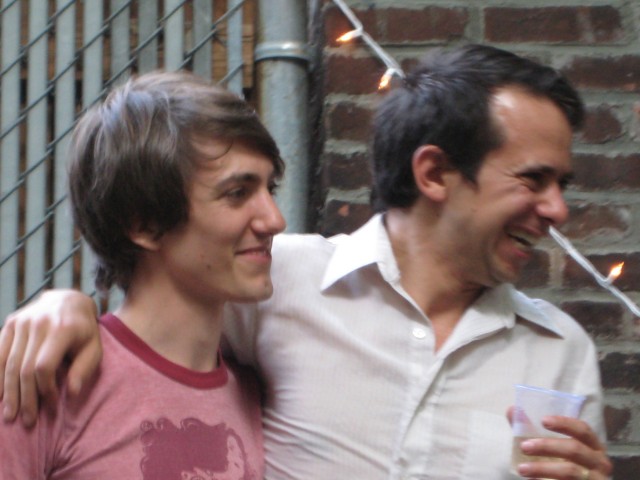
Nick and Jake collaborate both personally and professionally, using their life together as a starting point in their art

HERE
145 Sixth Ave. at Dominick St.
April 23 – May 4 (Tuesday – Sunday, 8:30), $10 in advance, $20 within twenty-four hours
Installation free Tuesday – Sunday 2:00 – 10:00
212-647-0202
www.here.org
www.nickandjakestudio.com

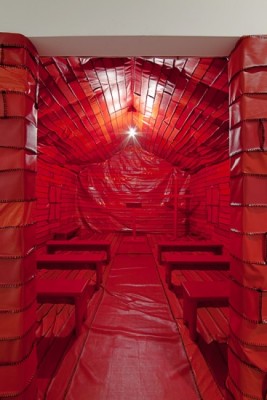
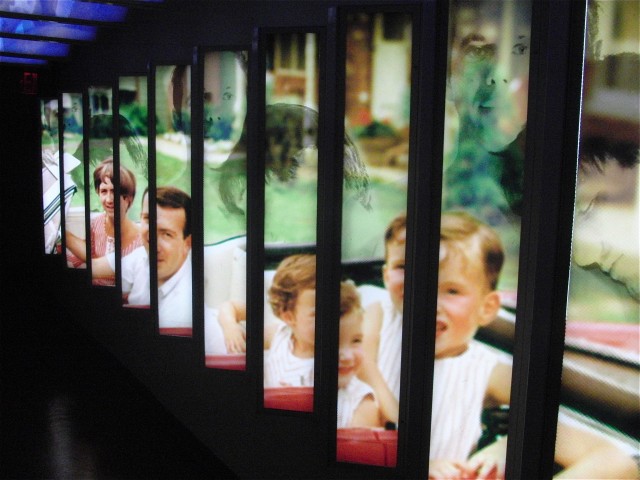
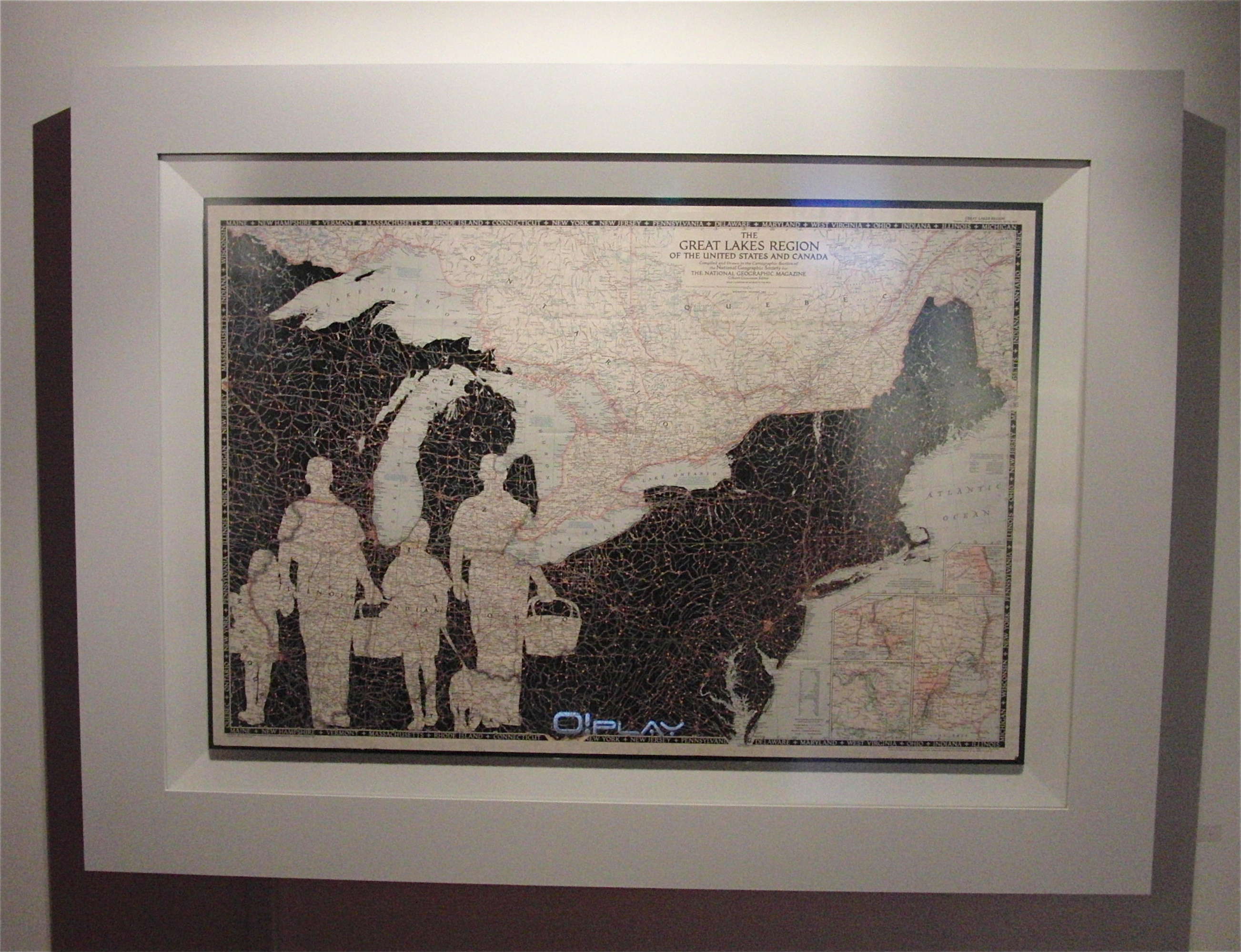
Married couple and professional partners Nick Vaughan and Jake Margolin have taken over HERE, filling the downtown arts center with the multimedia immersive presentation A Marriage: 1 (Suburbia). Employing the visual sensibility of Gilbert & George, Nick and Jake examine what has become of the American Dream and the concept of the nuclear family through photography, video, performance, and installation that will continue to evolve from April 23 through May 4. In the art exhibit, which is free, they employ maps that have been reconfigured to portray superimposed families on them and/or video of the two men in the background; pages from John Updike’s Rabbit Run torn out and put on a wall, with highlighted phrases and blue lines connecting them to tell a different kind of suburban story; a hallway of colorful light boxes depicting the conventional 1950s ideal of the American family; and wall sketches that will be added to over the course of the two weeks. Every night will feature a sixty-minute live show ($10 in advance, $20 within twenty-four hours) featuring text written by Jessica Almasy and performed by Jess Barbagallo, with long-duration actions by Brandon Hutchinson and Libby King (April 23-25), Sean Donovan (April 26-30), and Chantal Pavageaux (May 1-4); brand-new Guggenheim Fellow and award-winning choreographer Faye Driscoll serves as consulting director.

“It was super fun for me to work with Nick and Jake; they are both so earnest, humble, and smart and amazingly open inside their process,” says Driscoll. “I loved working on ideas around performance in a visual art context; it opened up my thinking around my own work and gave me some new structures of making, and permission for a different type of exploration. But I think it really helped that all three of us have backgrounds in working in theater. We very easily found a common language around dramaturgical questions and rigor. And we all have an easy willingness to engage in the labor involved in making things. We did a lot of figuring out on our feet, which is how I think best. I think in A Marriage there is clear play with that merged and excessive space of togetherness of coupledom, but as opposed to the work just becoming insular and exclusive, there is actually something deeply generous and activist happening in what Nick and Jake are creating.” At the center of that togetherness and activism is an exploration of America’s changing relationship with same-sex marriage. Nick and Jake, who are still part of the TEAM arts collective where they met, discussed that and more as they prepared for the start of this fascinating undertaking.

twi-ny: Did either of you grow up in the suburbs?

Jake: Neither of us grew up in the suburbs. We both grew up in small university cities, Nick in Fort Collins, Colorado, and I in Berkeley, California. I think it’s safe to say that we both grew up with a healthy distrust of the suburbs — growing up, my family hosted a singing group at our house in which Malvina Reynolds’s “Little Boxes” was a pretty frequent request. Growing up with parents who had no interest in the suburban version of the American Dream is part of why I grew up thinking that the suburbs were for other people. But I also felt that because I was gay it wasn’t an option, even if I wanted it. I grew up knowing a fair number of kids who lived in the suburbs of the Bay Area, and many of them were nonwhite, and not wealthy, which I mention only to say that I didn’t have a view of the suburbs as a place that was exclusively white or monied. But my sense of it was that the suburbs were exclusively heterosexual. And as I realized that I didn’t fit into that, I had a real sense that even had I wanted anything to do with the suburbs, I wouldn’t be welcome — that the ’burbs weren’t for people like me.

twi-ny: What do you think has happened to that American Dream since your were kids?

Jake: When we talk about the “American Dream” we are talking about the heteronormative version that aspires to a suburban nuclear family. There are as many different versions of the American Dream as there are people in this country, so I just want to clarify that we are using it as a cliché. And I think a major shift has happened since we were kids, which is that this version of the American Dream is now opened up to include LGBTQ people. Even growing up in a hyperliberal place, I had a sense of gay people as being abnormal – a deviance from the norm that are tolerated because Berkeleyites are tolerant and open-minded people, but still a group of people who are in some way going to have to live on the outside of mainstream society. As many things about gay culture have been accepted into the mainstream since we were kids, now that set of aspirations that were traditionally exclusively for heterosexuals, aspirations towards suburbia, the nuclear family, and all of that – are on the table.

Nick and Jake explore the suburban ideal of the American Dream in immersive multimedia installation (photo by twi-ny/mdr)

Nick and Jake explore the suburban ideal of the American Dream in immersive multimedia installation (photo by twi-ny/mdr)

twi-ny: An earlier part of A Marriage at HERE included your watching twenty hours of Fox News. What are your feelings toward America’s evolving relationship with same-sex marriage, primarily as portrayed in the media?

Jake: That piece was trying to get at how we are surrounded by these media portrayals of same-sex marriage, almost swimming in these sound bites. And we’d been floored by the general tone on Fox News about same-sex marriage – it felt so belittling whenever we saw it. That said, I should fess up that Nick and I don’t own a TV, and other than when we are on tour with the TEAM or other projects (or holing up in motels to make art pieces), we watch very little TV. Probably my greatest exposure to how the media portrays same-sex marriage is the package of clippings from the New York Times and various Bay Area publications on the topic that my mother sends us every few months.

In general I am so thrilled by the growing acceptance of same-sex marriage, both by the country in general and by the media that I am exposed to. Thrilled and grateful for the hard work and sacrifices that have been made by so many people to make this happen. However, I feel a certain ambivalence about this acceptance because I wonder who’s terms this acceptance is on. I wonder about the sense that we are accepted as long as we conform to a version of heteronormative social structures that people have spent the last however long – forty years? – trying to dismantle. I grew up with plenty of models of people living outside the construct of marriage – whether it be raising a family with their partner and never getting married or remaining single. So while Nick and I have a pretty traditional marriage in all respects other than our gender, I don’t have a sense that it is an inherently superior situation than any other. It just works for us.

As we were creating this piece, this ambivalence felt very strong – a real sense of “Now we have the option of fitting into all this iconography, but do we want to have anything to do with it? This inevitable-feeling march towards the mainstream, do we want it or are we losing something really important tied to our heritage as a people relegated to being the Other.” And then the Prop 8 case gets argued in front of the Supreme Court, and when I hear the justices waffling about “Is this really the right time?” and “Can’t we just wait for the states to decide on their own?” I find that I swing completely in the opposite direction and feel strongly, “How dare anyone say that I am different or that our relationship is in any way inferior” and find that I want that mainstream acceptance – that I feel completely entitled to it.

twi-ny: Among your collaborators is one of our favorite people, Faye Driscoll. How did that collaboration come about?

Nick: She’s one of our favorite people too! I first met Faye when I designed the set for Taylor Mac’s The Lily’s Revenge a few years ago. For the third section of the epic piece (which Faye choreographed) we stripped the space bare and taped out “‘scenery’ on the wall.” I’ve been following her work ever since and have collaborated on a couple of operas which she choreographed and I designed.

It was after the premiere of You’re Me at the Kitchen, though, that Jake and I decided to ask her to help us out with this project. She has such a clear and deceptively simple way of cutting to the core of visual ideas. You always have the sense watching her work that things are actually happening, that there’s a real exchange taking place. She’s also one of the smartest people I know. It seemed, therefore, only natural to ask her to help us curate and develop the eleven nightly actions for our piece, none of which is dance, per-se. . . .

twi-ny: The images of you and Jake in the installation evoke the work of Gilbert and George. Did they serve as any kind of influence or inspiration?

Nick: Absolutely. I don’t know if it would have been possible for the two of us as a couple and artistic team not to address Gilbert and George in some way. At some level I think their work was probably influencing us from the very beginning of our collaborations, but I don’t know that we realized it until their retrospective at the Brooklyn Museum a few years ago.

I think there is a very different approach to performance and it’s something that has certainly come up multiple times as we’ve developed the nightly actions. G&G were revolutionary in that they presented themselves as objects, stripped (or at least muted) of identity. Our presence in our work (hopefully) serves to frame the world through our eyes so you’re looking with us, not at us.

But there are small references peppered throughout the piece: There’s a large wax panel work that bears a slight reference to G&G in its framing. There are three sprayed-paint performances that I think in some way give a little nod to the silver and red body paint of the duo. But there are also other little nods to other artists who have inspired us.

There’s a piece in the downstairs hallway (and bathrooms) that lightly reference this wonderful Sol Lewitt piece Jake and I saw at MassMOCA last year in which he took an art criticism journal and diligently connected every use of the word “art” so you got this strange kind of matrix and it turned the text into this impenetrable geometric construction. We’ve taken a much looser approach, deconstructing John Updike’s Rabbit Run and attempting to give some kind of graphic anchor to the images that feel related, from a very subjective set of criteria.

Installation includes geographic portraits made of cut maps emphasizing negative space (photo by twi-ny/mdr)

Installation includes geographic portraits made of cut maps emphasizing negative space (photo by twi-ny/mdr)

twi-ny: You met while working together at the Team, and now you’re married. How has the dynamic of living, working, and performing together impacted your relationship?

Jake: One thing we joke about is that normally your spouse is the person you can come home to and gripe about work and your coworkers. . . . We can’t really do that. Our collaboration came out of conversations that we had while on tour with the TEAM as well as while on tour with Yoshiko Chuma. It feels that through the TEAM we have the most wonderful outlet for making theater with a group of the smartest and most talented people we know. And we realized that we shared an interest in installation art and how performance functions in that setting, and what started as daydreaming while on tour turned into works-in-progress at various places and ultimately this residency at HERE.

The show will change over time, with people encouraged to return to see where things have gone. Dare we read anything into the work as coming from your real-life marriage?

Jake: Each night of the show we will do a different performance action, so they will accumulate over the course of the run, while a fourteen-day-long action in which we, Brandon Hutchinson, Libby King, Sean Donovan, and Chantal Pavageaux read the entire oral arguments of Perry v. Schwarzenegger into clear bags, creating an expanding sculpture of the captured breath. We hope that people will come by later in the run to see how this has evolved, and the tickets are structured to encourage that – the ticket that you purchase is good for return visits so that people might stop by for ten minutes on a later night to check in on it all.

This question makes me laugh – I suppose it does feel like our marriage evolves over time and that if you check back in with us at a later point it will have gotten larger and more complicated and more fleshed out . . . but I suspect that is true of all relationships.

Earlier this year we were debating whether we should condense the performance actions into brief excerpts that could all be performed each night — and ultimately decided that they really only function if they are given the room to take a whole evening each — that their duration is at the core of the thing. Perhaps there’s an analogy there with our marriage, and probably with marriage in general – that it’s slow work, and things take time to breathe and grow, and that in fact this expansive time is a really good thing. A great perk of being married is that there isn’t the pressure to get things right immediately, because we’re in it for the long haul.

(A Marriage: 1 (Suburbia) runs April 23 – May 4 at HERE and will include several special programs. The April 24 performance will be preceded by “Cocktails & Context” at 7:30 and will be followed by the panel discussion “The Ambiguity of Acceptance,” and the May 1 show will be followed by a discussion moderated by Risa Shoup and featuring Steven Cheslik-DeMeyer, Erin Markey, Glenn Marla, and Tony Osso.)

BLUES FOR SMOKE

Rodney McMillian, “Asterisks in Dockery,” mixed-media installation, 2012 (photo by Sheldan C. Collins)

Rodney McMillian, “Asterisks in Dockery,” mixed-media installation, 2012 (photo by Sheldan C. Collins)

Whitney Museum of American Art
945 Madison Ave. at 75th St.
Wednesday – Sunday through April 28, $14-$18 (pay-what-you-wish Fridays, 6:00 – 9:00)
212-570-3600
www.whitney.org

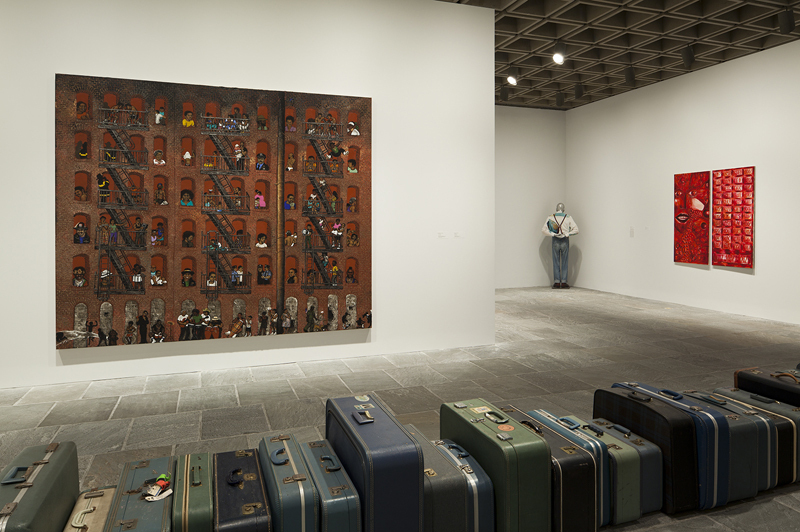
In 1960, jazz pianist and composer Jaki Byard released his solo debut, Blues for Smoke, an improvisatory record that features on its cover a train puffing out dark clouds as it makes its way down the tracks. The album lends its name to an exciting multimedia exhibit at the Whitney that examines the impact of the blues on the arts. The show is highlighted by David Hammons’s extraordinary 1989 installation, “Chasing the Blue Train,” which greets visitors on the third floor. A blue train makes its way across tracks that take it through a tunnel covered in coal and a landscape with upturned piano tops as John Coltrane’s 1957 Blue Train album plays from a boom box, the work riffing on Coltrane’s name (coal, train) while celebrating the blues. Zoe Leonard’s “1961, 2002-Ongoing” consists of a row of suitcases of different shades of blue, evoking impermanence and creating a mystery about what might be inside; nearby, Martin Kipperberger’s “Martin, into the Corner, You Should Be Ashamed of Yourself” is a life-size replica of the artist standing in the corner, suffering from a case of the blues. Specially commissioned for the show, Kori Newkirk’s “Yall” consists of a shopping cart nearly completing a circle of blue on the floor, calling to mind exclusion, homelessness, and failed capitalism. Kira Lynn Harris lines a stairwell and entrance with silver Mylar in “Blues for Breuer,” paying tribute to the architect of the Whitney building, which will be taken over by the Met in 2015 when the Whitney moves downtown.

Installation view, Blues for Smoke (photo by Sheldan C. Collins)

Works by Martin Wong, Martin Kipperberger, Zoe Leonard, and others form a blues aesthetic at the Whitney (photo by Sheldan C. Collins)

Curated by Bennett Simpson in consultation with Chrissie Iles, “Blues for Smoke” also features works by Romare Bearden, Carrie Mae Weems, Glenn Ligon, Liz Larner, Jean-Michel Basquiat, Rachel Harrison, Mark Morrisroe, Alma Thomas, Beauford Delaney, Kara Walker, William Eggleston, and Lorraine O’Grady, all contributing to the overall examination of the blues aesthetic. A media room includes viewing stations where people can watch classic performances, while Stan Douglas’s “Hors-champs” plays continuously in its own space on the first floor, offering a unique view of a live recording on the front and back of a screen hanging from the ceiling. In addition, the Whitney is hosting a series of live events that continue through the end of the exhibition, which closes April 28, including “Blues for Smoke: Matana Roberts, Keiji Haino, and Loren Connors” on April 20 at 8:00 (featuring a solo performance by Roberts and a duo guitar improvisation by Haino and Connors), “Through the Lens of the Blues Aesthetic: An Evening of Short Films Selected by Kevin Jerome Everson” on April 25 at 7:00, the live concert “Blues for Smoke: Annette Peacock” on April 26 at 7:00, and the three-day “Blues for Smoke: Thomas Bradshaw,” in which the playwright will be creating a new piece that will be shown April 26-28.