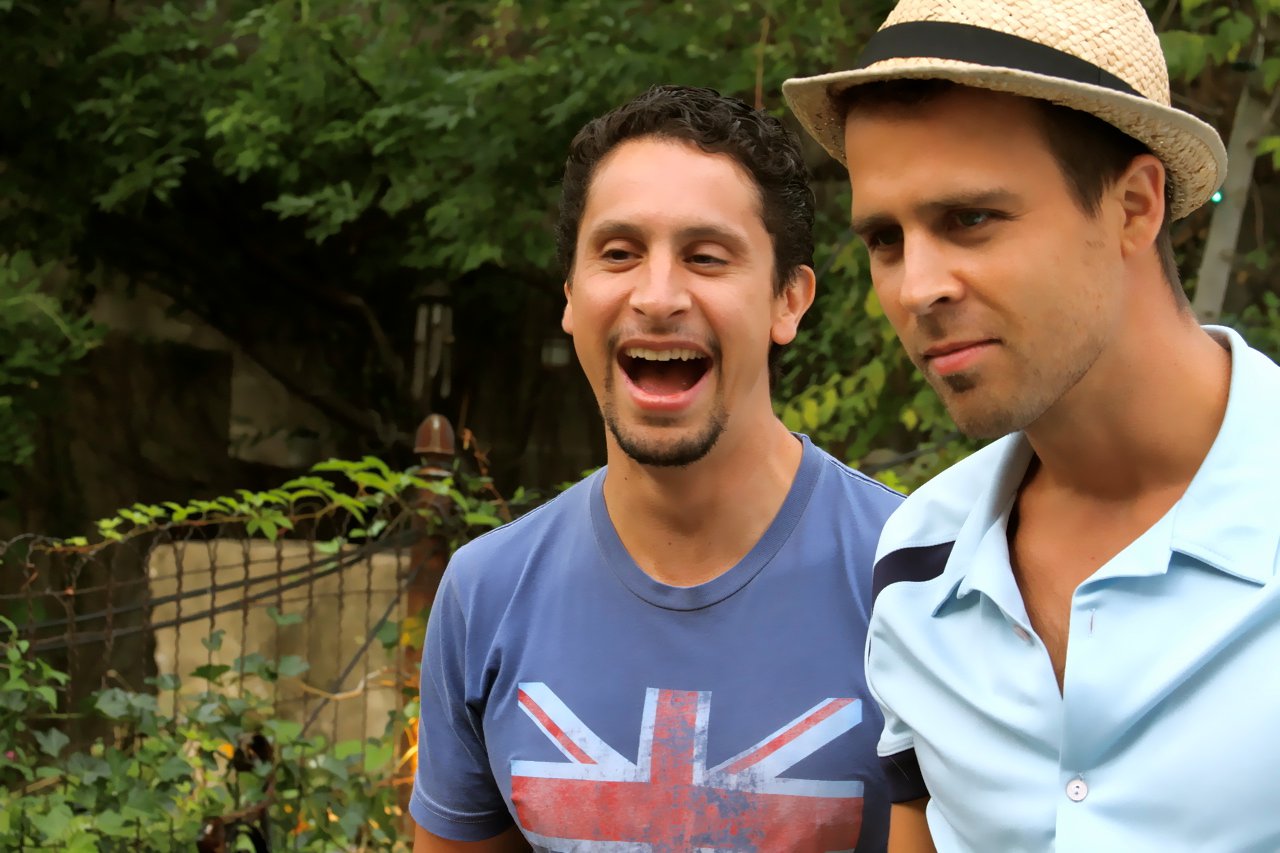
Real-life partners Ricardo Valdez and Brian W. Seibert wrote, produced, and star in film set in their Brooklyn apartment
TURTLE HILL, BROOKLYN (Ryan Gielen, 2011)
Quad Cinema
34 West 13th St.
Opens Friday, May 3
212-255-2243
www.quadcinema.com
www.turtlehillbrooklyn.com
 If director Ryan Gielen’s Turtle Hill, Brooklyn feels real, that’s because it was written and produced by real-life partners Brian W. Seibert and Ricardo Valdez, who star as on-screen couple Will (Seibert) and Mateo (Valdez), and takes place in their Sunset Park apartment, in a neighborhood they have redubbed “Turtle Hill” for this gentle, understated slice-of-life drama. It’s Will’s thirtieth birthday, and Mateo is getting ready to throw a big party in their backyard patio. But when Will’s sister unexpectedly shows up early in the morning and suddenly discovers that her brother is gay — and is clearly not okay with that kind of lifestyle — Will and Mateo start examining themselves and their relationship as friends start arriving for the celebration, where there’s lots of food and drink as well as discussions about politics, same-sex marriage, immigration, drugs, discrimination, and America itself, none of which comes off as pedantic. Things, however, threaten to become volatile when a gym trainer stops by, exciting Will and unnerving Mateo. Shot with a handheld camera by Andrew Tank Rivara, the film invites the audience into the party, as if they are guests as well, surrounded by friends and family. (Indeed, many of the guests are friends of Seibert and Valdez’s.) It’s a welcoming atmosphere filled with believable situations and characters, even though Seibert and Valdez have explained that the plot is not autobiographical. And the film avoids the potential pitfalls of pushing a gay agenda by simply allowing the story to play out organically, resulting in an involving tale about two people in love, facing a pivotal moment in their lives together. A film festival hit across the country, Turtle Hill, Brooklyn, which won the Audience Award for Best Narrative Feature at 2011’s NewFest, opens May 3 at the Quad, with Gielen, Seibert, and Valdez participating in Q&As following the 7:00 and 9:00 screenings on Friday and Saturday.
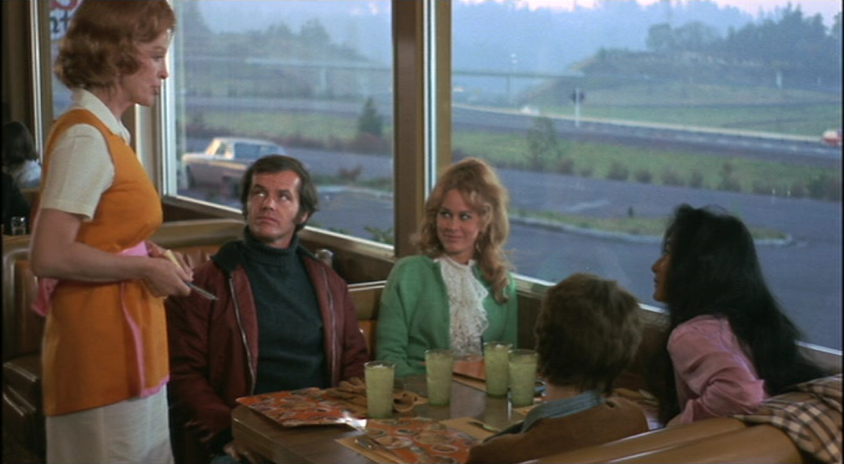
 A key film that helped lead 1960s cinema into the grittier 1970s, Bob Rafelson’s Five Easy Pieces is one of the most American of dramas, a tale of ennui and unrest among the rich and the poor, a road movie that travels from trailer parks to fashionable country estates. Caught in between is Bobby Dupea (Jack Nicholson), a former piano prodigy now working on an oil rig and living with a well-meaning but not very bright waitress, Rayette (Karen Black). When Bobby finds out that his father is ill, he reluctantly returns to the family home, the prodigal son who had left all that behind, escaping to a less-complicated though unsatisfying life putting his fingers in a bowling ball rather than tickling the keys of a grand piano. Back in his old house, he has to deal with his brother, Carl (Ralph Waite), a onetime violinist who can no longer play because of an injured neck and who serves as the film’s comic relief; Carl’s wife, Catherine (Susan Anspach), a snooty woman Bobby has always been attracted to; and Bobby’s sister, Partita (Lois Smith), a lonely, troubled soul who has the hots for Spicer (John Ryan), the live-in nurse who takes care of their wheelchair-bound father (William Challee). Rafelson had previously directed the psychedelic movie Head (he cocreated the Monkees band and TV show) and would go on to make such films as
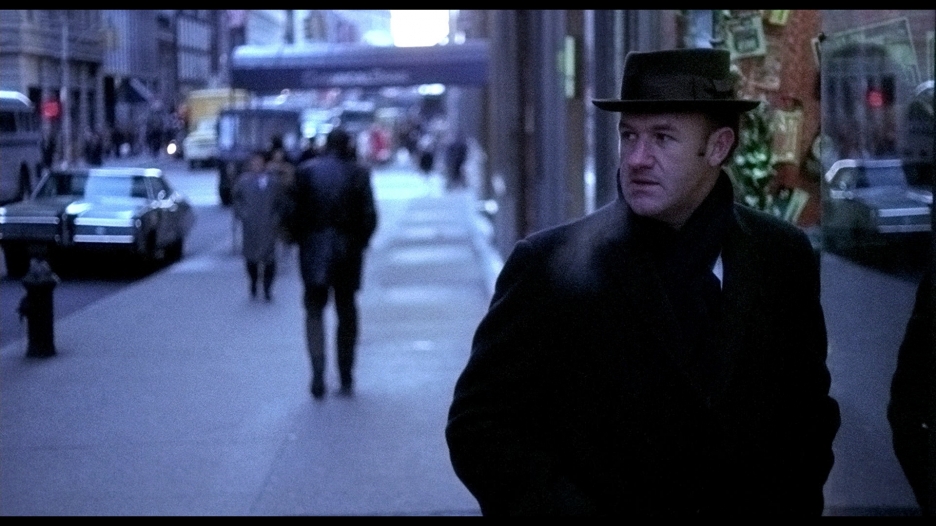
 William Friedkin’s Oscar-winning classic The French Connection is a whole lot more than just a car chase. But oh, what a car chase. Adapted by screenwriter Ernest Tidyman from a nonfiction book by Robin Moore, the gripping 1971 thriller is about obsession and paranoia, setting the stage for a decade filled with gritty, soul-searching films centered around troubled antiheroes. Way down on the list of actors to play Popeye Doyle, Gene Hackman won an Academy Award for his portrayal of the undercover detective willing to do anything to get his man. In this case, his targets are suave local hoodlum Sal Boca (Tony Lo Bianco) and elegant French drug kingpin Alain Charnier (Fernando Rey), less-than-affectionately known as Frog One. Sure that a major international deal is about to go down, Doyle and his partner, Cloudy Russo (Roy Scheider), trail Boca and Charnier, highlighted by a marvelous cat-and-mouse game between Doyle and Charnier on the subway and then, of course, the car chase to end all car chases, as Doyle speeds underneath an elevated train in a Pontiac LeMans, determined to catch hit man Pierre Nicoli (Marcel Bozzuffi). Shot in muted browns and grays by Owen Roizman, who photographed such other New York City tales as The Taking of Pelham One Two Three, Three Days of the Condor, and Tootsie, the film was inspired by real-life situations involving cops Eddie Egan and Sonny Grosso, both of whom appear in the film (but not as themselves). The French Connection is screening May 4 as part of the BAMcinématek series “Friedkin 70s,” which kicks off on May 2 with Sorcerer, followed on May 3 with Cruising, both of which will have showings that include a Q&A with Friedkin, who has just published his memoir, The Friedkin Connection (Harper, April 2013, $29.99). The series also includes The Boys in the Band, The Exorcist, and The Brink’s Job.