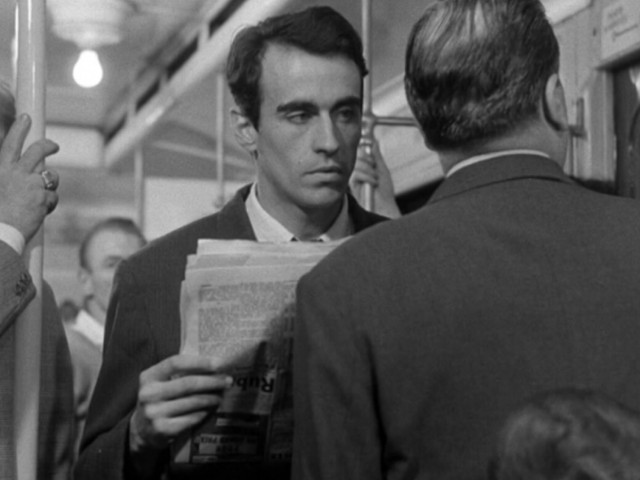
Michel (Martin LaSalle) eyes a potential target in Robert Bresson’s highly influential masterpiece PICKPOCKET
PICKPOCKET (Robert Bresson, 1959)
French Institute Alliance Française, Florence Gould Hall
55 East 59th St. between Madison & Park Aves.
Tuesday, July 30, $10, 12:30, 4:00, 7:30
212-355-6100
www.fiaf.org
IFC Center
323 Sixth Ave. at West Third St.
Tuesday, July 30, $16, 7:30
212-924-7771
www.ifccenter.com
 Robert Bresson’s 1959 Pickpocket is a stylistic marvel, a brilliant examination of a deeply troubled man and his dark obsessions. Evoking Raskolnikov in Dostoevsky’s Crime and Punishment, Martin LaSalle made his cinematic debut as Michel, a ne’er-do-well Parisian who lives in a decrepit apartment, refuses to visit his ailing mother (Dolly Scal), and decides to become a pickpocket. But it’s not necessarily the money he’s after; he hides the cash and watches that he steals in his room, which he is unable to lock from the outside. Instead, his petty thievery seems to give him some kind of psychosexual thrill, although his pleasure can seldom be seen in his staring, beady eyes. As the film opens, Michel is at the racetrack, dipping his fingers into a woman’s purse in an erotically charged moment that is captivating, instantly turning the viewer into voyeur. Of course, film audiences by nature are a kind of peeping Tom, but Bresson makes them complicit in Michel’s actions; although there is virtually nothing to like about the character, who is distant and aloof when not being outright nasty, even to his only friends, Jacques (Pierre Leymarie) and Jeanne (Marika Green), the audience can’t help but breathlessly root for him to succeed as he dangerously dips his hands into men’s pockets on the street and in the Metro. Soon he is being watched by a police inspector (Jean Pélégri), to whom he daringly gives a book about George Barrington, the famed “Prince of Pickpockets,” as well as a stranger (Kassagi) who wants him to join a small cadre of thieves, leading to a gorgeously choreographed scene of the men working in tandem as they pick a bunch of pockets. Through it all, however, Michel remains nonplussed, living a strange, private life, uncomfortable in his own skin. “You’re not in this world,” Jeanne tells him at one point.
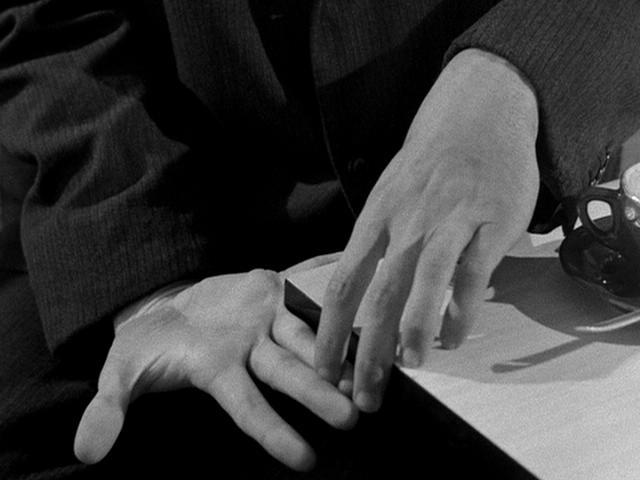
Michel (Martin LaSalle) can’t keep his hands to himself in Bresson classic
Bresson (Au hasard Balthazar, Diary of a Country Priest) fills Pickpocket with visual clues and repeated symbols that add deep layers to the narrative, particularly an endless array of shots of hands and a parade of doors, many of which are left ajar and/or unlocked in the first half of the film but are increasingly closed as the end approaches. Shot in black-and-white by Léonce-Henri Burel — Bresson wouldn’t make his first color film until 1969’s Un femme douce — Pickpocket also has elements of film noir that combine with a visual intimacy to create a moody, claustrophobic feeling that hovers over and around Michel and the story. It’s a mesmerizing performance in a mesmerizing film, one of the finest of Bresson’s remarkable, and remarkably influential, career. In a scheduling quirk, Pickpocket is screening on July 30 at two different locations in the city. First, at 12:30, 4:00, and 7:30, it will be shown at FIAF, concluding the CinémaTuesdays series “Highlights of Cannes Film Festival with Gilles Jacob,” consisting of works chosen by festival president Jacob in honor of the glamorous event’s sixty-fifth anniversary. Also at 7:30, it will be presented at the IFC Center by writer-director Paul Schrader (Taxi Driver, Affliction), who called the film “an unmitigated masterpiece” in his extensive 1969 two-part review in the Los Angeles Free Press and told Sheila Johnston in a 2003 interview for the Telegraph, “I adore Pickpocket and can watch it endlessly. To me it’s as close to perfect as there can be.”

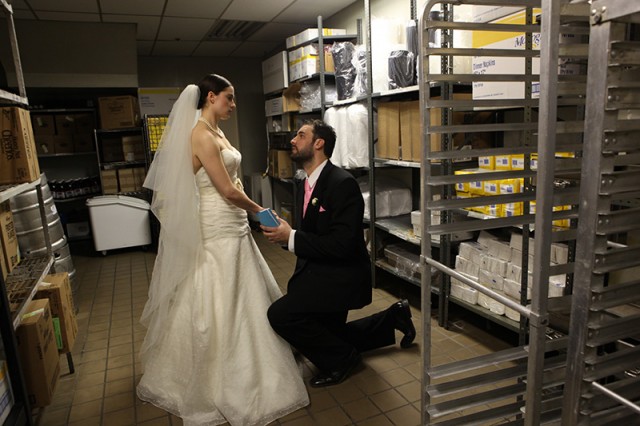
 With their wedding day upon them, Alison Jones (Alison Fyhrie) suddenly gets cold feet, convincing her fiance, Philip Havemeyer (cowriter Philip Quinaz), that they should go ahead with the festivities anyway, faking it for the guests and then calling it quits afterward in the silly but fun pseudo-mockumentary Breakup at a Wedding. The film is set up as wedding videographer Vic James’s (cowriter, director, and producer Victor Quinaz, Philip’s brother) self-proclaimed masterpiece; James and his small team of photographers have been given unlimited access to the previously happy couple and their friends and families, capturing intimate moments, deep, dark secrets, and general mayhem as all hell breaks loose, from the rehearsal dinner through the wedding itself. “Weddings make people go insane, but I always edit out the crazy,” Vic says at the beginning, “that is, until I met these two.” There are battles between the competing best men (Damian Lanigan and Chris Manley), maid of honor Mary (Mary Grill) is determined to get laid, and Alison has trouble dealing with her divorced parents (Hugh Scully and Caitlin B. FitzGerald), her father’s new Czech mail-order bride (Helena Lukas Martemucci), and her stepmother’s goddaughter, Lenka Jones (cowriter and producer Anna Martemucci, who is married to Victor Quinaz), who is betrothed to Alison’s brother, Brian (Brian Shoaf). It all makes for a host of bizarre antics, some very funny, others too far over the top, but there’s a charming genuineness and warmth to it all, probably in part because many of the actors and filmmakers are related themselves, and Philip Quinaz has most likely experienced a whole lot in one of his other jobs, professional wedding DJ. Cinematographer and coeditor Giovanni P. Autran, who also plays the florist, keeps it all honest, mixing in interview segments, handheld shots at the wedding, and playfully lit dance scenes. And thankfully, the film avoids getting overly sentimental while including some fresh insights into love, friendship, responsibility, and trust. Breakup at a Wedding continues at indieScreen in Williamsburg nightly at 7:00 through August 8; one of the producers, Zachary Quinto, who plays Spock on the relaunched Star Trek franchise, will be on hand for a Q&A following the August 6 show.

 The 2013 Human Rights Watch Film Festival came to a close this past June 23 with Jeremy Teicher’s heart-wrenching Tall as the Baobab Tree, an involving, powerful, yet gentle drama about a Senegalese family trapped by tradition in a modernizing world. Real-life sisters Dior and Oumoul Kâ star as Coumba and Debo, close siblings who live in the tiny rural village of Sinthiou Mbadane (where they actually are from). When their older brother, Silèye (Alpha Dia), falls out of a baobab tree and breaks his leg, their father (Mouhamed Diallo) doesn’t have enough money to pay for the necessary medical care so he instead sends Coumba out to do Silèye’s job of herding the cows and decides to sell off eleven-year-old Debo to suitors for marriage. Their mother (Mboural Dia) is unwilling to stand up to her husband, so Coumba hatches a plan in which her friend Amady (Cheikh Dia), who has a crush on her, will watch the herd for her secretly while she heads into the city and gets a job until she makes enough money to help Silèye heal and prevent Debo from having to marry so young. Unfortunately, not everything goes quite as planned. But through it all, no matter how difficult things get, all of the characters maintain their faith, praising peace and continually saying, “God is great.”
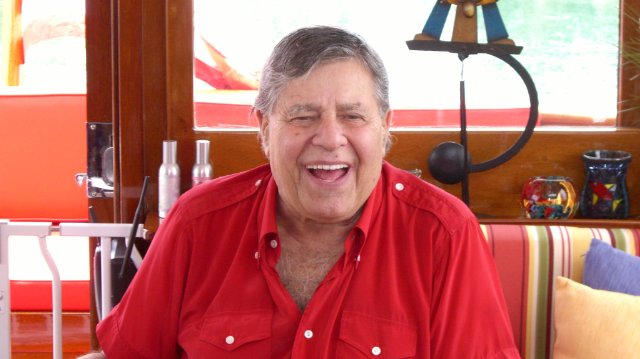
 In the new documentary When Comedy Went to School, Mickey Freeman describes what it’s like to “die” onstage, that terrible feeling of experiencing flop sweat while bombing in front of a live audience. Unfortunately, this film is dead on arrival, dripping wet. Made by Mevlut Akkaya (director and producer), Ron Frank (director, producer, and editor), and Lawrence Richards (writer and producer), the thankfully short film, which clocks in at a mere seventy-seven minutes, purports to tell the history of the Catskill comedians at such resorts as Kutsher’s, Grossinger’s, and the Concord. The filmmakers speak with such comic giants as Jerry Lewis, Sid Caesar, Mort Sahl, Dick Gregory, Jackie Mason, and Jerry Stiller, who describe what it was like in the Borscht Belt’s heyday of the 1950s and 1960s. There are also plenty of archival clips of those men as well as Rodney Dangerfield, Woody Allen, Henny Youngman, Milton Berle, Bob Hope, and Lenny Bruce (however, very few from actual Catskills performances), with additional commentary from Joe Franklin, Larry King, and Hugh Hefner. But timing is everything in comedy, something When Comedy Went to School is sorely lacking; the film drags and sputters as Akkaya, Frank, and Richards — onscreen host and narrator Robert Klein is the poor soul relegated to reading the increasingly dull script — try to delve into the social and historical aspects of the Catskills, from the comedians themselves to the people who owned the resorts and the families that went there year after year, but it’s slow moving, repetitive, and, worst of all, boring. Although some of the comedians have interesting anecdotes — Lewis steals the show with his insights on the relationship between performer and audience — most of it falls flat, reminiscent of the old vaudeville convention of bringing out the weakest act to clear the house after the stars are done. When Comedy Went to School runs July 31 to August 6 at the JCC in Manhattan and the IFC Center, with Akkaya, Frank, and Richards on hand to talk about the film at the 7:05 show on opening night at IFC; the trio will be back at IFC for the 7:05 screening on August 1, joined by Klein and Cory Kahaney.