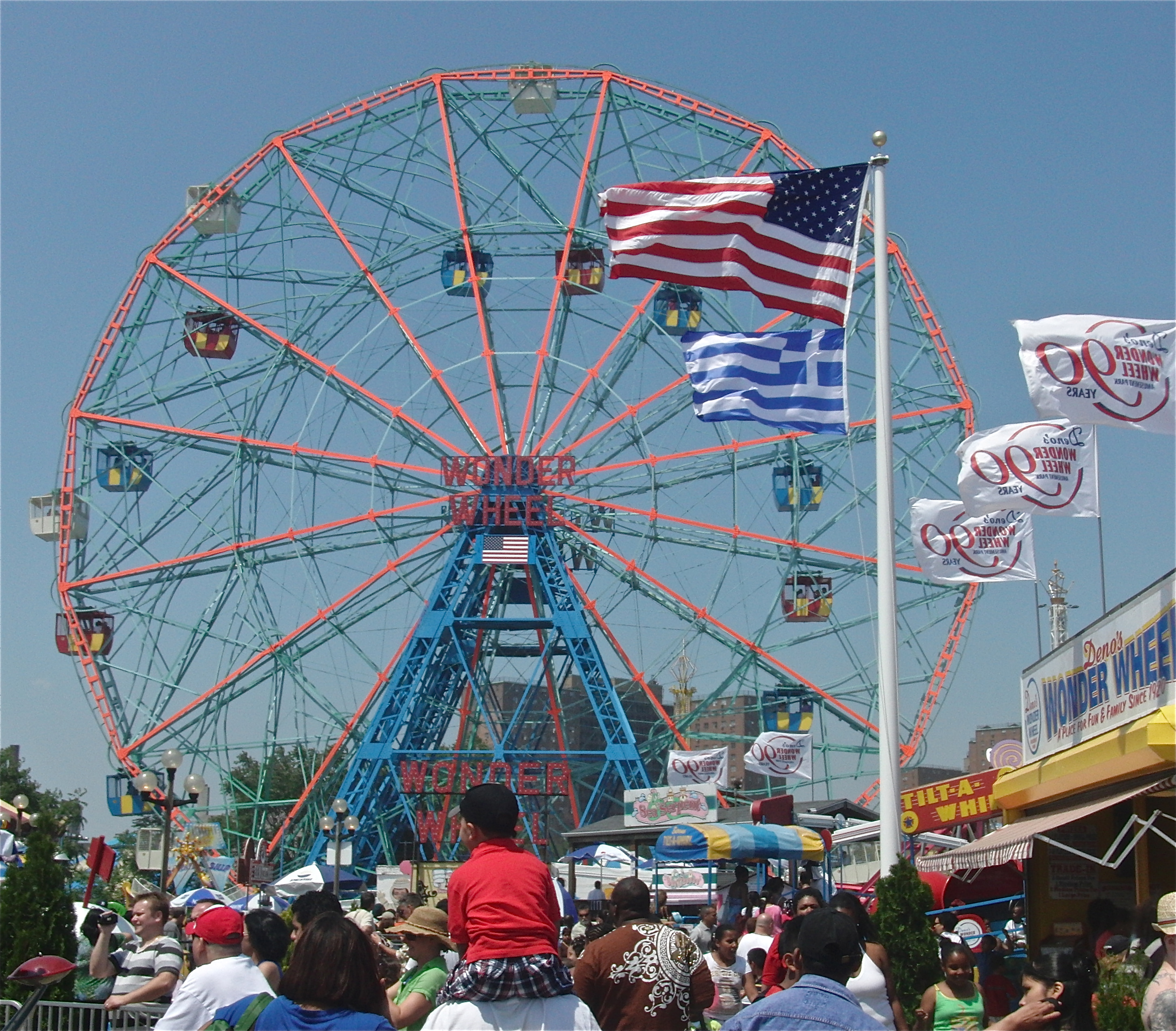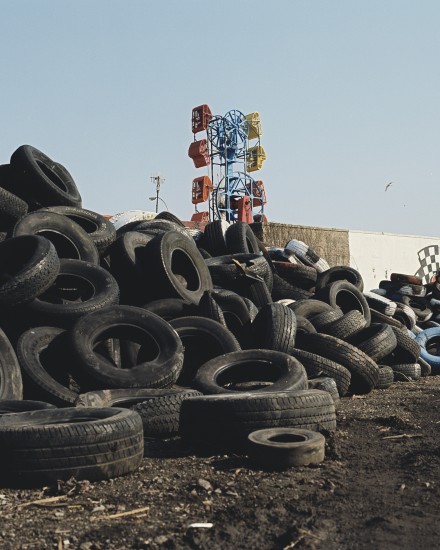
The Zipper ride serves as a central focus on what is happening to Coney Island in new documentary (photo by Amy Nicholson)
ZIPPER: CONEY ISLAND’S LAST WILD RIDE (Amy Nicholson, 2012)
IFC Center
323 Sixth Ave. at West Third St.
August 9-29
212-924-7771
www.ifccenter.com
www.zipperfilm.com
 The past, present, and future of Coney Island as an amusement park mecca is explored through the microcosm of one specific attraction in Amy Nicholson’s bittersweet documentary, Zipper: Coney Island’s Last Wild Ride. Since the mid-to-late 2000s, the New York City government and private developers have been pursuing controversial plans to rezone the Coney Island district, with proposals for high-rise condos, chain stores and restaurants, and new, modern rides to replace the old-time classics, which are being torn down one at a time. But even as agreements are made, contracts are signed, and games and amusements evicted, Coney Island has not turned into a futuristic fantasyland, instead filled with empty lots as everyone battles over what to put where, with hundreds of millions of dollars at stake. Nicholson focuses on the crazy Zipper ride, in which customers are locked in a cage, then lifted high in the air and twisted and turned in multiple directions; she speaks at length with longtime Coney Island resident and Zipper owner Eddie Miranda and his crew of Jerry, Joey, Don, and Larry, who together represent what Coney Island is all about — a gritty, very real, and historic place where people flock to have fun, free of corporate greed and suburban sameness. Nicholson also meets with the big-time players in the controversy, including several members of the New York City Economic Development Corporation and the Department of City Planning (Amanda Burden, Seth W. Pinsky), Thor Equities head Joe “Coney Island Joey” Sitt, and city councilman Dominic Recchia, as they offer their views on what should be done with the beachfront property. Nicholson (Muskrat Lovely) also captures numerous protests and public meetings where people gather to try to save and protect the indelible nature and unique character of Coney Island, a one-of-a-kind location. Although Nicholson clearly has an agenda — in her official director’s statement, she explains, “My hope is to share this story with anyone who appreciates the noisy, unfettered, chaotic, all-welcoming, anything goes atmosphere of a place like Coney Island; the one place in the world where you wouldn’t find an Applebee’s” — she doesn’t get overly nostalgic about the former resort destination, instead presenting the facts, which are not pretty. Zipper is running August 9-13 at the IFC Center, with Nicholson participating in several Q&As on Friday, Saturday, and Sunday.