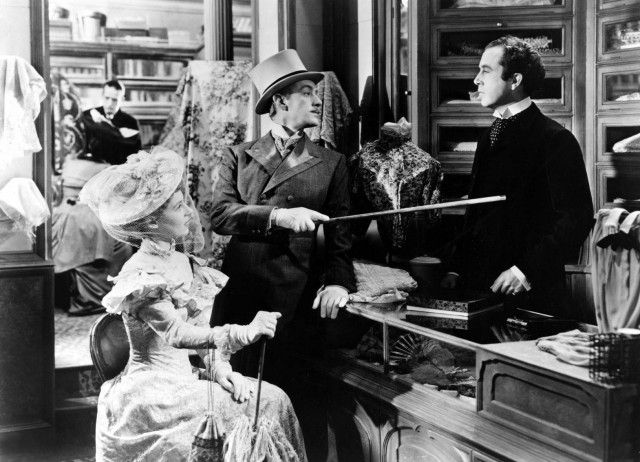
Louis Mazzini (Dennis Price) is sick and tired of being bossed around by the D’Ascoynes (Alec Guinness in multiple roles) and decides to take extreme action in KIND HEARTS AND CORONETS
CABARET CINEMA: KIND HEARTS AND CORONETS (Robert Hamer, 1949)
Rubin Museum of Art
150 West 17th St. at Seventh Ave.
Friday, September 6, free with $7 bar minimum, 9:30
212-620-5000
www.rmanyc.org
 After being spurned by their aristocrat family and watching the wealthy D’Ascoynes turn their back on his mother even in death, Louis Mazzini (Dennis Price) decides that he is not going to let them get away with such awful treatment. So Louis, the tenth Duke of Chalfont, comes up with a plot to get rid of the eight D’Ascoynes standing between him and the dukedom. In Robert Hamer’s wickedly funny black comedy Kind Hearts and Coronets, each one of those haughty D’Ascoynes is played by Alec Guinness, young and old, male and female, to deservedly great acclaim. The film is told in flashback as an elegant, distinguished Louis is writing his memoirs in prison on the eve of his execution. He eloquently describes the details of his multiple murders, as well as his unending yearning for the questionably prim and proper Sibella (Joan Greenwood), who continues her flirtations with him even after she marries Louis’s former schoolmate Lionel (John Penrose), as well as his relationship with Edith (Valerie Hobson), the wife of one of the D’Ascoynes he kills on his march to power, glory, and revenge. But his hubris leads to his downfall — and one of the most delicious twist endings in film history. Based on Roy Horniman’s 1907 novel, Israel Rank: The Autobiography of a Criminal, and adapted by Hamer (The Spider and the Fly, School for Scoundrels) and cowriter John Dighton (The Barretts of Wimpole Street), Kind Hearts and Coronets takes on British high society, class conflict, royalty, and hypocrisy with a brash dose of cynical humor and more than a hint of eroticism, pushing the sexual envelope amid all the laughter. Price is terrific as the dapper Louis, but it’s impossible to steal the show from Guinness, who is a riot as the succession of doomed D’Ascoynes. Guinness was originally asked to play four of the roles but suggested that he do them all, and thankfully Ealing Studios agreed; one of the key shots in the film is when six of the D’Ascoynes are seen together. Kind Hearts and Coronets is screening September 6 at the Rubin Museum, introduced by Vanity Fair contributing editor John Heilpern, kicking off the Cabaret Cinema series “I Don’t Know,” held in conjunction with the “Ignorance” festival of talks, films, and live music.
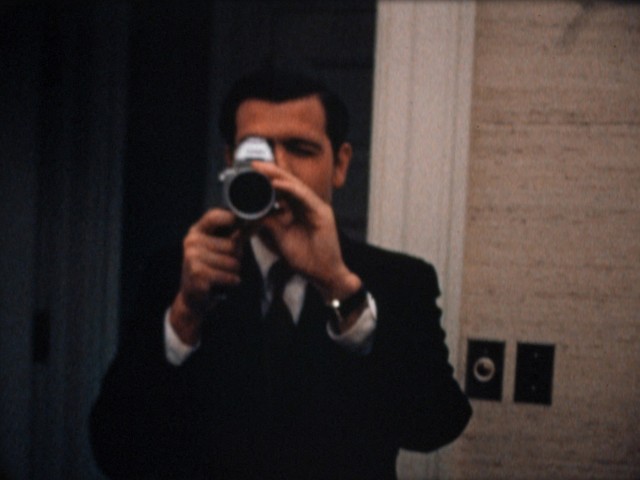
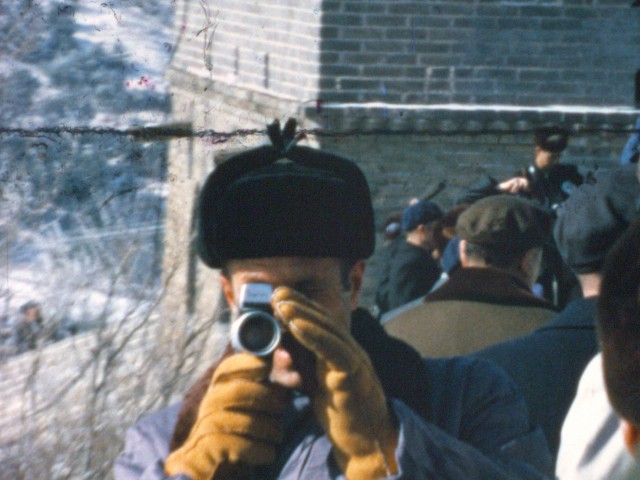
 Penny Lane’s debut documentary, the all-archival Our Nixon, offers a compelling new inside look at the Nixon White House. The classic cautionary tale about power, corruption, and paranoia, which ultimately brought down the thirty-seventh president of the United States, has been told many times before, on film (All the President’s Men, Oliver Stone’s Nixon), in books (Woodward and Bernstein’s The Final Days, RN: The Memoirs of Richard Nixon), onstage (Frost/Nixon, Checkers), and even as an opera (John Adams’s Nixon in China). When Nixon moved into the White House in January 1969, he brought along three key figures: Chief of Staff H. R. Haldeman, Chief Domestic Adviser John Erlichman, and Deputy Assistant Dwight Chapin. And those three men brought along Super 8 cameras, prepared to document not only their daily lives but also how they were going to change the nation. During its investigation of the Watergate scandal, the FBI confiscated more than five hundred reels of footage, totaling more than twenty-six hours, taken by Haldeman, Erlichman, and Chapin, and these home movies, which belong to the Nixon Library and have been digitized specifically for the film, form the basis of Our Nixon. Director-producer Lane combines this deeply personal footage — showing alternate views of the 1969 inauguration, a White House Easter egg hunt, the moon landing, Trisha Nixon’s wedding, Nixon’s trip to China, the Republican National Convention, and other, more mundane events — with carefully chosen audio excerpts from the White House tapes, creating a unique audiovisual experience.