THE GREAT FLOOD (Bill Morrison, 2011)
Symphony Space, Leonard Nimoy Thalia
2537 Broadway at 95th St.
Sunday, February 2 (3:00), 9 (8:00), 16 (8:00), $14
212-864-5400
www.symphonyspace.org
www.icarusfilms.com
 Sound and image meld together beautifully in Bill Morrison’s meditative, elegiac The Great Flood. Inspired by John M. Barry’s 1997 book Rising Tide: The Great Mississippi Flood of 1927 and How It Changed America, Morrison teamed up with improvisational musician Bill Frisell on the project. The two had previously worked together on a pair of short works, The Mesmerist and The Film of Her, after meeting at the Village Vanguard when Morrison was a dishwasher at the jazz club where Frisell was playing. Morrison, who specializes in using deteriorated and degraded archival footage and experimental scores, scoured the National Archives, the Library of Congress, the Hoover Presidential Library, and other sources to come up with remarkable scenes of the flooding of the Mississippi in 1927. Divided into such chapters as “Sharecroppers,” “Swollen Tributaries,” “Evacuation,” “Aftermath,” and “Watershed,” with snippets of informational text but without narration, the film follows the southern blacks who were most affected by the massive flood, being forced to shore up the levees around white areas, losing their own homes, and ultimately heading north as part of the Great Migration, bringing the Delta blues with them. Guitarist Frisell, joined by Ron Miles on cornet, Tony Scherr on guitar and bass, and Kenny Wollesen on drums and vibes, has composed a gorgeous, moving score, heavily influenced by a trip his band and Morrison took in early 2011 up the Mississippi, with the group playing in multiple cities while the river threatened to flood again. Each chapter, from an overhead view of a computerized map that details the 1927 flood to a fast and furious foray through the Sears Roebuck catalog, from a Baptist church procession to a series of rare clips of such bluesmen as Big Bill Broonzy, Son House, Sonny Boy Williamson, and Robert Lockwood, features a different piece of music, highlighted by Frisell’s always inventive guitar and Miles’s deeply expressive horn. Of course, as the images pass by, it’s impossible not to think of Hurricanes Katrina and Sandy and be awed by the devastating power of nature, as well as realize how little has changed with regard to the reaction of politicians and who the victims tend to be. But the film is rarely mournful; instead, there’s often a celebratory quality about it, centered on people’s natural instinct to survive. Following its recent theatrical release at the IFC Center, The Great Flood is next scheduled to run February 2, 9, and 16 as part of the Symphony Space series Thalia Docs, with Morrison, who has also created such other unique cinematic experiences as Spark of Being, Decasia, and The Miners’ Hymns, on hand for a Q&A after the February 9 show.



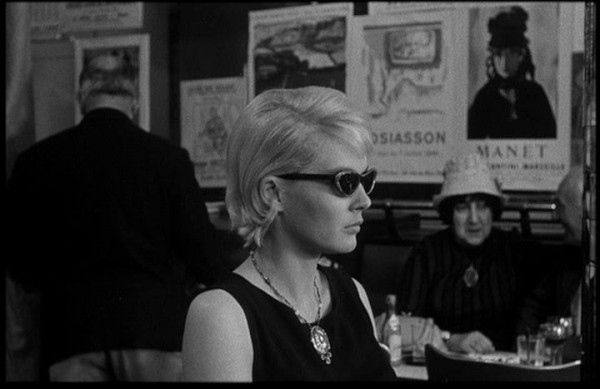
 After getting a biopsy taken and drawing the death card while consulting a fortune-teller, popular French singer Cléo (Corinne Marchand) begins looking back at her life — and wondering just what’s left of it — while awaiting the dreaded results. The blonde beauty talks with old friends, asks her piano player (Michel Legrand, who composed the score) to write her a song, and meets a dapper gentleman in the park, becoming both participant and viewer in her own existence. As Cléo makes her way around town, director (and former photographer) Agnès Varda (Le Bonheur, Vagabond) shows off early 1960s Paris, expertly winding her camera through the Rive Gauche. Just as Cléo seeks to find out what’s real (her actual name is Florence and that gorgeous hair is a wig), Varda shoots the film in a cinema verité style, almost as if it’s a documentary. She even sets the film in real time (adding chapter titles with a clock update), enhancing the audience’s connection with Cléo as she awaits her fate, but the movie runs only ninety minutes, adding mystery to what is to become of Cléo, as if she exists both on-screen and off, alongside the viewer. A central film in the French Nouvelle Vague and one of the first to be made by a woman, Cléo de 5 à 7 is an influential classic even as it has lost a step or two over the years. A new digital restoration of Cléo de 5 à 7 is screening January 28 at 4:00 & 7:30 as part of the FIAF CinéSalon series “Remastered & Restored: Treasures of French Cinema”; the later screening will be introduced by French author Catherine Cusset. The three-month festival continues with such other recently restored French classics as Jean Renoir’s Boudu Saved from Drowning (introduced by Henry Bean), Jacques Demy’s Une chambre en ville (introduced by Adam Gopnik), and Max Ophüls’s Lola Montès (introduced by Lola Montes Schnabel).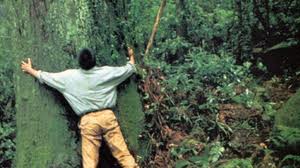
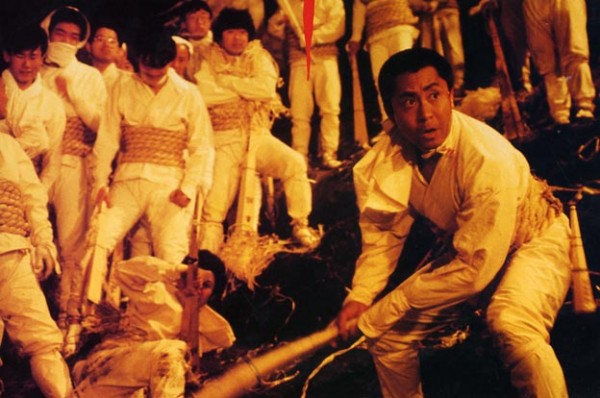
 There’s something always lurking just beneath the surface of Mitsuo Yanagimachi’s 1985 drama, Himatsuri, and when it finally arrives, it’s shocking and explosive. In the small coastal village of Nigishima, the fishermen are at odds with the lumberjacks. Someone is dumping oil in the water, killing the fish, and the chief suspect is Tatsuo (Kinya Kitaoji), a strong woodsman who chops down trees, raises dogs to hunt down wild boars, shoots monkeys, cheats on his wife with a former girlfriend turned hussy (Kiwako Taichi), and is the only villager who refuses to sell his property to a company intent on building a marine park there. He both cavorts with and defies nature and the local spiritual beliefs, at one point swimming naked in the waters leading to a sanctuary. “Only I can make the goddess feel like a woman,” he proclaims. Carefully watching and worshiping Tatsuo is young Ryota (Ryota Nakamoto), who also oversteps boundaries, using sacred branches in animal traps, and is forced to expose himself to the goddess in retribution. Soon a storm comes, transforming Tatsuo and leading to a horrific conclusion. Set in the area where the Japanese creation myth takes place, Himatsuri is a strange creature indeed, with confusing plot twists, bizarre transitions, and some very weird scenes, with a creepy score by Tōru Takemitsu and lush photography by Tamura Masaki. Yanagimachi’s tale, written by Kenji Nakagami, is no mere clarion call to save the environment; instead, it’s an examination of man’s inhumanity to nature, the disregard for the trees, the oceans, the animals (while also commenting on religion, homosexuality, and contemporary society). Yanagimachi (God Speed You! Black Emperor; Ai ni tsuite, Tokyo) mixes genres, from horror to thriller to romance to musical, as he tells the story of one man who just can’t stop himself.