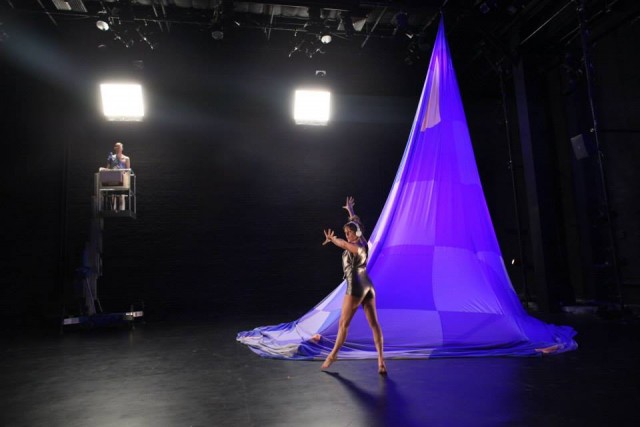
MLK Day features a host of special events and community-based service projects throughout the city (photo by twi-ny/mdr)
Multiple venues
Monday, January 21
www.mlkday.gov
In 1983, the third Monday in January was officially recognized as Martin Luther King, Jr. Day, honoring the birthday of the civil rights leader who was assassinated in Memphis on April 4, 1968. Dr. King would have turned eighty-five this month, and you can celebrate his legacy tomorrow by participating in a Martin Luther King, Jr. Day of Service project or attending one of several special events taking place around the city. BAM’s twenty-eighth annual free Brooklyn Tribute to Dr. Martin Luther King, Jr. includes a keynote speech by Angela Davis, live performances by José James and the Christian Cultural Center Choir, the NYCHA Saratoga Village Community Center student exhibit “Picture the Dream,” and a screening of Shola Lynch’s 2012 documentary Free Angela and All Political Prisoners. The JCC in Manhattan will host an MLK Day blood drive and “The Living Legacy of Dr. King,” consisting of the panel discussion “Leading a Socially Responsible Life” with Ruth Messinger, Harrie Bakst, and Rabbi Joanna Samuels, interactive workshops for teens, and the “Artists Celebrate the Living Legacy of Dr. King” performance with Judith Sloan, Susannah Heschel, and Joshua Nelson, the Prince of Kosher Gospel. (Admission is free but preregistration is recommended.)
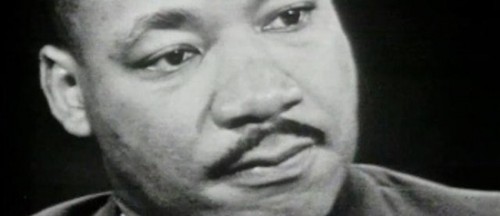
The Museum of the Moving Image is screening THE NEGRO AND THE AMERICAN PROMISE on MLK Day
The Museum of the Moving Image will be open on MLK Day, with two screenings of the 1963 documentary The Negro and the American Promise as part of its “Changing the Picture” series (free with museum admission). The Children’s Museum of Manhattan will teach kids about King’s legacy with the “Martin’s Mosaic” workshop, the “Heroic Heroines: Ruby Bridges” book talk, and live performances by the National Jazz Museum in Harlem All Stars Band, while the Brooklyn Children’s Museum has such special hands-on crafts programs as “Let’s March!,” “Let’s Join Hands,” and “Dream Clouds” and live music from the Berean Community Drumline. And the Museum at Eldridge Street will be hosting a free reading of Eloise Greenfield and Jan Spivey Gilchrist’s picture book The Great Migration: Journey to the North.

 In 2009, thirteen-year-old Laura Dekker announced that she was going to try to become the youngest person to sail around the world solo. After a long battle with the Dutch court, the teen, who was born on a boat in New Zealand and spent her first five years at sea, took off on her journey in her thirty-eight-foot ketch appropriately dubbed Guppy. Laura’s inspiring — and controversial — story is told in the winning documentary Maidentrip. Jillian Schlesinger’s debut feature-length film follows Laura as she circumnavigates the globe by herself, sailing across long stretches of sometimes treacherous ocean and making stops to experience a variety of lands and cultures. The bulk of Maidentrip is told in Laura’s own voice, as she films herself on board Guppy and talks not only about her adventure but also about her personal life, including discussing the effects of her parents’ divorce on her and her sister when she was five. “I love being alone,” Laura says at one point. “And I guess, yeah, I feel like freedom is when you’re not attached to anything.” As serious as she is about sailing, she is still a teenager, dancing in front of the camera playfully and throwing a little hissy fit when a visitor annoys her. It all makes for an intimate coming-of-age story as Laura, who values her privacy, grows up in public. Should her parents, particularly her father, who she chose to live with, have allowed the teen to go on this trip in the first place? Is it the court’s responsibility to intercede in such situations? Schlesinger gets the controversy out of the way early, never again revisiting what many people will consider a wrongheaded and dangerous decision, but they’re likely to change their mind once they watch Laura persevere and flourish at sea. Winner of the Audience Award at the Cannes Film Festival and SXSW, Maidentrip opens January 17 at the IFC Center, with Schlesinger and producer Emily McAllister on hand to talk about the film at the 6:25 and 8:25 screenings on Friday and Saturday night.
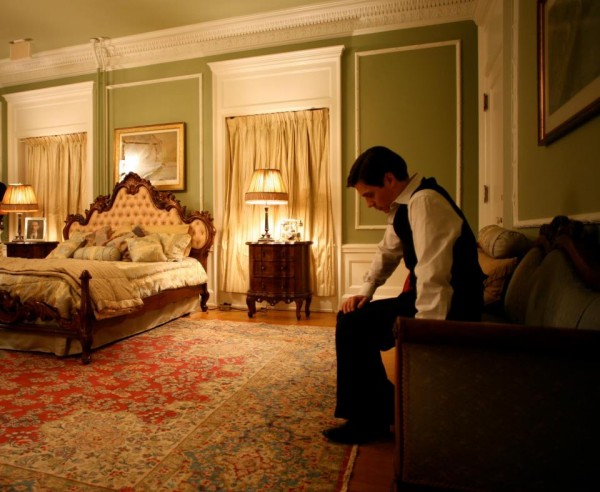
 Director and star Bruce Ramsay strips down and condenses the Bard in his 1940s-set noirish update of Hamlet, but in doing so he also drains one of Shakespeare’s most powerful tragedies of all its poetry and emotion. Trimming the tale down to a far-too-lean eighty-seven minutes, Ramsay cuts out characters and reinterprets scenes to focus on the family-related aspects of the story of betrayal, madness, murder, and revenge, using the original text for the most part while setting the entire film in one large house (actually the University Women’s Club in Vancouver). He fills the cast with veterans of Canada’s Bard on the Beach series, including Gillian Barber as Gertrude, Duncan Fraser as Polonius, Haig Sutherland as Laertes, Martin Sims as Guildenstern, Russell Roberts as the ghost of Hamlet’s father, and Lara Gilchrist as Ophelia; Welsh actor Peter Wingfield plays Claudius, with Stephen Lobo as Horatio and Bret Stait as Rosencrantz. The bare-bones film was shot in three days (for a mere — and rather admirable — $27,000), but it’s taken nearly three years for it to get a U.S. theatrical release, and it’s easy to see why. Ramsay’s Hamlet is more like a failed episode of Masterpiece Theatre, sort of Agatha Christie meets Downton Abbey in postwar London, than a fresh new look at the extremely familiar play, though it is a noble attempt. Indeed, “I must be cruel to be kind. Thus bad begins and worse remains behind.” Hamlet opens at Cinema Village on January 10, with Ramsay taking part in Q&As following the 7:10 screenings on Friday and Saturday night.
 Sound and image meld together beautifully in