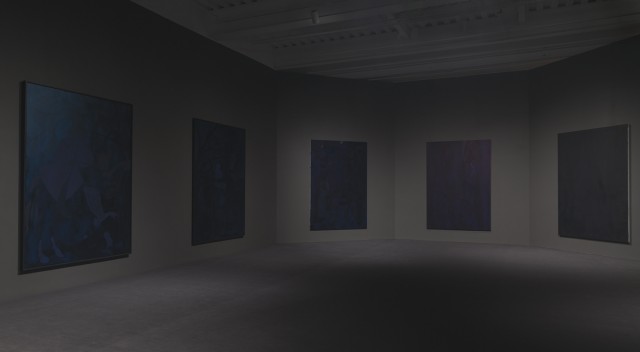
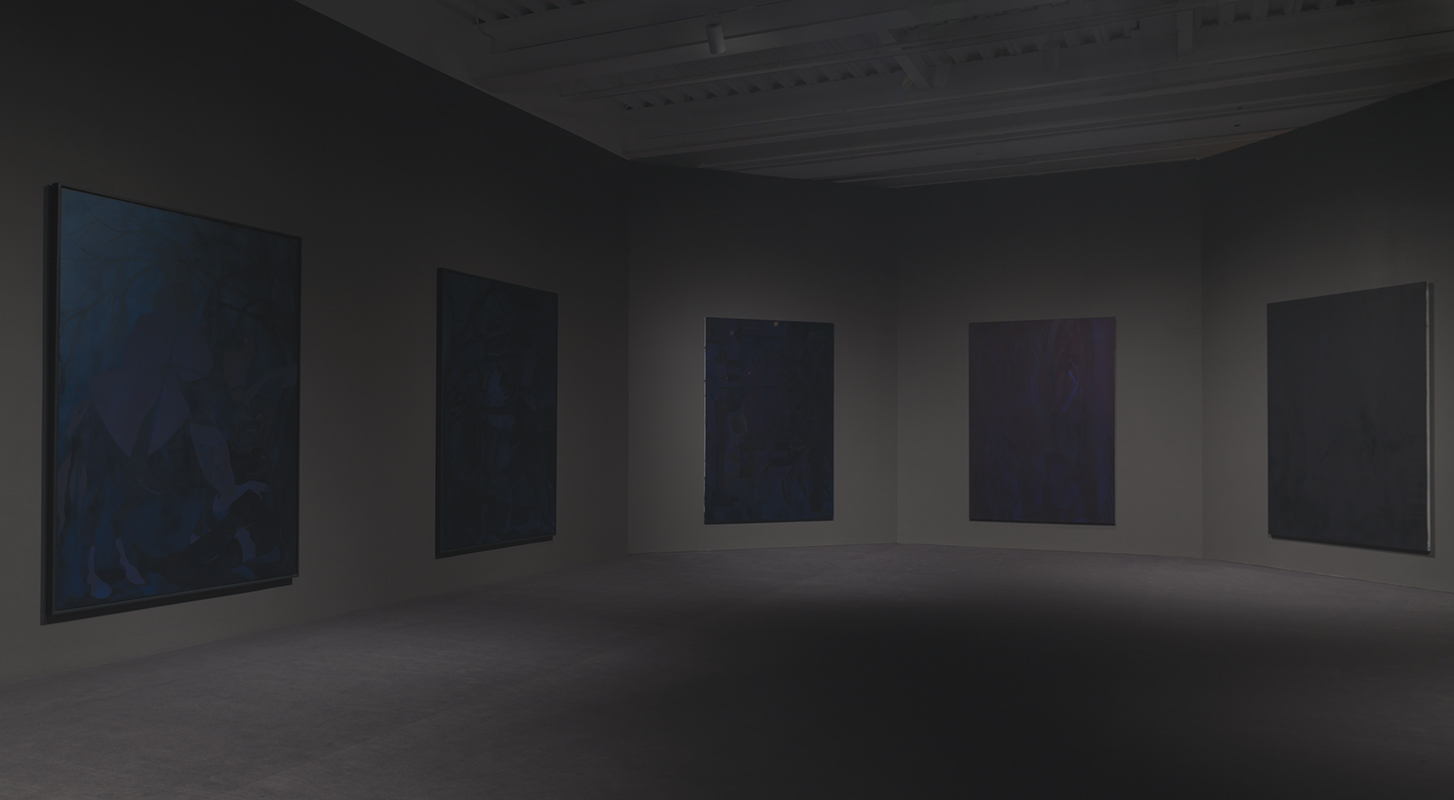
Chris Ofili’s “Blue Rider” paintings highlight solo exhibition at the New Museum (© Chris Ofili; photo by Maris Hutchinson/EPW)
CHRIS OFILI: NIGHT AND DAY
New Museum of Contemporary Art
235 Bowery at Prince St.
Thursday, January 29, $10 (includes half-price gallery admission), 7:00
Exhibition continues through Sunday February 1, $16 (pay-what-you-wish Thursday 7:00 – 9:00)
212-219-1222
www.newmuseum.org
Tonight at 7:00, with the revelatory midcareer-redefining exhibit “Chris Ofili: Night and Day” about to begin its final weekend at the New Museum, writer and professor Fred Moten will be at the downtown institution for a special presentation, “Fred Moten on Chris Ofili: Bluets, Black + Blue, in Lovely Blue.” Moten, author of the 2014 National Book Award finalist The Feel Trio, will be discussing Ofili’s influences, historical references, and multidisciplinary trajectories, with a particular focus on the artist’s “Blue Rider” paintings. In 2004, Ofili, who was born in Manchester and moved from London to Trinidad in 2005, began a series of striking large-scale oil-on-linen works, some with charcoal and/or acrylic as well, with varying shades of deep blue over a silver background. At first glance, the paintings appear to be virtually all dark blue, nearly black, with no figuration apparent. Nine of the works are hanging together in a dark room on the third floor of the museum; visitors will benefit from allowing time for their eyes to adjust to the lack of light, moving around and viewing the canvases from different angles to let the paintings’ magic and mystery slowly reveal themselves. When we were there, a woman got angry when people just walked in and out, thinking that there was not much to see; she got down on her hands and knees, examining every detail of the works, imploring others to do the same. The paintings have quite a collection of stories to tell, incorporating elements of slavery, mythology, blues music, the Bible, and modern life. “Ofili’s work suggests a way of seeing where the centrality of the color is taken for granted,” artist Glenn Ligon writes in his catalog essay, “Blue Black.” He continues, “‘Iscariot Blues’ (2006), ‘Blue Riders’ (2006), ‘Blue Steps (fall from grace)’ (2011), ‘Blue Smoke (Pipe Dreams)’ (2011), and ‘Blue Devils’ (2014) use blue as a kind of dark matter, a force not easily quantified but which holds the universes [Ofili] creates on canvas together. Blue is a bitch.” Ofili might be best known for the controversy surrounding his use of elephant dung in “The Holy Virgin Mary” when it was shown as part of the 1999 Brooklyn Museum exhibit “Sensation” and publicly decried by Mayor Rudolph Giuliani, so it’s fascinating that there have been no such issues about “Blue Devils,” which is based on symbolic figures during Trinidadian Carnival in Paramin but is essentially about police brutality affiliated with Britain’s “stop and search” program; the powerful piece also evokes the tragedies of Stephen Lawrence, Trayvon Martin, and other black men and women who either died at the hands of the police or had their cases botched by law enforcement.
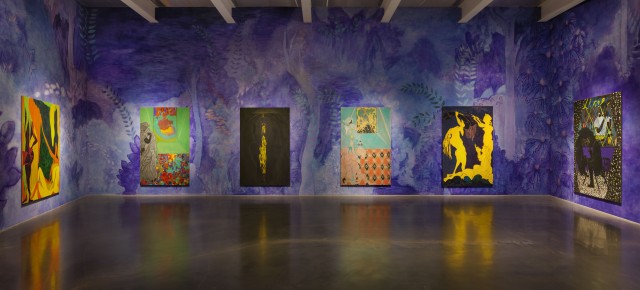
New Museum survey shows Chris Ofili’s wide range of work (© Chris Ofili; photo by Maris Hutchinson/EPW)
“In choosing ‘Blue Devils’ (2014) as the title of his ominous, dark new painting, Chris Ofili has disturbingly and deliciously subverted that famous Trinidadian Carnival reference, transposing it to the streets of London, Manchester, or New York,” writes lawyer Matthew Ryder in his catalog essay, “Blue Devils.” Ryder, who handles police brutality cases, further explains, “Through this piece, Ofili adds his voice at a timely point to the long-running debate concerning the relationship of black men with the police, both in the United Kingdom and the United States, since it has gained unusual intensity in recent months. . . . ‘Blue Devils,’ with its twisted, interlocked figures barely discernible beneath the deep, overlapping shades of blue, evokes a misconduct occurring in a state of near invisibility. It also captures something much harder to express — the peculiar way that such confrontations between black men and the police are simultaneously intensely crude and unusually subtle.” The nine “Blue Rider” works are harrowing and emotional, but this first major solo museum show for Ofili, which has been extended through February 1 and is curated by Massimiliano Gioni, Gary Carrion-Murayari, and Margot Norton, also displays Ofili’s wide range, including his “Afromuse” and “Afro Margin” series, his recent paintings inspired by Ovid’s Metamorphoses, and “The Holy Virgin Mary,” one of a roomful of pieces by Ofili that consist of acrylic, oil, polyester resin, glitter, map pins, and elephant dung on linen, many precipitously set on the floor at an angle, with myriad details that require up-close examination, and not just because of their provocative titles: “No Woman, No Cry,” “Foxy Roxy,” “Pimpin’ ain’t easy.” There are also drawings, sculptures, watercolors — but it all leads back to these dark, sociopolitically daring, sensational works. As Ligon concludes, “To approach black through blue, to be in its vicinity but not quite get there, blackness an event horizon, blackness with a ‘u’ instead of an ‘e,’ a ‘state of mind’ not a ‘state,’ something always under construction, subject to revision, is what Ofili’s canvases suggest. In them, he proposes new ways to see blackness, new pathways to travel. For Ofili, blue black is the new black.” It should be fascinating to hear Moten’s take on the subject as well. (The event is sold out, but there will be a standby line beginning at 6:00. You can also watch the event on Livestream. For a conversation between Ofili and Gioni, go here.)

 Over the last several years, New Yorkers have gotten the chance to see Elizabeth Streb’s Extreme Action Company perform such dazzling works as
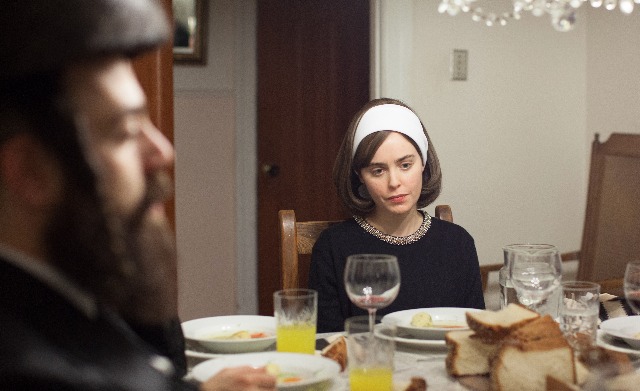
 The 2015 New York Jewish Film Festival comes to a close on January 29 with Maxime Giroux’s somber, reflective Félix and Meira. Named Best Canadian Feature at the Toronto International Film Festival, the film stars Israeli actress Hadas Yaron as Meira, a young married woman who is feeling trapped by the constraints of the Hasidic world in which she lives in Montreal’s Mile End district. Her husband, Shulem (Luzer Twersky), is a devout man who follows the tenets of his religion; he and Meira sleep in separate beds, and he seems more intent on ritualistically washing his hands in the bedroom than touching his wife. One morning, while pushing her daughter in a stroller, she is approached by Félix (Martin Dubreuil), a conflicted man whose father just died so he is seeking advice about God and death. Meira tells him to leave them alone, but soon Félix and Meira are meeting in secret, and when Shulem finds out about it, he ships Meira off to Brooklyn. Félix goes after her, wanting to take their relationship to the next level as Meira considers her responsibilities to her husband, her daughter, and herself.