Who: Wang Jianwei
What: “Spiral Ramp Library,” live performance held in conjunction with the closing of the exhibition “Wang Jianwei: Time Temple”
Where: Solomon R. Guggenheim Museum, 1071 Fifth Ave. at 89th St., 212-423-3587
When: Thursday, February 12, $12, 8:00, and Friday, February 13, $15, 8:00
Why: “I always want to position my works, the exhibitions, and the audience’s relationship to the exhibitions as part of a process. The process includes changes that take place during different periods of time. For example, the production of works as time, the exhibition cycle as time, and the audience’s viewing experience in different locations as time,” Beijing-based artist Wang Jianwei says in a video about his Guggenheim exhibition, “Time Temple.” The exhibition consists of a room of painting and sculpture on view through February 16; the fifty-five-minute film The Morning Time Disappeared, inspired by Franz Kafka’s Metamorphosis, screening daily at 1:00; and the live multimedia performance event “Spiral Ramp Library,” taking place February 12-13 in the museum’s rotunda, incorporating sound, video, dance, theater, and improvisation, gathering ideas generated by the exhibition’s opening event, in which twenty speakers discussed ten topics, including maps, Jorge Luis Borges, climate, Frank Lloyd Wright, the universe, and the Guggenheim itself, in a way reimagining the building as Borges’s Tower of Babel in which every person is a book. (The February 13 performance will be followed by a Q&A with Wang.)
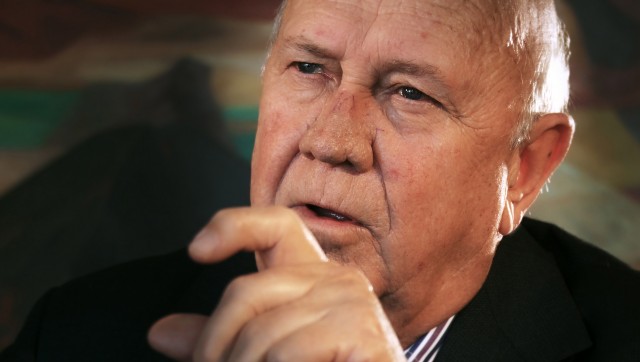
 In The Other Man: F. W. de Klerk and the End of Apartheid, filmmaker Nicolas Rossier examines the legacy of the man who won the 1993 Nobel Peace Prize with Nelson Mandela, painting an intriguing portrait of former South African president Frederik Willem de Klerk, who ended the ban on the African National Congress and ultimately ceded power to Mandela. “I’ve come to the conclusion that apartheid was wrong, that it was morally unjustifiable, and therefore it had to be changed,” de Klerk states emphatically in the film. “And I’m not justifying in any way the wrongs which took place and which was done to the majority of the people living in South Africa in the period of apartheid and separate development.” De Klerk was born into a privileged family, his father one of the chief architects of apartheid, which its supporters prefer to call “separate development.” Taking over the presidency in 1989 from P. W. Botha, de Klerk saw the inevitable downfall of white leadership in South Africa and worked with Mandela to create a new future for the country. Rossier speaks with such anti-apartheid activists as Mathews Phosa, Albie Sachs, Yasmin Sooka, Randall Robinson, and Father Michael Lapsley; such members of de Klerk’s inner circle as Director General David Steward, cabinet ministers Leon Wessels and Roelf Meyer, and friend and foreign ministry spokeswoman Alayne Reesberg; journalists Allister Sparks and Max du Preez; human rights abuse investigator Richard Goldstone; U.S. assistant secretary of state Chester Crocker; former SADF soldier Piet Croucamp; and former South African president Thabo Mbeki, who share wide-ranging opinions and stories about de Klerk as a man and a politician, examining his motives and responsibilities and placing them in context of the changes swirling throughout his country.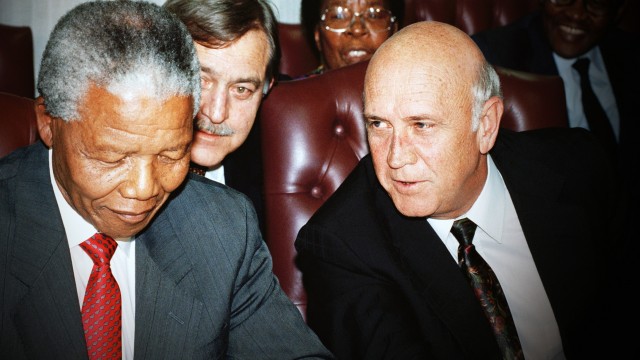
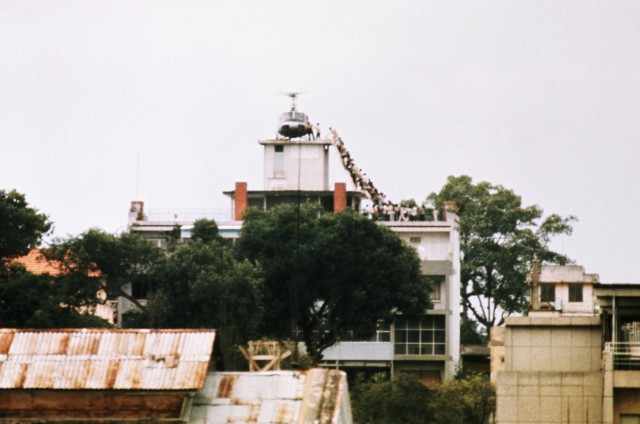
 To many, the fall of Saigon immediately brings to mind images of men, women, and children climbing the gate at the U.S. embassy, desperately trying to board American helicopters and escape the country as the North Vietnamese army approached. Director and producer Rory Kennedy takes viewers behind the scenes of that madness in the harrowing and revealing documentary Last Days in Vietnam. Kennedy, the youngest daughter of Bobby and Ethel Kennedy, and editor Don Kleszy have woven together remarkable footage from 1970s Vietnam as more than a dozen insiders share their compelling stories, which play out like a gripping thriller with a surprise, emotionally powerful ending. At the center of it all is the late U.S. ambassador Graham Martin, a stubborn patriot who continually refused to vacate the embassy until it was almost too late. U.S. Army captain Stuart Herrington gets personal as he talks about trying to help potential refugees. Secretary of State Henry Kissinger and White House press secretary Ron Nessen discuss President Gerald Ford’s attempts to persuade Congress to fund a major evacuation. CIA analyst Frank Snepp and Special Forces advisor Richard Armitage delve into the military’s plans, while South Vietnamese Navy captain Kiem Do, South Vietnamese Army lieutenant Dam Pham, and Vietnamese student Binh Pho tell what it was like from their vantage points. USS Kirk chief engineer Hugh Doyle, USS Kirk captain Paul Jacobs, and Marine pilot Gerald Berry reveal stunning stories of bravery and daring during the evacuation on land and sea and in the air. If you think this is old news, you’re mistaken, as the film offers a whole new perspective on this seminal moment in the history of two nations — and it’s nearly impossible to watch it without thinking that something similar might occur in Iraq and Afghanistan soon. An American Experience production and nominated for an Oscar for Best Documentary Feature, Last Days in Vietnam is screening February 8 at 7:30 as part of the Maysles Documentary Center series “Oscar Buzz Presents” and will be followed by a Q&A with Kennedy (Ethel, Ghosts of Abu Ghraib); the series includes such other Oscar-nominated and shortlisted films as Laura Poitras’s Citizenfour, Sam Cullman, Mark Becker, and Jennifer Grausman’s Art and Craft, and Al Hicks’s Keep on Keepin’ On.
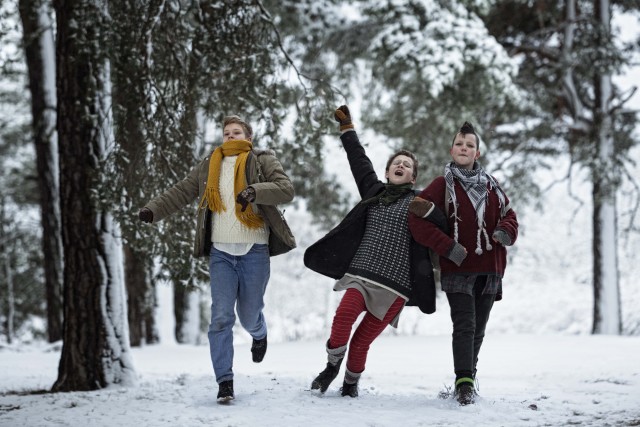
 Thank goodness Lukas Moodysson changed his mind. After his 2009 film, Mammoth, and the death of his father, the Swedish director of such indie faves as Show Me Love, Together, and Lilya 4-ever was extremely depressed and considering quitting the movie business. But he was eventually inspired to make a happy film, and the result is the absolutely delightful We Are the Best! A liberal adaptation of his wife Coco’s semiautobiographical graphic novel Never Goodnight, the film, set in 1982 Sweden, follows the adventures of thirteen-year-old best friends Bobo (Mira Barkhammar) and Klara (Mira Grosin), a pair of outsiders who think they are rebellious punk rockers, making statements by running down the up escalator at the mall and writing an anti-sports song. Joined by fourteen-year-old Christian classical guitarist Hedvig (Liv LeMoyne), they form a punk band to rival middle school heavy metalers Iron Fist. Determined to show that punk is not dead, they futz with their hair, attempt to bond with a teen-boy punk trio, and try their darnedest to gel as a band, even though drummer Bobo and bassist Klara don’t really know how to play their instruments. All the adults in the film, primarily Klara’s parents (Lena Carlsson and David Dencik), Bobo’s mother (Anna Rydgren) and her strange friends, and the two youth recreation leaders (Matte Wiberg and Johan Liljemark, real-life members of the band Sabotage), are pretty goofy themselves, not exactly your prototypical role models, so silliness pervades in wonderfully funny ways.