this week in lectures, signings, panel discussions, workshops, and Q&As

ORSON WELLES 100: TOUCH OF EVIL

Three different versions of neo-noir masterpiece TOUCH OF EVIL will be shown as part of Orson Welles centennial celebration at Film Forum

TOUCH OF EVIL (Orson Welles, 1958)
Film Forum
209 West Houston St.
Pre-release preview version: Wednesday, January, January 14, 12:30, 2:40, 4:50, 7:00, 10:00
Theatrical release version: Thursday, January 29, 7:00 & 9:00
Reconstruction version: Sunday, February 1, 1:10, 3:20, 8:00, and Monday, February 2, 12:30, 2:40, 4:50, 9:45
Series continues through February 3
212-727-8110
www.filmforum.org

They don’t come much bigger than Orson Welles in his dark potboiler Touch of Evil, as he nearly bursts through the frame as spectacularly dastardly police captain Hank Quinlan. A deliciously devious corrupt lawman, Quinlan is an enormous drunk who has no trouble breaking the rules to get his man. Charlton Heston took a lot of criticism playing Mike Vargas, a Mexican drug enforcement agent newly married to beautiful blonde Susan (Janet Leigh), who soon finds herself menaced by a dangerous gang as a weak-kneed, pre-McCloud Dennis Weaver looks the other way. The film famously opens with a remarkable crane shot that goes on for more than three minutes, setting the stage like no other establishing shot in the history of cinema. And the final scene with Marlene Dietrich as sultry hooker Tana is a lulu as well, highlighted by one of the great all-time movie lines. What goes on in between is a lurid tale of murder and revenge filled with unexpected twists and turns, featuring appearances by such Welles regulars as Joseph Cotten, Akim Tamiroff, Joseph Calleia, and Ray Collins. There was a lot of hype surrounding the film in 1998 when it was restored to match Welles’s original desires, but the final product lives up to its billing. As part of its “Orson Welles 100” festival, honoring the centennial of the always controversial auteur’s birth, Film Forum is screening three different versions of this deeply affecting noir masterpiece: the 108-minute pre-release version on January 14 (with the 7:00 show introduced by Welles historian Joseph McBride), the 93-minute original theatrical edition on January 29, and the 111-minute reconstruction on February 1-2. The Welles festival continues through February 3 with such double features as The Lady from Shanghai and The Third Man, Compulsion and The Long, Hot Summer, and Jane Eyre and Tomorrow Is Forever, multiple versions of Macbeth, and two evenings of Wellesiana rarities hosted by series consultant McBride, author of What Ever Happened to Orson Welles? A Portrait of an Independent Career.

NEW YORK JEWISH FILM FESTIVAL OPENING NIGHT: THE MUSES OF BASHEVIS SINGER

THE MUSES

Documentary delves into Isaac Bashevis Singer’s love of women and their work as his translators

THE MUSES OF BASHEVIS SINGER (Asaf Galay & Shaul Betser, 2014)
Film Society of Lincoln Center, Walter Reade Theater
165 West 65th St. between Eighth Ave. & Broadway
Wednesday, January 14, 4:00 & 8:45
Festival runs January 14-29
212-875-5050
www.filmlinc.com
www.the-muses-of-bashevis-singer.com

Who ever thought that little old Yiddish mensch Isaac Bashevis Singer was such a horndog? Asaf Galay and Shaul Betser begin The Muses of Bashevis Singer, their light and playful documentary, with the following quote from the Nobel Prize-winning author: “In my younger days I used to dream about a harem full of women. Lately I’m dreaming of a harem full of translators. If those translators could be women in addition, this would be paradise on earth.” Well, it seems that Singer, who was born in Poland in 1902, emigrated to the United States in 1935, and died in Florida in 1991 at the age of eighty-eight, found that paradise, as Galay and Betser meet with a series of women who were among many hand-picked by Singer, the man who nearly singlehandedly preserved Yiddish literature in the twentieth century, to serve as his translators, and not necessarily because of their language skills. “There were certain women who were more than just translators to him. It happened quite often,” says his Swedish publisher, Dorothea Bromberg, who also talks about Alma, Singer’s wife of more than fifty years. “He loved her, I’m sure, in his own way,” she adds. “She was very jealous of him, and she was completely right.” Galay and Betser meet with translators Eve Fridman, Evelyn Torton Beck, Dvorah Telushkin, Marie-Pierre Bay, Duba Leibell, and Dr. Bilha Rubenstein as well as Singer biographers Florence Noiville and Janet Hadda, his granddaughters Hazel Karr and Merav Chen-Zamir, Yentl the Yeshiva Boy playwright Leah Napolin, and his longtime secretary and proofreader, Doba Gerber, who share intimate, surprising tales about the author of such books as The Family Moskat, The Magician of Lublin, Shosha, and Enemies, a Love Story and such short stories as “Gimpel the Fool,” “A Friend of Kafka,” and “Zlateh the Goat.”

The seventy-two-minute film, lifted by a bouncy, airy soundtrack by Jonathan Bar-Giora, also includes footage of Singer making speeches, appearing on interview programs, going to a Jewish deli, walking on the Coney Island boardwalk, and writing with pen on paper and on a typewriter with Yiddish characters. But as the title implies, The Muses of Bashevis Singer doesn’t depict him as a callow cad but as a determined writer — and father and husband — who just loved women, loved being surrounded by women, using them as inspiration for his marvelous stories that mixed fiction with reality. “Isaac was a very frisky old man,” says Leibell, who worked with Singer in his later years after he moved to Florida with Alma. “That’s to put it very mildly.” The Muses of Bashevis Singer will have its U.S. premiere as the opening-night selection of the New York Jewish Film Festival on January 14 with screenings at 4:00 and 8:45 at the Walter Reade Theater, both followed by Q&As with the directors. The twenty-fourth annual festival continues through January 29 with screenings and special events at the Film Society of Lincoln Center and the Jewish Museum.

BOOK RELEASE PARTY: IN LOVE IN NEW YORK

in love in new york

Who: Caitlin Leffel and Jacob Lehman
What: Book party celebrating release of In Love in New York: A Guide to the Most Romantic Destinations in the Greatest City in the World (Rizzoli, January 13, 2015, $24.95)
Where: The Corner Bookstore, 1313 Madison Ave. at 93rd St., 212-831-3554
When: Tuesday, January 13, free, 6:00
Why: Forget Paris, Rome, or Bayonne; there is no better place to be in love than our very own backyard, New York City. Caitlin Leffel and Jacob Lehman have followed up The Best Things to Do in New York: 1001 Ideas with In Love in New York, which features such chapters as “Love at First Sight,” “Getting Serious with the City,” and “Will You New York Me?” In the introduction, “The City that Never Sleeps Alone,” they write, “Whether you’re new to your relationship, new to the city, or an old pro at both, New York is there to seduce, excite, console, and entertain.” Their romantic suggestions are accompanied by photos of the Temple of Dendur, Lincoln Center, Central Park, the High Line, and other sensuous locations, with each chapter kicked off with an old-fashioned iconic postcard image of a favorite part of the city. And they include the top-ten make-out spots as well, in addition to the forty best places to propose, in case the kissing sessions were a big hit.

FAREWELL, HERR SCHWARZ

FAREWELL HERR SCHWARZ

A filmmaker uncovers heart-wrenching secrets of her family’s past in FAREWELL, HERR SCHWARZ

FAREWELL, HERR SCHWARZ (SCHNEE VON GESTERN / היה שלום פטר שווארץ) (Yael Reuveny, 2013)
Quad Cinema
34 West 13th St.
Opens Friday, January 9 (also at the JCC in Manhattan January 10-11)
212-255-2243
www.quadcinema.com

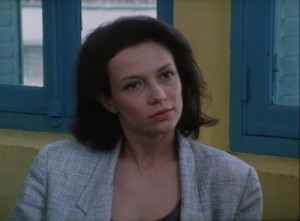
Named Best Documentary at the 2013 Haifa International Film Festival, Yael Reuveny’s Farewell, Herr Schwarz offers a unique look at the Holocaust and its continuing effects on her and her family through three generations. “We were raised to reject the Diaspora,” the Israeli-born, Berlin-based writer and director says near the beginning of her first feature-length film. “I was supposed to be ‘the new Jew’ but somehow I ended up living in Germany, in the land I wasn’t allowed to set foot in. I wasn’t allowed to be here because of my grandmother’s story. But still, her story, which haunted my childhood, eventually made me build my home here.” And a haunting story it is, filled with intrigue, mystery, and powerful emotions. Sensitively shot by cinematographer Andreas Kohler and featuring an elegiac score by Volker “Hauschka” Bertelmann, the film explores what happened between Reuveny’s grandmother, Michla Schwarz, and Michla’s beloved brother, Feiv’ke. During the war, Feiv’ke was sent to the Schleiben concentration camp in Germany, where Michla thought he perished. Yet Reuveny discovers that her great-uncle actually survived the Holocaust but remained in the same town he had been held in, changing his first name to Peter, marrying a non-Jewish German woman whose brother was a Nazi, and starting a family.

FAREWELL HERR SCHWARZ

Yael Reuveny (r.) meets relatives she never knew she had in gripping documentary

Traveling from Israel to Poland to Germany, Reuveny meets with Peter’s widow, Helga Krüger, and two surviving children, Uwe and Barbara; speaks with some of her late grandmother’s longtime friends; and talks to her own parents, Etty and Shaul, and brother, Oded, who share their thoughts and feelings about what Feiv’ke/Peter did. Although Oded thinks that Yael should move forward instead of looking back, others are deeply troubled and fascinated as more and more of the truth is revealed. It’s a gripping tale that Reuveny divides into three generational chapters, focusing first on her grandmother and great-uncle, who grew up together, and then on the next generation: her parents and their cousins, the children from Peter and Helga’s marriage. Finally, she looks at the third generation: herself, a young Jewish woman born in Israel but now living in Germany, and Peter’s grandson, Stephan, who curiously works in a synagogue and is studying Judaism. Reuveny is obsessed with the past, “not knowing how much I’m allowed to forget, how much I am allowed to let people around me forget,” and she captures her torn feelings in this captivating film that reveals yet another side of the haunting after-effects of the Holocaust. Farewell, Herr Schwarz opens Friday, January 9, at the Quad, with Columbia professor Annette Insdorf on hand to introduce the 6:00 show; the film will also be screened January 10 & 11 at the JCC in Manhattan.

ORSON WELLES 100: CITIZEN KANE

Orson Welles masterpiece kicks off centennial celebration of controversial auteur’s birth

CITIZEN KANE (Orson Welles, 1941)
Film Forum
209 West Houston St.
January 1-8
Series continues through February 3
212-727-8110
www.filmforum.org
www2.warnerbros.com

Film Forum is ringing in 2015 with the greatest American movie ever made, the epic Citizen Kane, kicking off a massive centennial celebration of the birth of its creator, the rather iconoclastic writer, director, producer, actor, and wine spokesman Orson Welles. In 1941, a young, brash, determined Welles shocked Hollywood with a masterpiece unlike anything seen before or since — a beautifully woven complex narrative with a stunning visual style (compliments of director of photography Gregg Toland) and a fabulous cast of veterans from his Mercury radio days, including Everett Sloane, Joseph Cotten, Ray Collins, Paul Stewart, and Agnes Moorehead. Each moment in the film is unforgettable, not a word or shot out of place as Welles details the rise and fall of a self-obsessed media mogul. The film is prophetic in many ways; at one point Kane utters, “The news goes on for twenty-four hours a day,” foreseeing today’s 24/7 news overload. And it doesn’t matter if you’ve never seen it and you know what Rosebud refers to; the film is about a whole lot more than just that minor mystery. Like every film the Wisconsin-born Welles made, Citizen Kane was fraught with controversy, not the least of which was a very unhappy William Randolph Hearst seeking to destroy the negative of a film he thought ridiculed him. Kane won only one Oscar, for writing — which also resulted in controversy when Herman J. Mankiewicz claimed that he was the primary scribe, not Welles. The film lost the Academy Award for Best Picture to John Ford’s How Green Was My Valley, but it has topped nearly every greatest-films-of-all-time list ever since.

Orson Welles

Orson Welles was one of a kind, as splendid Film Forum series shows

A classic American story that never gets old, Citizen Kane, in a 4K restoration, will run at Film Forum January 1-8, igniting “Orson Welles 100,” a four-week festival programmed by Bruce Goldstein along with consultant Joseph McBride, author of What Ever Happened to Orson Welles? A Portrait of an Independent Career. Welles’s career was fraught with controversy, with battles over editorial control, finances, and politics, with more unfinished projects than completed ones. As McBride points out at the start of his 2006 book, “‘God, how they’ll love me when I’m dead!’ Welles was fond of saying in his later years, with a mixture of bitterness and ironic detachment. But that’s a half-truth at best. More than two decades after Welles’s death, his career is, in a very real sense, still flourishing. But it is a disturbing irony that Welles is more ‘bankable’ now than when he was living.” The Film Forum series confirms this statement, consisting of more than thirty films that Welles directed and/or appeared in, including multiple versions of Touch of Evil and Macbeth; the lineup ranges from the familiar (The Magnificent Ambersons, The Third Man, Compulsion, A Man for All Seasons) to the obscure (Prince of Foxes, The Black Rose, Man in the Shadow, Black Magic), from the Shakespearean (Chimes at Midnight, Macbeth, Othello) to the Muppets (The Muppet Movie). Among the double features are The Immortal Story and F for Fake, The Stranger and Journey into Fear, and Jane Eyre and Tomorrow Is Forever. McBride will be on hand to present the rarities collection “Wellesiana” as well as the “Preview version” of Touch of Evil on January 14 and the “Scottish version” of Macbeth on January 16, joined by Welles’s daughter Chris Welles Feder.

FIRST SATURDAY: “CROSSING BROOKLYN” ARTISTS’ CHOICE

Brooklyn Museum
200 Eastern Parkway at Washington St.
Saturday, January 3, free, 5:00 – 11:00
212-864-5400
www.brooklynmuseum.org

The Brooklyn Museum welcomes in 2015 by handing over the reins of its free monthly First Saturdays program to several of the artists featured in “Crossing Brooklyn: Art from Bushwick, Bed-Stuy, and Beyond,” which concludes on January 4. The night before, curators Eugenie Tsai and Rujeko Hockley will discuss the exhibition at 5:30, “Crossing Brooklyn” artist Linda Goode Bryant will talk about urban farming at 6:15, jazz percussionist Ches Smith will activate David Horvitz’s forty-seven suspended bells as part of a site-specific musical composition at 6:30, and BFAMFAPhD (Blair Murphy, Susan Jahoda, and Vicky Virgin) will delve into the nature of creativity and debt at 7:15. “‘Crossing Brooklyn’ Artists’ Choice” also features live performances by Snarky Puppy, DJ Selly and DJ Asen from Fon, ventriloquist Nigel “Docta Gel” Dunkley (telling the story of Cindy Hot Chocolate from Geltown), immersive dance company Ani Taj and the Dance Cartel, Fela! veterans Chop and Quench led by Sahr Ngaujah, and spoken word poets Corina Copp, Patricia Spears Jones, Rickey Laurentiis, and Charles North as well as Greg Barris’s “Heart of Darkness” comedy showcase with Janeane Garofalo and Ilana Glazer, a print-making art workshop, a creative writing workshop led by Jaime Shearn Coan, and D’hana Perry’s multimedia improvisational “LOOSE.” In addition, you can check out such exhibitions as “Revolution! Works from the Black Arts Movement,” “Judith Scott — Bound and Unbound,” and “Chitra Ganesh: Eyes of Time.”