this week in lectures, signings, panel discussions, workshops, and Q&As

THALIA DOCS — BORN TO FLY: ELIZABETH STREB vs. GRAVITY

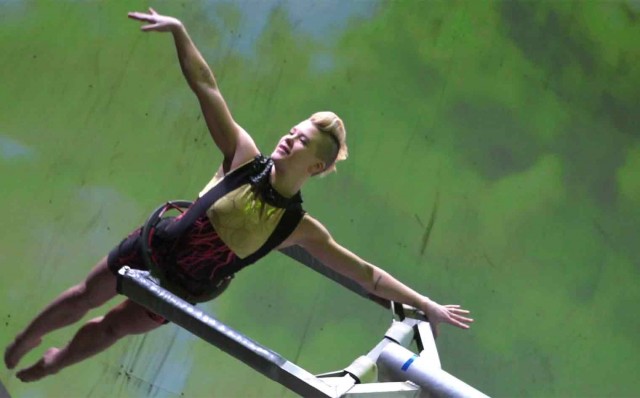
Jackie

Documentary reveals how Elizabeth Streb and her Extreme Action Company (including Jackie Carlson, seen here) take dance to a whole new level

BORN TO FLY: ELIZABETH STREB vs. GRAVITY (Catherine Gund, 2014)
Symphony Space, Leonard Nimoy Thalia
2537 Broadway at 95th St.
Sunday, December 21 & 28 and January 4, $14, 4:30
212-864-5400
www.symphonyspace.org
www.borntoflymovie.com

Over the last several years, New Yorkers have gotten the chance to see Elizabeth Streb’s Extreme Action Company perform such dazzling works as Ascension at Gansevoort Plaza, Kiss the Air! at the Park Avenue Armory, and Human Fountain at World Financial Center Plaza as her team of gymnast-dancer-acrobats risk their physical well-being in daring feats of strength, stamina, durability, and grace. In addition, Streb herself walked down the outside wall of the Whitney as part of a tribute to one of her mentors, Trisha Brown. Now Catherine Gund takes viewers behind the scenes in the exhilarating documentary Born to Fly: Elizabeth Streb vs. Gravity, going deep into the mind of the endlessly inventive and adventurous extreme action architect and the courage and fearlessness of her company. Gund follows Streb as she discusses her childhood, her dance studies, the formation of STREB in 1985, and her carefully thought out views on space, line, and movement as her work stretches the limits of what the human body can do. “I think my original belief and desire is to see a human being fly,” Streb says near the beginning of the film, which includes archival footage of early performances, family photos, and a warm scene in which the Rochester-born Streb and her partner, Laura Flanders, host a dinner party in their apartment, cooking for Bill T. Jones, Bjorn Amelan, Anne Bogart, Catharine Stimpson, and A. M. Homes.

Elizabeth Streb

Elizabeth Streb and her partner, Laura Flanders, prepare for a dinner party in new documentary

Gund also speaks with current and past members of the talented, ever-enthusiastic company — associate artistic director Fabio Tavares, Sarah Callan, Jackie Carlson, Leonardo Giron, Felix Hess, Samantha Jakus, Cassandre Joseph, John Kasten, and Daniel Rysak — who talk about their dedication to Streb’s vision while using such words as “challenge,” “velocity,” “endurance,” “magic,” “invincibility,” and “risk” to describe what they do and how they feel about it. Gund focuses on the latter, as virtually every one of Streb’s pieces is fraught with the possibility of serious injury, as evidenced by their titles alone: Fly, Impact, Rebound, Breakthru, and Ricochet, not to mention the use of such materials as spinning I-beams, plastic barricades, dangling harnesses, and a rotating metal ladder. “I have to be able to ask someone to do that and be okay about it. Those aren’t easy requests,” Streb explains. “Knowing where you are is how you survive the work,” adds former STREB dancer Hope Clark. Gund goes with Streb to her doctor, where the choreographer describes what happened to her gnarled feet, and also meets with former dancer DeeAnn Nelson Burton, who had to retire after breaking her back. The film concludes with an inside look at STREB’s spectacular “One Extraordinary Day,” a series of hair-raising site-specific events staged for the 2012 London Olympics at such locations as the Millennium Bridge, the London Eye, and the sphere-shaped city hall, photographed by documentary legend Albert Maysles. In her Kickstarter campaign, Gund (Motherland Afghanistan, A Touch of Greatness) said, “Action architect Elizabeth Streb has reinvented the language of movement. [Born to Fly] will rewrite the language of documentary.” That’s a bold declaration, but the film does have a lot of the same spirit that Streb displays in her awe-inspiring work. Born to Fly is screening December 21 & 28 and January 4 at 4:30 as part of Symphony Space’s ongoing Thalia Docs series.

THE ART OF SEX AND SEDUCTION: THE MAN WHO LOVED WOMEN

THE MAN WHO LOVED WOMEN

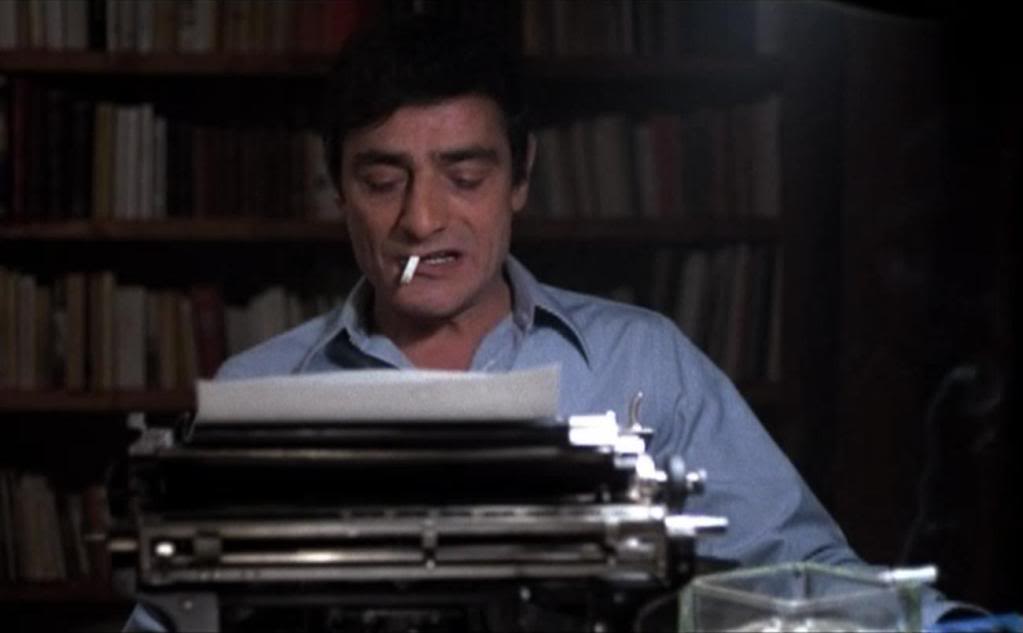
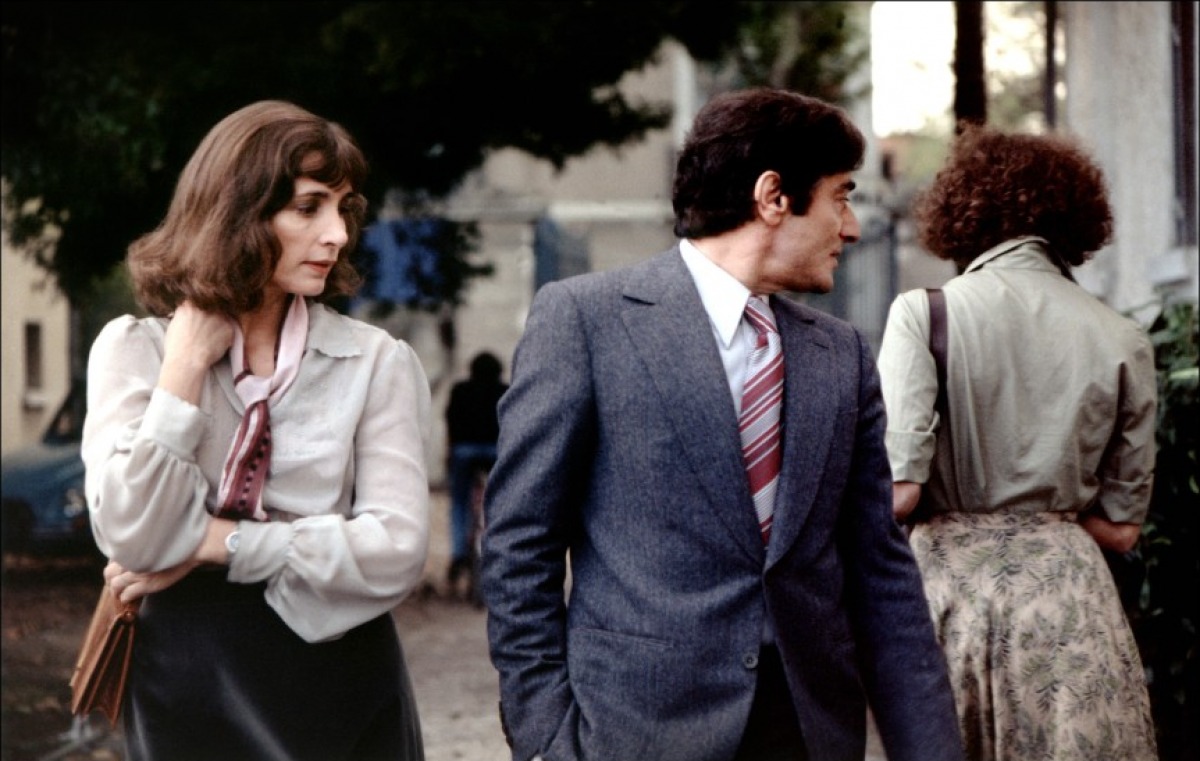
Bertrand Morane (Charles Denner) keeps his eyes on he prize in François Truffaut’s THE MAN WHO LOVED WOMEN

CINÉSALON: THE MAN WHO LOVED WOMEN (L’HOMME QUI AIMAIT LES FEMMES) (François Truffaut, 1977)
French Institute Alliance Française, Florence Gould Hall
55 East 59th St. between Madison & Park Aves.
Tuesday, December 16, $13, 7:30
212-355-6100
www.fiaf.org

Back in October, a Hollaback! video went viral showing a young woman walking through New York City as men harassed her by calling out suggestively to her, looking luridly at her, and even following her. It’s hard not to think about that video, posted by a nonprofit “dedicated to ending street harassment,” when watching François Truffaut’s 1977 film, The Man Who Loved Women. As Maurice Jaubert’s bright, cheery score plays, a string of women get out of their cars to attend a funeral. The hearse drives past the camera — just as cinematographer Nestor Almendros’s name flashes on the screen — and holds for a few seconds as Truffaut himself watches the hearse go by, then walks off in the other direction. “One funeral is just like another,” Geneviève (Brigitte Fossey) says in voice-over. “However, this one is special. Not a man in sight. Only women . . . nothing but women.” They have all gathered to say farewell to Bertrand Morane (Charles Denner), a man obsessed with the fairer sex, particularly when he sees their bare ankles and calves. He goes to great lengths to find them, to be with them, but he is no mere ladies’ man or womanizing misogynist seeking to add notches to his belt. Deeply affected by his rather offbeat relationship with his mother (Marie-Jeanne Montfajon), he finds it impossible to stop these constant urges. He works in a lab building and testing model airplanes for the military, still a child playing with toys. He is not a particular handsome man, nor is he that dapper or charming, but there is something in his eyes, in his mannerisms, that make him surprisingly desirable to the opposite sex. He is after more than just physical pleasure, but it always remains just out of his grasp, leaving an empty hole inside that he tries to fill by writing a book about his numerous exploits and endless search for happiness, a journey that ends with his premature death.

THE MAN WHO LOVED WOMEN

Bertrand Morane (Charles Denner) decides to share his love of women with the rest of the world

Truffaut, who based some situations in the film on his own life with women and his mother, fills The Man Who Loved Women with a bevy of beauties, including Nelly Borgeaud, Geneviève Fontanel, Valérie Bonnier, Nathalie Baye, and Leslie Caron. But The Man Who Loved Women is not just about eye candy, even with the nudity; it’s about the search for true love, as evidenced by a late scene between Bertrand and former flame Véra (Caron). It’s also about the art of storytelling itself, told in flashback and, in the second half, focusing on Bertrand’s book, with a stream of clever self-references linking cinema and literature. Denner, who previously starred in Truffaut’s The Bride Wore Black, has an uncanny way of making us root for him despite the sheer political incorrectness of his raison d’être; The Man Who Loved Women is probably not on Hollaback!’s Christmas wish list. But as crafted by screenwriters Truffaut, Michel Fermaud, and Suzanne Schiffman, the film, which is set in the pretty city of Montpellier in the south of France, portrays Bertrand as a kind of romantic antihero, an everyman who is fully aware of what he is doing but just can’t stop it. The film was remade in 1983 by Blake Edwards with Burt Reynolds, Julie Andrews, and Kim Basinger, but it’s not the same, of course. Truffaut’s The Man Who Loved Women, which earned César nominations for Denner, Borgeaud, and Fontanel, concludes the French Institute Alliance Française CinéSalon series “The Art of Sex and Seduction” on December 16 at 7:30, introduced by cultural critic Laura Kipnis.

A PARTICLE OF DREAD (OEDIPUS VARIATIONS)

(photo by Matthew Murphy)

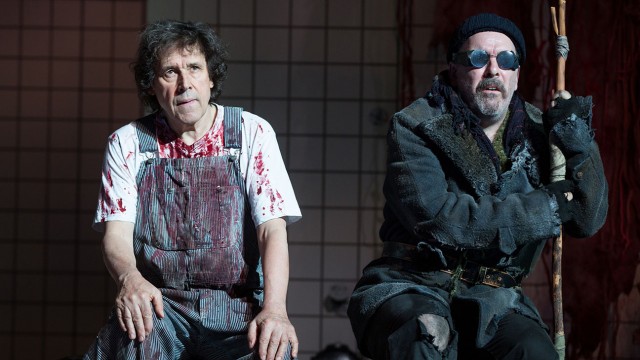
Oedipus (Stephen Rea) and a ragged traveler (Lloyd Hutchinson) discuss life and death in A PARTICLE OF DREAD (photo by Matthew Murphy)

The Pershing Square Signature Center
The Alice Griffin Jewel Box Theatre
480 West 42nd St. between Tenth & Eleventh Aves.
Tuesday – Sunday through January 4, $25 through December 23, $55 after
212-244-7529
www.signaturetheatre.org

Pulitzer Prize-winning playwright Sam Shepard continues his Legacy residency at the Signature Theatre with A Particle of Dread (Oedipus Variations), a contemporary examination of the Oedipus myth first explored by Sophocles nearly twenty-five-hundred years ago. Presented with Brian Fiel and Stephen Rea’s Derry-based Field Day Theatre Company, where the ninety-minute play premiered in the fall of 2013, A Particle of Dread (Oedipus Variations) mixes two primary story lines, one taking place in Northern Ireland during the Troubles, the other set in the California desert. In the former, gangster kingpin Lawrence/Laius (Aidan Redmond) receives a prophecy from Uncle Del (Lloyd Hutchinson) that “any child born to you and your lovely queen, Jocasta, will turn out to be your killer and the husband of his mother,” so he locks his wife (Brid Brennan) in a cage. Meanwhile, out in the Far West of America, highway patrol officer Harrington (Jason Kolotouros) and forensic investigator RJ Randolph (Matthew Rauch) are on the case of a triple murder that the wheelchair-bound Otto (Rea) is obsessed with. “None of it makes any sense! Are you kidding? This is just — this is just plain old slaughter — butchery. Like the old days,” Harrington says. “Old days?” Randolph asks. “Disemboweling — hearts torn out — drawn and quartered — heads rolling. Blood dripping down the altar steps,” Harrington replies. Randolph: “Oh — ancient then?” Harrington: “Ancient, yes, but —” Randolph: “Everything has a history, doesn’t it? I mean, this stuff didn’t come out of thin air.” Everything does have a history, which Shepard delves into as the two stories echo each other and merge, “draped in mystery and confusion,” as Oedipus (Rea) says.

(photo by Matthew Murphy)

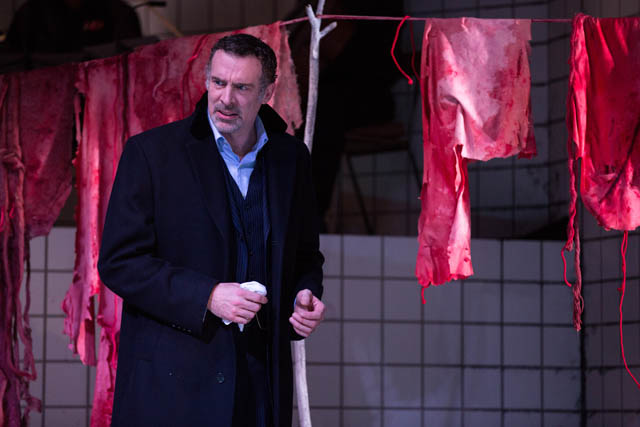
Aidan Redmond plays gangster kingpin Langos and ancient king Laius in Sam Shepard play (photo by Matthew Murphy)

Mystery and confusion abound in Shepard’s play, which reunites the two-time Tony nominee with longtime collaborators Rea (Geography of a Horse Dreamer, Kicking a Dead Horse) and director Nancy Meckler (Curse of the Starving Class, Buried Child), who have worked with one another on and off since the 1970s. The intersecting plots take place on Frank Conway’s clinically white-tiled set stained with blood, a clothesline of torn fabrics representing drying intestines in one corner, above which is an alcove where cellist Neil Martin and slide guitarist Todd Livingston contribute live music. It’s not always easy to know who is who and when is when as the story drags on, with several of the actors playing more than one role, occasionally addressing the audience directly, and the accents, American and Irish, eventually seem to intermingle. (Brennan plays Jocasta and Jocelyn, Judith Roddy plays Antigone and Annalee, Redmond plays Laius and Larry, and Hutchinson is Uncle Del, a traveler, Tiresias, and the Maniac of the Outskirts.) The Oscar-nominated Rea (The Crying Game) reveals the most depth as Oedipus, who is seeking revenge for a past wrong, and Otto, whose daughter, Annalee, is trying to protect her infant son, getting to the heart of Shepard’s own forensic investigation of fate and destiny, parents and children, and murder and duality, showing how little humanity has changed through the ages. It all makes for a rather uncomfortable experience. “Oh, tragedy, tragedy, tragedy, tragedy / Piss on it / Piss on Sophocles’ head,” Annalee says. “What’s it for? Catharsis? Purging? Metaphor? What’s in it for us?” Despite some intense moments amid lofty ideals, A Particle of Dread leaves us to ponder such critical questions, about the play itself.

AM AT THE JM: CHRISTIAN BOLTANSKI IN CONVERSATION WITH JENS HOFFMANN

Christian Boltanski,  “Monument (Odessa),” six gelatin silver prints, three tin biscuit boxes, lights, wire, dimensions variable, 1989–2003 (© Christian Boltanski / Courtesy of the Marian Goodman Gallery, New York)

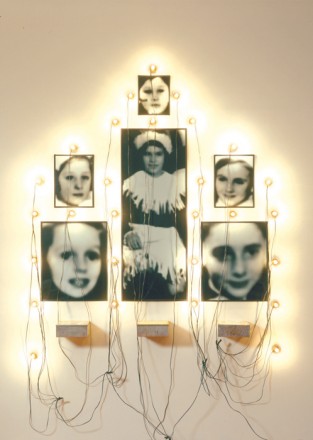
Christian Boltanski, “Monument (Odessa),” six gelatin silver prints, three tin biscuit boxes, lights, wire, dimensions variable, 1989–2003 (© Christian Boltanski / Courtesy of the Marian Goodman Gallery, New York)

Think Coffee
123 Fourth Ave. between Twelfth & Thirteenth Sts.
Friday, December 12, free, 8:00
www.thejewishmuseum.org
www.thinkcoffee.com

For years, we’ve been fascinated by Christian Boltanski’s “Monument (Odessa),” which is part of the permanent collection of the Jewish Museum. The wall installation consists of six photos of children, surrounded by wires connected to more than two dozen lights, above three rusted tin boxes. It makes one instantly think of the Holocaust, of lighted Yahrzeit remembrances in synagogues, of the six million. However, Boltanski, who was born in France in 1944, has stated, “My work is about the fact of dying, but it’s not about the Holocaust itself.” On Friday, December 12, at 8:00 in the morning, Boltanski, who built a mountain of clothing at the Park Avenue Armory for “No Man’s Land” in 2010 — an immersive work that also evoked the Holocaust — will discuss art, memory, “Monument (Odessa),” and more during the Jewish Museum’s latest downtown edition of “AM at the JM,” a free morning talk, with free java, at Think Coffee by Union Square, hosted by Jens Hoffmann, deputy director of exhibitions and public programs at the Jewish Museum. “A good work of art can never be read in one way. My work is full of contradictions,” Boltanski told Tamar Garb in 1997. “There are many ways of looking at the work. It has to be ‘unfocused’ somehow so that everyone can recognize something of their own self when viewing it.” This coffee klatch should make for quite a heady way to start the day.

tears become . . . streams become . . .

Performance installation transforms the Park Avenue Armory into a multisensory experience (photo by James Ewing)

Performance installation transforms the Park Avenue Armory into a multisensory experience (photo by James Ewing)

Park Avenue Armory
643 Park Ave. at 67th St.
Installation: December 11 – January 4, $15, times vary
Performances: December 9-21, $90, 7:00 or 8:00
212-933-5812
www.armoryonpark.org

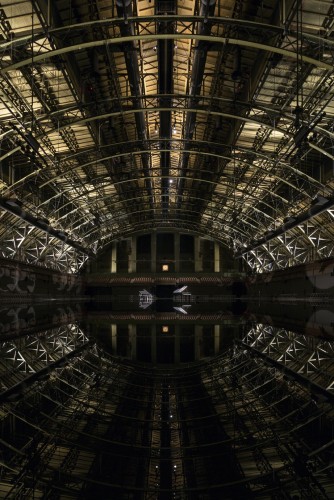
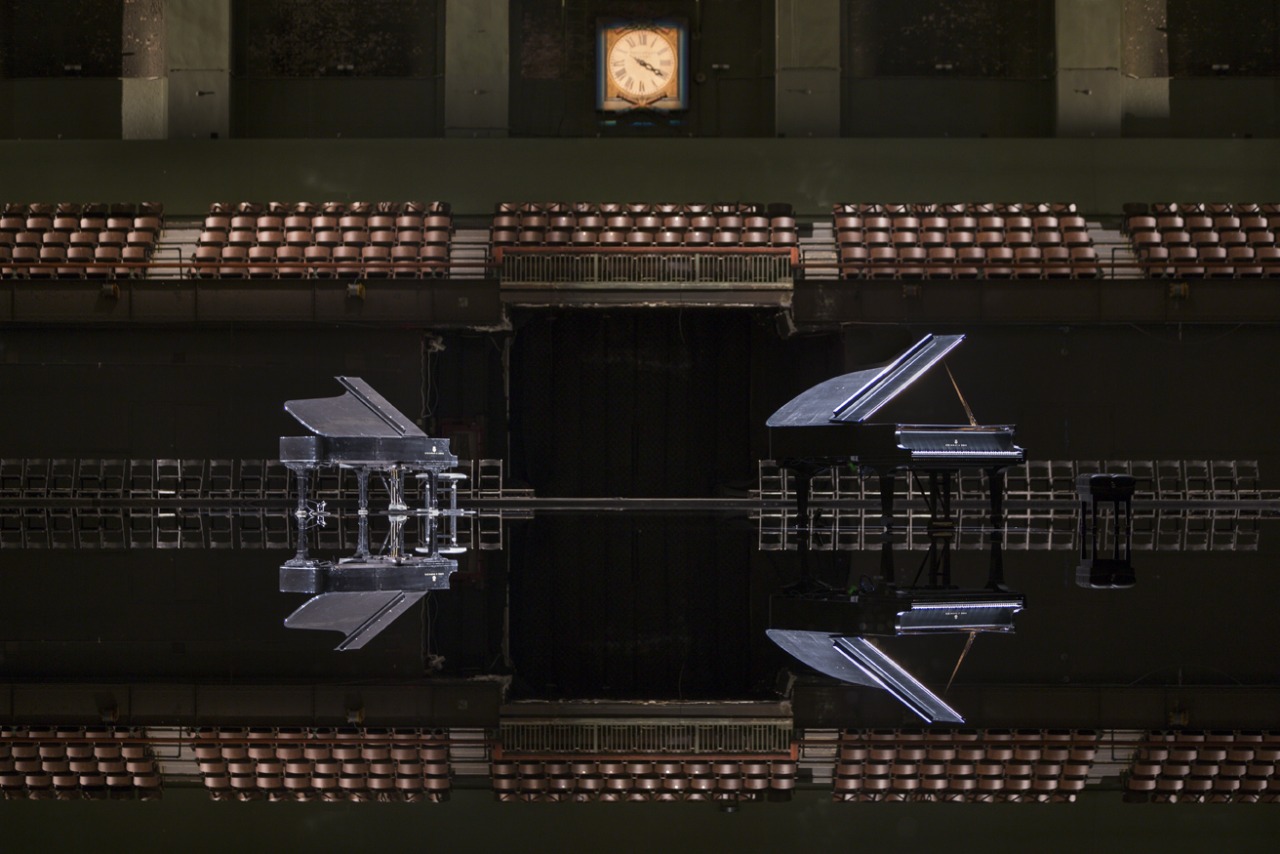
As you enter the cavernous Wade Thompson Drill Hall in the Park Avenue Armory to experience Douglas Gordon and Hélène Grimaud’s absolutely wonderful “tears become . . . streams become . . . ,” you encounter a long rectangular space in front of you, several inches below floor level, with two pianos standing on it and groups of chairs on all four sides. Slowly, water begins seeping into the central area. You take your seat and become mesmerized as water continues coming up through the seams of more than eight hundred dark panels of cement-bonded particle board and spreads across the thirty-three thousand square foot space, filling in ever-dampening circles in extremely satisfying individual narratives. Then the French-born, Switzerland-based Grimaud, seated at the larger of the Steinway grands, begins playing water-inspired works by Debussy, Ravel, Liszt, and others as the lighting turns the floor into a breathtaking reflecting pool, the arched ceiling echoed below in such a way that you feel like you can fall right into its spacious depths, as if the pool below is as vast and open as the space above. The large semicircular vaults of the west entrance and the east wall become complete circles with the reflection, the whole entity resembling a kind of submarine; meanwhile, little gurgles of water occasionally pop up on the surface, making quick sounds and small ripples. In addition, occasional currents create shimmers that add an enticingly surreal quality to the proceedings. At the press preview on December 8, the Turner Prize–winning Gordon sat on the piano bench next to Grimaud, occasionally standing up and determinedly waving his hands and arms, signaling the lighting personnel as if conducting an orchestra. One of the most accomplished classical pianists in the world, Grimaud has synesthesia, a sensory condition that causes her to visualize music as colors, which is ironic given the piece’s decidedly monochromatic appearance; also ironic is that Gordon says he is not a very good swimmer — and in his 2012 installation “The End of Civilisation,” he burned a piano onscreen. (Gordon and Grimaud each has a thing for wolves as well.) Doused in magic and mystery, “tears become . . . streams become . . . ” is yet another major triumph for the armory, which has been presenting many of the city’s most dazzling and innovative performance installations since opening as an arts institution in 2007.

(photo by James Ewing)

Lights and music lead to reflective moments in “tears become . . . streams become . . . ” (photo by James Ewing)

Grimaud will be performing a one-hour program live December 9-21 ($90); there will be an Artist Talk on December 10 ($15) with Gordon and Grimaud, moderated by armory artistic director Alex Poots, who brought the two together for this very special commission, and Family Day takes place Sunday, December 13, from 10:00 am to 12 noon, specifically for families with children ages six to twelve. The must-see “tears become . . . streams become . . . ” — a title Gordon came up with from a memory of having seen a young boy playing the piano with one hand while wiping away tears with the other — will be open afternoons and some evenings December 11 through January 4 ($15, stay as long as you want), during which times a computerized piano will play Grimaud’s music, but the lighting, which is so integral to the piece, will not change. “A field is endless — it goes on, and on, and on, and on,” Gordon states about the project. “And as the water collects, the space it inhabits will never be the same again.” Indeed, after immersing yourself in “tears become . . . streams become . . . ,” you will never see the armory — or hear Debussy, Ravel, and Liszt — quite the same way again.

CONCERNING VIOLENCE: NINE SCENES FROM THE ANTI-IMPERIALISTIC SELF-DEFENSE

Documentary uses Swedish archival footage and the words of Frantz Fanon to tell story of colonization and decolonization

Documentary uses Swedish archival footage and the words of Frantz Fanon to tell story of colonization and decolonization

CONCERNING VIOLENCE (Göran Hugo Olsson, 2014)
IFC Center
323 Sixth Ave. at Third St.
December 5-11
212-924-7771
www.ifccenter.com
www.facebook.com/concerningviolence

Swedish filmmaker Göran Hugo Olsson brings physician and psychiatrist Frantz Fanon’s seminal 1961 book, The Wretched of the Earth, to bold, vivid life in the empowering documentary Concerning Violence: Nine Scenes from the Anti-Imperialistic Self-Defense. “Every one of us must think for himself — always provided that he thinks at all; for in Europe today, stunned as she is by the blows received by France, Belgium, or England, even to allow your mind to be diverted, however slightly, is as good as being the accomplice in the crime of colonialism,” French philosopher Jean-Paul Sartre wrote in the lengthy preface to the book. For Concerning Violence, Olsson called on Columbia University professor Gayatri Chakravorty Spivak to provide a heavily academic introduction, setting the stage for nine examples of the relationship between settlers and natives, Europeans and Africans, in the 1960s, ’70s, and ’80s. As he did with his previous film, The Black Power Mixtape 1967-1975, Olsson uses amazing footage taken by Swedish journalists, including interviews with Christian missionaries, Zimbabwe president Robert Mugabe, reporter Gaetano Pagano, Burkina Faso president Thomas Sankara, black revolutionaries, and privileged white men, combining those stunning images with strong statements from Fanon’s treatise, read by Ms. Lauryn Hill and blasted across the screen in big letters. “Colonialism is not a thinking machine, nor a body endowed with reasoning faculties. It is violence in its natural state, and it will only yield when confronted with greater violence,” Hill states in a steady voice. “Decolonization is always a violent phenomenon. Decolonization is a historical process. It cannot be understood, it cannot become clear to itself except by the movements which give it historical form and content. Decolonization, which sets out to change the order of the world, is, obviously, a program of complete disorder.”
The nine “chapters” take viewers to Angola, Rhodesia, Liberia, Tanzania, Mozambique, Guinea-Bissau, and other current or former African nations, examining institutional racism, wealth and poverty, illegal imprisonment, guerrilla revolutions, the IMF, and the lurking “monster” that is the United States. It draws a brutal, powerful picture that pulls no punches, with expert use of archival footage never seen outside of Sweden. “There is no native who does not dream at least once a day of setting himself up in the settler’s place,” Ms. Hill reads, the words still ringing true today as riots and protests spread throughout the United States and civil wars continue in Africa and other continents. More than fifty years after its publication, The Wretched of the Earth is still a call to action, albeit one steeped in violence, as one can debate how much things have really changed. “The films in the Swedish Archive might have been part of a patronizing perspective at the time, but thirty years later, we think they reveal something important about this time to Europeans, Americans, and Africans — as well as others across the world who have been on either side of colonization, or are experiencing it now,” Olsson points out in his director’s statement. Concerning Violence opens December 5 at the IFC Center, with Olsson participating in Q&As following the 6:00 shows on Friday and Saturday.

SHE’S BEAUTIFUL WHEN SHE’S ANGRY

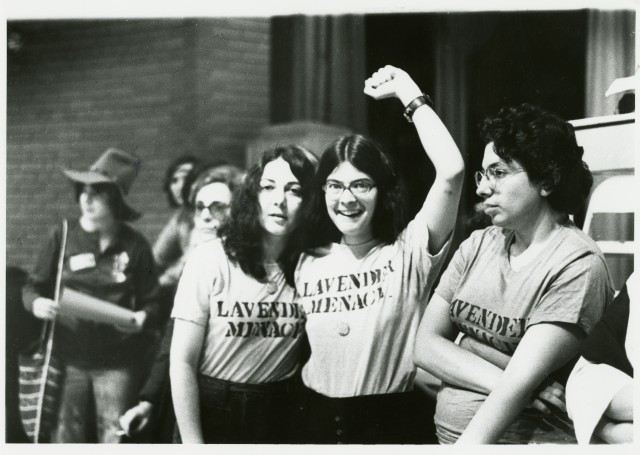
Lavender Menace

Women show their power in rousing new documentary

SHE’S BEAUTIFUL WHEN SHE’S ANGRY (Mary Dore, 2014)
Landmark Sunshine Cinema
143 East Houston St. between First & Second Aves.
Opens Friday, December 5
212-330-8182
www.landmarktheatres.com
www.fb.com/ShesBeautifulWhenShesAngry

Emboldened by the civil rights movement, antiwar rallies, and student demonstrations, women across America came together and took to the streets in the mid-to-late 1960s, fighting for liberation from long-held societal beliefs and strictures. Mary Dore’s She’s Beautiful When She’s Angry focuses in on the years 1966 to 1971, when women became activists for their own rights, reclaiming their bodies and redefining gender roles, refusing to be treated like second-class citizens anymore. “It was like all this energy had been pent up in these women for all these years and it just exploded,” says Chicago activist Mary Jean Collins at the beginning of the film. Twenty years in the making, the documentary contains new interviews with more than thirty women who describe their experiences in the women’s liberation movement, giving the inside scoop behind specific marches, strikes, protests, and organizations, as Dore cuts between the speakers today, usually interviewed in their home environment, and rare archival footage and photographs of the women in action more than forty years ago. Dore explores the importance of such books as Betty Friedan’s The Feminine Mystique and the Boston Women’s Health Book Collective’s Our Bodies, Ourselves and speaks to cofounders and early members of such groups as the National Organization for Women, the Chicago Women’s Liberation Union, Gainesville Women’s Liberation, and JANE, which provided underground abortions. All of them fully understand that the fight is far from over, especially with what is currently going on in Congress. “You’re not allowed to retire from women’s issues,” Dallas Women’s Coalition cofounder Virginia Whitehill explains. “You still have to pay attention, ’cause somebody’s gonna try to yank the rug out from under you, and that’s what’s happening now.”

Among the women who speak openly and honestly about the women’s movement, both the good and the bad, examining such topics as birth control, abortion, rape, career opportunities, education, misogyny, child care, unequal pay, sexual harassment, and more, are early organizer Chude Pamela Allen, Student Nonviolent Coordinating Committee Black Women’s Liberation Committee cofounder Fran Beal, lesbian feminist and writer Rita Mae Brown, journalists Susan Brownmiller, Marilyn Webb, and Marlene Sanders, NOW Women’s Strike Coordinator Jacqui Ceballos, Miss America protestor Carol Giardina, writer and professor Kate Millett, Congresswoman Eleanor Holmes Norton, and Redstockings cofounder Ellen Willis. No men are interviewed for the documentary, although some are shown in old footage, mostly putting women down. In fact, the film was written, directed, produced, edited, and photographed by women; the only major role filled by a man is the composer, with a score by Mark degli Antoni. Even the powerful soundtrack consists primarily of female vocalists, including Cat Power, Nico, Bikini Kill, Janis Ian, Janis Joplin, Grace Slick, Aretha Franklin, and the Chicago Women’s Liberation Rock Band. “Telling the truth and talking is very revolutionary,” historian and journalist Ruth Rosen says in the film, not only referring to the past but to the future as well.

The film, which is certainly rather talky, opens December 5 at the Landmark Sunshine, with many of the opening-weekend screenings followed by Q&As with Dore, who will be joined on December 5 at 7:15 by producer and editor Nancy Kennedy and film subjects Muriel Fox, Linda Burnham, Marlene Sanders, Nona Willis Aronowitz, Carol Giardina, Alix Kates Shulman, Marilyn Webb, and Ellen Shumsky, on December 6 at 2:30 by Kennedy and Planned Parenthood’s Diane Max and Christine Canedo, on December 6 at 7:15 by DOMA litigant Edie Windsor and Astraea Lesbian Foundation for Justice director J. Bob Alotta, December 7 at 2:30 by Sanders, former NOW VP Lucy Komisar, the NYCLU’s Katharine Bodde, and NOW’s Sonia Ossorio, and December 7 at 7:15 by Kennedy, executive producers Elizabeth Driehaus and Pamela Tanner Boll, NY Women in Film & TV’s Mirra Bank, Women Make Movies’ Debbie Zimmerman, Women in the Arts & Media Coalition’s Shellen Lubin and Avis Boone, and various other producers. America has seen more than its share of protests in recent weeks alone; can organized rebellion make a difference? She’s Beautiful When She’s Angry, which was significantly financed by a grassroots Kickstarter campaign, has the answer.