New York City celebration of MLK Day includes a screening of KING: A FILMED RECORD…MONTGOMERY TO MEMPHIS at Film Forum
Multiple venues
Monday, January 19
www.mlkday.gov
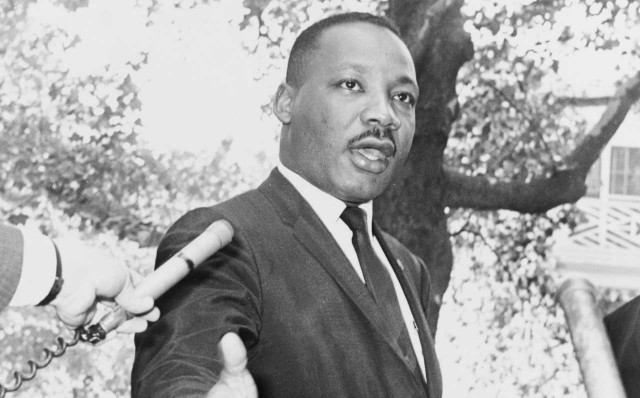
In 1983, the third Monday in January was officially recognized as Martin Luther King, Jr. Day, honoring the birthday of the civil rights leader who was assassinated in Memphis on April 4, 1968. Dr. King would have turned eighty-six this month, and you can celebrate his legacy on Monday by participating in a Martin Luther King, Jr. Day of Service project or attending one of numerous special events taking place around the city. BAM’s twenty-ninth annual free Brooklyn Tribute to Dr. Martin Luther King, Jr. includes a keynote speech by Dr. Cornel West, live performances by Sandra St. Victor & Oya’s Daughter and the New York Fellowship Mass Choir, the theatrical presentation State of Emergence, the NYCHA Saratoga Village Community Center student exhibit “Picture the Dream,” and a screening of Ken Burns, Sara Burns, and David McMahon’s 2012 documentary The Central Park Five. The JCC in Manhattan will host an Engage MLK Day of Service in Brooklyn: Feeding Our Neighbors community initiative, a screening of Rachel Fisher and Rachel Pasternak’s 2014 documentary Joachim Prinz: I Shall Not Be Silent, and “Thank You, Dr. King,” in which Dance Theater of Harlem cofounder Arthur Mitchell shares his life story, joined by dancers Ashley Murphy and Da’Von Doane.
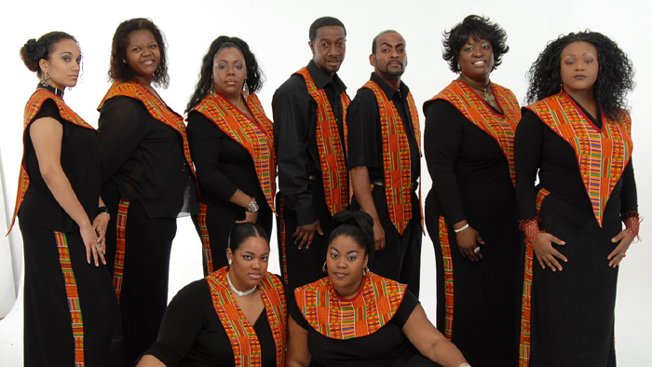
The Harlem Gospel Choir will play a special matinee at B.B. King’s on MLK Day
The Children’s Museum of Manhattan will teach kids about King’s legacy with the “Martin’s Mosaic” and Mugi Pottery workshops, the “Heroic Heroines: Coretta Scott King” book talk, and Movement & Circle Time participatory programs, while the Brooklyn Children’s Museum hosts the special hands-on crafts workshops “Let’s March!” and “Let’s Join Hands,” screenings of Rob Smiley and Vincenzo Trippetti’s 1999 animated film Our Friend, Martin, and a Cultural Connections performance by the Berean Community Drumline. The Museum at Eldridge Street will be hosting a free reading of Kobi Yamada and Mae Besom’s picture book What Do You Do with an Idea? along with a collage workshop. Also, Film Forum will show the 1970 three-hour epic documentary King: A Filmed Record . . . Montgomery to Memphis at 7:00, and the Harlem Gospel Choir will give a special MLK Day matinee at 12:30 at B.B. King’s in Times Square.
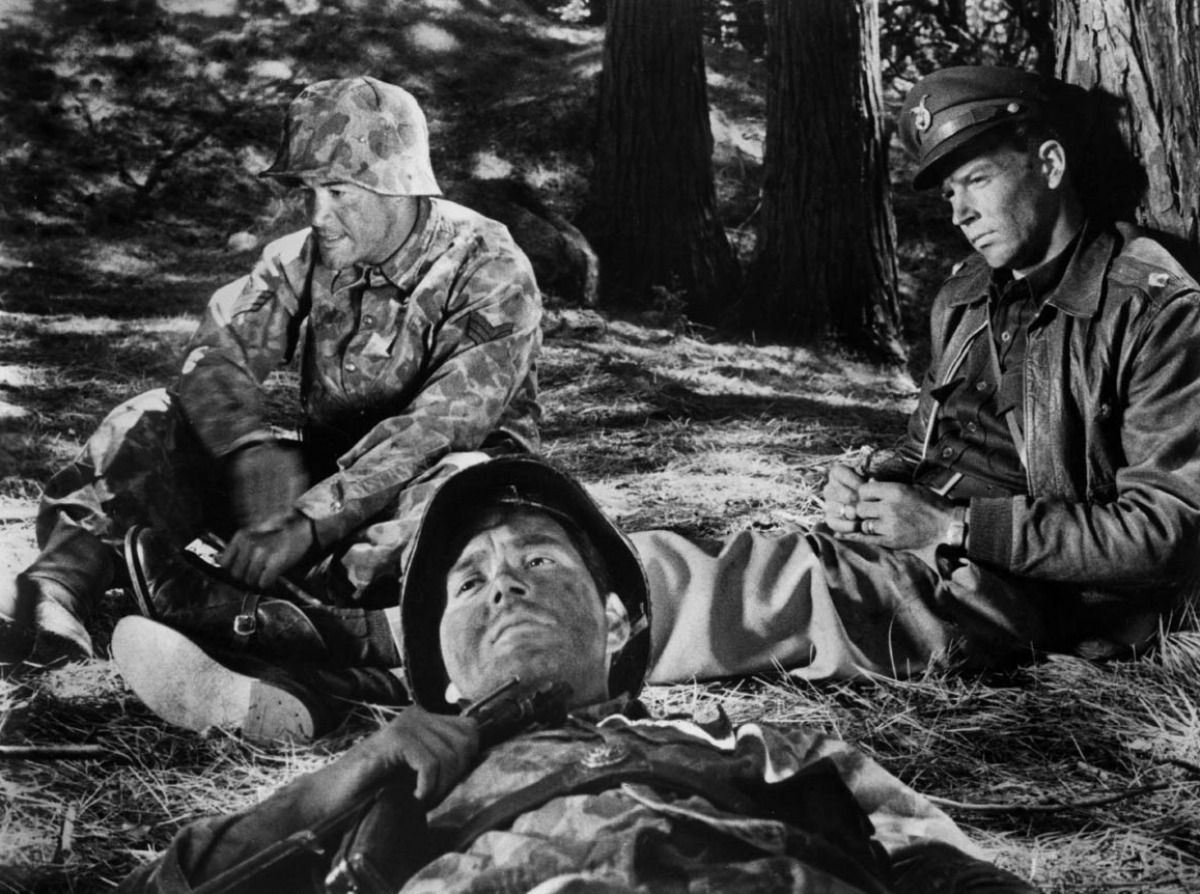
 Fear and Desire, Stanley Kubrick’s seldom-seen 1953 psychological war drama and his first full-length film, made when he was just twenty-four, is a curious tale about four soldiers (Steve Coit, Kenneth Harp, Paul Mazursky, and Frank Silvera) trapped six miles behind enemy lines. When they are spotted by a local woman (Virginia Leith), they decide to capture her and tie her up, but leaving Sidney (Mazursky) behind to keep an eye on her turns out to be a bad idea. Meanwhile, they discover a nearby house that has been occupied by the enemy, and they argue over whether to attack or retreat. Written by Howard Sackler, who was a high school classmate of Kubrick’s in the Bronx and would later win the Pulitzer Prize for The Great White Hope, and directed, edited, and photographed by the man who would go on to make such powerful, influential war epics as Paths of Glory, Full Metal Jacket, and Dr. Strangelove or: How I Learned to Stop Worrying and Love the Bomb, Fear and Desire features stilted dialogue, much of which is spoken off-camera and feels like it was dubbed in later. Many of the cuts are jumpy and much of the framing amateurish. Kubrick was ultimately disappointed with the film and wanted it pulled from circulation; instead it was preserved by Eastman House in 1989 and restored twenty years later, which was good news for film lovers, as it is fascinating to watch Kubrick learning as the film continues. His exploration of the psyche of the American soldier is the heart and soul of this compelling black-and-white war drama that is worth seeing for more than just historical reasons.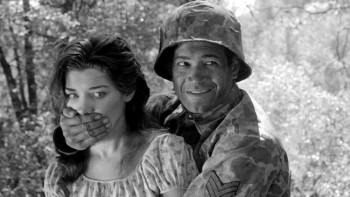
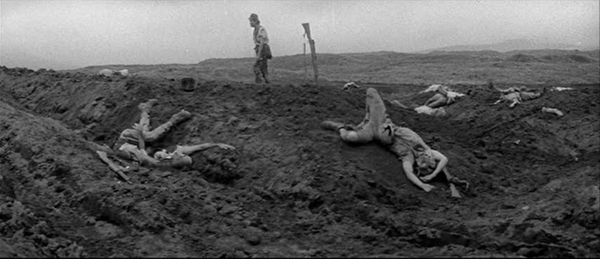
 Kon Ichikawa’s Fires on the Plain is one of the most searing, devastating war movies ever made. Loosely based on Shohei Ooka’s 1952 novel and adapted by Ichikawa’s wife, screenwriter Natto Wada, the controversial film stars Eiji Funakoshi as the sad sack Tamura, a somewhat pathetic tubercular soldier on the island of Leyte in the Philippines at the tail end of World War II. After being released from a military hospital, he returns to his platoon, only to be ordered to go back to the hospital so as not to infect the other men. He is also given a grenade and ordered to blow himself up if the hospital refuses him, which it does. But instead of killing himself, Tamura wanders the vast, empty spaces and dense forests, becoming involved in a series of vignettes that range from darkly comic to utterly horrifying. He encounters a romantic Filipino couple hiding salt under their floorboards, a quartet of soldiers stuffed with yams trying to make it alive to a supposed evacuation zone, and a strange duo selling tobacco and eating “monkey” meat. As Tamura grows weaker and weaker, he considers surrendering to U.S. troops, but even that is not a guarantee of safety, as the farther he travels, the more dead bodies he sees. Fires on the Plain is a blistering attack on the nature of war and what it does to men, but amid all the bleakness and violence, tiny bits of humanity try desperately to seep through against all the odds. And the odds are not very good. Fires on the Plain is screening January 19 at 1:00 at the Walter Reade Theater as part of the War Against War sidebar program of the twenty-fourth annual New York Jewish Film Festival, which focuses on antiwar films from the 1950s and 1960s; the schedule also includes Gillo Pontecorvo’s Battle of Algiers, Stanley Kubrick’s Fear and Desire, Konrad Wolf’s I Was Nineteen, Jean-Luc Godard’s Les Carabiniers, and Peter Watkin’s The War Game, anchored by a panel discussion on January 19 at 3:00 at the Elinor Bunin Munroe Film Center (free with
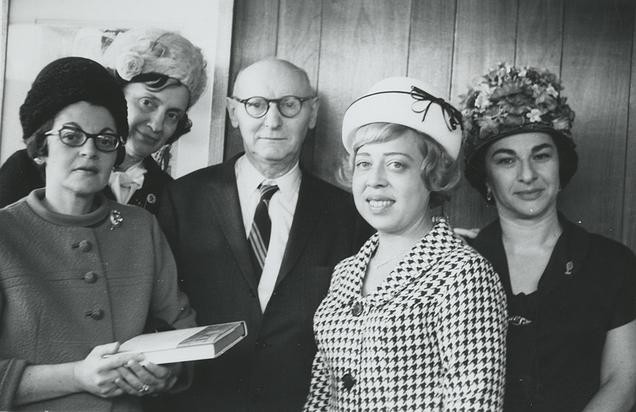

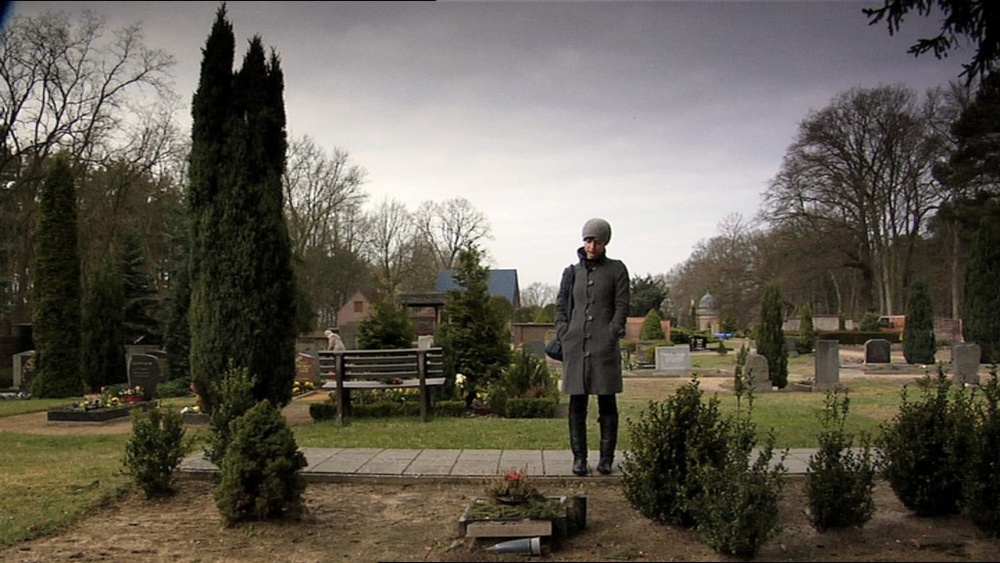
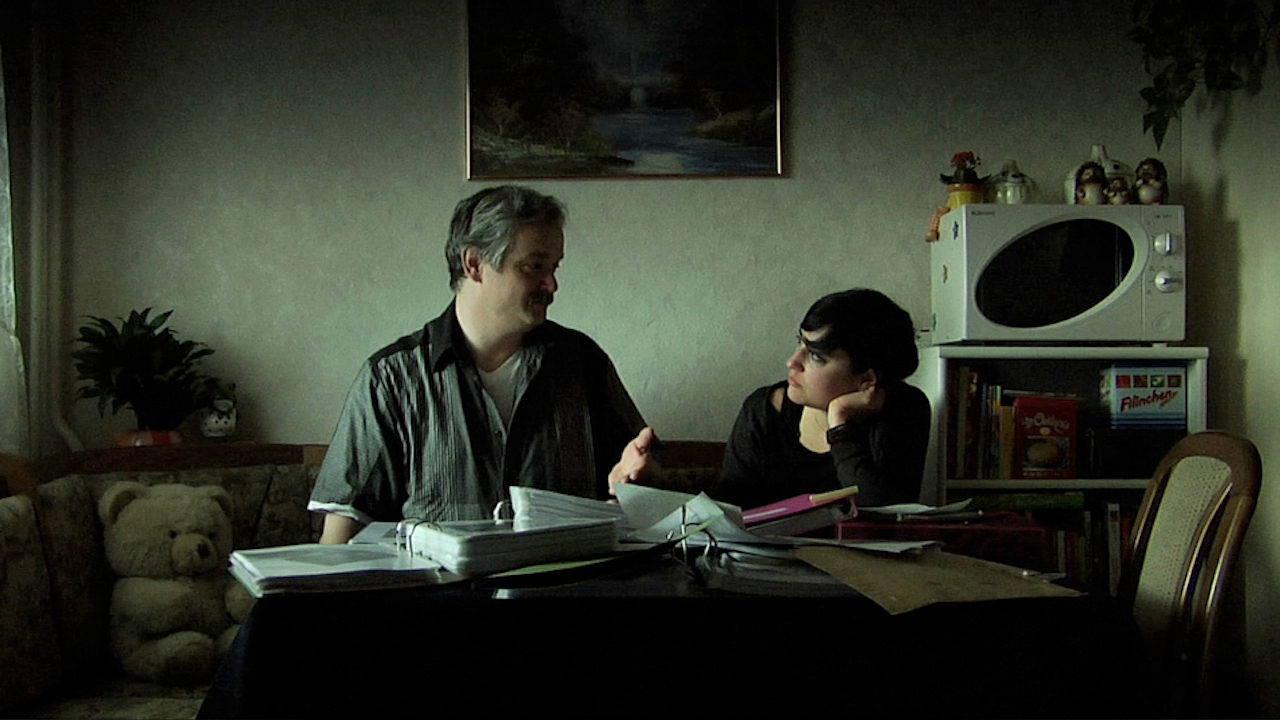
 Named Best Documentary at the 2013 Haifa International Film Festival, Yael Reuveny’s Farewell, Herr Schwarz offers a unique look at the Holocaust and its continuing effects on her and her family through three generations. “We were raised to reject the Diaspora,” the Israeli-born, Berlin-based writer and director says near the beginning of her first feature-length film. “I was supposed to be ‘the new Jew’ but somehow I ended up living in Germany, in the land I wasn’t allowed to set foot in. I wasn’t allowed to be here because of my grandmother’s story. But still, her story, which haunted my childhood, eventually made me build my home here.” And a haunting story it is, filled with intrigue, mystery, and powerful emotions. Sensitively shot by cinematographer Andreas Kohler and featuring an elegiac score by Volker “Hauschka” Bertelmann, the film explores what happened between Reuveny’s grandmother, Michla Schwarz, and Michla’s beloved brother, Feiv’ke. During the war, Feiv’ke was sent to the Schleiben concentration camp in Germany, where Michla thought he perished. Yet Reuveny discovers that her great-uncle actually survived the Holocaust but remained in the same town he had been held in, changing his first name to Peter, marrying a non-Jewish German woman whose brother was a Nazi, and starting a family.