Raoul Peck’s MOLOCH TROPICAL kicks off four-day examination of the state of Haiti five years after the earthquake
MOLOCH TROPICAL (Raoul Peck, 2009)
Maysles Cinema
343 Malcolm X Blvd. between 127th & 128th Sts.
Thursday, January 22, $10, 7:30
“Après the Earthquake” runs January 22-25
212-582-6050
www.maysles.org
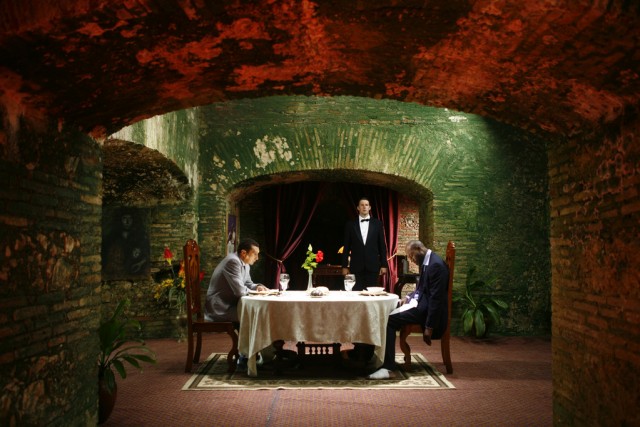
 On January 12, 2010, a devastating earthquake rocked Haiti, setting in motion a global relief effort. Five years later, there’s still a whole lot more to be done, as well as many questions to be answered. “Après the Earthquake” is a four-day examination of the state of Haiti and the Haitian people in 2015 organized by the Haiti Cultural Exchange and the DDPA (Durban Declaration & Programme of Action) Watch Group, who have teamed up with the Maysles Institute and Port-au-Prince–born filmmaker and activist Raoul Peck. The series begins with Peck’s Moloch Tropical, which was selected as the centerpiece of the 2010 Human Rights Watch Film Festival; the work of fiction follows the sad decline of democratically elected Haitian president Jean de Dieu (Zinedine Soualem) as power corrupts and overwhelms him. A combination of nineteenth-century Haitian leader Henri Christophe, twentieth-century president Jean-Bertrand Aristide, any of several Shakespearean kings, the protagonist of Aleksandr Sokurov’s Nazi drama Molokh, and General Vargas from Woody Allen’s Bananas, de Dieu lives in a mountain fortress where he takes advantage of the female servants, gets all excited when a Hollywood film crew shows up to meet him, and tries to prevent his mother from visiting because he is ashamed of the poverty he came from. In the beginning of the film, he steps on a piece of broken glass, so he limps through the rest of the movie, symbolic of his shaky regime. Although the film does suffer from an overabundance of clichés, it’s still a compelling portrait of the downfall of a powerful man. Moloch Tropical is being shown January 22 at 7:30 at the Maysles Documentary Center (MDC) and will be followed by a Q&A with series curator Michelle Materre and Dowoti Desir of the DDPA.
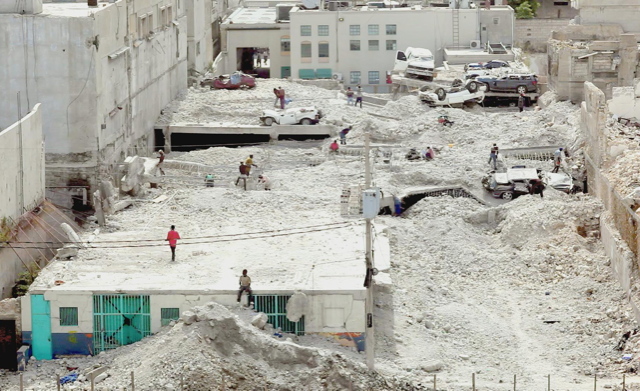
Documentary reveals that there’s still a whole lot to be done in Haitian recovery effort as organizations fight over details
FATAL ASSISTANCE (ASSISTANCE MORTELLE) (Raoul Peck, 2012)
Friday, January 23, Maysles Cinema, $10, 7:30
Saturday, January 24, Mount Morris Ascension Presbyterian Church, 15 Mount Morris Park West, $10, 4:00
www.maysles.org
Moloch Tropical is followed the next night by Peck’s Fatal Assistance, which starts by posting remarkable numbers onscreen: In the wake of the devastating earthquake that hit his native country on January 12, 2010, there were 230,000 deaths, 300,000 wounded, and 1.5 million people homeless, with some 4,000 NGOs coming to Haiti to make use of a promised $11 billion in relief over a five-year period. But as Peck reveals, there is significant controversy over where the money is and how it’s being spent as the troubled Haitian people are still seeking proper health care and a place to live. “The line between intrusion, support, and aid is very fine,” says Jean-Max Bellerive, the Haitian prime minister at the time of the disaster, explaining that too many of the donors want to cherry-pick how their money is used. Bill Vastine, senior “debris” adviser for the Interim Commission for the Reconstruction of Haiti (CIRH), which was co-chaired by Bellerive and President Bill Clinton, responds, “The international community said they were gonna grant so many billions of dollars to Haiti. That didn’t mean we were gonna send so many billions of dollars to a bank account and let the Haitian government do with it as they will.” Somewhere in the middle is CIRH senior housing adviser Priscilla Phelps, who seems to be the only person who recognizes why the relief effort has turned into a disaster all its own; by the end of the film, she is struggling to hold back tears.
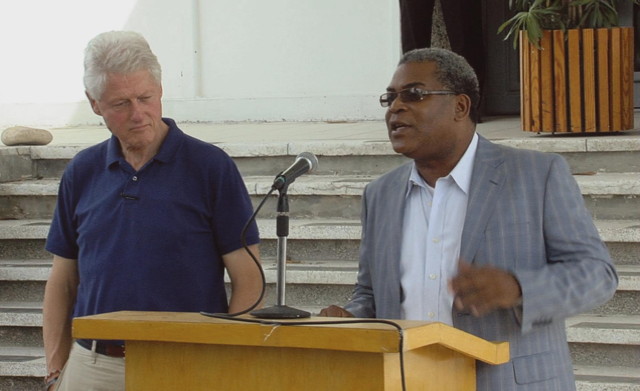
There’s a lot of talk but not nearly as much action in Haitian recovery from devastating earthquake
A self-described “political radical,” Peck doesn’t play it neutral in Fatal Assistance, instead adding mournful music by Alexei Aigui, somber English narration by a male voice (Peck narrates the French-language version), and a female voice-over reading melodramatic “Dear friend” letters that poetically trash what is happening in Haiti. “Every few decades, the rich promise everything to the poor,” the male voice-over says. “The dream of eradication of poverty, disease, death remains a perpetual fantasy.” Even though Peck attacks the agendas of the donors and NGOs while pushing an agenda of his own, Fatal Assistance is an important document that shows that just because money pours in to help in a crisis situation doesn’t mean that the things that need to be done are being done properly. The centerpiece selection of the 2013 Human Rights Watch Film Festival, Fatal Assistance will screen at MDC on January 23 at 7:30, followed by a Q&A with Materre and Peck, a two-time Human Rights Watch Lifetime Achievement Award winner, in addition to a reception with food and live music from the Haitian Diaspora. The film is also being shown on January 24 at 4:00 at the Mount Morris Ascension Presbyterian Church as part of the public health forum “Haiti: Five Years Later,” a panel discussion with Peck, Materre, and others, followed by a reception at the nearby MDC. The series continues January 25 at 4:00 at MDC with Peck’s 2001 film, Profit and Nothing But!, followed by a Q&A with Materre and Darrick Hamilton, then concludes with Peck’s most well known work, 1992’s Lumumba: The Death of a Prophet, screening at 6:30, followed by a Q&A with Materre and others.
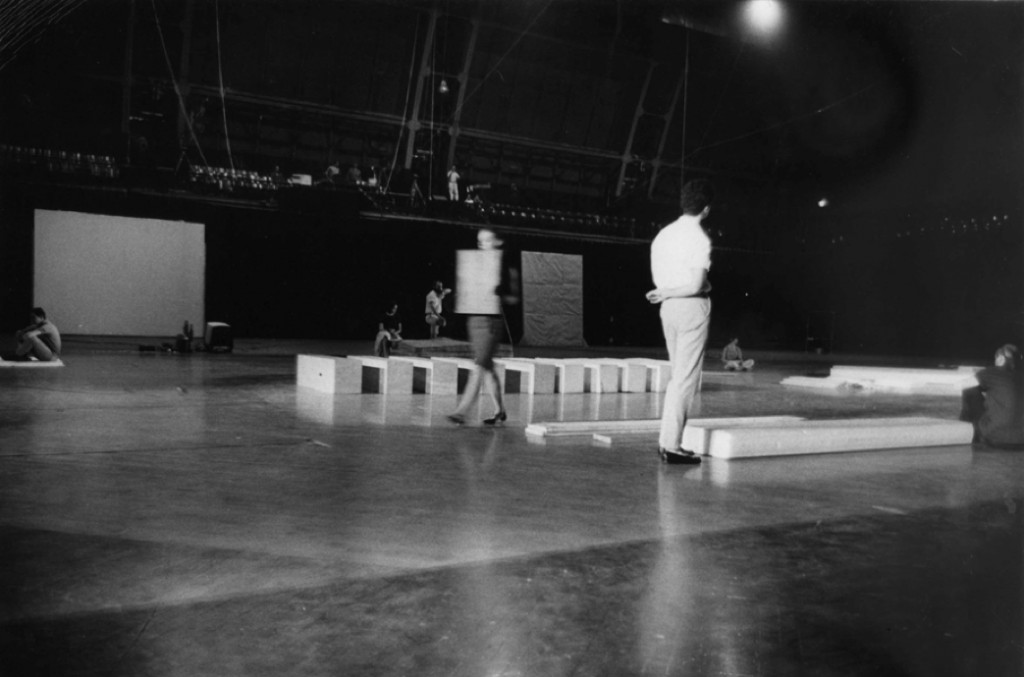
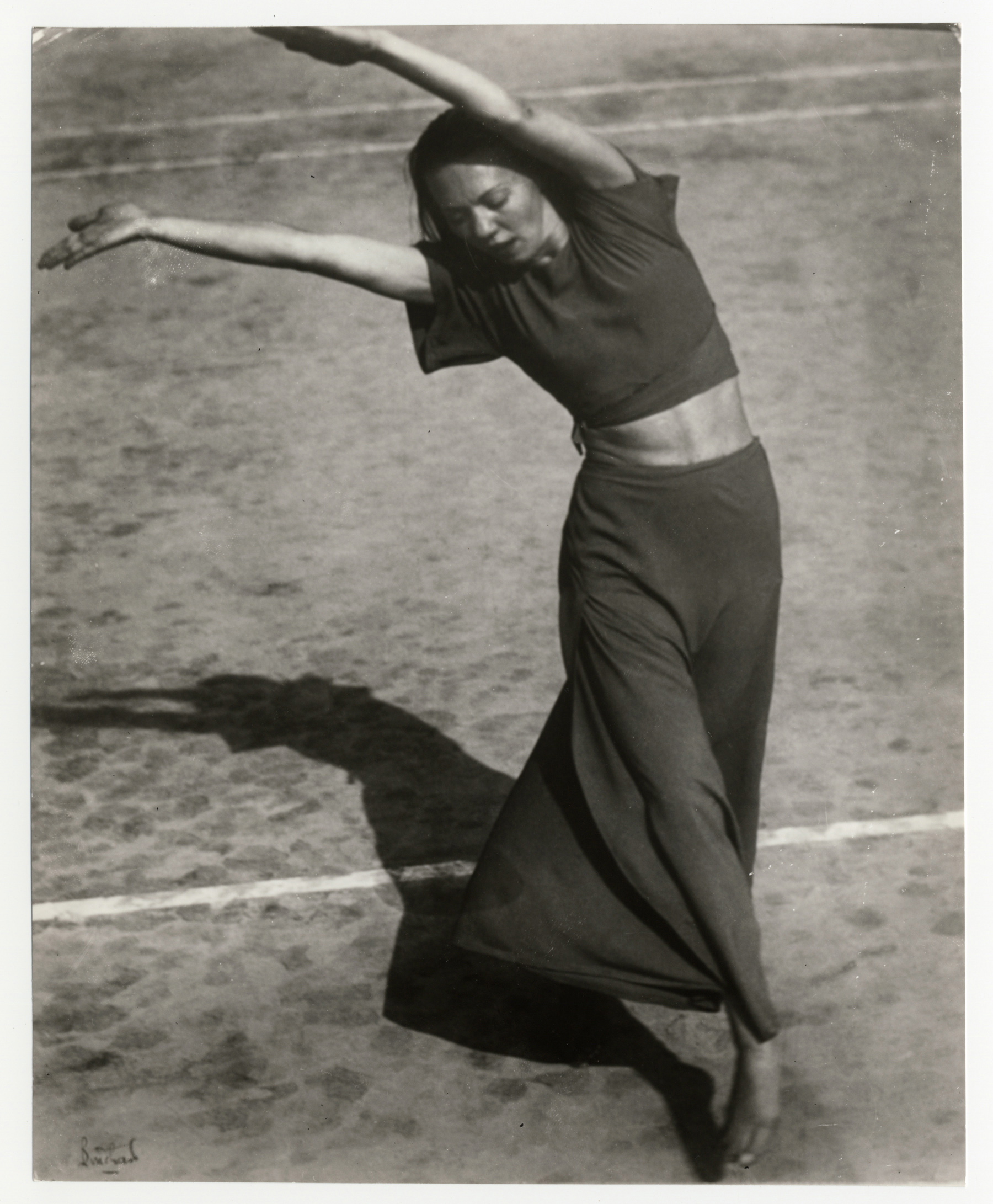
 Greg Vander Veer’s Miss Hill: Making Dance Matter is a charming celebration of a woman who had a tremendous impact on the development of modern dance but is still little known outside her tight-knit circle. Born in 1900 in a small town in Bible Belt Ohio, Martha Hill danced with Martha Graham before concentrating on teaching the art form, which as a child she was told was sinful, at Bennington and NYU. But she created her legacy as the first director of dance at Juilliard, where she taught from 1951 to 1985, balancing instruction in both modern dance and classical ballet. Vander Veer (Keep Dancing) and coordinating producer Vernon Scott, who graduated from Juilliard in 1985 and is currently president of the board of directors of the Martha Hill Dance Fund, combine wonderful archival footage of Hill as both a dancer and a teacher, along with old clips of many of her students, including Pina Bausch, Lar Lubovitch, Bessie Schönberg, Hanya Holm, José Limón, and Doris Humphrey, as well as fellow teacher Antony Tudor; there are also new interviews with Paul Taylor, Martha Clarke, Francis Patrelle, Robert Battle, Ohad Naharin, Dennis Nahat, H. T. Chen, and others. “She’s created the dancers of the twenty-first century,” says former Boston Ballet artistic director Bruce Marks. One of the most fascinating parts of the eighty-minute documentary is Hill’s fight to preserve Juilliard’s dance program during the building of Lincoln Center, which pitted her against George Balanchine’s School of American Ballet, the New York City Ballet, and Lincoln Kirstein. Miss Hill displays its subject with clarity, smartly exploring her understanding that dance is more than just language and movement. “Modern dance is not a system, it is a point of view,” Hill explains. Meanwhile, Patrelle gets right to the heart of the matter: “She was dance. She defined it.” A lovely treat for dance fans, Miss Hill opens January 23, at the Quad, with Vander Veer and Scott participating in Q&As following the 7:00 shows Friday and Saturday and the 4:30 shows Saturday and Sunday.