this week in lectures, signings, panel discussions, workshops, and Q&As

BLACK HISTORY MONTH: LIVING LEGACY

Carrie Hawks will discuss her upcoming documentary, BLACK ENUF, at the Brooklyn Museum’s free First Saturday program for Black History Month

FIRST SATURDAY
Brooklyn Museum
200 Eastern Parkway at Washington St.
Saturday, February 7, free, 5:00 – 11:00
212-864-5400
www.brooklynmuseum.org

The theme of this year’s annual Brooklyn Museum First Saturday celebration of Black History Month is “Living Legacy,” another eclectic, wide-ranging collection of music, dance, film, art, discussion, and more. The free evening will feature live performances by Chel Lo and Asante Amin’s multimedia “Soundtrack ’63,” Water Seed, and Bilal; screenings of Byron Hurt’s 2013 documentary Soul Food Junkies and Carrie Hawks’s doc-in-progress Black Enuf, both followed by talkbacks with the directors; a quilt-making workshop; a talk with artists Devin Kenny and Sondra Perry with Black Contemporary Art blog founder Kim Drew; a poetry reading and community forum hosted by Mahogany L. Browne, Jonterri Gadson, and Amanda Johnston of Black Poets Speak Out; and J. Ivy discussing his new memoir, Dear Father: Breaking the Cycle of Pain. In addition, you can check out such exhibitions as “Revolution! Works from the Black Arts Movement,” “Judith Scott — Bound and Unbound,” “Double Take: African Innovations,” and “Chitra Ganesh: Eyes of Time.”

BALLET 422

Justin Peck

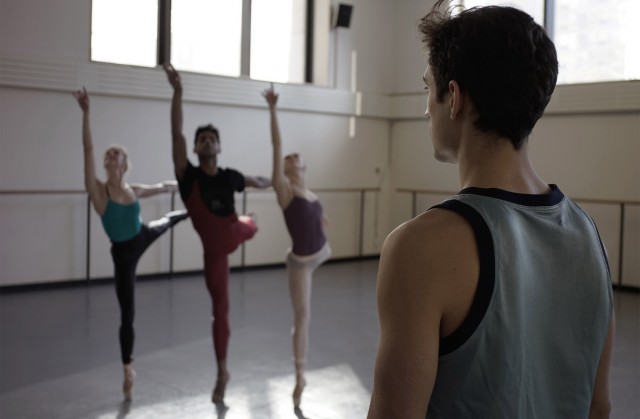
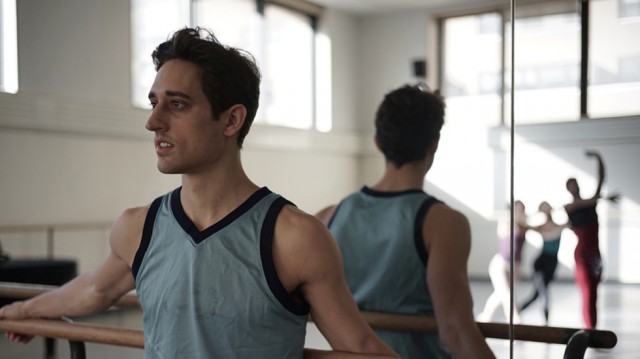
Viewers are taken behind the scenes as Justin Peck creates a new work for New York City Ballet

BALLET 422 (Jody Lee Lipes, 2014)
Film Society of Lincoln Center, Elinor Bunin Monroe Film Center, Francesca Beale Theater, 144 West 65th St. between Broadway & Amsterdam Ave., 212-875-5600
Landmark Sunshine Cinema, 143 East Houston St. between First & Second Aves., 212-330-8182
Opens Friday, February 6 (special advance screening February 3 at 7:00 at BAMcinématek)
www.magpictures.com

In Ballet 422, Jody Lee Lipes takes viewers behind the scenes as twenty-five-year-old New York City Ballet dancer Justin Peck choreographs the 422nd original piece for the prestigious company, Paz de la Jolla. One of fifty dancers in the Corps de Ballet, which the film calls “the lowest rank” of NYCB, Peck was named by company head Peter Martins to be the New York Choreographic Institute’s first active choreographer-in-residence for the 2011-12 season, and he is the only current NYCB dancer to choreograph for the company. Documentarian and cinematographer Lipes (NY Export: Opus Jazz, Tiny Furniture) focuses on the fascinating collaboration that goes into creating a ballet. “As a former soloist with New York City Ballet, I had long dreamed about pulling back the veil on the making of a new ballet,” producer Ellen Bar explains on the film’s Hatchfund page, which has raised more than $55,000 for the project. “Even as a dancer who was often part of the choreographic process, I never saw the other artistic and technical elements develop until the very end. Wouldn’t it be amazing to invite audiences into a world they can never visit in person and to let them watch it unfold in real time?” Lipes does just that, showing Peck and ballet master Albert Evans working out specific moves with principal dancers Sterling Hyltin, Amar Ramasar, and Tiler Peck; costumers Reid Bartelme and Harriet Jung discussing materials with the performers; Mark Stanley detailing the lighting design; and Peck meeting with conductor Andrews Sill, who reveals that the orchestra is not particularly fond of playing the ballet’s musical score, Czech composer Bohuslav Martinu’s “Sinfonietta la Jolla.”

Sterling Hytlin, Amar Ramasar, and Tiler Peck rehearse with Justin Peck on 422nd original piece for New York City Ballet

Sterling Hytlin, Amar Ramasar, and Tiler Peck rehearse with Justin Peck on 422nd original piece for New York City Ballet

There are no talking heads in the film, no experts chiming in on the beauty and intricacy of ballet, no one pontificating on how unusual it is for such a young dancer to already be choreographing his fifth work for the company, following Year of the Rabbit, Tales of a Chinese Zodiac, In Creases, and Capricious Movements. No one stops and looks into the camera, sharing their fears, hopes, or dreams; Lipes doesn’t even identify who’s who, instead allowing the drama to play out sans editorial comment. A few times, the camera goes with Peck as he puts on his backpack and heads home to his unglamorous Queens apartment, and the surprise ending puts everything in fabulous perspective. You don’t have to love ballet or know anything about it to enjoy Ballet 422, an intimate, compelling inside look into the creative process, but don’t be surprised if you soon find yourself ordering tickets for an upcoming NYCB production — perhaps even Peck’s latest work for the company, a new interpretation of Aaron Copland’s Rodeo, which is having its premiere February 4 at the David H. Koch Theater. Ballet 422 opens February 6 at the Landmark Sunshine and the Film Society of Lincoln Center, where Lipes and Peck will participate in a Q&A following the 7:15 screening and will introduce the 9:35 show on February 6. In addition, the film is having a sneak peek February 3 at 7:00 as part of the BAMcinématek series “Two by Jody Lee Lipes,” followed by a Q&A with Lipes.

JOHN CARPENTER: LOST THEMES

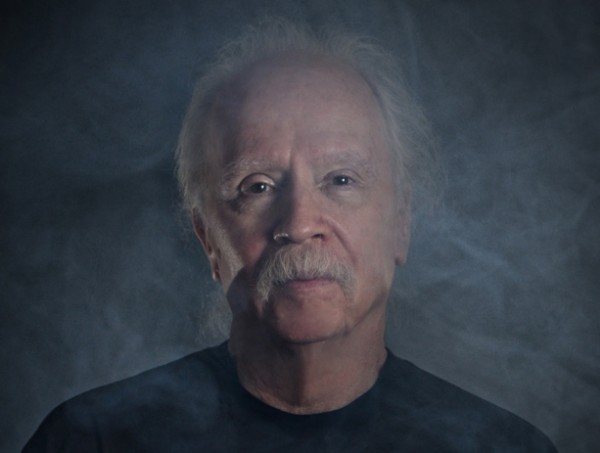
The career of iconoclastic auteur John Carpenter is the focus of a talk and film series at BAM

The career of iconoclastic auteur John Carpenter is the focus of a talk and film series at BAM

Who: John Carpenter
What: John Carpenter in conversation with NPR host Brooke Gladstone
Where: BAM Howard Gilman Opera House, Peter Jay Sharp Building, 230 Lafayette Ave., 718-636-4100
When: Thursday, February 5, $25-$50, 8:00
Why: Writer, director, and composer John Carpenter discusses his career in film and music, in conjunction with the release of his album John Carpenter’s Lost Themes (Sacred Bones, February 3, 2015) and the BAMcinématek series “John Carpenter: Master of Fear,” which runs February 5-22 and consists of eighteen of Carpenter’s films, including Halloween, The Thing, Assault on Precinct 13, Escape from New York, They Live, and Starman in addition to three films specially selected by Carpenter: Straw Dogs, Sorcerer, and Forbidden Planet.

DANCE ON CAMERA — BORN TO FLY: ELIZABETH STREB vs. GRAVITY

Jackie

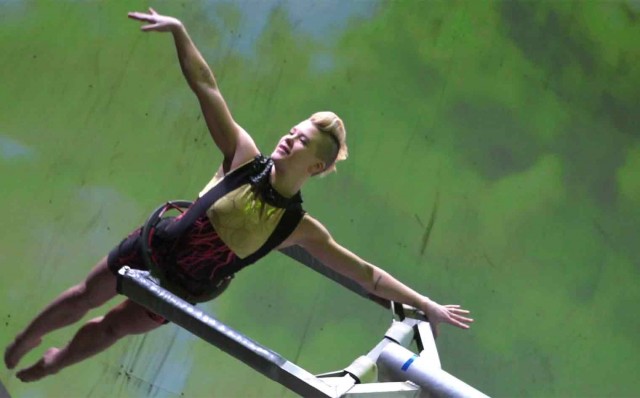
Documentary reveals how Elizabeth Streb and her Extreme Action Company (including Jackie Carlson, seen here) take dance to a whole new level

BORN TO FLY: ELIZABETH STREB vs. GRAVITY (Catherine Gund, 2014)
Film Society of Lincoln Center, Walter Reade Theater
165 West 65th St. between Eighth Ave. & Broadway
Sunday, February 1, 3:20
Festival runs January 30 – February 3
212-875-5050
www.filmlinc.com
www.borntoflymovie.com

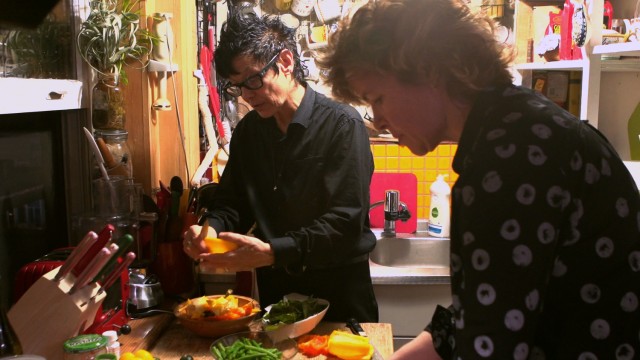
Over the last several years, New Yorkers have gotten the chance to see Elizabeth Streb’s Extreme Action Company perform such dazzling works as Ascension at Gansevoort Plaza, Kiss the Air! at the Park Avenue Armory, and Human Fountain at World Financial Center Plaza as her team of gymnast-dancer-acrobats risk their physical well-being in daring feats of strength, stamina, durability, and grace. In addition, Streb herself walked down the outside wall of the Whitney as part of a tribute to one of her mentors, Trisha Brown. Now Catherine Gund takes viewers behind the scenes in the exhilarating documentary Born to Fly: Elizabeth Streb vs. Gravity, going deep into the mind of the endlessly inventive and adventurous extreme action architect and the courage and fearlessness of her company. Gund follows Streb as she discusses her childhood, her dance studies, the formation of STREB in 1985, and her carefully thought out views on space, line, and movement as her work stretches the limits of what the human body can do. “I think my original belief and desire is to see a human being fly,” Streb says near the beginning of the film, which includes archival footage of early performances, family photos, and a warm scene in which the Rochester-born Streb and her partner, Laura Flanders, host a dinner party in their apartment, cooking for Bill T. Jones, Bjorn Amelan, Anne Bogart, Catharine Stimpson, and A. M. Homes. Gund also speaks with current and past members of the talented, ever-enthusiastic company — associate artistic director Fabio Tavares, Sarah Callan, Jackie Carlson, Leonardo Giron, Felix Hess, Samantha Jakus, Cassandre Joseph, John Kasten, and Daniel Rysak — who talk about their dedication to Streb’s vision while using such words as “challenge,” “velocity,” “endurance,” “magic,” “invincibility,” and “risk” to describe what they do and how they feel about it.

Elizabeth Streb

Elizabeth Streb and her partner, Laura Flanders, prepare for a dinner party in new documentary

Gund focuses on the latter, as virtually every one of Streb’s pieces is fraught with the possibility of serious injury, as evidenced by their titles alone: Fly, Impact, Rebound, Breakthru, and Ricochet, not to mention the use of such materials as spinning I-beams, plastic barricades, dangling harnesses, and a rotating metal ladder. “I have to be able to ask someone to do that and be okay about it. Those aren’t easy requests,” Streb explains. “Knowing where you are is how you survive the work,” adds former STREB dancer Hope Clark. Gund goes with Streb to her doctor, where the choreographer describes what happened to her gnarled feet, and also meets with former dancer DeeAnn Nelson Burton, who had to retire after breaking her back. The film concludes with an inside look at STREB’s spectacular “One Extraordinary Day,” a series of hair-raising site-specific events staged for the 2012 London Olympics at such locations as the Millennium Bridge, the London Eye, and the sphere-shaped city hall, photographed by documentary legend Albert Maysles. In her Kickstarter campaign, Gund (Motherland Afghanistan, A Touch of Greatness) said, “Action architect Elizabeth Streb has reinvented the language of movement. [Born to Fly] will rewrite the language of documentary.” That’s a bold declaration, but the film does have a lot of the same spirit that Streb displays in her awe-inspiring work. Born to Fly is screening with Benjamin Epps’s 2014 short, Angsters, on February 1 at 3:20 at the Walter Reade Theater as part of the Film Society of Lincoln Center’s annual “Dance on Camera” series and will be followed by a Q&A with Gund and Streb. The festival runs January 30 – February 3 and includes such other movement-related works as Meredith Monk’s Girlchild Diary, followed by a Q&A with Monk and cast member Lanny Harrison; Kenneth Elvebakk’s Ballet Boys, set at the Norwegian Ballet School; Louis Wallecan’s Dancing Is Living: Benjamin Millepied, followed by a Q&A with the director; the U.S. premiere of Don Kent and Christian Dumais-Lvowski’s Jiri Kylian: Forgotten Memories; Isaki Lacuesta’s Perpetual Motion: The History of Dance in Catalonia, followed by a Q&A with choreographer Cesc Gelabert; and a handful of free events as well.

FRED MOTEN ON CHRIS OFILI: BLUETS, BLACK + BLUE, IN LOVELY BLUE

Chris Ofili’s “Blue Rider” paintings is the centerpiece of solo exhibition at the New Museum (© Chris Ofili; photo by Maris Hutchinson/EPW)

Chris Ofili’s “Blue Rider” paintings highlight solo exhibition at the New Museum (© Chris Ofili; photo by Maris Hutchinson/EPW)

CHRIS OFILI: NIGHT AND DAY
New Museum of Contemporary Art
235 Bowery at Prince St.
Thursday, January 29, $10 (includes half-price gallery admission), 7:00
Exhibition continues through Sunday February 1, $16 (pay-what-you-wish Thursday 7:00 – 9:00)
212-219-1222
www.newmuseum.org

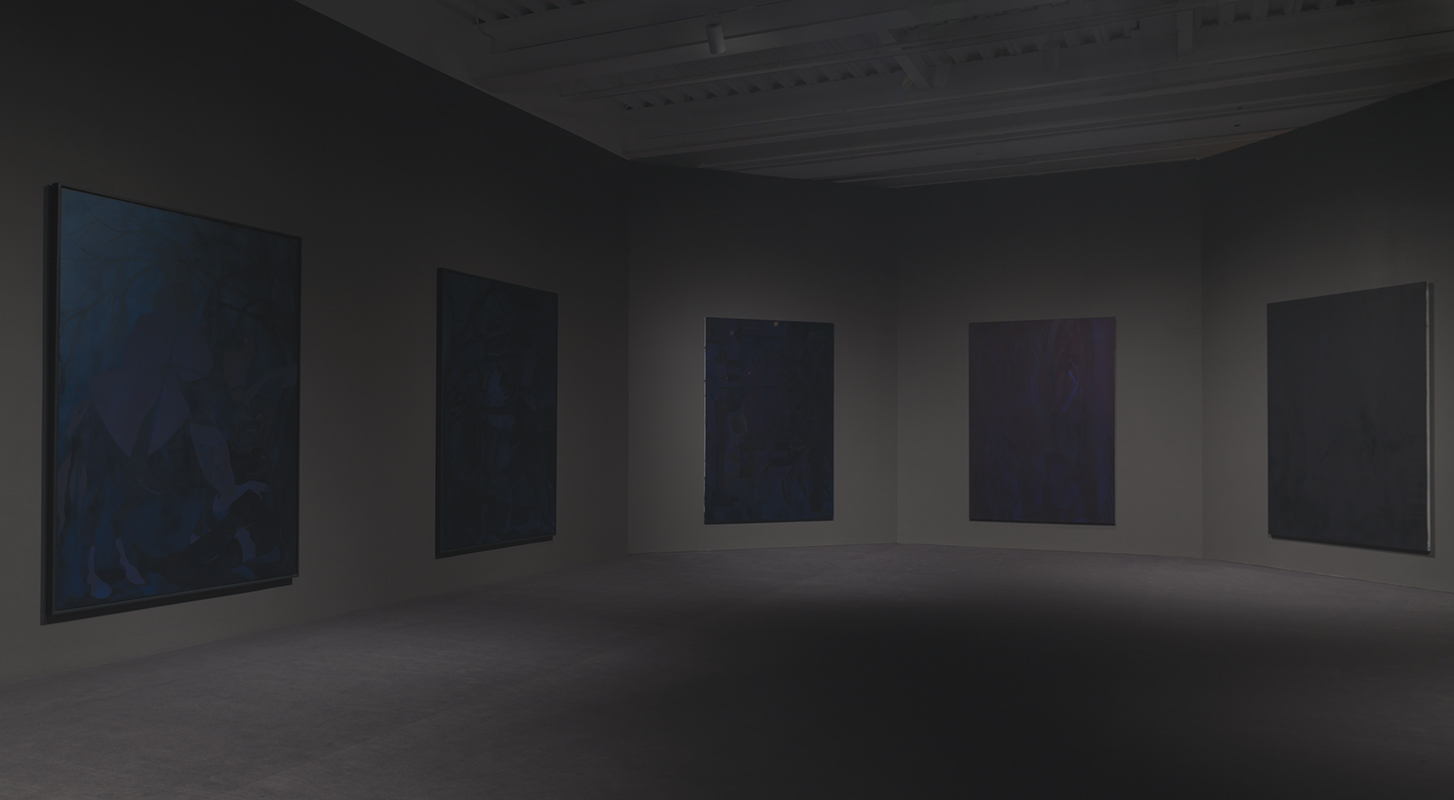
Tonight at 7:00, with the revelatory midcareer-redefining exhibit “Chris Ofili: Night and Day” about to begin its final weekend at the New Museum, writer and professor Fred Moten will be at the downtown institution for a special presentation, “Fred Moten on Chris Ofili: Bluets, Black + Blue, in Lovely Blue.” Moten, author of the 2014 National Book Award finalist The Feel Trio, will be discussing Ofili’s influences, historical references, and multidisciplinary trajectories, with a particular focus on the artist’s “Blue Rider” paintings. In 2004, Ofili, who was born in Manchester and moved from London to Trinidad in 2005, began a series of striking large-scale oil-on-linen works, some with charcoal and/or acrylic as well, with varying shades of deep blue over a silver background. At first glance, the paintings appear to be virtually all dark blue, nearly black, with no figuration apparent. Nine of the works are hanging together in a dark room on the third floor of the museum; visitors will benefit from allowing time for their eyes to adjust to the lack of light, moving around and viewing the canvases from different angles to let the paintings’ magic and mystery slowly reveal themselves. When we were there, a woman got angry when people just walked in and out, thinking that there was not much to see; she got down on her hands and knees, examining every detail of the works, imploring others to do the same. The paintings have quite a collection of stories to tell, incorporating elements of slavery, mythology, blues music, the Bible, and modern life. “Ofili’s work suggests a way of seeing where the centrality of the color is taken for granted,” artist Glenn Ligon writes in his catalog essay, “Blue Black.” He continues, “‘Iscariot Blues’ (2006), ‘Blue Riders’ (2006), ‘Blue Steps (fall from grace)’ (2011), ‘Blue Smoke (Pipe Dreams)’ (2011), and ‘Blue Devils’ (2014) use blue as a kind of dark matter, a force not easily quantified but which holds the universes [Ofili] creates on canvas together. Blue is a bitch.” Ofili might be best known for the controversy surrounding his use of elephant dung in “The Holy Virgin Mary” when it was shown as part of the 1999 Brooklyn Museum exhibit “Sensation” and publicly decried by Mayor Rudolph Giuliani, so it’s fascinating that there have been no such issues about “Blue Devils,” which is based on symbolic figures during Trinidadian Carnival in Paramin but is essentially about police brutality affiliated with Britain’s “stop and search” program; the powerful piece also evokes the tragedies of Stephen Lawrence, Trayvon Martin, and other black men and women who either died at the hands of the police or had their cases botched by law enforcement.
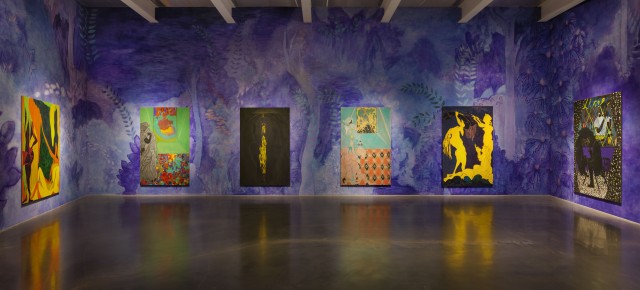
 (© Chris Ofili; photo by Maris Hutchinson/EPW)

New Museum survey shows Chris Ofili’s wide range of work (© Chris Ofili; photo by Maris Hutchinson/EPW)

“In choosing ‘Blue Devils’ (2014) as the title of his ominous, dark new painting, Chris Ofili has disturbingly and deliciously subverted that famous Trinidadian Carnival reference, transposing it to the streets of London, Manchester, or New York,” writes lawyer Matthew Ryder in his catalog essay, “Blue Devils.” Ryder, who handles police brutality cases, further explains, “Through this piece, Ofili adds his voice at a timely point to the long-running debate concerning the relationship of black men with the police, both in the United Kingdom and the United States, since it has gained unusual intensity in recent months. . . . ‘Blue Devils,’ with its twisted, interlocked figures barely discernible beneath the deep, overlapping shades of blue, evokes a misconduct occurring in a state of near invisibility. It also captures something much harder to express — the peculiar way that such confrontations between black men and the police are simultaneously intensely crude and unusually subtle.” The nine “Blue Rider” works are harrowing and emotional, but this first major solo museum show for Ofili, which has been extended through February 1 and is curated by Massimiliano Gioni, Gary Carrion-Murayari, and Margot Norton, also displays Ofili’s wide range, including his “Afromuse” and “Afro Margin” series, his recent paintings inspired by Ovid’s Metamorphoses, and “The Holy Virgin Mary,” one of a roomful of pieces by Ofili that consist of acrylic, oil, polyester resin, glitter, map pins, and elephant dung on linen, many precipitously set on the floor at an angle, with myriad details that require up-close examination, and not just because of their provocative titles: “No Woman, No Cry,” “Foxy Roxy,” “Pimpin’ ain’t easy.” There are also drawings, sculptures, watercolors — but it all leads back to these dark, sociopolitically daring, sensational works. As Ligon concludes, “To approach black through blue, to be in its vicinity but not quite get there, blackness an event horizon, blackness with a ‘u’ instead of an ‘e,’ a ‘state of mind’ not a ‘state,’ something always under construction, subject to revision, is what Ofili’s canvases suggest. In them, he proposes new ways to see blackness, new pathways to travel. For Ofili, blue black is the new black.” It should be fascinating to hear Moten’s take on the subject as well. (The event is sold out, but there will be a standby line beginning at 6:00. You can also watch the event on Livestream. For a conversation between Ofili and Gioni, go here.)

ZERO HOUR: TOKYO ROSE’S LAST TAPE

Miwa Yanagi’s ZERO HOUR: TOKYO ROSE’S LAST TAPE will have its North American premiere at Japan Society this week (photo by Ayumi Sakamoto)

Miwa Yanagi’s ZERO HOUR: TOKYO ROSE’S LAST TAPE will have its North American premiere at Japan Society this week (photo by Ayumi Sakamoto)

Japan Society
333 East 47th St. at First Ave.
January 29-31, $35, 7:30
212-715-1258
www.japansociety.org
www.yanagimiwa.net

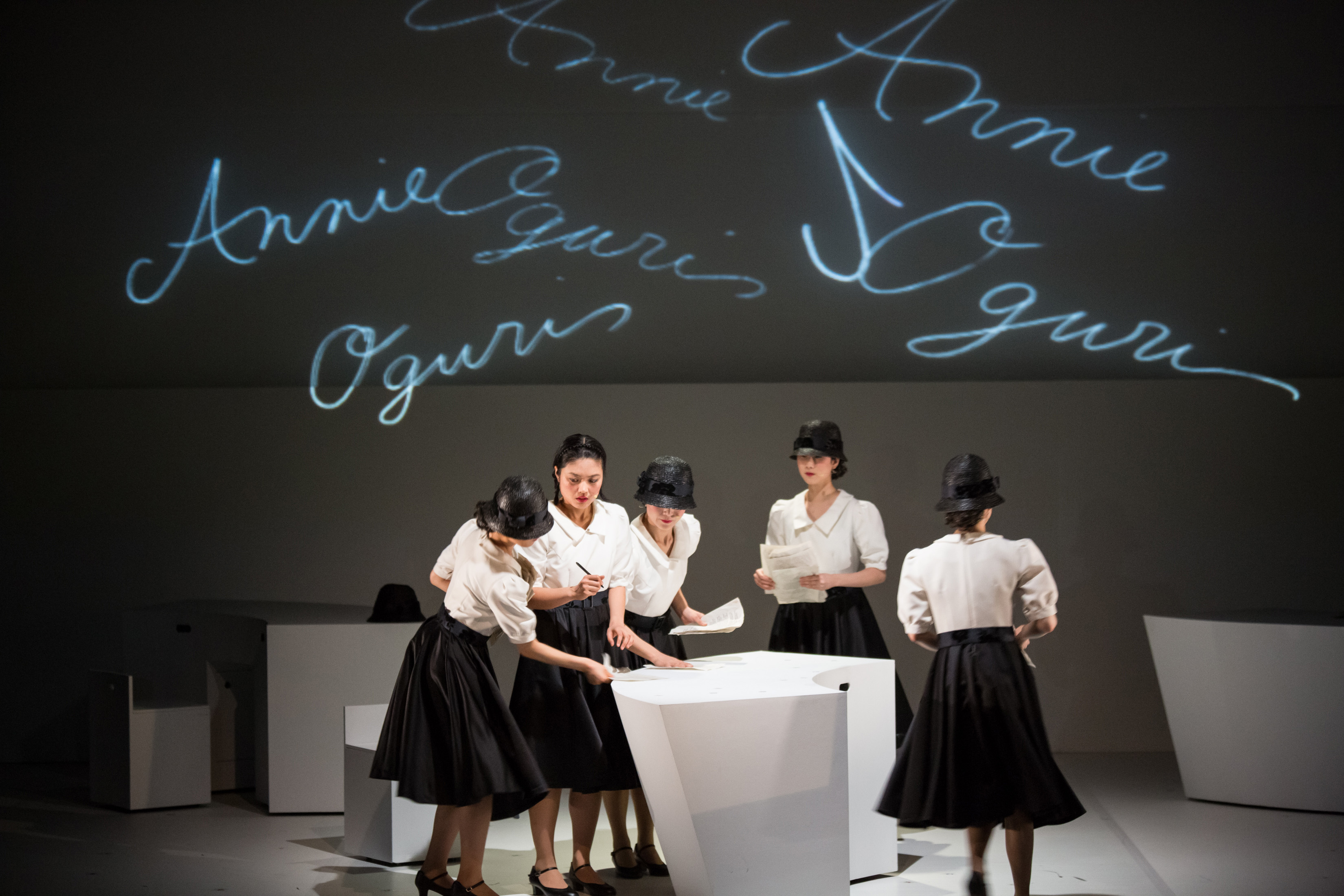
We’ve been fans of Japanese multidisciplinary artist Miwa Yanagi since her summer 2007 exhibit at the Chelsea Art Museum, consisting of three photographic series that featured highly cinematic compositions and videos. So it comes as no surprise that the Kobe-born Yanagi is also now creating theatrical works and performance art projects. The North American premiere of Yanagi’s latest piece, Zero Hour: Tokyo Rose’s Last Tape, will take place January 29-31 at Japan Society as part of the institution’s “Stories from the War” series, being held in recognition of the seventieth anniversary of the end of World War II. Conceived, written, and directed by Yanagi, who also designed the sets and costumes, Zero Hour follows one of the many women known as Tokyo Rose, who broadcast propaganda for the Japanese Imperial Army. The production, which will be performed in English and Japanese (with English subtitles) by Yohei Matsukado, Hinako Arao, Megumi Matsumoto, Ami Kobayashi, Sogo Nishimura, Aki, and Sachi Masuda, with video projection by Tadashi Mitani, lighting design by Akane Ikebe, sound design by Yasutaka Kobayakawa, and choreography by Megumi Matsumoto. The January 29 show will be followed by a meet-the-artists reception. “Stories from the War” continues through August with Michiko Godai in Yokohama Rosa April 25-26, New and Traditional Noh: Holy Mother in Nagasaki and Kiyotsune May 14-16, Meet the Author lectures by Julie Otsuka and Hayden Herrera, and the Globus Film Series “The Most Beautiful: The War Films of Shirley Yamaguchi & Setsuko Hara.”

NEW YORK JEWISH FILM FESTIVAL CLOSING NIGHT: FELIX AND MEIRA

FELIX AND MEIRA

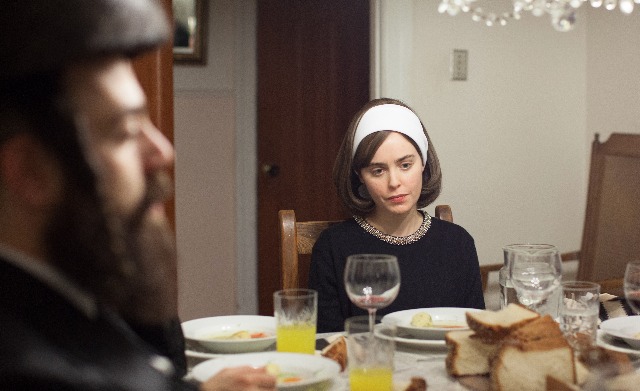
Meira (Hadas Yaron) takes a long, hard look at her life in Maxime Giroux’s FELIX AND MEIRA

FELIX AND MEIRA (FÉLIX ET MEIRA) (Maxime Giroux, 2014)
Film Society of Lincoln Center, Walter Reade Theater
165 West 65th St. between Eighth Ave. & Broadway
Thursday, January 29, 3:30 & 9:00
Festival runs through January 29
212-875-5050
www.filmlinc.com

The 2015 New York Jewish Film Festival comes to a close on January 29 with Maxime Giroux’s somber, reflective Félix and Meira. Named Best Canadian Feature at the Toronto International Film Festival, the film stars Israeli actress Hadas Yaron as Meira, a young married woman who is feeling trapped by the constraints of the Hasidic world in which she lives in Montreal’s Mile End district. Her husband, Shulem (Luzer Twersky), is a devout man who follows the tenets of his religion; he and Meira sleep in separate beds, and he seems more intent on ritualistically washing his hands in the bedroom than touching his wife. One morning, while pushing her daughter in a stroller, she is approached by Félix (Martin Dubreuil), a conflicted man whose father just died so he is seeking advice about God and death. Meira tells him to leave them alone, but soon Félix and Meira are meeting in secret, and when Shulem finds out about it, he ships Meira off to Brooklyn. Félix goes after her, wanting to take their relationship to the next level as Meira considers her responsibilities to her husband, her daughter, and herself.
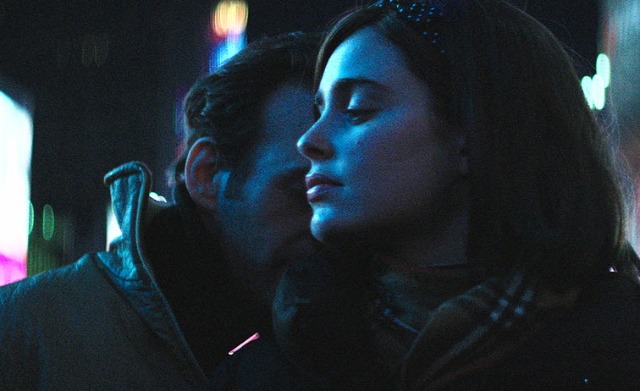
FELIX AND MEIRA

Félix (Martin Dubreuil) and Meira (Hadas Yaron) are both looking for something more in Canadian drama set in Hasidic world

Félix and Meira is a subtle, slow-moving tale that avoids genre clichés, keeping the details tantalizingly vague and mysterious. There’s not a lot of humor in the film; instead, there’s an ominous, moody cloud hanging over everything, the story bordering just on the edge of passion without ever exploding. Yaron (Fill the Void) plays Meira with a dark foreboding, while Dubreuil (Bunker, Ressac) and Twersky (Romeo and Juliet in Yiddish, Where Is Joel Baum?) work well as adversaries who want Meira in their life, albeit for different reasons. Cowriter and director Giroux (Demain, Jo pour Jonathan) doesn’t force any issues, maintaining a low-key approach that is intensified by an overall palette of blacks, whites, and grays. Félix and Meira is the closing-night selection of the New York Jewish Film Festival, screening on January 29 at 3:30 and 9:00 at the Walter Reade Theater, with each show followed by a Q&A with Giroux and members of the cast.