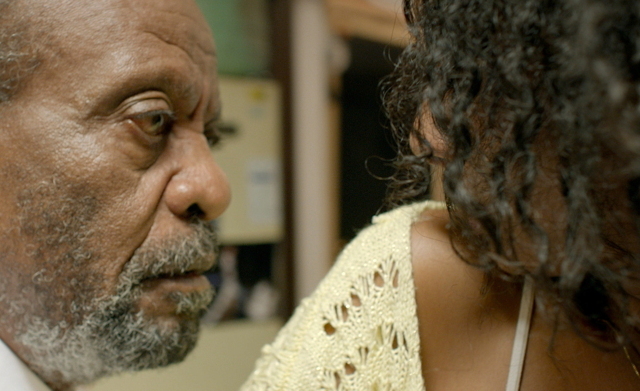
Lucia Small and Ed Pincus team up to film the end of his time on Earth in ONE CUT, ONE LIFE (photo by Danielle Morgan)
ONE CUT, ONE LIFE (Lucia Small & Ed Pincus, 2014)
IFC Center
323 Sixth Ave. at West Third St.
Opens Wednesday, May 13
212-924-7771 www.ifccenter.com onecutonelife.com
When documentarian and flower farmer Ed Pincus, considered the father of first-person film, was diagnosed with a terminal illness, he did what he had done previously in his life: turn the camera on himself. Teaming up with Lucia Small (My Father, the Genius), with whom he had made the post-Katrina nonfiction film The Axe in the Attic in 2007, Pincus (Black Natchez, Diaries [1971–1976]) shared the intimate details of his story as they compiled what would become One Cut, One Life, named for a Japanese Aikido philosophy that means “Everything could be the last time,” “Everything counts,” “Everything has meaning.” Not everyone was thrilled with Pincus’s decision; in particular, Jane, his wife of fifty years, had severe reservations about his making a film with death on the horizon. But in her director’s statement, Small explains, “Rather than slowing us down, Ed’s illness created a flurry of creative work, as well as the impetus to delve into difficult emotional territory. We wrote [in a grant application], ‘When he is filming, he easily immerses himself into something productive, something that extends his creative life. Making another film offers a much-needed crucial distance from his potential fate.’” Pincus died in November 2013, but One Cut, One Life lives on, to show how he faced the end. The film opens Wednesday, May 13, at the IFC Center, and the first week will feature a series of special discussions at select shows. On May 13 at 7:15, “Celebrating Ed Pincus’s Life and Legacy: Pushing Boundaries — Up Close and Personal” brings together Small, Michel Negroponte, Marco Williams, and moderator Tom Roston. On May 14 at 7:15, Small, Nina Davenport, and Judith Helfand will delve into “Female Voice and First Person Non-Fiction.” On May 15 at 7:50, Liz Giamatti will talk about “The Art of Collaboration: Trauma, Loss, and Creative Partnership.” The 7:50 screening on May 18 will be followed by a Q&A with Small. And on May 19 at 7:50, Judith Schwarz explores “The Reality of Being Mortal: End of Life, Quality of Life, and Navigating Options.”
The mad rush for New York Comic Con begins on May 13, when tickets go on sale for the October event (photo by twi-ny/mdr)
Who: Spotlight Guests Jewel Staite, John Rhys-Davies, Adam Hughes, Chris Claremont, Greg Capullo, Masashi Kishimoto, Scott Snyder, Todd McFarlane, and John Rhys-Davies, Featured Guests Allison Sohn, Amy Reeder, Charles Soule, Terry Dodson, and many, many more to be announced What:New York Comic Con Where:Javits Center, 655 W 34th St. at 12th Ave. When: October 8-11, single day $40-$50, three-day pass $75, four-day pass $105, tickets go on sale Wednesday, May 13, at 12 noon Why: New York Comic Con continues its exponential growth as it reaches its tenth anniversary, making it harder and harder to get tickets, so there’s no time to waste if you want to go to the annual celebration of pop culture, with particular focuses on gaming, science fiction and fantasy books and films, anime, and all things comic-book-related. The four days, part of New York Super Week, are chock full of panel discussions, sneak-peek screenings, photo and autograph opportunities, book signings, and tons and tons of costumed fans. It’s getting so that those who come dressed in regular clothes are the minority. Tickets will go very quickly, so get yours now; don’t wait around until the big-time celebrity attendees are announced, as there will be plenty of major stars there to promote their latest work and smile for the camera with you.
CinéSalon: HOW TO MARRY A MILLIONAIRE (Jean Negulesco, 1953)
French Institute Alliance Française, Florence Gould Hall
55 East 59th St. between Madison & Park Aves.
Tuesday, May 12, $13, 4:00 & 7:30
Festival runs through May 26
212-355-6100 www.fiaf.org
Fox’s first CinemaScope romantic comedy, How to Marry a Millionaire, is not exactly a feminist’s dream, as a trio of gorgeous blonde models concoct a dubious plan to snare rich husbands in très chic 1950s Manhattan. Mastermind Schatze Page (Lauren Bacall), blind-as-a-bat Pola Debevoise (Marilyn Monroe), and far-from-genius Loco Dempsey (Betty Grable) move into a luxury Manhattan high-rise on Sutton Place when the previous tenant, Freddie Denmark (David Wayne), has to suddenly disappear because of tax problems. The three women are going for the gold, so Schatze refuses the constant attention of Tom Brookman (Cameron Mitchell), a man she thinks is a “gas pump jockey” but is actually one of the richest men in the city. Instead, she soon drapes herself all over aging widower and Texas cattleman J. D. Hanley (William Powell), while Loco goes away with married businessman Waldo Brewster (Fred Clark) and Pola takes up with mysterious oil baron J. Stewart Merrill (Alex D’Arcy). But no one ends up with who they brought to the dance in this outdated, old-fashioned, often annoying, yet still fun farce.
Marilyn Monroe, Betty Grable, and Lauren Bacall go wealthy husband hunting in 1950s romantic comedy
Director Jean Negulesco (Humoresque, Johnny Belinda) tries to inject some class into the proceedings by beginning the film with Alfred Newman conducting the Twentieth Century-Fox Symphony Orchestra performing part of his score for the 1932 film Street Scene before the opening credits. Cinematographer Joseph MacDonald’s (My Darling Clementine, Pickup on South Street) camera lingers over shots of such iconic locations as Rockefeller Center, the George Washington Bridge, and the United Nations as Monroe, Grable, and Bacall seek out a ritzy future built on the wallets of men. Screenwriter producer Nunnally Johnson (The Man in the Gray Flannel Suit, The Three Faces of Eve), who based the story on two plays, Zoë Akins’s The Greeks Had a Word for It and Dale Eunson and Katherine Albert’s Loco, includes inside jokes for each of the three female stars, Bacall referencing husband Humphrey Bogart, Grable mentioning hubby Harry James, and Monroe being told that “diamonds are a girl’s best friend.” Just because the filmmakers know the premise is silly doesn’t excuse it for several ridiculous plot twists and its not-so-subtle misogyny. But it all looks great, especially the lead actresses, who are dressed to the nines in dazzling Christian Dior outfits that earned Charles LeMaire and Travilla an Oscar nomination for Best Costume Design (Color), so it is appropriate that How to Marry a Millionaire is screening in the French Institute Alliance Française CinéSalon series “Haute Couture on Film,” part of the larger “Fashion at FIAF” festival, being shown May 12 at 4:00 & 7:30; both presentations will be followed by a wine reception, and Wesleyan professor and All We Know: Three Lives author Lisa Cohen will introduce the later show. The series continues through May 26 with Luis Buñuel’s Belle de jour and Deborah Riley Draper’s Versailles ’73: American Runway Revolution.
Apu (Subir Banerjee) watches life unfold in his small Indian village in Satyajit Ray’s PATHER PANCHALI
PATHER PANCHALI (SONG OF THE LITTLE ROAD) (Satyajit Ray, 1955)
Film Forum
209 West Houston St.
May 8-28
212-727-8110 filmforum.org
A groundbreaking work in the history of world cinema, Satyajit Ray’s Pather Panchali and its two sequels, Aparajito and Apur Sansar, have been meticulously restored by the Criterion Collection and the Academy Film Archive following a nitrate fire in 1993 — the year after Ray was awarded an honorary Oscar on his deathbed — and now are being shown together as “The Apu Trilogy,” running May 8-28 at Film Forum. Inspired by a meeting with Jean Renoir in Kolkata, where Renoir was shooting The River, and watching ninety-nine films in six months while working as a graphic designer for an advertising agency in London, Ray decided to make his first film, adapting Bibhutibhushan Banerjee’s 1929 novel, which he knew well; Ray had contributed illustrations to a later edition of the book. The film took nearly five years to make as Ray faced repeated financing problems, such delays as cattle eating flowers that were needed for an important scene, and a cast and crew primarily of nonprofessionals. Despite all those issues, Pather Panchali is a stunning masterpiece, a bittersweet and captivating tale of a rural family mired in poverty, struggling to survive in extremely hard times. In a small village, Sarbajaya (Karuna Banerjee) is raising her daughter, Durga (Runki Banerjee), a rambunctious teen, and son, Apu (Subir Banerjee), while her husband, dreamer Harihar (Kanu Banerjee), a wannabe playwright and poet, goes off for months at a time, trying to find work in the city. (The actors shared a common surname but were not related in real life.) Sarbajaya is also caring for their elderly cousin, “Auntie” Indir (retired theater actress Chunibala Devi), who walks very slowly, hunched over and with impossibly leathery skin. The family goes about its business from day to day, as the kids play with friends, figure out how they can get something from the sweets man, and hang out with Auntie, who offers a fresh perspective on life. Sarbajaya is embarrassed that she cannot pay back several rupees she owes her relatively wealthy neighbor, who owns an orchard from which Durga steals fruit. It’s a meager existence, but it avoids being completely dark and bleak because of Auntie’s sense of humor and Apu’s wide-eyed innocence. The film is told from his point of view — in fact, the first time we see him, he is lying down, covered, and one of his eyes pops open, dominating the screen. It’s a difficult, challenging life, but there’s always hope.
Durga (Runki Banerjee) offers Auntie (Chunibala Devi) a stolen treat in PATHER PANCHALI
The episodic Pather Panchali was heavily influenced by Italian Neorealism while also evoking works by Ozu, Kurosawa, and Renoir, providing an alternative to the flashier, popular Bollywood style. First-time writer-director Ray and first-time cinematographer Subrata Mitra maintain a lyrical, poetic pace, accompanied by a traditional score by sitar legend Ravi Shankar. The film succeeds both as a cultural testament, lending insight into the poor of India, as well as a fully realized cinematic story; it won the country’s National Film Award for Best Feature Film while also earning Best Human Document honors at Cannes. Sarbajaya, Durga, Apu, and Auntie are almost always barefoot, wearing the same clothes, scraping the bottom of the pan with their fingers for that last grain of rice, but there’s an elegance and grace, an intoxicating honesty, to their simple, laborious daily lives. Ray would go on to make such other films as Teen Kanya, Jalsaghar, Ashani Sanket, Devi, and Agantuk, but he is most remembered for “The Apu Trilogy,” which looks absolutely gorgeous in these new 4K restorations, reaffirming its lofty place in the coming-of-age pantheon alongside François Truffaut’s Antoine Doinel series. Ray’s son, director and cinematographer Sandip Ray, who collaborated with his father on several projects, will introduce the 8:00 screening of Pather Panchali on May 8.
Hope Davis, Bobby Cannavale, and Parker Posey will participate in thirtieth anniversary of Selected Shorts at BAM
Brooklyn Academy of Music
BAM Harvey Theater
651 Fulton St. between Ashland & Rockwell Pl.
Saturday, May 9, $30, 7:30
Festival runs through May 10
718-636-4100 www.bam.org www.symphonyspace.org
BAM’s second annual RadioLoveFest, a collaboration presented with WNYC, continues with a special Selected Shorts evening celebrating the thirtieth anniversary of the popular Symphony Space series in which a roster of film and theater actors reads short fiction. On May 9 at 7:30, Hope Davis (American Splendor, In Treatment), Bobby Cannavale (Blue Jasmine, The Motherfucker with the Hat), Parker Posey (The House of Yes, Broken English), and host Robert Sean Leonard (The Music Man, House, M.D.) will focus on works dealing with unexpected encounters. RadioLoveFest continues through May 10 with such other programs as Hilary Frank’s “Speed Dating for Mom Friends,” Glynn Washington’s “Snap Judgment LIVE!,” Anna Sale’s “Death, Sex & Money,” John Schaefer’s “Mexrrissey: Mexico Loves Morrissey,” and “Leonard Lopate & Locavores: Brooklyn as a Brand.”
Meseganio Tadela (Debebe Eshetu) prepares for a new life following the death of his wife
RED LEAVES (ALIM ADUMIM) (Bazi Gete, 2014)
Film Society of Lincoln Center, Elinor Bunin Munroe Film Center
Francesca Beale Theater, 144 West 65th St. between Broadway & Amsterdam
Friday, May 8, 6:45, and Sunday, May 10, 4:15, $14 ($75 for centerpiece screening and reception on May 8)
Festival runs May 6-12
212-875-5601 www.filmlinc.com www.africanfilmny.org
Named Best First Film at the 2014 Jerusalem Film Festival, Bazi Gete’s Red Leaves is a compelling cinema-vérité-style tale of an Ethiopian Jewish family dealing with a very stubborn patriarch following the death of his wife. The film opens as a man tries to lead a goat to slaughter, an apt metaphor for what might become of seventy-four-year-old Meseganio Tadela (Debebe Eshetu), a solemn survivor of Sudan who suddenly tells his family that he has sold his home and will spend the rest of his life living with each of them in Tel Aviv. So he shows up unannounced at one son’s home, then another’s, leaving behind psychological wreckage that might never be undone. A stubborn man of few words, Meseganio is determined to preserve the old traditions in changing times that are quickly passing him by. His adherence gets him into trouble with his children and grandchildren, who have different priorities. Gete and cinematographer Edan Sasson use a handheld camera that puts the viewer at the Shabbat dinner table with the family as they playfully joke around with one another but afterward reveals Meseganio sitting by himself as everyone else goes on about their life without him. He can’t keep from interfering in his children’s lives, and he sticks his nose in various situations that turn volatile, from a confrontation with his granddaughter Bosna (Ruti Asarsai) to battles with his son Baruch’s (Meir Dassa) wife, Zehava (Hanna Haiela), and his other son, Moshe (Solomon Mersha). “Nothing to live for,” Meseganio’s friend Achenaf (Molla Megistu) says, but Meseganio has plenty to live for, if he would only recognize it. The final twenty minutes, and the wholly ambiguous ending, are heartbreaking and painful as the old man tries to find his way.
RED LEAVES follows a Lear-like Ethiopian immigrant stubbornly clinging to the old ways
Gete was inspired by King Lear, Shakespeare’s classic tragedy of an aging old king and his daughters, as well as his own family, who went from Ethiopia to Sudanese refugee camps before moving to Israel when he was a young boy. Eshetu gives a subtly powerful performance as Meseganio, but he gets terrific support from the rest of the cast, all nonactors who play their parts extremely well. Featuring English, Hebrew, and Amharic, Red Leaves might be about the African diaspora, but it tells a story that any immigrant family will relate to. The film is the centerpiece selection of the twenty-second annual New York African Film Festival, screening May 8 at 6:45 and May 10 at 4:15 at the Film Society of Lincoln Center’s Francesca Beale Theater, followed by Q&As with Gete. (Red Leaves will also be shown May 19 at the JCC in Manhattan as part of the twelfth annual Sheba Film Festival.) The NYAFF runs May 6-12 and includes such other films as Carey McKenzie’s opening-night Cold Harbour, Dare Fasasi’s Head Gone, Tala Hadid’s The Narrow Frame of Midnight, followed by a Q&A with Hadid, Danny Glover, Khalid Abdalla, and Adam Shatz, and Philippe Lacôte’s Run, followed by a Q&A with Isaach de Bankolé.
Lisette (Paulette Dubost) and Christine (Nora Grégor) discuss love and fidelity in Jean Renoir masterpiece
CinéSalon: THE RULES OF THE GAME (LA RÈGLE DU JEU) (Jean Renior, 1939)
French Institute Alliance Française, Florence Gould Hall
55 East 59th St. between Madison & Park Aves.
Tuesday, May 5, $13, 4:00 & 7:30
Festival runs through May 26
212-355-6100 www.fiaf.org
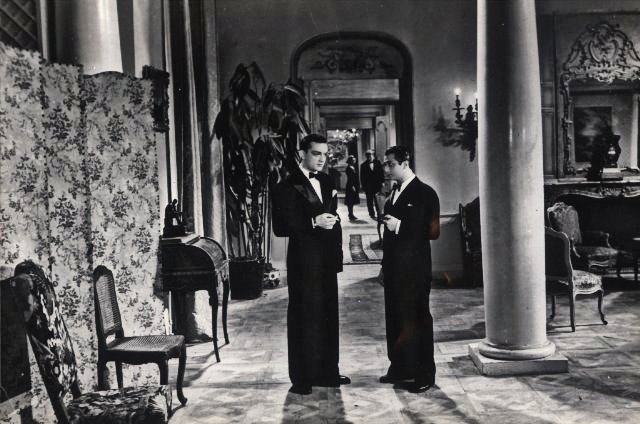
“We’ll have as much fun as we can,” Robert de la Chesnaye (Marcel Dalio) says in Jean Renoir’s 1939 comic masterpiece, the madcap farce The Rules of the Game. And oh, what fun it is. Renoir, the son of Impressionist painter Pierre-Auguste Renoir, skewers love and lust among France’s idle rich on the eve of WWII, the haute bourgeoisie fiddling in their own self-defeating way while their country is about to burn. Banned by the government for being “too demoralizing,” The Rules of the Game follows a group of men and women, both servants and masters, as they jump from bed to bed, sometimes in full view of their spouse. It’s 1939, but even with war on the horizon, a fanciful coterie of friends and acquaintances have gathered for a weekend at Château de la Colinière, the country estate owned by Robert, who is married to Christine (Nora Grégor) but has been fooling around with Geneviève de Marras (Mila Parély). Christine, meanwhile, is being wooed by aviator André Jurieux (Roland Toutain), who has just flown solo across the Atlantic, and the dapper Monsieur de St. Aubin (Pierre Nay). Newly hired domestic Marceau (Julien Carette) has the hots for Christine’s maid, Lisette (Paulette Dubost), whose extremely jealous husband, Edouard Schumacher (Gaston Modot), is Robert’s game warden, prowling the grounds with a rifle he is ready to use. And in the middle of it all is Octave (Renoir), a bear of man who is friends with André and Christine and a former lover of Lisette’s. Borrowing elements from Alfred de Musset’s Les caprices de Marianne and Pierre-Augustin Caron de Beaumarchais’s Le mariage de Figaro, Renoir depicts French society as a bunch of silly, selfish fools, and even though in the credits, over delightful music by Mozart, he calls it “A Dramatic Fantasy” that “does not claim to be a study of manners,” he later referred to it as “an exact description of the bourgeoisie of our time.” Its truthfulness is what helped make the film a critical and popular failure upon its initial release, leading Renoir to cut nearly a half hour in a desperate attempt to save it.
André Jurieux (Roland Toutain) and Robert de la Chesnaye (Marcel Dalio) fight over Robert’s wife in THE RULES OF THE GAME
“It is a war film, and yet there is no reference to the war,” Renoir wrote in his 1974 memoir, My Life and My Films. “Beneath its seemingly innocuous appearance the story attacks the very structure of our society. Yet all I thought about at the beginning was nothing avant-garde but a good little orthodox film. People go to the cinema in the hope of forgetting their everyday problems, and it was precisely their own worries that I plunged them into. The imminence of war made them even more thin-skinned. I depicted pleasant, sympathetic characters, but showed them in a society in process of disintegration, so that they were defeated at the outset, like Stahremberg and his peasants. The audience recognized this. The truth is they recognized themselves. People who commit suicide do not care to do it in front of witnesses. I was utterly dumbfounded when it became apparent that the film, which I wanted to be a pleasant one, rubbed most people up the wrong way.” The Rules of the Game was ultimately restored and reevaluated in 1959, being justly recognized as a misunderstood classic. Renoir and cinematographer Jean Bachelet use deep focus, long scenes, and carefully orchestrated close-ups to comment on luxury and class, brilliantly using metaphor as a storytelling device, particularly during the hunting scene at the château. The militaristic Shumacher is determined to catch the poor, disheveled Marceau poaching rabbits — first those sexually active animals on the grounds of the estate, then Shumacher’s wife inside. As the wealthy men and women fire at the rabbits, as well as pheasants, Renoir doesn’t turn the camera away, instead showing the creatures dying as the hunters cheer their success. It’s a painful scene to watch in a film otherwise filled with inventive slapstick and mayhem. It’s no wonder the French public initially booed the picture, which was essentially a rather unflattering mirror placed before their very eyes.
The Rules of the Game is one of the most important, and most entertaining, films ever made about love and class, about the relationships between the rich and the poor, both personal and professional. It’s no coincidence that it is Octave, played by writer-director Renoir himself, who says, “This world has rules — very strict rules,” which Renoir (Grand Illusion, Boudu Saved from Drowning) then tears down. The film still feels fresh and alive today, no mere museum piece, part “Love Stinks” by the J. Geils Band (“You love her / but she loves him / and he loves somebody else / you just can’t win”), part Upstairs, Downstairs, devastatingly funny and devilishly playful. And look for genre-redefining photojournalist Henri Cartier-Bresson as the English servant. Coco Chanel designed the dazzling “robes de la maison,” making The Rules of the Game a worthy selection for the French Institute Alliance Française CinéSalon series “Haute Couture on Film,” part of the larger “Fashion at FIAF” festival, where it is screening May 5 at 4:00 & 7:30; both presentations will be followed by a wine reception, and journalist Anne-Katrin Titze will introduce the later show. The series continues through May 26 with such other films as Jean Negulesco’s How to Marry a Millionaire and Luis Buñuel’s Belle de jour. The third annual “Fashion at Fiaf” also includes talks with Kate Betts and Garance Doré and a gallery exhibit of the work of photographer Grégoire Alexandre.


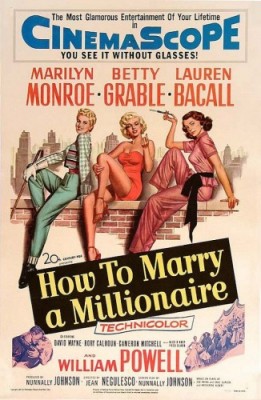
 Fox’s first CinemaScope romantic comedy, How to Marry a Millionaire, is not exactly a feminist’s dream, as a trio of gorgeous blonde models concoct a dubious plan to snare rich husbands in très chic 1950s Manhattan. Mastermind Schatze Page (Lauren Bacall), blind-as-a-bat Pola Debevoise (Marilyn Monroe), and far-from-genius Loco Dempsey (Betty Grable) move into a luxury Manhattan high-rise on Sutton Place when the previous tenant, Freddie Denmark (David Wayne), has to suddenly disappear because of tax problems. The three women are going for the gold, so Schatze refuses the constant attention of Tom Brookman (Cameron Mitchell), a man she thinks is a “gas pump jockey” but is actually one of the richest men in the city. Instead, she soon drapes herself all over aging widower and Texas cattleman J. D. Hanley (William Powell), while Loco goes away with married businessman Waldo Brewster (Fred Clark) and Pola takes up with mysterious oil baron J. Stewart Merrill (Alex D’Arcy). But no one ends up with who they brought to the dance in this outdated, old-fashioned, often annoying, yet still fun farce.
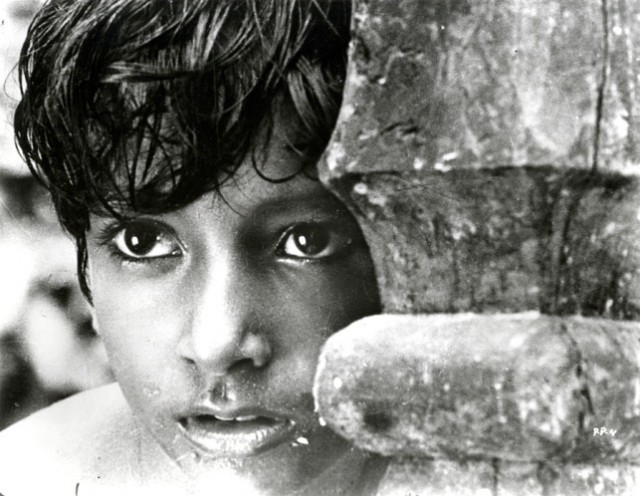
 A groundbreaking work in the history of world cinema, Satyajit Ray’s Pather Panchali and its two sequels, Aparajito and Apur Sansar, have been meticulously restored by the Criterion Collection and the Academy Film Archive following a nitrate fire in 1993 — the year after Ray was awarded an honorary Oscar on his deathbed — and now are being shown together as “The Apu Trilogy,” running May 8-28 at Film Forum. Inspired by a meeting with Jean Renoir in Kolkata, where Renoir was shooting The River, and watching ninety-nine films in six months while working as a graphic designer for an advertising agency in London, Ray decided to make his first film, adapting Bibhutibhushan Banerjee’s 1929 novel, which he knew well; Ray had contributed illustrations to a later edition of the book. The film took nearly five years to make as Ray faced repeated financing problems, such delays as cattle eating flowers that were needed for an important scene, and a cast and crew primarily of nonprofessionals. Despite all those issues, Pather Panchali is a stunning masterpiece, a bittersweet and captivating tale of a rural family mired in poverty, struggling to survive in extremely hard times. In a small village, Sarbajaya (Karuna Banerjee) is raising her daughter, Durga (Runki Banerjee), a rambunctious teen, and son, Apu (Subir Banerjee), while her husband, dreamer Harihar (Kanu Banerjee), a wannabe playwright and poet, goes off for months at a time, trying to find work in the city. (The actors shared a common surname but were not related in real life.) Sarbajaya is also caring for their elderly cousin, “Auntie” Indir (retired theater actress Chunibala Devi), who walks very slowly, hunched over and with impossibly leathery skin. The family goes about its business from day to day, as the kids play with friends, figure out how they can get something from the sweets man, and hang out with Auntie, who offers a fresh perspective on life. Sarbajaya is embarrassed that she cannot pay back several rupees she owes her relatively wealthy neighbor, who owns an orchard from which Durga steals fruit. It’s a meager existence, but it avoids being completely dark and bleak because of Auntie’s sense of humor and Apu’s wide-eyed innocence. The film is told from his point of view — in fact, the first time we see him, he is lying down, covered, and one of his eyes pops open, dominating the screen. It’s a difficult, challenging life, but there’s always hope.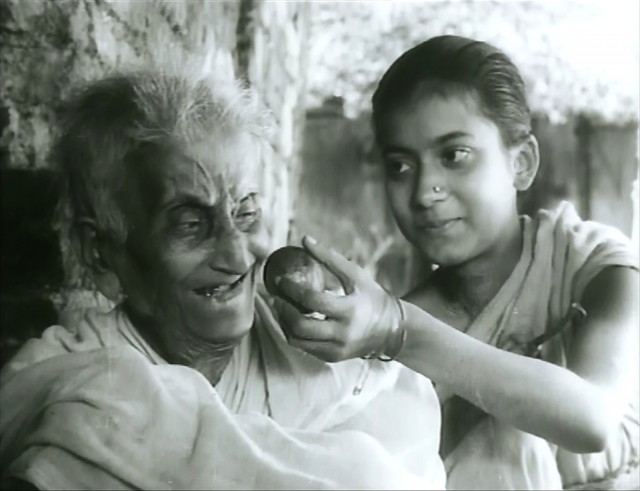

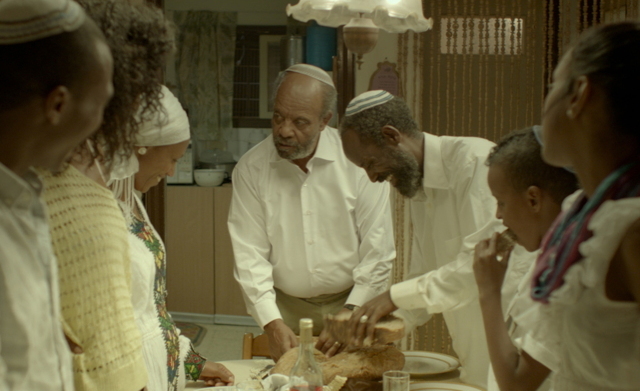
 Named Best First Film at the 2014 Jerusalem Film Festival, Bazi Gete’s Red Leaves is a compelling cinema-vérité-style tale of an Ethiopian Jewish family dealing with a very stubborn patriarch following the death of his wife. The film opens as a man tries to lead a goat to slaughter, an apt metaphor for what might become of seventy-four-year-old Meseganio Tadela (Debebe Eshetu), a solemn survivor of Sudan who suddenly tells his family that he has sold his home and will spend the rest of his life living with each of them in Tel Aviv. So he shows up unannounced at one son’s home, then another’s, leaving behind psychological wreckage that might never be undone. A stubborn man of few words, Meseganio is determined to preserve the old traditions in changing times that are quickly passing him by. His adherence gets him into trouble with his children and grandchildren, who have different priorities. Gete and cinematographer Edan Sasson use a handheld camera that puts the viewer at the Shabbat dinner table with the family as they playfully joke around with one another but afterward reveals Meseganio sitting by himself as everyone else goes on about their life without him. He can’t keep from interfering in his children’s lives, and he sticks his nose in various situations that turn volatile, from a confrontation with his granddaughter Bosna (Ruti Asarsai) to battles with his son Baruch’s (Meir Dassa) wife, Zehava (Hanna Haiela), and his other son, Moshe (Solomon Mersha). “Nothing to live for,” Meseganio’s friend Achenaf (Molla Megistu) says, but Meseganio has plenty to live for, if he would only recognize it. The final twenty minutes, and the wholly ambiguous ending, are heartbreaking and painful as the old man tries to find his way.