
Wyndham New Yorker Hotel and downtown music venues
481 Eighth Ave. between 34th & 35th Sts.
June 21-23, registration $499, individual concerts free – $12
www.newyorkerhotel.com
newmusicseminar.com
The New Music Seminar takes place in Manhattan June 21-23, with three days of panel discussions, master classes, sound sessions, and special speakers that are geared to music makers and business insiders. “Everything we do at New Music Seminar is about belief in building the music business, belief in change, and belief in long-term success for artists and businesses alike,” the seminar manifesto explains. “We provide a platform for discourse by the voices who disrupt the conventional, tackle key issues, and give a stage for emerging artists to shine.” Each night features live shows at four downtown clubs that give the opportunity for emerging artists to shine, open to everyone, with either free admission or tickets costing no more than twelve bucks. Below are some of the highlights.
Sunday, June 21
NMS Opening Night Party, with Grace Weber, Fictionist, and Belmont Lights, the Studio at Webster Hall, $12, 6:30
NMS Opening Night Party, with Melanie Martinez, Jay Stolar, Bad Veins, and Alessia Cara, the Marlin Room at Webster Hall, 6:30
Monday, June 22
Music Xray’s Live A&R Listening and Critique Sound Sessions, conducted by Mike McCready, with label managers and A&R scouts, Crystal Ballroom, 10:15 am
Songwriter’s Movement, conducted by Peter Asher, with Denis Leary, Jenna Andrews, Alex Bilowitz, James Adam Shelley, Jonnie Davis, Adam Palin, Holly Knight, and Sean Douglas, Grand Ballroom, 12:30
Women in Music Open Forum, with Diana Akin, Neeta Ragoowansi, and Ariel Hyatt, Gramercy Park Suite, 4:00
New Music Nights, with Little Racer, Lewis Lane, Dear Rouge, Twiceyoung, and Tribe Society, Pianos, 158 Ludlow St., $8, 7:00
New Music Nights, with Julia Weldon, the Como Brothers, Dolly Spartans, SYKA, and Valerie Orth, Cake Shop, 152 Ludlow St., $8, 8:15
New Music Nights, with SPZRKT, Bizzy Crook, Ace Cosgrove, and Shirley House, DROM, 85 Ave. A., free, 8:15
New Music Nights, with Nalani and Sarina, Lovebettie, Animal Years, and AJ Smith, the Delancey, $8, 8:15
Tuesday, June 23
Music Xray’s Live A&R Listening and Critique Sound Sessions, conducted by Mike McCready, with label managers and A&R scouts, Crystal Ballroom, 10:15 am
Label Heads: The Music, the Media, the Money, conducted by Ralph Simon, with Tom Corson, Avery Lipman, Craig Kallman, Steve Bartels, Dave Hansen, and Emmanuel de Buretel, Grand Ballroom, 12:30
The Developing World: Music Explosion, with Ralph Simon, Michael Abbattista, Julien Simon, Prashant Bahadur, Paramdeep Singh, Ed Peto, Ademola Ogundele, and Emmanuel Zuna, Sutton Place, 2:45
New Music Nights, with Frances Rose, Summer Heart, Chaos Chaos, Ayer, and HIGHS, Pianos, 158 Ludlow St., $8, 7:00
New Music Nights, with Frances Cone, ONWE, End of an Era, Phosphene, and Paper Fleet, Cake Shop, 152 Ludlow St., $8, 8:15
New Music Nights, with Janita, the Collection, City of the Sun, DJ SANiTY, and AOV Class of 2015 winner, DROM, 85 Ave. A., free, 8:15
New Music Nights, with Beecher’s Fault, Lilly Wolf, Fort Lean, and Dinner and a Suit, the Delancey, $8, 8:15
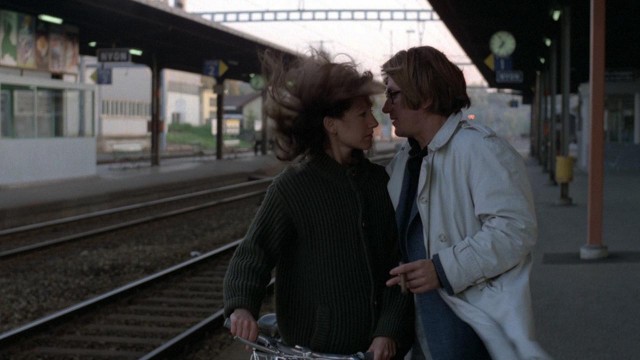
 In 1980, Jean-Luc Godard told journalist Jonathan Cott, “When you have a first love, a first experience, a first movie, once you’ve done it, you can’t repeat it,” the French auteur said about his latest film, Every Man for Himself, which he considered his “second first” film. “If it’s bad, it’s a repetition; if it’s good, it’s a spiral. It’s like when you return home — to mountains and lakes, in my case — you have a feeling of childhood, of beginning again. But in films, it’s very seldom that you have the opportunity to make your first film for the second time.” For Godard, whose real first film was 1960’s Breathless and who went on to make such other avant-garde masterworks as Contempt, Pierrot le Fou, Masculine Feminine, and Two or Three Things I Know About Her, Every Man for Himself might have been somewhat of a return to narrative, but only as Godard can do it. He still plays with form and various technological aspects, including a fascination with slow motion and an unusual, often very funny use of incidental music, and his manner of episodic storytelling would not exactly be called traditional. Sometimes it’s good, and sometimes it’s bad. Jacques Dutronc stars as mean-spirited, self-obsessed Swiss television director Paul Godard, who has recently broken up with his girlfriend, Denise Rimbaud (Nathalie Baye), who wants to leave their apartment in the city for the idyllic greenery of the country. (Yes, the characters have such names as Godard and Rimbaud, and the voice of Marguerite Duras shows up.) Paul then meets a prostitute, Isabelle Rivière (Isabelle Huppert), who is interested in Paul and Denise’s apartment, planning on bettering her life even as she still must submit to the whims of her clients, including a businessman who orchestrates a strange orgy that would make Secretary’s James Spader proud.

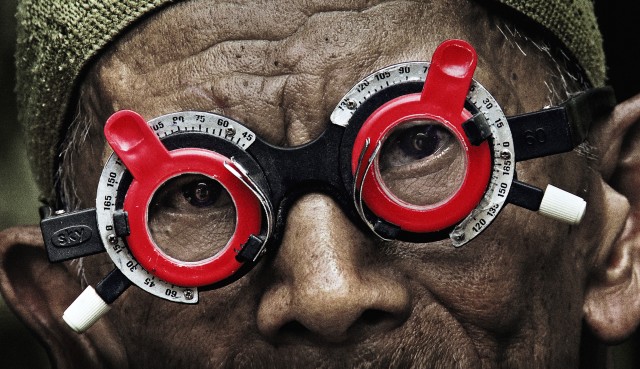
 Joshua Oppenheimer’s The Look of Silence opens with an old man, wearing a pair of red optic trial lens frames, gazing into and around the camera for twelve uncomfortable seconds, in complete silence, showing no emotion. It is a striking metaphor for the rest of the film, a shocking documentary about the 1965–66 Indonesian genocide and a bold man determined to confront the men who brutally murdered his brother then, along with a million other supposed communists. In 2012, Oppenheimer made the Oscar-nominated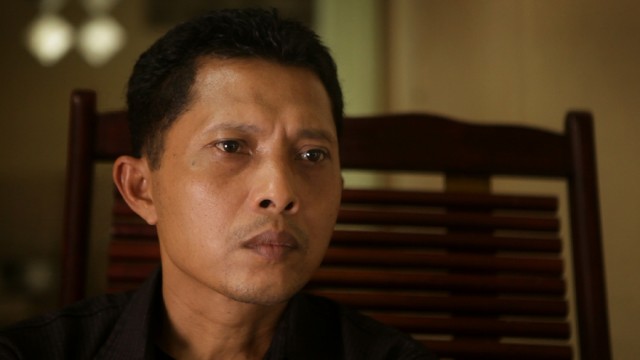
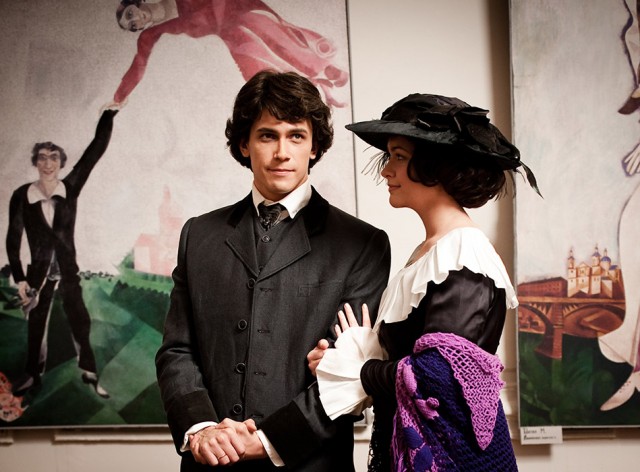
 For his first film in a dozen years, Russian writer-director Alexander Mitta tells the intriguing story of the little-known relationship between early modernist painter Marc Zakharovich Chagall and avant-garde Suprematist Kazimir Malevich. In 1917, Chagall (Leonid Bichevin), already a success in Paris, returns to his home in Vitebsk to marry his sweetheart, Bella Rosenfeld (Kristina Schneidermann), who is being wooed by their childhood friend, Naum (Semyon Shkalikov). Chagall initially wants to return to Paris with Bella and continue his burgeoning career, but with the onset of the Russian Revolution he decides that he will use the power of art to provide much-needed culture and creativity for the community, opening the Academy of Modern Art. Trouble ensues when he hires Malevich (Anatoliy Belyy) to teach there, as Malevich brings his own very different ideas about art and politics. Meanwhile, Naum, who is still in love with Bella, has become the Red Commissar, ruling Vitebsk with fear and violence. Made with the support of Chagall’s granddaughter, Meret Meyer Graber, a vice president of the Marc Chagall Committee, and inspired by his memoirs, Chagall-Malevich is a highly stylized, fanciful film, evoking the work of Wes Anderson (Rushmore, The Grand Budapest Hotel) and Michel Gondry (Eternal Sunshine of the Spotless Mind, The Science of Sleep); cinematographer Sergei Machilsky shot the movie in colors based on the paintings of Chagall and Malevich, set at sharp angles that can be both cool and disorienting. But Mitta’s (Lost in Siberia, My Friend, Kolka!) screenplay is far too sentimental and idealistic in its celebration of the brush over the gun. Chagall-Malevich might be beautiful to look at — Malevich’s bold geometric shapes are a wonderful foil for Chagall’s dreamscapes, and some of the more fantastical elements are rather funny — but the central plot is overly whimsical and often just plain silly, its palette lacking in subtlety and gradation. Chagall-Malevich opens June 12 at Cinema Village, with Schneidermann participating in a Q&A following the 7:30 show on Friday night.