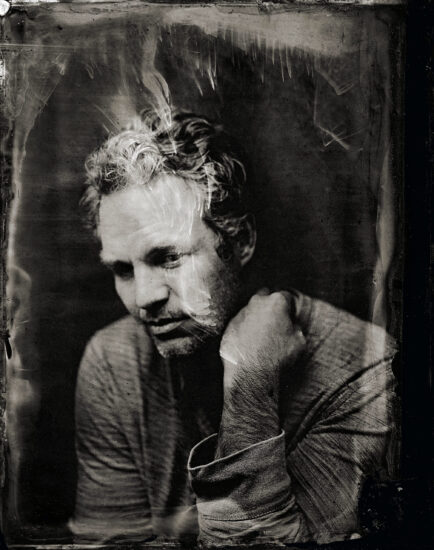
Mark Ruffalo will be joined by Jessica Hecht for reading and discussion about upcoming stage production of Ironweed and the unhoused crisis (photo by Victoria Will)
Who: Mark Ruffalo, Jessica Hecht, Vinson Cunningham What:Play reading and discussion Where:BAM Strong, Harvey Theater, 651 Fulton St. When: Tickets on sale Thursday, April 18, $35+, 1:00; show is Friday, May 17, 7:30 Why: “Riding up the winding road of Saint Agnes Cemetery in the back of the rattling old truck, Francis Phelan became aware that the dead, even more than the living, settled down in neighborhoods.” So begins Ironweed, the third of eight books in William Kennedy’s Albany Cycle. The 1983 novel earned the Albany native the Pulitzer Prize and was made into a movie four years later by Hector Babenco starring Oscar nominees Jack Nicholson as Francis and Meryl Streep as Helen Archer, a homeless couple just trying to make it to the next day.
The story is now being told in a new play, along with an all-star audio recording of the drama, directed by Jodie Markell. On April 18 at 1:00, tickets go on sale for “Ironweed: An Evening of Art & Humanity,” which consists of a staged reading of several scenes from the play, with Mark Ruffalo and Jessica Hecht as the couple, followed by a discussion with the actors and experts on the unhoused crisis, moderated by Vinson Cunningham. The audio recording features Ruffalo, Hecht, Norbert Leo Butz, Kristine Nielsen, John Magaro, Michael Potts, David Rysdahl, Frank Wood, Katie Erbe, and others, the ninety-six-year-old Kennedy as narrator, songs by Tom Waits, and an original score by Tamar-kali.
Ruffalo is on the board of the Solutions Project, which “funds and amplifies climate justice solutions created by Black, Indigenous, immigrant, women, and communities of color building an equitable world.” Hecht is the cofounder of the Campfire Project, which “promotes arts-based wellness in refugee spaces and empowers refugees to step into the spotlight, explore their creativity, and refocus on their humanity,” and she is on the board of Projects with Care, an organization that “works closely with housing and social service agencies in New York City to coordinate need-based initiatives for families who need a helping hand.”
[Mark Rifkin is a Brooklyn-born, Manhattan-based writer and editor; you can follow him on Substack here.]
Who:MC Baba Israel,Hetep BarBoy,Squala Orphan,JSWISS,KUMBAYA,DJ Reborn What: Word. Sound. Power. 2024: SOUND — Rhythm Is Rhythm Where:BAM Fisher, Fishman Space, 321 Ashland Pl. When: Friday, April 19, and Saturday, April 20, $25, 7:30 Why: In past years, BAM’s annual “Word. Sound. Power.” showcase of hip-hop and spoken-word artists has featured such performers as Helixx C. Armageddon, Pri the Honey Dark, Silent Knight, Peggy Robles-Alvarado, Jade Charon, Nejma Nefertiti, Okai, Dizzy SenZe, and others. The 2024 iteration, “SOUND — Rhythm Is Rhythm,” is taking place at the Fishman Space April 19 and 20, with an impressive lineup that includes host, cocurator, and director MC Baba Israel, Hetep BarBoy with Squala Orphan, Kumbaya, JSWISS, and DJ Reborn, celebrating the fiftieth anniversary.
“Hip-hop embodies an ongoing dialogue between the beat and the community. Sometimes, it’s the rhyme that answers back, while other times, it’s the body that continues the discussion,” event cocurator and BAM education manager Mikal Amin Lee said in a statement. “This year, we aim to spotlight the dynamic conversation between beats and rhymes, in the spirit of the Last Poets, the block, and the Cipher. Whether expressed through the ones or the mic, the essence remains the same: rhythm is rhythm.” The seventy-minute live performance will be followed by a twenty-minute Q&A with the artists.
[Mark Rifkin is a Brooklyn-born, Manhattan-based writer and editor; you can follow him on Substack here.]
Who: Alex Edelman, Judy Gold, Peter Yarrow, David Broza, Dr. Benjamin Chavis Jr., AC Lincoln, Terrance Floyd, Brad Lander, Rabbi Amichai Lau-Lavie, Rabbi Tamar Manasseh, Laurie Anderson, Steven Bernstein, Jared Freed, Richard Kind, Nicki Richards, more What: Downtown Seder 2024 Where:City Winery, 25 Eleventh Ave. at Fifteenth St. When: Wednesday, April 17, $75-$180 (livestream free), 7:00 Why: For more than three decades, Michael Dorf has been hosting all-star seders to celebrate Passover, concentrating on freedom and justice. The latest iteration takes place on Wednesday, April 17, at City Winery, which Dorf opened on Varick St. in 2008 and moved to Hudson River Park’s Pier 57 in 2020. Attendees will be treated to a plant-based meal with four glasses of wine as they go through the Haggadah, the illustrated text that tells the story of the Jewish people’s exodus from Egypt. This year’s participants include multidisciplinary artist Laurie Anderson, musicians David Broza, AC Lincoln, Peter Yarrow, Steven Bernstein, and Nicki Richards, comedians Alex Edelman, Jared Freed, and Judy Gold, activist and author Dr. Benjamin Chavis Jr., activist Terrance Floyd, NYC comptroller Brad Lander, Rabbis Amichai Lau-Lavie and Tamar Manasseh, and actor extraordinaire Richard Kind. The setlist is likely to include “The Four Questions,” “Dayenu,” “Chad Gadya,” “Go Down Moses,” and “The Ten Plagues.” If you can’t make it to City Winery on April 17, you can follow the livestream for free here.
“Every year has local and international issues which resonate with the Passover story, and the Palestinian/Israeli conflict — which has historical connections — could not make this year’s seder conversations any more intense,” Dorf writes on the event website. “However, as José Andrés eloquently stated in his recent NYT op-ed, ‘Let People Eat,’ we all share a culture that values food as a powerful statement of humanity and hospitality — of our shared hope for a better tomorrow. City Winery’s seder takes these ancient symbols of life and hope and transcends the normal script using art, music, and humor to bring back some joy while inspiring and feeding our soul.”
[Mark Rifkin is a Brooklyn-born, Manhattan-based writer and editor; you can follow him on Substack here.]
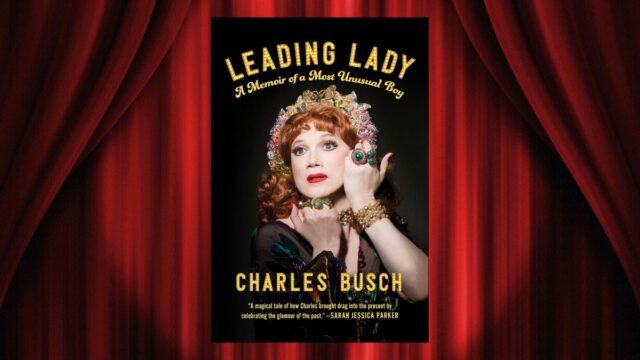
Who:Charles Busch,Melissa Errico What: Book talk Where:The National Arts Club, 15 Gramercy Park South When: Monday, April 15, free with advance RSVP, 6:30 Why: In the first chapter of his memoir, Leading Lady: A Memoir of a Most Unusual Boy (Smart Pop, September 2023, $27.95), Charles Busch is writing about meeting up with Joan Rivers. “Dining with a group of friends at Joe Allen, Joan expressed wistfully, ‘I wish I had a gay son I could phone at midnight and discuss whatever movie was on TCM.’ Everyone laughed. I fell silent, but inside I was pleading, Take me. I’ll be your gay son. Joan was the most prominent in a long line of smart, bigger-than-life mother figures I’ve attached myself to. All my life, I’ve been in a search for a maternal woman whose lap I could rest my head on.”
New York native Busch has been part of the entertainment scene in the city since the late 1970s, writing and appearing in numerous plays and films, often in drag. The Tony nominee and Drama Desk Award winner has dazzled audiences with such plays as The Tale of the Allergist’s Wife,Vampire Lesbians of Sodom,The Tribute Artist, and The Confession of Lily Dare as well as Psycho Beach Party and Die, Mommie, Die!, both of which transferred from stage to the big screen. He currently can be seen in Ibsen’s Ghost at 59E59 through April 14.
On April 16, Busch will be at the National Arts Club to talk about his life and career, in conversation with Manhattan-born, Tony-nominated actress and singer Melissa Errico, who has starred in such shows as My Fair Lady,High Society,Dracula the Musical,Amour,Sunday in the Park with George, and Aunt Dan and Lemon. Expect lots of great stories featuring many all-time theater greats.
[Mark Rifkin is a Brooklyn-born, Manhattan-based writer and editor; you can follow him on Substack here.]
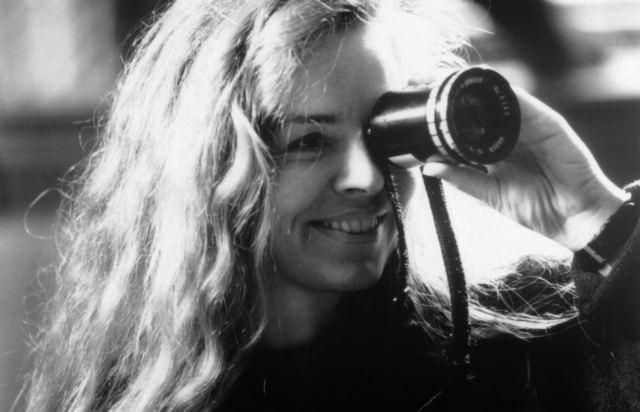
The career of Canadian auteur Patricia Rozema will be celebrated at Roxy retrospective
FILMS OF PATRICIA ROZEMA
Roxy Cinema
2 Sixth Ave. at Church St.
April 5-11 www.roxycinemanewyork.com
“You know, the smile that people have when they think they’re alone — that look people have when they think they’re alone or they’re not being watched — is entirely different from the way we are with others in the room,” award-winning Toronto New Wave director Patricia Rozema told David Schwartz in a November 1999 Museum of the Moving Image Pinewood Dialogue about Mansfield Park, her adaptation of the novel by Jane Austen. “I’m probably attracted to making movies because I’m a voyeur, because I wish for those moments. And since it’s illegal, for the most part, to capture them, you have to re-create them.”
Rozema will be at the Roxy Cinema for several Q&As during a weeklong retrospective consisting of five of her films, beginning April 5 at 7:15 with a 4K restoration of her second feature, White Room, which stars Maurice Godin, Margot Kidder, and Kate Nelligan in a dark fairy tale about murder and celebrity obsession; the screening will be followed by a Q&A with the Future of Film Is Female’s Caryn Coleman. On April 6 at 7:30 and April 11 at 7:30, Rozema will speak with Queer Forty editor-in-chief Merryn Johns after a screening of a 4K restoration of 1995’s When Night Is Falling, in which two university professors at a faith-based institution, Camille (Pascale Bussières) and Martin (Henry Czerny), are considering getting married until Camille is suddenly drawn to the mysterious acrobat Petra (Rachael Crawford).
On April 7 at 5:15, Rozema will discuss 2018’s Mouthpiece with writer director Charlie Kaufman; the film is based on a play by Amy Nostbakken and Norah Sadava, who star as two sides of the same woman, Cassandra, dealing with the death of their mother. And on April 8 at 7:00, Rozema will be on hand to talk with A. M. Homes about her debut, I’ve Heard the Mermaids Singing. In addition, a 35mm print of Mansfield Park will be shown April 6 at 5:15, and White Room will have an encore screening on April 10 at 9:00.
“I believe in tension and release, in that if you stay in the the same tone and mode and intensity for too long, it actually becomes monotonous. When you change up your pace or your humor level, then the release is welcome,” Rozema says in the DVD audio commentary of Mansfield Park. “I believe that’s my biggest job: tone control, and maintaining enough unity so that it all feels like one movie and all the scenes belong together, and yet diversity so that emotional and narrative interest is maintained.”
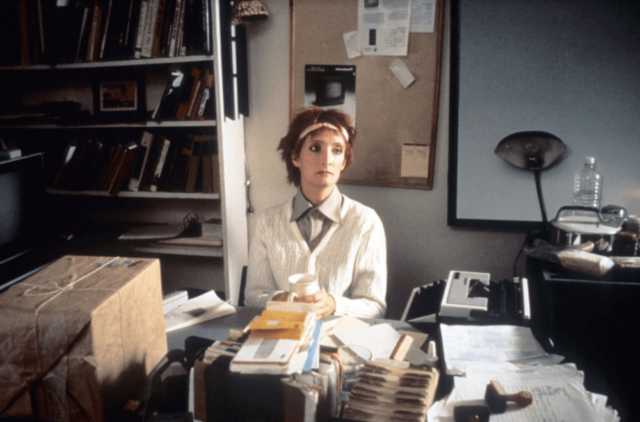
Polly Vandersma (Sheila McCarthy) shares her unique view of the world in I’ve Heard the Mermaids Singing
“Gosh. You know, sometimes I think my head is like a gas tank. You have to be really careful what you put into it because it might just affect the whole system,” Polly Vandersma (Sheila McCarthy) says in I’ve Heard the Mermaids Singing. “I mean, isn’t life the strangest thing you’ve ever seen?”
Considered one of the best films to ever come out of Canada, I’ve Heard the Mermaids Singing is plenty strange itself. The 1987 comedy is a unique exploration of queer culture and belongs with such 1980s underground fare as Smithereens,Liquid Sky, and Repo Man as well as James McBride’s 1967 David Holzman’s Diary. In her second film, McCarthy stars as the birdlike Polly, a quirky, self-described “unsuccessful career woman” and “gal on the go,” a not-very-good girl Friday who is content being a temporary secretary, the antithesis of the ’80s archetype embodied by Tess McGill, the ambitious thirty-year-old portrayed by Melanie Griffith in Mike Nichols’s 1988 Working Girl.
The story is told in flashback as Polly makes a video about her simple existence, kind of like a precursor to the confessions in MTV’s The Real World but without the self-aggrandizement. Polly lives alone in Toronto, with no friends; now thirty-one, she lost both her parents ten years before. She’s not exactly smart or well rounded and not much of a conversationalist. When gallery curator Gabrielle (Paule Baillargeon) offers her a full-time position, Polly jumps at the chance, ready to immerse herself in the contemporary art world, which she knows nothing about, and Gabrielle’s personal life, which includes the sudden, unexpected return of her old girlfriend, Mary (Ann-Marie MacDonald).
Polly is an aspiring photographer who snaps pictures of people on the street hanging out, playing sports, and falling in love, all activities that seem to evade her. She develops the film in her bathroom, which she has converted into a makeshift darkroom. Meanwhile, she has endearing fantasies of climbing buildings, flying, and walking on water. Her photos and fantasies are in black-and-white, countering the pastel colors of her daily life. When she finds out that Gabrielle is a painter — her canvases literally glow, as if descended from heaven (while evoking the mysterious object in the trunk of the Chevy Malibu in Repo Man) — she becomes obsessed with her mentor’s works as both of them decide to pursue their artistic talents further.
Filmed in Toronto in one month for $275,000, I’ve Heard the Mermaids Singing, winner of the Prix de la Jeunesse at the 1987 Cannes Film Festival, underwent a 4K restoration in 2017 as part of Canada 150, a celebration of the country’s 150th anniversary of its confederation. The title was taken from a line in T. S. Eliot’s poem “The Love Song of J. Alfred Prufrock”: “I have heard the mermaids singing, each to each. / I do not think that they will sing to me.”
McCarthy, who also appeared in Rozema’s White Room, won the first of two Genie Awards for Best Actress, the Canadian equivalent of the Oscars, for Mermaids; she would nab the honor again six years later for Diane Kingswood’s The Lotus Eaters. She is mesmerizing as the endlessly eccentric, spikey-red-haired Polly, who is as peculiar and unpredictable as she is charming and endearing; it’s like she’s arrived from another planet, intent on learning what life can be about. Pay close attention to the scene in which Gabrielle and art critic Clive (Richard Monette) discuss a new painting by a gallery artist while Polly eavesdrops; they are actually talking about her potential transformation, even if she doesn’t realize it.
Rozema wrote, directed, edited, and coproduced the film, which features playful cinematography by Douglas Koch and a fab ’80s score by Mark Korven, alongside Ludwig van Beethoven’s Symphony No. 5.
Rozema will participate in a Q&A with author A. M. Homes following the screening. “I wanted to make a warm-spirited anti-authority film,” Rozema says in her director’s statement. “But most of all I wanted to make a film with Polly in it, one where she and I get to hear the mermaids singing.” We should consider ourselves fortunate to be able to do the same.
[Mark Rifkin is a Brooklyn-born, Manhattan-based writer and editor; you can follow him on Substack here.]
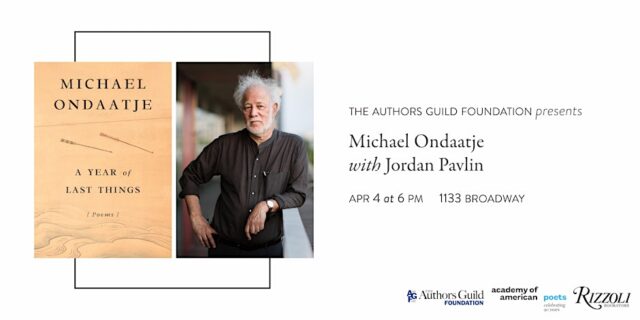
Who: Michael Ondaatje, Jordan Pavlin What: Poetry reading and discussion Where:Rizzoli Bookstore, 1133 Broadway at West Twenty-Sixth St. When: Thursday, April 4, free with advance RSVP, 6:00 Why: “When you are surrounded with ornaments / of the old world, you need to hear one living vein,” Michael Ondaatje writes in “A Night Radio Station in Koprivshtitsa,” from his new poetry book, A Year of Last Things (Knopf, March 19, $28). He later adds, “Most stories remain unresolved, / undiscovered, like the breaking of a rule.” On April 4 at 6:00, the eighty-year-old Sri Lankan-born Canadian author, who has penned such novels as The English Patient,Anil’s Ghost, and Warlight, will be at Rizzoli to launch A Year of Last Things; he will read from the work, which contains such poems as “Lock,” “Definition,” “Lost,” “A Disappearance,” and “Stillness,” and sit down for a conversation with Knopf editor-in-chief Jordan Pavlin. Admission to the event, which is presented by the Authors Guild Foundation with support from the Academy of American Poets, is free, but reservations are strongly encouraged. Presigned books will be available at the end.
[Mark Rifkin is a Brooklyn-born, Manhattan-based writer and editor; you can follow him on Substack here.]
PAYMENT OF THE ARGENTINE FOREIGN DEBT TO ANDY WARHOL WITH CORN, THE LATIN AMERICAN GOLD
Americas Society
680 Park Ave. at Sixty-Eighth St.
Tuesday, March 26, free with advance RSVP, 6:30 www.as-coa.org
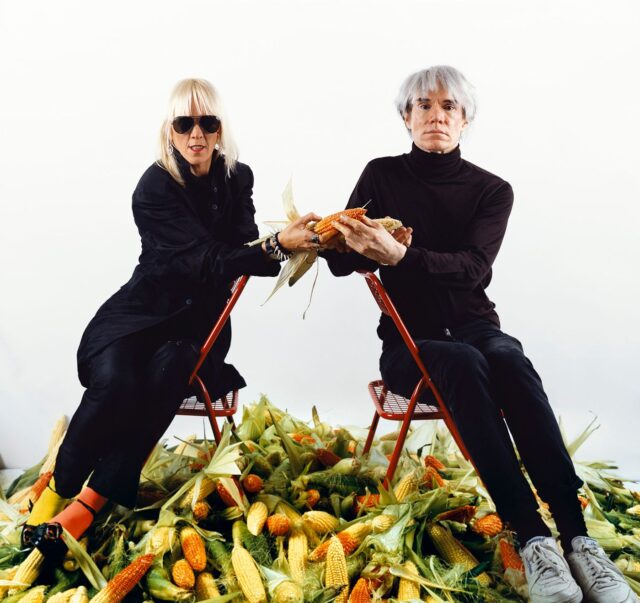
In 1985, multidisciplinary artist Marta Minujín went to the Factory to participate in a unique performance with Andy Warhol. The Argentine-born Minujín and the Pittsburgh-born Warhol sat back-to-back in red folding chairs amid one thousand ears of corn; each artist was dressed all in black, except for the platinum blond Minujín’s yellow and orange socks and the silver-wigged Warhol’s grayish-white sneakers. Titled Payment of the Argentine Foreign Debt to Andy Warhol with Corn, the Latin American Gold, the conceptual performance piece, printed in 2011 in a six-photo grid against a white background, involved the forty-two-year-old Minujín, wearing dark sunglasses, presenting the fifty-six-year-old Warhol with the international food staple maize, which had been painted yellow and orange. Over the course of the photographs, they turn to each other, look directly at the camera, and exchange a handful of ears. After the performance, Minujín and Warhol signed the corn and handed ears out to people in front of the Empire State Building, the subject of one of Warhol’s most famous films, Empire.
“Simply put, Argentina’s always owed money to the International Monetary Fund. Always. Then I thought, ‘This country’s fed the entire world by now,’ because during World War II, Argentine ships would sail out laden with seeds and corn for people to make bread and everything. So many ships sailed out, in fact, that their lives were extended by what they received from Argentina. So, for me, the dollar debt had already been settled,” Minujín says on the audioguide that accompanies the Jewish Museum exhibition “Marta Minujín: Arte! Arte! Arte!,” where Payment is part of an exciting career survey of the artist through April 1. “I wanted to be done with the subject and figured I’d pay Andy Warhol. He was a friend of mine, and our intentions, way of living, everything was aligned. So, I paid off Argentina’s foreign debt to him in Latin American gold — corn. That was the idea behind this piece. Now, many issues still remain around the dollar, but it’s as though I’ve paid off this debt. For me, it’s settled. Even for Argentina, it’s settled — it has been for many years now.” One of the photos was also on view in the recent Americas Society show “El Dorado: Myths of Gold Part I.”
On March 26, Minujín will restage the event at Americas Society; admission is free with advance registration. Americas Society director and chief curator of art Aimé Iglesias Lukin and Jewish Museum associate curator Rebecca Shaykin will introduce the performance, which will be followed by a reception.
MARTA MINUJÍN: ARTE! ARTE! ARTE!
Jewish Museum
1109 Fifth Ave. at 92nd St.
Thursday – Monday through April 1, free – $18 thejewishmuseum.org
“Marta Minujín: Arte! Arte! Arte!” is the artist’s first comprehensive US museum survey, and it’s a revelation. Five years ago, she restaged her labyrinthine Menesunda Reloaded at the New Museum, drawing long lines. She deserves long lines again for the Jewish Museum exhibition, which includes nearly one hundred paintings, sculptures, photographs, videos, and installations, alive with bright colors and immersive experiences. Conceptos entrelazados (Intertwined Concepts) is an inviting foam-stuffed mattress bursting with bold colors and patterns. Congelación a lo largo (Autorretrato de espaldas) (Long-Term Freeze [Self-Portrait with Back Turned]) at first appears to be a gentle landscape but is actually an elongated nude body that is part of Minujín’s “Frozen Sex” series. Pandemia (Pandemic) is a canvas of 27,900 pieces of hand-painted and glued mattress fabric created during the coronavirus crisis. El Partenón de libros (The Parthenon of Books) is an examination of a 1983 performance piece in which the artist built a Parthenon-shaped tower of banned books, now accompanied by contemporary American banned books. Soliloquio de emociones encontradas (Soliloquy of Mixed Emotions) undulates with enticing shapes and colors. And Implosión! is a dazzling, dizzying immersive room exploding in a whirlwind of 3D-like projections and sound.
“I don’t have origins. I have my own planet,” Minujín says in one of the above videos. The exhibition at the Jewish Museum ably displays that, as will the live performance at Americas Society.