this week in lectures, signings, panel discussions, workshops, and Q&As

HOPE BOYKIN WANTS YOU TO HAVE THE BEST DAY EVER

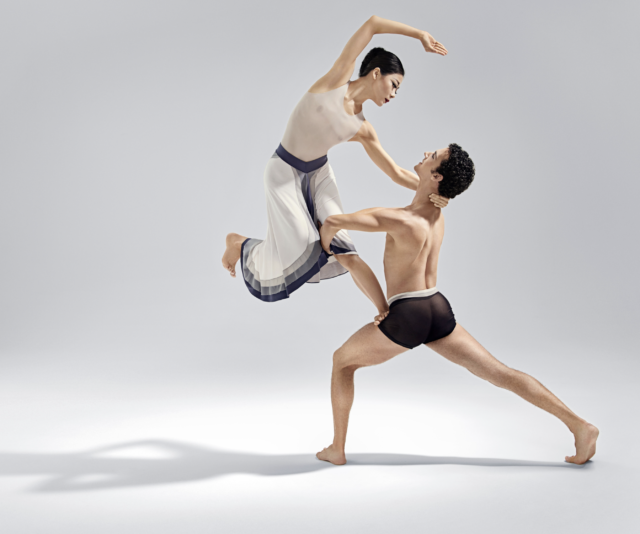
Hope Boykin makes her Joyce debut with States of Hope (photo courtesy HopeBoykinDance)

STATES OF HOPE
The Joyce Theater
175 Eighth Ave. at 19th St.
October 17-22 (Curtain Chat October 18), $52-$72
212-691-9740
www.joyce.org
www.hopeboykindance.com

“You have the best day ever,” Hope Boykin told me at the end of our lively Zoom conversation a few weeks ago. And I set out to do just that, as it’s impossible not to be affected by her infectious positivity, encased in a warming glow.

A self-described educator, creator, mover, and motivator who “firmly believes there are no limits,” the Durham-born, New York–based Boykin began dancing when she was four and went on to become an original member of Dwight Rhoden and Desmond Richardson’s Complexions, performed and choreographed with Joan Myers Brown’s Philadanco!, then spent twenty years with Alvin Ailey American Dance Theater, first under Judith Jamison, then Robert Battle. A two-time Bessie winner and Emmy nominee, Boykin was busy during the pandemic lockdown, performing the “This Little Light of Mine” excerpt from Matthew Rushing’s 2014 Odetta for the December 2020 Ailey Forward Virtual Season, making several dance films, collaborating with BalletX and others, and preparing October 2021’s . . . an evening of HOPE, a deeply personal hybrid program at the 92nd St. Y that investigated Boykin’s truth and her unique movement language.

Next up for Boykin is another intimate presentation, States of Hope, running October 17–22 at the Joyce. Boykin wrote, directed, and choreographed what she calls her “dance memoir,” which features an original score by jazz percussionist Ali Jackson, lighting and set design by Al Crawford, and costumes by Boykin and Corin Wright. The work, in which she explores different parts of herself, will be performed by Boykin as the Narrator, Davon Rashawn Farmer as the Convinced, Jessica Amber Pinkett as the Determined, Lauren Rothert as the Conformist, Bahiyah Hibah Sayyed or Nina Gumbs as the Daughter of Job, Fana Minea Tesfagiorgis or Amina Lydia Vargas as the Cynical, Martina Viadana as the Angry, and Terri Ayanna Wright as the Worried.

On a Wednesday morning, Boykin, evocatively gesticulating with her hands and smiling and laughing often, discussed transitioning from dancer to choreographer, making dance films, seeing Purlie Victorious on Broadway, avoiding ditches, and seeking radical love in this wide-ranging twi-ny talk.

twi-ny: You are in rehearsals for your Joyce show. Where are you right now?

hope boykin: I’m at the 92nd Street Y. I got here early because I was a fellow for the Center for Ballet and the Arts [at NYU] for 2022–23, and then they extended it through the academic year, then they extended it through the summer, but they have new fellows now. And so I will never take an office space and stairs down to the studio for granted again.

Now that I’m a New Yorker, I can say I was schlepping all of the cameras and the computers and the music, and so I found a corner here in the newly renovated Arnhold Dance Center. I give everybody a warmup at 10:15 before we get started. So I’m here early.

twi-ny: I’ve previously interviewed Matthew Rushing and Jamar Roberts, who are two other longtime Alvin Ailey dancers who became choreographers for Ailey while they were still dancing with the company. When you started at Ailey, did you anticipate becoming a choreographer in the way you have?

hb: I don’t think anything was in the way that I had; I definitely didn’t have that thought. I was always making work because at Philadanco!, Joan Myers Brown put into practice a summer event called Danco on Danco!, and so she allowed dancers in the company to choreograph on other dancers in the company, then in the second company, and there was also an evening that would showcase D/2, the second company. The concert was in a small theater. I mean, she gave us tech time and rehearsal so we could see our work on a stage.

That also happened at Ailey once I got there, but I feel like I was able to really create work there. And then I was also an adjunct professor and did choreography at University of the Arts. And so I was choreographing and then seeing things on stages there. But never would I have thought that I would wake up in the morning and say, This is what I do for a living. I mean, it’s a little bit wild. And then in this stage now, having the opportunity to do things under my own name — having commissions is incredible.

It’s not just satisfying because you’re able to travel, but you’re able to meet people and you’re challenged with different environments, you’re challenged with different artists, different genres of dance, and so that’s wonderful. But having your name on it, being responsible to make sure that everyone’s paid on time, having a physical therapy schedule, will that schedule work with the schedule that I made, it’s a different animal.

twi-ny: In some cases you’re choreographing on friends and colleagues you’ve worked with for years, and in other cases you’re working with completely new teams you’re not as familiar with. Is one harder than the other?

hb: That does get a little bit difficult.

twi-ny: You have to boss friends around sometimes.

hb: Well, yeah. You just have to remind them what you want and that as much as they know you and want the best for you, you may not have the answer for why you’re doing something right away, but they have to trust you. And they do. They ultimately do.

Sometimes, it’s funny; you still have to watch your words when they’re people who you love. I love to talk about the found family. And when you have people who are committed to you and they want the best for you, and they maybe think that their opinion’s going to help . . . what really helps above all is their support, not having to pretend or perform when you’re in front of people who don’t know you. You have to show up. You have to do the smiling thing. I mean, we always have to watch our words, especially now. I’m super conscious of how I speak to other artists, but I feel like I’ve always been conscious of that because of things I didn’t like. So I wanted to be one of those people who could tell you the truth and tell you no and tell you I don’t like that, let’s fix it.

twi-ny: Right. Tell them, “I still love you.”

hb: Exactly, “I still love you.” And so I feel that it’s easier for me. We were away during our technical residency in the Catskills, and I just had a yucky morning, and three of the women who I knew I could cry in front of and that they would pray with me did. We started late that day. I was weeping. I said, “I need some help.” They put their arms around me in a group, and then the day got started after that. It was just heavy times. But when you have people who’ve known you, they can also pick up some of the slack when you don’t feel a hundred percent; they fill in the rest.

twi-ny: In your PBS First Twenty episode Beauty Size & Color, you talk about “renegotiating and forcing a change of narrative,” which relates to something that comes up a lot in your work. You talk about finding your own path, that your path is different from someone else’s path. Are we on the right path as a society?

hb: Yes. It’s so interesting. Lately, especially because I’ve been applying for grants — I don’t mean foundational grants, I mean the creative grants — you are competing against hundreds of applications. You’re lucky if someone recognizes your name; maybe recognizing your name will move you forward, but maybe it also won’t. They’re really just trying to look at the topic. And if my topic of what I want to make is not radical enough, if it is not wild enough, if it is not socially piercing enough, if I’m not saying the words that people want to hear from a huge activist, I mean, I’m not saying that I’m not. I’m just saying if those words aren’t the words people want to hear, then it feels like I’m not in those rooms.

So I want to be clear about that. But it feels like you’re not chosen. And I think that love is the most radical thing we should work on. If we were radical with our love, we wouldn’t watch someone fall and then just look at them. We would pick them up. If we were more radical with our love, we would have compassion for those who didn’t have homes. If we were more radical with our love, we would not necessarily need to walk into a school with some sort of weapon. I’m going to tell you when it changed for me: There was a woman who looked fine. She did not look homeless. She was a young white woman, and she was walking in my neighborhood — I live in Harlem, but it’s gentrified. And then she pulled down her pants to take a wee.

And I said to myself, Excuse me, what are you doing? I didn’t judge; she looked perfectly fine. But at some point she was not able to walk into a place and say, May I use the bathroom?

twi-ny: Or someone said no.

hb: Or someone said no. I checked myself in the moment; instead of me saying, How dare you! I should have said, How could I help you? But please understand. I did not think that first; I thought that third or fourth after all of the other things. But if I were more radical with my love, maybe I would’ve said to her, How can I help you? Is there something I could do? I don’t know what her situation was.

twi-ny: Exactly. You don’t know.

hb: And so I want to speak about this love and trying to understand why I felt the lack and why I felt like I was in constant competition with things that I could not control. There are a lot of things I could control. So once again, let me be clear. I’m not trying to be a hypocrite, but if I’m in competition with you simply because you’re bald — I’m usually bald.

twi-ny: I know, I know.

hb: It’s a little bit long today.

twi-ny: Yeah, mine too. Mine too.

hb: But if that’s the case, I’m in the wrong business. I love to go into new studios and tell people, if it were about being tall and blond with a bun, I would not have been working for over twenty years. But I did. Which means that there is room for me; which means that there’s room for you. Now, it doesn’t feel like a lot of room at the time, but if I can make room, if my path is this wild and then I am able to do this, then that means someone else can come in and then they can, and then we can, and then they can. And then we can.

Even on Broadway right now. I went to see Purlie Victorious.

twi-ny: I saw it last night. Unbelievable.

hb: Unbelievable. I’m sure that they thought that the musical, Purlie, was going to be a better moneymaker. What’s the reasoning behind us not seeing that? Yes, the musical, yay, we’re not cutting it. Yay. We love a musical, song and dance. But that piece of art. That was written, what? More than sixty years ago?

twi-ny: Yes. And it felt like it could have been written yesterday. The friend I went with, she saw the musical with Cleavon Little and Patti Jo. She even brought her program from 1972, and she asked, Why is this a musical? Now that she’s seen the play, it’s like, wow.

hb: Yeah, I’m friends with [Purlie Victorious star] Leslie Odom Jr. And he was like, “You think Ms. Jamison wants to come?” I said, “Yeah.” So I called her and she said, “You mean Purlie? I said, No, I mean Purlie Victorious. She said, “Purlie.” I said, “No, Judy. The prequel.”

twi-ny: And to be that funny sixty years ago about this topic. We laughed our heads off while facing this truth.

hb: It’s unbelievable. All of that to say there is a radicalness that can change our view on what truth is. Do you know what I mean? And I’m not thinking in this log line; I call it my log line. It doesn’t really explain the work, but I say in this evening-length, fully scripted new dance theater work. It’s not new because I’m making something no one has ever seen. It’s new for me. It’s a new way for me to express myself. It’s a new way for me to make work that I feel deserves to be spoken about just because it’s my experience. And once again, here I am trying to broaden a path that I feel like other people just need to — I don’t want them to walk the way that I walk. I just want them to feel they’re given the ability to actually walk forward and not feel stunted.

twi-ny: Kara Young, who plays Lutiebelle Gussie Mae Jenkins [in Purlie Victorious], she’s like a dancer at times; she speaks volumes with her body even when not saying anything.

hb: She’s studied and trained in all the disciplines because you can’t move like that, I’m sure, without that agility and understanding. [ed. note: Young studied at the New York Conservatory for Dramatic Arts.] It’s not just being flexible; it’s about awareness. I don’t know all of her story, but I could say I can’t imagine that she didn’t. But I do know that Leslie studied at Danco. That’s where I met him when he was fifteen or sixteen years old. So I know he’s a mover. And his agility — that scene where he kept running back to the window, oh my God. Oh my. The timing. I was like, look at my friend. But anyway.

[ed. note: . . . an evening of HOPE opened with Deidre Rogan dancing to Odom’s rendition of “Ave Maria.”]

twi-ny: One of the things you say is your journey is yours, and your journey is yours. We’re not all on the same journey, even if we’re spending an hour and a half or two hours together in a safe space. Your recent work, first with . . . an evening of HOPE, a beautiful and fascinating thing to experience, and now with States of Hope, is very personal. It can’t get much more personal. You’ve taken this other meaning of your name — the work is very much about moving forward, evolving; hope is an essential theme. And now you’re baring your soul out there. Every choreographer and dancer puts themselves into it, but you’re putting Hope Boykin into it. Is that difficult to do?

hb: It is and it isn’t. Sometimes people are like, “Oh, it must be very healing.” And I was actually having to hear it every day. Getting it out was the part that was the healing part’ hearing other people voice these things has become something a little bit different. Matthew Rushing came to Bryant Park to see me perform a solo. The year before I was rained out; everyone was able to perform except for me. It started raining more. So then the next year, I was just going to do the same work, but no one was available. So I ended up dancing it; I did a recorded voiceover, and then I performed. He was like, “Wow, you really laid it out there. You all right?”

Because not only was it my voice, but you were watching me and hearing my voice. That was sort of the turning point for me. I had taken this memoir writing class during the pandemic here at the 92nd St. Y. And that was also another way that I understood that I could tell my story differently, that I could use prose as well as those poetic sounds. I call them my poetic moments. But I could speak. And I said, Well, what if I turned this around? I was acquainted with Mahogany L. Browne, and I was telling her I wanted to work on this project. And she was like, “Oh, sure, I can help you.” And so she’s called herself my script midwife, and she basically said, “Give me your text.” And she said, amongst other exercises and examinations, “How do you feel about this from this person’s perspective? Write this from your mother’s perspective.”

So then she is teaching me how to take a situation and bring it in together so that these perspectives can have a conversation. Then we named the people, and then the people got ideas. And then instead of them actually having names —because at first I thought they might have names; I just thought that we would hear their characteristic in their name. And she’s like, “Are you sure?” I’m like, “Yeah, I think this is the best way.” And then all of a sudden I was able to have one of them speak to the other. But that’s exactly what’s going on in my mind. Should I buy that purse? It’s pretty expensive. Well, did you pay the rent? Yes, I paid the rent. That’s the logical person. Well, did you buy groceries? Yeah, I bought groceries, dah, dah, dah. But you have that bag. You have another bag that looks just like that bag. So all of these ideas are floating around. Well, should you get it? Because if you just save that money, maybe you could put that money away. That’s the worry. You know what I mean? Maybe you could put that money someplace else. And then the Angry says, of course I buy the bag. I’m worth it. I want to buy it. And so all of these ideas — I’m not going to say people, but these states, these parts, these slivers of me are living together.

twi-ny: You’re talking about the Determined, the Conformist, the Cynical, the Convinced, the Angry, the Daughter of Job, and the Worried.

hb: And the Worried. Yes.

twi-ny: All parts of you and parts of other people in your life.

hb: Yes. Parts of me hearing other people. There are parts of me, but they also represent experiences that I’ve had. Matthew, when he was creating Odetta, he told the whole cast, “The turning point for me being able to make this piece was realizing that all of the people and all of my influences were inside of me, that they’re all an ingredient. And so there’s no point in trying to pretend that this doesn’t have some Ailey in it. It doesn’t have some Judy in it. It doesn’t have some [Ulysses] Dove.”

[ed. note: Boykin performed the “This Little Light of Mine” excerpt from Odetta for the December 2020 Ailey Forward Virtual Season.]

He said, “I’d be ridiculous to think that all of those influences weren’t coming out of me.” Because we’re always trying to do something brand new, right? But there’s nothing new under the sun. So we have to just know that all of those people are a part of me. So when my mother makes a statement to me, I make that statement to another person, who’s younger, because I learned that lesson. If I fall in the ditch — I’m from North Carolina; we had ditches. So if I fall in the ditch —

twi-ny: We have potholes here.

hb: Right? But if I can tell someone, “Hey, there’s a ditch about three feet from there, just go around it,” and they don’t listen, then they’re like, “Hope told me about that ditch.” It won’t be, “I didn’t know there was a ditch there.” And so all of those people have played a part of who those characters turn out to be and will be. It’s interesting, and it’s challenging, but I want to do it. I feel it’s important.

twi-ny: I’m looking at the seven characters, and I guess you’re the eighth.

hb: Oh, yeah.

twi-ny: All of us fit into every one of those characters. I was even thinking about the Book of Job the other day. So, in choosing the dancers, did you have ideas for who you wanted for each part? Did you have auditions, or did you say, Oh, I already know who’s going to be doing this and who’s doing that?

hb: There were a few people that I knew I wanted. There was all dance first. There were people who I know dance and then act; one of the dancers is on Broadway right now. Some of them have been in movies and television, but I’ve met most everyone through my relationship with the Ailey organization. Two of them are former students of mine from USC. So everything is dance first. And I let people know that we have to read and we have to act. And I let them know that I’ll help you do that. Not because I can, because I know people who can.

twi-ny: Well, that’s key.

hb: Yes, it’s key. Yes. And so a couple of the dancers had never read before. So I said, I want you to read this. And then I would say, “No, try reading it with this tone; here’s the back story for that person. Read it like this.” And then once the nerves are gone, and once they understood, all of a sudden the person who can physicalize pain without speaking can now speak pain and physicalize it at the same time, in my opinion, is probably going to be better than the person who has to learn to move. Because we do. We go onstage hungry, experiencing loss. I’ve danced directly after my father’s funeral. There’s just this thing. We are just experiencing things, but we don’t get to say it. So imagine if I can scream, “I’m still angry! I’m still angry!”

Hope Boykin will get personal in States of Hope at the Joyce (photo courtesy HopeBoykinDance)

Watching them do that is just amazing. The sweetness of Daughter of Job says, “Well, are you sure this is the way you want to move?” And then Cynical says, “Well, I don’t know.” So it wasn’t an audition per se, but some of them I needed to let them know, “I do need you to read this. I need to understand.” But I think it’s perfectly cast. I think there are challenges to everyone’s level. Another friend of mine said to me, “You realize that actors ask why. And dancers say okay.” So now I have to have these dancers ask me why all the time. And I’m like, “Can you just try it?”

twi-ny: At the Joyce, of all places. This is the big time for them, for all of you.

hb: It’s a big time for me. And I am excited and nervous, but it’s successful already because of the people in the room. It’s successful because they’ve already not just agreed but taken on the weight of this work in a way that is just — I’m just really blessed.

twi-ny: It’s got to be so gratifying for you.

hb: Yes.

twi-ny: You have said, “I’ve waited, sometimes patiently, for my turn, permission to be given. Who have I been waiting on and why? I can’t wait anymore.” What’s the next, as you call it, “hope thing” after the Joyce?

hb: I have some projects that are simmering, and they’re the ones that you can’t forget about, the ones you don’t need to write down, the ones that you are, like, Oh, I can see this happening.

You mentioned Beauty Size & Color. Three of the four cameras that were used to film that I own, the microphones are mine, the lights are mine. I mean, of course I had support from the spaces that we were in, but there’s something about being behind the camera that is so thrilling, because as a person who moves bodies in space, I see dance on film in a way that is scripted, much like what I’m working on right now with States of Hope.

So that’s just me dropping a little bit of some simmering plans, a scripted dance film that is moving while speaking. It’s not just moving instead of the word, but they’re working in tandem, which is why this States of Hope process feels difficult because everyone has to learn their lines, then you block them in the space. Or we work with choreography in the morning, and then I say, Oh, we’re going to do this choreography with this scene. And at first it’s like, Well, I can’t say that and do that. And then it’s like, Oh, okay, maybe I could say that and do that. Well, you know what? Then all of a sudden they’re literally moving and speaking at the same time. So the layers upon layers upon layers of trying to add to this presentation is what the challenge has been. But I’m happy right now. I don’t think it’ll be complete. I don’t think it’ll be finished by October 17. I think that I will still have to add and see things that I was like, Oh, I should have done that. But I have time.

twi-ny: So you’re still a little worried, who is one of the characters, and you’re happy, who is not. The happy person is not one of the people. But you’re not angry either.

hb: I’m not angry. [laughs] No, I’m not angry.

[Mark Rifkin, who wants you to have the best day ever, is a Brooklyn-born, Manhattan-based writer and editor; you can follow him on Substack here.]

JUDY CHICAGO IN CONVERSATION

Judy Chicago and Massimiliano Gioni will discuss artist’s career survey at New Museum on October 12 (photos by Donald Woodman; Christine Rivera)

Who: Judy Chicago, Massimiliano Gioni
What: Livestreamed talk
Where: New Museum YouTube page
When: Thursday, October 12, free with advance RSVP, 6:30
Why: “Art history is a patriarchal paradigm, and my work challenges that entire paradigm,” Judy Chicago proclaims in a promotional video for her latest show, “Judy Chicago: Herstory.” On view October 12 through January 14 at the New Museum, this first career museum survey of the artist born Judith Sylvia Cohen in Chicago on July 20, 1939, features painting, sculpture, installation, drawing, textiles, photography, stained glass, needlework, and printmaking spread across three floors, one of which is dedicated to materials from more than eighty women artists (“City of Ladies”). To kick off the show, Chicago will be in conversation with New Museum artistic director Massimiliano Gioni on October 12 at 6:30; the in-person event is at capacity, but the talk will be livestreamed for free on YouTube.

“Working with Massimiliano Gioni has been both a challenge and an absolute joy!” Chicago recently declared on Instagram. “He is one of the best curators I have ever worked with and I am looking forward to the first exhibition of my work that will provide an appropriate context, one that challenges the idea that art history is universal because it leaves out or marginalizes all the women artists upon whose shoulders we stand.”

[Mark Rifkin is a Brooklyn-born, Manhattan-based writer and editor; you can follow him on Substack here.]
MY LOVE AFFAIR WITH MARRIAGE

Three winged Mythology Sirens (Trio Limonāde) teach Zelma (Dagmara Dominczyk) old-fashioned ideas in My Love Affair with Marriage

MY LOVE AFFAIR WITH MARRIAGE (Signe Baumane, 2022)
Quad Cinema
34 West 13th St. between Fifth & Sixth Aves.
October 6-12
212-255-224
quadcinema.com
www.myloveaffairwithmarriagemovie.com

“I am a girl and I am weak,” seven-year-old Zelma (voiced by Dagmara Dominczyk) is taught in Signe Baumane’s wonderful animated feature, My Love Affair with Marriage.

In her 2014 debut, Rocks in My Pockets: A Crazy Quest for Sanity, the Latvian-born, Brooklyn-based filmmaker explored her family history of mental illness. In My Love Affair with Marriage, she follows the life of Zelma, from conception through childhood and the adult quest to find an identity.

Writer, director, animator, and designer Baumane combines hand-drawn animation, papier-mâché constructions, photographed backgrounds, and stop-motion animation to create a beguiling world that mixes reality with fantasy as Zelma goes through “Inception,” “Formation,” “Implementation,” and “Reconsideration.” Poignant scenes from her life — defending herself at school, moving to new countries, losing a friend, falling in love — are supplemented by songs performed by a Greek chorus of three winged Mythology Sirens (Trio Limonāde, consisting of Iluta Alsberga, Ieva Katkovska, and Kristine Pastare) who serenade her with old-fashioned notions about soul mates, virginity, sex appeal, shaming, weakness, and other concepts of life and romance. The heavenly music and songs are by Kristian Sensini, with lyrics by Baumane.

“It’s not a war / Not a tear / Not a wound / It’s the start of your monthly cycle,” the chorus tells Zelma. “You are on your way to becoming a woman / The worst is ahead of you / The world is full of traps set just for us women / Beware of everything / especially men / There are three simple rules for a woman to succeed in life / One: Be a virgin until you marry / Two: Choose and marry well / Three: Hold the marriage together whatever it takes.” Zelma responds, “But how about love?”

Zelma (Dagmara Dominczyk) is ogled by an older man on a train (Keith Randolph Smith) in My Love Affair with Marriage

As Zelma encounters new situations that she doesn’t understand, Baumane cuts to wildly inventive biology lessons animated by Yajun Shi in which an adorable smiling neuron (Michele Pawk) discusses fallopian tubes, the limbic system, major histocompatibility complex, the effects of oxytocin and dopamine, hormones, various parts of the brain, human microbiomes, and a bevy of scientific facts that impact how and why Zelma reacts to specific stimuli.

She is told early on that “ignorance is a girl’s bliss,” but she spends the film battling her biology and gender expectations to search out happiness and fulfillment, discovering that traditional ideas of subservience and marriage are not making her feel complete. Her relationships with such men as Bo (Matthew Modine), Sergei (Cameron Monaghan), and Jonas (Stephen Lang) bring her ever closer to who she is, but it is not going to be easy, especially as she still fights off the repression that was forced into her by growing up in the Soviet Union.

My Love Affair with Marriage is an engaging film that effectively turns stereotypical tropes inside out and upside down while avoiding becoming academic, moralistic, or didactic. Baumane uses different forms of animation for the personal, biological, political, and imaginary aspects of Zelma’s life, which helps maintain the fast pace of the 108-minute film. The entrancing visuals include works by Lasse Persson, Douglas Fitch, and Sandra Osip and art historical references, from Munch to Escher.

Dominczyk (Succession, The Lost Daughter) brings a childlike wonder to Zelma, while Tony winner Pawk (Crazy for You, Cabaret) is mesmerizing as Biology; if they ever make any kind of Biology collectible, count me in. Also in the voice cast are Erica Schroeder as Elita, Emma Kenney as Sarma, Clyde Baldo as Eduards the bully, Florencia Lozano as Zelma’s mother, Ruby Modine as Nina, Carolyn Baeumler as Darya, Christina Pumariega as Darya’s mother, Tracy Thorne and Laila Robins as emcees, Dale Soules as a Soviet official, and Michael Laurence as the Big Man.

But the focus is what’s happening in Zelma’s mind and body — which represents what’s going on in the viewer’s mind and body as well, regardless of gender. It might be an all-too-familiar story, but Baumane infuses it with a bold and intriguing freshness. Her depictions of kisses, coffins, clouds, and interior spaces are captivating, showing that life as a woman is no automatic fairy tale.

“To be a woman is dangerous and can be deadly,” Zelma, who turns into an animal when threatened, says. “I was so afraid to be a woman.” But that was once upon a time.

My Love Affair with Marriage opens October 6 at the Quad, with Baumane on hand for Q&As at the 2;30, 5:00, and 7:30 screenings every day through October 11.

[Mark Rifkin is a Brooklyn-born, Manhattan-based writer and editor; you can follow him on Substack here.]
NICK CAVE LIVE IN NEW YORK

Who: Nick Cave, Seán O’Hagan
What: Book signings and solo concerts
Where: The Strand, 92nd St. Y, Kings Theatre, Beacon Theatre
When: Book signings October 5, concerts October 6-8
Why: At the beginning of Faith, Hope and Carnage (Picador, September 19, $20), Irish journalist Seán O’Hagan tells Australian musician, composer, and author Nick Cave, “I’m surprised you agreed to do this given that you haven’t done any interviews for a long time.” Cave replies, “Well, who wants to do an interview? Interviews, in general, suck. Really. They eat you up. I hate them. The whole premise is so demeaning: you have a new album out, or new film to promote, or a book to sell. After a while, you just get worn away by your own story. I guess, at some point, I just realised that doing that kind of interview was of no real benefit to me. It only ever took something away. I always had to recover a bit afterwards. It was like I had to go looking for myself again. So five or so years ago I just gave them up.” O’Hagan asks, “So how do you feel about this undertaking?” Cave answers, “I don’t know. I do like having a conversation. I like to talk, to engage with people. And we’ve always had our big, sprawling conversations, so when you suggested it, I was kind of intrigued to see where it would go. Let’s see, shall we?”

Divided into such chapters as “A Beautiful Kind of Freedom,” “Love and a Certain Dissonance,” “A Radical Intimacy,” “A Sense of Shared Defiance,” and “The Astonishing Idea,” Faith, Hope and Carnage was assembled from forty hours of conversations between Cave and O’Hagan (Freddie Mercury: The Great Pretender). The two spoke about his childhood, family, and tragedy; absences, absolution, and addiction; Cave’s bands (the Birthday Party, Grinderman, the Bad Seeds), albums (The Boatman’s Call, Skeleton Tree, Carnage), and books (The Death of Bunny Munro, The Sick Bag Song); the pandemic; the Red Hand Files, where Cave answers one of the hundreds of letters he receives each week from fans; and grief — Cave has suffered immeasurable loss over the last eight years, including the passing of his two sons, his mother, and numerous friends and colleagues. “If this is a book that outlines a dramatic creative and personal transformation in the face of great personal catastrophe, it is also shot through with a sense of life’s precariousness,” O’Hagan writes in the afterword.

Cave will be in New York City this week in support of the paperback edition of the book. He will be at the Strand on October 5 at 11:30 am for a conversation and signing with O’Hagan, followed by a talk and Q&A that night at the 92nd St. Y’s Kaufmann Concert Hall at 7:30. Cave’s Live in North America solo tour — on which he’ll be joined by Radiohead bassist Colin Greenwood — comes to the Kings Theatre in Brooklyn on October 6 and the Beacon in Manhattan on October 7-8,. I’ve seen him play solo, with the Bad Seeds, with Grinderman, and with Warren Ellis, and his shows are always like nothing you’ve ever experienced before.

[Mark Rifkin is a Brooklyn-born, Manhattan-based writer and editor; you can follow him on Substack here.]
PROMETHEUS FIREBRINGER

Annie Dorsen pits herself against ChatGPT in Prometheus Firebringer (photo by Maria Baranova)

PROMETHEUS FIREBRINGER
Theatre for a New Audience, Polonsky Shakespeare Center
262 Ashland Pl. between Lafayette Ave. & Fulton St.
Through October 1, $50
866-811-4111
www.tfana.org

As the audience enters Theatre for a New Audience’s Polonsky Shakespeare Center for Annie Dorsen’s Prometheus Firebringer, text is being projected one letter at a time on a white screen above the stage. Below are five AI-generated mask faces on poles, while a more menacing mask hovers at the top of a wall at the center of the stage, perhaps suggesting the traditional comedy and tragedy masks that decorate so many prosceniums.

The text of the paragraph appears over and over again, each time with significant differences, but they all tell the same story, summarizing the plot of Aeschylus’s unfinished Prometheia trilogy, which began with Prometheus Bound and continued with Prometheus Unbound and Prometheus the Fire-bringer; only eleven fragments of Unbound exist, and only one line of the finale.

The recaps are being generated live by ChatGPT-3.5, scanning the internet and regurgitating the tale of Prometheus’s battle with Zeus in language that repositions key words, plot points, and themes, reminding us how many ways there are to say the same thing.

Writer-director Dorsen enters stage left and sits at a plain wooden desk with paper, a water bottle, and a microphone. When GPT-3.5 is done, she begins a unique kind of lecture. “I am going to try to talk to you about the individual in the contemporary age,” she says. “I suppose this piece is an essay, maybe, a think piece. It doesn’t really matter what it is, I call it an ‘essay’ because it is not anything more.”

A Greek chorus of masks shares the story of Prometheus in TFANA production (photo by Maria Baranova)

From this point on, the lecture-performance alternates between Dorsen’s “essay” and the masks performing parts of Aeschylus’s conclusion to the Prometheus trilogy, in which the five masks — a chorus of orphaned children — sing and the larger mask narrates the tale. The fight between Zeus and Prometheus over power and control mimics that between AI and human writers and philosophers.

As with GPT-3.5, nothing Dorsen is saying is original; every single word and phrase has come from sources she carefully researched. As she speaks, those sources are cited via projections on a screen behind her. The sources range from Bernard Stiegler’s Symbolic Misery Vol. I: The Hyperindustrial Epoch, Ted Berrigan’s On the Level Everyday: Selected Talks on Poetry and the Art of Living, The Twilight Zone, Jakob Norberg’s Tragedy of the Commonplace, Gregg Lambert’s The Elements of Foucault, and Simon Critchley’s Tragedy, the Greeks, and Us to Susan Sontag’s Regarding the Pain of Others, Mark Grabowski and Eric P. Robinson’s Cyber Law and Ethics: Regulation of the Connected, E. A. Havelock’s The Crucifixion of Intellectual Man, Virginia Woolf’s To the Lighthouse, Ted Chiang’s “ChatGPT Is a Blurry JPEG of the Web” in the New Yorker, and Noam Chomsky’s “The False Promise of ChatGPT” in the New York Times.

Whereas GPT-3.5 produces comprehensible strings of words by searching archives and databases for expected patterns, Dorsen works in the opposite direction; she knows what she wants to say and then finds the word strings through her research. She pulls both important phrases and more mundane thoughts and sentences from books and articles that don’t always have anything to do with her topic. For example, when she greets the audience, saying, “Hi. Thanks for coming,” she cites R. H. Wood’s Lightning Crashes. When she notes, “We are together in time,” her source is Christina Baldwin’s Our Turn Our Time: Women Truly Coming of Age. GPT-3.5 seems to act more randomly, while Dorsen is building a coherent argument.

Talking about language, Dorsen explains, “It is a shared resource, it belongs to us all, and words are never consumed, no matter how often we use them. I chose these words carefully. I chose these words carefully, because they resonate with my experiences. But what do I mean by experience? And whose??? Mine or theirs? In other words, who is speaking?”

Artificial intelligence investigates Aeschylus’s unfinished play in Prometheus Firebringer (photo by Maria Baranova)

Dorsen and the play-within-a-play explore tragedy, choices, coding, fate, recombining, and the past. The most effective section is when Dorsen describes how Irish artist Matt Loughrey used AI to colorize black-and-white photos of victims of the Khmer Rouge, but he also gave them all smiles. “If these photos are part of current AI models that’ll represent a total rewrite of history, in an absolutely frightening way,” Dorsen points out. “How can you change hell to happiness?”

Prometheus Firebringer concludes Dorsen’s algorithmic theater trilogy, which began with 2010’s Hello Hi There, followed by last year’s A Piece of Work. As clever as it is, there is also an overwhelming dryness to it. The interplay between the AI and Dorsen never, well, ignites. The excerpts “performed” by the masks, whose eyes are like video screens, are dull and lifeless; Dorsen’s lecture is much more fun and interesting, but there is not enough of it. The entire production, previously seen at the Chocolate Factory in Queens, is extremely slight at a mere forty-five minutes.

Earlier this month I saw Tjaša Ferme’s Bioadapted at CultureLab LIC, which was more successful in dramatizing a narrative involving AI and GPT-3. Of course, Dorsen (The Great Outdoors, Magical) is showing us that human activity is more viable and entertaining than that created by AI, but the proceedings lag too much. Prometheus needs to bring some fire.

[Mark Rifkin is a Brooklyn-born, Manhattan-based writer and editor; you can follow him on Substack here.]
WE DON’T DO IT ALONE: LISA WEINERT AND NARRATIVE HEALING

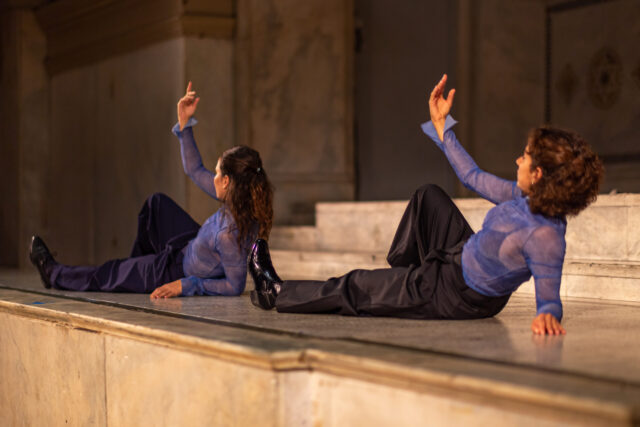
Lisa Weinert laughs during conversation with Carla Zanoni at Narrative Healing book launch (photo by Anita Ng Photography)

LISA WEINERT CONVERSATION AND BOOK SIGNING
Shakespeare & Co
2020 Broadway between Sixty-Ninth & Seventieth Sts.
Thursday, September 28, free with advance RSVP, 6:00
shakeandco.com
www.narrativehealing.com
www.lisaweinert.com

Lisa Weinert knows how to bring people together.

A speaker, teacher, and author born and raised on the Upper West Side, Weinert attended Ethical Culture Fieldston, among other schools, and graduated from Barnard with an English degree. She worked in corporate book publishing before starting Narrative Healing, a wide-ranging program that uses storytelling “to heal and transform lives.”

Everywhere she goes, Weinert, who exudes a natural warmth and charm, builds communities of friends and colleagues, who mingle and then form bonds and relationships of their own. For example, it was through Weinert that I met Make Conscious founder Jessica Kung, who I wrote about in my most recent Substack post.

Weinert’s program consists of lectures, classes, workshops, and now a book, Narrative Healing: Awaken the Power of Your Story (Hachette Go, July 2023, $30), arranged around six cycles: Awaken, Listen, Express, Inspire, Connect, Grow. “In my earliest memory of writing, I am nestled under my covers, in a kind of bedsheet cocoon. I am seven, and I am spilling my guts out. I am sending an SOS into the universe,” Weinert writes in the introduction. “When I am writing, I feel heard and seen. My journal is a portal to something larger than myself contained within me, and I am hooked.”

Weinert shares personal stories from her life, along with those from more than two dozen contributors, in such chapters as “The Best Protection Is No Protection,” “Quiet Wildness,” “Mindful Eavesdropping,” “How You Do Anything Is How You Do Everything,” “Talk to Animals and Plants,” and “The Message That’s Needed Most.”

You can become part of Weinert’s ever-growing community on September 28 at 6:00, when she will be at Shakespeare & Co for a book signing and conversation with Knopf VP and executive editor Jenny Jackson, author of the novel Pineapple Street. [ed. note: Jackson can no longer attend the event; in her stead, writer, poet, and journalist Carla Zanoni will join Weinert.] From October 13 to 15, Lisa will be joining Jamia Wilson, Kim Thai, and Dr. Lewis Mehl-Madrona for a three-day retreat, “Listen to Your Ancestors: Bring Their Voices to the Page,” at the Omega Institute in Rhinebeck. And on October 17 at 6:00, she will take part in a virtual conversation with gun violence survivor and Everytown Survivor Network director Keenon James, hosted by Brooklyn-based writer Susan McPherson, author of The Lost Art of Connecting.

Lisa, who lives in Chelsea with her husband, photographer and educator Barry Sutton, and their ridiculously adorable Cavalier King Charles Spaniel, Ocean, recently spoke with me over Zoom, discussing storytelling and trauma, writing by hand on unruled paper, the mind-body connection, getting married in Central Park during Covid, and more.

twi-ny: You’ve been writing since you were seven years old. Do you still have any of those old notebooks and journals?

lisa weinert: I don’t have writing from when I was seven, but I do from when I was twelve, and I pretty much have every single journal since then.

twi-ny: Do you ever look back at them? And if you do, what’s the feeling to see your younger self doing what your older self is eventually going to do?

Lisa Weinert started writing when she was seven years old and has never stopped (photo courtesy Lisa Weinert)

lw: That’s such a sweet question. I referred to them quite a bit when I was writing the book. I went through a process . . . I had them in different places and I laid them all out and I actually organized them chronologically and labeled them. I think it did a tremendous amount to provide them with so much care and order.

I read through them thinking I was going to find some kind of gem or aha moment. But there weren’t so many surprises, I think at this point I’m very well acquainted with my younger selves; they’re like very good friends. So it was more like hanging out with some buddies.

A childhood friend once said to me, “You’re just going to be one of those people that you’re going to wake up in your forties and have so many unpublished books that are just in boxes because it’s just writing all the time.” And I think that’s a little bit the case. In rereading, I find there’s a lot of stuff where I’m like, Oh, I could probably do something with that now.

But I can say about my earlier journals, I found in a number of places, I would circle something with an arrow and it would say, “Don’t forget this” or “Read this,” and I had such a sense that I was going to read it again.

twi-ny: I still have my fourth-grade notebook. In it is a story I wrote called “If I Were a Pencil.” When I look back at it, I’m like, okay, first of all, there I am using the conditional subjunctive properly at ten. And I’m also writing about a pencil and what do I do? I become a managing editor for children’s books, using a pencil to write and to correct authors’ grammar and punctuation, or at least used to before the pandemic and working electronically from home.

lw: So beautiful. And in fourth grade!

twi-ny: Another thing I noticed in looking back at my writing was my handwriting. Did you get any feel for your handwriting?

lw: It’s very important to me to write with unlined paper. I find it very constraining, like somebody’s telling me what to do with lines. I’ve always written with big black artist notebooks and I like to write oftentimes in different shapes and do big circles or squares and end up drawing. So there’s a really dynamic quality oftentimes.

I think my handwriting now is practically illegible. Almost every morning I write by hand for a period of time. And when I’m working on something, my first draft is always by hand and then I type it into the computer. A lot of it is pretty illegible. I trust that the parts that are meant to be read will be legible.

twi-ny: That’s a good point. I scribble on lined paper and have trouble staying within the lines.

lw: I hate the lines. I feel like I’m all of a sudden in a dictatorship with my creative life. I want to be able for it to be big or small, whatever I want. Sometimes I just want to put a couple of words on a page.

twi-ny: Right. Yes. So in your case, the act of writing, especially since you say that you might add little drawings, it’s like the physical act of writing is a work of art in and of itself before it goes into the computer.

lw: Oh, definitely.

twi-ny: When you type words directly into the computer, you don’t get that. You can look at your words and know when you wrote them and what you were feeling when you wrote them.

lw: I’m an incredibly fast typist. I can type a hundred words per minute. Writing by hand slows me down in a way that’s really important.

twi-ny: You were born and raised primarily on the Upper West Side.

lw: Yes, we moved every couple of years. I had, I think, eleven different residences by the time I was eighteen. It was a combination of wanderlust and trying different things and opportunities. And I think my parents didn’t quite realize that it would have an impact on us in a certain way. This resulted in me seeking out consistency where I could find it and also in a really close relationship with my siblings.

twi-ny: You started Narrative Healing around 2014?

lw: The trainings began then. That’s when I started my yoga teacher training. And the first iterations of this workshop were actually a result of the five-hundred-hour yoga teacher training I did with YogaWorks. I brought together some writers and yogis and started exploring this kind of connection. But my program at Kripalu in 2016 was when this program really launched.

Lisa Weinert signs a copy of Narrative Healing for her mother at book launch (photo by Anita Ng Photography)

twi-ny: When did you decide to write the book? Did someone come to you and say, You need to put this in a book, or did you say it yourself?

lw: It was both things. On the one hand, as we’ve been discussing, I always had this fire to write, and to write a book. And with Narrative Healing, there was so much momentum to the program. It was just one of those moments in life where a lot of things were integrating and synthesizing within me, and these opportunities were coming my way. I had a brief conversation with a program director at Kripalu, and six months later I had a conference with 150 people; I was teaching a version of ths program at Wesleyan University for three years, and I had an event at the Rubin and so many other moments of synergy and opportunity. I saw the kind of impact it was having on people’s lives and that people were coming back and noticing the kind of feedback I was getting.

The desire to write a book was born from what books are meant to do. I wanted to be able to reach people who didn’t happen to be in the room with me. And it kind of came down to that. And I wanted to be able to endeavor to make the program really mobile and personal. So wherever you are, you could try it and explore with friends.

I was also really inspired by the publication journey of The Artist’s Way after interviewing Julia Cameron, learning more about that publishing history. I’ve been a fan of her and her work, but what really inspired me was releasing work into the world and letting it do its thing. What I started seeing in my program was people were coming and participating, and really deep, amazing friendships were forming rather quickly. They were staying in touch independent of me for years, and with me. But that was really it. People did ask me, and students would say, “Where’s the book? I want the book,” that kind of thing. But that was really the idea behind it.

twi-ny: I’ve experienced what you’re talking about in the friendship that Ellen and I have developed with Jessica Kung, who we met through you. You have a way of curating events to have people really become part of them and meet other people. At your book launch, Ellen and I both met people who we work with but had never met in person.

lw: That’s so cool. Yeah, that’s what happens. That’s the real magic of this whole thing.

twi-ny: Did you write most of the book during the pandemic?

lw: Totally. I basically worked on the proposal in 2019. I spent a long time with the proposal. It was a really big transition moving from a live experience to what worked on the page, especially in terms of accessibility. Because when you’re teaching and you see what’s happening with someone, I just immediately amend my instruction. So writing it all out was a big thing. And then Covid hit, and with what it was like to live in the city, and the protests, and BLM, I did a huge pivot with the proposal and the book and really changed the format in some significant ways. I wrote the entire book during lockdown, essentially when my husband was experiencing severe health challenges. It was a challenging environment when I wrote the book.

twi-ny: Yes. You discuss this a lot in your book, how writing is a solitary pursuit. You’re at a computer or at a desk writing by yourself, and now you’re by yourself during a pandemic where it’s not like you can, after you’re done, go out with friends; you can’t. Did you find it more difficult to write under these conditions?

lw: Despite having the book out now, and publishing two pieces in the last couple of weeks in MindBodyGreen (“How We Listen Matters — Here Are 7 Tips to Help Get Better at It”) and the TueNight Social (“Why Is Publishing Making Authors Sick?”), I hadn’t written very much before, period. I’ve been writing all the time, but I had not written for other people. I really hadn’t. When I was writing the book, the world around me offered me tremendous drive and focus. I live in downtown Manhattan; there were sirens everywhere. There was a very extreme situation, and within my home there was a lot of stress. So I had to really do my own personal practice to find the focus that I needed. I felt tremendous drive and I was really grateful for that.

I sensed I must really have to write this if I’m able to write it under these circumstances. I was very protected by the cocoon nature of that time period. There was a fearlessness that happened. I didn’t realize or think about how vulnerable the writing was or how much I was revealing or how the tone of it was; I was just really focused on being truthful. And I was teaching online at the time, so I was really clear about my students and who I was talking to.

twi-ny: I can feel in reading the book, and knowing you, there are times I’m like, oh, she went there. I wasn’t sure you were going to go there. And so really it’s a very open book about who you are and how the program works. Among the elements it deals with are the body and trauma. And so here we are in a pandemic, stuck inside, and we’re more aware of our bodies than we’ve probably been in a long time. We live near Bellevue, so we heard the —

lw: Sirens. Oh, that’s right. You’re right there.

twi-ny: It was scary. We live on one of the busiest streets in the city, and it’s suddenly a quiet street, an empty street, except for the sirens. It makes you aware of your health, your body; you’re worried about anything and everything, like, Oh my God, do I have Covid? So one of parts of the book that I just love is your focus on the body. The natural idea is that we write from our mind. But what you’re saying is that it’s your body that’s always telling a story. That was a revelation for me.

lw: Yeah, me too.

twi-ny: I have a lot of weird pains that doctors have trouble diagnosing. But my chiropractor always says that pain is your friend. It’s your body telling you that something needs to be fixed. So those two things, your take on the body and my chiropractor’s, made me really listen to what stories my body’s telling me. How did that come to you?

lw: I think you just really described it. I think the first thing is, there’s a lot of consequences to not listening to the story of our body. It can become a very ephemeral kind of conversation pretty quickly, but in a very practical way. If you’re not listening to the messages your body’s telling you, you’ll quickly find yourself in danger and at risk. You can think of it like walking through life with earpods and not noticing what’s around you.

And there was a eureka moment for me. I thought everything happened in my head. I’m from a very intellectual family; I had a career in corporate publishing, working with ideas and stories all the time, and I felt very confident about it. I kept getting promoted. I had this idea that I knew everything about this kind of thing.

Like you, I had a moment of physical pain. I had a really scary medical diagnosis that turned out to be false, but I didn’t know it at the time. And I discovered in that moment that I was unable to access my voice. And this diagnosis wasn’t because I didn’t advocate for myself. The point is I had the experience of really knowing that when I’m actually paralyzed by fear, it’s really hard for me to articulate what I think. I didn’t think all of this at the moment, but once I was recovering from that experience and I had major surgery, I started thinking that a lot of the storytelling that I knew that was in my head was useless. What’s the point of all of this if I don’t know the rest of this?

I had always wanted to do a deeper dive into yoga. It’d always been a big part of my life; when I started my yoga teacher training, I started learning from masterful teachers these concepts that our body is carrying stories and that our body carries stories both in narratives but also in the form of tension and hunger and desire and pain and all these other things. And that these are essential parts of living an integrated life as being sensitive and having an active conversation between those things because our mind and our body are actively connected. And I started studying this and learning and becoming really like, Oh my goodness, I’m just on fire about it. And then working with writers over the years who were writing narrative consistently, I think writers are more disembodied. We’re just head on the page and isolated.

But not only are you at risk of crossing the street and not seeing the car coming your way, but you’re at risk when you sit down at the computer not really having access to ninety percent of your creative energy, both in terms of actual energy and also memories and associations and senses. I discover every day again and again and again that when I incorporate a little bit of a mindfulness practice or a full yoga practice into writers’ lives, their writing changes in amazing ways — what they write about, how they write, how they feel about what they write. This doesn’t mean that great writing doesn’t happen elsewhere, but particularly for people living with physical pain or emotional pain or confusion, transition — who isn’t living that way right now? This is just a really helpful way to begin to integrate. And I think for us intellectual creatures in the West, writing has a way of acting like a translator between the mind and the body.

twi-ny: That’s a great point. Although I haven’t taken the program, I’m familiar with what you do. I follow your posts on social media and the articles you write, and I’ve told you before that what you do has impacted me in the way you describe. So coming out of a pandemic, I did a deeper dive into my mind and my body. I’ve been writing This Week in New York for more than twenty years, but I never used the word “I.” It’s not about me but the event I’m writing about. And it opened me up to the point where I now have a Substack where I write about extremely personal things. I’m sharing these stories that I’ve never told before. I’ve revealed things about myself that I never thought I would share in public. And people are reacting and responding in such positive ways. So I want to thank you again for that.

lw: Thank you for sharing. That means a lot to me. The other part that I want to add to this is some of the science behind writing as a healing practice. I think intuitively we might feel it or we might notice it in our writing, but this sort of thinking about writing as a way to connect the mind and the body is a two-way street. On the one hand, you might get a source of creativity and flow, but on the other hand, writing slows down and connects us to our mind. We understand as writers, you actually can’t really write clearly unless you’re connecting to your thoughts, but it can create a higher sensitivity to what is happening in the body.

So when you get those alarms, like something happening with the stomach or the back or whatever it is, you will more quickly address it, number one. And number two, there’s tremendous amounts of science, hundreds of research studies, that show a regular, consistent writing practice done in this way has a huge impact on rates of anxiety, depression, loneliness, PTSD, trauma. There’s a lot of research that cancer patients who write regularly recover or react better to the medicine. So while we experience the impact in a singular way, when you start to study it, it’s really astounding how impactful it is.

twi-ny: It is amazing. And you make it clear that the writing doesn’t have to be for publication. One of the things the book gets into is that writing, meditation, and yoga, you don’t have to be an expert at any of those things. You don’t have to be, Well, I’m not going to write a book. It’s not about that. It’s not about getting published. What do you tell people who come to you and say, Oh, well, I don’t write, I don’t meditate, I don’t do yoga. This program, it’s not really right for me.

lw: Well, I’m definitely not trying to convince anyone to do this program. But I’ve been doing some corporate events recently where I’m walking into environments where people are not opting in but it’s part of a company program. I did a program recently at an art school and also at a law firm. I think in both cases people came but they didn’t really know what it was and were fairly skeptical when I arrived. And what I can say is people tend to feel better afterward. There tends to be an experience of relaxation and curiosity, whether people jump into a writing practice or not. I’ve been actually really humbled by how open-minded people are. I think we’re living in a time where people feel so bad and are so full of fear and trauma, and there’s so much division and so much stress.

And what this program offers is something that’s really pretty accessible, welcoming, inclusive, and free. And there’s just not that many things like that that you can try out that will make you feel better. Maybe you’ll take some of the classes, but they’re really pretty affordable. Someone who might not be a great fit is somebody who is really hell bent on having a New York Times bestseller. For those people, I tend to recommend someone who might help you more than what I’m doing. I haven’t ever been in a situation where I’m trying to persuade someone to get into it.

twi-ny: Yes, yes. So the genesis is 2014, and in 2016 you’re really getting into it. So much has happened between 2016 and 2023. Do you find that either the people coming to you or the kinds of stories that they want to share have always been the same, or because of all this daily pressure we’re talking about, racial injustice, the DEI movement, social media, are the students and their stories different from when you started even only seven years ago?

lw: That’s such an interesting question. I think I’ll have to reflect on that a little bit more. When I started the program, it was oriented in a little bit more of a medical way. There were a lot of people living with chronic illnesses, so the shares might be more about illness narrative and trauma, people who are identifying that way. I often teach with groups where I have a sense of where they’re coming from, with gun violence or corporate burnout or whatever it is. So there is what I think is sort of a difference that I wouldn’t have expected. People are very willing to share.

I’ve been in a number of situations where it’s a big group, and by big, I mean maybe more than thirty, but where people don’t know each other. I used to be much more careful about how I would curate the sharing, but we always have some kind of writing in these programs. And I’m finding people just shoot their hands up and have so much they want to say, so much they want to share, and it’s often emotional, about love. That’s what I’m seeing — love, grief. I don’t think the topics are that different, but I think it’s a little bit more on the tip of their tongue.

twi-ny: That brings me back to the essay you wrote for TueNight Social, “Why Is Publishing Making Authors Sick?”

lw: It’s such a great headline. I didn’t come up with it, but it’s really good.

twi-ny: Working in book publishing, I understand it, but it also addresses what we talked about earlier, the loneliness of being a writer, especially once the book is put into production and you’re getting toward the book being published and the marketing surrounding it. So this struck me. You have, from what I can tell, a tight-knit family. I know you have a caring husband, you have a large community of friends and colleagues who you care about and who care about you, but still you write in the article about feeling vulnerable and insecure as the book comes out. It almost seems like it was a surprise to you, and you used to work in the business. What do you think that was, and are there any easy answers to get over it now that you’ve gone through it?

lw: I think what that piece is really about is sharing honestly with people that you trust, which is really what the whole program is about. And the part that was difficult about it had less to do with any realities of my personal life or the skills of the amazing people that I got to partner with on this publishing journey. What I really felt was that the publishing process, the structure of it, taps into attachment wounds. And that with attachment theory, that felt like the real aha! moment, when you have a vulnerable story that you’re sharing and then nobody’s there with you. Your partner and your friends are not with you on the publishing journey because they’re just not inside of you, with you all the time.

It’s not something that you think to share because this wonderful thing is happening, and it’s not something that you’re complaining about. “My dreams are coming true but I feel miserable.” So I was really taken aback by how powerful it was, and it was a deep psychological thing that was tapped into that I know all writers connect with because of the kind of feedback I’ve been getting. During my years of working in corporate publishing, I witnessed authors being like this, and I truly didn’t understand it. I was surprised because I’ve witnessed authors, I’ve coached them, I’ve supported them. And I would be frustrated, honestly, as a publicist, saying, “Why aren’t you doing more right now? This is what you’re supposed to be doing. You signed up for this.”

I used to give talks at writing conferences where I had a line I used about comparing publishing a book to having a baby and that once your baby’s born, you don’t drop it on its head, you’ve got to take care of it. That’s what I would say to authors. But then I started understanding. I wrote another piece for a newsletter for my community that many healthy cultures, after a baby is born, the parent, the mother gets to rest for a while, and loads of other people started the forty days, come in and help. And what I didn’t understand, it started happening to me. I mean, I had some expectation; everyone has a particular story, but the second it was finished, I was profoundly depleted and exhausted. I’ve been working on this since 2016, through the pandemic, and then all the extra stuff you have to do, and now I’m being asked to write extra pieces and go do this and go do that.

I had underestimated the actual exhaustion, depletion I would feel. And also in terms of attachment theory, having that one trusted person who’s your secure person; the way our publishing system is set up, just the dynamic of it, you really don’t have that because you get passed along like a conveyor belt. My husband was very supportive throughout, but he doesn’t know anything about publishing. I have lots of people I’m close with, but what I found was that doesn’t prevent the feelings you have inside of “I’m not doing enough. Oh my gosh, I needed to do a million things as of yesterday and now I’m not taking care of it, and now it’s not good enough and now it’s not going to do this.” I didn’t think I was going to have those thoughts because I thought I knew better. I thought I was immune to that.

And I just was really, really run down. And then I got Covid and got super sick, and I noticed that it was late August, early September when my energy came back and feel very motivated and excited. I’ve written a couple of pieces and I think there’s a real truth to this gestation period, or the fourth trimester, where you need to rest and you need to be taken care of. And what I talk about in the piece in terms of an antidote was something I found very compelling, the idea of having a publishing buddy and somebody who, not necessarily a family member or friend, but somebody who truly could believe in your work. One person you go to, who you check in with daily, someone who can respond and give you support. It’s made me really motivated within Narrative Healing to continue to create creative support. I guess I have so much to say about this.

The other part about the support system is there’s just very little community out there for authors after the book comes out that’s not extremely expensive or competitive, and that’s not what your nervous system needs. Your nervous system needs to feel safe. You’ve done enough. The emails and text and calls I’ve gotten since that piece has come out have really overwhelmed me. And authors who look on paper like they’re killing it are emailing me, “I’ve never felt so alone in my entire life. I thought I was the only one.” And so I think it’s tapped into something. It’s not at all a takedown of publishing. It’s more how we haven’t addressed it enough. What kind of care do you need at this point? And having been through a wedding also, it’s not that different from that, leading up to it, it’s not necessarily a stress-free time for a lot of people, even though it’s a wonderful occasion.

twi-ny: I like the comparison to giving birth because a lot of people now, they celebrate their book’s birth date on Instagram and Facebook. I remember how excited you were when you posted a video of you opening your first box of books. Opening the box to take out that first printed book is, in a way, like a baby coming out of the womb and now it’s out in the world. It’s very moving to watch the pure joy of that. But then knowing that it’s not as joyous the next day, dealing with these other aspects that you didn’t anticipate.

lw: It’s also like that six months later, actually. I think many writers going from such a cocoon state of me in my apartment creating this thing to being out in the world is just a big adjustment.

twi-ny: Yes. You also mentioned your wedding, which my wife and I attended. It was such a wonderful experience. It took place in the North Garden of the Conservatory Garden in Central Park, and you had different people from different parts of your lives share stories about you and Barry under each of the floral arches. We walked around the fountain and listened to the stories; it was very moving and intimate, especially because the pandemic was far from over. But what was it like for a writer who has edited or worked with other writers on their stuff? You’re now listening to stories about you; you are the subject. What was it like walking around and hearing what these people had to say about you and Barry?

lw: In some ways, it was a similar experience. Coming out of Covid, it was the first time I’d been around that many people in two years. And then it was sort of the same when my book came out; I guess I’ve been in seclusion a lot the last couple of years. It was very similar. I think for both the wedding and the book, I had a very big laser focus on service. I never wanted to have a wedding. I’m not somebody that ever wanted to get married. I never dreamed about it, never thought about it. I always wanted to have a book, but I never wanted a wedding. And then I met this person, but also Covid. And I felt this different urgency to — not urgency, but responsibility, of sharing the joy and bringing people together and doing it safely and doing it with care.

And so I felt very clear about why I was there, and it was super-overwhelming. I kind of knew what one or two people were going to say. Other people, I didn’t know what they were going to say, but I totally trusted them. I just remember having my hand on my heart the whole time to just make sure that I was breathing, and that was kind of it. And letting myself off the hook if I wasn’t fully experiencing everything because it was so overwhelming. The book experience has been very similar in terms of things being really overwhelming. The launch party that you came to was almost like a reunion from the wedding. It was so many of the same people, and just trusting others to help me care for this thing, understanding that we don’t do it alone.

[Mark Rifkin is a Brooklyn-born, Manhattan-based writer and editor; you can follow him on Substack here.]
JOHN CAGE’S JAPAN

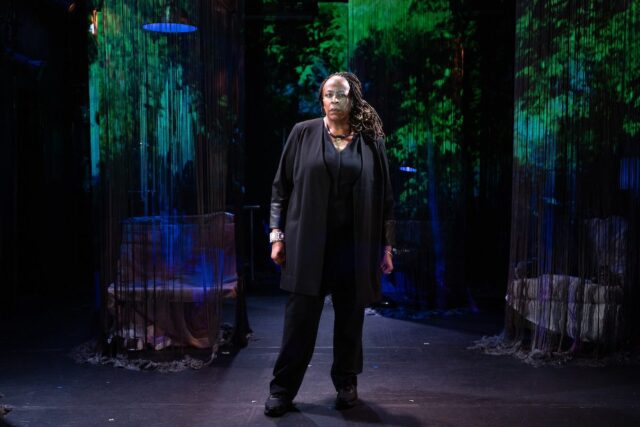
John Cage’s unique relationship with Japan and Japanese culture will be celebrated in Japan Society series (photo by Yasuhiro Yoshioka / courtesy of Sogetsu Foundation)

JOHN CAGE’S JAPAN
Japan Society
333 East 47th St. at First Ave.
Thursday, September 28, and Friday, September 29, $28-$35, 7:30
Saturday, October 21, Thursday, November 16, Thursday, December 7, $32-$40
212-715-1258
www.japansociety.org

“If John Cage had not encountered Japanese culture, there would have been no John Cage!” Japan Society artistic director Yoko Shioya recently declared.

In 1989, experimental composer John Cage was awarded the Kyoto Prize in the category of Creative Arts and Moral Sciences; the citation, presented in Kyoto, Japan, noted that he was “a rebel against Western music. . . . His creative activities and philosophy of art have truly constituted a revolution in culture. . . . Mr. John Cage has stood in the vanguard of change in the postwar Western musical world, and has continually demonstrated his leadership among the most avant-garde group of composers.” Cage, who was born in Los Angeles in 1912, first visited Japan in 1962; he returned in 1964, 1976, and several times in the 1980s. Not only was Cage impacted by Japanese art and culture — he was particularly interested in Zen Buddhism — but he was a major influence on such Japanese composers as Tōru Takemitsu, Toshiro Mayuzumi, Yoko Ono, and Yuji Takahashi, in what was called “Jon Kēji shokku,” or John Cage Shock.

Japan Society pays tribute to the relationship between Cage and Japan in the series “John Cage’s Japan,” which kicks off September 28-29 with Paul Lazar’s Cage Shuffle. From 1958 to 1960, Cage wrote and recorded a series of sixty-second real-life anecdotes called Indeterminacy. At Japan Society, Lazar, the cofounder of Big Dance Theater, will perform pieces related to Japan and the East; using an iPhone — “a device that John Cage invented,” Lazar jokes in the above video — Lazar will have Cage’s recordings of the stories piped into his earbuds and will repeat them out loud, along with quotes from such Cage contemporaries as D. T. Suzuki, Isamu Noguchi, and Hidekazu Yoshida. Meanwhile, Lazar will be moving to choreography by BDT cofounder and Tony winner Annie-B Parson. The movement is fixed but the text is random, creating the kind of chance Cage was celebrated for. The September 29 show will be followed by an artist Q&A.

On October 21, “John Cage’s Ryoanji” features the composer’s 1983 work, inspired by the Zen rock garden at Kyoto’s Ryoanji Temple. Directed by Tomomi Adachi, it will be performed by International Contemporary Ensemble in New York City (with Michael Lormand on trombone, Lizzie Burns on double bass, and Clara Warnaar on percussion), joined virtually from a teahouse in Kanazawa City by Hitomi Nakamura on the ancient hichiriki woodwind and Maki Ota on vocals. The multimedia concert, with 3D projections by Dr. Tsutomu Fujinami, will be preceded by a lecture from Cage scholar James Pritchett at 7:30.

Adachi’s “Noh-opera / Noh-tation: Decoding John Cage’s Unrealized Project” takes place on November 16 at 7:30, for which Adachi used AI to compose music and lyrics based on Buddhist koans for Cage’s unrealized Noh-opera: Or the Complete Musical Works of Marcel Duchamp. The work will be performed by vocalist Gelsey Bell, noh actor Wakako Matsuda, and Adachi with ICE’s Alice Teyssier on flute, James Austin Smith on oboe, Campbell MacDonald on clarinet, Rebekah Heller on bassoon, and Lormand on trombone and will be followed by an artist Q&A.

The series concludes on December 7 with “Cage Shock: Homage to His First Japan Visit,” consisting of a lecture by Dr. Pritchett, live performances of 1951’s Haiku, 1958’s Aria and Solo for Piano with Fontana Mix, and 1962’s 0’00” by Cage, Toshi Ichiyanagi’s 1962 Sapporo, which Cage conducted, and soundscapes by Tania Caroline Chen and Victoria Shen, with ICE’s Kyle Armburst on viola, Wendy Richman on viola, and Katinka Kleijn and Michael Nicolason on cello.

“I must express my deep and sincere gratitude to John Cage,” Takemitsu wrote. “The reason for this is that in my own life, in my own development, for a long period I struggled to avoid being ‘Japanese,’ to avoid ‘Japanese’ qualities. It was largely through my contact with John Cage that I came to recognize the value of my own tradition.” At Japan Society this fall, we can all express our deep and sincere gratitude to John Cage.