this week in lectures, signings, panel discussions, workshops, and Q&As

ATMOSPHERES: ARTISTS ON FEMINISM AND THE ENVIRONMENT

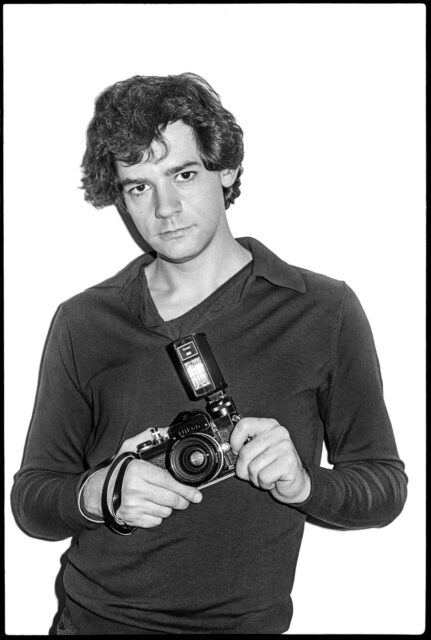
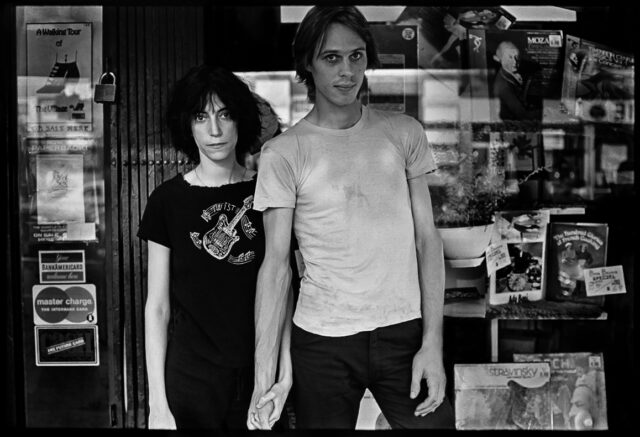
Torkwase Dyson (photo by Suzie Howell), Candice Hopkins (photo by Thatcher Keats), and Joan Jonas (photo by Toby Coulson) will be at New Museum December 14 for special conversation

Who: Candice Hopkins, Torkwase Dyson, Joan Jonas
What: Artist talk inspired by Judy Chicago’s ecofeminist performances from the 1970s
Where: New Museum Theater, 235 Bowery at Rivington St.
When: Thursday December 14, $10, 6:30
Why: Between 1968 and 1974, Chicago-born multidisciplinary artist Judy Chicago staged a series of events, called “Atmospheres,” that used fireworks to bring feminist impulses to site-specific environments, sometimes involving butterflies; she revisited the works in 2012, 2015, 2020, and 2021. In conjunction with the New Museum career survey “Judy Chicago: Herstory,” the Bowery institution is hosting what should be a compelling discussion on December 14. “Atmospheres: Artists on Feminism and the Environment” brings together curator Candice Hopkins, abstract artist Torkwase Dyson, and multimedia installation pioneer Joan Jonas to discuss the incorporation of the natural world into works that explore ecofeminism, from the 1970s to today. Hopkins is the executive director of Forge Project, which “fosters relationships between the land and the built environment, creating spaces of kinship for the people who use them.” The exhibition, which covers four floors of the New Museum, continues through March 3; there will be a live virtual tour on January 9 at 2:00 and the conversation “Herstory: Responses to ‘The City of Ladies’” on January 11 at 6:30 with scholar Sophie Lewis, poet Simone White, novelist Kate Zambreno, and moderator and exhibition cocurator Madeline Weisburg.

[Mark Rifkin is a Brooklyn-born, Manhattan-based writer and editor; you can follow him on Substack here.]

MY HARRY

Photographer unknown, Harry Smith at Naropa Institute, gelatin silver print, 1990 (Harry Smith Papers, Getty Research Institute, Los Angeles; gift of the Harry Smith Archives)

MY HARRY
Whitney Museum of American Art, Education Center and Hess Family Theater
99 Gansevoort St.
December 8-10, $18-$25
212-570-3600
whitney.org

The Whitney celebrates the legacy of American polymath Harry Smith in the three-day festival “My Harry.” Held in conjunction with the multimedia exhibition “Fragments of a Faith Forgotten: The Art of Harry Smith,” which continues at the museum through January 28, the revelry features listening sessions, illustrated lectures, film screenings, conversations, live music, art workshops, and more, with appearances by friends and colleagues of Smith, who was born in Portland, Oregon, in 1923 and died in New York City in 1991 at the age of sixty-eight, leaving behind a treasure trove of music, art, and film that he both made and collected, as well as a lifelong interest in the occult. Among those participating in the weekend are Carol Bove, Ali Dineen, Bradley Eros, Raymond Foye, Andrew Lampert, April and Lance Ledbetter, James Inoli Murphy, Rani Singh, Peter Stampfel, Charles Stein, and Anne Waldman. Below is the full schedule.

My Harry: Magick and Mysticism
Friday, December 8, $8-$10, 5:30–9 pm

Listening Session: Harry Smith’s Field Recordings, 5:30

Fragments of a Faith Forgotten: A Presentation by Carol Bove, with Carol Bove and Andrew Lampert, 6:30

Screening of Harry Smith’s “Film No. 14: Late Superimpositions,” 7:30

Harry Smith and the Future of Magick: A Presentation by Charles Stein, with Charles Stein and Raymond Foye, 8:00

Harry Smith, Untitled [Zodiacal hexagram sctratchboard], ink on cardstock, ca 1952 (Lionel Ziprin Archive, New York)

My Harry: Stories, Songs, and Strings
Saturday, December 9, free with museum admission, 11:00 am – 6:00 pm

Stop Motion Animation Studio and Paper Airplane Workshop, hosted by Bradley Eros, 11:00 am – 3:00 pm

Singing Circle with Ali Dineen, 11:00 am

Peter Stampfel and the Atomic Meta-Pagan Posse, with Peter Stampfel, Eli Smith, Zoe Stampfel, Eli Hetko, Steve Espinola, Paul Nowinski, Sam Werbalowsky, Heather Wagner, and Dok Gregory, 12:00

String Figure Workshop with James Inoli Murphy, 12:00

Paper Airplane Contest with Bradley Eros, 2:00

On Mahagonny: A Presentation by Rani Singh, 5:00

My Harry: Affinities
Sunday, December 10, free with museum admission, 11:00 am – 5:00 pm

Listening Session: Harry Smith’s Field Recordings, 11:00 am

On Harry’s Trail: A Presentation by Dust-to-Digital, with Lance and April Ledbetter, 12:00

Screening: A selection of films and videos featuring Harry Smith by a variety of the artist’s friends and associates, 1:00

Friendly Rivals: The Art of Jordan Belson, a Presentation by Raymond Foye, 3:00

Anne Waldman, 4:00

[Mark Rifkin is a Brooklyn-born, Manhattan-based writer and editor; you can follow him on Substack here.]

DRAWING DIALOGUES: MEL CHIN AND SHELLYNE RODRIGUEZ

Left, Shellyne Rodriguez, BX Third World Liberation Mixtape No. 2 (Esquire Strikes Empire), colored pencil on paper, 2021; right, Mel Chin, detail, Elements of a Trophy Frame for Leopold II, graphite on vellum, gold leaf, drafting dots, 2007 (photos courtesy of the artists)

Who: Mel Chin, Shellyne Rodriguez
What: Artist conversation
Where: National Academy of Design, 519 West Twenty-Sixth St. between Tenth & Eleventh Aves., second floor
When: Tuesday, December 5, free with advance RSVP, 6:30
Why: Formerly located in the Archer Milton Huntington House on Museum Mile, the National Academy of Design has moved to Chelsea, where it is hosting its inaugural exhibition in the new space, “Drawing as Practice,” a group show featuring work by such artists as Richard Artschwager, Judith Bernstein, Cecily Brown, Mark di Suvero, Jim Dine, Frank Gehry, Jasper Johns, Alex Katz, Christine Sun Kim, Sol LeWitt, Ana Mendieta, Robert Mangold, Mary Mattingly, Robert Motherwell, Claes Oldenburg and Coosje van Bruggen, Clifford Owens, Renzo Piano, Judy Pfaff, Howardena Pindell, Jenny Polak and Dread Scott, Liliana Porter, Joel Shapiro, Arlene Shechet, Kiki Smith, Billie Tsien, Rafael Viñoly, and many others. On December 5 at 6:30, National Academician Mel Chin and Shellyne Rodriguez, both of whom are represented in the show, will sit down for an artist talk, part of the series “Drawing Dialogues.” The exhibit, which continues through December 16, includes Chin’s Elements of a Trophy Frame for Leopold II and Convo Pool Mood Board and Rodriguez’s India and Bangladesh on Pugsley Avenue and BX Third World Liberation Mixtape No. 2 (Esquire Strikes Empire).

[Mark Rifkin is a Brooklyn-born, Manhattan-based writer and editor; you can follow him on Substack here.]

HIROSHI SUGIMOTO: ON PHOTOGRAPHY AND JAPANESE ART

Hiroshi Sugimoto will be at Asia Society on November 30 to discuss his latest work (photo courtesy Sugimoto Studio)

Who: Hiroshi Sugimoto, Dr. Yasufumi Nakamori
What: Artist talk about the photography of Hiroshi Sugimoto
Where: Asia Society Museum, 725 Park Ave. at Seventieth St.
When: Thursday, November 30, $15, 6:30
Why: You’ll have to travel to London to catch the largest survey to date of the work of Japanese photographer and architect Hiroshi Sugimoto, on view through January 7 at Hayward Gallery. But Asia Society on the Upper East Side is offering the next best thing: Seeing Sugimoto himself. On November 30 at 6:30, the seventy-five-year-old Tokyo-born artist, who is based in Tokyo and New York City, will be at Asia Society for an artist talk, “On Photography and Japanese Art,” speaking with Asia Society museum director Yasufumi Nakamori, focusing on Sugimoto’s latest series, “Brush Impression,” featuring calligraphic brushstrokes on photographic paper, started during the coronavirus crisis.

“When I finally returned to my New York studio after the three-year-long disruption of the Covid-19 pandemic, I discovered that I was in possession of a large amount of photographic paper which had passed its expiry date. Rather like fresh food, this special paper for photographic printing deteriorates over time,” Sugimoto explains in his artist statement. “The defining feature of my prints is the subtle expression of different shades, something that is very hard to achieve with photographic paper that is even slightly degraded. What I therefore did was to flip my thinking, Copernicus-style. My idea was not to accept deterioration as deterioration per se but to treat it as a form of beautification instead. When ancient works of art are exposed to the operations of time, deterioration usually causes an aesthetic improvement. The white of photographic paper looks rather like albumenized paper, while black tones acquire a certain softness on it. I decided to bring the calligraphy skills I had mastered during three years of enforced leisure into the dark room. In the dim room suffused with pale orange light, I spread out a sheet of photographic paper, then dunk my brush into the developer. In the darkness, I gropingly draw the characters which I cannot actually see. Then, just for a fleeting moment, I expose the paper to a burst of light like a flash.

“Just the areas which are touched by the brush metamorphose into Japanese characters and float to the surface in black. Having shown that it was possible to do calligraphy using a developer, I then tried dipping my brush in photographic fixer. I plied my bush surrounded by the stench of acid; this time it was white characters appearing on a jet-black ground. As I wrote, I tried to concentrate on the invisible characters, focusing my mind on the place where the meaning of the characters would manifest itself. Protean and shapeshifting, fire is an extraordinary thing. Gaze at it and you will feel yourself being drawn into another world. This planet of ours was originally born from the fires of the sun. A blazing flame is at once a sacrament of birth and an echo of a burned-out death. Sometimes, as here, the burning flame flings out its arms and legs to be transcribed as the kanji character for fire.”

Sugimoto has proved himself to be a genius with such exhibitions as “History of History,” “Still Life,” “Gates of Paradise,” and “Sea of Buddha” as well as such performances as Rikyu-Enoura and Sanbaso, divine dance, so be ready for a fascinating evening.

[Mark Rifkin is a Brooklyn-born, Manhattan-based writer and editor; you can follow him on Substack here.]

ISABELLE HUPPERT AT THE QUAD

Isabelle will be in person — not on the phone — at the Quad for Q&As following screenings of Jean-Paul Salomé’s La Syndicaliste

Who: Isabelle Huppert
What: Screenings followed by Q&As
Where: Quad Cinema, 34 West 13th St. between Fifth & Sixth Aves.
When: December 1-2 (festival continues all month)
Why: For more than half a century, French actress Isabelle Huppert has been one of cinema’s brightest stars. She’s appeared in more than 130 films, working with a who’s who of international directors, including Claude Chabrol, Márta Mészáros, Jean-Luc Godard, Diane Kurys, Bertrand Tavernier, David O. Russell, Joachim Trier, Hal Hartley, Ursula Meier, Bertrand Blier, Curtis Hanson, Hong Sang-soo, Ira Sachs, Paul Verhoeven, Wes Anderson, Michael Cimino, and Michael Haneke. She’s also done more than thirty plays, including 4.48 Psychose, The Maids, and The Mother in New York.

Huppert will be back in New York on December 1 and 2, participating in Q&As following screenings of Jean-Paul Salomé’s Venice Film Festival selection La Syndicaliste, a thriller in which Huppert plays real-life Irish trade unionist and whistleblower Maureen Kearney. Huppert will be at the Quad for the 7:15 show on December 1 and the 4:15 and 7:15 shows on December 2. The Quad will also be presenting “Restorations Starring Isabelle Huppert,” part of its ongoing “From the Vault: The Cohen Film Collection” series, on three Wednesdays in December: Benoît Jacquot’s 1999 Keep It Quiet on December 6, André Téchiné’s 1979 The Brontë Sisters on December 13, and Maurice Pialat’s 1980 Loulou on December 20. Finally, her latest film, François Ozon’s The Crime Is Mine, a murder mystery adapted from a 1934 play, opens exclusively at the Quad on December 25. Huppert, who turned seventy this past March, is as resplendent as ever, so these Q&As are must-see events.

[Mark Rifkin is a Brooklyn-born, Manhattan-based writer and editor; you can follow him on Substack here.]

THE WILD PARROTS OF TELEGRAPH HILL 4K RESTORATION

Mark Bittner feeds several cherry-headed conures in The Wild Parrots of Telegraph Hill

THE WILD PARROTS OF TELEGRAPH HILL (Judy Irving, 2003)
New Plaza Cinema @Macaulay Honors College
35 West Sixty-Seventh St. between Central Park West & Columbus Ave.
Opens Friday, November 17
newplazacinema.org
pelicanmedia.org

Judy Irving begins her 2003 documentary, The Wild Parrots of Telegraph Hill, with a shot of a skeptical passerby who has stopped to watch Mark Bittner as he cares for a flock of forty-five cherry-headed conures, also known as red-masked parakeets, living in the trees outside his apartment.

“They’re not really wild if you have names for them, if you don’t mind my saying,” the man claims. “You feed them out of your hands, you have names for them, and they come up to you like they’re your pets. . . . Well, whatever.” He then shrugs and walks away.

The exchange doesn’t bother Bittner at all; he gleefully answers the suspicious man’s doubts and just continues doing what he’s doing, a big smile on his face.

It’s an extremely clever way to start the film, which opens November 17 in a brand-new 4K twentieth anniversary digital restoration at New Plaza Cinema. With the question of Bittner’s relationship with the birds resolved right up front, Irving, who served as director, producer, editor, and cinematographer, is free to now follow Bittner’s odd life choice.

Born in Vancouver, Washington, in 1951, Bittner moved from Seattle to Berkeley when he was twenty and then to San Francisco with the goal of making it as a rock-and-roll musician, in search of a “real transformation.” In 1993, he became infatuated with the conures, some of whom had previously been pets and others that had been born in the wild. Over the course of several years, he devoted his life to them, giving them names, caring for them when they were ill, watching out for predatory hawks, and keeping a somewhat scientific journal of their comings and goings and their individual personalities.

As if he’s sharing the plot of a soap opera, he talks about Scrapper and Scraperella’s breakup; discusses the pairing of Picasso and Sophie; introduces us to Fanny, Gibson, Flap, Pushkin, and Olive; sings to Mingus to get him dancing; vacuums up the mess the birds make in his apartment; nurses Tupelo; and bonds deeply with Connor, the only blue-crowned conure in the flock, an older bird who cannot find a mate or best friend. Connor is not unlike Bittner, a single man with thick glasses, a bushy beard and mustache, and a long ponytail who apparently has no close friends either.

“I don’t think of myself as an eccentric,” he says in his calm, relaxing voice.

Inspired by such Beat writers as Gary Snyder and Jack Kerouac, Bittner is a kind of throwback, an easygoing Bohemian going with the flow, living for free without a paying job. “It wasn’t a plan; it just happened,” he says about his caring for the birds. “It was what I was doing while I was trying to figure out what that thing would be, my idea of where I was going to go in my life. But it became the thing that I’m doing. It’s magic that way.”

But that magic threatens to disappear when he is forced to leave his apartment and has to figure out what will happen to the birds.

Irving, who appears in the film, originally intended the project to be a short but ended up compiling thirty hours of 16mm footage over a few years on a shoestring budget. “When I first met him, I thought Mark was an inarticulate hippy recluse and he thought I was an ecofeminist lesbian,” she writes in a new article for Talkhouse. That changed as filming continued.

A companion piece to Bittner’s 2004 memoir of the same name (the book has the added subtitle A Love Story . . . with Wings), The Wild Parrots of Telegraph Hill is a tender and touching — and colorful — look at not just one man’s dedication to conures but the connection between humanity and nature, as well as the need for people to be a part of something, like a bird in a flock. We are not built for solitude. And that comes to fruition in a sweet shocker of a finale involving Irving (Pelican Dreams, Dark Circle), who will be at New Plaza Cinema for Q&As following the 6:10 screening on November 17 and the 2:40 shows on November 18 and 19.

Meanwhile, Bittner is working on his next book, Street Song, which will be accompanied by an album featuring such originals as “Poppa John,” “The Arrow You Want,” and “You’re So Peaceful” and covers of tunes by Van Morrison, Bob Dylan, and the Beatles.

[Mark Rifkin is a Brooklyn-born, Manhattan-based writer and editor; you can follow him on Substack here.]

REVERSE SHOT AT 20: SELECTIONS FROM A CENTURY: MANAKAMANA

MANAKAMANA

A mother and daughter eat ice cream in experimental documentary Manakamana

MANAKAMANA (Stephanie Spray & Pacho Velez, 2013)
Museum of the Moving Image
35th Ave. at 36th St., Astoria
Saturday, November 18, 12:30, & Sunday, November 19, 3:30
Festival continues through November 26
www.manakamanafilm.com
movingimage.us

If you’re an adventurous filmgoer who likes to be challenged and surprised, the less you know about Pacho Velez and Stephanie Spray’s Manakamana, the better. But if you want to know more, here goes: Evoking such experimental films as Michael Snow’s Wavelength, Hollis Frampton’s Zorns Lemma, and Andy Warhol’s Screen Tests as well as the more narrative works of such unique auteurs as Jim Jarmusch and Abbas Kiarostami, Manakamana is a beautiful, meditative journey that is sure to try your patience at first. The two-hour film, which requires a substantial investment on the part of the audience, takes place in a five-foot-by-five-foot cable car in Nepal that shuttles men, women, and children to and from the historic Manakamana temple, on a pilgrimage to worship a wish-fulfilling Hindu goddess. With Velez operating the stationary Aaton 7 LTR camera — the same one used by Robert Gardner for his 1986 documentary Forest of Bliss — and Spray recording the sound, the film follows a series of individuals and small groups as they either go to or return from the temple, traveling high over the lush green landscape that used to have to be traversed on foot before the cable car was built. A man and his son barely acknowledge each other; a woman carries a basket of flowers on her lap; an elderly mother and her middle-age daughter try to eat melting ice-cream bars; a pair of musicians play their instruments to pass the time.

A heavy metal band takes a picture of themselves in meditative documentary

A heavy metal band takes a picture of themselves in meditative documentary

Each trip has its own narrative, which must be partly filled in by the viewer as he or she studies the people in the cable car and the surroundings, getting continually jolted as the car glides over the joins. The film is a fascinating look into human nature and technological advances in this era of surveillance as the subjects attempt to act as normal as possible even though a camera and a microphone are practically in their faces. Produced at the Sensory Ethnography Laboratory at Harvard, Manakamana consists of eleven uncut shots of ten-to-eleven minutes filmed in 16mm, using rolls whose length roughly equals that of each one-way trip, creating a kind of organic symbiosis between the making and projecting of the work while adding a time-sensitive expectation on the part of the viewer.

A film well worth sticking around for till the very end — and one that grows less and less claustrophobic with each scene — Manakamana is screening November 18 and 19 as part of the Museum of the Moving Image series “Reverse Shot at 20: Selections from a Century,” honoring the twentieth anniversary of the film publication Reverse Shot, which has been its in-house journal since 2014; the two-month retrospective highlights twenty-first-century works touted by what was originally a stapled zine. Velez will be present at the November 19 show to discuss the film; both screenings will be preceded by the 2014 video Reverse Shot Talkie: Stephanie Spray & Pacho Velez. “Spray and Velez’s film calls attention to attention, the ways our thoughts and perceptions slowly drift and return during long durations spent looking at certain subjects or familiar scenarios,” Leo Goldsmith wrote in Reverse Shot.